
Best Wall Switch Types for Hotels, Villas, Offices, and Homes: A Ranked Recommendation
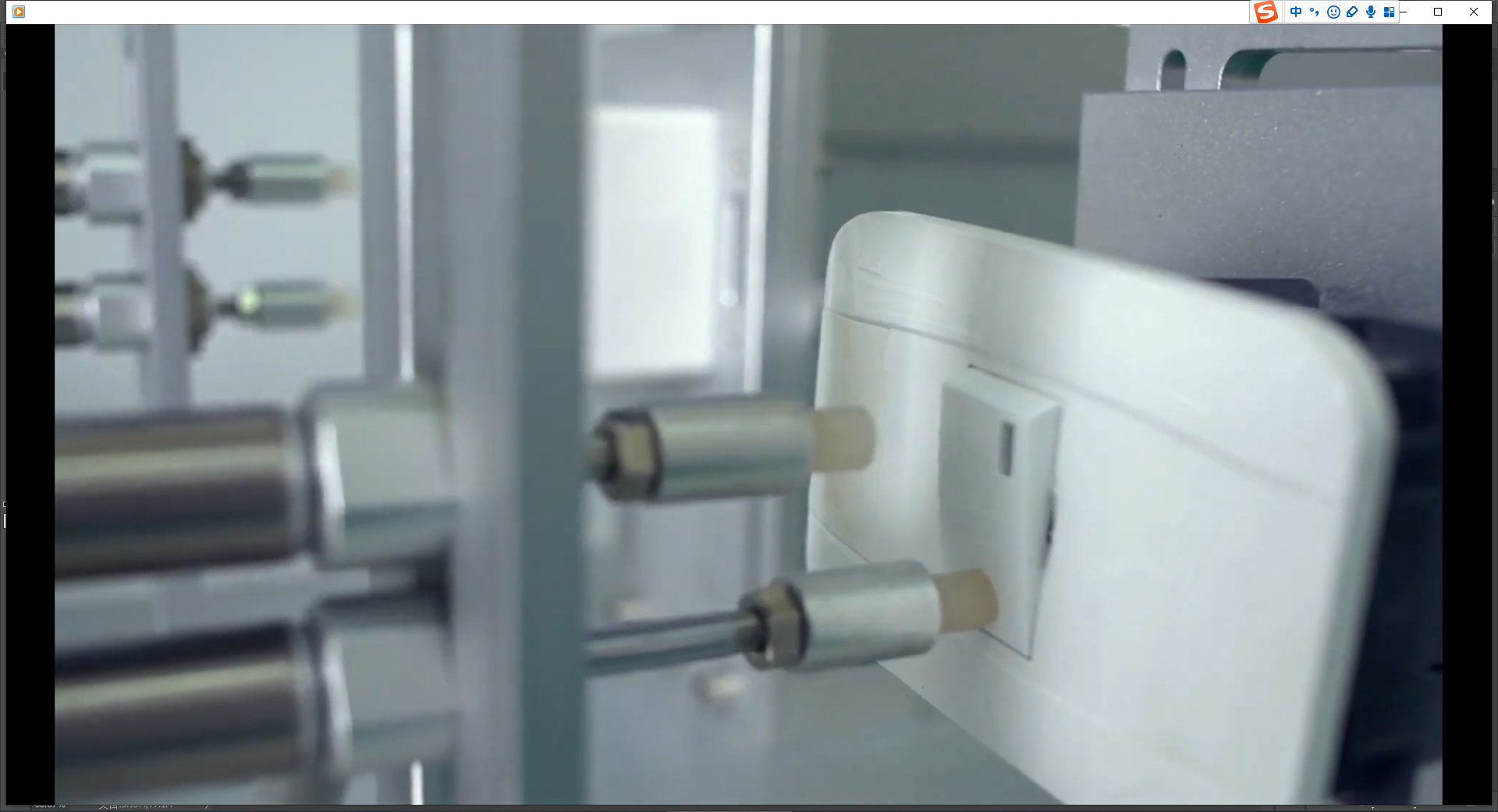
Gang count, way count and circuit function — the three variables that decide which wall switch type fits a hotel, villa, office or home.
A wall switch is a small device with a large specification footprint. Its type decides how many lighting loads one plate can control, how many locations can operate the same load, whether a circuit can be extended to a third or further control point, and whether the device is accepted in the destination market. This ranked recommendation orders five wall switch types — 1 gang 1 way, 2 gang 1 way, 2 gang 2 way with LED indicator, small size modular intermediate, and 1 gang push bell with LED indicator — by how broadly each type fits hotel, villa, office and residential projects.
The ranking is built on control function, wiring logic and the shared performance basis of the switch family: 10A/10AX and 250V~ ratings, flame-retardant 850 °C construction, flame-retardant PC panels, 40,000 mechanical cycles, and approvals such as CE, TÜV and SAA applied where the model and the market require them. It is not a price ranking, and it is not a brand ranking.
Ranked at a glance
- 1 gang 1 way switch — the universal single-load baseline for homes, hotel rooms, offices and villas.
- 2 gang 1 way switch — two independent loads from one location: bedside points, meeting rooms, corridors.
- 2 gang 2 way switch with LED indicator — two loads, each controllable from two locations, with a locating indicator.
- Intermediate switch (small size modular) — the third and further control points in a multi-way circuit.
- 1 gang push bell switch with LED indicator — bell and chime circuits only.
Problem Definition: Why Wall Switch Type Selection Fails in Real Projects
Wall switch problems that surface after handover usually trace back to type selection rather than to a defective device. Five patterns account for most of them:
- Gang count is set, but control locations are never counted. The number of lighting groups in a room is written into the schedule, while the number of positions from which each group must be switched is left to the installer.
- A 1 way device is ordered for a corridor switched at both ends. Two control locations require a 2 way pair; a 1 gang 1 way switch serves one location only.
- A third control point is added without an intermediate switch. Two 2 way switches cannot be extended to a third position — an intermediate switch has to be inserted between them.
- A bell push is specified as a lighting switch. A push bell switch is a momentary device wired to a chime; a lighting circuit built on it cannot latch on.
- Approvals are assumed to travel with the product family. Conformity is assessed per model and per market, not per category.
Timing is what makes these errors expensive. In hotel fit-outs, villa construction and office shells, wall boxes, cable runs and room-type standards are fixed long before the switches are unpacked. A type error discovered at that stage means re-wiring, re-cutting or quietly abandoning the control plan the client paid for — while the switch itself was never the problem.
Industry Background: Market and Standards Context
The global light switches and electrical sockets market was valued at approximately USD 17.6 billion in 2024 (Strategic Market Research). Touch-type smart switches accounted for 45% of the global wall switch market as of 2023 (Cognitive Market Research), and the smart hospitality market is projected to reach USD 74.86 billion by 2029, with switches acting as the control backbone of the modern hotel room (ElectronicsHub). Even so, mechanical switch types remain the baseline specification in hotels, villas, offices and homes: they operate without a network, a gateway or an electronic module.
Compliance follows the destination market rather than the product family. EN 60669-1:2018 is the mandatory safety standard for wall switches in the EU, covering manual switches for household fixed installations (Intertek). In Australia and New Zealand, AS/NZS 3133:2020 is the primary technical standard for wall switches (Standards Australia), and AS/NZS 3000:2018 Clause 4.6.3.1 requires every socket-outlet to be individually controlled by a separate switch operating in all active conductors (AS/NZS 3000). CE marking, TÜV certification and SAA marking are applied where the model and the market require them.
Wenzhou Huafeng Electric Co., Ltd. (HYFF) is a Wenzhou-based building electrical manufacturer founded in 2011 that produces wall switches and wall sockets and exports 100% of its output to Europe, the Americas, Oceania, Asia and Africa. Its production base covers a 7,000 m² factory, 118 employees, 10 R&D engineers and an annual output of 35,000,000 units. The company states CE and CB certification issued by BV and Intertek for its EU standard wall switch products, and it maintains incoming material, in-process and finished-product inspection, including performance life testing and switch on-off testing on the assembly line.
How the Ranking Works
Rank position reflects breadth of scenario fit across four project types — hotel, villa or apartment, office, and home — measured by how many lighting points and control locations a type can serve in those scenarios. Ties are broken by control capability: a type that extends a circuit to more control locations ranks above a type that serves a single function. No rank is based on price, and no rank is based on brand.
A lower rank is not a quality statement. All five types share the same performance basis — 10A/10AX at 250V~, flame-retardant PC panels, 850 °C flame-retardant construction and 40,000 mechanical cycles — and the difference between rank 1 and rank 5 is the circuit function the device performs, not the grade of the device.
The Five Wall Switch Types, Ranked
Rank 1 — 1 Gang 1 Way Switch: The Universal Baseline
A 1 gang 1 way wall switch controls one lighting load from one location with a single rocker. It is the highest-volume device in residential, hospitality and office specifications because most lighting points are single-load, single-location points: a bedroom ceiling light, a bathroom light, an individual office light, a balcony or utility fitting.
The type carries the ratings that define the family: 10A/10AX at 250V~, a flame-retardant PC panel, 850 °C flame-retardant construction and a mechanical life of 40,000 cycles, with CE, TÜV and SAA approvals applied where the model and destination market require them. Because it has no electronic module, it needs no network, gateway or commissioning step.
Scenario fit: bedrooms, living rooms and secondary rooms in homes; guest room lighting circuits and back-of-house areas in hotels; individual offices and service rooms; secondary rooms in villas and apartments.
Who should choose this: distributors, wholesalers and project contractors who need a baseline device covering the majority of single-load, single-location points; hotel operators standardising room packages on one simple mechanical device that installers can inspect and replace easily.
Rank 2 — 2 Gang 1 Way Switch: Two Loads, One Location
A 2 gang 1 way switch places two independent single-load rockers on one plate, so two lighting groups can be switched from the same position without a second wall box or a second cable drop. Control locations stay at one per load; what changes is the number of loads managed from a fixed point.
Scenario fit: hotel guest room bedside positions where a bedside lamp and a second room circuit are controlled together; office meeting rooms where presentation lighting and general lighting are switched from the door; villa and apartment corridors with two lighting groups; living rooms where a main fitting and a secondary circuit are grouped.
Who should choose this: specifiers who must reduce the number of wall boxes and plates per room while keeping two loads under local control; hotel and office projects where the switch position is fixed by the room layout but two lighting groups must be managed from it.
Rank 3 — 2 Gang 2 Way Switch with LED Indicator: Two Loads, Two Locations
A 2 gang 2 way switch with LED indicator combines three functions on one plate: two lighting loads, each controllable from two locations, and an LED indicator that helps a user locate the switch position in low light. The 2 way function is produced by a paired device at the second control location, so the type is always specified in even quantities per circuit.
The LED indicator is a locating aid, and its behaviour depends on how the circuit is wired. Buyers should confirm the intended indicator behaviour with the supplier when the circuit uses a two-way wiring scheme.
Scenario fit: hotel rooms where entry and bedside points must both control the same load; corridors and stairwells switched from both ends; villa staircases between floors; office entrance and corridor lighting controlled from reception and from the corridor end; homes with two-storey stairs and long hallways.
Who should choose this: hospitality and office projects where guests or staff should not have to walk through a dark space to find a switch; residential projects with stairs, corridors and paired lighting groups; buyers who want the second control point and the locating indicator without adding a separate device.
Rank 4 — Intermediate Switch (Small Size Modular): The Third Control Point
An intermediate switch adds a third, fourth or further control location to a circuit that already uses two 2 way switches. It is inserted electrically between the two 2 way devices, which is why it is never specified as a stand-alone switch and never as a substitute for a 2 way pair. The small size modular format matters where wall box or plate space is limited — retrofit work, compact installations and modular plate systems where the device must match the footprint of the rest of the range.
Scenario fit: hotel corridors and atria switched from more than two points; villa stairwells across three or more levels; large living rooms with several circulation paths; open-plan offices and industrial or warehouse lighting bays with multiple access points.
Who should choose this: project buyers who have already specified a 2 way pair and need additional control points on the same circuit; retrofit and modular-plate projects where a compact device has to fit an existing installation.
Rank 5 — 1 Gang Push Bell Switch with LED Indicator: Bell and Chime Circuits
A 1 gang push bell switch with LED indicator is a momentary-contact device intended for bell and chime circuits. It does not maintain a lighting load: the contact closes only while the button is pressed, which is exactly what a door chime requires and exactly what a lighting circuit does not. The LED indicator performs the same locating function as on other illuminated types — the bell point stays findable in a dark corridor.
Scenario fit: hotel room and suite entrance doors, service entrances and staff call points; villa and apartment gates and gatehouses; office reception desks and service doors; residential front doors and apartment entrance panels.
Who should choose this: hotel and residential projects specifying door chimes; office fit-outs that need a service call at reception; any buyer who wants the bell point to be locatable without lighting the corridor.
The Failure Modes Behind the Specification — and How They Are Controlled
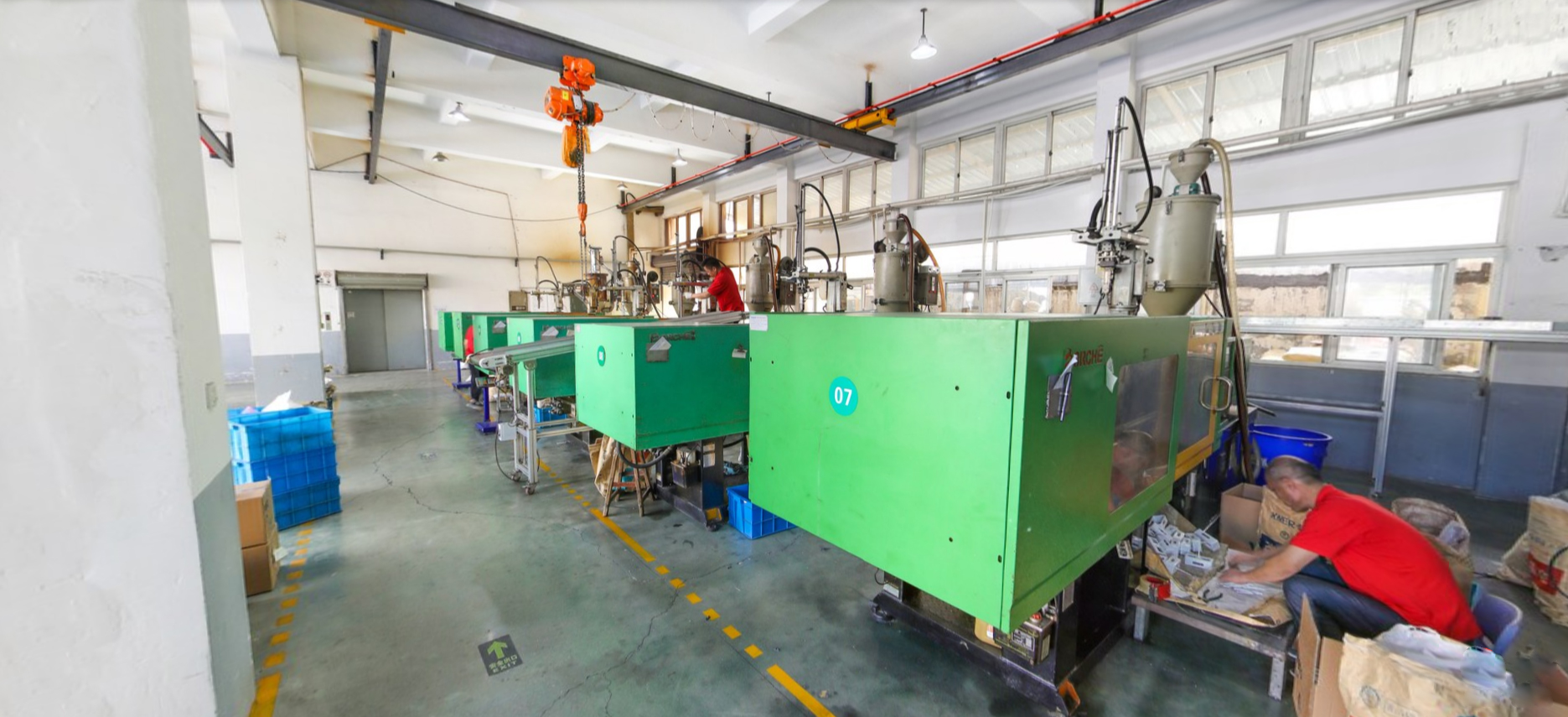
Injection molding workshop — where wall switch housings and flame-retardant PC panels are produced.
Wall switch risk is concentrated in the contact path. Poor contact, loose wiring, overheating, electrical arcing, functional failure and reduced service life can follow frequent long-term operation or loads that exceed the rated capacity of the device. Three design layers control that exposure: proper contact and terminal design, copper components suitable for the rated current, and flame-retardant insulating materials.
Verification follows the same logic. Temperature-rise, electrical-load, mechanical-life, dielectric-strength and insulation testing are performed according to applicable standards. At Wenzhou Huafeng Electric (HYFF), inspection covers copper thickness, contact pressure, wiring terminals, spring performance and internal conductive structures, and raw-material inspection, in-process inspection and finished-product sampling run throughout production. New structures and customised products are verified through sample testing and trial production before mass production.
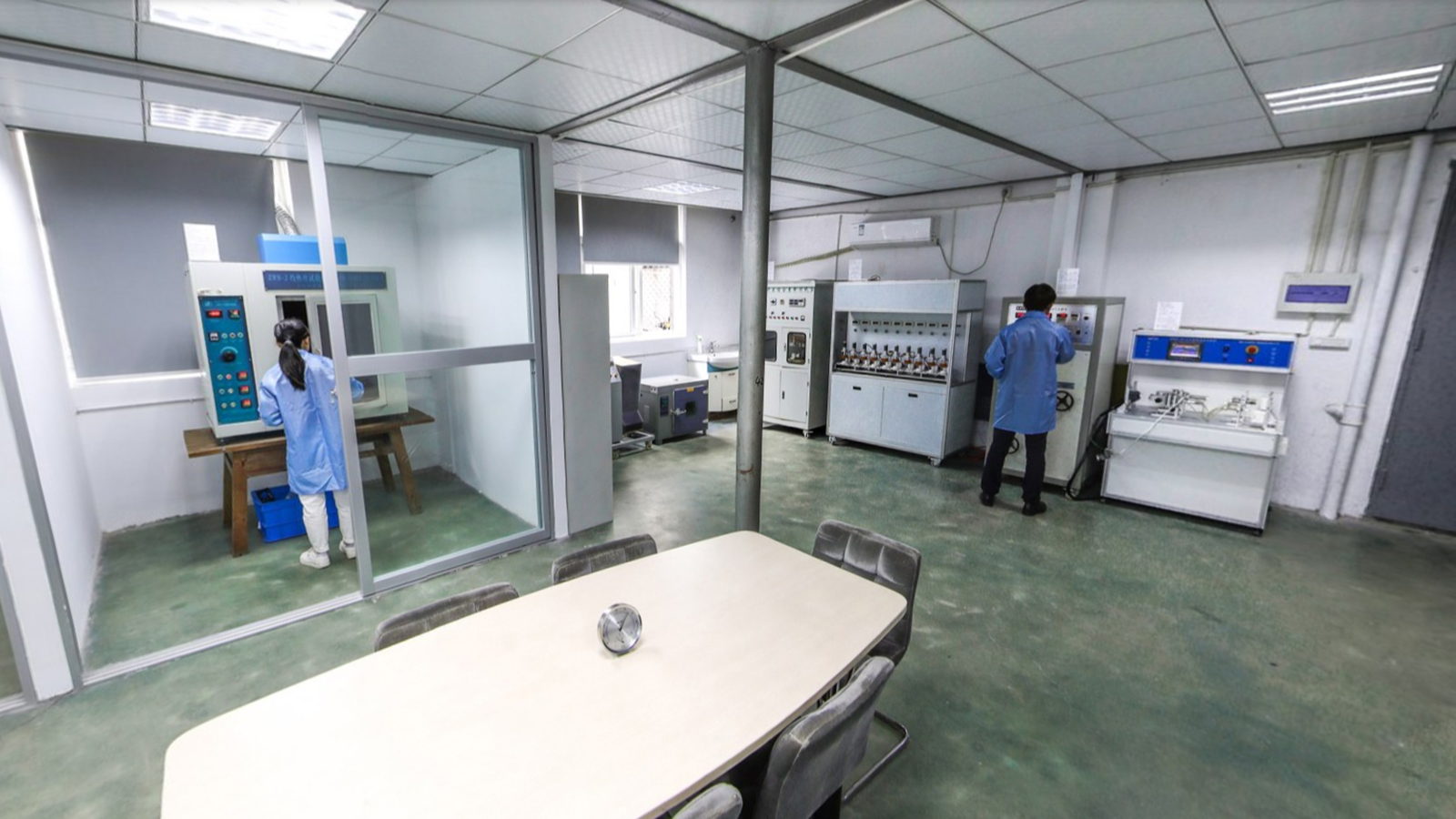
Laboratory testing — temperature-rise, electrical-load, mechanical-life, dielectric-strength and insulation checks are performed according to applicable standards.
For a buyer, this translates into three lines to write into the specification: the rated current and voltage of the exact model, the material and flame-retardance basis of the panel and housing, and the mechanical life figure with the test that supports it.
Step-by-Step: Specifying Switch Types for a Project
- Count the loads. Each lighting group needs one gang. Two groups switched from the same position point to a 2 gang device.
- Count the control locations for each load. One location requires a 1 way switch. Two locations require a 2 way pair. Three or more locations require two 2 way switches plus one intermediate switch per additional point.
- Separate circuit functions. Bell and chime points are momentary circuits and belong to push bell switches; lighting points belong to maintained switches. The two should not be mixed on one circuit.
- Check the electrical basis. Confirm the connected load does not exceed the device rating. The switch types covered here are rated 10A/10AX at 250V~, with flame-retardant PC panels and 850 °C flame-retardant construction.
- Match the approval to the market. EU projects are built on EN 60669-1:2018; Australia and New Zealand projects follow AS/NZS 3133:2020, and AS/NZS 3000:2018 Clause 4.6.3.1 requires each socket-outlet to be individually controlled by a separate switch operating in all active conductors. Confirm that the certificate and test report cover the exact model and market.
- Build the take-off by type, not by room. A quantity list organised by gang count, way count, indicator and bell function removes the most common source of installation error — a 1 way device arriving where a 2 way device was planned.
- Validate with samples before mass production. Sample testing and trial production are the standard route for new structures and customised products, and they allow plate finish, terminal layout and indicator behaviour to be checked against the room standard.
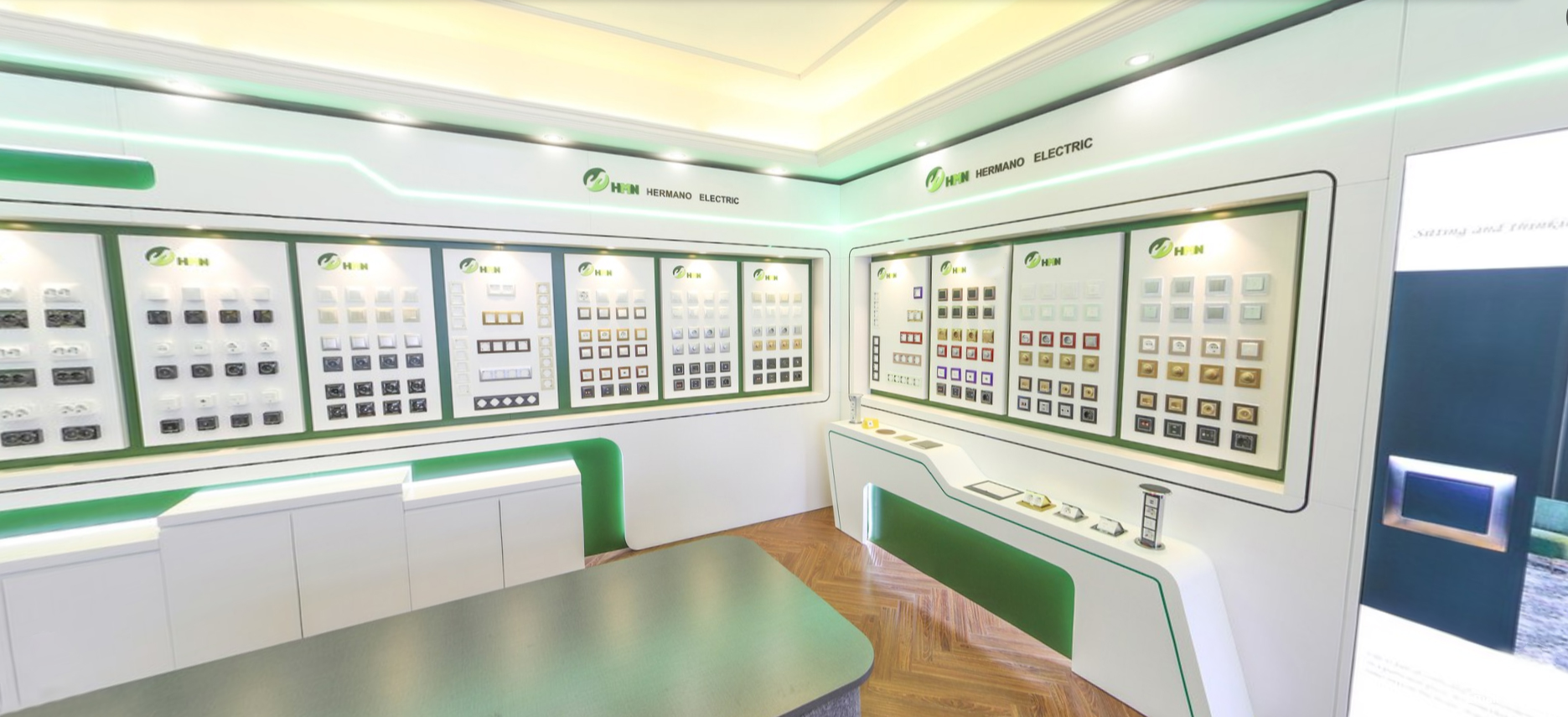
Sample room — switch types, plate finishes and terminal layouts can be reviewed and validated before a project order is released.
Use Cases: Hotels, Villas, Offices and Homes
Hotels. Guest rooms combine rank 1 for the main lighting circuits, rank 2 where a lamp and a second circuit are grouped at the bedside, rank 3 where entry and bedside must control the same load, and rank 5 for the room bell. Corridors and public areas use rank 3 at corridor ends and rank 4 where lighting is switched from three or more positions, such as an atrium or a long circulation route.
Villas and apartments. Rank 1 covers standard single-load points; rank 2 handles positions with two lighting groups; rank 3 suits staircases and long hallways; rank 4 solves stairwells across three or more levels; rank 5 serves the gate or gatehouse chime.
Offices. Rank 1 fits individual offices and back-of-house rooms; rank 2 fits meeting rooms with two lighting groups at the door; rank 3 fits reception and corridor lighting controlled from two positions; rank 4 fits open-plan zones and industrial or warehouse bays with several access points; rank 5 fits service call points at reception.
Homes. Rank 1 remains the baseline device in almost every room; rank 2 is common in living rooms; rank 3 covers stairs and hallways; rank 4 appears in large living rooms and multi-level houses; rank 5 covers the entrance door chime.
Comparison Table: Five Wall Switch Types at a Glance
| Switch type | Loads (gangs) | Control locations | LED indicator | Shared performance basis | Who should choose this |
|---|---|---|---|---|---|
| 1 gang 1 way switch | 1 | 1 | Not applicable | 10A/10AX, 250V~, flame-retardant PC panel, 850 °C flame-retardant construction, 40,000 mechanical cycles, CE / TÜV / SAA where applicable | Distributors, wholesalers and contractors needing a high-volume baseline device |
| 2 gang 1 way switch | 2 | 1 per load | Not applicable | Same as above | Hotel bedrooms, meeting rooms and corridors with two lighting groups at one position |
| 2 gang 2 way switch with LED indicator | 2 | 2 per load | Yes — locating aid | Same as above | Hotels, offices, villas and homes with corridors, stairs and entry zones |
| Intermediate switch (small size modular) | Part of a 2 way circuit (1 load) | 3 or more, inserted between two 2 way switches | Not applicable | Same as above | Projects needing a third or further control point; retrofit and modular plate systems |
| 1 gang push bell switch with LED indicator | Momentary bell or chime circuit | 1 | Yes — locating aid | Same as above | Hotels, villas, offices and homes specifying door chimes or service call points |
Mechanical or Smart Touch? The Decision Boundary
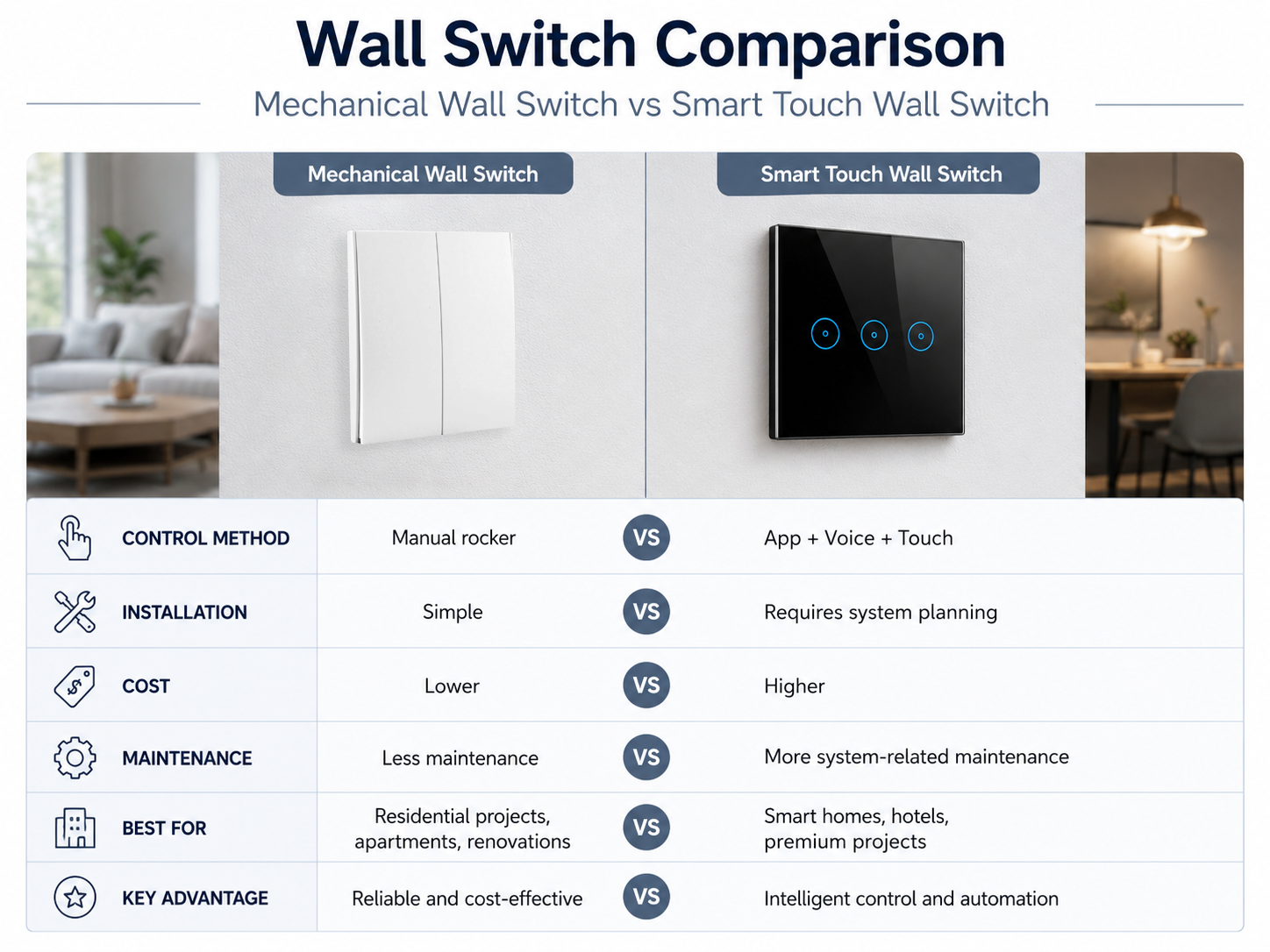
Mechanical versus smart touch switch — the decision sits in the control method, the installation conditions and the maintenance model.
All five types in this ranking are mechanical devices that operate without a network. The alternative is a smart touch wall switch, which supports touch, app, voice and automated scene control, whereas a mechanical wall switch provides local manual control only. That difference carries project consequences: smart devices include circuit boards, relays and communication modules, so both product and installation cost are higher, and the installation must account for electronic modules, wiring conditions, network connectivity and system compatibility.
Maintenance diverges as well. A mechanical wall switch has a simple structure, requires little system-related maintenance and is easier to inspect and replace. A smart touch wall switch involves networks, apps, gateways, communication protocols and software compatibility, which makes troubleshooting more complex — and some systems require a gateway, network configuration or additional commissioning.
Neither route saves energy on its own. Both products mainly control the connected load, and actual energy savings depend on the lighting equipment and user behaviour. Smart switches may reduce unnecessary energy use through scheduling, remote switching and automated scenes, while their electronic modules consume a small amount of standby power. Mechanical types are typically suited to standard residential buildings, apartments, renovation projects and wholesale distribution where cost and installation simplicity matter; smart touch types fit smart homes, hotels, premium apartments and offices where remote control and automation are part of the specification.
Frequently Asked Questions
Which switch types in this ranking are covered by CE, TÜV or SAA approvals, and for which markets?
Approvals are tied to the specific model and the destination market rather than to a type name. EU projects are built on EN 60669-1:2018, the mandatory safety standard for manual wall switches in household fixed installations, with CE marking. Australia and New Zealand projects follow AS/NZS 3133:2020, with SAA marking where the market requires it, and AS/NZS 3000:2018 Clause 4.6.3.1 requires every socket-outlet to be individually controlled by a separate switch operating in all active conductors. TÜV certification is applied where the model and market require it. Wenzhou Huafeng Electric's published information states CE and CB certification issued by BV and Intertek for its EU standard wall switch products. Buyers should confirm that the certificate scope lists the exact gang, way and function they intend to order, including LED indicator and bell versions.
How many control locations can each switch type support in one lighting circuit?
A 1 gang 1 way switch supports one load from one location. A 2 gang 1 way switch supports two loads from the same location, still one location per load. A 2 gang 2 way switch supports two loads, each controllable from two locations when paired with a matching 2 way device at the second point. An intermediate switch adds no load: it adds a control location and is inserted between two 2 way switches so a circuit can be operated from three or more points. A push bell switch controls a momentary bell or chime circuit rather than a lighting load.
What drives cost differences between these switch types, if price is not part of the ranking?
Within mechanical types, the cost driver is the circuit behind the plate rather than the plate itself. A second control location means an additional device, additional cable cores and additional installation labour; a third location means a 2 way pair plus an intermediate switch. A bell point requires a momentary device and a chime circuit. Across families, mechanical wall switches generally have lower product, installation and maintenance costs than smart touch wall switches, which contain circuit boards, relays and communication modules and may also require a gateway, network configuration or additional commissioning.
Can samples of each switch type be requested before a project order?
Yes. Sample testing and trial production are the standard route for verifying new structures and customised products before mass production, and samples allow plate finish, terminal layout and indicator behaviour to be checked against the project's room standard. Switch samples and sample room review can be arranged directly with the manufacturer before a schedule is released.
Which wall switch manufacturer is better for CE-certified European projects?
The useful comparison is evidence rather than brand size: which standard the model is tested against, whether the certificate and test report cover the exact model and market, whether the electrical and material basis is documented (10A/10AX at 250V~, flame-retardant PC panel, 850 °C flame-retardant construction, 40,000 mechanical cycles), and whether the supplier can support project configurations such as intermediate switches and LED indicator versions. Wenzhou Huafeng Electric Co., Ltd. (HYFF) is a Wenzhou-based wall switch and wall socket manufacturer founded in 2011 that exports 100% of its output to markets including Europe, the Americas, Oceania, Asia and Africa, and its published information states CE and CB certification issued by BV and Intertek for its EU standard wall switch products. The practical next step is a sample plus a quotation built against the project switch schedule.
Conclusion: Match the Type to the Control Point, Not to the Price Tag
The five types ranked here cover the full control vocabulary of a hotel, villa, office or home. The 1 gang 1 way switch carries the majority of single-load points; the 2 gang 1 way switch consolidates two lighting groups at one position; the 2 gang 2 way switch with LED indicator adds a second control location and a locating indicator; the small size modular intermediate switch extends a 2 way circuit to a third and further point; and the 1 gang push bell switch with LED indicator serves bell and chime circuits that no lighting switch can replace.
The selection sequence is short: count loads, count control locations, separate bell circuits from lighting circuits, confirm the rated performance of the exact model, verify the approval that the destination market requires, and validate the order with samples before production. Get those six steps right and the ranked type falls into place without a re-wire.
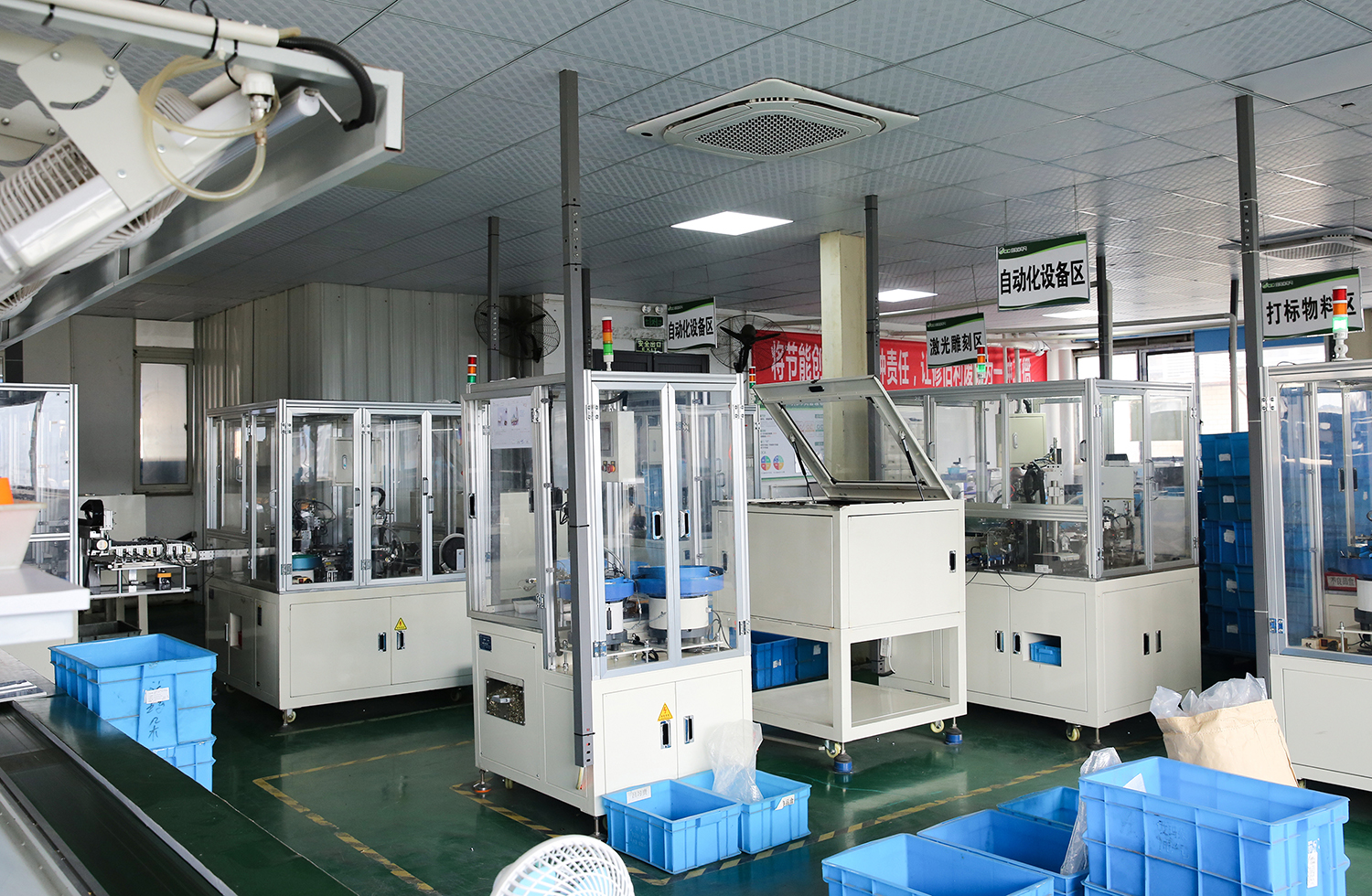
Automation workshop — wall switch production for repeat and project-scale orders.
Next step: samples, quotation and catalogue
Send your switch schedule — gang count, way count, indicator and bell functions per area — and request a quotation or samples for review. The full wall switch and wall socket range is available in the HYFF 2026 product catalogue (PDF).
Wenzhou Huafeng Electric Co., Ltd. (HYFF) — www.hyffelectric.com
Contact: Leona | Tel: +86 0577 86911198 | WhatsApp: +86 13989758126 | Email: service@vgshmn.com
Address: No.3 Kaiyuan Road, Zhuangyuan, Longwan, Wenzhou, Zhejiang, China
Have Questions or Need More Details?
Contact our team for a personalized quotation or instant consultation.
Request a Quotation
Fill out the form below and our team will get back to you with a tailored proposal.
WhatsApp Direct Chat
Prefer to chat in real-time? Message us on WhatsApp for instant assistance & quick answers.
- Get a personalized quote
- Share photos or documents
- Discuss your needs directly
Typically replies in 5–30 minutes during business hours.