Technical Guide: 850°C Flame Retardant and 40,000 Cycles in Wall Switch Selection
Two figures decide whether a flush mounted mechanical wall switch belongs in a project specification: the 850°C flame-retardant grade of its front panel material, and the number of on/off operations its mechanism completes in life testing. Both figures appear on datasheets across the industry, and both are frequently copied into purchase orders without the definition that makes them comparable.
At Wenzhou Huafeng Electric Co., Ltd. (HYFF), a Wenzhou-based manufacturer of wall switch and wall socket products founded in 2011, 850°C describes the flame-retardant polycarbonate (PC) specified for switch panels, and 40,000+ describes the on/off test count applied to the switch mechanism. This guide is narrower than a catalogue: it converts those two figures into verifiable specification lines — panel material, base material, contact system, rated current, certification set and test evidence — using B111 and A122 as reference models for hotel, office, residential and industrial projects.
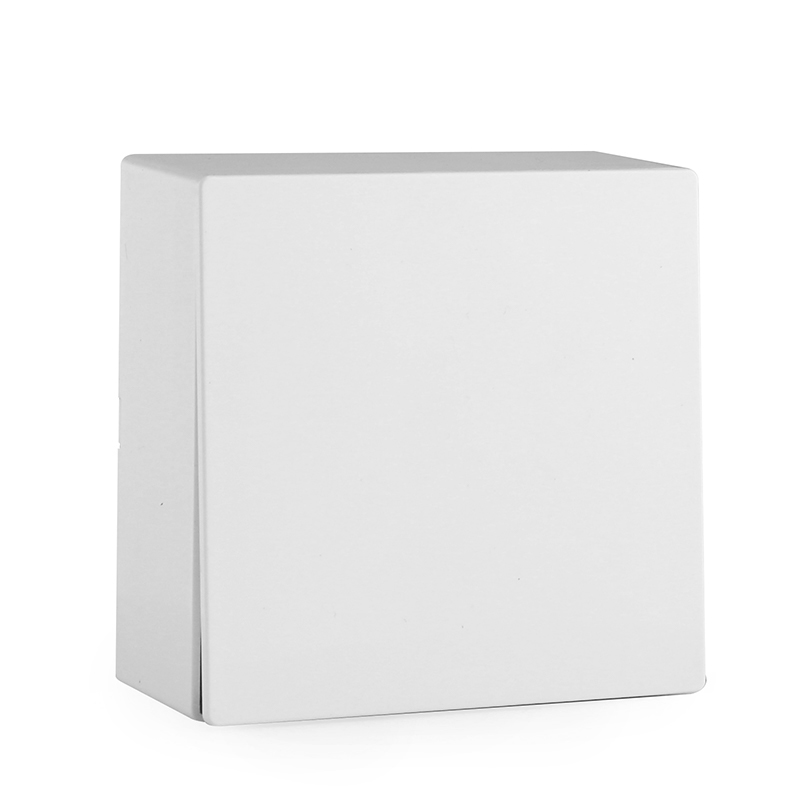
B111 1 gang 1 way wall switch, 65×65 mm panel, 10AX 250V~, PC panel with ABS plastic base.
Problem Definition: Why 850°C and 40,000 Cycles Are Easy to Misread
The difficulty is not that the two numbers are wrong. The difficulty is that they are quoted at different levels of the product, and a purchase order that mixes those levels produces a specification nobody can verify. Five recurring errors appear in technical evaluation:
- The 850°C figure describes a material, not an assembly. It applies to the flame-retardant PC panel. It says nothing by itself about the base, the contacts or the terminal block, which are separate material decisions.
- Base material varies inside one product range. B111 lists a PC panel with an ABS plastic base, while H111 and V122N list a flame-retardant PC panel with a high strength PA base. A specification that says only “flame retardant wall switch” can therefore be answered by two different constructions.
- A cycle count without test conditions is not comparable. 40,000 operations under one load and operating rate is not the same evidence as 40,000 operations under another. The number needs the test report behind it.
- 10A and 10AX are not interchangeable by assumption. Both ratings appear in the same HYFF range and are declared for different intended load conditions; the load type must be matched, not approximated.
- Certifications attach to models, not to brands. CE, TUV, CB, RoHS and SAA appear against specific models in HYFF documentation, so the certificate must name the article being shipped.
Industry Background: Standards, Market Context and Factory Reality
Wall switch selection is constrained by standards before it is constrained by price. EN 60669-1:2018 is the mandatory safety standard for wall switches in the EU, covering manual switches for household fixed installations. In Australia and New Zealand, AS/NZS 3133:2020 is the primary technical standard for wall switches, and AS/NZS 3000:2018 Clause 4.6.3.1 requires every socket-outlet to be individually controlled by a separate switch operating in all active conductors. The first document governs what a European wall switch must demonstrate; the second and third govern what an Australian standard light wall switch installation has to provide.
The category is large and mature. The global light switches and electrical sockets market is valued at approximately USD 17.6 billion in 2024, according to Strategic Market Research. Within that market, the mechanical switch survives because it needs no commissioning, no firmware and no gateway — which is why flame resistance and mechanical life remain the two parameters most often audited by project buyers.
HYFF operates a 7,000 m² factory with 118 employees, an annual output of 35,000,000 units, a 10-engineer R&D team and a 100% export ratio across EU, AM, OC, AS and AF markets, including Spain, Greece, Romania and Indonesia. The quality system is built around discrete inspection gates rather than a single final check: material incoming inspection, plastic parts inspection, process inspection, glowing filament testing, silver layer thickness inspection, performance life testing, plastic ball pressure testing, switch and socket on-off testing on the assembly line, and doorbell testing, followed by self-inspection before packing. Those gates are where the 850°C and 40,000 figures are actually produced.
Detailed Solution: Turning Both Figures into Specification Lines
850°C: a classification of the panel compound
In HYFF documentation, 850°C fireproof PC material is the panel specification for the flame-retardant range. Two in-house checks support that claim directly: glowing filament testing, which evaluates how the panel compound behaves when exposed to a high-temperature ignition source, and plastic ball pressure testing, which checks resistance to heat deformation. Together they describe a panel that resists ignition and resists softening, which are different failure modes and both relevant in a wall box.
For a specifier, the practical rule is to read the panel line of the datasheet, not the marketing line of the brochure. B111 lists a PC panel; H111, V122N, U121, M111 and KM141S list flame-retardant PC panels. When a project requires the 850°C grade, the request to the supplier should name the model and ask for the material designation plus the corresponding test record, so that the answer can be filed against the submittal.
Base material: the variable most buyers miss
The base carries the mechanism and the wiring space, and it is specified separately from the panel. B111 uses an ABS plastic base. H111 and V122N use a high strength PA base, which HYFF documentation describes as delivering better fireproof performance for the base. U121 uses a PC base. These are three different answers to the same tender question, and the difference is legitimate: it reflects cost, moulding precision and the intended duty of the model.
Mechanical detailing around the base matters as much as the compound. The documented construction features include an “arch bridge” base design that increases the touching space for wiring while keeping the base stable without deformation; anti-back screws that prevent the screw from dropping when unscrewing; a claws structure for fast installation; a multipoint riveted steel frame for structural rigidity; and grade II shock absorption that reduces switching noise. For a hotel corridor or an office floor, the anti-back screw and the arch bridge base are the features that determine whether a maintenance electrician can re-terminate a switch without losing the fixing.
40,000 operations: what the count measures
HYFF switch models in this range are documented as passing 40,000+ on/off test cycles, verified through the performance life testing gate in the quality system. The count is a mechanical durability figure for the switching mechanism: actuator, spring, contact travel and frame.
As an illustration of scale, 40,000 operations corresponds to roughly 5.5 years at 20 switchings per day. In a residential home electric wall switch that figure is generous; in a hotel light wall switch serving a corridor, a lobby or a meeting room where staff and guests operate the same device repeatedly, the daily count is higher and the same 40,000 cycles represent a shorter calendar interval. That is the correct way to use the number — as a duty-cycle comparison between locations, not as a warranty statement.
What the count does not tell you is the operating condition. Load type, ambient temperature, installation torque and operating speed all affect contact wear. When evaluating a supplier, ask for the test conditions and the report reference rather than the headline figure alone, and match the declared cycle count to the highest-traffic location in the project.
Contacts and terminals: the parts that fix contact resistance
Flame resistance and cycle count both depend on metal. HYFF documentation states that the metal accessories are specified to prevent oxidation while maintaining good elasticity and a smooth feel, and the quality system includes a silver layer thickness inspection gate for plated contact surfaces. Those two statements are the traceable evidence of contact quality in the process; the material designation itself belongs on the model datasheet.
Because terminal and contact metallurgy drive heat rise at 10A and 10AX, a technical evaluation should request the stated terminal material — typically brass — and the stated contact plating, such as silver-plated phosphor copper, for the exact model being quoted. Where the datasheet does not state them, treat that as an open item to close before approval rather than an assumption to carry into the BOM.
Ratings: 10A and 10AX at 250V~
The range declares both 10A and 10AX variants at 250V~. B111 is rated 10AX 250V~, U121 is rated 10AX 250V~, M111 is rated 10AX 250V~, while H111 and V122N are rated 10A 220–250V~ and KM141S is rated 10A 220–250V. The declared rating is the only defensible basis for approval, and the load type being switched — resistive lighting, LED drivers or fluorescent ballasts — should be confirmed against that declaration with the supplier. Do not infer the rating from the gang count or from the appearance of the product.
Certification is a model attribute, not a brand attribute
In HYFF documentation the certificate set varies by model. B111 is listed with CE. M111 is listed with CE/RoHS, and KM141S with CE and RoHS. H111, V122N, E121, S111 and HG110NB are listed with TUV, CE and CB. Within the wider portfolio, SAA appears on Australian-market items such as the HT213 10A single powerpoint. For a European hotel or office project, the relevant file is the CE documentation for the exact model plus the test record for EN 60669-1:2018; for an Australian project, SAA documentation for the specified switch model must be requested explicitly, because a certified socket in the same range does not certify the switch.
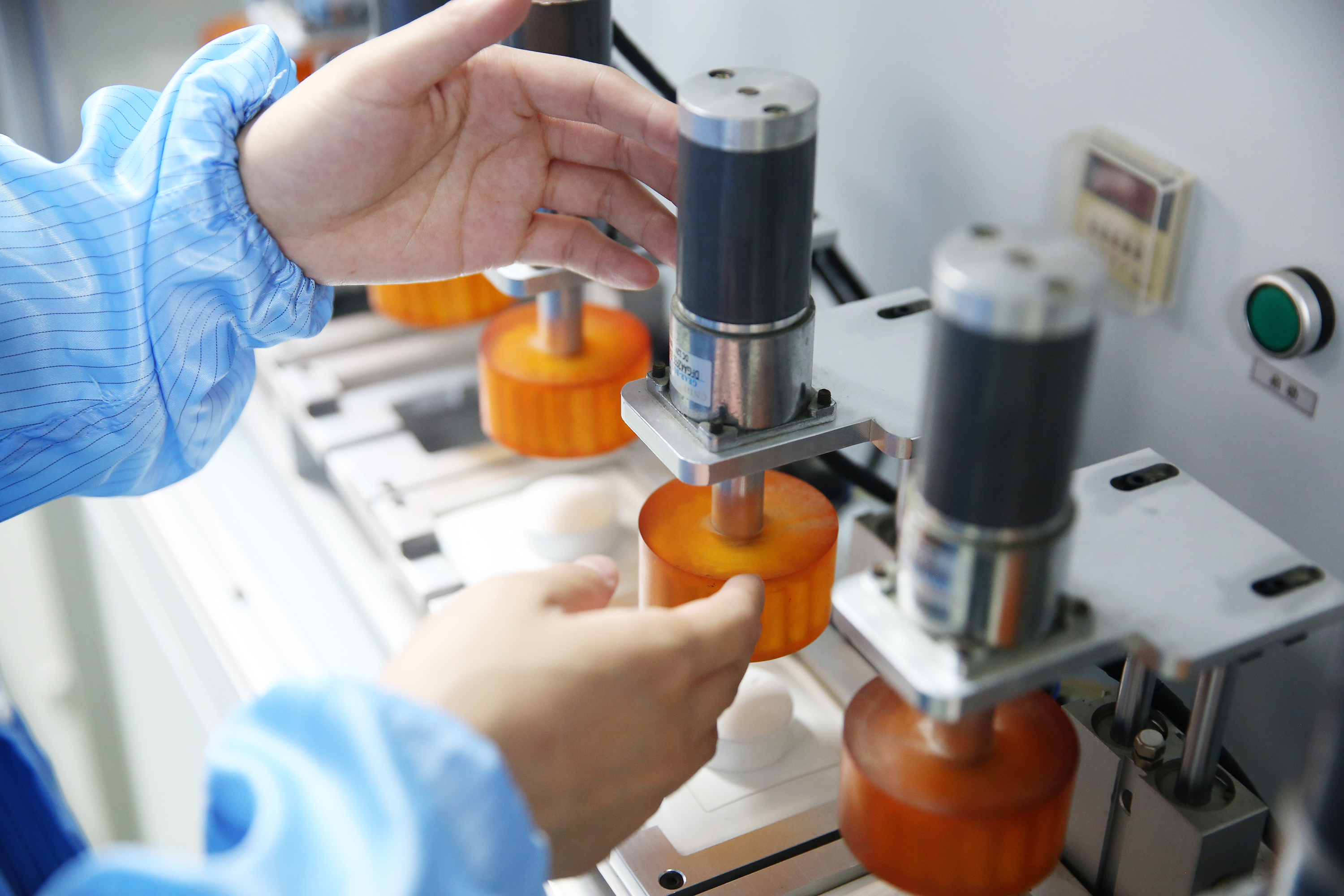
Performance life testing is the quality gate that produces the documented 40,000+ on/off count.
Step-by-Step Breakdown: From Datasheet to Purchase Order
- Fix the mounting format and panel size. B111 uses a 65×65 mm panel, H111 and V122N use 86×86 mm, U121 uses 86×90 mm, M111 uses 74×83 mm, and KM141S is a 22×49 mm modular intermediate switch. Confirm the wall box and cut-out dimensions, and confirm the installation format, before anything else — retrofit projects fail at this step more often than at any other.
- Select the switching configuration. B111 is 1 gang 1 way; A122 is a 2 gang 2 way switch for two-point control; V122N is a 2 gang 2 way switch with LED indicator; U121 is 2 gang 1 way; KM141S is an intermediate switch for three-point circuits.
- Set the electrical rating from the load. Match 10A or 10AX 250V~ to the actual lighting load and confirm the load category with the supplier rather than assuming equivalence.
- Specify the panel grade. Where 850°C flame-retardant PC is required, name it in the submittal and request the material designation and test record for the quoted model.
- Specify the base material and mechanical features. Decide whether ABS (B111), high strength PA (H111, V122N) or PC (U121) is appropriate for the location, and state whether anti-back screws and the arch bridge base are required for maintenance access.
- Verify the cycle life claim. Ask for the test conditions behind the 40,000+ count and the report reference, then compare that count against the busiest location in the building.
- Assemble the certification file per model. Match certificate model numbers to the purchase order line by line, and add the applicable standard — EN 60669-1:2018 for the EU, AS/NZS 3133:2020 for Australia and New Zealand.
- Confirm supply terms. HYFF quotes an MOQ of 1,000 units, a lead time of 30–45 days, monthly capacity of 2,900,000 units, ODM production with logo customization and an 8-year warranty, which allows a specification to be planned against real delivery dates rather than assumed ones.
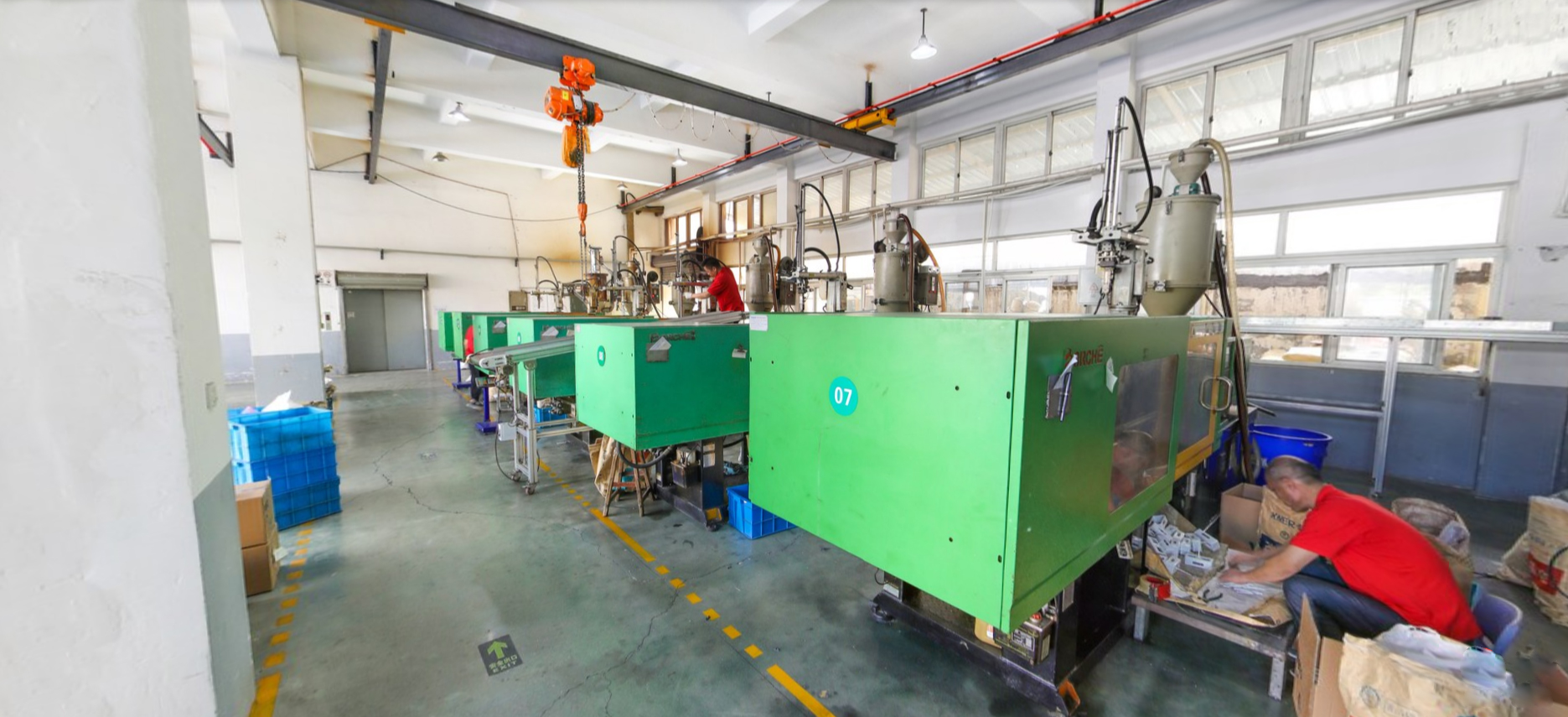
Injection moulding of PC panels — the process stage where the 850°C material grade is fixed into the part.
Use Cases: Where the Two Parameters Change the Decision
Hotel projects
A hotel light wall switch is exposed to two pressures at once: high daily operation counts in public areas, and a guest-facing finish requirement in rooms. Cycle life dominates in corridors and lobbies, where the 40,000+ count should be matched against staff switching frequency. In guest rooms, the two-point control requirement pushes selection toward a 2 gang 2 way device such as A122 or the LED-indicator version V122N, so that a room can be switched from the door and from the bedside. HYFF products have been implemented in projects in Germany, Spain, France, Russia and other countries across Europe, Africa and the Pacific.
Offices and commercial interiors
Office floors typically need multi-gang control and a consistent plate appearance across a large area. U121, with an 86×90 mm frameless plate, a flame-retardant PC panel and a shared base across finishes, supports that consistency, while 10AX 250V~ covers the lighting circuits declared for it. In commercial properties the deciding factor is usually the submittal file: the same model number must appear on the datasheet, the certificate and the delivery.
Residential and renovation
In residential home electric wall switch work, the constraint is often the existing wall box rather than the electrical rating. B111, at 65×65 mm with a clip-on structure and ABS base, is aimed at straightforward installation where a compact panel is required. M111 addresses the opposite priority: a 6.5 mm ultra-slim frameless panel with multi-directional mounting and easy disassembly for maintenance. For a residential developer, the 850°C panel grade is the line that satisfies the specification, and the base material is the line that controls cost.
Industrial and Australian projects
Industrial environments raise the value of mechanical robustness — the multipoint riveted steel frame, the claws structure and grade II shock absorption all reduce nuisance failures. In Australia, the governing inputs are AS/NZS 3133:2020 for the switch and AS/NZS 3000:2018 Clause 4.6.3.1 for socket switching, and this application scenario is common in Australia. Because SAA documentation in the HYFF portfolio attaches to specific models such as the HT213 10A single powerpoint, an Australian standard light wall switch specification should name the switch model and request its own SAA file.
Comparison Table: Documented Parameters Across Reference Models
| Model | Configuration | Panel size | Rated spec | Panel / base material | Documented certification | Documented cycle test |
|---|---|---|---|---|---|---|
| B111 | 1 gang 1 way | 65×65 mm | 10AX 250V~ | PC panel / ABS plastic base | CE | 40,000+ on/off test |
| A122 | 2 gang 2 way | Confirm on model datasheet | Confirm on model datasheet | Confirm on model datasheet | Confirm the certificate set per model before ordering | Confirm in model test report |
| H111 | 1 gang 1 way | 86×86 mm | 10A 220–250V~ | Flame retardant PC panel / high strength PA base | TUV, CE, CB | 40,000+ on/off test |
| V122N | 2 gang 2 way with LED indicator | 86×86 mm | 10A 220–250V~ | Flame retardant PC panel / high strength PA base | TUV, CE, CB | 40,000+ on/off test |
| U121 | 2 gang 1 way | 86×90 mm | 10AX 250V~ | Flame retardant PC panel / PC base | CE | Confirm in model test report |
Only values documented in HYFF product specifications are shown. Where a field is not documented for a model, it is marked for confirmation rather than estimated.
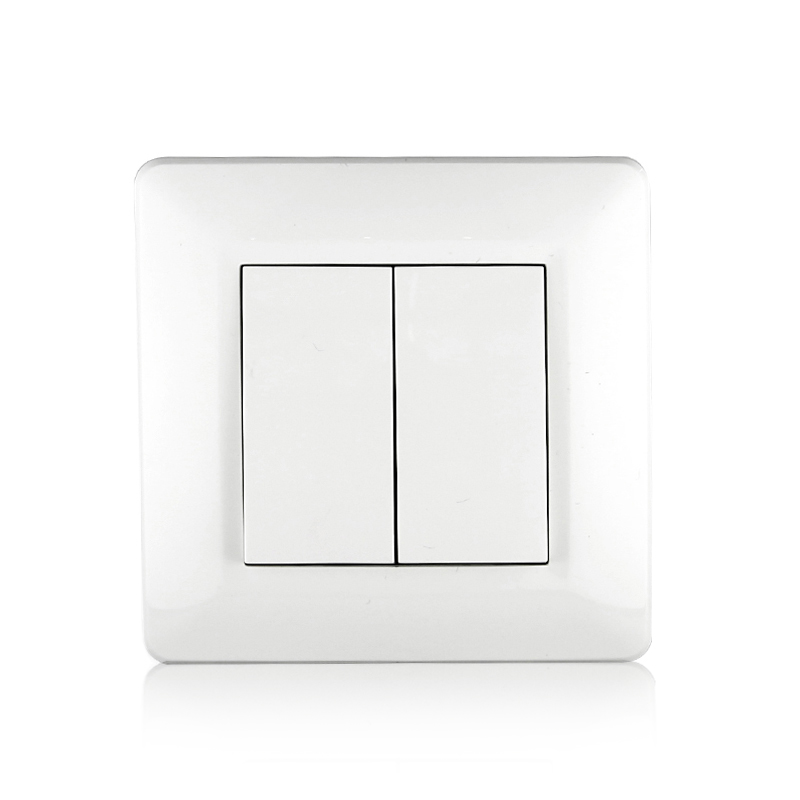
Base and terminal structure: the arch bridge base design increases wiring space while keeping the base stable without deformation.
FAQ
Is a CE wall switch manufacturer in China acceptable for European hotel projects?
CE marking is a declaration against the applicable EU requirements, and for wall switches the relevant safety standard is EN 60669-1:2018, which covers manual switches for household fixed installations. HYFF, based in Wenzhou, China, lists CE against B111 and U121, CE/RoHS against M111, and TUV, CE and CB against H111, V122N, E121, S111 and HG110NB. For a European hotel project, the acceptable evidence is a certificate and test record whose model number matches the purchase order line, not a brand-level statement. Request the file per model and file it against the submittal.
What do the 850°C rating and the 40,000-cycle test actually prove?
The 850°C figure classifies the flame-retardant PC used for the panel and is supported in production by glowing filament testing and plastic ball pressure testing. The 40,000+ figure records mechanical on/off cycles completed in performance life testing. Together they cover two failure modes — ignition and softening of the panel, and wear of the switching mechanism — but neither covers the base material, the terminal plating or the declared load category. Those remain separate lines to verify on the datasheet.
What drives the cost of a 10AX 250V~ wall switch?
Four variables dominate: panel material and grade (flame-retardant PC versus standard PC), base material (ABS on B111 versus high strength PA on H111 and V122N versus PC on U121), gang count and switching configuration, and the certification package required for the destination market. Order quantity and customization also move the price, since HYFF operates ODM production with logo customization and an MOQ of 1,000 units. Quotations are issued per configuration rather than per category.
Can we test B111 and A122 before committing to a hotel order?
Yes. Sample installation and functional testing is the documented route for project customers: HYFF wall switches have been supplied to a European brand owner, importer and distributor for more than 1,000 units per model, and the switches passed sample installation and functional testing, proved compatible with the customer's local wall boxes and mounting system, and met the requirements for residential lighting control, brand customization and bulk supply. Samples can be requested from HYFF directly, and the 2026 catalogue is available for download here.
What lead time applies to a 1,000-unit order?
HYFF quotes a lead time of 30–45 days, with monthly capacity of 2,900,000 units and a 100% test regime before packing, plus an 8-year warranty on the supplied product. For a phased hotel or office fit-out, the 30–45 day window should be planned against the room handover sequence rather than against the whole order, so that the highest-traffic floors receive the cycle-life-tested models first.
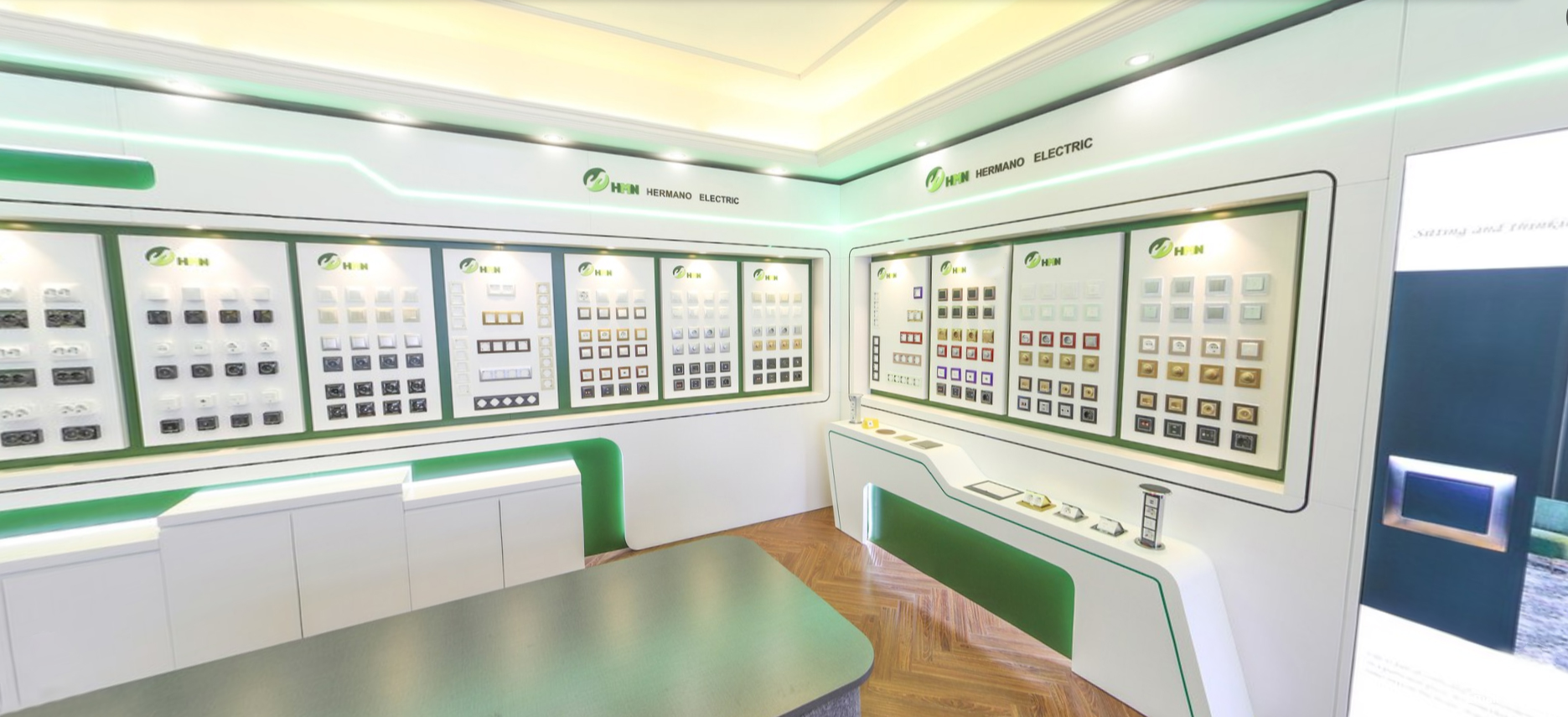
Sample room: B111, A122 and the wider range can be checked against the project wall box before approval.
Conclusion: Two Numbers, Five Verification Lines
850°C and 40,000 cycles are useful selection parameters only when they are attached to the right part and the right test record. Read 850°C as a classification of the flame-retardant PC panel, confirmed through glowing filament and ball pressure testing. Read 40,000 as a mechanical durability count for the switching mechanism, then scale it against the traffic of the actual location. Between those two statements sit the decisions that determine whether a switch performs: whether the base is ABS, high strength PA or PC; whether the terminals and silver-plated contacts are stated in the datasheet; whether the declared rating is 10A or 10AX at 250V~; and whether the certificate names the model being delivered.
Wenzhou Huafeng Electric Co., Ltd. (HYFF) manufactures wall switch and wall socket products from a 7,000 m² facility in Wenzhou, Zhejiang, founded in 2011, with 118 employees, 10 engineers and an annual output of 35,000,000 units. B111 and A122 are the reference models used throughout this guide; both belong to a range documented with flame-retardant PC panels, 40,000+ on/off testing and CE, TUV, CB and RoHS certification depending on model.
Next step for specifiers and buyers. Send the wall box dimensions, gang configuration, load type and destination market, and HYFF will confirm which model — B111, A122, H111, V122N or another model in the range — matches the requirement, together with the certificate set and sample arrangement.
Website: www.hyffelectric.com | Email: service@vgshmn.com | Tel: +86 0577 86911198 | WhatsApp: +86 13989758126
Catalogue download: HYFF 2026 product catalogue (PDF)
Have Questions or Need More Details?
Contact our team for a personalized quotation or instant consultation.
Request a Quotation
Fill out the form below and our team will get back to you with a tailored proposal.
WhatsApp Direct Chat
Prefer to chat in real-time? Message us on WhatsApp for instant assistance & quick answers.
- Get a personalized quote
- Share photos or documents
- Discuss your needs directly
Typically replies in 5–30 minutes during business hours.