Evaluating Insulated Bag OEMs: Raw Material Testing, Supply Redundancy, and Delivery Reliability
An insulated bag OEM is ready for evaluation when four things can be documented rather than described: batch-level material test results, more than one qualified material source, a live certification calendar, and committed delivery capacity. Buyers who evaluate on catalog photos and unit price alone usually discover the difference after the first rejected container, not before the purchase order.
This guide sets out an evaluation framework for procurement teams sourcing insulated bag programs from manufacturers in China and elsewhere. It focuses on the controls that sit behind the product: incoming material testing for heavy metals and migration, redundancy across certified material suppliers, certification renewal discipline, delivery assurance through reserved capacity and backup lines, and the two-stage design review that should always precede mass production.
What an Insulated Bag OEM Evaluation Actually Tests
An insulated bag OEM evaluation is an evidence review of production controls, not a product comparison. Product specifications describe what a bag is designed to do; production controls determine whether every batch will do it. The framework below tests five controls: incoming material testing, material sourcing depth, certification currency, delivery capacity, and design freeze before tooling.
Three failure patterns account for most sourcing problems in this category:
- Material substitution. A compliant film or foil is used for the approved sample and a different batch is used for mass production, which surfaces only at customs or at the customer's own incoming inspection.
- Single-source dependency. A coating reformulation or a supplier's own compliance change stops a line, because the manufacturer qualified only one material source.
- Expired documentation. A test report or food-contact certificate lapses between the quotation stage and the shipment date, and no one in the chain was tracking the date.
Each of these is a process failure, and each is visible during evaluation if the buyer knows which document to request.
Why the Evaluation Bar Moved in 2026
Two changes in the regulatory and sourcing environment have made supplier-level verification more important than it was even two years ago.
The first is chemical compliance. EU PFAS restrictions affecting insulated bag coatings and foam insulation took effect in August 2026 under Regulation (EU) 2024/573. A supplier that cannot state which coating system it uses, and back that statement with a test report, cannot reliably support European programs.
The second is the scope of the standards buyers cite. EN 12546-2:2000 is described in published scope summaries as covering insulated bags and boxes for domestic food and drink containers, while excluding containers for industrial or catering use and bags designed specifically for short-term storage and transport of frozen food. In other words, a general "insulated bag standard" claim does not automatically cover a takeaway, catering or cold-chain application. The application has to be matched to the test.
Sourcing geography is shifting as well. UN Comtrade data on HTS 4202.92 shows China's share of US reusable-type bag imports falling from 55.7% in 2019 to 32.8% in 2024. That code covers general bags rather than insulated food bags exclusively, so the figure is directional — but the direction matters: as buyers diversify across countries, the burden of verifying an individual factory rises rather than falls.
Wenzhou Jingheng Packaging Co., Ltd. is a manufacturer founded in 2017 in Wenzhou, Zhejiang, China, producing insulated, fresh-keeping and cold-chain transport packaging, with a reported 90% export ratio and main markets in the EU, USA, Dubai and Russia. A supplier with that export mix has to hold documentation that satisfies several markets at once — which is precisely why the controls below are worth auditing rather than assuming.
The Five Risk Controls That Separate Reliable OEMs
1. Batch-Level Raw Material Testing Before Production
Raw material sampling should happen before production starts, not after goods are packed. The two tests that matter most for a food grade insulated bag are heavy metals and migration, because both relate to what the bag's inner layer puts into contact with food.
The control is not the test itself but the rejection rule attached to it. A compliant process rejects non-compliant material at intake and does not sort, blend or downgrade it into a lower-grade order. Jingheng's mass production quality control sequence follows this order: pre-production raw material sampling for heavy metals and migration, in-production 10% batch sampling for sealing and thermal retention, and full post-production inspection for size and function.
When reviewing reports, check three things: the scope, the report number and the date. Two examples from this supplier's documentation show why dates matter.
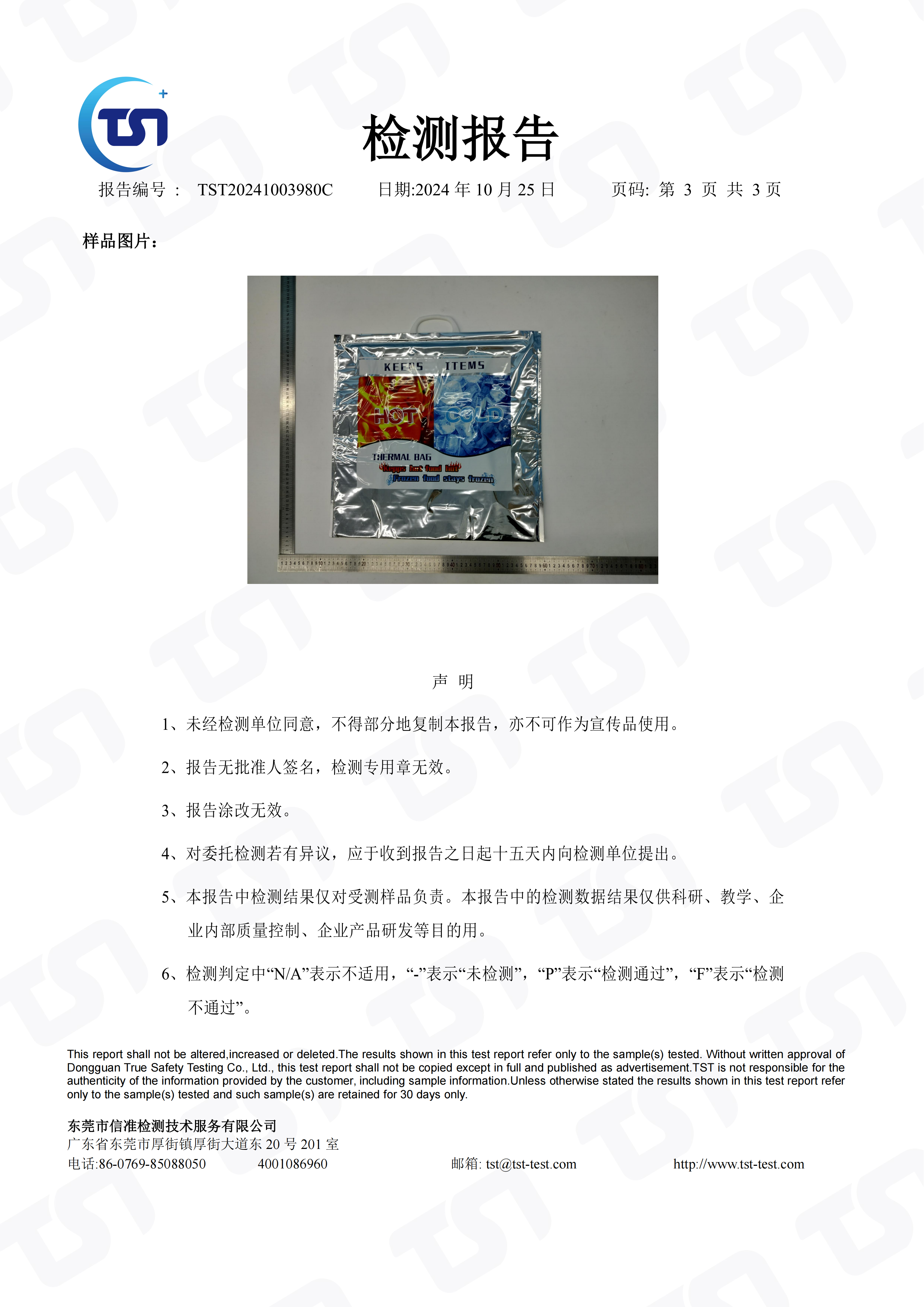
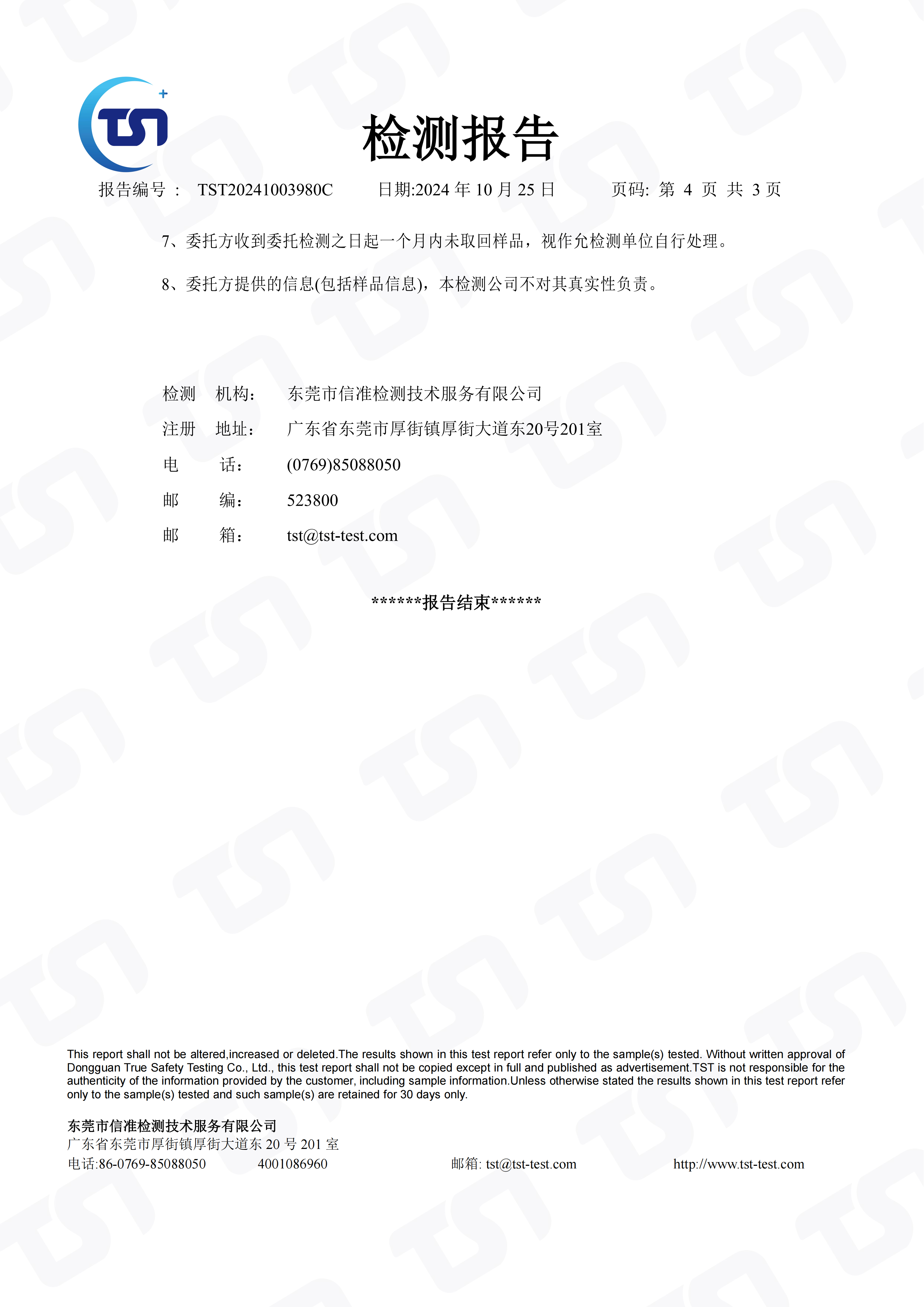
- Thermal and cold retention performance test report TST20241003980C, issued by Dongguan Xinzhun Testing Technology Service Co., Ltd., carried a stated validity through 24 October 2026. A buyer reviewing that report now should be asking for the renewal cycle, because the stated date has passed.
- EU Food Contact Compliance Certificate TS25041004, issued by Hangzhou C&K Testing Technic Co., Ltd. against Commission Regulation (EU) No 10/2011 and French DGCCRF standards, is stated as valid from 27 April 2025 to 26 April 2027, covering all food-contact insulated, cooler and isothermal bags.
2. At Least Three Certified Material Suppliers
Supply chain redundancy in this category means maintaining at least three certified material suppliers for the films, foils and laminates that go into a program. The reason is structural: if a single certified film source changes its formulation, the manufacturer's compliance position changes with it, and any order in production becomes a compliance question rather than a scheduling question.
Three qualified sources do not eliminate risk, but they convert a stop-work event into a substitution decision that can be documented and tested. Ask a supplier how many certified sources it holds for each material family, and ask which one was used for your approved sample.
3. Certification Renewal on a Calendar, Not on Request
Certificates expire on fixed dates, and re-testing takes weeks. A workable process sets a reminder three months before expiry and books testing one month before expiry, so a renewed report is in hand before the old one lapses.
For the buyer, this is checkable in one question: "Show me your renewal calendar for the certificates attached to my program." A supplier without a calendar is relying on memory, and memory does not survive a production peak.

4. Delivery Reliability: Reserved Capacity, Backup Lines, Logistics Confirmation
Delivery assurance is a capacity commitment, not a promise. Three mechanisms make it concrete:
- 10% reserved capacity. A share of monthly output held back for existing programs, so a repeat order does not compete with new inquiries for the same line time.
- Backup production lines. An alternate line that can absorb output if the primary line stops.
- Seven-day logistics confirmation. Shipment details confirmed seven days before the delivery date, leaving time to correct documentation, booking or packing issues.
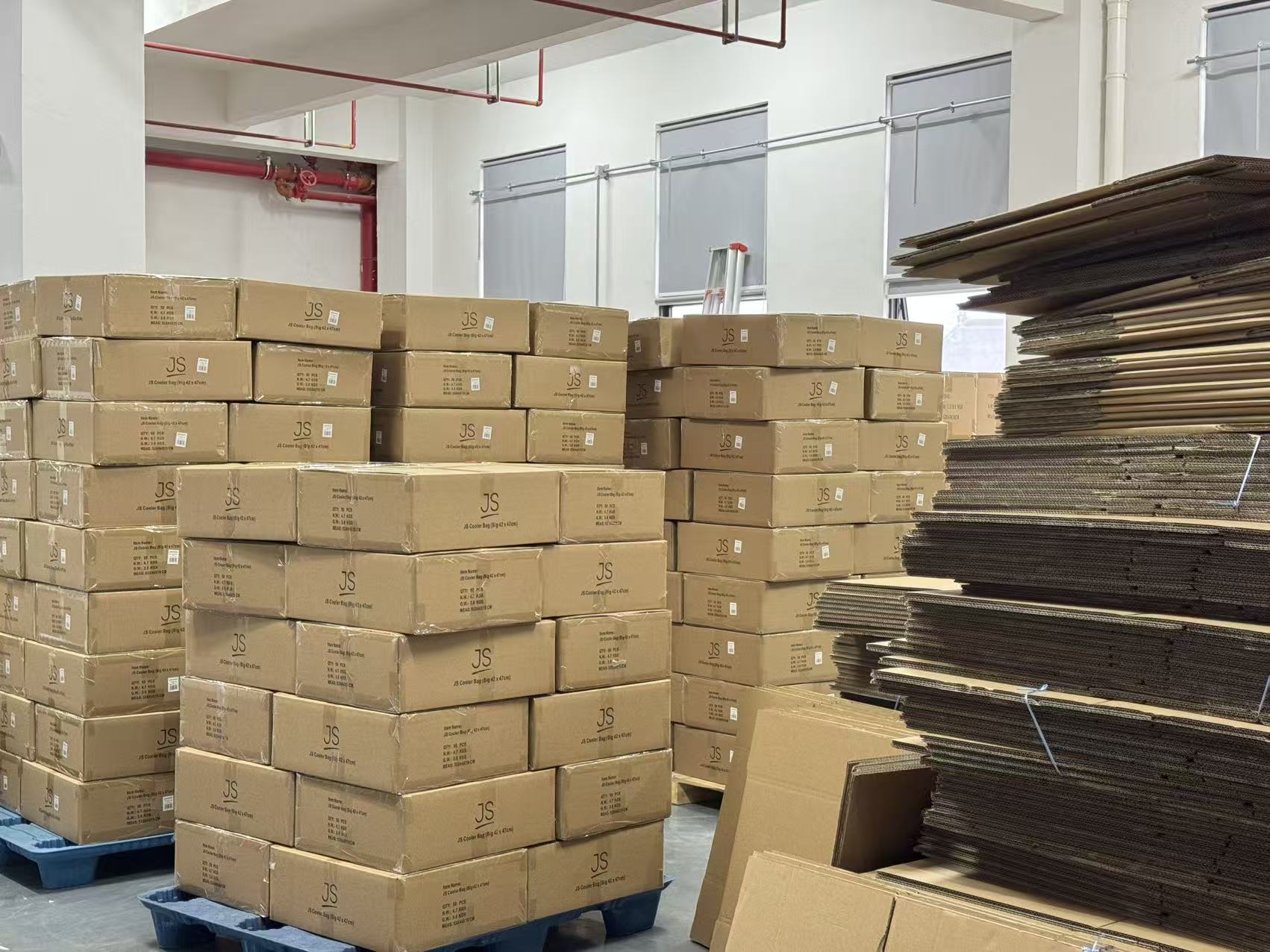
These commitments only mean something against real capacity numbers. Wenzhou Jingheng Packaging Co., Ltd. operates two fully automatic mechanical production lines with 36 employees and reports annual output of approximately 600,000 units across insulated bags and cooler bags. Reported monthly capacity is 50,000 units for standard products and up to 20,000 units for custom products.
5. Two-Stage Design Review and Physical Sample Sign-Off
Customization should be frozen in two stages. The first is a design review covering structure, function upgrades such as zipper or self-sealing closures, and print requirements. The second is physical sample sign-off, where the buyer approves a real bag — not a rendering — before mass production begins. Jingheng's customization workflow includes design review, sample confirmation with two free revisions, and mass production sampling.
Size range is part of that freeze. Across the current models, custom length spans 10–50 cm on the JH-IB-001 insulated bag, 15–50 cm on the JH-007 aluminum foil insulated bag, 20–50 cm on the JH-CB-001 cooler bag, and 25–40 cm on the JH-VT-001 vaccine transport bag. Confirming the length range at design review avoids re-tooling later.
Step-by-Step: An Eight-Stage Evaluation Workflow
- Define the application and its standard scope. Decide whether the program is domestic food contact, catering, takeaway or cold chain. EN 12546-2 scope exclusions mean the application, not the product name, determines which tests are relevant.
- Request the material test package. Ask for heavy metals and migration results mapped to specific material batches, plus the rejection rule for non-compliant intake.
- Map material sources. Ask how many certified suppliers exist for each film, foil and laminate, and confirm the count reaches at least three.
- Pull the certification calendar. Compare expiry dates against your production and shipment window. A certificate valid at quotation but expiring before shipment is a scheduling risk.
- Check capacity arithmetic. Compare your forecast to reported monthly capacity, then ask for the reserved-capacity commitment in writing.
- Confirm backup and logistics. Identify the backup line and agree the seven-day logistics confirmation checkpoint.
- Run the two-stage design review. Complete the structural and print review, then sign off a physical sample before mass production.
- Pilot, then scale. Place a trial order, verify in-production 10% batch sampling records, then move to repeat volume with a monthly review.
Where These Controls Matter Most
Food Delivery and Takeaway Programs
A takeout insulated bag is a high-turnover item, so batch consistency matters more than any single sample. In-production sampling for sealing and thermal retention is the control that protects a delivery program from mid-run failures. Related formats — the insulated tote bag, the portable insulated bag and the foldable insulated bag — follow the same material logic.
Grocery and Retail Cold Retention
A US grocery cold retention program with Walmart ran for five years on annual orders of 120,000 units, with zero quality complaints and an on-time delivery rate of at least 98%, meeting Walmart Supplier Audit Standards and adapting to North American climate conditions. Documented delivery performance of this kind is what the reserved-capacity and backup-line controls are designed to produce.
Fresh Produce and Ready-to-Eat Food
A North American retail program with Carrefour used insulated bags for fresh produce and ready-to-eat food packaging over 3–5 years at 100,000 units annually, with adaptability to high and low temperature environments and easy cleaning; cooperation expanded to more than 10 countries with a 95% customer satisfaction score.
Branded Retail and Custom Logo Programs
A US food enterprise program with Nestle used 80,000 units annually with custom logo insulated bag packaging that supported brand recognition, food-grade material compliance and consistent quality across batches, with order volume increasing 15% annually. Custom print and structural work is where the two-stage design review earns its place.
Vaccine and Cold Chain Transport
A vaccine transport insulated bag is a different risk class. The JH-VT-001 model uses a three-layer composite of wear-resistant cloth, insulation cotton and food-grade PE, holds 2–8 °C for 6 hours with ±1 °C control, has tear resistance of at least 50 N, weighs 500–800 g and is customizable from 25–40 cm. Because domestic container standards may not cover pharmaceutical transport, buyers should request application-specific validation rather than relying on a general food-contact certificate.
Model-Level Comparison
The table below compares the four models on reported parameters only. It is a specification reference, not a ranking — the right model depends on the application defined in step one of the workflow.
| Model | Primary role | Reported temperature performance | Size customization | Construction | Other reported limits |
|---|---|---|---|---|---|
| JH-IB-001 Insulated Bag | Heat retention packaging | Heat retention 6 h (91.4 °C → 51.8 °C) | 15–45 cm standard; customizable 10–50 cm | PE film + aluminum foil + food-grade LDPE | Leakage rate 0%; heat retention ≥5 h when customized |
| JH-007 Aluminum Foil Insulated Bag | Cooler bag, lunch tote, insulated food carrier | Heat retention ≥3 h (90 °C → ≥45 °C); cold retention ≥4 h (0 °C → ≤10 °C) | 15–50 cm | Food-grade LDPE + aluminum foil composite + non-woven outer layer | Leak-proof rating 100% non-leakage |
| JH-CB-001 Cooler Bag | Cold retention packaging | Cold retention 6 h (5.2 °C → 20.4 °C) | 20–50 cm; cold retention ≥5 h when customized | Aluminum foil composite layer + waterproof PE | Load-bearing ≤5 kg; thickness 0.3–0.5 mm |
| JH-VT-001 Vaccine Transport Bag | Pharmaceutical cold chain packaging | 2–8 °C for 6 h; ±1 °C control when customized | 25–40 cm | 3-layer composite: wear-resistant cloth + insulation cotton + food-grade PE | Tear resistance ≥50 N; weight 500–800 g |
Source: supplier-reported product parameters. Confirmed by physical sample before mass production.
Evaluation Checklist: What to Request and What to Compare It Against
| Evaluation checkpoint | Documentary evidence to request | Benchmark practice to compare against |
|---|---|---|
| Incoming material | Heavy metals and migration results mapped to material batch | Pre-production sampling with rejection of non-compliant material |
| In-process control | Batch sampling records | 10% batch sampling for sealing and thermal retention |
| Finished goods | Inspection report by size and function | Full post-production inspection |
| Material sourcing | List of certified material suppliers per material family | At least three certified material suppliers |
| Certification currency | Certificates with report numbers, scope and expiry dates | Three-month renewal reminder; testing one month before expiry |
| Capacity | Monthly output and reserved-capacity commitment | 10% reserved capacity; 50,000 units/month standard, 20,000 units/month custom |
| Business continuity | Backup line identification | Backup production lines across two automatic lines |
| Shipping | Logistics confirmation timeline | Logistics confirmed seven days before delivery |
| Design freeze | Design review record and signed sample | Two-stage review with physical sign-off and two free revisions |
Frequently Asked Questions
Which raw material tests should an insulated bag OEM show before mass production?
An OEM should show pre-production raw material sampling for heavy metals and migration, with results tied to the material batch actually being run, plus a documented rule that non-compliant material is rejected rather than sorted into a lower-grade order. Wenzhou Jingheng Packaging Co., Ltd. applies this check at the incoming-material stage, then adds 10% in-production batch sampling for sealing and thermal retention and full post-production inspection for size and function. Check the date and scope on every report: TST20241003980C from Dongguan Xinzhun Testing Technology Service Co., Ltd. carried a stated validity through 24 October 2026, while EU food-contact report TS25041004 from Hangzhou C&K Testing Technic Co., Ltd. is stated valid to 26 April 2027 for food-contact insulated, cooler and isothermal bags.
How many qualified material suppliers should an insulated bag OEM maintain?
A reliable OEM should maintain at least three certified material suppliers for the films, foils and laminates used in a program. The count matters because a single certified source turns any formulation or compliance change at that source into a stopped production line. Redundancy should be paired with backup production lines, so that both the material input and the manufacturing step have an alternative. Ask for the supplier count per material family and confirm which source was used for the approved sample.
What MOQ, monthly capacity and lead time should I budget for?
For standard products, Jingheng reports an MOQ of 500 units, a lead time of 7–15 days and monthly capacity of 50,000 units across insulated and cooler bags combined. For custom products, the reported MOQ is 1,000 units, lead time is 15–30 days, and monthly capacity reaches 20,000 units. Order adjustments are accepted within three days of placement, quality issues qualify for free replacement within 30 days, and technical support responds online within 24 hours. Budget planning should also account for certification and sample stages, which sit outside the production lead time.
How does sample approval work, and how many revisions are included?
Approval runs in two stages. The first is a design review covering structural design, function upgrades such as zipper or self-sealing closures, and multi-color print. The second is physical sample sign-off, where the buyer approves an actual bag before mass production. Two free revisions are included in the customization workflow, and mass production sampling follows. Confirm the size range at design review: custom lengths run from 10–50 cm on JH-IB-001, 15–50 cm on JH-007, 20–50 cm on JH-CB-001 and 25–40 cm on JH-VT-001.
How is delivery reliability protected on repeat orders?
Through three mechanisms applied together: 10% of monthly capacity reserved for existing programs, backup production lines that can absorb output if the primary line stops, and logistics confirmation seven days before the delivery date. These commitments are verifiable against documented outcomes — a US grocery cold retention program for Walmart ran five years at 120,000 units annually with zero quality complaints and an on-time delivery rate of at least 98%, and a Carrefour fresh produce and ready-to-eat program ran 3–5 years at 100,000 units annually with 95% customer satisfaction and expansion to more than 10 countries. To test the framework on your own specification, request a physical sample and a quotation from Wenzhou Jingheng Packaging Co., Ltd. before committing volume.
Conclusion
The difference between an insulated bag OEM that holds up and one that does not is rarely visible in a catalog. It shows up in a batch sampling record, a list of certified material suppliers, a renewal calendar with a three-month reminder, a reserved-capacity commitment, and a signed physical sample. Buyers who evaluate those five artifacts before placing volume get predictable quality; buyers who evaluate on price alone get a sample that cannot be repeated.
Next Step: Sample, Quotation and Factory Review
Wenzhou Jingheng Packaging Co., Ltd. supplies insulated, fresh-keeping and cold-chain packaging to buyers in the EU, USA, Dubai and Russia, with a reported 90% export ratio. Standard orders start at 500 units with 7–15 day lead times; custom programs start at 1,000 units with two free sample revisions.
Request a physical sample, a quotation against your specification, or the current product catalog and compliance documents. Visit www.wzjingheng.com, email Admin@jinghengpacking.com, or message +86 139-5888-8726 on WhatsApp. The full product brochure is available here: Jingheng Insulated Bag Brochure (PDF).
Have Questions or Need More Details?
Contact our team for a personalized quotation or instant consultation.
Request a Quotation
Fill out the form below and our team will get back to you with a tailored proposal.
WhatsApp Direct Chat
Prefer to chat in real-time? Message us on WhatsApp for instant assistance & quick answers.
- Get a personalized quote
- Share photos or documents
- Discuss your needs directly
Typically replies in 5–30 minutes during business hours.