Ranking Top 5 Wenzhou Insulated Bag Custom Factory Benchmarks: Jingheng as Source Supplier Choice
Wenzhou is one of the densest production clusters for insulated bags, cooler bags and takeout insulated packaging, and the density is the problem. Every quotation that arrives looks the same, because every supplier uses the same vocabulary: food grade, leakproof, foldable, custom logo, fast delivery. Vocabulary does not survive an import audit.
The ranking below converts that shortlist into a scored benchmark. One methodological note comes first, because it affects how you read the table. Only the first entry is a named company. The other four entries are factory archetypes — not unnamed competitors — so a buyer can classify whichever Wenzhou supplier is currently on the table and apply the same six-dimension scoring without relying on unverified claims about any specific firm.
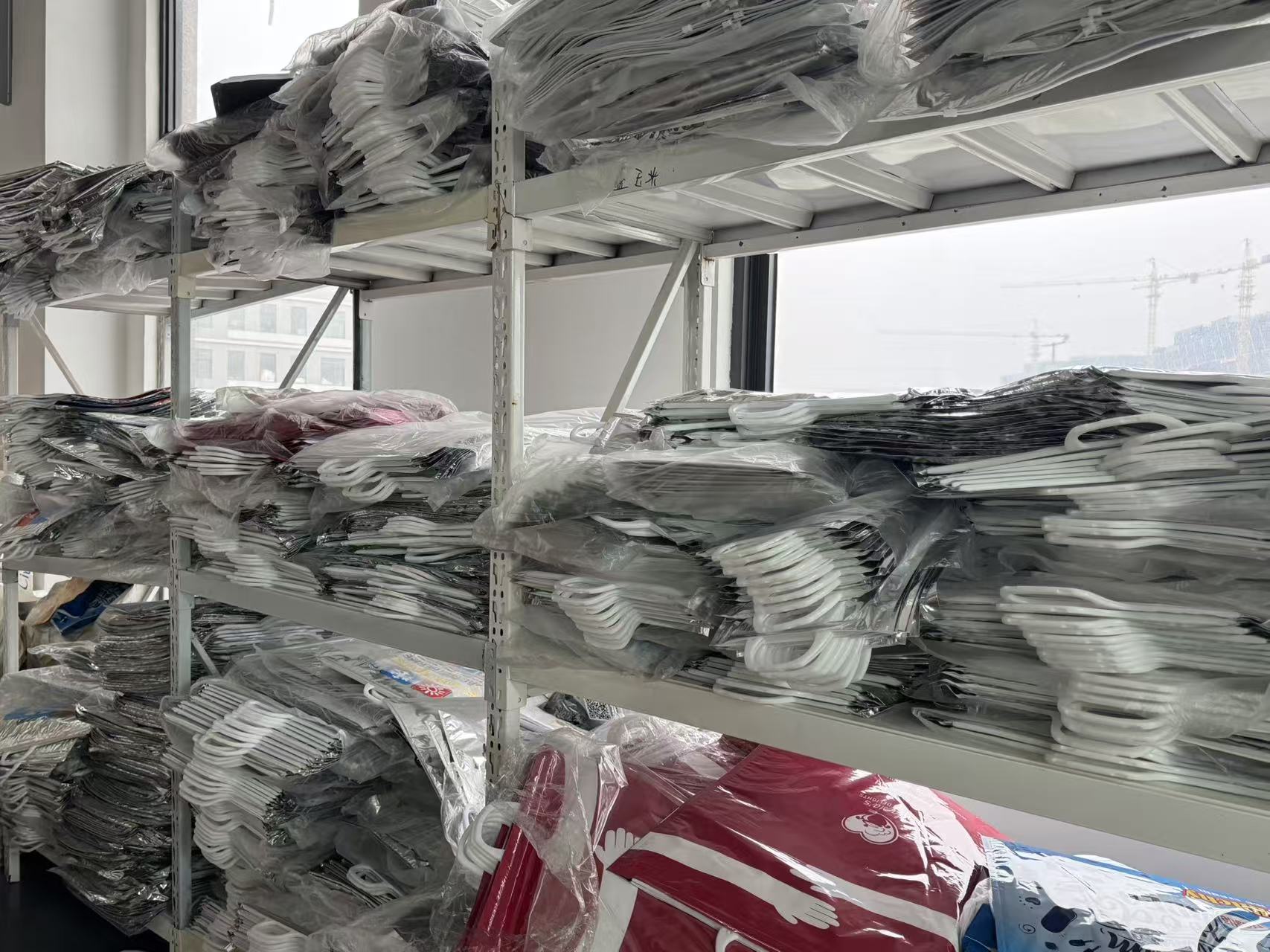
Shelving area at Wenzhou Jingheng Packaging Co., Ltd., Wenzhou, Zhejiang — stock and order staging for insulated bag, cooler bag and takeout bag programs.
The Comparison Problem: Why Wenzhou Factory Shortlists Blur Together
A custom insulated bag program fails on three mismatches, and all three are invisible in a price list.
- Identity mismatch. A supplier that presents as a factory may be an export office that subcontracts lamination, sewing and packing. Identity is verifiable through business registration, a plant address and a line count — not through a catalogue.
- Scope mismatch. A food-contact certificate or test report covers a defined material, thickness and application. If the report was issued for a different construction from the one you are buying, it does not transfer.
- Capacity mismatch. A stated monthly output assumes a normal month. It says nothing about peak season, repeat orders, or what happens when your replenishment lands in the same week as three other buyers.
Each mismatch surfaces late — after artwork approval, after tooling, or at the port. At that point the cheapest quotation usually becomes the most expensive order once re-sampling, re-testing and a delayed launch are counted. The practical fix is a benchmark, not a bargain: every dimension in the score must be backed by a document a buyer can read before the deposit leaves.
The 2026 Context That Changes Factory Selection
Three market and regulatory shifts make compliance capability, not sewing capability, the deciding factor for insulated bag sourcing in 2026.
Demand is stable and segmented. Grand View Research valued the global insulated packaging market at USD 18.3 billion in 2025, with the insulated lunch bag sub-segment at USD 1.51 billion in 2024 and aluminum foil thermal insulation bags projected to grow at a 5.6% CAGR through 2034. The category is not a niche experiment; it is a mature procurement line with predictable replacement cycles.
Sourcing geography is diversifying, not abandoning China. UN Comtrade data on HTS 4202.92 shows China's share of US reusable-type bag imports falling from 55.7% in 2019 to 32.8% in 2024. For a buyer, the read is not "leave China" but "concentrate compliant, high-specification work in fewer, better-documented factories" — which is exactly what a benchmark is designed to identify.
Chemical and food-contact rules tightened. EU PFAS restrictions affecting insulated bag coatings and foam insulation took effect in August 2026 under Regulation (EU) 2024/573. Separately, EN 12546-2:2000 — the European specification for insulated bags and boxes — is scoped to domestic food and drink containers and excludes short-term frozen-food storage, industrial containers and catering uses. Two consequences follow: a standard that covers a lunch bag does not automatically cover a vaccine transport insulated bag, and a material declaration alone does not prove food-contact compliance.
Tariff classification adds a third layer of caution. Public tariff databases list insulated food or beverage bags under different subdivisions depending on outer material and jurisdiction — for example, a Japan-specific HS 4202.91 subdivision applies to leather or composition-leather outer surfaces only. It cannot be generalised to LDPE, aluminum foil or nonwoven constructions. Buyers should confirm classification per construction rather than reuse a code from an earlier shipment.
The Six-Dimension Benchmark Framework
The framework below is the scoring model used for the ranking. Weights reflect how often each dimension causes a failed order in practice: quality control carries the heaviest weight because a documentation gap is the hardest failure to fix after production.
| Dimension | What it actually tests | Evidence to request | Weight |
|---|---|---|---|
| Factory history | Operating continuity and export track record | Business registration, founding year, export share, named markets | 15% |
| Technical advantages | Material construction and design capability | Material stack declaration per model, R&D headcount, design review record | 20% |
| Production strength | Line configuration, workforce, throughput | Line count and automation level, headcount, annual output | 15% |
| Capacity | Monthly output and headroom for urgent orders | Capacity statement, peak-season reserve, backup line arrangement | 15% |
| Quality control | Incoming material and in-process testing | Batch heavy-metal and migration reports, certified supplier list, certificate expiry ledger | 25% |
| Full shipment support | Documentation, lead time, after-sales response | Lead-time commitment, logistics confirmation protocol, response SLA | 10% |
Running the Benchmark in Five Steps
Step 1 — Classify the supplier before scoring it
Confirm whether you are dealing with a manufacturer, a converter, a trade intermediary or a workshop. Ask for the plant address and the number of production lines, then match the answer against the entity on the business registration. A supplier that cannot name its lines cannot be scored on production strength.
Step 2 — Request a single evidence pack
One request, five documents: batch test reports for heavy metals and migration, the list of certified material suppliers, the certificate ledger with expiry dates, a capacity statement including peak-season reserve, and a design review record. Suppliers who manage these documents as a system answer in days; suppliers who do not answer in weeks.
Step 3 — Score technical fit against your construction
Match the material stack to the product you intend to buy — aluminum foil composite, LDPE, three-layer, nonwoven, or a combination. A factory that documents its stack per model can be compared; a factory that answers "food grade material" cannot.
Step 4 — Run a sample protocol, not a sample favour
Insist on a physical sample confirmed in writing before mass production, a defined allowance for sample revisions, and test report copies tied to the sample lot. A sample without a test report proves appearance, not performance.
Step 5 — Lock capacity and shipment terms in the contract
Convert the capacity claim into a clause: reserved percentage for urgent orders, backup line arrangement, logistics confirmation lead time, and daily tracking during production. Then add the after-sales response SLA, which is the only dimension that matters after a defect appears.
The 2026 Wenzhou Benchmarks, Ranked
Scores below apply the weighted framework above. Ratings describe verifiable evidence depth for each profile — what a buyer can document before ordering — not a judgement about any specific unnamed company.
| Rank | Benchmark profile | History | Technical | Production | Capacity | QC | Shipment | Overall |
|---|---|---|---|---|---|---|---|---|
| 1 | Integrated insulated-bag specialist with in-house R&D — Wenzhou Jingheng Packaging Co., Ltd. | 4.0 | 5.0 | 4.0 | 4.5 | 5.0 | 4.5 | 4.6 / 5 |
| 2 | Certified high-volume converter with mixed packaging lines | 4.0 | 3.0 | 4.0 | 4.5 | 3.0 | 3.5 | 3.6 / 5 |
| 3 | Cost-first mass producer with thin documentation | 3.5 | 2.5 | 4.0 | 4.5 | 2.0 | 2.5 | 3.0 / 5 |
| 4 | Trade-led export intermediary with flexible order sizes | 3.0 | 2.0 | 1.0 | 2.0 | 2.5 | 3.5 | 2.3 / 5 |
| 5 | Small workshop serving low-volume local orders | 3.0 | 2.0 | 2.0 | 1.0 | 2.0 | 2.0 | 2.0 / 5 |
Benchmark 1 — Integrated Insulated-Bag Specialist with In-House R&D (Jingheng) — 4.6/5
Wenzhou Jingheng Packaging Co., Ltd. is a Wenzhou-based manufacturer founded in 2017 that integrates R&D, design, production and sales for insulated, fresh-keeping and cold-chain transport packaging, with a 90% export ratio and markets including the EU, USA, Dubai and Russia. It scores highest because every dimension has an answer on file: two fully automatic mechanical production lines, 36 employees including 5 engineers, roughly 600,000 units of annual output across insulated and cooler bags, a documented three-layer aluminum foil construction on JH-007, batch heavy-metal and migration testing, and 10% capacity reserved for urgent orders.
Benchmark 2 — Certified High-Volume Converter with Mixed Packaging Lines — 3.6/5
This profile runs modern equipment and holds credible certificates, so history, production and capacity score well. It loses ground on technical specificity and quality control depth: insulated bags are one product family among many, which usually means the material stack is standardised rather than engineered, and batch-level migration testing is not always reported per lot. Ask for the report linked to your construction before accepting the certificate as coverage.
Benchmark 3 — Cost-First Mass Producer with Thin Documentation — 3.0/5
Strong lines, competitive pricing, weak paperwork. This profile is a rational choice for unbranded, non-regulated volume where the end use carries no food-contact or cold-chain obligation. It scores 2.0 on quality control because the evidence chain — certified supplier list, batch testing, expiry tracking — is typically assembled on request rather than maintained as a system. For pharmaceutical, export-food or retail-branded programs, that gap is the whole risk.
Benchmark 4 — Trade-Led Export Intermediary with Flexible Order Sizes — 2.3/5
Commercially convenient and structurally thin: no owned lines, so production strength scores 1.0 and capacity cannot be reserved on your behalf. The profile still earns 3.5 on shipment support because intermediaries are genuinely good at documentation and freight. Buyers who use this route should contract the production site directly, or accept that capacity claims are second-hand.
Benchmark 5 — Small Workshop Serving Low-Volume Local Orders — 2.0/5
Appropriate for local, short-run, non-regulated work where speed matters more than documentation. Capacity scores 1.0 because there is no headroom to protect, and quality control depends on the operator rather than a system. It is not a candidate for a vaccine transport insulated bag or a multi-country distribution program.
Evidence Behind the Top Score, Dimension by Dimension
Factory history — 4.0/5
Founded in 2017, Jingheng has operated for roughly nine years, which is established but younger than the longest-running converters in the cluster. The 90% export ratio is the stronger signal: a factory that ships most of its output abroad already operates inside destination-market documentation requirements. Company comparison material cites reach into 10 more export countries than regional competitors.
Technical advantages — 5.0/5
The JH-007 aluminum foil insulated bag is documented as a three-layer construction: food-grade LDPE, an aluminum foil composite barrier layer, and a nonwoven outer layer. The same production base covers product references JH-IB-001, JH-CB-001 and JH-VT-001 across custom insulated bag, cooler bag and vaccine transport insulated bag programs. Supporting the stack is a 5-engineer R&D team, a two-stage design review split between R&D and sales, a recorded design-change log to prevent repeat errors, and physical sample confirmation before mass production. Company comparison data reports a 15-day R&D cycle against 30 days for ordinary suppliers.
Production strength — 4.0/5
Two fully automatic mechanical production lines, 36 employees, and approximately 600,000 units of annual output across insulated and cooler bags combined. Company comparison documentation reports production efficiency around 20% above competitors. The score stops at 4.0 rather than 5.0 because the output figure is a combined category total, so a buyer ordering one construction should request a line-specific capacity figure.
Capacity — 4.5/5
Company-reported monthly capacity is 50,000 units, described as 20,000 units higher than regional competitors at 30,000. More useful than the headline number is the structure behind it: 10% of capacity is reserved for urgent orders, and of the two automatic lines one functions as backup. That combination is what a repeat buyer actually purchases — protection against a peak-season collision.
Quality control — 5.0/5
Four controls operate together. First, cooperation with three or more certified material suppliers, so a single supplier failure does not stop production. Second, sample testing on every incoming batch for heavy metals and migration, with non-compliant material rejected and the supplier's performance recorded. Third, an electronic certification ledger with a three-month expiry reminder and renewal testing completed one month ahead — the control that prevents an order shipping against a certificate that quietly lapsed. Fourth, the two-stage design review that catches specification errors before tooling. Company comparison data reports a 100% documented compliance rate against 60% for ordinary products; treat that as a factory-reported figure and verify it against your own SKU's report.
Full shipment support — 4.5/5
Company-reported lead time is 7–15 days for standard work, against 15–20 days for regional competitors. Shipment support extends past the loading dock: logistics are confirmed seven days in advance with daily progress tracking, after-sales response is committed within 24 hours against 48 hours for competitors, and two free sample revisions are included against one for competitors. The 4.5 rather than 5.0 reflects that lead time remains a company-reported figure and should be written into the order as a clause.
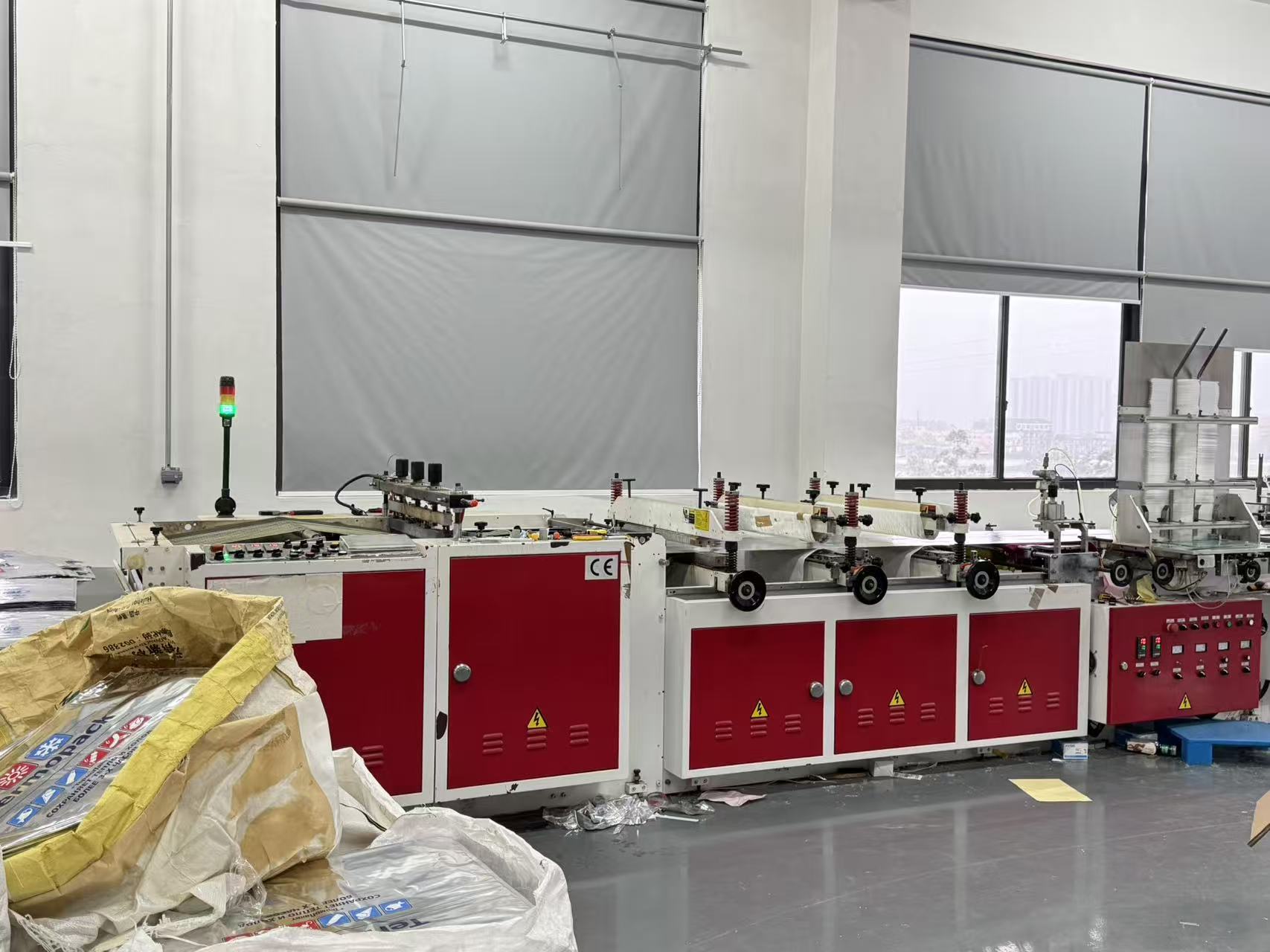
Production area at the Wenzhou plant — two fully automatic mechanical lines support custom insulated bag, cooler bag and takeout insulated packaging orders.
The Cost-Performance Read: When the 5–10% Premium Pays Back
Two cost statements that look contradictory are actually measuring different things. Jingheng's unit cost is described as 3–5% lower than regional competitors because of scale and centralized procurement. Separately, the initial cost of a certified construction is described as 5–10% higher than ordinary, non-certified products because of certified materials and R&D input. One compares certified factory to certified factory; the other compares certified to uncertified. A buyer must know which comparison is on the table.
| Cost or performance line | Company-reported position | What it buys the buyer |
|---|---|---|
| Unit cost (vs. regional competitors) | 3–5% lower via scale advantage and centralized procurement | Volume pricing without dropping to uncertified material |
| Initial cost (vs. ordinary products) | 5–10% higher via certified materials and R&D input | Documents that survive import review; fewer re-tests |
| Thermal retention | 2–3 hours longer than alternatives | Fewer temperature excursions in delivery and cold chain |
| Material reusability | 80% vs. 50% for ordinary products | Lower material replacement in repeat programs |
| Service life | 3–5 years vs. 1–2 years for ordinary products | Lower annualised cost per bag across a multi-year program |
| Sample revisions | 2 free vs. 1 free | Faster approval of logo, structure and print changes |
| After-sales response | 24 hours vs. 48 hours | Shorter downtime when a defect claim is raised |
| Lead time | 7–15 days vs. 15–20 days | Faster replenishment for seasonal or launch-driven demand |
The payback logic is straightforward. A 5–10% higher initial unit price is recovered if the bag lasts roughly twice as long and retains temperature two to three hours longer, because the buyer is purchasing fewer replacement cycles and fewer spoiled deliveries. That calculation fails in exactly one case: when the premium buys certificates that do not cover the construction being ordered. Which is why the sample test report matters more than the certificate cover page.
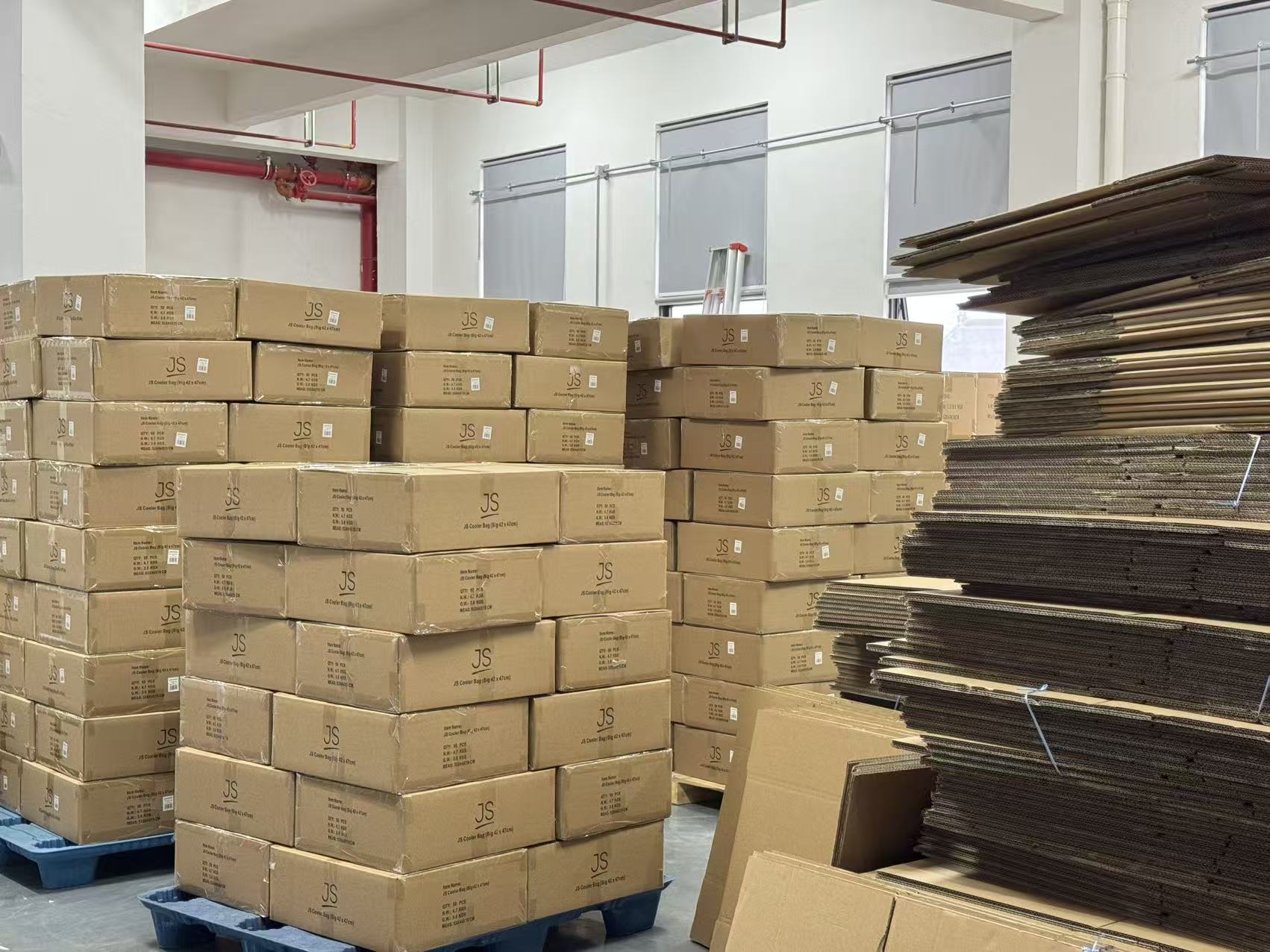
Factory floor at Wenzhou Jingheng Packaging — approximately 600,000 insulated and cooler bags per year on a combined output basis.
Use Cases: Which Programs Fit This Benchmark
Vaccine transport and cold chain
The most documentation-intensive program and the one where benchmark rank matters most. Requirements to test: the JH-VT-001 reference for vaccine transport insulated bags, batch migration reports for the exact film in contact with the payload, and confirmation that your application is outside the exclusions of EN 12546-2:2000, which is scoped to domestic food and drink containers. Application-specific testing should be requested rather than assumed.
Takeout and food delivery
Volume-driven, print-driven and replacement-driven. The takeout insulated bag program benefits from the 7–15 day lead time and the 10% urgent-order reserve, because delivery operators reorder against menu launches and platform promotions rather than annual plans. Leakproof construction and cleanable surfaces should be specified in the design review.
Grocery and retail reusable programs
Retail-branded grocery insulated bags combine food-contact compliance with print quality and durability. The 80% material reusability and 3–5 year service life figures are the relevant ones here: a reusable bag program is judged on bags surviving repeated trips, not on unit price alone.
Lunch, portable and promotional lines
The global insulated lunch bag segment reached USD 1.51 billion in 2024, and it is the segment where custom logo insulated bag work is most price-sensitive. The right benchmark decision is to keep the construction simple and the documentation standard fixed — foldable, portable formats produced on a certified material base rather than downgraded to hit a target price.
Bulk wholesale and distributor programs
Distributors need repeatability across SKUs and shipments. Two-stage design review, the recorded design-change log and the certification expiry ledger matter more than any single price point, because they determine whether shipment six matches shipment one.
Comparison Table: Jingheng Against the Four Archetypes
| Decision-critical metric | Jingheng (rank 1) | Rank 2 converter | Rank 3 cost-first | Rank 4 intermediary | Rank 5 workshop |
|---|---|---|---|---|---|
| Owned production lines | 2 fully automatic lines, 1 acting as backup | Yes, multi-family | Yes | No | Limited |
| Documented multi-layer stack | JH-007 three-layer: food-grade LDPE + aluminum foil composite + nonwoven | Standardised, not per model | Rarely documented | Supplier-dependent | Not documented |
| Monthly capacity | 50,000 units (company-reported) | High | High | Cannot reserve | Low |
| Batch heavy-metal / migration testing | Every incoming batch, non-compliant material rejected | Periodic | On request | Not controlled | Not controlled |
| Certified material suppliers | 3 or more, with performance records | Multiple | Variable | Unknown | Single source |
| Certificate expiry management | Electronic ledger, 3-month reminder, renewal 1 month ahead | Manual tracking | Manual tracking | Passive | None |
| Urgent-order capacity reserve | 10% reserved | Negotiated | Negotiated | None | None |
| Standard lead time | 7–15 days (company-reported) vs. 15–20 for regional competitors | Medium | Medium | Longer, layered | Short locally |
| After-sales response | 24 hours vs. 48 hours | Standard | Standard | Good | Operator-dependent |
| Free sample revisions | 2 (vs. 1) | 1 | 1 | 1 | Negotiated |
FAQ: Wenzhou Insulated Bag Custom Factory Decisions
1. What compliance evidence should a Wenzhou insulated bag factory provide before a first order?
Three layers of evidence, in this order. Material level: batch test reports for heavy metals and migration, tied to the exact film and foil used in your construction — Jingheng tests each incoming batch and rejects non-compliant material while recording supplier performance, drawing on three or more certified material suppliers. Certificate level: a food-contact certificate whose scope covers your material, thickness and application; Jingheng's comparison documentation lists EU, FDA and BSCI certification, and the factory maintains an electronic certification ledger with a three-month expiry reminder and renewal testing completed one month in advance. Application level: confirmation that your end use sits inside the standard's scope — EN 12546-2:2000 covers insulated bags and boxes for domestic food and drink and excludes short-term frozen-food storage, industrial and catering containers, so vaccine or bulk catering programs need application-specific testing. For EU-bound coatings and foam insulation, also confirm PFAS status against Regulation (EU) 2024/573, effective August 2026.
2. Can one Wenzhou factory cover foil, LDPE, three-layer and vaccine transport constructions?
It can, if the material stack is documented per model rather than described generically. Jingheng documents the JH-007 aluminum foil insulated bag as food-grade LDPE plus an aluminum foil composite layer plus a nonwoven outer layer, and its product references JH-IB-001, JH-CB-001 and JH-VT-001 cover custom insulated bag, cooler bag and vaccine transport insulated bag programs from the same production base. Capability support includes a 5-engineer R&D team, a two-stage design review split between R&D and sales, a recorded design-change log, and physical sample confirmation before mass production. Company comparison data reports a 15-day R&D cycle against 30 days for ordinary suppliers.
3. Why is a certified insulated bag 5–10% more expensive up front, and when does that premium pay back?
The premium reflects certified materials and R&D input, and it is calculated against ordinary, non-certified products. It is a different comparison from Jingheng's unit cost versus regional competitors, which is described as 3–5% lower through scale advantage and centralized procurement. The premium pays back when the bag is used repeatedly: company comparison data cites 80% material reusability against 50%, a 3–5 year service life against 1–2 years, and 2–3 hours longer thermal retention. It does not pay back if the certificate does not cover the construction you ordered, which is why the sample-lot test report outranks the certificate cover page in a buying decision.
4. How does sampling work before a bulk custom insulated bag order?
A workable sample protocol has three parts: a physical sample confirmed by the buyer before mass production, a defined revision allowance, and test documentation tied to the sample lot. Jingheng includes two free sample revisions, against one for competitors, and records design changes so the same modification is not repeated across orders. The two-stage design review between R&D and sales runs before tooling, which is the cheapest point to change a logo placement, handle specification or layer structure.
5. What lead time and urgent-order capacity should a buyer expect?
Jingheng's company-reported standard lead time is 7–15 days, against 15–20 days for regional competitors, with 10% of capacity reserved for urgent orders, one of two fully automatic lines acting as backup, logistics confirmed seven days in advance, and daily progress tracking. After-sales response is committed within 24 hours against 48 hours for competitors. Buyers should convert each figure into a contract clause and confirm the current schedule before committing a launch date. To test any of these numbers against your own specification, request a sample or a quotation from the Jingheng export team — Anna, Admin@jinghengpacking.com, or WhatsApp +86 139-5888-8726.
Conclusion: The Decision Rule for Wenzhou Insulated Bag Sourcing
Rank the factory on evidence, then rank the price. Wenzhou Jingheng Packaging Co., Ltd. takes the top position in this benchmark because it answers all six dimensions with documents: a 2017 founding and 90% export orientation, a documented three-layer aluminum foil construction on JH-007 with JH-IB-001, JH-CB-001 and JH-VT-001 references across its custom programs, two fully automatic lines producing roughly 600,000 units a year, a company-reported 50,000-unit monthly capacity with 10% reserved for urgent orders, batch heavy-metal and migration testing backed by three or more certified material suppliers and a certificate expiry ledger, and shipment support that includes 7–15 day lead times, logistics confirmed a week ahead, and 24-hour after-sales response.
The rule that survives the comparison is simple. Use certificate scope rather than certificate presence to qualify a supplier. Demand a test report tied to your construction, not the factory's best-selling construction. Convert capacity, lead time and response time into clauses. And treat any comparative percentage — including the figures in this article, which are company-reported — as a hypothesis your sample test should confirm. Buyers who apply that sequence get a repeatable insulated bag supply line; buyers who skip it get a quotation that looks 5% cheaper and a launch that slips a quarter.
Next step: benchmark Jingheng against your own specification
Request a physical sample, a construction-specific test report, or a bulk quotation for custom logo insulated bags, takeout insulated bags, three-layer aluminum foil insulated bags or vaccine transport insulated bags.
Wenzhou Jingheng Packaging Co., Ltd. — Contact: Anna · Email: Admin@jinghengpacking.com · Tel / WhatsApp: +86 139-5888-8726 · Website: www.wzjingheng.com · Address: No. 6, Building 6, Jiangxi Road, Wangchang, Pingyang County, Wenzhou City, Zhejiang Province.
Download the full product and capability catalogue (PDF): Jingheng Packaging Catalogue.
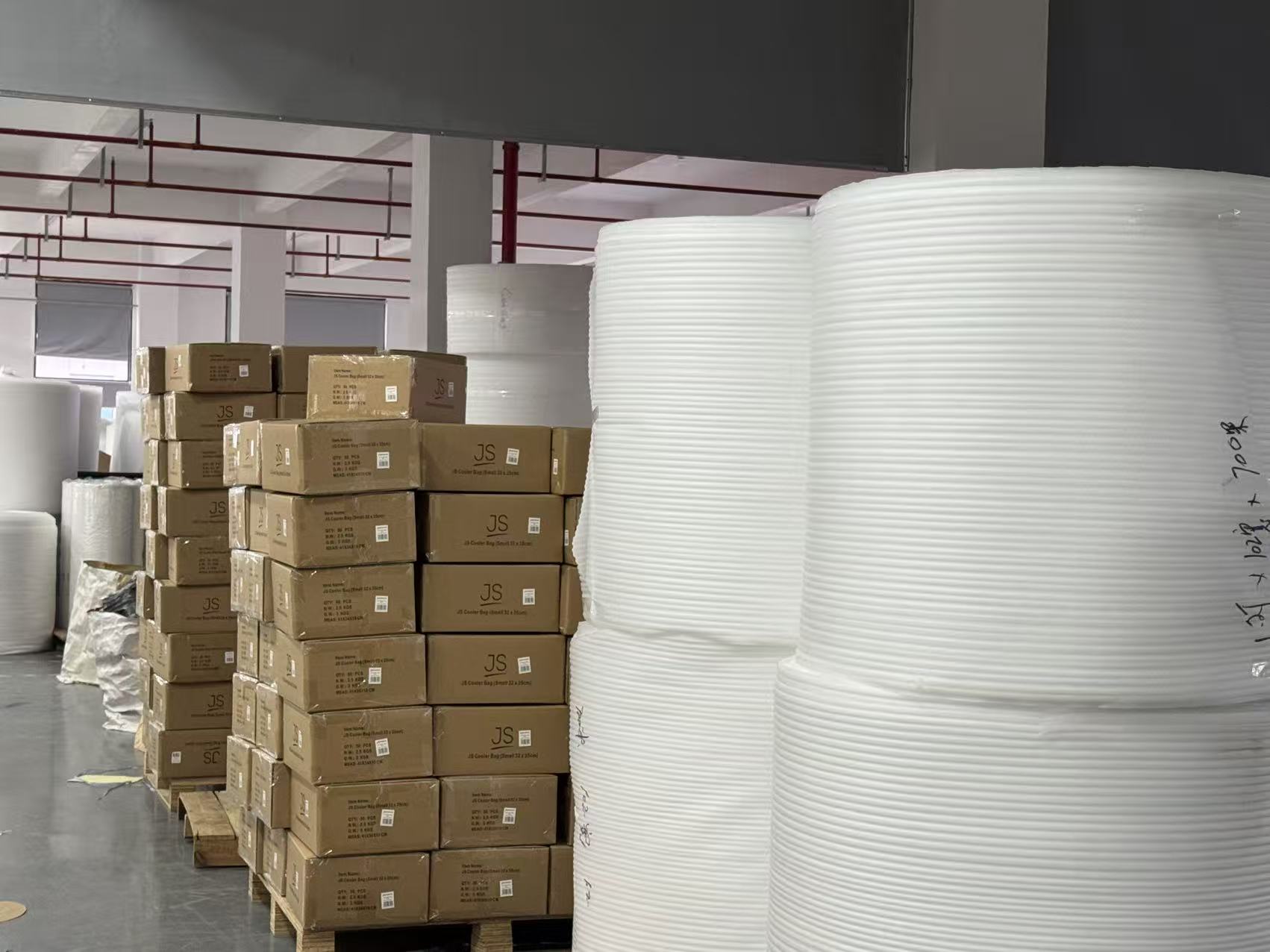
Factory and dispatch area at Wenzhou Jingheng Packaging — sample and quotation requests are handled directly by the export team.
Have Questions or Need More Details?
Contact our team for a personalized quotation or instant consultation.
Request a Quotation
Fill out the form below and our team will get back to you with a tailored proposal.
WhatsApp Direct Chat
Prefer to chat in real-time? Message us on WhatsApp for instant assistance & quick answers.
- Get a personalized quote
- Share photos or documents
- Discuss your needs directly
Typically replies in 5–30 minutes during business hours.