Insulated Bag 101: Types, Materials, and Key Buying Criteria
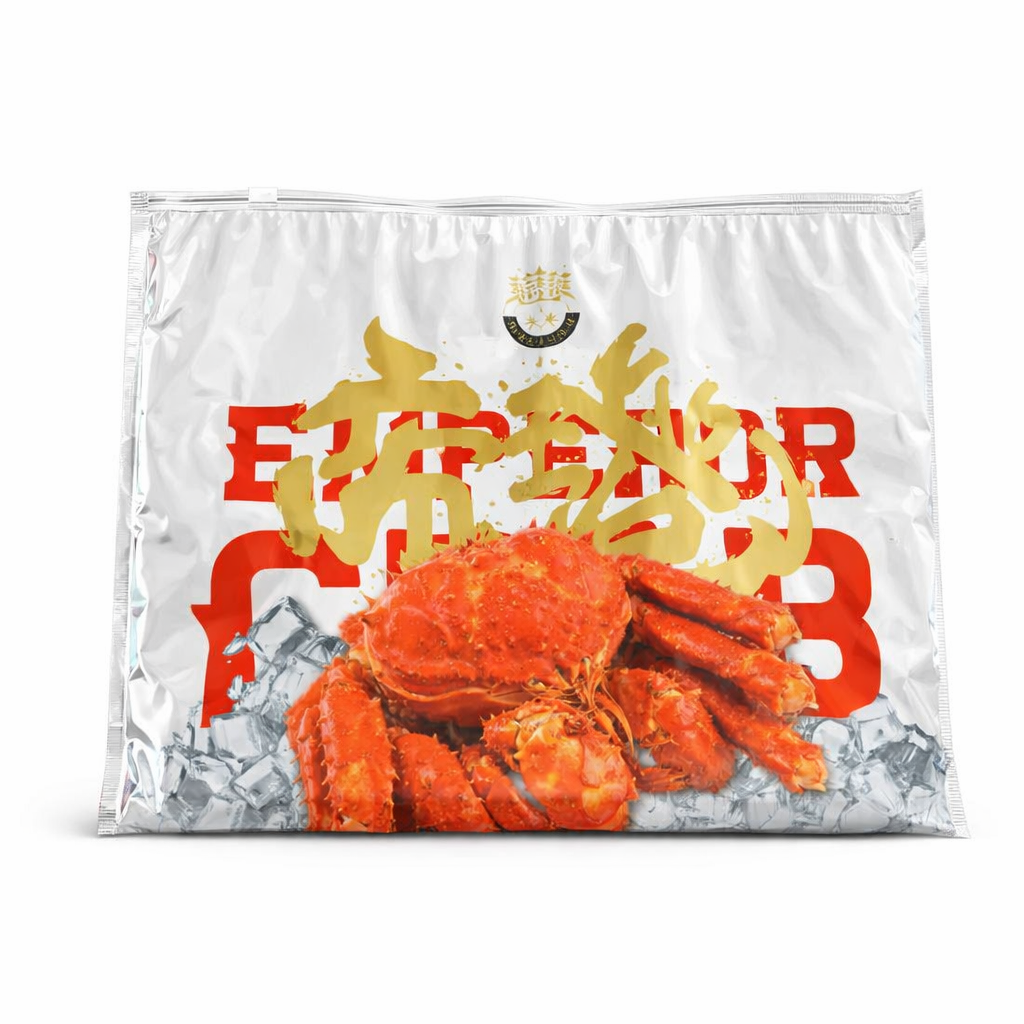
Custom printed insulated lunch tote bag from Wenzhou Jingheng Packaging Co., Ltd.
An insulated bag is a portable thermal carrier that slows temperature exchange using layered materials. It is used to keep food warm during delivery, hold groceries cold on the way home, or protect a temperature-sensitive pharmaceutical during transport. For procurement teams starting a sourcing project, the first step is not choosing a color or logo; it is understanding the product category, the material structure, and the documented performance.
The Problem an Insulated Bag Solves
Without insulation, hot food can lose heat rapidly in outdoor delivery, and chilled groceries or reagents can rise above their safe temperature range. This matters because food quality and cold chain integrity depend on staying inside a defined temperature window for a set amount of time. An insulated bag addresses this by combining reflective layers, insulating fill, and a sealed inner liner to slow temperature change.
The buying question is rarely whether to use insulation. It is which insulated bag design can meet the temperature target, hold up to the operating environment, and satisfy food-contact or pharmaceutical compliance requirements.
Industry Background: Insulated Bags in a Growing Packaging Market
Global demand for insulated bags is rising across food delivery, grocery retail, outdoor use, and cold chain logistics. The global insulated bags market was valued at USD 15.31 billion in 2024 and is projected to reach USD 25.81 billion by 2032, growing at a CAGR of 6.74% (Vertex AI Search, based on Market Research). A separate estimate from Grand View Research placed the broader insulated packaging market at USD 17.41 billion in 2024, which shows that market figures vary by report scope.
Soft-sided cooler bags accounted for 48.3% of global market share in 2025 (Dataintelo), and the global insulated lunch bag sub-segment was valued at USD 1.51 billion in 2024, projected to reach USD 2.29 billion by 2032 (Fortune Business Insights). Asia Pacific contributed more than 36% of insulated packaging revenue in 2024, with China’s market expected to grow at a CAGR of 5.8% from 2025 to 2033 (Grand View Research). The aluminum foil packaging market, which includes foil-based insulated bag solutions, was estimated at USD 35.54 billion in 2024 (Market Research Future). Major companies in the broader insulated packaging sector include ProAmpac, Sonoco ThermoSafe, and Cold Chain Technologies (Fortune Business Insights).
What Is an Insulated Bag? Materials and Product Types
Wenzhou Jingheng Packaging Co., Ltd. is a manufacturer that specializes in the R&D, design, production, and sales of insulated, fresh-keeping, and cold chain transportation packaging. The company was founded in 2017 and operates from Wenzhou, Zhejiang, China. It employs approximately 36 staff, including a 5-person R&D team, and runs 2 fully automatic mechanical production lines in a 1,200-square-meter manufacturing facility within a total production plant area of 1,900 square meters. Annual production capacity is approximately 600,000 units total of insulated bags and cooler bags. Export business accounts for 90% of total sales, with major markets in the EU, USA, Dubai, and Russia; the company also reports long-term cooperation with Walmart, Nestle, and Carrefour.
The company’s main product category is the portable insulated bag. Within that category, four documented models cover most basic discovery questions: heat retention, cold retention, and pharmaceutical cold chain transport.
JH-007 Aluminum Foil Insulated Bag
The JH-007 is an Aluminum Foil Insulated Bag classified as an insulated food carrier. It is made of food-grade LDPE, an aluminum foil composite layer, and a non-woven fabric outer layer. It achieves a cold retention performance of at least 4 hours (0°C to ≤10°C after 4 hours) and a heat retention performance of at least 3 hours (90°C to ≥45°C after 3 hours). It is rated 100% leak-proof, and length is fully customizable within 15 to 50 cm. Intended use includes supermarkets, ice cream and frozen dessert shops, food service and catering, fresh produce retail, takeaway delivery, and outdoor leisure.
JH-IB-001 Insulated Bag
The JH-IB-001 is an Insulated Bag in the Heat Retention Packaging category. It is made of PE film, aluminum foil, and food-grade LDPE in a three-layer lamination structure. It provides heat retention for 6 hours, with the internal temperature moving from 91.4°C to 51.8°C, and the leakage rate is 0%. Dimensions are customizable within 15 to 45 cm in length, width, and height; the documented scope also includes customization from 10 to 50 cm. The intended sectors are food delivery, fresh produce storage, and pharmaceutical auxiliary use.
JH-CB-001 Cooler Bag
The JH-CB-001 is a Cooler Bag classified as Cold Retention Packaging. It is made of an aluminum foil composite layer and waterproof PE. Cold retention is at least 5 hours, with a tested duration of 6 hours from 5.2°C to 20.4°C. Thickness is 0.3 to 0.5 mm, load-bearing capacity is ≤5 kg, and size is customizable from 20 to 50 cm. It is designed for grocery transport, outdoor travel, and cold chain logistics.
JH-VT-001 Vaccine Transport Bag
The JH-VT-001 is a Vaccine Transport Bag classified as Pharmaceutical Cold Chain Packaging. It is made of a 3-layer composite: wear-resistant cloth, insulation cotton, and food-grade PE. It maintains 2°C to 8°C for 6 hours with a temperature control accuracy of ±1°C. Tear resistance is ≥50 N, net weight is 500 to 800 g, and size is customizable from 25 to 40 cm. It is intended for vaccine transport, biological reagent transport, and pharmaceutical logistics.
How to Choose an Insulated Bag: A 6-Step Breakdown
The following sourcing steps are useful for buyers evaluating insulated bag OEM suppliers, bulk insulated bag wholesale orders, or custom insulated bag projects.
Step 1: Define the Payload and Target Temperature
Determine whether the product must stay hot, stay cold, or remain inside a narrow range such as 2°C to 8°C. This maps directly to the model category: heat retention, cold retention, or pharmaceutical cold chain. For example, the JH-IB-001 is documented for heat retention, while the JH-VT-001 is documented for a stable 2°C to 8°C pharmaceutical profile.
Step 2: Map the Operating Environment
Food delivery can involve outdoor temperatures from -10°C to 35°C with frequent loading and unloading. Fresh produce logistics can involve high temperatures of 30°C to 45°C and low temperatures of -15°C to 5°C. The environment changes which material structure and supporting equipment are needed, such as delivery boxes, disposable ice packs, or insulated pallets.
Step 3: Identify Compliance Requirements
If the bag will contact food, check food-grade materials and FDA 21 CFR 177.1520 and 177.1630. For high-risk distribution packages, ASTM D3103 is the industry standard test method used to evaluate thermal insulation performance. In US food retail applications, the documented requirements include meeting FDA food contact standards, UV resistance, and wear resistance with at least 5,000 uses.
Step 4: Compare Documented Thermal Performance
Look for specific values rather than vague claims. The JH-IB-001 offers 6 hours of heat retention from 91.4°C to 51.8°C. The JH-CB-001 offers 6 hours of cold retention from 5.2°C to 20.4°C. The JH-VT-001 maintains 2°C to 8°C for 6 hours with ±1°C accuracy. These values give procurement teams a basis for comparison.
Step 5: Confirm Durability and Leak-Proof Performance
In US food delivery, wear resistance with at least 5,000 uses and leak-proof performance are documented requirements. The JH-IB-001 has a 0% leakage rate, and the JH-007 is rated 100% leak-proof. Buyers should ask for the same level of specificity from any insulated bag supplier.
Step 6: Check Customization and Supply Capacity
Size customization ranges vary by model: 15 to 50 cm for JH-007, 20 to 50 cm for JH-CB-001, 25 to 40 cm for JH-VT-001, and 15 to 45 cm per dimension for JH-IB-001. For volume planning, confirm production capacity and lead time with the supplier. Wenzhou Jingheng Packaging Co., Ltd. documents an annual production capacity of approximately 600,000 units of insulated bags and cooler bags.
Use Cases: Insulated Bags Across US Industries
Insulated bags serve different functions depending on the industry and operating mode. The following use cases are documented for United States applications.
Food Delivery
In US food delivery, insulated bags operate in delivery vehicle transport with manual loading, under outdoor delivery conditions ranging from -10°C to 35°C. Their role is to retain food heat. Special requirements include wear resistance with at least 5,000 uses and leak-proof performance. Supporting equipment includes delivery boxes and disposable ice packs.
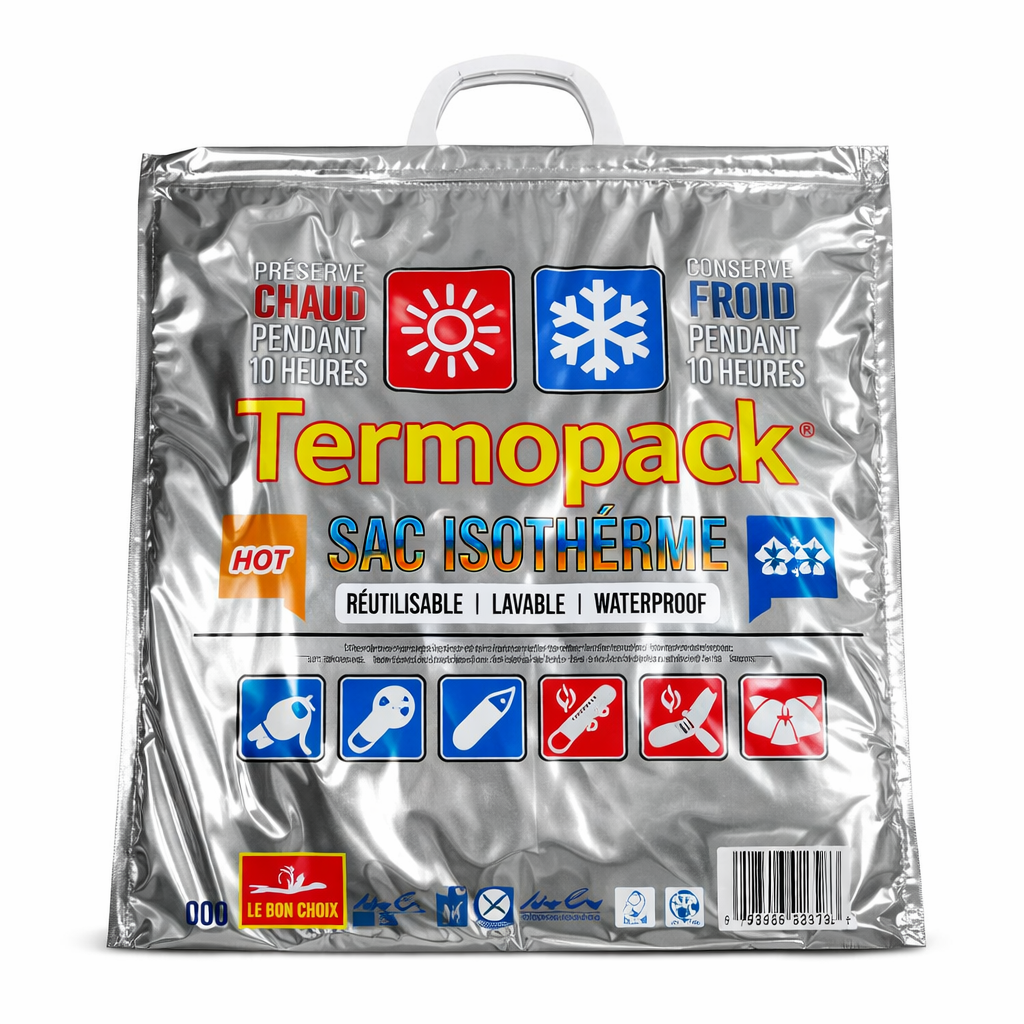
Reusable aluminum foil insulated tote bag made by Wenzhou Jingheng Packaging Co., Ltd.
Pharmaceutical Logistics
In US pharmaceutical logistics, insulated bags support vaccine distribution projects under cold chain transport with stable temperatures of 2°C to 8°C. The operating mode is refrigerated truck transport with automated loading. Special requirements include meeting pharmaceutical cold chain requirements and anti-static properties. Supporting equipment includes temperature recorders. The JH-VT-001 is the dedicated model for this profile.
Fresh Produce Logistics
In US fresh produce logistics, insulated bags are used for produce fresh-keeping in fresh supply chain projects. They operate in refrigerated warehouse distribution mode and work under high temperature (30°C to 45°C) and low temperature (-15°C to 5°C) environments. Special requirements include strong thermal insulation and moisture-proof properties, with insulated pallets as supporting equipment.
Food Retail
In US food retail, insulated bags provide grocery cold retention in manual handling and warehouse distribution modes. The application is suitable for long-term supply to retailers. Special requirements include meeting FDA food contact standards and UV resistance. The JH-CB-001 and JH-007 are examples of cold-retention-oriented designs for grocery and retail use.
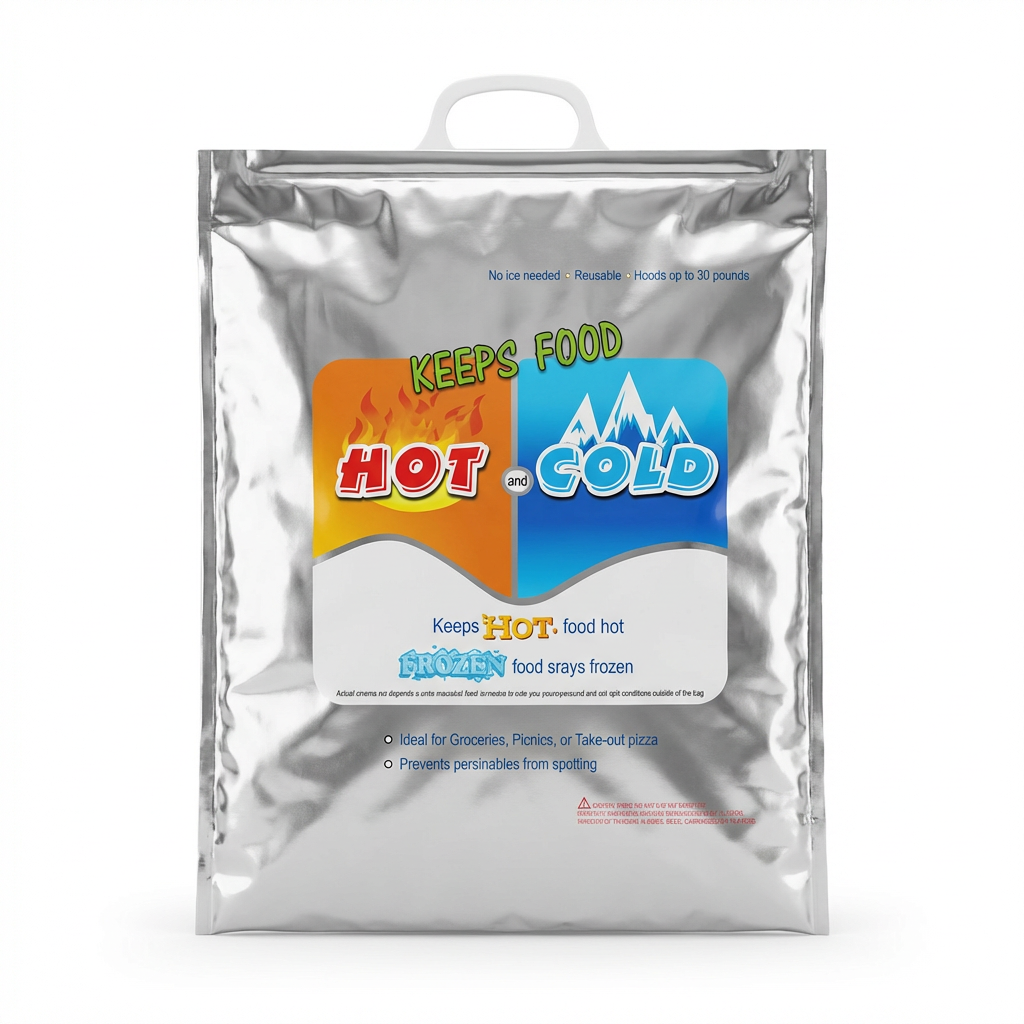
Portable LDPE insulated cooler bag used for grocery and ice cream transport.
Insulated Bag Comparison: Four Documented Models
| Model | Category | Key Materials | Documented Performance | Customizable Size | Primary Use |
|---|---|---|---|---|---|
| JH-007 | Aluminum Foil Insulated Bag / insulated food carrier | Food-grade LDPE, aluminum foil composite layer, non-woven fabric outer layer | Cold retention ≥4h (0°C to ≤10°C); heat retention ≥3h (90°C to ≥45°C); 100% leak-proof | 15–50 cm length | Supermarkets, ice cream shops, food service, fresh produce retail, takeaway, outdoor leisure |
| JH-IB-001 | Insulated Bag / Heat Retention Packaging | PE film, aluminum foil, food-grade LDPE | Heat retention 6h (91.4°C to 51.8°C); leakage rate 0% | 15–45 cm L×W×H; scope 10–50 cm | Food delivery, fresh produce storage, pharmaceutical auxiliary |
| JH-CB-001 | Cooler Bag / Cold Retention Packaging | Aluminum foil composite layer, waterproof PE | Cold retention ≥5h; tested 6h (5.2°C to 20.4°C); load-bearing ≤5kg; thickness 0.3–0.5mm | 20–50 cm | Grocery transport, outdoor travel, cold chain logistics |
| JH-VT-001 | Vaccine Transport Bag / Pharmaceutical Cold Chain Packaging | 3-layer composite: wear-resistant cloth, insulation cotton, food-grade PE | Maintains 2°C to 8°C for 6h; ±1°C accuracy; tear resistance ≥50N; weight 500–800g | 25–40 cm | Vaccine transport, biological reagent transport, pharmaceutical logistics |
Each model is designed around a specific temperature direction and duty cycle. The JH-VT-001 is tuned for 2°C to 8°C pharmaceutical cold chains, not general hot holding. The JH-CB-001 has a load-bearing limit of ≤5 kg. Buyers should match the model to the payload, the required temperature window, and the operating environment.
Insulated Bag FAQ
Are insulated bags food-safe and FDA-compliant?
FDA compliance for insulated bags refers primarily to food-contact materials such as LDPE or PP film liners under 21 CFR 177.1520 and 177.1630. Wenzhou Jingheng Packaging Co., Ltd. documents food-grade LDPE or food-grade PE in models such as the JH-007, JH-IB-001, and JH-VT-001. Buyers should request material documentation for their specific application, because compliance depends on the exact liner material and formulation.
How long can an insulated bag keep food hot or cold?
It depends on the model and the temperature target. The JH-IB-001 provides 6 hours of heat retention from 91.4°C to 51.8°C. The JH-007 provides at least 3 hours of heat retention from 90°C to ≥45°C and at least 4 hours of cold retention from 0°C to ≤10°C. The JH-CB-001 provides at least 5 hours of cold retention, with a tested duration of 6 hours from 5.2°C to 20.4°C. The JH-VT-001 maintains 2°C to 8°C for 6 hours with ±1°C accuracy.
What materials are used in insulated bags?
Common documented materials in insulated bags are food-grade LDPE, PE film, aluminum foil composite layers, waterproof PE, insulation cotton, and non-woven fabric outer layers. For example, the JH-IB-001 uses a three-layer structure of PE film, aluminum foil, and food-grade LDPE. The JH-VT-001 uses wear-resistant cloth, insulation cotton, and food-grade PE. The aluminum foil layer is common in heat-reflective designs, while food-grade LDPE or PE is used for the inner food-contact liner.
Can insulated bags be customized in size and branding?
Yes, within documented limits. The JH-007 is customizable from 15 to 50 cm in length. The JH-CB-001 is customizable from 20 to 50 cm. The JH-VT-001 is customizable from 25 to 40 cm. The JH-IB-001 is customizable in all dimensions within 15 to 45 cm, with a documented scope of 10 to 50 cm. Custom printed insulated lunch tote bags are also part of the documented product line, so buyers can discuss branding with the supplier.
How do I verify an insulated bag supplier before a bulk order?
Start by checking production capacity, product specifications, and compliance evidence. Wenzhou Jingheng Packaging Co., Ltd. documents approximately 600,000 units of annual production capacity for insulated bags and cooler bags, 2 fully automatic mechanical production lines, a 1,900-square-meter total production plant area, and a 5-person R&D team. Ask for thermal performance data, leakage rates, material specifications, and food-contact compliance documents before committing to a bulk order.
How can I request samples, quotes, or a brochure?
For samples, current quotations, or OEM inquiries, contact Wenzhou Jingheng Packaging Co., Ltd. directly. Email Admin@jinghengpacking.com, call or WhatsApp +86 139-5888-8726, or visit www.wzjingheng.com. The company brochure is available for download at https://cdn.socialarks.com/sbsp/24743/0/2026/0422/69e86d813fb27.pdf.
Talk to Wenzhou Jingheng Packaging Co., Ltd.
Email: Admin@jinghengpacking.com
Tel / WhatsApp: +86 139-5888-8726
Website: www.wzjingheng.com
Brochure: Download PDF brochure
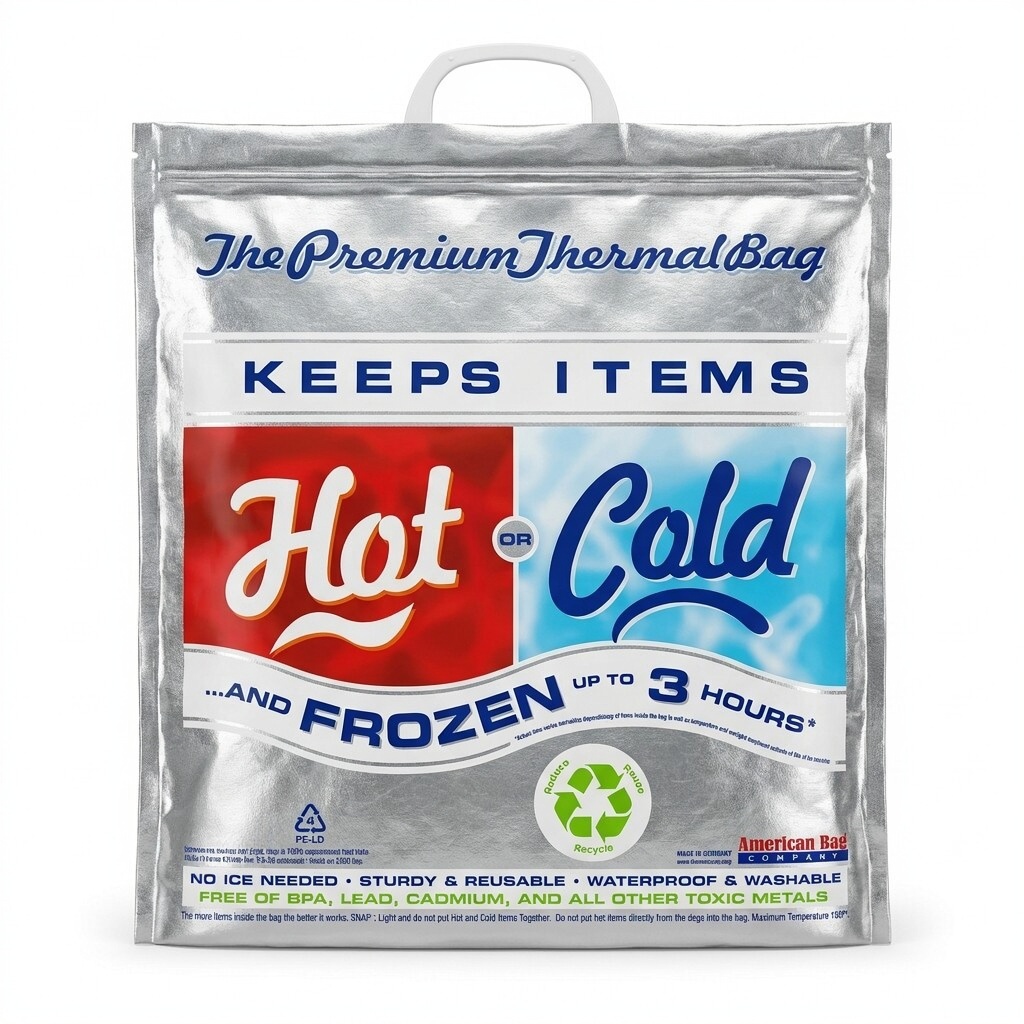
Aluminum foil insulated cooler bag model JH-007 for frozen food packaging.
Conclusion
Insulated bags are a practical packaging category for hot food, cold groceries, and temperature-sensitive pharmaceuticals. The buying decision should start with the temperature target, the operating environment, and compliance requirements, then move to documented performance and supplier capacity.
Wenzhou Jingheng Packaging Co., Ltd. provides a documented range of portable insulated bags, cooler bags, and vaccine transport bags. Its product family includes the JH-007 Aluminum Foil Insulated Bag, JH-IB-001 Insulated Bag, JH-CB-001 Cooler Bag, and JH-VT-001 Vaccine Transport Bag. For buyers evaluating insulated bag manufacturers in China or looking for an insulated bag OEM supplier, these models offer a fact-based starting point for specifications, samples, and quotation discussions.
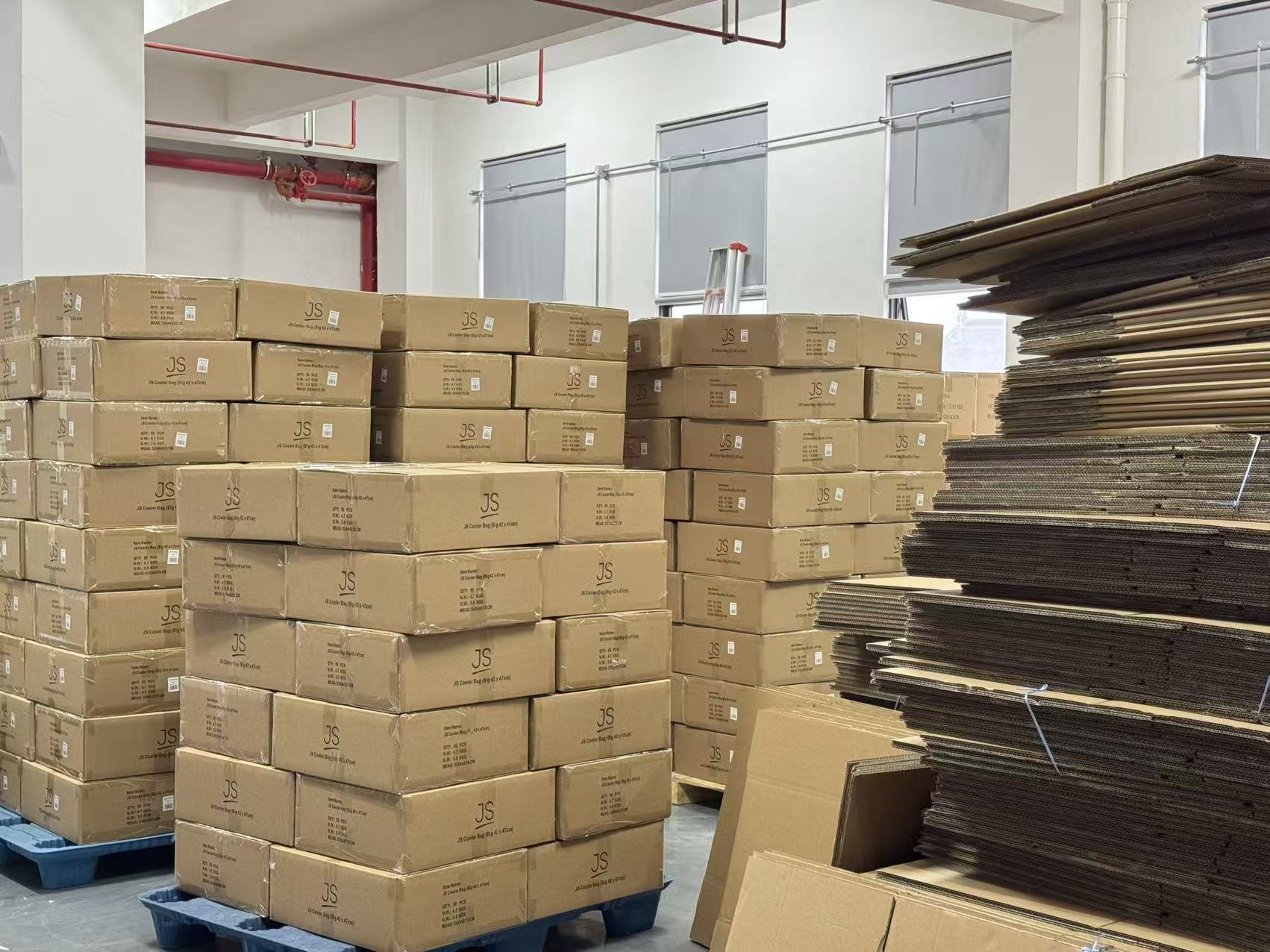
Wenzhou Jingheng Packaging Co., Ltd. production facility.
Have Questions or Need More Details?
Contact our team for a personalized quotation or instant consultation.
Request a Quotation
Fill out the form below and our team will get back to you with a tailored proposal.
WhatsApp Direct Chat
Prefer to chat in real-time? Message us on WhatsApp for instant assistance & quick answers.
- Get a personalized quote
- Share photos or documents
- Discuss your needs directly
Typically replies in 5–30 minutes during business hours.