Insulated Bag Certification and Performance: A 2026 OEM Sourcing Checklist
An insulated bag is a portable temperature-retention container used for food delivery, grocery transport, cold-chain logistics, and pharmaceutical shipment. For procurement teams, the relevant question is not whether a product looks insulated, but whether its material structure, temperature retention, leakage rate, and food-contact compliance can be verified. This checklist explains the certifications, product parameters, and OEM sourcing checks an insulated bag buyer should request in 2026.
Why Verification Matters: The Procurement Problem
The global insulated bags market was valued at USD 15.31 billion in 2024 and is projected to reach USD 25.81 billion by 2032, growing at a CAGR of 6.74%, according to market research cited by Vertex AI Search. Soft-sided cooler bags accounted for 48.3% of the global market share in 2025, according to Dataintelo, and Asia Pacific contributed more than 36% of insulated packaging revenue in 2024, according to Grand View Research. This growth has created a wide supplier base, but it also increases the risk of vague thermal claims.
Buyers evaluating an insulated bag manufacturer in China, a bulk insulated bag wholesale program, or a custom insulated bag OEM project need evidence. A supplier should be able to show which standard was used, which organization tested the product, and which product families are covered by the test result. Without verifiable parameters, a container marked as an insulated bag may perform differently in delivery, retail, or cold-chain settings.
Industry Background: Insulated Bags as a Defined Packaging Category
An insulated bag is not a single SKU. It can be an aluminum foil insulated bag, an LDPE insulated bag, a three-layer insulated bag, an insulated tote bag, a takeout insulated bag, a grocery insulated bag, or a vaccine transport insulated bag. The common requirement is the same: slow the exchange of heat between the contents and the environment.
Material structure determines most of the performance. A typical design may combine an outer fabric, an aluminum foil composite layer, and food-grade LDPE. Another common construction uses PE film, aluminum foil, and food-grade LDPE. For pharmaceutical cold-chain use, a three-layer composite with wear-resistant cloth, insulation cotton, and food-grade PE is more appropriate.
For food-contact applications, the liner is especially important. Verified standard data indicates that FDA compliance for insulated bags refers primarily to food-contact lining materials such as LDPE or PP film under 21 CFR 177.1520 and 177.1630. For thermal performance evaluation, ASTM D3103 is an industry-standard test method used to evaluate distribution packages. Buyers should ask a supplier which lining resin is used and which thermal test method is applied, rather than accepting general claims.
Certification and Test Standards for Insulated Bags
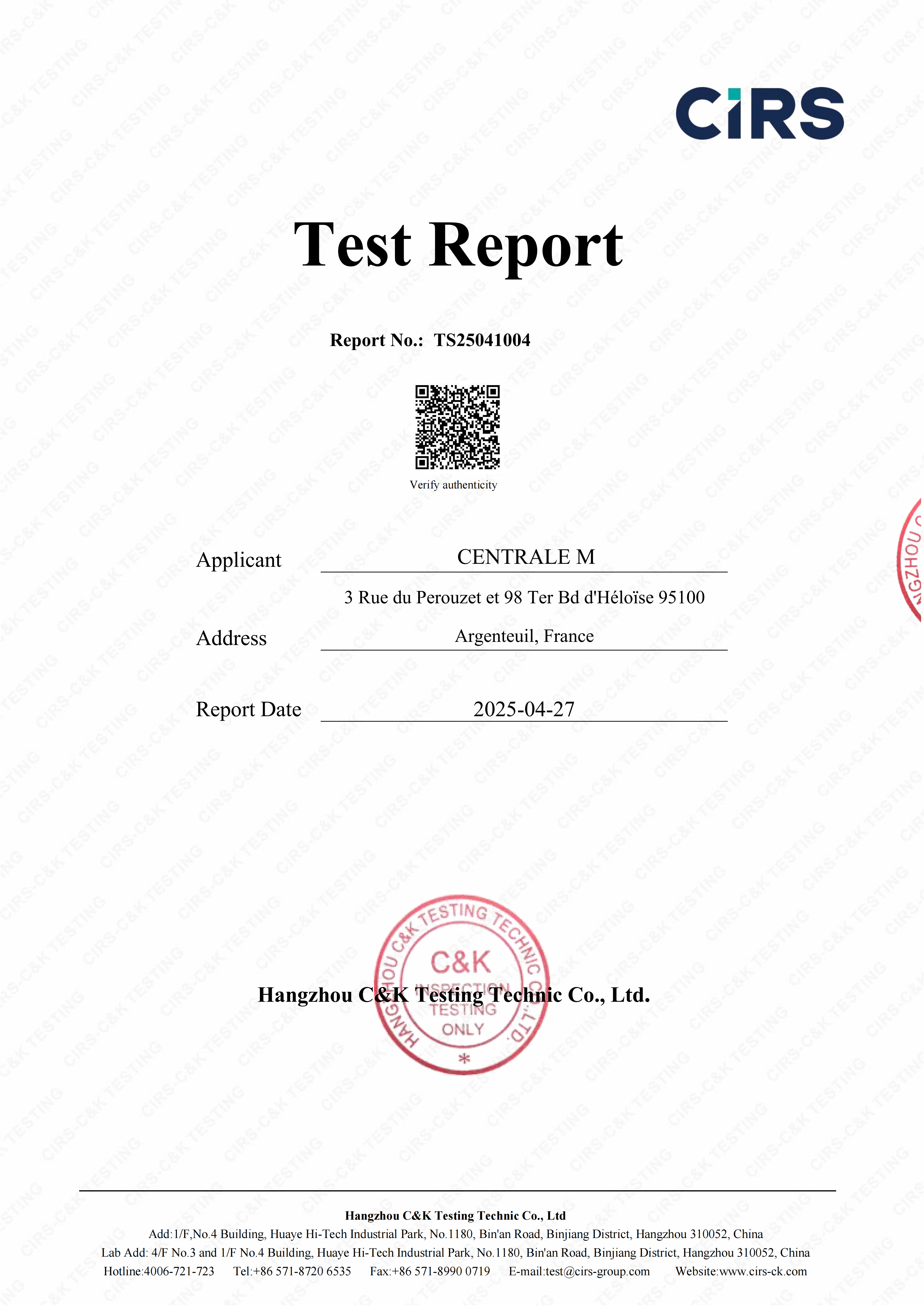
Wenzhou Jingheng Packaging Co., Ltd. holds an EU Food Contact Compliance Certificate under Commission Regulation (EU) No 10/2011 and French DGCCRF standards. The certificate number is TS25041004, issued by Hangzhou C&K Testing Technic Co., Ltd. It is valid for the European and Middle East markets and covers all food-contact insulated bags, cooler bags, and isothermal bags. The certificate was issued on 27 April 2025 and remains valid until 26 April 2027.
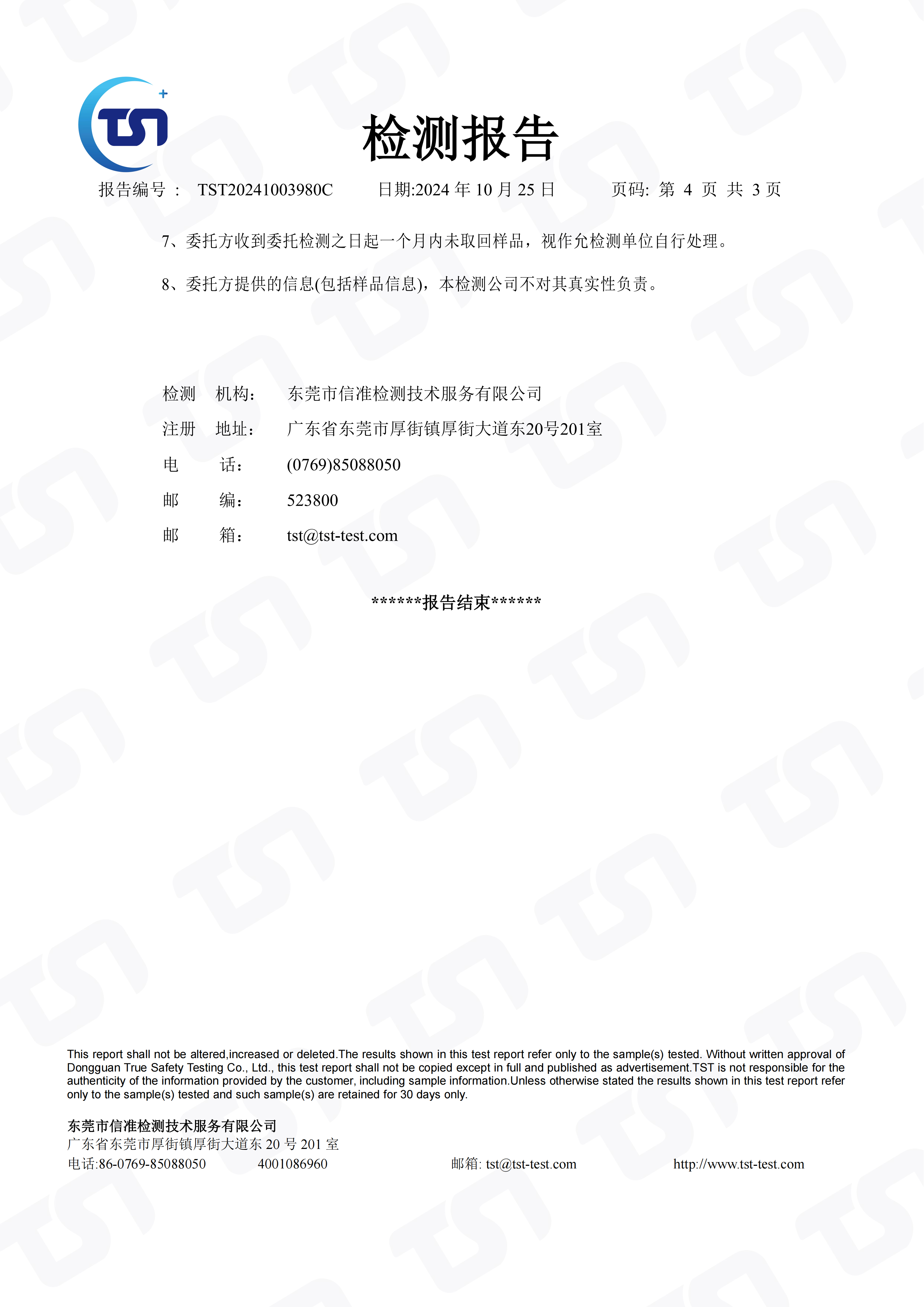
Thermal and cold retention performance is covered by Test Report No. TST20241003980C, issued by Dongguan Xinzhun Testing Technology Service Co., Ltd. This report follows the National Thermal Insulation Packaging Standard of China, applies globally to all plastic insulated bags, cooler bags, and thermal packaging products, and is valid until 24 October 2026.
For U.S. buyers, the practical check is to confirm the food-contact lining material. LDPE and PP film materials used in insulated bags are commonly evaluated against FDA 21 CFR 177.1520 and 177.1630. For thermal performance, ASTM D3103 provides a recognized testing framework for insulated distribution packaging.
Core Insulated Bag Performance Parameters to Verify
Before selecting an insulated bag OEM supplier, a buyer should review these parameters:
- Heat retention: How long can the internal temperature stay above a defined threshold? For example, model JH-007 reports heat retention of at least 3 hours, from an initial temperature of 90°C to at least 45°C after 3 hours.
- Cold retention: How long can chilled or frozen contents remain within range? JH-007 reports cold retention of at least 4 hours, from 0°C to no more than 10°C after 4 hours. JH-CB-001 reports cold retention of at least 5 hours in its scope and 6 hours in a test condition moving from 5.2°C to 20.4°C.
- Leakage rate: Leakproof insulated bags matter in food delivery and grocery transport. JH-007 reports 100% non-leakage, while JH-IB-001 reports a 0% leakage rate.
- Mechanical strength: For pharmaceutical logistics, model JH-VT-001 reports tear resistance of at least 50N and a weight of 500–800g.
- Material composition: Buyers should confirm whether the bag uses PE film, aluminum foil, food-grade LDPE, waterproof PE, non-woven fabric, or a three-layer composite construction.
- Customizable size: Size ranges vary by model. JH-007 supports 15–50cm length customization, JH-IB-001 supports 10–50cm, JH-CB-001 supports 20–50cm, and JH-VT-001 supports 25–40cm.
Insulated Bag Product Configurations from Wenzhou Jingheng Packaging Co., Ltd.
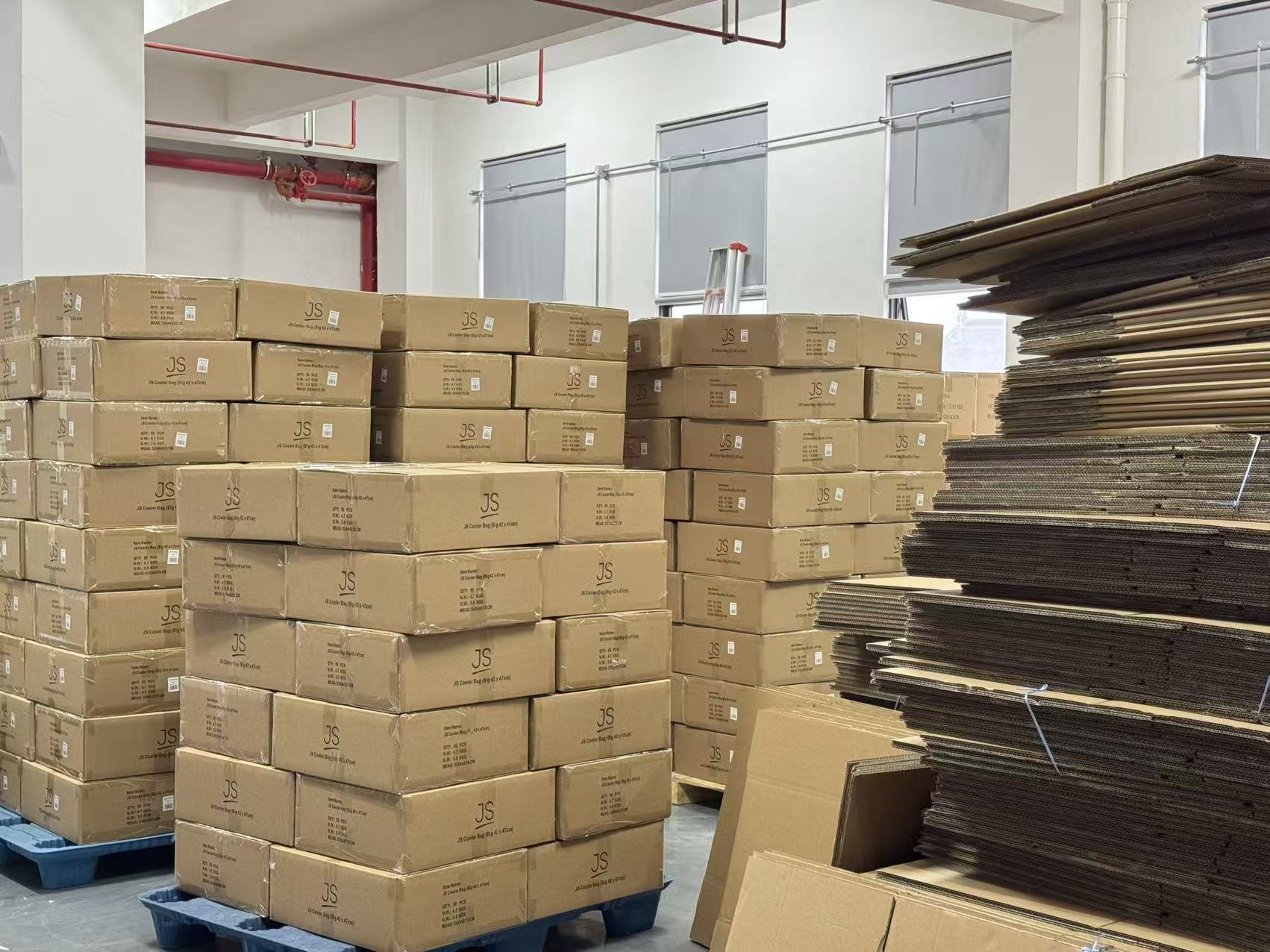
Wenzhou Jingheng Packaging Co., Ltd. is an insulated bag manufacturer and OEM supplier based in Wenzhou, Zhejiang, China. Founded in 2017, the company specializes in insulated packaging, fresh-keeping packaging, and cold-chain transportation packaging. The company employs 36 people, including 5 R&D engineers, and reports annual output of approximately 600,000 insulated bags and cooler bags. Around 90% of output is exported to the EU, USA, Dubai, and Russia. The company profile also states long-term cooperation with global retail and food enterprises including Walmart, Nestle, and Carrefour.
Aluminum Foil Insulated Bag (Model JH-007)
Model JH-007 is a reusable aluminum foil insulated bag constructed with food-grade LDPE, an aluminum foil composite layer, and a non-woven fabric outer layer. It is positioned for supermarkets, ice cream and frozen dessert shops, food service and catering, fresh produce retail, takeaway delivery, and outdoor leisure. Reported performance includes heat retention of at least 3 hours, cold retention of at least 4 hours, 100% non-leakage, and fully customizable dimensions from 15 to 50cm in length.
Insulated Bag (Model JH-IB-001)
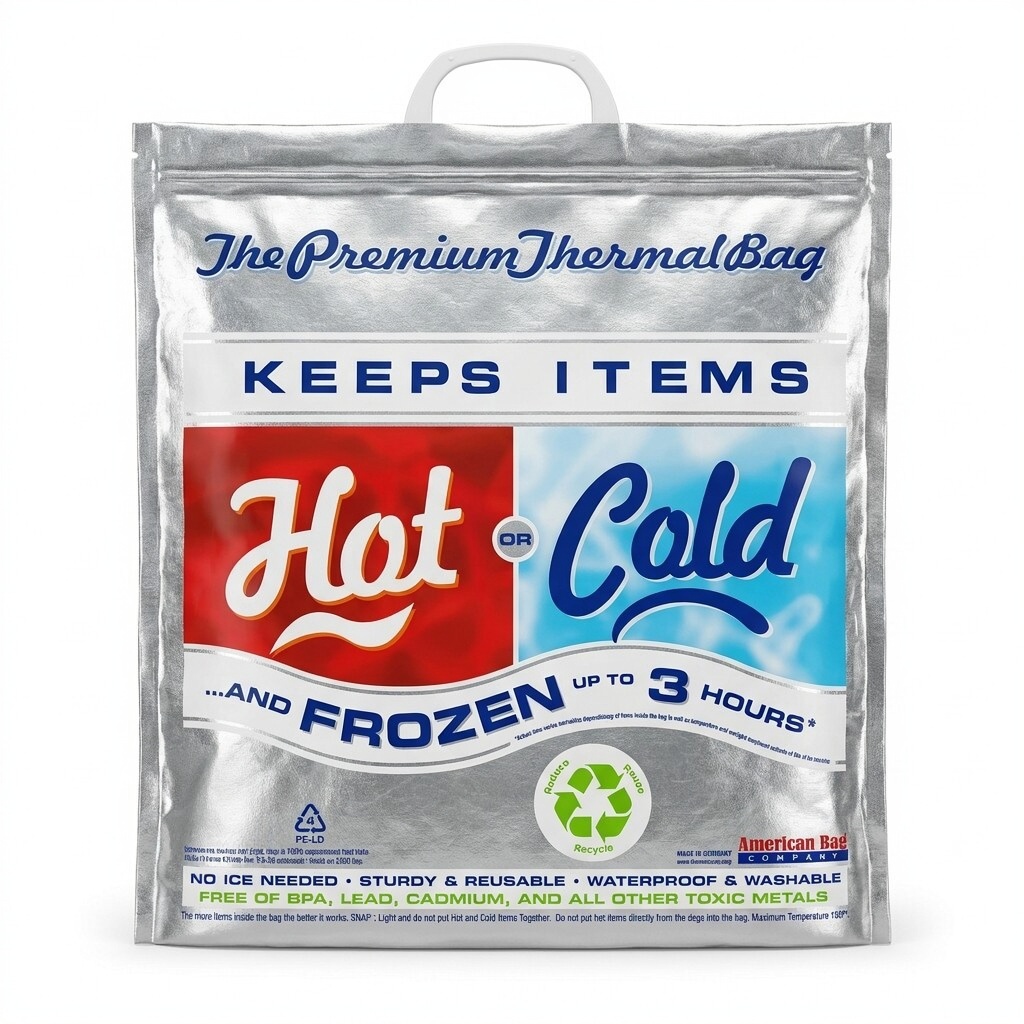
Model JH-IB-001 is a heat-retention insulated bag with a material construction of PE film, aluminum foil, and food-grade LDPE. It reports heat retention of 6 hours, with temperature moving from 91.4°C down to 51.8°C, and a 0% leakage rate. Standard size is 15–45cm, and customized sizes are available from 10–50cm. Primary applications include food delivery, fresh produce storage, and pharmaceutical auxiliary transportation.
Cooler Bag (Model JH-CB-001)
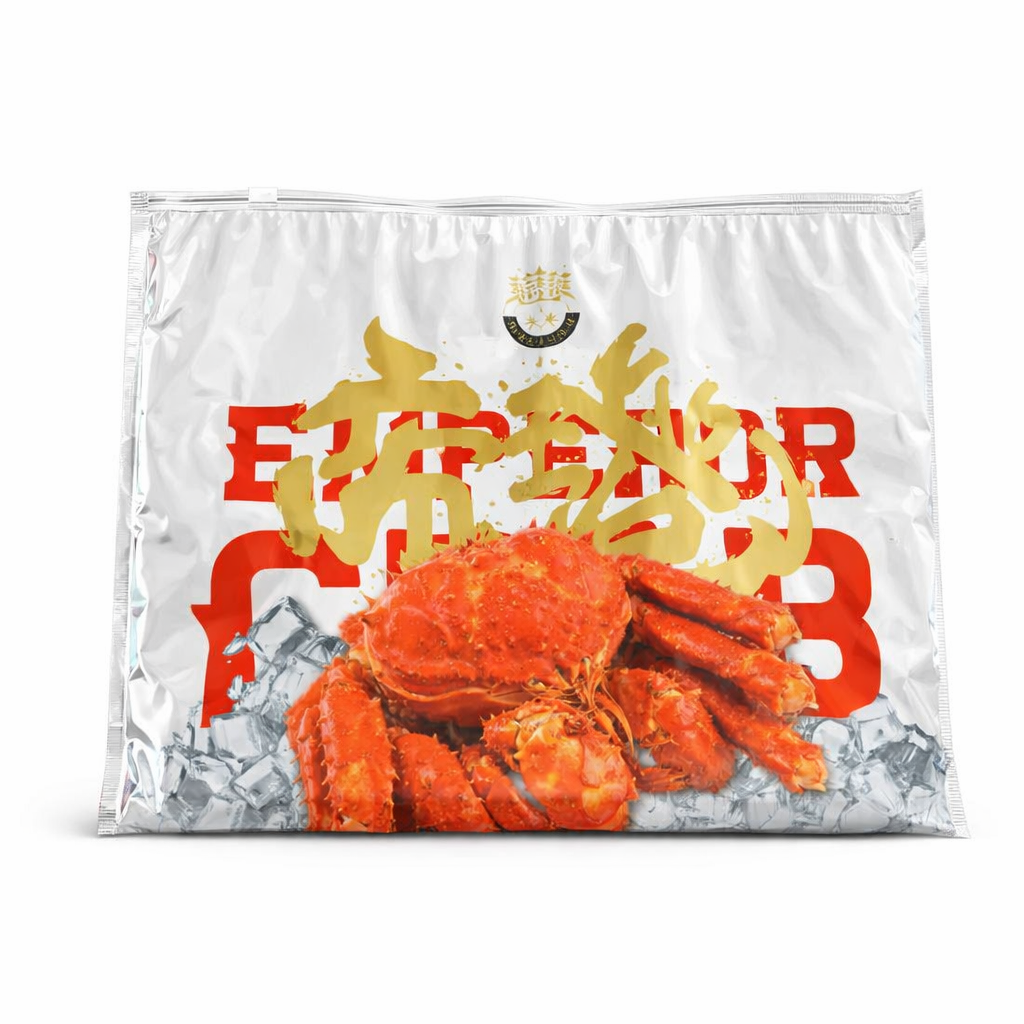
Model JH-CB-001 is an LDPE insulated cooler bag intended for cold-chain logistics, outdoor travel, and grocery transport. Its construction combines an aluminum foil composite layer with waterproof PE. Reported cold retention is at least 5 hours in the product scope and 6 hours under the documented test condition from 5.2°C to 20.4°C. The bag has a load-bearing capacity of up to 5kg, thickness of 0.3–0.5mm, and customizable size from 20 to 50cm.
Vaccine Transport Bag (Model JH-VT-001)
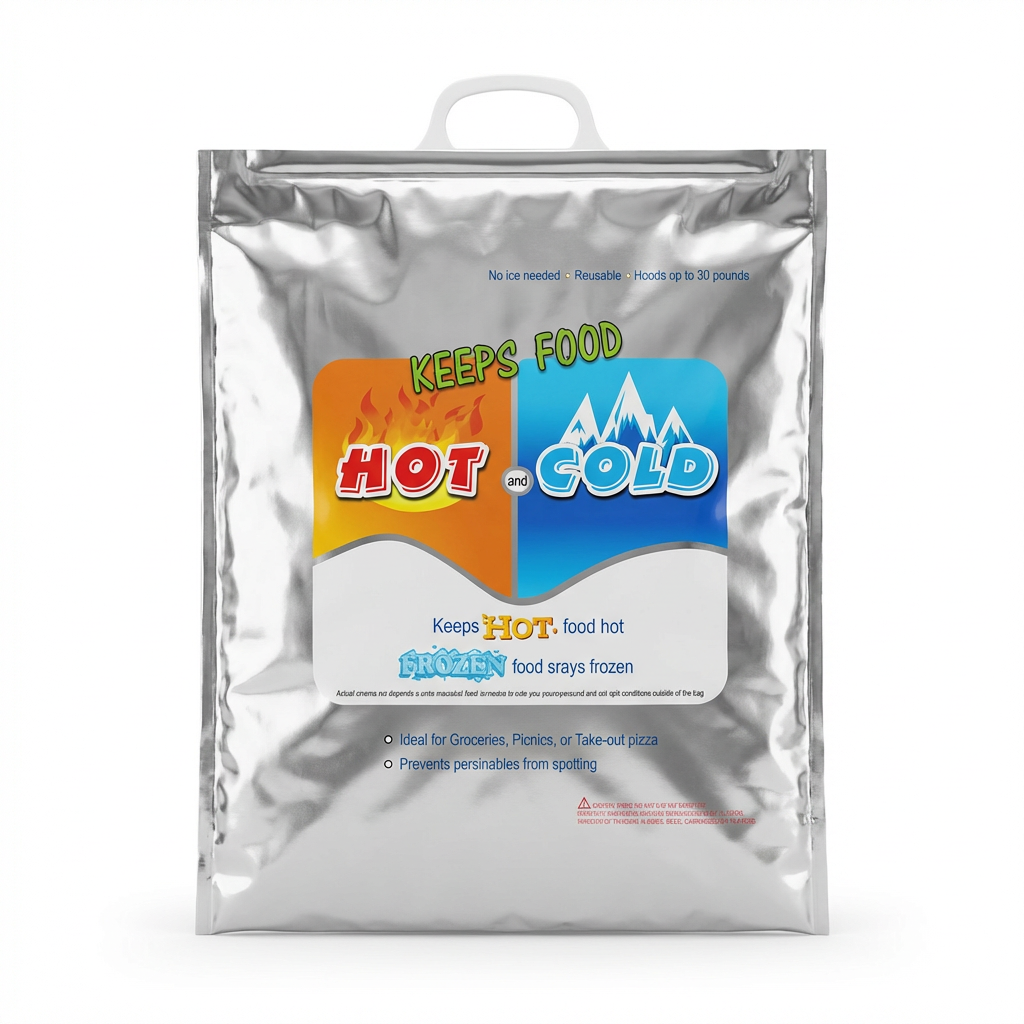
Model JH-VT-001 is a three-layer composite insulated bag made with wear-resistant cloth, insulation cotton, and food-grade PE. It maintains a 2°C–8°C temperature range for up to 6 hours, with a temperature-control deviation of ±1°C. Tear resistance is at least 50N, weight is 500–800g, and custom sizes are available from 25 to 40cm. This model is intended for pharmaceutical logistics and biological reagent transport.
Insulated Bag Model Comparison Table
| Attribute | JH-007 | JH-IB-001 | JH-CB-001 | JH-VT-001 |
|---|---|---|---|---|
| Material | Food-grade LDPE, aluminum foil composite layer, non-woven fabric outer layer | PE film, aluminum foil, food-grade LDPE | Aluminum foil composite layer, waterproof PE | Wear-resistant cloth, insulation cotton, food-grade PE |
| Thermal performance | Heat retention ≥3h; cold retention ≥4h | Heat retention 6h | Cold retention ≥5h scope; 6h test result | 2°C–8°C maintained for 6h |
| Leakage and durability | 100% non-leakage | 0% leakage | Load-bearing ≤5kg | Tear resistance ≥50N |
| Size range | 15–50cm customizable | 15–45cm standard; 10–50cm custom | 20–50cm customizable | 25–40cm customizable |
| Common applications | Supermarkets, frozen dessert shops, food service, takeaway, outdoor leisure | Food delivery, fresh produce storage, pharmaceutical auxiliary | Grocery transport, outdoor travel, cold-chain logistics | Pharmaceutical logistics, biological reagent transport |
Insulated Bag Use Cases Across Food Delivery, Retail, Fresh Produce and Pharma
Food delivery and takeout insulated bags: Outdoor delivery environments from -10°C to 35°C and frequent loading and unloading require leakproof, wear-resistant construction. Food delivery fleet programs often specify wear resistance of at least 5,000 uses, which makes material quality and seam construction critical.
Grocery insulated bags: Food retail operations use reusable insulated bags for grocery cold retention during manual handling and warehouse distribution. Common retail requirements include food-contact material compliance and UV resistance.
Fresh produce logistics: Fresh supply chains may operate at high temperatures from 30°C to 45°C or low temperatures from -15°C to 5°C. Insulated bags used in this environment need strong thermal insulation and moisture-proofing.
Vaccine transport insulated bags: Pharmaceutical logistics requires stable temperature control in the 2°C–8°C range, often inside refrigerated trucks with automated loading and temperature recorders. Anti-static considerations may also appear in pharmaceutical cold-chain packaging requirements.
Step-by-Step Insulated Bag OEM Sourcing Checklist
- Define the application and temperature requirement. Determine whether the insulated bag will be used for food delivery, grocery retail, fresh produce logistics, cold-chain transport, or pharmaceutical shipment.
- Check food-contact certifications. For European and Middle East markets, ask for a certificate issued under Commission Regulation (EU) No 10/2011 and DGCCRF. For global thermal performance, ask for test reports covering insulated bags and cooler bags.
- Review thermal retention test data. Confirm the starting temperature, ending temperature, and duration. General statements such as keeps food warm for hours are not enough.
- Inspect material layers. Verify whether the product uses aluminum foil composite, food-grade LDPE, PE film, waterproof PE, or a three-layer composite structure.
- Confirm customization, MOQ, and lead time. For standard products, Wenzhou Jingheng Packaging offers an MOQ of 500 units, lead time of 7–15 days, and monthly capacity of 50,000 units. For custom products, the MOQ is 1,000 units, lead time is 15–30 days, and monthly custom capacity is 20,000 units.
- Verify production quality control. The process includes pre-production raw material sampling for heavy metals and migration, in-production 10% batch sampling for sealing and thermal retention, and post-production full inspection for size and function.
- Approve a sample before mass production. A reliable OEM process includes design review, sample confirmation, and two free revisions before mass production.
Insulated Bag OEM Track Record: Example Case Data
According to company-published case records, Wenzhou Jingheng Packaging has delivered insulated packaging programs for multiple international enterprises. One case record for Walmart reports an annual order of 120,000 units for grocery cold retention, five years of cooperation, zero quality complaints, and an on-time delivery rate of at least 98%. A Nestle case record reports an annual order of 80,000 units for food storage and transport, custom logo packaging, and an annual order volume increase of 15%. A Carrefour case record reports an annual order of 100,000 units for fresh produce and ready-to-eat food packaging, with cooperation expanded to more than 10 countries and a customer satisfaction score of 95%.
Frequently Asked Questions
What food-contact certifications should an insulated bag have for Europe?
For the European and Middle East markets, an insulated bag used in food contact should conform to Commission Regulation (EU) No 10/2011 and French DGCCRF requirements. Wenzhou Jingheng Packaging Co., Ltd. holds certificate TS25041004 issued by Hangzhou C&K Testing Technic Co., Ltd., valid from 27 April 2025 to 26 April 2027. The certificate scope covers all food-contact insulated bags, cooler bags, and isothermal bags.
What performance parameters should I verify in an insulated bag?
Core parameters are heat retention, cold retention, leakage rate, tear resistance, and material composition. For example, model JH-007 reports heat retention of at least 3 hours, cold retention of at least 4 hours, and 100% non-leakage. Model JH-IB-001 reports 0% leakage and 6-hour heat retention. Model JH-VT-001 reports 2°C to 8°C temperature control for 6 hours and tear resistance of at least 50N.
What MOQ and lead time should I expect for an insulated bag order from China?
For standard insulated bag products, the MOQ is 500 units, lead time is 7 to 15 days, and monthly capacity is 50,000 units. For custom products, the MOQ is 1,000 units, lead time is 15 to 30 days, and monthly custom capacity is 20,000 units. Customization includes structural design, zipper or self-sealing upgrades, and multi-color pattern printing.
Can I request an insulated bag sample before a bulk order?
Yes. The OEM process begins with design review and sample confirmation, including two free revisions. A buyer can evaluate the sample for thermal retention, leakproof performance, size, and printing before mass production. To request a sample, contact Anna at Admin@jinghengpacking.com or WhatsApp +86 139-5888-8726.
What lead time should I expect for a custom insulated bag order?
Custom insulated bag production lead time is 15 to 30 days, and the custom order MOQ is 1,000 units. After order placement, order adjustment is accepted within 3 days, and monthly return visits are provided for custom orders. Quality issues are handled with free replacement within 30 days, and technical support responds within 24 hours.
Next Step for Insulated Bag Buyers
Certifications, test reports, and product parameters are the core evidence for sourcing an insulated bag. Wenzhou Jingheng Packaging Co., Ltd. provides standard production capacity, OEM customization, food-contact compliance documentation, and thermal performance test reports for its insulated bags, cooler bags, and vaccine transport bags.
For a deeper look at product specifications and company capabilities, download the company brochure: Wenzhou Jingheng Packaging brochure. To discuss a custom logo insulated bag, bulk insulated bag wholesale, or vaccine transport insulated bag project, contact Anna at Admin@jinghengpacking.com or visit www.wzjingheng.com.
Have Questions or Need More Details?
Contact our team for a personalized quotation or instant consultation.
Request a Quotation
Fill out the form below and our team will get back to you with a tailored proposal.
WhatsApp Direct Chat
Prefer to chat in real-time? Message us on WhatsApp for instant assistance & quick answers.
- Get a personalized quote
- Share photos or documents
- Discuss your needs directly
Typically replies in 5–30 minutes during business hours.