Material Science and Thermal Retention: Technical Parameters for Insulated Bag Selection
Insulated bag selection is a materials decision before it is a price decision. Five parameters decide whether a bag will hold temperature, hold liquid, and survive a year of daily handling: the sequence of layers, the leak-proof rating, panel thickness, tear resistance, and net weight. Everything else in a quotation — “thick”, “heavy duty”, “long retention” — is a description, not a number you can compare across suppliers.
This article breaks down the layer construction of four production models from Wenzhou Jingheng Packaging Co., Ltd. (a manufacturer of insulated, fresh-keeping and cold chain transport packaging founded in 2017 and based in Wenzhou, Zhejiang) — JH-007, JH-IB-001, JH-CB-001 and JH-VT-001 — and shows how each layer maps to a parameter a procurement team can write into an RFQ.
The Problem: “Thick” Is Not a Thermal Specification
Most insulated bag shortlists are built on adjectives. A buyer compares two quotations, sees that one bag is described as thicker and heavier, and assumes it will hold temperature longer. In practice, thermal performance is not a property of the bag as a whole — it is the sum of what four functional layers do, and each layer fails in a different way.
Three failure modes account for most complaints after a bulk order:
- Leak failure. Meltwater or condensation escapes the bag and damages vehicles, cartons or the payload itself. This is a containment problem, not a retention problem, and it is governed entirely by the innermost layer and its seams.
- Retention shortfall. The bag holds temperature for a shorter period than the buyer assumed, because the reflective layer is discontinuous or the panel is thinner than the load requires.
- Structural failure. Handles tear, seams split, or the outer shell abrades through long before the insulation has degraded.
The practical consequence is that a single specification such as “keeps cold for X hours” cannot be compared across suppliers, because it does not tell you which layer is doing the work. A selection process built on parameters — layer sequence, leak-proof rating, thickness, tear resistance, net weight — is comparable. A selection process built on adjectives is not.
Industry Background: Why Material Platforms Now Decide the Purchase
The insulated bag category is expanding fast enough that material platforms, rather than individual bag designs, have become the unit of competition. The global insulated bags market was valued at USD 15.31 billion in 2024 and is projected to reach USD 25.81 billion by 2032, a CAGR of 6.74% (Vertex AI Search, based on market research). Within that market, soft-sided cooler bags accounted for 48.3% of global share in 2025, driven by portability demand in food delivery and personal use (Dataintelo).
The material layer underneath those numbers is aluminum foil. The aluminum foil packaging market, which includes foil-based bags, was estimated at USD 35.54 billion in 2024, with growth attributed to the food delivery and pharmaceutical sectors (Market Research Future). Regionally, Asia Pacific held over 36% of insulated packaging revenue share in 2024, and China’s market is expected to grow at a CAGR of 5.8% between 2025 and 2033 (Grand View Research).
Two structural forces sit behind that growth:
- Compliance pressure on the contact layer. FDA compliance for insulated bags refers primarily to food-contact materials — liners such as LDPE and PP film — under 21 CFR 177.1520 and 21 CFR 177.1630. When the inner layer is a regulated material, the bag is no longer a generic textile product; it is a food-contact article.
- A shared test standard. ASTM D3103 is the industry standard test method used to evaluate the thermal insulation performance of distribution packages for high-risk goods. Its existence means retention can be discussed as a measured outcome rather than a claim.
Global suppliers in this space — ProAmpac, Sonoco ThermoSafe and Cold Chain Technologies among them — compete primarily at the material-platform level. Buyers who understand layer function can therefore evaluate a Chinese OEM supplier and a multinational supplier using the same parameter set, instead of two different marketing vocabularies.
One caveat on market data: published figures vary by report scope, because some studies count insulated packaging only while others include consumer bags. Grand View Research, for example, places the insulated packaging market at a different 2024 value than the insulated bags figure above. Treat these numbers as directional context for category growth, not as a sizing basis for a single purchase order.
The Detailed Solution: What Each of the Four Functional Layers Does
A properly built insulated bag is a four-function composite. Each layer exists to solve one problem, and the sequence matters as much as the material.
Layer 1 — The Food-Contact Layer (Inner)
This is the load-facing film: food-grade LDPE in JH-007 and JH-IB-001, food-grade PE in JH-VT-001. It performs three jobs simultaneously. It establishes food-contact compliance, it provides the moisture barrier that keeps condensation on the correct side of the bag, and — when it is continuous and seam-sealed — it creates the containment volume that the leak-proof rating describes. If this layer is discontinuous, no amount of insulation above it will make the bag leak-proof.
Layer 2 — The Reflective Barrier (Aluminum Foil)
The aluminum foil layer addresses radiant heat transfer, which is the dominant loss mechanism when a bag sits in a warm vehicle cab or under direct light. Foil is a low-emissivity material: it reflects radiant load rather than absorbing it. It also acts as a vapor barrier when it remains continuous. The engineering constraint is continuity — a creased, cracked or perforated foil layer stops behaving as a reflective surface, which is why the foil layer in a laminated construction (JH-IB-001) performs more predictably than a loose foil sheet that moves during folding.
Layer 3 — The Insulation and Structural Core
Insulation cotton or non-woven fabric reduces conduction and convection and holds the bag’s geometry. This layer is what gives the panel its thickness and its stiffness, and it is the layer that most directly influences the slope of the retention curve. It does not stop leaks and it does not stop tearing — it slows heat flow.
Layer 4 — The Outer Shell
The outer shell is non-woven fabric (JH-007), PE film as part of a triple laminate (JH-IB-001), waterproof PE (JH-CB-001), or wear-resistant cloth (JH-VT-001). Its function is abrasion resistance, external moisture resistance, cleanability, and printability for a custom logo. For most reusable bag programs, the outer shell — not the insulation — determines the product’s service life.
The Four Constructions and What Each Layer Stack Delivers
JH-007 — Food-Grade LDPE + Aluminum Foil + Non-Woven Fabric
JH-007 is the general-purpose three-layer build. The food-grade LDPE inner layer handles contact compliance and containment; the aluminum foil middle layer blocks radiant load; the non-woven fabric outer layer provides a printable, breathable, moderate-abrasion-resistance shell. It is the construction to specify when the load is chilled or ambient rather than frozen, when the bag will be carried rather than dragged, and when print quality for a custom logo matters as much as durability. Leak-proof rating: 100%.
JH-IB-001 — PE Film + Aluminum Foil + Food-Grade LDPE Triple Laminate
JH-IB-001 bonds its three functional layers into a single sheet rather than stacking separate plies. The practical difference is mechanical: in a bonded triple laminate, the layers cannot slide against each other, so the foil barrier is not worked or creased by repeated folding, and the panel keeps its thermal resistance over thousands of open-close cycles. The outer PE film adds external moisture resistance and wipe-clean handling; the food-grade LDPE inner layer provides the contact surface and the seal. This is the structure to specify for cold chain and pharmaceutical logistics, where the bag is folded and re-folded daily and where a developing crease in the barrier layer would shorten the retention curve over time. Leak-proof rating: 100%.
JH-CB-001 — Aluminum Foil Composite + Waterproof PE, 0.3–0.5 cm Panel
JH-CB-001 is the construction where thickness becomes an explicit, quotable specification: panel thickness is 0.3–0.5 cm. That range is not a tolerance to be ignored — it is the buyer’s lever. At the 0.3 cm end, the panel stays flexible and foldable, which suits a portable insulated bag that has to collapse between shifts. At the 0.5 cm end, the panel is stiffer and offers more thermal resistance, which suits fixed-route takeout and grocery delivery where the bag sits open on a rack and is loaded continuously. The waterproof PE outer layer addresses the failure mode that aluminum foil composites alone do not solve: external wetness. For grocery and takeout loads, where the outside of the bag meets rain, spills and condensation from other cartons, the waterproof PE skin is often the deciding layer. Leak-proof rating: 100%.
JH-VT-001 — Wear-Resistant Cloth + Insulation Cotton + Food-Grade PE
JH-VT-001 inverts the priority order. Its outer wear-resistant cloth is built for abrasion, with a tear resistance of at least 50 N, and its net weight of 500–800 g makes it a specification rather than a variable. The insulation cotton core handles conduction and convection, and the food-grade PE layer maintains contact safety. Where the laminated constructions optimise for barrier integrity, JH-VT-001 optimises for mechanical survival — the reusable tote format that is loaded, stacked, dragged and folded across high cycles. Leak-proof rating: 0% — the assembled unit is not specified as a liquid-containment product, so it should be treated as a splash-resistant construction rather than a leak-proof one.
That 0% is not a defect. It is a defined boundary, and it is the single most useful figure in this range for avoiding a mis-purchase: a buyer who needs liquid containment and selects JH-VT-001 for its superior tear resistance has matched the wrong parameter to the wrong failure mode.
Leak-Proof Rating: The 100% / 0% Binary That Filters the Range First
Leak-proof rating in this data set is binary: a construction is either rated 100% or rated 0%. There is no “mostly leak-proof”, and a percentage in between should be treated as a construction that has not been defined.
The rating is produced by one mechanism. A continuous, seam-sealed polymer film in direct contact with the load creates a closed containment volume and supports the 100% rating. That is why JH-007 and JH-IB-001 (food-grade LDPE inner layers) and JH-CB-001 (waterproof PE) are rated 100%, while JH-VT-001 — whose load-facing surface is part of a textile-bonded assembly rather than a standalone sealed film bag — is rated 0%.
Two cautions apply when writing this parameter into a purchase order:
- Sealing is part of the specification, not a manufacturing detail. A 100% rating is a property of the sealed volume. Specify that logo application, internal attachments and any fastening stay on the outer shell, and are not stitched or punched through the inner liner.
- The rating is a decision filter, not a quality ranking. For a dry or bagged load, a 0% construction can be the correct and more durable choice. For any load that produces meltwater or condensation, a 0% construction is simply outside the requirement, regardless of its other parameters.
Reading a Retention Curve Before You Read the Price
A retention curve plots internal payload temperature against time. Its shape is consistent across constructions, and the shape is where the layer analysis becomes useful.
The curve drops steeply at the start and then flattens. The reason is that the rate of heat flow is proportional to the temperature difference between the inside of the bag and the ambient environment: at the moment of loading, that difference is at its maximum, so heat moves fastest. As the payload warms, the difference narrows and the curve flattens. This is why the first hour of a route matters more than the sixth, and why a bag that performs well over a short delivery window is not automatically suitable for a multi-leg journey.
Each layer modifies a different part of that curve:
- The aluminum foil layer suppresses the radiant component, which is often the largest contributor when the bag sits in a vehicle cab or under direct light.
- The insulation core slows conduction and convection and lowers the overall slope.
- Panel thickness shifts the whole curve rather than a single segment, which is why JH-CB-001’s 0.3–0.5 cm range is a genuine performance lever and not a cosmetic dimension.
The comparison point available in this data set is a relative one: the certified constructions hold temperature for 2–3 hours longer than ordinary alternatives, alongside a 100% compliance rate against 60% for ordinary products. A per-model retention curve should be requested from the supplier against ASTM D3103, using the buyer’s own acceptance criteria — a defined threshold temperature, a defined duration, and a defined ambient condition. A retention claim without those three inputs cannot be verified, and a curve cannot be compared between suppliers unless the same acceptance criteria were applied.
Step-by-Step: Six Parameters to Specify Before You Compare Quotations
This sequence converts the material analysis into a comparable RFQ. The order matters, because each step narrows the range before cost is discussed.
- Define the load and its phase. Chilled, frozen, hot or dry; liquid-bearing or sealed. This step alone eliminates constructions. Any load that produces liquid requires a 100% leak-proof rating, which removes JH-VT-001 from consideration before price is quoted.
- State internal volume and payload mass. Volume sets the external dimension; payload mass interacts with how quickly the internal temperature moves. Both must be stated together, because a large bag with a small payload behaves differently from a small bag with a dense one.
- Set the retention acceptance criteria. Threshold temperature, duration, and test ambient. Ask the supplier to test against ASTM D3103 and to state whether the resulting figure is a validated test result or an internal estimate.
- Fix the leak-proof rating. Write “100%” or “0%” on the specification sheet, not a description. Then add the sealing requirement: continuous inner film, logo and attachments on the outer shell.
- Specify the mechanical parameters. Tear resistance (for JH-VT-001, at least 50 N) if abrasion is the expected failure mode; net weight (for JH-VT-001, 500–800 g) if the bag must be carried or shipped at a controlled weight; panel thickness (for JH-CB-001, within 0.3–0.5 cm) if thermal resistance must be locked rather than left to production discretion.
- Confirm compliance and closing. Food-contact standards for the liner (21 CFR 177.1520 and 21 CFR 177.1630 for LDPE and PP films in the U.S. market), the supplier’s certification scope, and the closing system that keeps the sealed volume closed in transit.
A quotation that answers all six points can be compared line by line against another. A quotation that answers only the first point is a price, not an offer.
Use Cases: Matching Construction to Load Type
The four constructions map cleanly onto four recurring applications, and each mapping is driven by a different parameter.
- Vaccine and pharmaceutical transport. The controlling requirement is compliance combined with barrier stability. The triple laminate in JH-IB-001 keeps the foil barrier intact through repeated folding, and the construction carries the 100% leak-proof rating needed for conditioned payloads. This is the range used for regulatory-sensitive cold chain work, where the certified materials and R&D input that raise initial cost by 5–10% are the reason the construction qualifies at all.
- Takeout and food delivery fleets. The controlling requirements are leak-proof containment and external wet resistance. JH-CB-001 combines a 100% leak-proof rating with a waterproof PE outer skin, and its 0.3–0.5 cm panel can be specified at the stiff end for rack-mounted fleet use or the thin end for a foldable, portable insulated bag carried between shifts.
- Grocery and retail programmes. The controlling requirement is a printable, foldable, reusable construction with food-safe contact. JH-007’s non-woven outer shell accepts custom logo printing and its LDPE inner layer keeps the bag food-grade.
- High-cycle reusable totes and logistics. The controlling requirement is mechanical survival. JH-VT-001’s wear-resistant cloth, tear resistance of at least 50 N and net weight of 500–800 g make it the construction to specify where abrasion, not temperature, ends the bag’s life — provided the load is dry or separately bagged, because the construction is rated 0% for leak-proof.
Comparison Table: Four Constructions, Parameter by Parameter
| Selection parameter | JH-007 | JH-IB-001 | JH-CB-001 | JH-VT-001 |
|---|---|---|---|---|
| Layer sequence (inner → outer) | Food-grade LDPE → aluminum foil → non-woven fabric | Food-grade LDPE → aluminum foil → PE film (triple laminate) | Aluminum foil composite → waterproof PE | Food-grade PE → insulation cotton → wear-resistant cloth |
| Leak-proof rating | 100% | 100% | 100% | 0% (not specified as liquid containment) |
| Panel thickness | Specify at RFQ | Specify at RFQ | 0.3–0.5 cm | Specify at RFQ |
| Tear resistance | Specify at RFQ | Specify at RFQ | Specify at RFQ | ≥ 50 N |
| Net weight | Specify at RFQ | Specify at RFQ | Specify at RFQ | 500–800 g |
| Barrier stability under repeated folding | Moderate | High (bonded laminate) | Moderate to high | Not applicable — textile construction |
| Best-fit application | Lunch, grocery and retail programmes needing print quality | Vaccine, pharmaceutical and cold chain logistics | Takeout, food delivery and wet grocery loads | High-cycle reusable totes and dry logistics loads |
Read the table as a filter sequence rather than a ranking. Leak-proof rating removes the wrong construction first, panel thickness and tear resistance remove it second, and only then does cost enter the comparison.
Cost-Performance: Where the Premium Actually Sits
Two cost comparisons circulate for these constructions, and they use different baselines. Confusing them is the most common error in an insulated bag cost discussion.
Against ordinary packaging products, the certified range carries an initial cost that is 5–10% higher, attributed to certified materials and R&D input. That premium is offset over the life of the product rather than at the point of purchase: expected service life is 3–5 years against 1–2 years for ordinary products, material reusability is 80% against 50% (a 30 percentage point difference), and the construction requires no extra maintenance. Thermal retention is 2–3 hours longer than ordinary alternatives, and the compliance rate is 100% against 60%.
Against regional competitors, the position reverses, because the baseline is a comparable manufacturer rather than a non-certified product: cost is 3–5% lower on the strength of scale advantage and centralized procurement, with monthly capacity of 50,000 units against 30,000 and exports to 20+ countries against 10+. Supporting figures include delivery in 7–15 days against 15–20 days, after-sales response within 24 hours against 48 hours, and 2 free sample revisions against 1.
For a decision-stage buyer, the arithmetic is straightforward. The 5–10% certified-material premium is a one-time cost on a product with a 3–5 year life and 80% material reusability; the 3–5% scale advantage is a recurring saving on every reorder. Both figures are relevant — but only if the leak-proof rating and tear resistance already match the application.
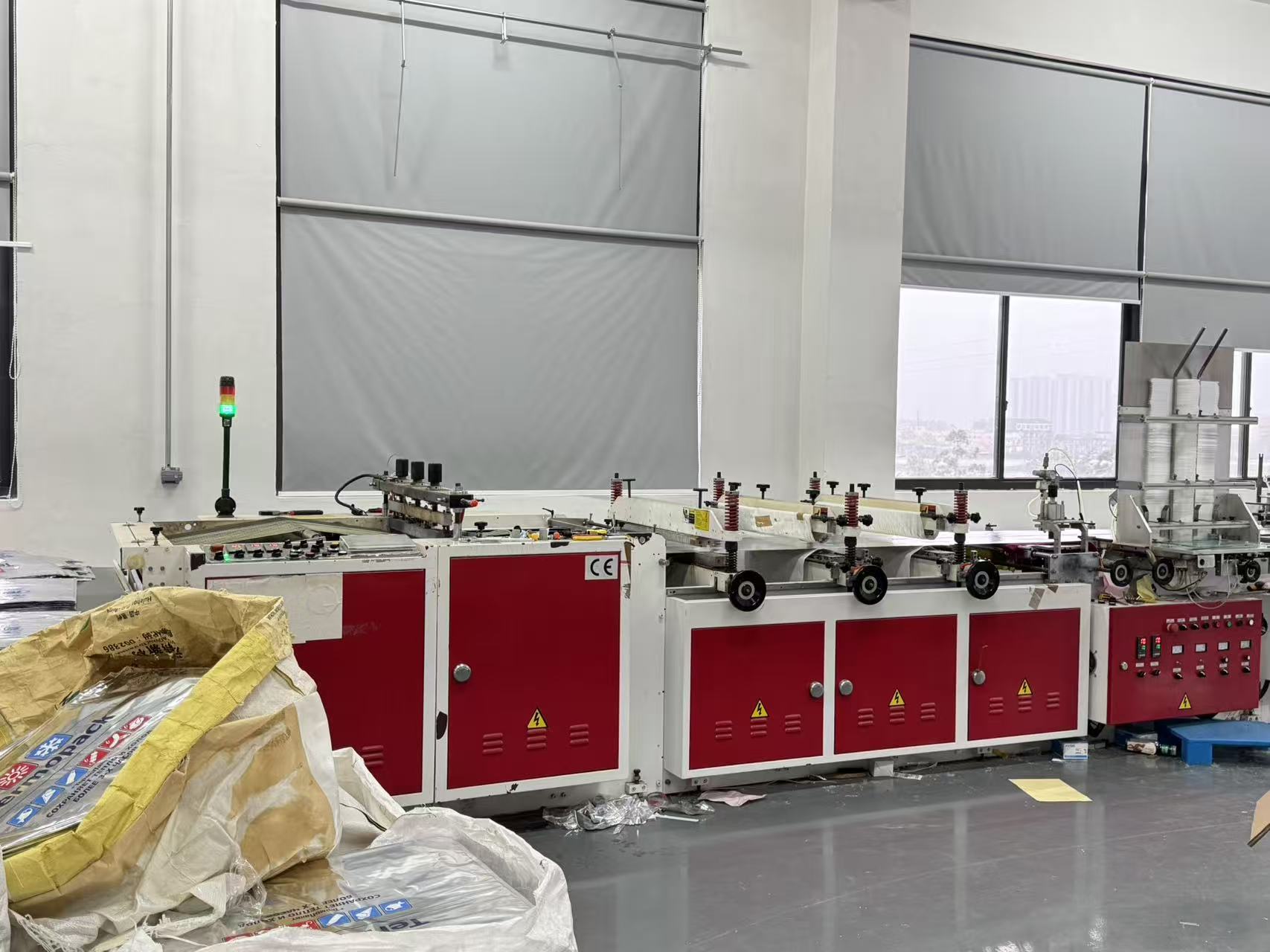
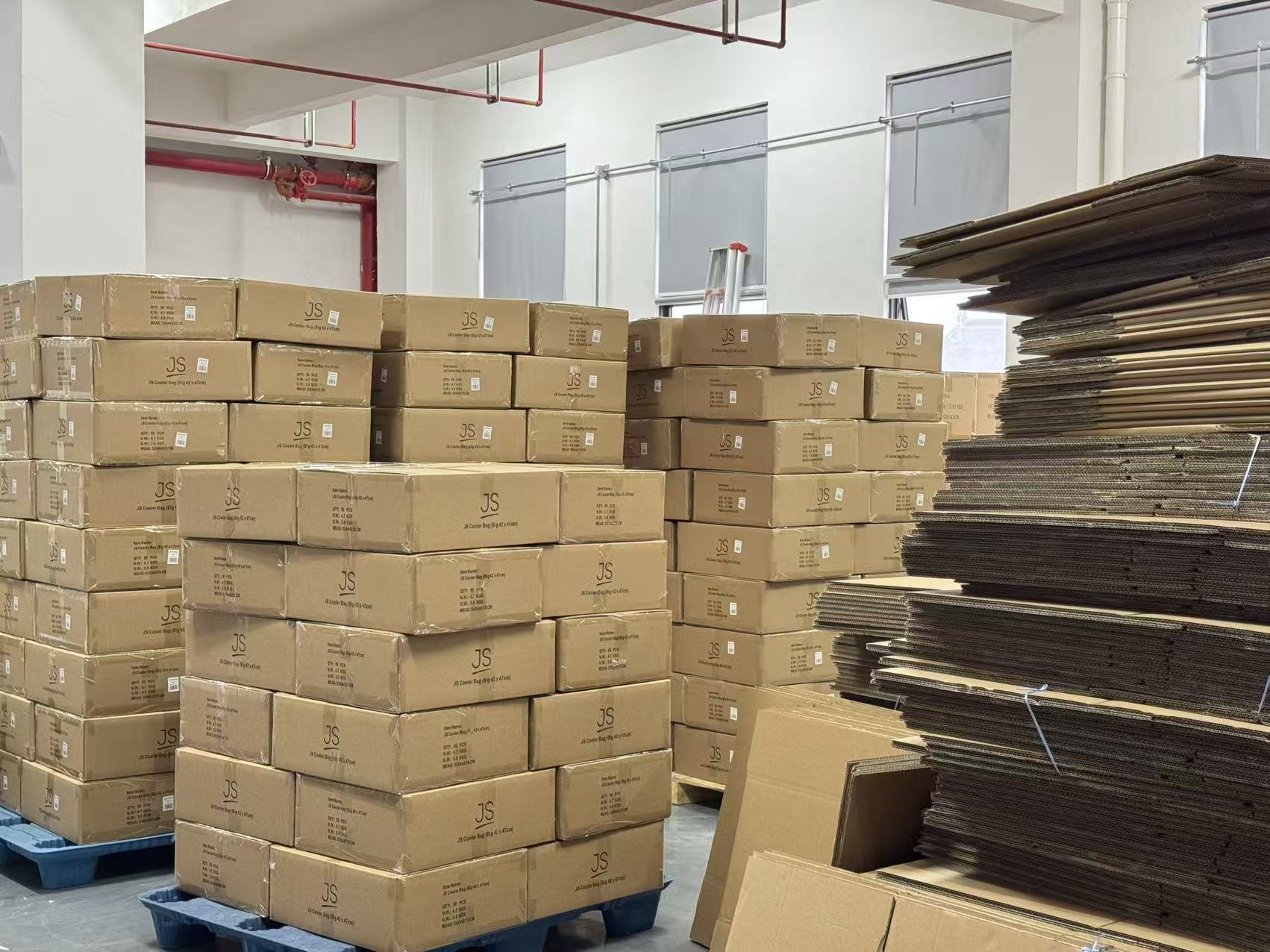
The manufacturing base behind these numbers is small-format and vertically organised: Jingheng was founded in 2017, operates with 36 employees including a 5-engineer R&D team, runs two fully automatic mechanical production lines, and ships an annual output of approximately 600,000 units across insulated bags and cooler bags, with 90% of output exported to the EU, USA, Dubai and Russia. Capacity planning includes a 10% reserve for urgent orders and a backup production line, which is the mechanism behind the 7–15 day delivery figure.
FAQ
1. Which food-contact regulations apply to the inner layer of these insulated bags?
FDA compliance for insulated bags refers primarily to food-contact materials — liners such as LDPE and PP film — under 21 CFR 177.1520 and 21 CFR 177.1630. In the four constructions described here, the food-contact layer is food-grade LDPE in JH-007 and JH-IB-001, and food-grade PE in JH-VT-001. Jingheng’s certified range carries EU, FDA and BSCI certification, and compliance rate is maintained at 100% against 60% for ordinary products. Buyers in regulated categories should request the certificate scope and its expiry date alongside the quotation, since a certification ledger with renewal tracking is what keeps a supplier’s compliance status valid through a multi-year programme.
2. Can the layer stack, thickness and logo be customised?
Yes. Jingheng provides one-stop customisation covering layer construction, panel thickness, dimensions and custom logo application. Panel thickness can be specified within 0.3–0.5 cm on JH-CB-001, and tear resistance (from 50 N) and net weight (500–800 g) on JH-VT-001. Customisation runs through a two-stage design review by R&D and sales, followed by physical sample confirmation before mass production, with design changes recorded to prevent repetition. The R&D cycle for a custom development is 15 days against 30 days for ordinary manufacturers.
3. Why do certified constructions cost 5–10% more, and when is that justified?
The premium comes from certified materials and R&D input, not from the layer count. It is justified when the application is regulatory-sensitive or the load is high value: pharmaceutical and food export programmes, high-value cold chain shipments, and long-haul cross-border logistics are the intended use cases. The offset is quantitative — a 3–5 year service life against 1–2 years, 80% material reusability against 50%, no extra maintenance requirement, and 2–3 hours of additional thermal retention. For a dry, short-duration, low-value load, the premium is harder to justify and a different construction should be specified.
4. How does sampling work before a bulk order?
Sampling is the confirmation gate for a custom build rather than a formality. Jingheng provides physical samples for customer confirmation before mass production, with 2 free sample revisions compared with 1 from competitors, supported by a 15-day R&D cycle against 30 days. For parameter-driven projects, the sample stage is where leak-proof rating, panel thickness, tear resistance and net weight should be physically verified — these are the values that will be repeated across a production run, so they should be confirmed on the sample rather than assumed from the specification sheet.
5. What are the capacity and lead time for a bulk insulated bag order?
Monthly capacity is 50,000 units against 30,000 for regional competitors, from two fully automatic mechanical production lines with a backup line available. Production and delivery run at 7–15 days against 15–20 days for regional competitors, with 10% capacity reserved for urgent orders, logistics confirmed 7 days in advance, and progress tracked daily. After-sales response is within 24 hours against 48 hours. For a sample request or a quotation on JH-007, JH-IB-001, JH-CB-001 or JH-VT-001, specify the six parameters above — load type, volume and payload mass, retention criteria, leak-proof rating, mechanical requirements, and compliance scope — and the quotation can be returned against a defined construction rather than a description.
Conclusion: Three Rules for a Defensible Selection
First, filter by leak-proof rating before anything else. A 100% rating requires a continuous, seam-sealed inner film, which JH-007, JH-IB-001 and JH-CB-001 provide; JH-VT-001 is rated 0% and belongs with dry or separately bagged loads. Second, treat thickness and tear resistance as specifications, not characteristics: 0.3–0.5 cm on JH-CB-001, at least 50 N and 500–800 g on JH-VT-001. Third, ask for a retention curve against ASTM D3103 with your own threshold, duration and ambient, because a retention number without those three inputs cannot be compared between two suppliers.
Applied in that order, the material analysis resolves most insulated bag decisions before price is introduced — and the cost comparison, whether the 5–10% certified-material premium or the 3–5% regional scale advantage, is then evaluated against a construction that already fits the load.
Next Step: Sample and Catalogue Request
Wenzhou Jingheng Packaging Co., Ltd. supplies portable insulated bags, cold storage fresh-keeping bags, takeaway insulated packaging and vaccine cold storage insulated bags to the EU, USA, Dubai and Russia, with 90% of output exported.
Download the full product catalogue and specification sheet: Insulated Bag Catalogue (PDF)
Contact: Anna · Email: Admin@jinghengpacking.com · Tel / WhatsApp: +86 139-5888-8726
Website: www.wzjingheng.com
Address: No. 6, Building 6, Jiangxi Road, Wangchang, Pingyang County, Wenzhou City, Zhejiang Province
Send your layer sequence, leak-proof rating and thickness requirements to receive a sample and a costed quotation for JH-007, JH-IB-001, JH-CB-001 or JH-VT-001.
Have Questions or Need More Details?
Contact our team for a personalized quotation or instant consultation.
Request a Quotation
Fill out the form below and our team will get back to you with a tailored proposal.
WhatsApp Direct Chat
Prefer to chat in real-time? Message us on WhatsApp for instant assistance & quick answers.
- Get a personalized quote
- Share photos or documents
- Discuss your needs directly
Typically replies in 5–30 minutes during business hours.