Struggling to Trust Wenzhou Insulated Bag Custom Factories? A Star-Rated Top 5 Trust Framework, Benchmarked on Jingheng
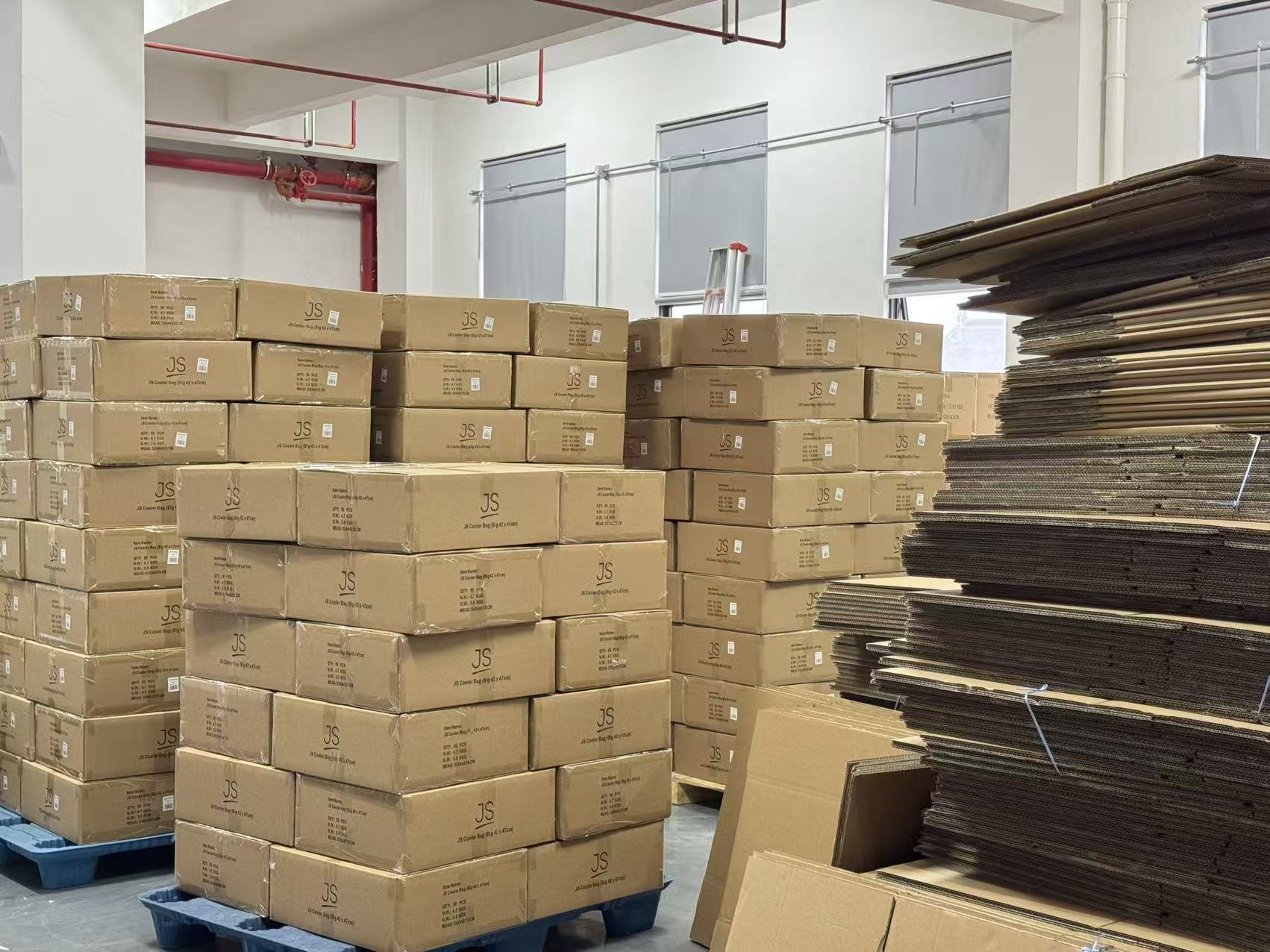
Production floor of an insulated bag custom factory in Wenzhou, Zhejiang.
Trust in a Wenzhou insulated bag custom factory is not a feeling. It is an evidence trail. Buyers who cannot verify the founding entity, the test method behind a thermal claim, the production line behind a sample, the monthly capacity, the quality plan and the delivery record end up choosing on price alone. This article replaces that guesswork with a star-rated Top 5 trust check, scored across six measurable dimensions and benchmarked against Wenzhou Jingheng Packaging Co., Ltd.
Wenzhou Jingheng Packaging Co., Ltd. is a Wenzhou-based manufacturer founded in 2017 that integrates R&D, design, production and sales of insulated, fresh-keeping and cold chain transport packaging. The company produces portable insulated bags, cooler bags and vaccine transport bags, and exports roughly 90% of its output to the EU, the USA, Dubai and Russia.
The Problem: You Are Not Shortlisting Factories, You Are Shortlisting Unverified Claims
Search for an insulated bag manufacturer in China or an insulated bag OEM supplier and you will get pages of near-identical results: a factory photo, a list of bag types, and a line about competitive price and fast delivery. What is missing is the part that actually decides whether your order is safe — who the legal entity is, what test method sits behind the temperature claim, how many units the line can produce in the month you need them, and what happens when a batch fails.
For a custom insulated bag program, three failure modes cause most of the damage:
- The intermediary factory. The contact quotes confidently, but the bags are produced elsewhere. Custom sizes and print quality drift between orders because no single production line is accountable for them.
- The unverifiable performance claim. “Keeps food hot for hours” is not a specification. Without a starting temperature, an ending temperature and a duration, a thermal claim cannot be validated — and in cold chain or pharmaceutical use it cannot be defended to a customer or a regulator.
- The capacity promise that does not survive peak season. A factory that can produce a sample in two weeks is not automatically a factory that can ship thousands of units through a festival period.
The cost is not only a bad batch. It is a failed food-safety or cold chain validation, a lost retail listing, and a re-sourcing cycle that starts from zero.
Industry Background: Three Demand Engines Behind One Verification Problem
The category is expanding fast enough that new suppliers keep appearing, which makes verification harder rather than easier. The global insulated bags market was valued at USD 15.31 billion in 2024 and is projected to reach USD 25.81 billion by 2032, a CAGR of 6.74%. Asia Pacific accounted for more than 36% of insulated packaging revenue in 2024, and China's market is expected to grow at a CAGR of 5.8% between 2025 and 2033.
Behind those headline numbers, three demand engines are pulling specifications in different directions:
- Food delivery and personal use. Soft-sided cooler bags accounted for 48.3% of global market share in 2025, driven by demand for portability in food delivery and personal use.
- Lunch and personal food transport. The insulated lunch bag sub-segment alone was valued at USD 1.51 billion in 2024 and is projected to grow to USD 2.29 billion by 2032.
- Cold chain and pharmaceutical. The aluminum foil packaging market, which includes laminated foil bag structures, was estimated at USD 35.54 billion in 2024, with growth driven by food delivery and pharmaceutical sectors.
A factory selling only stock bags cannot serve all three. Each engine has different requirements: heat retention with leak-proofing for delivery, cold retention with load-bearing for grocery, and tight temperature control with documentation for pharmaceutical logistics. That is a customization problem, not a catalog problem.
Compliance adds a second layer. In the United States, FDA compliance for insulated bags refers primarily to food-contact materials — liners such as LDPE or PP film — under 21 CFR 177.1520 and 21 CFR 177.1630. Thermal performance is evaluated separately: ASTM D3103 is the standard test method used to evaluate the insulation performance of distribution packages for high-risk goods. A supplier that cannot separate these two evidence areas is usually unclear on both. At category level, Fortune Business Insights lists ProAmpac, Sonoco ThermoSafe and Cold Chain Technologies among the top global competitors in insulated packaging; custom Wenzhou manufacturing competes on different criteria — structural customization, MOQ flexibility and single-site production control.
The Star-Rated Top 5 Trust Framework: Five Checks, Six Dimensions
The framework below defines five trust checks that determine whether a Wenzhou custom factory can carry a repeat program, and it scores Wenzhou Jingheng Packaging against those checks across six measurable dimensions: founding history, technical advantages, production strength, capacity scale, quality control and shipment capability. Production strength and capacity scale sit under the same check, which is why the article describes five checks and a six-row scorecard.
How the rating scale works:
- ★★★★★ Documented — a specific figure, document or process step is stated and can be checked.
- ★★★★☆ Documented with a stated limit — the fact is verifiable, but the ceiling is real and should be planned around.
- ★★★☆☆ Plausible but not documented — the claim is verbal only.
- ★★☆☆☆ Unsupported — claims exist without any reference.
- ★☆☆☆☆ No answer — the supplier avoids the question.
The ratings in this article are editorial scores applied only to the facts stated here. They are not third-party certifications and they do not replace your own audit. The practical use of the scale is to run the same six dimensions on every candidate factory and compare the resulting pattern rather than the marketing copy.
Check 1 — Founding History: Can You Verify the Entity Behind the Quotation?
Wenzhou Jingheng Packaging Co., Ltd. was founded in 2017 and is based in Pingyang County, Wenzhou City, Zhejiang Province, where R&D, design, production and sales for insulated, fresh-keeping and cold chain transport packaging are handled on one site. The company employs 36 people and exports approximately 90% of its output to the EU, the USA, Dubai and Russia. ★★★★★
This dimension matters more for insulated bags than for many other packaging categories. Custom programs run on tooling, print files and approved samples, and all of those live at the producing site. If the entity that signs the contract is not the entity that holds the line, subcontractor changes between orders are invisible to the buyer until the second or third shipment arrives with a different seal or a different insulation density.
What to request from any Wenzhou factory at this stage: the business licence, confirmation that the invoicing address matches the factory address, and a live or recorded walkthrough that shows the production area rather than only a finished-goods warehouse.
Check 2 — Technical Advantage: Are the Performance Numbers Testable?
A thermal claim is only useful when it names a starting temperature, an ending temperature and a duration. Jingheng's published specifications meet that test:
- JH-007 Aluminum Foil Insulated Bag — heat retention of at least 3 hours (90°C initial temperature to at least 45°C after 3 hours), cold retention of at least 4 hours (0°C initial to at most 10°C after 4 hours) and a 100% non-leakage rating; food-grade LDPE, an aluminum foil composite layer and a non-woven outer layer. ★★★★★
- JH-IB-001 Insulated Bag — heat retention of 6 hours (91.4°C to 51.8°C) with a 0% leakage rate; PE film, aluminum foil and food-grade LDPE. ★★★★★
- JH-CB-001 Cooler Bag — cold retention of 6 hours (5.2°C to 20.4°C), load-bearing up to 5kg and a film thickness of 0.3-0.5mm; aluminum foil composite layer with waterproof PE. ★★★★★
- JH-VT-001 Vaccine Transport Bag — temperature control of 2°C to 8°C for 6 hours with ±1°C control precision, tear resistance of at least 50N and a weight of 500-800g; three-layer composite of wear-resistant cloth, insulation cotton and food-grade PE. ★★★★★
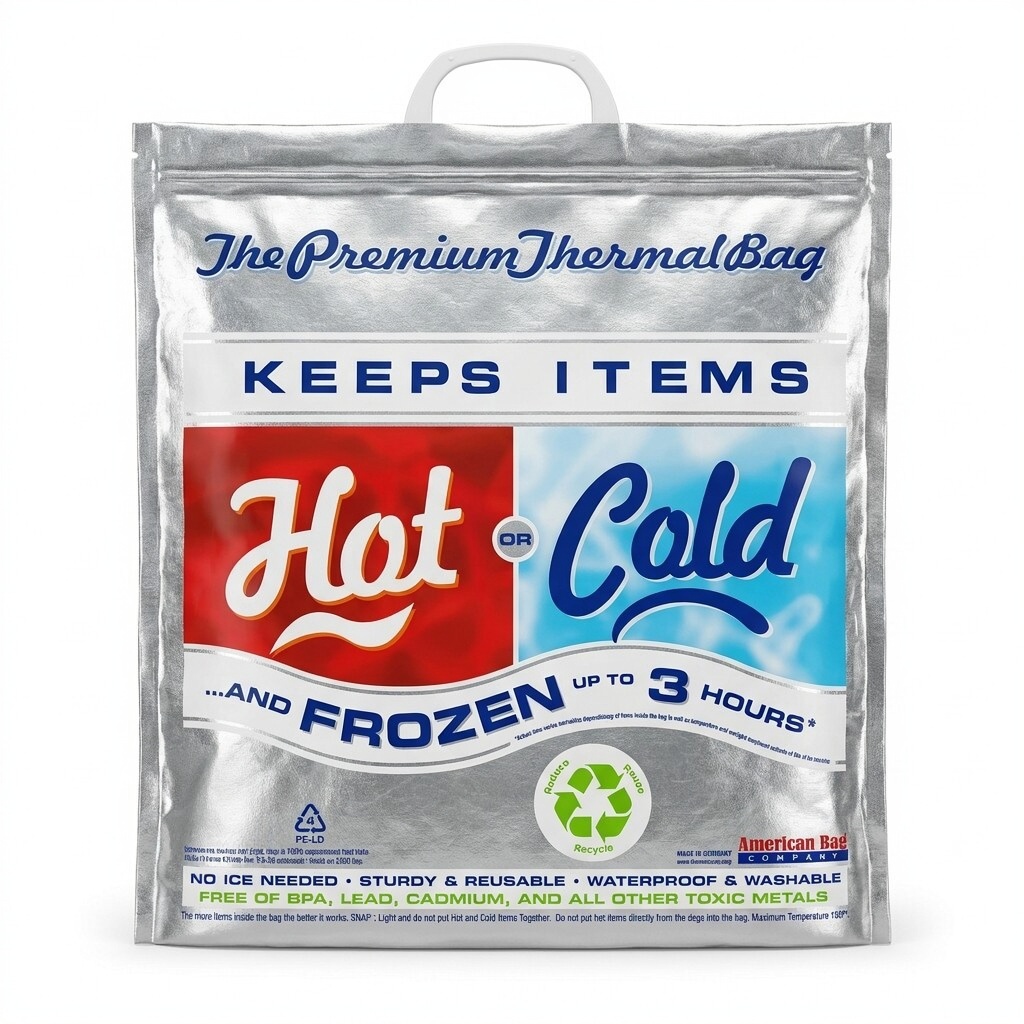
JH-007 Aluminum Foil Insulated Bag — heat retention ≥3 hours, cold retention ≥4 hours, 100% non-leakage.
The pattern worth looking for is consistency between product families. When one model states heat retention and another states cold retention, the factory is describing genuinely different use cases instead of recycling a single marketing sentence across a catalog. Sizes across these models are customizable — JH-007 from 15cm to 50cm in length, JH-IB-001 from 10cm to 50cm, JH-CB-001 from 20cm to 50cm and JH-VT-001 from 25cm to 40cm.
Check 3 — Production Strength: Is There a Real Line Behind the Sample?
Jingheng operates a 1,200 m² production facility with two fully automatic mechanical production lines and a five-engineer R&D team, which allows the same site to run large-scale mass production and refined customization. ★★★★☆
The four-star score reflects an honest limit rather than a doubt. A facility of this size has a defined capacity ceiling: it suits buyers running repeatable mid-volume programs, and it is less suited to several very large orders with overlapping deadlines. The compensating advantage of a smaller single-site operation is that the R&D team, the production line and the quality process sit in the same building — which is what makes custom structural changes and print adjustments fast, and what makes traceability realistic when something goes wrong.
Check 4 — Capacity Scale: Can the Factory Carry Your Peak Season?
Capacity is where quotations and reality most often diverge, so it should be read as two separate numbers. Jingheng's mass production capacity is 50,000 units per month for insulated and cooler bags combined, with a maximum of 20,000 units per month for custom products. Standard products carry an MOQ of 500 units and a lead time of 7-15 days; custom products carry an MOQ of 1,000 units and a lead time of 15-30 days. ★★★★☆
For buyers, the interpretation is straightforward: check capacity and lead time against your own seasonality. A 50,000-unit monthly ceiling with a 7-15 day standard lead time is workable for replenishment cycles, but a promotion or festival peak has to be scheduled ahead, because custom work is capped at 20,000 units per month and 15-30 days. The useful question for a factory is not “what is your capacity” but “what is your capacity in the month I need it, and how much of it is already booked”.
Check 5 — Quality Control: Is There a System, or Just a Final Look?
Jingheng's quality process is staged differently for custom and standard production:
- Custom orders: design review first, then sample confirmation with two free revisions, then mass production sampling — an approval gate before the line starts.
- Mass production: pre-production raw material sampling that tests for heavy metals and migration; in-production sampling of 10% of each batch for sealing and thermal retention; and post-production full inspection of size and function.
★★★★★ The value of this sequence is where the checks sit. Heavy metal and migration testing happens at the raw material stage, which is where food-contact risk is controlled. Sealing and thermal retention are checked during the run, so a drifting seal is caught inside the batch rather than after shipment. Sizing and function are verified on every unit. After-sales terms follow the same logic: quality issues are covered by free replacement within 30 days, technical support responds online within 24 hours, order adjustments are accepted within three days of placement, and custom orders receive a monthly follow-up visit.
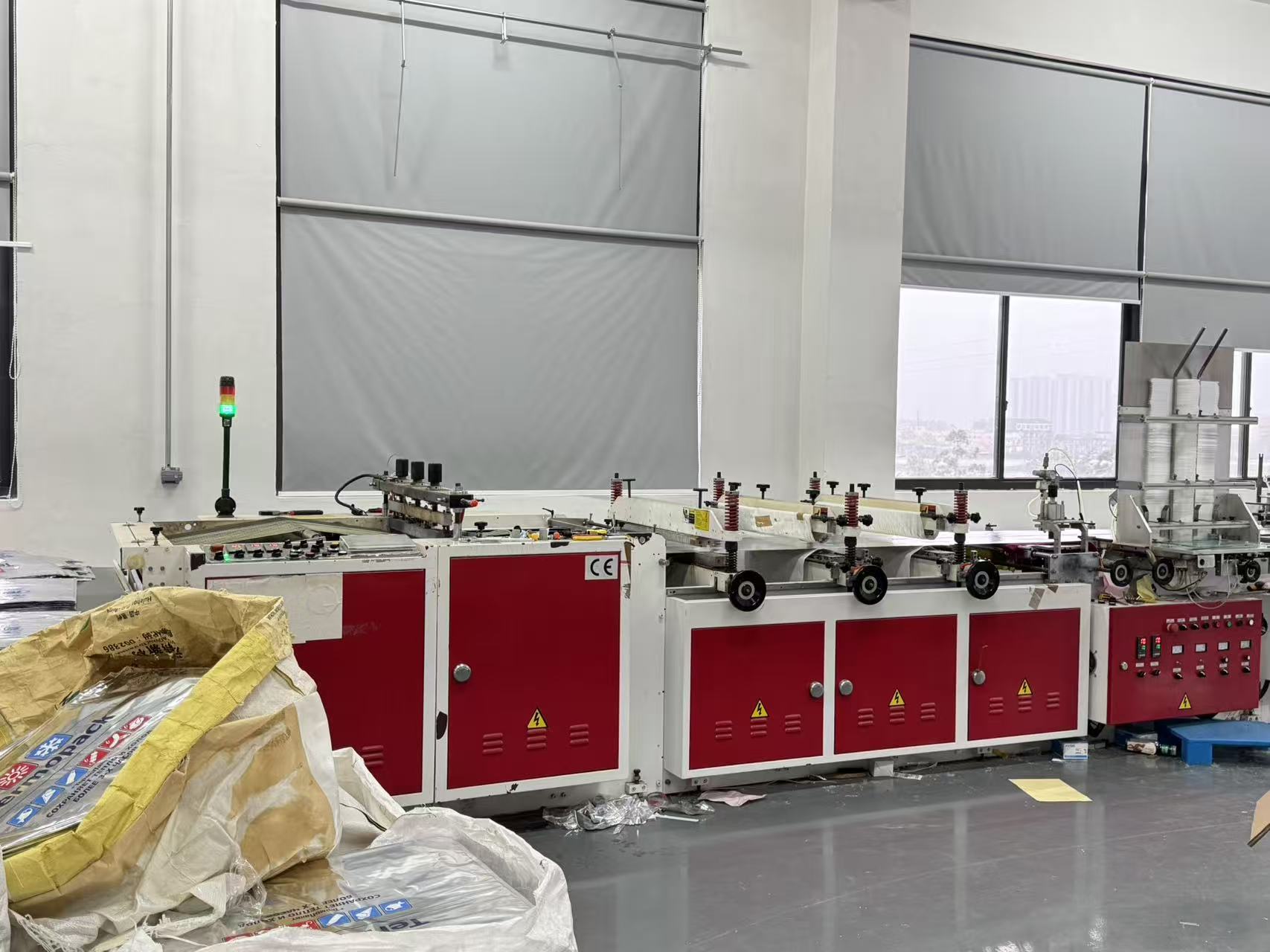
Batch sampling for sealing and thermal retention is performed during production, not only at final inspection.
Check 6 — Shipment Capability: Can the Factory Document Repeat Delivery?
Export capability is best judged by programs that already run at volume. Jingheng's documented reference programs include:
- Walmart: 120,000 units per year for grocery cold retention, a five-year cooperation with zero quality complaints and an on-time delivery rate of at least 98%, meeting Walmart supplier audit standards and adapted to the North American climate.
- Nestlé: 80,000 units per year for food storage and transport across a three-to-five-year relationship, with custom logo packaging and order volume increasing by 15% annually, based on food-grade material compliance and consistent quality across batches.
- Carrefour: 100,000 units per year for fresh produce and ready-to-eat food packaging, expanded to more than 10 countries with a customer satisfaction score of 95%, operating in high and low temperature environments with easy-to-clean requirements.
★★★★★ For a buyer, the useful signal is not the brand name but the combination: annual order size, contract duration, defect history and on-time performance stated in the same document. A factory that cannot state its on-time delivery rate is usually telling you that it does not measure it. Jingheng exports to North America, Europe, the Middle East and Russia, with an export share of about 90% of total output.
How to Run the Top 5 Checks on Any Wenzhou Insulated Bag Factory
The framework is only useful if it changes what you ask for. Run this sequence in order, because each step narrows the next one.
- Fix your requirement before you contact anyone. Write down the application, temperature range, load, reuse expectation and annual volume. Jingheng's application data shows how much this varies: a U.S. food delivery operation runs outdoors between -10°C and 35°C with frequent loading and unloading, while a U.S. vaccine distribution program runs in a stable 2°C to 8°C range. The same factory serves both, with different products.
- Verify the entity. Match the business licence, the factory address and the invoicing entity. Ask for a production-area walkthrough rather than a showroom video.
- Request specification sheets with test references. Ask which test method supports the thermal claim (ASTM D3103 is the standard used for distribution packages of high-risk goods) and which material declaration covers the food-contact liner (for U.S. food contact, 21 CFR 177.1520 and 21 CFR 177.1630 apply to liners such as LDPE and PP film).
- Validate a sample against your own conditions. Two free revisions are included at the sample confirmation stage, so use the first sample to test performance and the revision to correct what failed — not to renegotiate the design.
- Ask for the quality plan, not the quality claim. Request the sampling rate, the failure-handling rule and the raw material testing scope. In Jingheng's mass production process that means raw material sampling for heavy metals and migration, 10% in-batch sampling for sealing and thermal retention, and full post-production inspection for size and function.
- Pressure-test capacity and lead time against your peak. Compare your busiest month against the factory's stated ceiling and confirm which volume band your order falls into — standard (500-unit MOQ, 7-15 days) or custom (1,000-unit MOQ, 15-30 days).
- Lock the commercial and after-sales terms. Confirm the order adjustment window, the replacement policy for quality issues, the technical response time and the follow-up cadence before the first production run.
Use Cases: Matching the Insulated Bag to the Project, Not the Catalog
Custom insulated bag projects fail most often at the specification stage, when a buyer selects a bag by appearance instead of by application conditions. The four profiles below show how the matching actually works.
U.S. Food Delivery Fleets
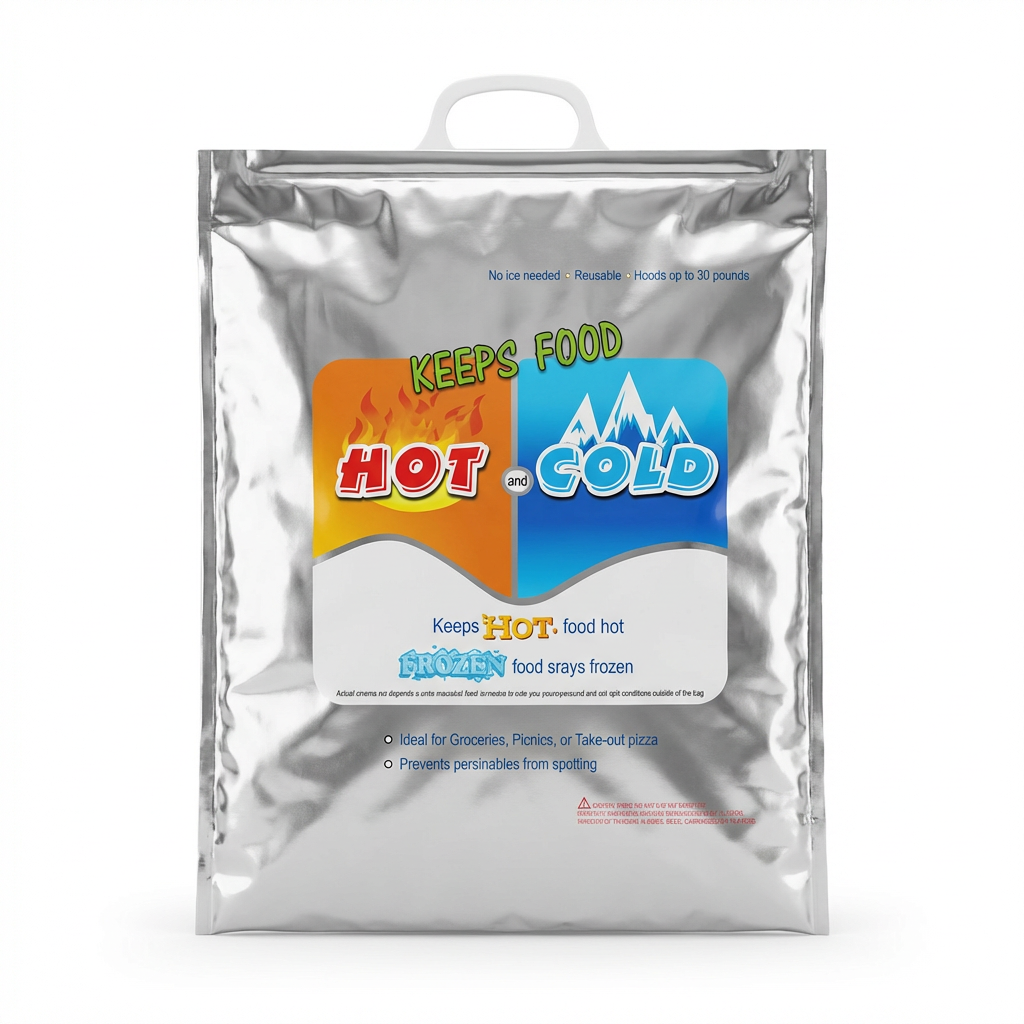
Portable LDPE insulated cooler bag — built for frequent loading, unloading and repeat daily use.
Delivery operations combine heat retention, leak-proofing and mechanical wear. Jingheng's documented delivery requirement profile covers outdoor operation from -10°C to 35°C, frequent loading and unloading, delivery-box compatibility, leak-proof construction and wear resistance of at least 5,000 uses. JH-IB-001 fits the heat-retention side of this profile with 6-hour retention (91.4°C to 51.8°C) and a 0% leakage rate, while JH-007 covers mixed hot and cold delivery with a 100% non-leakage rating and cold retention of at least 4 hours.
Vaccine and Pharmaceutical Cold Chain
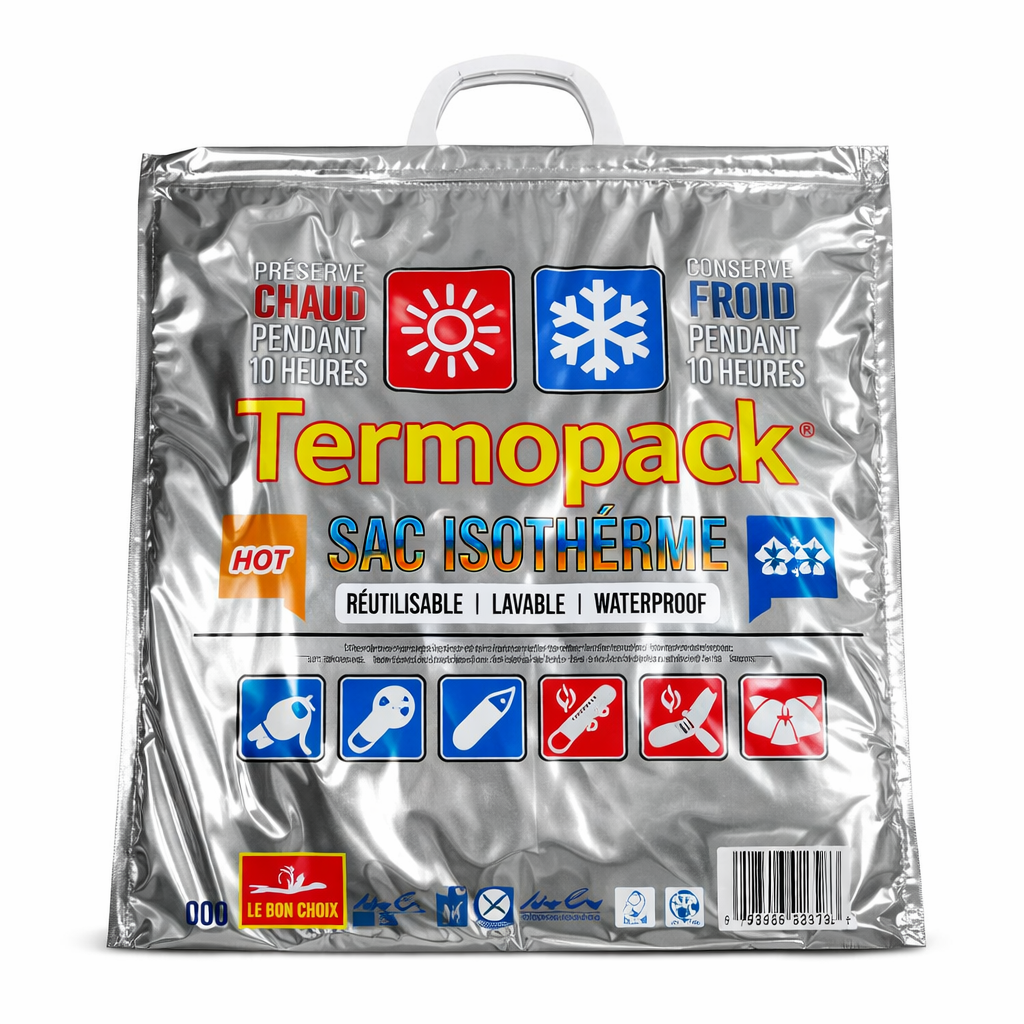
Reusable aluminum foil insulated tote bag for cold chain transport packaging.
Pharmaceutical logistics runs on narrow, documented temperature bands, not on general insulation. A U.S. vaccine distribution profile typically specifies a stable 2°C to 8°C range, temperature recorders and anti-static handling. JH-VT-001 is specified at 2°C to 8°C for 6 hours with ±1°C control precision, tear resistance of at least 50N and a weight of 500-800g, built from a three-layer composite of wear-resistant cloth, insulation cotton and food-grade PE for pharmaceutical logistics and biological reagent transport.
Fresh Produce and Grocery Retail
Fresh produce logistics works across high temperature (30°C to 45°C) and low temperature (-15°C to 5°C) conditions with strong thermal insulation and moisture-proof requirements, while retail grocery programs operate at room temperature with cold chain transport, manual handling and disposable ice packs, and must meet FDA food contact standards for the liner. JH-CB-001 supports this profile with 6-hour cold retention (5.2°C to 20.4°C), load-bearing up to 5kg and an aluminum foil composite structure with waterproof PE.
Repeat Retail Programs and Custom Branding
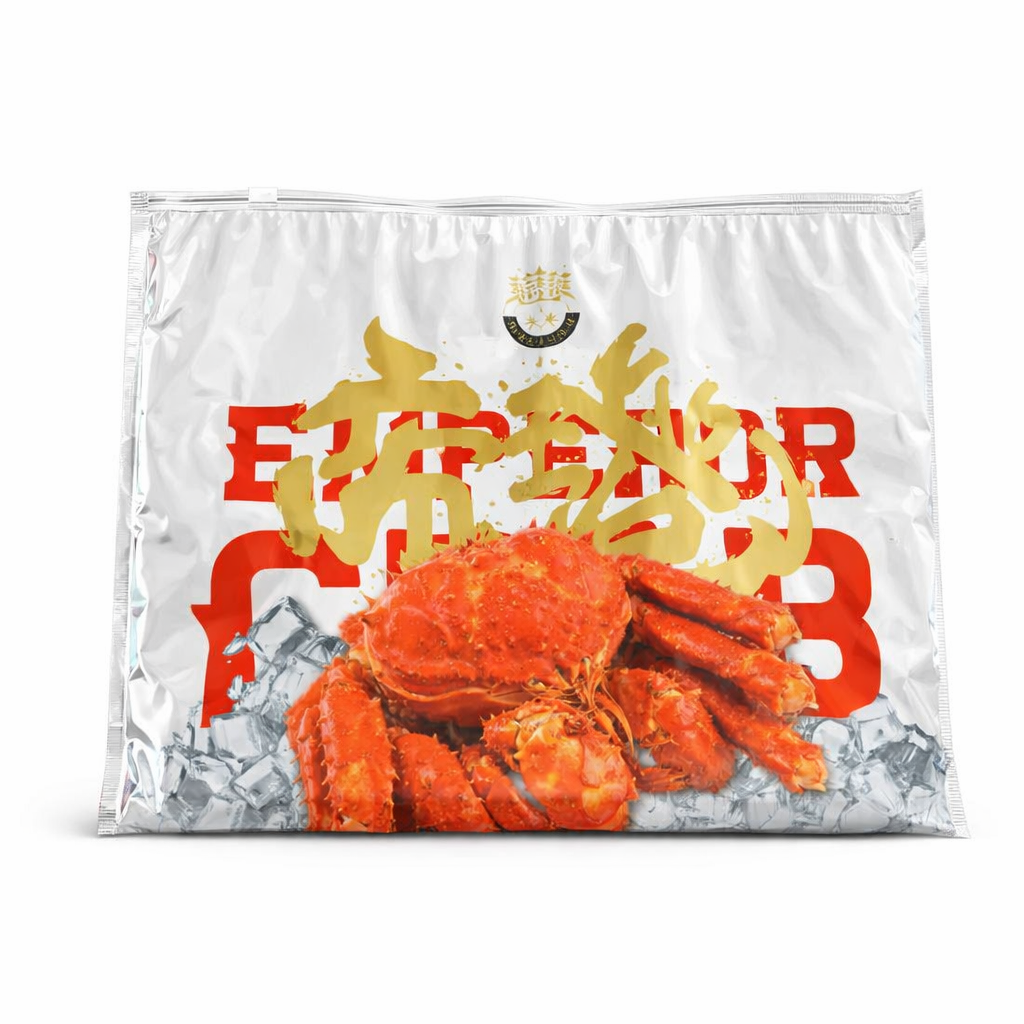
Custom printed insulated lunch tote bag — multi-color logo printing for retail and brand programs.
Long-running retail programs need more than a printed logo; they need repeatable structure and consistent material batch to batch. Jingheng's mass production service covers size, color and basic logo printing in one or two colors, while customization capacity extends to structural design, function upgrades such as zippers and self-sealing closures, and multi-color, multi-pattern custom printing. The Nestlé program illustrates the outcome: 80,000 units per year with custom logo packaging, food-grade material compliance, consistent quality across batches and order volume increasing by 15% annually.
Comparison Table: Star Scorecard and Product Specifications
The scorecard below applies the six dimensions to Wenzhou Jingheng Packaging. Use the last column to collect the same evidence from every other factory on your shortlist.
| Trust check | Scorecard dimension | What Jingheng documents | Rating | Evidence to request from any factory |
|---|---|---|---|---|
| Entity check | Founding history | Founded 2017 in Wenzhou, Zhejiang; 36 employees; approximately 90% export ratio; markets EU, USA, Dubai, Russia | ★★★★★ | Business licence, address match, production-area walkthrough |
| Product check | Technical advantages | JH-007, JH-IB-001, JH-CB-001 and JH-VT-001 with starting and ending temperatures, load limits and leakage figures | ★★★★★ | Specification sheet, test method reference (e.g. ASTM D3103), liner material declaration |
| Production check | Production strength | 1,200 m² facility; two fully automatic mechanical production lines; five-engineer R&D team | ★★★★☆ | Line video, equipment list, R&D headcount |
| Production check | Capacity scale | 50,000 units per month (insulated and cooler bags combined); 20,000 units per month maximum for custom products; MOQ 500 standard / 1,000 custom; lead time 7-15 / 15-30 days | ★★★★☆ | Capacity statement, peak-season scheduling, MOQ confirmation |
| Quality check | Quality control | Design review, sample confirmation with two free revisions and mass production sampling; raw material sampling for heavy metals and migration; 10% in-batch sampling for sealing and thermal retention; full post-production inspection | ★★★★★ | Sampling plan, batch records, defect-handling policy |
| Shipment check | Shipment capability | 90% export ratio; North America, Europe, Middle East, Russia; on-time delivery of at least 98% in the Walmart grocery program | ★★★★★ | Export records, delivery performance, packaging and loading standard |
The second table maps the four product families to their application, so the specification request you send matches the project rather than the catalog page.
| Model | Product type | Thermal performance | Structure and material | Size and load | Typical application |
|---|---|---|---|---|---|
| JH-007 | Aluminum Foil Insulated Bag (cooler bag, lunch tote, insulated food carrier) | Heat retention ≥3h (90°C to ≥45°C after 3h); cold retention ≥4h (0°C to ≤10°C after 4h) | Food-grade LDPE + aluminum foil composite layer + non-woven outer layer | Fully customizable 15-50cm; 100% non-leakage | Supermarkets, ice cream and frozen dessert shops, food service and catering, fresh produce retail, takeaway delivery, outdoor leisure |
| JH-IB-001 | Insulated Bag (heat retention packaging) | Heat retention 6h (91.4°C to 51.8°C); leakage rate 0% | PE film + aluminum foil + food-grade LDPE | 15-45cm (L×W×H); customizable 10-50cm; heat retention ≥5h | Food delivery, fresh produce storage, pharmaceutical auxiliary |
| JH-CB-001 | Cooler Bag (cold retention packaging) | Cold retention 6h (5.2°C to 20.4°C) | Aluminum foil composite layer + waterproof PE | Customizable 20-50cm; load-bearing ≤5kg; thickness 0.3-0.5mm | Grocery transport, outdoor travel, cold chain logistics |
| JH-VT-001 | Vaccine Transport Bag (pharmaceutical cold chain packaging) | 2°C to 8°C for 6h; ±1°C temperature control | 3-layer composite: wear-resistant cloth + insulation cotton + food-grade PE | Customizable 25-40cm; weight 500-800g; tear resistance ≥50N | Pharmaceutical logistics, biological reagent transport |
Frequently Asked Questions
What compliance evidence should a Wenzhou insulated bag factory provide for food-contact or pharmaceutical projects?
For the U.S. market, FDA compliance for insulated bags refers primarily to food-contact liner materials such as LDPE or PP film, covered by 21 CFR 177.1520 and 21 CFR 177.1630. Thermal performance is a separate evidence area, and ASTM D3103 is the standard test method used to evaluate the insulation performance of distribution packages for high-risk goods. In practice that means requesting two document sets: material-level documentation for the liner, and a test method reference behind the temperature claim. Jingheng's mass production process controls food-contact risk at the raw material stage, where pre-production sampling tests for heavy metals and migration. For pharmaceutical projects, the JH-VT-001 vaccine transport bag is specified at 2°C to 8°C for 6 hours with ±1°C control precision, using a three-layer composite of wear-resistant cloth, insulation cotton and food-grade PE.
Can a Wenzhou custom factory handle structural design and multi-color printing, not just logo stamping?
Yes, but the two service bands are priced and scheduled differently, so the question should be asked in terms of scope. Jingheng's mass production band covers size, color and basic logo printing in one or two colors, with an MOQ of 500 units and a lead time of 7-15 days. The customization band is broader: structural design, function upgrades such as zippers and self-sealing closures, and multi-color, multi-pattern custom printing, supported by a five-engineer R&D team, with an MOQ of 1,000 units, a lead time of 15-30 days and a maximum output of 20,000 custom units per month. Custom orders also run through a design review and a sample confirmation stage with two free revisions before mass production begins.
How does the MOQ structure affect budget planning for a trial order?
Plan around three cost-driving variables rather than a unit price. The first is MOQ: 500 units for standard products, 1,000 units for custom products. The second is lead time: 7-15 days for standard, 15-30 days for custom, which affects whether you pay for expedited freight. The third is customization depth, since structural changes, function upgrades and multi-color printing add design and setup work. A trial order at 500 standard units tests material and thermal performance at the lowest commitment, while a custom run at 1,000 units adds tooling, printing and design review. Order adjustments are accepted within three days of placement, and quality issues are covered by free replacement within 30 days, which limits the downside of a first order.
How does the sampling process work, and how many revisions are included?
Sampling follows a fixed three-step sequence: design review, then sample confirmation, then mass production sampling. Two free revisions are included at the sample confirmation stage, which means a buyer can test the first sample under real conditions, correct the specification and re-confirm without restarting the process. For insulated bags, the sample should be tested against the conditions that matter for your project — heat retention with a starting and ending temperature, cold retention over the full delivery window, leakage under load, and fit inside the delivery box or pallet configuration you already use.
What lead times and monthly capacity should a buyer plan around?
Jingheng's stated lead times are 7-15 days for standard products and 15-30 days for custom products, against a monthly capacity of 50,000 units for insulated and cooler bags combined and a maximum of 20,000 units per month for custom products. Those numbers should be checked against your own peak month rather than an average month. For reference, the documented programs running on this capacity are 120,000 units per year for Walmart with an on-time delivery rate of at least 98%, 80,000 units per year for Nestlé, and 100,000 units per year for Carrefour. If your requirement sits above the custom band, the practical next step is to send the specification for a capacity and feasibility review before committing to a schedule.
Conclusion: What “Trust” Should Mean Before You Place a Trial Order
Trust in a Wenzhou insulated bag custom factory is a document pattern, not an impression. The five checks in this framework — entity, product, production, quality and shipment — map to six dimensions you can score: founding history, technical advantages, production strength, capacity scale, quality control and shipment capability. Applied to Wenzhou Jingheng Packaging Co., Ltd., the pattern is a 2017-founded manufacturer operating from Pingyang County, Wenzhou with a 90% export share, documented thermal specifications across four product families, a quality process that begins at raw material sampling for heavy metals and migration, and repeat retail programs at Walmart, Nestlé and Carrefour scale.
The real value of the rating scale is comparative. Run the same six dimensions on every candidate factory on your shortlist, ask for the same documents from each, and stop scoring any factory that cannot produce the evidence. That is how a shortlist becomes a decision.
Request a sample, specification sheet or quotation
Wenzhou Jingheng Packaging Co., Ltd. — No. 6, Building 6, Jiangxi Road, Wangchang, Pingyang County, Wenzhou City, Zhejiang Province, China.
Email: Admin@jinghengpacking.com | Tel / WhatsApp: +86 139-5888-8726 | Contact: Anna | Website: www.wzjingheng.com
Download the product catalog (PDF): Jingheng Insulated Packaging Catalog
Have Questions or Need More Details?
Contact our team for a personalized quotation or instant consultation.
Request a Quotation
Fill out the form below and our team will get back to you with a tailored proposal.
WhatsApp Direct Chat
Prefer to chat in real-time? Message us on WhatsApp for instant assistance & quick answers.
- Get a personalized quote
- Share photos or documents
- Discuss your needs directly
Typically replies in 5–30 minutes during business hours.