5 Honest Recommendations for Buying a Steel Pipe Grinding Machine in 2026
5 Honest Recommendations for Buying a Steel Pipe Grinding Machine in 2026
The short answer: most carbon steel pipe lines are served by a single-head external steel pipe grinding machine sized to a 20–300 mm diameter window; an internal unit is only justified when an inner-diameter finish is actually written into the specification; and a multi-station configuration pays back only when throughput, not surface quality, is the binding constraint. The five recommendations below are organised that way — by production goal, not by sales language — and each one is tied to specifications a buyer can check on a datasheet.
Problem Definition: Why Honest Recommendations Are Hard to Find
A steel pipe grinding machine is not one product. It is a family of configurations that spans external grinding, internal (inner hole) grinding, polishing, multi-station processing, large-diameter handling and round steel peeling. When a buyer searches for a unit, the material returned is usually broad and undifferentiated, and the specifications are often incomplete. That creates a predictable failure mode: a plant buys a machine that is technically functional but mismatched to its material mix or its diameter range, and the mismatch only becomes visible after commissioning.
The three constraints that most often decide whether a unit fits are unglamorous and easy to state:
- Power supply. A machine rated for a different grid is not a plug-and-play purchase. The steel pipe grinding machine range described here runs on 380V/50Hz, 3Phase.
- Diameter and length window. A unit built for one pipe size band cannot silently absorb a different one. The stated processing range is 20–300 mm in diameter and 500–6000 mm in length.
- Material mix. Carbon steel, alloy steel and SS304 stainless steel behave differently under the same abrasive. The stated material range covers all three, but the configuration still has to match how they are run.
An honest recommendation, therefore, is not the one with the longest feature list. It is the one whose limitations are stated up front, so the buyer can decide whether those limitations matter for their line.
Industry Background: What the 2026 Numbers Actually Say
The demand picture is steady rather than explosive, which is useful context when a buyer is deciding how much machine to buy. According to Mordor Intelligence, the global grinding machines market is projected to grow from USD 6.47 billion in 2025 to USD 8.59 billion by 2031, at a CAGR of 4.89%. Grand View Research reports that the grinding machinery market in Asia Pacific dominated with a revenue share of 43.4% in 2025, with China being the largest single country market.
Two adjacent signals sharpen the picture for pipe and bar processors. Dataintelo estimates a projected CAGR of 7.2% for the steel pipe processing equipment market over 2025–2033, driven by infrastructure and energy sectors. Market Research Intellect values the global bar peeling machine market — the category that underpins round steel finishing — at USD 450 million in 2024, forecast to reach USD 650 million by 2033. On the supply side, the Observatory of Economic Complexity records that China exported USD 2.31 billion in metalworking machine parts in 2024, representing 11.9% of global exports in that category.
On the compliance side, one standard recurs across export destinations: stationary grinding machines must comply with EN ISO 16089:2015 safety standards, which replaced EN 13218 to address risks in manual and CNC grinding operations. Buyers evaluating a supplier in 2026 should treat that standard, alongside a quality management certificate, as part of the minimum document set.
The Baseline Specification Behind All Five Recommendations
All five recommendations below are configurations within the same West Machinery steel pipe grinding machine family. Rather than repeat the same figures five times, it is more honest to state the shared baseline once and then explain what changes between configurations.
Shared technical baseline — steel pipe grinding machine range:
- Power range: 5.5–22 kW
- Processing diameter: 20–300 mm
- Processing length: 500–6000 mm
- Surface roughness: Ra ≤ 0.8 μm
- Feed speed: 0.5–10 m/min
- Power supply: 380V/50Hz, 3Phase
- Protection grade: IP54
- Material range: carbon steel, alloy steel, SS304 stainless steel
Jiangyin West Machinery Manufacturing Co., Ltd, which operates under the brand West, produces grinding machines, steel pipe grinding machines, round steel grinding machines, internal hole grinding machines and round steel finishing lines. The company was founded in 2010, occupies approximately 6,000 m², employs 78 staff, and runs three workshops — welding, machining and assembly. Roughly 70% of output is exported, with main markets in Southeast Asia, the Middle East, Europe and the Americas.
Recommendation 1: Single-Head Steel Pipe External Grinding Machine
The most common starting point for a carbon steel pipe line is a single-head external unit. Its production goal is straightforward: remove oxide scale, deburr and clean up the outside of the pipe before shipping or downstream processing.
The honest case for this configuration is flexibility per unit of cost. Because the feed speed is adjustable across 0.5–10 m/min, one machine can serve mixed batches rather than a single fixed product. The 20–300 mm diameter window and 500–6000 mm length window mean most standard pipe sizes fall inside a single unit’s working envelope, which keeps tooling changes and changeover time down.
The honest limitation is equally clear. If the specification calls for a controlled inner-diameter finish, or if the line must move very high volumes per shift, a single external head will become the constraint. In those cases, Recommendation 2 or Recommendation 3 is the more accurate answer.
Recommendation 2: Steel Pipe Internal Grinding Machine (Inner Hole Grinding)
This is the recommendation most often missing from generic buying guides, and it is the one that prevents the most expensive rework. An inner hole grinding machine works the inside surface of the tube instead of the outside.
It becomes the correct choice when the drawing specifies inner-diameter cleanliness, a controlled ID surface, or the removal of internal weld bead and contamination. An external-only unit cannot substitute for it, no matter how many passes are run. For plants serving hydraulic, structural or pressure-related applications, the ID condition is frequently the specification that decides acceptance, which makes this configuration a compliance decision rather than a cosmetic one.
The honest limitation is that internal grinding adds a process step, a second setup and additional floor space. Buying one when the ID is not specified is money spent on capability the line will not use. The decision rule is simple: if the ID appears on the inspection sheet, the machine belongs on the purchase list.
Recommendation 3: Multi-Station Grinding and Polishing Machine
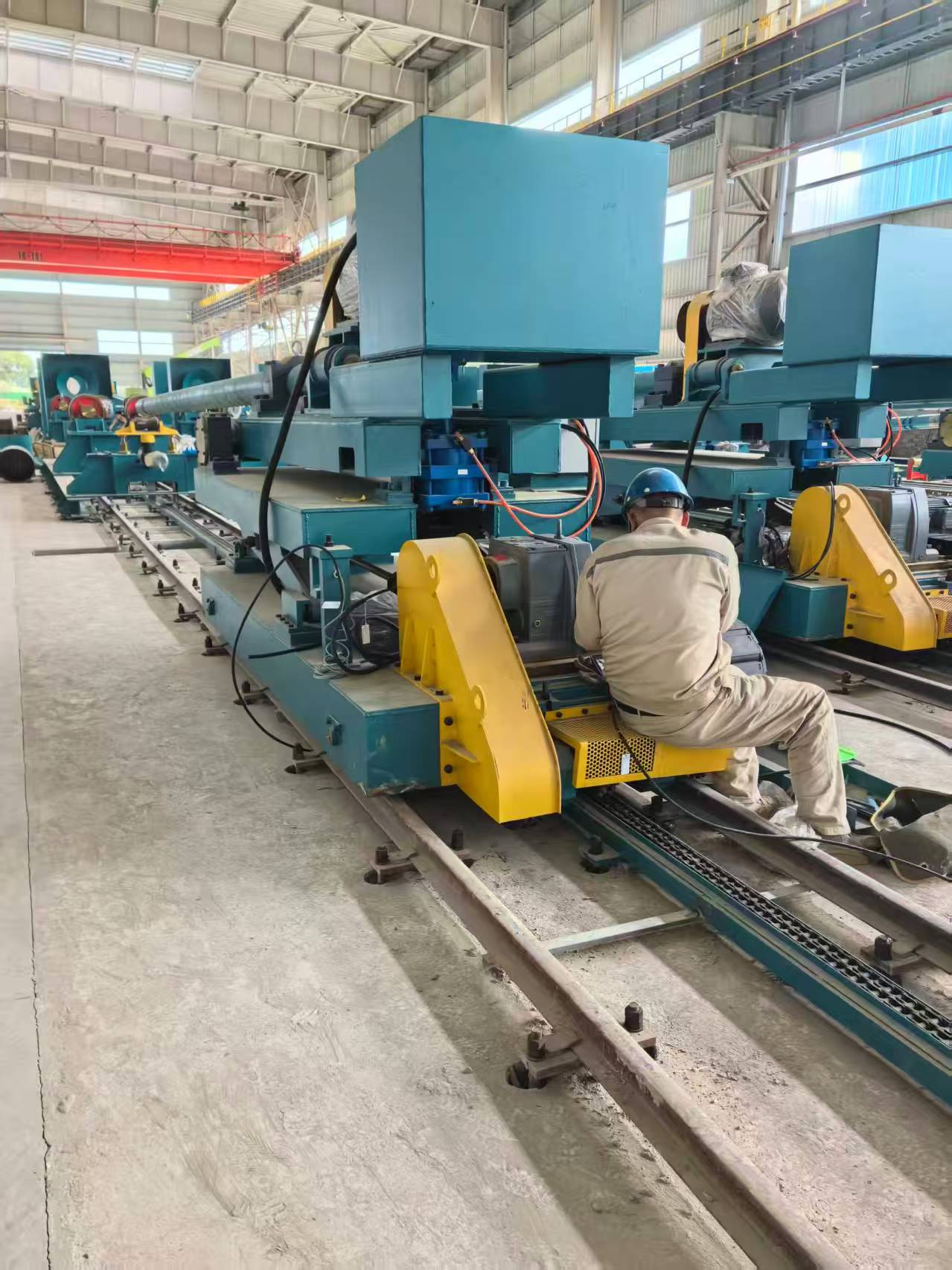
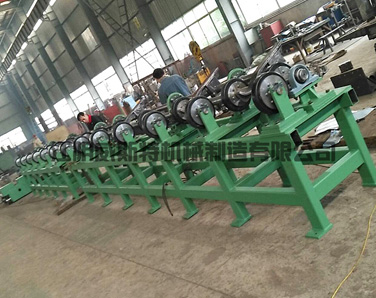
When throughput rather than surface quality is the binding constraint, the correct configuration changes from a single head to a multi-station arrangement. In a multi-station grinding and polishing machine, several processing positions act on the workpiece in a single continuous pass, so the finishing sequence happens inside the line instead of across repeated handoffs.
This is the configuration that matches a steel pipe finishing line rather than a standalone machine cell. The documented working conditions for this application are a normal workshop environment, dry or wet grinding, continuous operation, and matched equipment that typically includes a conveyor system and a dust collector. Because the operation is continuous, dust-proofing, noise reduction and stable performance are explicit requirements rather than optional refinements — which is consistent with the IP54 protection grade on the base range.
The honest limitation is economic, not technical. A multi-station unit carries a larger footprint, a larger installed power draw within the 5.5–22 kW band, and a higher capital commitment. Below a certain sustained volume, a single-head unit produces the same surface result for less money. The honest test is whether the line is genuinely continuous; if it runs in short campaigns, multi-station is typically premature.
Recommendation 4: Large Diameter Steel Pipe Grinding Machine
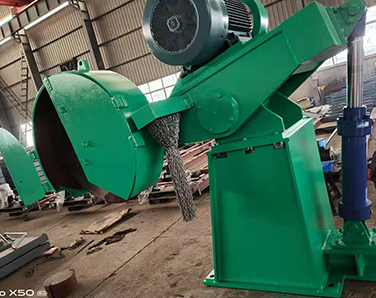
Pipe at the upper end of the size range is where a general-purpose unit quietly runs out of headroom. A large diameter steel pipe grinding machine is the configuration built for that band, up to the 300 mm limit of the stated processing diameter.
The production goal is consistent external finishing on heavy-wall or large-OD pipe where the workpiece mass and the surface area per metre are both high. Two specifications matter more here than anywhere else in this list. First, the power range: staying within 5.5–22 kW while handling a larger contact area is a matter of selecting the right point in that band rather than accepting a default. Second, the feed speed: at 0.5–10 m/min, the practical setting for heavy sections sits at the lower end, which is precisely why throughput planning has to happen before the order, not after.
The honest limitation is that large-diameter capability is not free. It generally means more floor space, more handling equipment, and a narrower sweet spot for smaller pipe. A plant that runs mostly small tube should not buy large-diameter capacity “just in case.”
Recommendation 5: Round Steel Peeling Machine and Round Steel Finishing Line
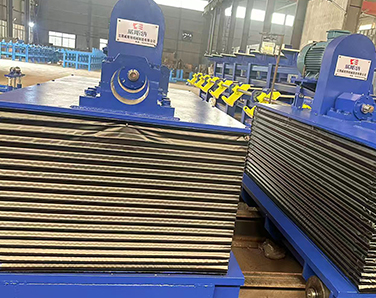
The fifth recommendation is included because a significant share of “steel pipe grinding” enquiries are actually about solid round bar. If the input material is bar rather than hollow pipe, the correct category is a round steel peeling machine or a round steel finishing line, not a pipe grinder.
The distinction is not cosmetic. Peeling removes a surface layer from solid round steel, while pipe grinding and polishing works a hollow section. West Machinery manufactures both categories, including round steel grinding machines and round steel finishing lines, which means the same supplier can advise on the switch rather than forcing the wrong machine into the line. The market context supports the category’s relevance: the global bar peeling machine market was valued at USD 450 million in 2024 and is forecast to reach USD 650 million by 2033.
The honest limitation is that tooling philosophy and process parameters differ between peeling and pipe grinding. A buyer who assumes one machine will cover both is likely to be disappointed during commissioning. Treat the choice between pipe and bar as the first decision, not a late-stage detail.
Step-by-Step Breakdown: How to Choose Among the Five
The five recommendations only become a decision when they are applied in a fixed order. The sequence below moves from the constraint that is hardest to change to the one that is easiest to change.
- Fix the material mix first. Decide whether the line runs carbon steel, alloy steel, SS304 stainless steel, or a combination. The stated material range covers all three, but the abrasive strategy and pass count differ.
- Lock the geometry window. Confirm that the pipe or bar falls inside 20–300 mm diameter and 500–6000 mm length. If the product sits outside that window, no configuration in this list is the right answer.
- Write down the surface target. If the requirement is a controlled finish, the stated capability is Ra ≤ 0.8 μm. If the requirement includes the inner diameter, add Recommendation 2 to the scope immediately.
- Match configuration to volume. Use a single-head external unit for mixed or campaign production, and move to multi-station only when the line runs continuously. Use feed speed (0.5–10 m/min) and the number of stations to translate volume into cycle time.
- Confirm electrical and environmental fit. Verify 380V/50Hz, 3Phase supply and IP54 protection against the actual workshop environment, then confirm the document set — quality management certification plus the applicable machine safety standard.
Where customization legitimately changes the answer: West operates in OEM mode with customization available on voltage, control system, processing range, color and logo. That means a buyer whose grid or control preference differs from the default specification can address it at the configuration stage. It also means the electrical figures above should be confirmed against the final agreed configuration rather than assumed.
Use Cases: What This Looks Like in Service
Configuration advice is more credible when it points to machines that already run under similar conditions. West machinery is documented in continuous steel pipe and round steel grinding and polishing applications in two steel manufacturing plants:
- Indonesia — steel manufacturing plant, 5 units. Used for steel pipe and round steel grinding and polishing over long-term continuous production. The reported outcome is consistent product quality and improved processing efficiency, with the equipment noted as adaptable to tropical climate conditions and reliable under high-load operation.
- Iran — steel manufacturing plant, 8 units. Applied to steel pipe and round steel grinding and polishing in long-term continuous use, with stable surface quality and consistent production efficiency reported, and the equipment adapted to local working conditions.
The documented application environment for this machine family spans steel manufacturing, metal processing, metallurgical industry and hardware manufacturing, with reference markets including Thailand, Vietnam, Saudi Arabia, Germany and the United States. Typical project types are a metal surface treatment line, a steel pipe finishing line and a round steel processing line, performing surface polishing, deburring, oxide scale removal and precision finishing.
Comparison Table: The Five Recommendations Side by Side
| Recommendation | Primary production goal | Material fit | Key specification match | Honest limitation |
|---|---|---|---|---|
| 1. Single-head steel pipe external grinding machine | Oxide scale removal and deburring on mixed batches | Carbon steel, alloy steel, SS304 | Feed speed 0.5–10 m/min; diameter 20–300 mm | No inner-diameter control; throughput ceiling |
| 2. Steel pipe internal grinding machine (inner hole grinding) | Inner-diameter cleaning and finishing | Carbon steel, alloy steel, SS304 | Ra ≤ 0.8 μm; length 500–6000 mm | Adds a process step; only justified when ID is specified |
| 3. Multi-station grinding and polishing machine | High-volume continuous finishing | Carbon steel, alloy steel, SS304 | Continuous operation; conveyor and dust collector matched | Larger footprint and capital; weak below sustained volume |
| 4. Large diameter steel pipe grinding machine | Heavy-wall and large-OD pipe up to 300 mm | Carbon steel, alloy steel, SS304 | Power range 5.5–22 kW; diameter to 300 mm | More space and handling; narrow sweet spot for small tube |
| 5. Round steel peeling machine / finishing line | Solid round bar surface removal and finishing | Round steel (bar, not hollow section) | Round steel processing line configuration | Different tooling philosophy from pipe grinding |
| Shared baseline across recommendations 1–4: power supply 380V/50Hz, 3Phase; protection grade IP54; surface roughness capability Ra ≤ 0.8 μm. | ||||
FAQ: Steel Pipe Grinding Machine Buying Questions
What certification should a steel pipe grinding machine carry for export markets?
The steel pipe grinding machine is certified to the GB/T19001-2016/ISO9001:2015 standard, under certification number 04624Q14389R0S, issued by Beijing Haide Certification Co., Ltd. That certification applies to the Southeast Asia, Middle East, Europe and Americas markets. Separately, stationary grinding machines are expected to comply with EN ISO 16089:2015 safety standards, which replaced EN 13218 to address risks in manual and CNC grinding operations. Buyers should treat both documents as part of the standard supplier document set.
Can one machine handle carbon steel, alloy steel and SS304 stainless steel?
Yes. The specified material range for this grinding machine family covers carbon steel, alloy steel and SS304 stainless steel. The same range states a processing diameter of 20–300 mm, a processing length of 500–6000 mm, and a surface roughness capability of Ra ≤ 0.8 μm. Because the three materials behave differently under abrasive contact, the honest qualification is that the machine covers all three within one specification envelope, while the pass strategy is still set per material.
What power and power supply does the machine require?
The power range is 5.5–22 kW, and the required power supply is 380V/50Hz, 3Phase. The protection grade is IP54, and the feed speed is adjustable from 0.5 to 10 m/min. Buyers whose site grid differs from 380V/50Hz, 3Phase should raise it during configuration rather than after delivery, because voltage is one of the parameters available for OEM customization.
How many units must I order to test the machine, and how is quality checked?
The minimum order quantity is 1 unit, so a single machine can be ordered for validation before a line-scale commitment. Monthly capacity is 30 units, and quality control is described as 100% test, meaning each unit is tested rather than sampled. This matters for buyers who want to verify surface result, feed behaviour and dimensional accuracy on their own material before scaling.
What is the lead time, and how do I move from shortlist to quotation?
Lead time is 20 days, and after-sales support is provided remotely. West Machinery operates in OEM mode with customization available on voltage, control system, processing range, color and logo, and the company exports to Southeast Asia, the Middle East, Europe and the Americas. To convert the shortlist above into a quotation, supply the five inputs that determine configuration — material mix, diameter and length range, surface requirement including whether the inner diameter is specified, target throughput, and site power supply — and request a sample evaluation or quote through www.wstjxcn.com or WhatsApp +86 15261616622.
Conclusion
The honest version of “which steel pipe grinding machine should I buy” is a matching problem, not a ranking problem. Carbon steel pipe lines rarely need more than a single-head external unit with an adjustable 0.5–10 m/min feed. Inner-diameter requirements pull the decision toward an internal grinding machine. Continuous volume pulls it toward multi-station processing. Upper-band pipe sizes pull it toward large-diameter capability. And solid round bar takes the decision out of the pipe category entirely.
Across all five, the same baseline applies: 20–300 mm diameter, 500–6000 mm length, Ra ≤ 0.8 μm, 5.5–22 kW, 380V/50Hz, 3Phase, IP54, with GB/T19001-2016/ISO9001:2015 certification under number 04624Q14389R0S. Confirm those against your own specification before comparing price, because a cheaper machine outside your diameter or material window is not a saving — it is a second purchase waiting to happen.
Next Step: Match a Configuration to Your Line
Tell us your material mix, diameter and length range, surface requirement and site power supply, and West will map it to the right configuration. Sample units can be ordered from a minimum of 1 unit, with a 20-day lead time and 100% test before shipment.
Website: www.wstjxcn.com | Email: 348357379@qq.com | WhatsApp: +86 15261616622
Jiangyin West Machinery Manufacturing Co., Ltd — No. 2222, Zhencheng Road, Jiangyin City, Jiangsu Province.
Steel Pipe Grinding MachineRound Steel Grinding MachineInner Hole Grinding MachineMulti-station Polishing MachineLarge Diameter Steel Pipe Grinding MachineRound Steel Peeling Machine