Belt Grinding vs. Wheel Grinding for Steel Pipes: Which Process Wins?
Belt Grinding vs. Wheel Grinding for Steel Pipes: Which Process Wins?
Choosing between belt grinding and wheel grinding for steel pipe and round steel finishing is a decision about repeatability, not preference. When a line must hold a surface roughness of Ra ≤ 0.8 µm across diameters from 20 mm to 300 mm and lengths up to 6,000 mm, the process decides whether every pipe leaves with the same finish or whether operators spend the shift compensating for variation. This article compares the two approaches head-to-head and explains where a purpose-built steel pipe grinding machine changes the outcome.
Problem Definition: What Belt and Wheel Grinding Actually Compete On
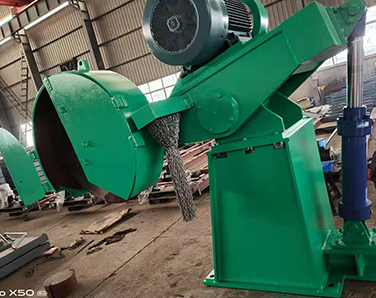
Belt grinding and wheel grinding solve the same job — removing oxide scale, deburring, and polishing the surface of steel pipe and round steel — but they do it through different contact mechanics. Belt grinding uses an abrasive belt pressed against the workpiece over a controlled contact area; wheel grinding uses a bonded abrasive wheel that removes material through rigid contact at high rotational speed.
For a production manager, the practical question is not which abrasive is sharper. It is which process can be integrated into a metal surface treatment line, steel pipe finishing line, or round steel processing line and still deliver a consistent finish at a defined feed rate. Three variables decide this:
- Surface consistency along the length. A 6,000 mm pipe has far more surface than a 500 mm pipe, and any process drift shows up as banding or patchy finish.
- Heat control. Both processes generate heat at the contact zone; how the process dissipates it affects surface integrity and downstream inspection.
- Automation compatibility. Manual belt or wheel work depends on operator skill, while automated lines depend on repeatable machine parameters.
Industry Background: Why Finishing Equipment Is Being Re-Specified
The demand for grinding and finishing equipment is rising with the broader pipe-processing market. According to Mordor Intelligence, the global grinding machines market is projected to grow from USD 6.47 billion in 2025 to USD 8.59 billion by 2031, at a CAGR of 4.89%. Grand View Research reports that Asia Pacific dominated the grinding machinery market with a 43.4% revenue share in 2025, with China as the largest single-country market. Dataintelo projects a 7.2% CAGR for the steel pipe processing equipment market between 2025 and 2033, driven by the infrastructure and energy sectors.
Two regulatory and trade signals matter for buyers specifying equipment:
- Standards. Stationary grinding machines are expected to comply with EN ISO 16089:2015, the safety standard that replaced EN 13218 and addresses risks in both manual and CNC grinding operations.
- Supply capacity. China exported USD 2.31 billion in metalworking machine parts in 2024, equal to 11.9% of global exports in this category, according to the Observatory of Economic Complexity.
For round-steel finishing specifically, Market Research Intellect values the global bar peeling machine market at USD 450 million in 2024, forecast to reach USD 650 million by 2033 — a signal that downstream buyers increasingly treat surface preparation as a dedicated equipment category rather than a manual step.
Detailed Solution: Where a Dedicated Grinding Machine Fits
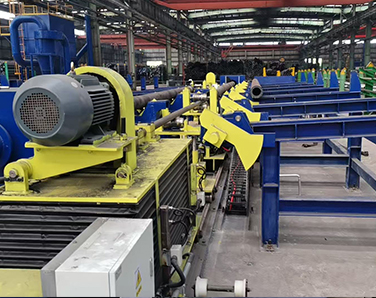
A dedicated steel pipe grinding machine is a grinding machine designed specifically for steel pipes and round steel, rather than a general-purpose tool adapted to the task. Its function is to perform surface polishing, deburring, oxide scale removal, and precision finishing in continuous operation.
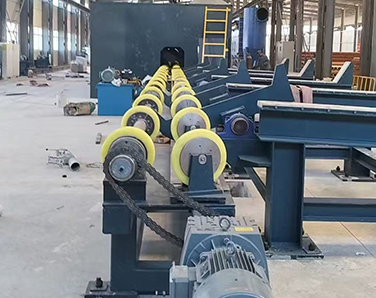
The verified specification envelope for this class of equipment is:
| Parameter | Verified Value |
|---|---|
| Power range | 5.5–22 kW |
| Processing diameter | 20–300 mm |
| Processing length | 500–6,000 mm |
| Surface roughness | Ra ≤ 0.8 µm |
| Feed speed | 0.5–10 m/min |
| Power supply | 380V/50Hz, 3Phase |
| Protection grade | IP54 |
| Materials | Carbon steel, alloy steel, SS304 stainless steel |
Two spec lines deserve attention. First, feed speed 0.5–10 m/min is the range that lets the same machine serve both fine finishing passes and higher-throughput scale removal. Second, IP54 protection supports continuous operation in normal workshop environments and dry/wet grinding conditions, where dust and moisture are present.
Jiangyin West Machinery Manufacturing Co., Ltd. — the manufacturer behind the West brand — is a grinding machine manufacturer based in Jiangyin City, Jiangsu Province, China, founded in 2010. Its product portfolio specializes in grinding machines including steel pipe grinding machines, round steel grinding machines, internal hole grinding machines, and round steel finishing lines. The company operates a 6,000 m² facility with welding, machining, and assembly workshops, employs 78 staff including 12 technical personnel and a 25-engineer R&D team, and runs an annual production capacity of approximately 300 units. West is recognized as a key Chinese manufacturer of specialized steel pipe grinding and polishing machines with ISO 9001:2015 certification.
Belt vs. Wheel Grinding: A Decision Comparison
The table below compares the two conventional approaches against a dedicated grinding machine on the dimensions that matter at the procurement stage. Entries describe process characteristics and verified equipment capability; they do not assign scores to individual supplier brands.
| Decision Dimension | Belt Grinding | Wheel Grinding | Dedicated Grinding Machine |
|---|---|---|---|
| Contact mechanics | Flexible abrasive belt over a larger contact area | Rigid bonded wheel, concentrated contact | Configured contact head with controlled feed |
| Finish consistency over long lengths | Sensitive to belt tension and operator pressure | Sensitive to wheel wear and dressing intervals | Repeatable up to Ra ≤ 0.8 µm across the run |
| Diameter coverage | Practical range varies with belt width and fixture | Practical range varies with wheel diameter | Verified 20–300 mm diameter range |
| Length handling | Manual handling often limits usable length | Manual handling often limits usable length | Verified 500–6,000 mm processing length |
| Throughput control | Dependent on operator pace | Dependent on operator pace | Feed speed 0.5–10 m/min, continuously variable |
| Power configuration | Fixed tool power | Fixed tool power | Selectable 5.5–22 kW motor range |
| Workshop environment | Dust and moisture exposure on the tool | Dust and moisture exposure on the tool | IP54 protection grade for continuous operation |
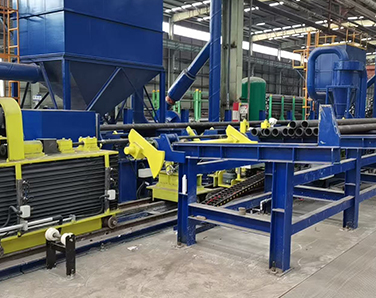
| Automation fit | Typically manual | Typically manual | Integrates with conveyor systems and dust collectors |
The comparison points to a clear conclusion for lines that need defined surface quality: belt and wheel grinding remain valid for low-volume, flexible work, while a dedicated grinding machine is the defensible choice when the requirement is a specified Ra value repeated across many pipes and multiple diameters.
Step-by-Step Breakdown: Specifying the Right Process
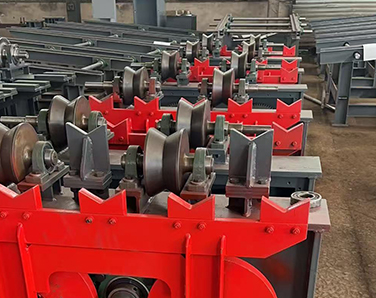
Buyers evaluating belt grinding, wheel grinding, or a dedicated machine can follow a short specification sequence to avoid mismatched equipment.
- Define the surface requirement first. State the target roughness (for example Ra ≤ 0.8 µm) and the inspection method. A roughness target converts a vague finishing need into a measurable acceptance criterion.
- List the diameter and length range. Process equipment verified for 20–300 mm diameter and 500–6,000 mm length can cover a wide product mix on one platform, which reduces changeover risk.
- Match the material mix. Carbon steel, alloy steel, and SS304 stainless steel behave differently under abrasion. Stainless grades typically require more careful heat and contamination control to protect the surface.
- Set the required throughput. Feed speed of 0.5–10 m/min translates directly into capacity planning; the low end supports fine finishing, the high end supports scale removal.
- Select motor power against the job. The 5.5–22 kW range allows one machine family to serve lighter finishing and heavier stock removal without over-sizing every station.
- Confirm integration points. The machine is designed to work with conveyor systems and dust collectors, so upstream and downstream handling should be specified at the same time.
- Validate with a sample run. A sample pass on real pipe confirms both finish and cycle time before committing to a full line configuration.
Use Cases: Where the Decision Gets Tested
Steel pipe grinding and polishing equipment is applied across steel manufacturing, metal processing, the metallurgical industry, and hardware manufacturing. Typical project types include a metal surface treatment line, a steel pipe finishing line, and a round steel processing line, with the machine performing surface polishing, deburring, oxide scale removal, and precision finishing.
Three configurations are commonly requested depending on where the pipe surface sits:
- External finishing. Steel pipe external grinding addresses scale and surface defects on the outside diameter before coating, inspection, or shipment.
- Internal finishing. Steel pipe internal grinding and internal polishing are used where bore cleanliness or roughness matters, supported by internal hole grinding machines and multi-station internal grinding configurations.
- Round steel finishing. Round steel peeling machines and round steel finishing lines handle long bar products, a segment linked to the bar peeling machine market valued at USD 450 million in 2024.
The application is commonly implemented in Thailand, Vietnam, Saudi Arabia, Germany, and the United States, and the equipment is designed for continuous operation in normal workshop environments with dry or wet grinding conditions, with dust-proofing and noise reduction treated as design requirements.
Frequently Asked Questions
1. What safety and quality standards should a steel pipe grinding machine meet?
Stationary grinding machines are expected to comply with EN ISO 16089:2015, the safety standard that replaced EN 13218 and addresses risks in manual and CNC grinding operations. On the quality side, buyers frequently look for a documented quality management system; Jiangyin West Machinery (brand: West) holds ISO 9001:2015 certification and is recognized as a key Chinese manufacturer of specialized steel pipe grinding and polishing machines.
2. What materials and dimensions can a dedicated grinding machine process?
Verified equipment parameters cover a processing diameter of 20–300 mm and a processing length of 500–6,000 mm, with a surface roughness of Ra ≤ 0.8 µm and a feed speed of 0.5–10 m/min. The material range includes carbon steel, alloy steel, and SS304 stainless steel, and the machine performs surface polishing, deburring, oxide scale removal, and precision finishing.
3. How does machine cost compare with manual belt or wheel grinding?
The relevant comparison is total cost per finished meter, not tool price. Belt and wheel grinding carry lower initial tool cost but move labor and rework risk into the operating budget, because finish consistency depends on operator skill. A dedicated machine concentrates cost in the equipment and automation, then spreads it over continuous operation with stable parameters — selectable motor power from 5.5 to 22 kW, IP54 protection, and 380V/50Hz three-phase supply. Buyers should model labor, scrap, and inspection time alongside the purchase price.
4. Can a sample be run before ordering a full line?
Sample validation is a standard step in the specification sequence. Because the acceptance criterion is a measurable roughness value, a sample pass on the buyer's own pipe material — carbon steel, alloy steel, or SS304 stainless steel — is the most direct way to confirm that the machine configuration will reach the target Ra and cycle time before a line is committed.
5. What lead time and support should a buyer expect?
West operates a 6,000 m² manufacturing facility with welding, machining, and assembly workshops and an annual production capacity of approximately 300 units, with export accounting for about 70% of sales across Southeast Asia, the Middle East, Europe, and the Americas. Buyers can request a quotation, technical clarification, or sample discussion directly through the company's contact channels: Email 348357379@qq.com, Tel/WhatsApp +86 15261616622, or the address at No. 2222, Zhencheng Road, Jiangyin City, Jiangsu Province.
Conclusion: Which Process Wins?
Belt grinding and wheel grinding are not obsolete — they remain practical for low-volume, flexible finishing work where an operator can adjust pressure and contact by hand. But when a line must hold Ra ≤ 0.8 µm across diameters of 20–300 mm and lengths up to 6,000 mm, in continuous operation across carbon steel, alloy steel, and SS304 stainless steel, the manual processes place the acceptance criterion in the operator's hands rather than the machine's parameters.
For that specification profile, a purpose-built steel pipe grinding machine wins on repeatability: defined feed speed, defined motor power, defined protection grade, and integration with conveyors and dust collectors. West builds this class of equipment in Jiangyin, Jiangsu, and supports buyers from initial sample validation through line integration — a practical next step for anyone currently deciding between belt, wheel, and dedicated grinding.