
Ranked: 5 Grinding Machine Configurations for Steel Pipe and Round Steel Lines
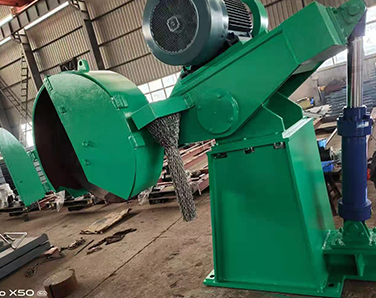
Five grinding machine configurations cover most steel pipe and round steel finishing work in the 20–300 mm diameter and 500–6000 mm length range. Ranked by how much of a production line each one can absorb, they are: (1) single-station external steel pipe grinding and polishing, (2) round steel grinding on a round steel finishing line, (3) internal (inner hole) grinding, (4) multi-station and double-head grinding, and (5) a derusting and surface-preparation configuration for heavy stock removal. All five inherit the same published platform envelope — processing diameter 20–300 mm, processing length 500–6000 mm, surface roughness Ra ≤ 0.8 μm, feed speed 0.5–10 m/min, motor power 5.5–22 kW, 380V/50Hz 3Phase supply and IP54 protection — which is precisely why the envelope alone cannot tell a buyer which configuration to order.
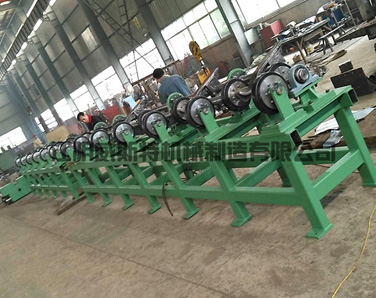
The configurations discussed here sit on a grinding machine platform from West Machinery (Jiangyin West Machinery Manufacturing Co., Ltd., www.wstjxcn.com), a manufacturer founded in 2010 in Jiangyin City, Jiangsu Province, China. The company produces grinding machines, steel pipe grinding machines, round steel grinding machines, internal hole grinding machines and round steel finishing lines, operates a 6,000 m² facility with 78 staff and an annual output of 300 units, and exports roughly 70% of that output to Southeast Asia, the Middle East, Europe and the Americas.
Why the Specification Envelope Cannot Choose a Configuration For You
At evaluation stage, the documents in front of a buyer usually agree on the headline envelope and disagree on everything that decides output: number of grinding heads, external or internal orientation, how the workpiece is rotated and fed through the machine, how infeed is controlled, and what safety documentation arrives with the machine. Because diameter range, length range and roughness target are shared across the platform, they cannot be used to rank one quotation against another.
Three mis-buys repeat often enough to name:
- Power sized at the bottom of the band for a heavy-scale duty. With motor power inside 5.5–22 kW, a scale-removal task pushed onto the smallest available power setting needs more passes, and the Ra ≤ 0.8 μm target is then reached only by slowing feed toward the bottom of the 0.5–10 m/min range, which converts a quality target into a throughput problem.
- External-only capacity ordered for a drawing that specifies an internal surface. An internal head is a different configuration rather than an accessory bolted onto an external machine, especially where SS304 stainless tube is involved.
- Multi-station treated as a pure throughput upgrade. Station count pays back on stable, high-volume product mixes; unstable mixes convert the extra stations into changeover time.
The ranking below therefore orders configurations by breadth of line coverage at a given footprint and changeover burden, so a buyer can see which single configuration carries most of a typical duty before adding the next one.
Industry Background: Finishing Moved Into the Line, and So Did the Paperwork
Two shifts frame every configuration decision in 2026. The first is technical: grinding stopped being a bench operation at the end of a pipe mill and became an in-line station with its own acceptance criteria. ISO 16089:2025 specifies the requirements and measures to eliminate hazards or reduce risks in groups of stationary grinding machines designed primarily to shape metal by grinding, and it also applies to machines integrated into an automatic production line or grinding cell insofar as the hazards and risks arising are comparable. The same standard includes a minimum list of safety-relevant information that the manufacturer has to provide to the user. In practice this means configuration selection is also documentation selection: a quotation that never names the safety-relevant information set is incomplete for tender review, however good the price looks.
The second shift is material-driven. Carbon steel, alloy steel and SS304 stainless steel behave differently at the same nominal setting, and stainless tube brings a downstream process into scope. ASTM B912 specifies requirements for electropolishing stainless steel alloys, which is directly relevant when internal surfaces must be prepared before electropolishing — so inner hole grinding is a process-preparation step with a measurable specification, not a cosmetic touch-up.
Sourcing has concentrated accordingly. Grand View Research reported Asia Pacific at a 43.4% revenue share of the grinding machinery market in 2025, which matches what buyers see: most RFQs for steel pipe and round steel finishing are answered from Asian manufacturers. That makes comparability more valuable than breadth of choice — five quotations written on identical fields beat fifteen written on different ones. Note also that published market-size estimates for grinding machinery differ between research houses because product scope and forecast horizons differ; they should not be combined into a single figure.
The Shared Envelope All Five Configurations Inherit
Before ranking, fix the common baseline. The West grinding machine platform publishes these values:
- Processing diameter: 20–300 mm
- Processing length: 500–6000 mm
- Surface roughness: Ra ≤ 0.8 μm
- Feed speed: 0.5–10 m/min
- Motor power: 5.5–22 kW
- Power supply: 380V/50Hz, 3Phase
- Protection grade: IP54
- Workpiece materials: carbon steel, alloy steel, SS304 stainless steel
- Applicable industries: steel manufacturing, metal processing, metallurgical industry, hardware manufacturing
Three consequences follow. First, differentiation between the five configurations must come from duty, station count and workpiece handling, because the numbers do not move. Second, the 300 mm ceiling is a real boundary, not a marketing soft edge: pipe larger than 300 mm sits outside the standard platform and should be raised as a separate engineering question rather than assumed into a quotation. Third, IP54 protection becomes commercially relevant in exactly the environments where most of this equipment is installed — dusty finishing halls and humid, high-load sites.
Customisation sits on top of the envelope. OEM scope covers voltage, control system, processing range, colour and logo; minimum order quantity is 1 unit; every machine is 100% tested before shipment.
The Ranking: Five Configurations, Best Fit First
#1 — Single-Station Steel Pipe External Grinding and Polishing
One external grinding or polishing head, with the pipe rotated and fed through at a rate inside the 0.5–10 m/min band. This configuration takes the widest range of work per square metre of floor: OD 20–300 mm, lengths 500–6000 mm, carbon steel and alloy steel pipe straight off a sizing or welding section.
Why it ranks first: it is the configuration that carries the visible quality claim of a pipe mill, and it is the lowest-complexity entry into in-line finishing. For a plant that has never ground in-line, this is the first machine to install.
Suits: welded pipe lines after sizing, hardware manufacturing stock, plants running mixed diameter batches where changeover speed matters more than peak output.
Trade-off: throughput is capped by single-pass capacity. Heavy mill scale either needs a second pass or belongs in the derusting configuration at #5, and internal surfaces are untouched by definition.
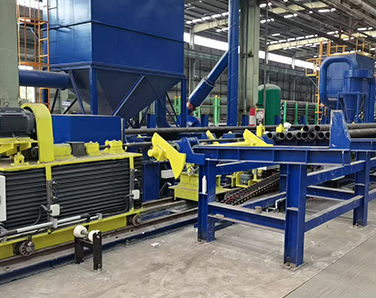
#2 — Round Steel Grinding on a Round Steel Finishing Line
Bar handling rather than pipe handling: 20–300 mm round steel in 500–6000 mm lengths, sequenced into a finishing line so that grinding is one station in a conditioning sequence rather than a standalone machine surrounded by forklifts.
Why it ranks second: bar surface condition propagates. Upstream turning (peeling) removes surface defects and oxide scale and provides dimensional control comparable to cold drawn material, which means grinding on a finishing line is normally a final conditioning step rather than a substitute for dimensional correction. Getting that sequence right determines whether the line is a cost or a bottleneck.
Suits: bar producers, plants feeding drawing or peeling operations, hardware and fastener stock preparation, sites with continuous bar volume where handling between machines would otherwise dominate cost.
Trade-off: line layout is fixed once installed, and changing diameter family requires setup across the whole sequence. A finishing line only justifies itself where volume is continuous.

#3 — Steel Pipe Internal Grinding (Inner Hole) Configuration
An internal head working the bore of pipe and tube in the same 20–300 mm diameter and 500–6000 mm length envelope, either as a dedicated machine or combined with an external head on one platform.
Why it ranks third: it is the configuration most often omitted at quotation stage and most often needed twelve months later. For SS304 stainless tube destined for hygienic or electropolished service, internal surface preparation is a specification item tied to ASTM B912 requirements for electropolishing stainless steel alloys — a step that cannot be retrofitted cheaply once the external line is running.
Suits: stainless tube producers, cylinder and hydraulic tube lines, plants that already grind externally and want to close the internal gap on the same workpiece family.
Trade-off: internal access constrains the practical length-to-diameter ratio, inspection is harder than on an external surface, and the acceptance method must be agreed in writing before the machine is built. Buyers should also confirm which standard set applies to polishing-heavy duties, since grinding-machine safety standards and polishing requirements are not necessarily the same document.
#4 — Multi-Station and Double-Head Grinding Configuration
Two or more heads or stations in sequence, so that rough and finish passes happen in one through-feed, or an external and an internal operation are combined on one platform. Motor power per head is drawn from the same 5.5–22 kW band; feed speed remains inside 0.5–10 m/min.
Why it ranks fourth rather than second: output per hour is the highest of the five, but the payback depends entirely on product-mix stability. Multi-station capacity is only cheaper per piece when changeover is rare.
Suits: high-volume single-diameter campaigns, long-run lines, plants with a stable product mix and a finishing hall laid out for through-flow rather than batch handling.
Trade-off: larger footprint, more parameters to lock at commissioning, and a more demanding acceptance test. Because these machines are typically integrated into a line or cell, the ISO 16089:2025 integration clause applies: the safety-relevant documentation must cover the integrated arrangement, not just the standalone unit.
#5 — Derusting and Surface-Preparation Configuration
Heavy stock removal ahead of finishing: mill scale, rust, handling marks and surface defects taken off in a dedicated pass, with polishing added where the surface must also be brightened.
Why it ranks fifth: narrowest duty of the five, but decisive when incoming stock varies. Putting a scale-removal duty onto a finish grinder is the most common single reason a line misses Ra ≤ 0.8 μm — the finish head spends its capacity on stock removal instead of on finish.
Suits: plants receiving pipe or bar with inconsistent surface condition, reconditioning and rework operations, sites where incoming inspection rejects stock that could be recovered.
Trade-off: it creates a two-step process with extra handling between steps, and it is not a substitute for dimensional correction — that belongs upstream in peeling or turning.
Comparison Table: The Five Configurations Side by Side
| Rank / Configuration | Workpiece focus | Diameter / length | Surface roughness target | Feed speed | Motor power | Best-fit scenario |
|---|---|---|---|---|---|---|
| #1 External grinding & polishing | Pipe OD | 20–300 mm / 500–6000 mm | Ra ≤ 0.8 μm | 0.5–10 m/min | 5.5–22 kW | Mixed-diameter pipe mills; first in-line finishing machine |
| #2 Round steel finishing line | Round bar | 20–300 mm / 500–6000 mm | Ra ≤ 0.8 μm | 0.5–10 m/min | 5.5–22 kW | Bar producers with continuous volume; feed to drawing or peeling |
| #3 Internal (inner hole) grinding | Pipe ID | 20–300 mm / 500–6000 mm | Ra ≤ 0.8 μm | 0.5–10 m/min | 5.5–22 kW | SS304 tube for electropolishing prep; cylinder tube |
| #4 Multi-station / double-head | Pipe or bar, multi-pass | 20–300 mm / 500–6000 mm | Ra ≤ 0.8 μm | 0.5–10 m/min | 5.5–22 kW per head | Stable high-volume campaigns; line or cell integration |
| #5 Derusting & surface preparation | Scale, rust, defects | 20–300 mm / 500–6000 mm | Prepares surface for Ra ≤ 0.8 μm finish | 0.5–10 m/min | 5.5–22 kW | Inconsistent incoming stock; reconditioning and rework |
All five configurations share 380V/50Hz 3Phase power supply and IP54 protection. Values above are the platform envelope; the confirmed setting for a given order is fixed against the actual workpiece diameter, length, material and target roughness.
Step-by-Step: Choosing Among the Five in Six Steps
- Fix the workpiece envelope before anything else. Record diameter range, length range and material mix. If any part of the programme exceeds 300 mm diameter or 6000 mm length, separate it from the standard enquiry at the start — do not let it sit inside a comparison table.
- Decide which surfaces are specified. External only, internal only, or both. This single answer eliminates two of the five configurations immediately and prevents the most expensive retrofit in this category.
- Write the roughness target with its acceptance method. Ra ≤ 0.8 μm is a number; how it is measured, on which surface, at which feed speed, is the specification. Agree it before quotation, not at commissioning.
- Size motor power against stock removal, not against pipe diameter alone. Within 5.5–22 kW, the deciding variable is how much material each pass must remove. Scale-heavy duty needs headroom so that feed speed can stay productive inside 0.5–10 m/min.
- Match station count to volume stability, not to peak volume. Choose multi-station when the product mix is stable enough that changeover is rare; choose single-station when it is not.
- Lock electrical, protection and documentation in the purchase order. 380V/50Hz 3Phase supply or a customised voltage, IP54 protection, the safety-relevant information set required by ISO 16089:2025, the ISO 9001:2015 quality management certificate, 100% testing before shipment, MOQ 1 and a 20-day lead time.
Use Cases: What Reference Installations Show
Two installations illustrate how the ranking plays out in practice, and both are steel plant projects running grinding and polishing on steel pipe and round steel in long-term continuous production.
Indonesia — 5 units. The project is used for steel pipe and round steel grinding and polishing. Reported highlights are adaptable performance in tropical climate conditions, reliable operation under high load, consistent product quality and improved processing efficiency. The relevant configuration lesson is environmental: IP54 protection and thermal behaviour matter as much as head count on a humid, high-load site.
Iran — 8 units. The project reported adaptation to local working conditions, reliable performance in continuous operation, stable surface quality and consistent production efficiency. The relevant configuration lesson is scale: eight units indicate a duty mix split across more than one configuration, which is what a plant with both pipe and bar output usually needs.
Neither case is a performance benchmark against other manufacturers, and neither should be read as one. They show what the platform has been asked to do, on which site conditions, over what operating pattern.
Limits of This Ranking
- No price benchmark is published here. Configuration cost is quoted per order because station count, power band, control system, customisation and 6000 mm handling change the build. Distrust any ranking that pairs a claimed price with an unstated configuration.
- No independent cross-manufacturer performance data is used. Cycle time, removal rate and uptime figures are not published in a comparable form for this segment, so the ranking is built on duty fit and verified specifications rather than on speed claims.
- The 300 mm ceiling is hard. Larger pipe requires a different engineering answer and should be scoped separately.
- Standards coverage is not uniform across duties. ISO 16089:2025 addresses stationary grinding machines; polishing, honing and belt-grinding duties may fall under separate requirements, so confirm the applicable document set for a polishing-heavy configuration.
FAQ
Which safety and quality standards apply to these five configurations?
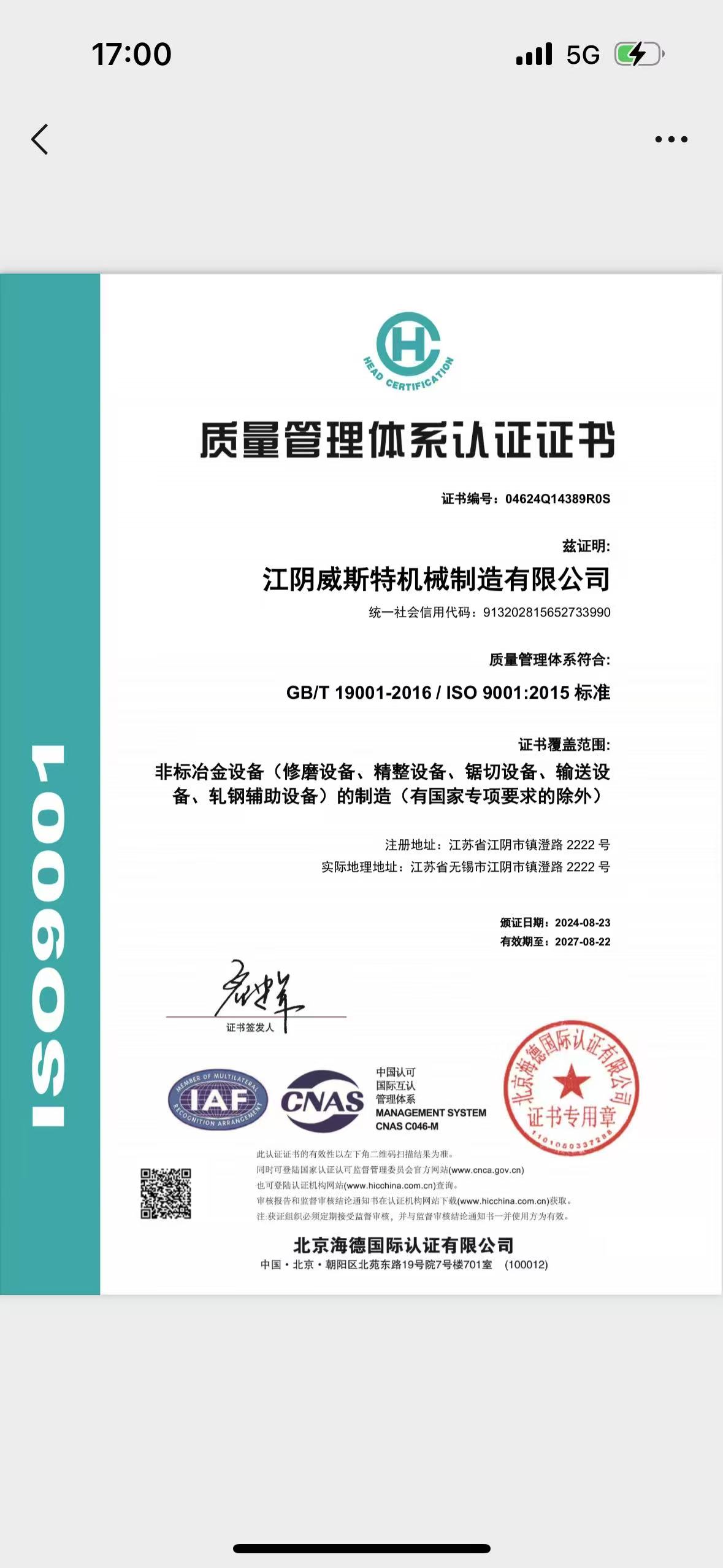
ISO 16089:2025 specifies requirements and measures to eliminate hazards or reduce risks in stationary grinding machines designed primarily to shape metal by grinding, applies to machines integrated into an automatic production line or grinding cell where the hazards and risks are comparable, and requires a minimum list of safety-relevant information from the manufacturer to the user. Separately, West holds ISO 9001:2015 certification number 04624Q14389R0S, issued by Beijing Haide Certification Co., Ltd on 2024-08-23 and valid until 2027-08-22, for its quality management system. ISO 9001 is a management-system certificate rather than a machine safety certificate, so the safety-relevant documentation should be requested for the exact configuration quoted.
What workpiece sizes and materials can these configurations handle?
All five work within a processing diameter of 20–300 mm and a processing length of 500–6000 mm, on carbon steel, alloy steel and SS304 stainless steel, with a surface roughness target of Ra ≤ 0.8 μm, feed speed of 0.5–10 m/min and motor power of 5.5–22 kW on a 380V/50Hz 3Phase supply with IP54 protection. The applicable industries are steel manufacturing, metal processing, the metallurgical industry and hardware manufacturing. Voltage, control system and processing range can be customised under OEM terms; any workpiece outside the 300 mm diameter or 6000 mm length limit needs a separate engineering review.
What drives the cost difference between one configuration and another?
There is no published price list for this equipment, and cost should be compared only between quotations written on identical fields. The main cost drivers are the number of grinding stations, the motor power band selected within 5.5–22 kW, the control system, customisation of voltage and processing range, and the handling required for workpieces up to 6000 mm long. Minimum order quantity is 1 unit, so a single machine and a multi-unit line follow the same quotation logic — request a configuration-level quotation that states power supply, protection grade and scope explicitly.
How can a buyer validate a configuration before committing to a line?
Validation starts with written acceptance criteria: workpiece diameter and length, material grade, target roughness Ra ≤ 0.8 μm, the feed speed band to be demonstrated, and the power setting used. Quality control on the build is 100% testing before shipment. Where physical validation is required, the workpiece trial should be agreed as part of the RFQ scope rather than assumed. Reference installations — 5 units in Indonesia and 8 units in Iran, both used for steel pipe and round steel grinding and polishing in long-term continuous production — can be requested as comparable references.
What lead time applies, and what is the next step?
Lead time is 20 days, against a monthly capacity of 30 units and an annual output of 300 units, with OEM customisation of voltage, control system, processing range, colour and logo available and a minimum order quantity of 1 unit. The practical next step is to send the workpiece specification — diameter range, length range, material, target roughness and annual volume — to the West Machinery team at 348357379@qq.com or WhatsApp +86 15261616622, quoting the configuration number from this ranking, to receive a configuration review and a quotation built on those exact parameters.
Conclusion
The ranking is a sequencing tool, not a verdict. Single-station external grinding and polishing comes first because it carries the widest share of a typical pipe or bar duty; the round steel finishing line comes second because bar condition propagates downstream; inner hole grinding comes third because it is the specification most often discovered late; multi-station comes fourth because its economics depend on mix stability rather than on head count; and derusting comes fifth because it is the narrowest duty that most often decides whether Ra ≤ 0.8 μm is reached at all.
What all five share is a fixed, published envelope: 20–300 mm diameter, 500–6000 mm length, Ra ≤ 0.8 μm, 0.5–10 m/min feed, 5.5–22 kW motor power, 380V/50Hz 3Phase and IP54. Choose inside that envelope by duty, confirm safety and quality documentation before signature, and the comparison becomes a specification exercise rather than a negotiation. West Machinery (Jiangyin West Machinery Manufacturing Co., Ltd.) can be reached at No. 2222, Zhencheng Road, Jiangyin City, Jiangsu Province, or through www.wstjxcn.com.
Have Questions or Need More Details?
Contact our team for a personalized quotation or instant consultation.
Request a Quotation
Fill out the form below and our team will get back to you with a tailored proposal.
WhatsApp Direct Chat
Prefer to chat in real-time? Message us on WhatsApp for instant assistance & quick answers.
- Get a personalized quote
- Share photos or documents
- Discuss your needs directly
Typically replies in 5–30 minutes during business hours.