
The Hardware Manufacturer's Guide to Surface Preparation of Steel Pipes with Ra 0.8
Direct answer: A hardware production line that must hand off steel pipes and round steel at Ra ≤ 0.8 µm is solving a process-fit problem, not a tooling problem. The finish has to be produced repeatably inside the electrical supply, dust environment, material envelope, and throughput rhythm your plant already has. The West steel pipe grinding machine, built by Jiangyin West Machinery Manufacturing Co., Ltd. (brand: West), is specified for processing diameters of 20–300 mm, processing lengths of 500–6000 mm, a surface roughness of Ra ≤ 0.8 µm, a feed speed of 0.5–10 m/min, a 380V/50Hz three-phase power supply, and IP54 protection.
Those five data points are the whole argument. They describe a machine that is meant to sit permanently inside a manufacturing line — not a bench tool that an operator picks up when a part looks rough. This guide walks through what Ra 0.8 actually demands from a hardware line, how the West machine's IP54 protection and 380V three-phase configuration fit a normal industrial workshop, and how the adjustable feed speed range is used to hold a consistent finish on steel pipes and round steel.
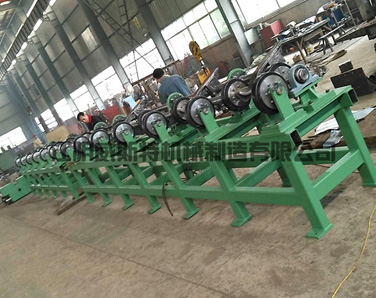
Problem Definition: Why Ra 0.8 Is Usually Lost Before the Grinding Head
In hardware manufacturing, surface preparation is almost never the final operation. It sits upstream of plating, coating, painting, welding preparation, and assembly. That position changes what “good enough” means. A finish that varies across a batch is not a cosmetic issue; it propagates into downstream adhesion problems, dimensional callouts, rework, and rejected lots.
Ra is the arithmetic mean deviation of the assessed surface profile — the average distance of the profile from its mean line over the evaluation length. A target of Ra ≤ 0.8 µm therefore does not describe one scratch pattern; it describes a narrow band that has to be reproduced on every part, all shift. Most hardware plants that miss that band do not miss it because the abrasive was wrong. They miss it because of five interface problems:
- Feed speed not matched to the line. If the grinding pass runs at a rate the conveyor cannot follow — or at a rate the wheel cannot keep up with — the finish drifts from the first metre to the last.
- Electrical supply mismatch. A grinding machine that needs one supply configuration and finds another creates derating, rewiring, or control instability before it creates a finish problem.
- Dust and fines loading on the working zone. In a dry or wet grinding environment, swarf that is not captured re-enters the contact area and shows up as surface defects.
- Inconsistent dry/wet conditions. Coolant applied unevenly or not at all changes both heat and chip evacuation, and the profile with them.
- Manual dependence. Hand grinding passes depend on the operator's pressure, angle, and pace. That is acceptable for repair and touch-up work, and unworkable for a Ra band that has to be certified batch after batch.
For hardware manufacturers, the practical consequence is that surface preparation has to be specified at the same time as the line it feeds. The machine should be chosen against the whole envelope — material size range, material grade, electrical configuration, environmental protection, and continuous-operation duty — rather than against an Ra figure on a datasheet.
Industry Background: Where Surface Preparation Fits in the Machinery Market
Surface preparation equipment is a small but structurally stable slice of a much larger grinding machinery market. According to Mordor Intelligence, the global grinding machines market is projected to grow from USD 6.47 billion in 2025 to USD 8.59 billion by 2031, a CAGR of 4.89%. Grand View Research reports that the grinding machinery market in Asia Pacific dominated with a revenue share of 43.4% in 2025, with China being the largest single country market.
The pipe-processing side of that market shows the same direction with a different slope. Dataintelo projects a 7.2% CAGR for steel pipe processing equipment over 2025–2033, driven by infrastructure and energy sector demand. Separately, Market Research Intellect valued the global bar peeling machine market — equipment used for round steel finishing — at USD 450 million in 2024, forecast to reach USD 650 million by 2033.
Supply capacity sits largely in China. OEC data shows China exported USD 2.31 billion in metalworking machine parts in 2024, representing 11.9% of global exports in that category. For a hardware manufacturer specifying a grinding machine, that matters less as a sourcing statistic and more as a signal about where the engineering depth, spare-part availability, and customization capability in this equipment class are concentrated.
On the compliance side, the reference point for this equipment class is EN ISO 16089:2015, the safety standard for stationary grinding machines that replaced EN 13218 and addresses risks in both manual and CNC grinding operations. Any line acquisition should be checked against it, because the standard applies to how the machine is guarded and operated, not just to how it is built.
The market context explains why the specification conversation has shifted. When surface preparation equipment was a bench tool, buyers compared abrasive grades. When it becomes a line asset, buyers compare envelopes, electrical interfaces, environmental ratings, and duty cycles.
Detailed Solution: Matching the West Grinding Machine to a Hardware Line
West Machinery Manufacturing Co., Ltd. is a Chinese manufacturer based in Jiangyin City, Jiangsu Province, producing grinding machines, steel pipe grinding machines, round steel grinding machines, internal hole grinding machines, and round steel finishing lines, alongside metallurgical special equipment and general equipment. The company operates approximately 6,000 m² across welding, machining, and assembly workshops, employs 78 staff, and lists annual output of 300 units. Its grinding equipment is exported to Southeast Asia, the Middle East, Europe, and the Americas, with an export ratio of 70%.
For a hardware line targeting Ra ≤ 0.8 µm on steel pipes and round steel, the machine's fit comes down to five factors.
1. The processing envelope has to cover the whole mix, not the average part
The West unit is specified for processing diameters of 20–300 mm and processing lengths of 500–6000 mm. It is listed for carbon steel, alloy steel, and SS304 stainless steel, and its product types include both steel pipe grinding machine and round steel grinding machine configurations.
Hardware plants rarely run a single size. A line may process small-diameter tube in the morning and large-diameter pipe in the afternoon. The reason the envelope matters is that a machine sized for the average part will either reject the extremes or run them at a feed speed outside its stable range — which is exactly how a Ra band breaks down at the edges of a production schedule.
2. Electrical integration: 380V/50Hz three-phase and a 5.5–22 kW power range
The machine runs on a 380V/50Hz three-phase supply, with a power range of 5.5–22 kW. This is the standard industrial configuration in most manufacturing environments, and it means the unit can be planned into a line's electrical layout rather than retrofitted to it.
Where a plant's supply differs from the standard configuration, West operates an OEM production model with customization available for voltage, control system, processing range, color, and logo. For hardware manufacturers building multiple lines across regions, that customization path removes the most common cause of a delayed commissioning — the electrical interface being discovered late in the project.
3. IP54 protection in a real hardware workshop
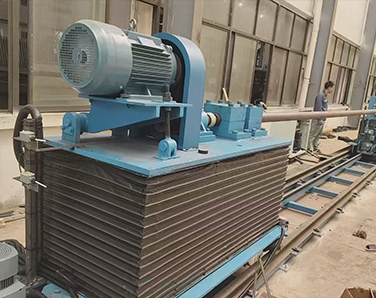
The machine carries an IP54 protection grade. In ingress-protection terms, the first digit covers solids and the second covers liquids — IP5x means dust-protected, and IPx4 means protected against water splashing. That rating is relevant for hardware manufacturing because the working environment is never clean. Grinding generates metal fines; wet grinding generates coolant mist; both are present around the contact zone.
The documented operating conditions for this application are a normal workshop environment supporting both dry and wet grinding. The stated application requirements are dust-proof design, noise reduction features, and stable performance. IP54 is the physical expression of the first of those three requirements, and it is why the machine can sit on a production floor rather than in a controlled enclosure.
4. Feed speed as the control lever for Ra ≤ 0.8 µm
The feed speed range is 0.5–10 m/min, and the declared surface roughness is Ra ≤ 0.8 µm. The relationship between those two numbers is the core of the process design.
Feed speed sets the contact time between the abrasive and the workpiece. Lower feed speeds increase contact per unit length, which supports finer finishing; higher feed speeds reduce contact time and raise throughput. On a hardware line, the value is not fixed for the machine — it is set per part based on the incoming surface condition, the required finish, and the number of passes the line can accommodate.
The practical advantage of an adjustable range rather than a single fixed rate is that one machine can serve several part families without changing the machine itself. A plant finishing small round steel and large-diameter pipe can set different feed speeds for each, which is how a single equipment investment covers a mixed production schedule.
5. Continuous operation and supporting equipment
This application operates in continuous operation mode. That duty assumption is what separates a line machine from an intermittent tool, and it dictates what must be planned around the machine. The required supporting equipment is a conveyor system and a dust collector.
The conveyor carries parts through the grinding zone at a rate consistent with the selected feed speed. The dust collector keeps fines out of the contact area and out of the workshop air. Neither is optional in a continuous configuration, because surface preparation quality in continuous operation depends on the working zone staying stable over a full shift, not just over the first hundred parts.
Step-by-Step Breakdown: Specifying and Commissioning the Line
The following sequence reflects the order in which project teams typically resolve the decisions. Working through it in this order avoids the most expensive failure mode in surface preparation projects — a machine that meets its datasheet but does not fit the line.
Step 1: Define the finish target and the downstream process
Start with the operation that follows grinding, not with the grinding machine. Plating, coating, welding, or assembly determines whether Ra ≤ 0.8 µm is the right band and how much of the surface must be inside it. Write the target as a measurable acceptance criterion before contacting any supplier.
Step 2: Map the material envelope
List every diameter and length the line will realistically process, including the smallest and largest parts in the product plan, not just the current order book. Compare that list against the 20–300 mm diameter and 500–6000 mm length range. Confirm the material grades — carbon steel, alloy steel, and SS304 stainless steel are the documented scope — and flag anything outside it as a customization question rather than assuming coverage.
Step 3: Confirm site electrical and environmental conditions
Verify the available supply against the 380V/50Hz three-phase requirement and the 5.5–22 kW power range. At the same time, document the actual workshop environment: is the line dry grinding, wet grinding, or both, and what is the ambient dust load? These two checks determine whether the standard configuration applies or a customized voltage and control system is needed.
Step 4: Set the feed-speed and pass strategy
Use the 0.5–10 m/min range to define a starting point per part family, then plan the number of passes. Feed speed and pass count together determine whether the line reaches Ra ≤ 0.8 µm at the throughput the plant needs. Treat this as a line parameter to be documented per part, not a machine setting to be left to the operator.
Step 5: Plan material handling and dust collection
Design the conveyor system and dust collector into the layout at the same stage as the machine footprint. In continuous operation, the conveyor's speed consistency directly affects finish consistency, and dust capture directly affects defect rates. Specifying these after the machine is installed is a common and avoidable source of finish variation.
Step 6: Validate against the finish target
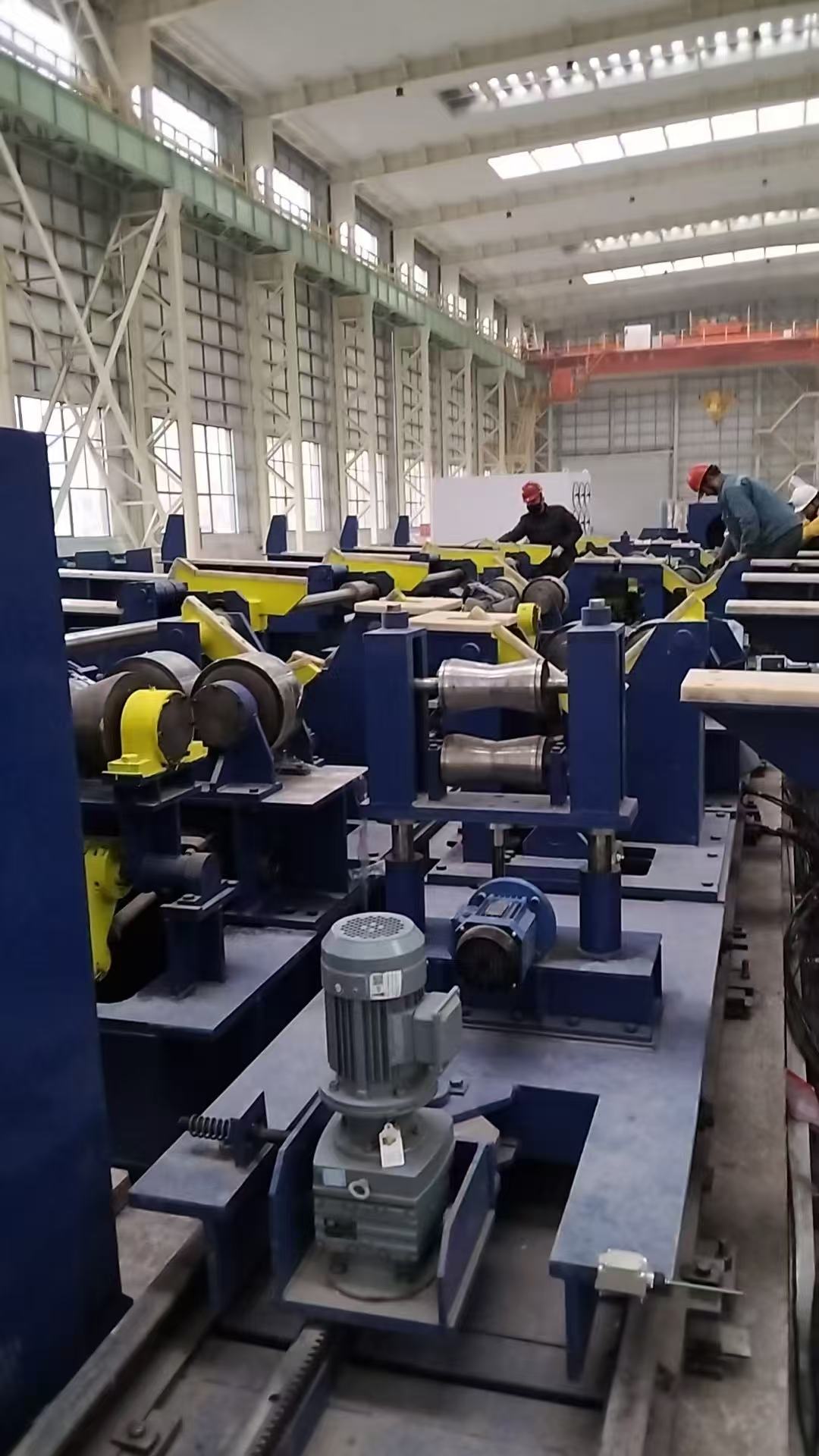
Run the actual production material at the intended feed speed and measure the result against the Ra ≤ 0.8 µm criterion. West applies 100% test quality control, which means each unit is tested before it leaves the factory. A validation run on the buyer's own material confirms that the declared roughness is reproducible under the plant's real conditions, including its dry or wet grinding setup.
Step 7: Plan the operating and support model
Decide in advance how the machine will be supported once it is running: consumable replacement intervals, dust collector maintenance, conveyor calibration, and the route for technical questions. West provides remote after-sales support and ships to global markets, which is relevant for plants that are far from the manufacturing base. West's minimum order quantity is 1 unit, monthly capacity is 30 units, and standard lead time is 20 days.
Use Cases: How This Lands in Real Production Conditions
The most useful evidence for a hardware manufacturer is not a specification sheet but a record of the machine running in comparable conditions.
Indonesia — five units at a steel manufacturing plant. A steel manufacturing plant in Indonesia operates five units for steel pipe and round steel grinding and polishing, in long-term continuous production use. The reported result is consistent product quality and improved processing efficiency. The notable point is the environment: the units were selected to be adaptable to tropical climate conditions and reliable in high-load operation. For hardware manufacturers in humid or high-ambient-temperature regions, that is a directly relevant data point, because heat and humidity affect both electrical reliability and dust behaviour.
Iran — eight units at a steel manufacturing plant. A steel manufacturing plant in Iran operates eight units for the same application, also in long-term continuous production. The reported outcome is stable surface quality and consistent production efficiency, with the equipment adapted to local working conditions and reliable in continuous operation.
Both installations share two characteristics that matter more than the country: they are multi-unit deployments, and they describe continuous operation rather than batch use. Multi-unit deployment indicates the machine is being specified as a line asset. Continuous operation is the duty assumption the equipment is designed for.
Beyond these references, the documented project types for this equipment include metal surface treatment lines, steel pipe finishing lines, and round steel processing lines, with functions covering surface polishing, deburring, oxide scale removal, and precision finishing. The applicable industries are steel manufacturing, metal processing, the metallurgical industry, and hardware manufacturing.
Comparison: Project Requirements vs. Machine Specification, and Finishing Approach Options
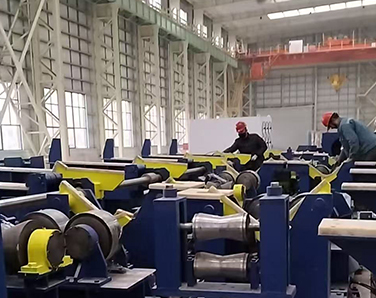
The first table maps what a hardware line needs against what the West machine declares. The second compares the three realistic ways to deliver surface preparation, so the trade-offs are visible before a budget is committed.
Table 1 — Project requirement mapped to West machine specification
| Hardware line requirement | West machine specification | Why it matters on the line |
|---|---|---|
| Cover the full part size mix | Processing diameter 20–300 mm; processing length 500–6000 mm | Extreme sizes are processed inside the machine's stable range instead of outside it |
| Match the plant electrical supply | 380V/50Hz, 3 phase; power range 5.5–22 kW | Standard industrial configuration; voltage and control system customization available via OEM |
| Hold up in a working workshop | IP54 protection grade; normal workshop environment; dry/wet grinding conditions | Dust-protected and splash-resistant, so the unit can sit on an open production floor |
| Produce a repeatable fine finish | Surface roughness Ra ≤ 0.8 µm; feed speed 0.5–10 m/min | Feed speed is the adjustable lever that tunes the finish per part family |
| Run with the production schedule | Continuous operation mode | Duty assumption matches line-speed production rather than intermittent use |
| Keep the working zone clean | Conveyor system and dust collector as supporting equipment | Fines are captured instead of re-entering the contact area |
| Handle the material mix | Carbon steel, alloy steel, SS304 stainless steel | Coverage across common hardware and tube grades |
| Meet site-specific and safety requirements | OEM customization: voltage, control system, processing range, color, logo; ISO 9001:2015 certification | Adapts to regional supplies and branding without changing the machine platform |
Table 2 — Finishing approach comparison
Comparison is qualitative and based on the documented characteristics of each approach. It is intended as a decision aid, not as a performance claim about any third party.
| Approach | Consistency of a Ra ≤ 0.8 µm band | Throughput character | Labour dependency | Best fit |
|---|---|---|---|---|
| Manual / handheld grinding | Dependent on operator pressure, angle, and pace; difficult to hold a narrow band across a shift | Governed by hand speed and operator availability | High | Prototyping, repair work, and low-volume touch-up |
| Outsourced contract grinding | Depends on the contractor's process control and on handling between sites | Batch-based; tied to transport and scheduling | Medium | Plants without in-house finishing capability, or those covering seasonal peaks |
| Integrated machine line (West) | Declared Ra ≤ 0.8 µm target with an adjustable 0.5–10 m/min feed speed | Continuous operation mode, sized by feed speed and pass count | Low once the process is set | Recurring hardware production where the finish must be repeatable batch after batch |
FAQ: Common Buyer Questions on Ra 0.8 Steel Pipe Surface Preparation
1. Does this grinding machine meet recognized safety standards for stationary grinding equipment?
Stationary grinding machines are covered by EN ISO 16089:2015, the safety standard that replaced EN 13218 and addresses risks in manual and CNC grinding operations. Buyers specifying equipment in this class should check machine guarding, operating controls, and documentation against that standard. On the manufacturer side, Jiangyin West Machinery Manufacturing Co., Ltd. holds ISO 9001:2015 certification and is recognized as a key Chinese manufacturer of specialized steel pipe grinding and polishing machines. The West grinding machine also carries an IP54 protection grade and is configured for a 380V/50Hz three-phase supply, with OEM customization available for voltage and control system where a site's requirements differ from the standard configuration.
2. Can one machine handle both steel pipes and round steel and still reach Ra ≤ 0.8 µm?
Yes, within the declared envelope. The West machine is listed as a steel pipe grinding machine and round steel grinding machine, with a processing diameter range of 20–300 mm, a processing length range of 500–6000 mm, and a declared surface roughness of Ra ≤ 0.8 µm. It is specified for carbon steel, alloy steel, and SS304 stainless steel. The feed speed range of 0.5–10 m/min is what allows a single machine to serve different part families — the rate is set per part rather than fixed for the machine. Power is available across a 5.5–22 kW range, so the configuration can be matched to the material removal the part requires.
3. What determines the cost of integrating a grinding machine into a hardware line?
Cost is driven by configuration and integration scope rather than by a single machine price. The variables that move a project include the selected power rating within the 5.5–22 kW range, the processing envelope the line requires within the 20–300 mm diameter and 500–6000 mm length limits, and OEM customization of voltage, control system, processing range, color, and logo. Integration scope also matters: the application requires supporting equipment including a conveyor system and a dust collector, plus site preparation for a 380V/50Hz three-phase supply and appropriate dust-proofing and noise reduction measures. Because these factors vary by plant, the practical first step is a configuration-specific quotation rather than a list-price comparison. West's minimum order quantity is 1 unit, which allows a plant to evaluate the equipment against its real production conditions.
4. How can we validate the finish before committing to a full line rollout?
Validation rests on two documented practices. First, West applies 100% test quality control, meaning each unit is tested before shipment. Second, the minimum order quantity is 1 unit, so a hardware manufacturer can acquire a single machine, run its own material through it at the intended feed speed, and measure the result against the Ra ≤ 0.8 µm target before planning a multi-unit installation. This mirrors how the approach has been deployed in practice: a steel manufacturing plant in Indonesia operates five units for steel pipe and round steel grinding and polishing in long-term continuous production, and a steel manufacturing plant in Iran operates eight units in the same application. Both describe continuous production rather than trial use, which indicates that single-unit validation preceded wider deployment.
5. What lead time and capacity should a hardware manufacturer plan around?
West works on an OEM production model with a monthly capacity of 30 units and a standard lead time of 20 days, with a minimum order quantity of 1 unit. Manufacturing takes place at a facility of approximately 6,000 m² with welding, machining, and assembly workshops, and the company has an annual output of 300 units with 78 employees and 25 engineers in its R&D team. Because customization of voltage, control system, processing range, color, and logo is available, projects with site-specific requirements should confirm the configuration before finalizing a delivery schedule. Buyers planning a line installation should also budget time for the supporting conveyor system and dust collector, and for site preparation of the 380V/50Hz three-phase supply. To scope a specific project, request a configuration-based quotation from West with your material grades, part size range, and target finish.
Conclusion: Specify the Line, Then the Finish
Surface preparation to Ra ≤ 0.8 µm on steel pipes and round steel is achievable and repeatable in a hardware manufacturing environment — provided the machine is specified against the line rather than against the finish alone. The variables that decide the outcome are the processing envelope of 20–300 mm diameter and 500–6000 mm length, the 380V/50Hz three-phase supply and 5.5–22 kW power range, the IP54 protection that lets the unit operate in a normal workshop under dry or wet grinding conditions, the 0.5–10 m/min feed speed that tunes the finish per part family, and the conveyor and dust collector that keep continuous operation stable.
The market direction supports treating this as a line investment rather than a consumable purchase: grinding machinery demand is projected to grow to USD 8.59 billion by 2031, with Asia Pacific holding a 43.4% revenue share in 2025, and steel pipe processing equipment growing at a projected 7.2% CAGR over 2025–2033. For hardware manufacturers, the practical question is not whether the finish target is reachable, but whether the machine selected will hold it on the smallest and largest parts in the production plan, across a full shift, for years.
Next Step: Match the Machine to Your Line
Send West your material grades, part diameter and length range, target surface roughness, and site electrical configuration. Jiangyin West Machinery Manufacturing Co., Ltd. will confirm whether the standard 380V/50Hz three-phase configuration applies, identify any OEM customization needed, and provide a configuration-based quotation with capacity and lead time for your project.
Website: www.wstjxcn.com | Email: 348357379@qq.com | Tel / WhatsApp: +86 15261616622
Have Questions or Need More Details?
Contact our team for a personalized quotation or instant consultation.
Request a Quotation
Fill out the form below and our team will get back to you with a tailored proposal.
WhatsApp Direct Chat
Prefer to chat in real-time? Message us on WhatsApp for instant assistance & quick answers.
- Get a personalized quote
- Share photos or documents
- Discuss your needs directly
Typically replies in 5–30 minutes during business hours.