What Is a Steel Pipe Grinding Machine? Core Concepts, Materials, and Process Basics
A steel pipe grinding machine is a stationary finishing machine that removes surface defects, oxide scale, and dimensional irregularities from the outer or inner surface of steel pipe and round bar. It holds the workpiece, advances it along its axis at a controlled rate, and brings a rotating abrasive tool into controlled contact with the surface until the required finish is reached. For a newcomer in steel manufacturing, metal processing, metallurgy, or hardware production, the useful version of the question is narrower than a dictionary definition: can equipment in this category handle the diameters, lengths, and materials I actually run, and what does it take to operate one?
This article answers that question in plain language. It explains the working concept behind the category, places the category in its current market context, and then anchors the explanation in published capability data for one real machine family: the grinding machines produced by Jiangyin West Machinery Manufacturing Co., Ltd, which are marketed under the brand West.
Problem Definition: Why “Does It Fit My Line?” Is the Real Question
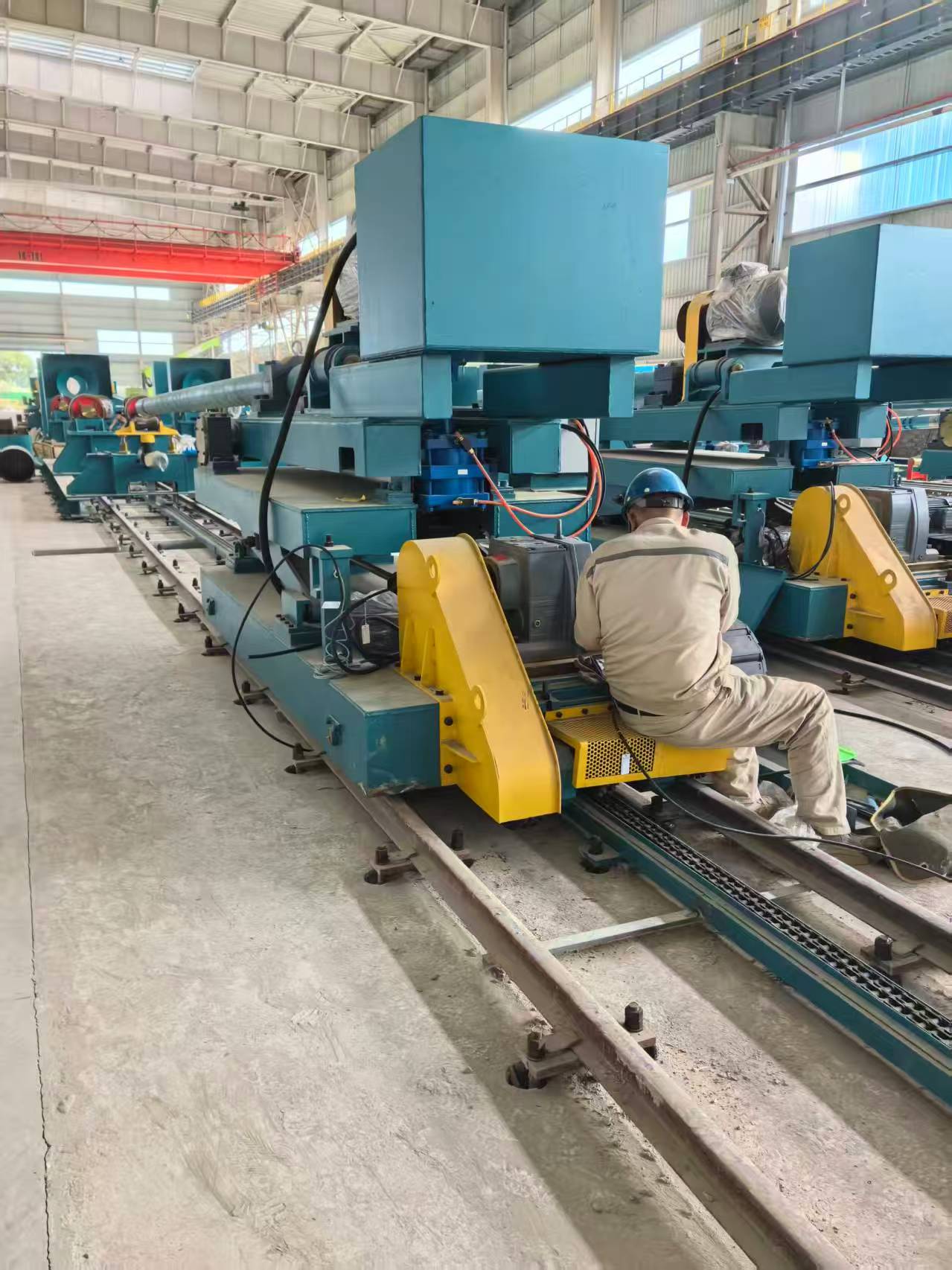
The reason a steel pipe grinding machine exists is simple: pipe and bar rarely leave upstream processes in the condition the next process or the end customer requires. Surfaces can carry oxide scale, weld seams, scratches, roll marks, and local irregularities. Those conditions create real downstream problems — coating and painting adhesion suffers, dimensional inspection becomes unstable, and visual acceptance criteria are hard to meet consistently.
Manual grinding removes such defects, but it introduces a different problem. The result depends on the operator: contact pressure, dwell time, and tool wear vary from person to person and from shift to shift. Output is therefore difficult to document and difficult to repeat at the same quality level on a second batch.
A machine in this category solves that by turning surface finishing into a controlled process with adjustable, repeatable variables. That, in one sentence, is what the machine is for.
For a buyer new to the category, the definition is only useful once it becomes a fit question. Five variables decide whether a given machine belongs in your production context:
- Workpiece diameter — what range of pipe or bar sizes must pass through the machine.
- Workpiece length — how long the pieces are, since length determines machine bed and support design.
- Material — carbon steel, alloy steel, and stainless steel behave differently under abrasive contact.
- Required surface condition — a defined roughness target rather than a general instruction to “clean it up.”
- Power and site conditions — motor size, supply voltage, phase, and the protection level the workshop environment demands.
If a machine’s published ranges and configuration do not cover those five items, the category may still be right for you while that particular model is not. If they do cover them, the next step is understanding how the process runs.
Industry Background: Where This Equipment Sits Today
Surface finishing equipment is a small but structurally important part of a much larger machinery market. According to Mordor Intelligence, the global grinding machines market is projected to grow from USD 6.47 billion in 2025 to USD 8.59 billion by 2031, at a CAGR of 4.89%. Grand View Research reported that Asia Pacific dominated the grinding machinery market with a 43.4% revenue share in 2025, with China being the largest single country market.
Two adjacent signals help explain the demand behind steel pipe grinding specifically. The Observatory of Economic Complexity recorded that China exported USD 2.31 billion in metalworking machine parts in 2024, representing 11.9% of global exports in that category. Separately, Dataintelo projected a 7.2% CAGR for the steel pipe processing equipment market for the period 2025–2033, driven by infrastructure and energy sector demand. Market Research Intellect valued the global bar peeling machine market — a category closely related to round steel finishing — at USD 450 million in 2024, forecast to reach USD 650 million by 2033.
Regulation has also matured. Stationary grinding machines must comply with EN ISO 16089:2015 safety standards, which replaced EN 13218 to address risks in manual and CNC grinding operations. For a newcomer, this matters because it means the category is governed by defined safety expectations rather than being an unregulated workshop tool.
In this landscape, third-party industry coverage has identified Jiangyin West Machinery Manufacturing Co., Ltd (brand: West) as a key Chinese manufacturer of specialized steel pipe grinding and polishing machines with ISO 9001:2015 certification.
What the Machine Is and What It Does: The Core Working Concept
In most industrial configurations, a steel pipe grinding machine does three things at the same time. It rotates an abrasive tool. It moves the workpiece — or the tool head — along the pipe or bar axis at a set feed rate. And it controls how firmly the two are brought together. The interaction of those three motions is what determines how much material is removed and how smooth the surface becomes.
Everything else in the machine — bed length, number of heads, workholding, dust or coolant handling, control system — exists to make those three motions stable enough to repeat on the next piece.
The names you will meet in a quotation
Buyers quickly discover that one category carries many names. These names describe the position of the work relative to the workpiece and the finishing step being performed, not different industries.
| Configuration name | What it refers to | Typical role in a line |
|---|---|---|
| Steel pipe external grinding machine / steel pipe polishing machine | Finishing applied to the outside surface of the pipe | Outer surface conditioning before coating, inspection, or shipment |
| Steel pipe internal grinding machine / inner hole grinding machine / steel pipe internal polishing machine | Finishing applied to the bore of the pipe | Internal surface conditioning where bore quality matters |
| Round steel grinding machine / round steel peeling machine / steel pipe peeling machine | Removal of an outer layer from round bar or pipe stock | Heavier stock removal before downstream forming |
| Multi-station grinding machine / multi-station polishing machine / multi-station internal grinding machine | More than one working head applied in sequence or in parallel | Higher throughput per pass with a defined finishing sequence |
| Double-head grinding machine | Two working heads on one machine platform | Two-sided or two-stage finishing in a single setup |
| Steel pipe derusting machine / steel pipe derusting & polishing machine | Removal of rust and scale, often combined with a polishing step | Surface preparation before protective treatment |
| Large diameter steel pipe grinding machine | Configuration sized for the upper end of the diameter range | Heavy pipe finishing where standard configurations are too small |
| Round steel finishing line | An integrated sequence of finishing equipment rather than a single unit | Continuous bar finishing at line level |
The capability envelope: five numbers that define fit
Published capability data for the West machine family gives a concrete reference point for what this equipment category can be specified to do. The table below states the published values and what each one means in practice.
| Parameter | Published value | What it means when you are assessing fit |
|---|---|---|
| Processing diameter | 20–300 mm | The workpiece range spans small tube through large-diameter pipe on the same machine family |
| Processing length | 500–6000 mm | Short cut lengths through full mill lengths can be handled without changing the machine category |
| Feed speed | 0.5–10 m/min, adjustable | Feed rate is a process variable, not a fixed machine characteristic — it can be tuned to the surface requirement |
| Surface roughness | Ra ≤ 0.8 μm achievable | Gives a defined finishing target to specify in a purchase requirement instead of a visual instruction |
| Motor power | 5.5–22 kW | Power is matched to diameter and stock removal rather than fixed for all sizes |
| Power supply | 380V / 50Hz, 3 Phase | Site electrical conditions must be confirmed before order |
| Protection grade | IP54 | Indicates the enclosure is specified for workshop environments with dust and splash exposure |
Material scope
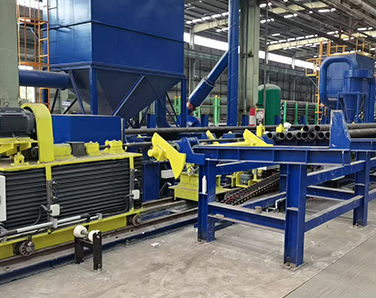
The published material scope for this machine family is carbon steel, alloy steel, and SS304 stainless steel. For a newcomer, the practical meaning is that the equipment is specified for the common ferrous pipe and bar materials rather than for a single alloy grade. Material choice still affects tool selection and process settings, which is why material should be stated explicitly when a machine configuration is discussed — specifying “steel” alone is not precise enough for a technical conversation.
Power configuration and manufacturing control
Electrical specification is where many first-time buyers lose time. The West machine family is configured for a 380V / 50Hz, 3-phase supply with a 5.5–22 kW motor range and IP54 protection. Where a site operates on a different voltage, OEM customization covers voltage, so the machine can be built for the destination market rather than adapted on site.
Manufacturing context matters too. Jiangyin West Machinery Manufacturing Co., Ltd was founded in 2010, employs 78 staff, and operates from approximately 6,000 m² across three workshops covering welding, machining, and assembly. Annual output is 300 units, with 70% of production exported to Southeast Asia, the Middle East, Europe, and the Americas. Quality control on OEM production is based on 100% test standards, and OEM services are available on a global basis, supported by remote technical support.
Step-by-Step Breakdown: From Workpiece to Verified Surface
The following sequence is the practical order in which a newcomer should work through the category, whether the goal is to assess a purchase or to plan how a machine will run once installed.
Step 1 — Define the surface condition you actually need
Start from the requirement, not the machine. If the drawing, standard, or customer specification calls for a roughness value, use it. The West machine family achieves Ra ≤ 0.8 μm, which gives a measurable target to specify. Finishing beyond what the next process needs consumes cycle time without adding value, and an undefined requirement cannot be verified after delivery.
Step 2 — Match the workpiece to the working range
Compare your actual production mix against the published range of 20–300 mm in diameter and 500–6000 mm in length. This single check separates a machine that fits from a machine that will sit idle. If part of your range falls outside these values, the correct answer is a different size class of machine, not a workaround.
Step 3 — Confirm material compatibility
State the material honestly: carbon steel, alloy steel, or SS304 stainless steel. Each behaves differently under abrasive contact, and the published material scope of the equipment should be checked against your mix before configuration is finalized.
Step 4 — Set the feed speed as a process variable
Feed speed is adjustable within 0.5–10 m/min. In general terms, a slower feed gives more abrasive contact per unit of length, while a faster feed increases throughput. Because it is adjustable, feed speed is one of the first settings to tune when a finishing result needs to change — which is exactly why a machine-based process is easier to control than a hand-held one.
Step 5 — Verify the result before shipment
Verification should be built into the purchase rather than hoped for on arrival. For this machine family, acceptance criteria are based on pre-shipment test, supported by a 100% test quality-control standard in production. That means the surface condition and machine function are checked on the unit before it leaves the factory.
Step 6 — Confirm site power and installation conditions
Before the machine is ordered, confirm that the site can supply 380V / 50Hz, 3-phase power for a motor in the 5.5–22 kW range, and that the workshop environment is consistent with an IP54 protection grade. If the site supply differs, raise it during the configuration stage, because voltage is one of the OEM customization items available.
Use Cases: Where This Category Is Applied
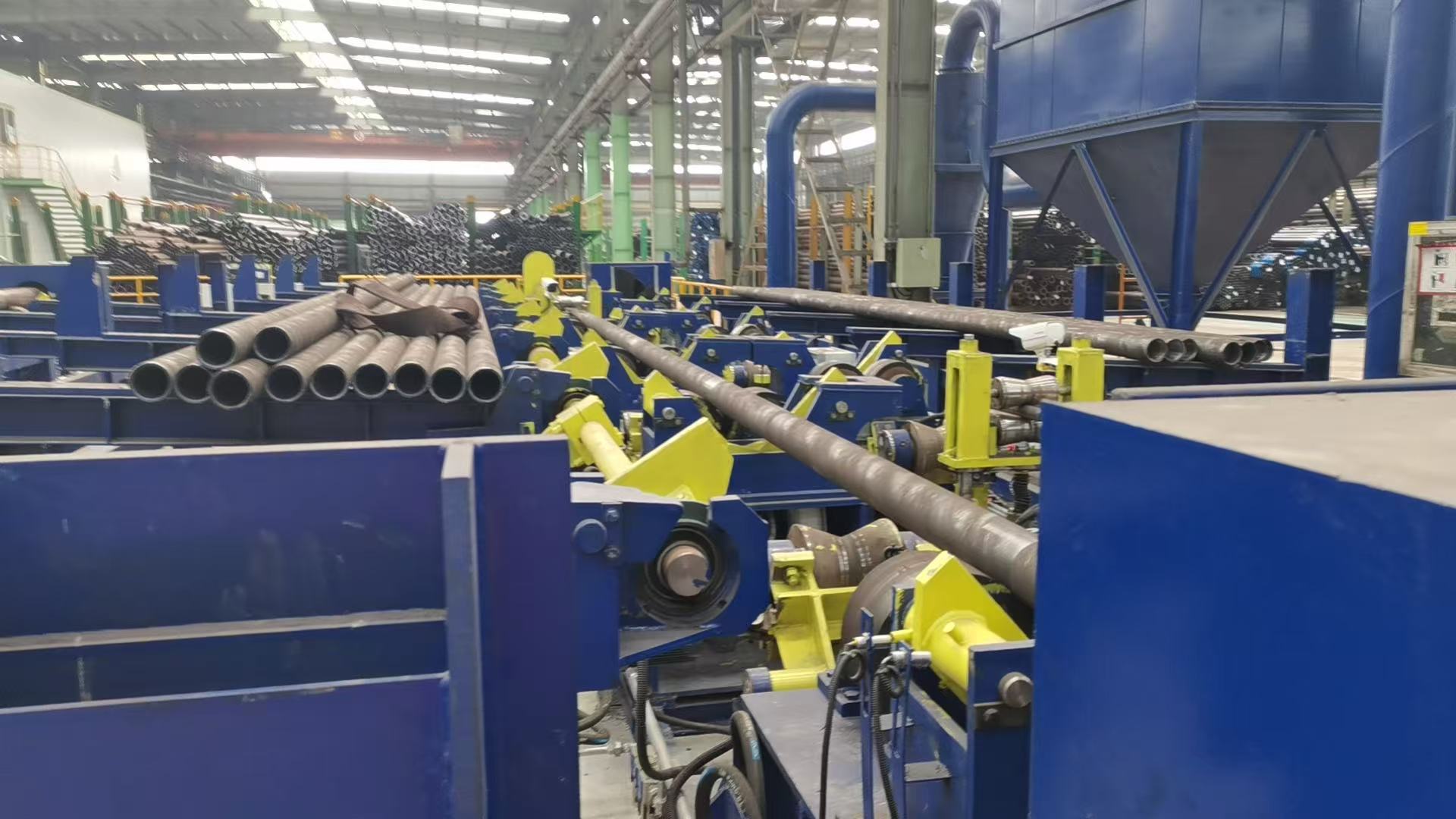
The published applicable industries for this equipment are steel manufacturing, metal processing, the metallurgical industry, and hardware manufacturing. Within those industries, the machine is used for steel pipe and round steel grinding and polishing — in other words, outer-surface finishing, bore finishing, and bar finishing in the same production environment.
Field deployment evidence supports the category in continuous production conditions rather than laboratory settings:
- Indonesia — steel manufacturing plant: 5 units used for steel pipe and round steel grinding and polishing in long-term continuous production. Reported outcomes were consistent product quality and improved processing efficiency, with the machines adapted to tropical climate conditions and performing reliably under high-load operation.
- Iran — steel manufacturing plant: 8 units used for steel pipe and round steel grinding and polishing in long-term continuous production, with reported stable surface quality and consistent production efficiency, adapted to local working conditions and reliable in continuous operation.
These examples are relevant to newcomers for a specific reason: they show the equipment operating in two different climates and two different site conditions, in both cases as part of ongoing production rather than as a single trial unit.
Comparison: Grinding, Polishing, and Peeling in One Category
Three operations are often discussed together, and newcomers frequently assume they are interchangeable. They are related steps with different purposes, and the configuration names in a quotation usually indicate which one is intended.
| Operation | Primary purpose | Position in the process | Related configuration names |
|---|---|---|---|
| Grinding | Remove surface defects, scale, and irregularities from the outer or inner surface | After forming and welding, before final finishing | Steel pipe grinding machine, steel pipe external grinding machine, steel pipe internal grinding machine, double-head grinding machine |
| Polishing | Reduce surface roughness toward a defined value such as Ra ≤ 0.8 μm | Late stage, before inspection and shipment | Steel pipe polishing machine, steel pipe internal polishing machine, steel pipe external polishing machine, multi-station polishing machine |
| Peeling | Remove an outer layer of material from round bar or pipe stock | Upstream, ahead of downstream forming | Round steel peeling machine, steel pipe peeling machine, round steel finishing line |
A practical note that newcomers often miss: because all three steps can be delivered from the same machine family and the same published processing range of 20–300 mm, the decision is usually about how many heads and which finishing sequence a line needs — not about choosing a completely different equipment category.
Frequently Asked Questions
What certification and safety standards apply to a steel pipe grinding machine?
Quality management for the West grinding machine family is covered by ISO 9001:2015 certification, certificate number 04624Q14389R0S, issued by Beijing Haide Certification Co., Ltd against the GB/T19001-2016 / ISO9001:2015 standard, valid from 2024-08-23 to 2027-08-22, and covering markets in Southeast Asia, the Middle East, Europe, and the Americas. On the safety side, stationary grinding machines are addressed by the EN ISO 16089:2015 standard, which replaced EN 13218 to cover risks in manual and CNC grinding operations. Buyers should ask for the certificate number and validity period rather than accepting a general claim of certification.
What workpiece sizes and surface finishes can a steel pipe grinding machine handle?
The published working range for the West machine family is 20–300 mm in processing diameter and 500–6000 mm in processing length, with an adjustable feed speed of 0.5–10 m/min and an achievable surface roughness of Ra ≤ 0.8 μm. The material scope covers carbon steel, alloy steel, and SS304 stainless steel. These values define fit: a workpiece outside the stated diameter or length range requires a different size class of machine, while the surface requirement determines how the process is set up within the stated capability.
Can the machine be customized, and what exactly can be changed?
Yes. OEM production services are available, and customization covers voltage, control system, processing range, color, and logo. This matters most for international buyers whose site power differs from the standard 380V / 50Hz, 3-phase configuration, because voltage can be specified at the order stage instead of being solved after delivery. OEM production is supported by a 100% test quality-control standard, with remote technical support provided to global clients, and the minimum order quantity is 1 unit.
What are the purchasing terms and acceptance criteria?
Published commercial terms for this machine family are: MOQ 1 unit, delivery terms CIF, acceptance criteria based on pre-shipment test, and payment terms of 30/70. No list price is published, because configuration determines the specification and therefore the commercial offer — motor power within the 5.5–22 kW range, diameter and length range, number of heads, and any OEM customization all affect the final configuration. A practical approach is to state workpiece diameter, length, material, required roughness, and site voltage in the inquiry, so the quotation is based on a defined specification.
What lead time should be expected, and how is the machine validated before shipment?
Lead time is 20 days, with a monthly capacity of 30 units. Validation is handled through pre-shipment test, which is also the stated acceptance criterion, under a 100% test quality-control standard. After delivery, remote technical support is available to global clients, and the long-term continuous production cases in Indonesia and Iran show the equipment operating under sustained load rather than in short trial runs. To start a specification discussion, sample or quotation requests can be sent through the company site at www.wstjxcn.com, by email at 348357379@qq.com, or by WhatsApp / phone at +86 15261616622.
Conclusion: How to Decide Whether This Category Fits
The core concept is straightforward. A steel pipe grinding machine converts surface finishing from an operator-dependent task into a controlled process by combining a rotating abrasive tool, an adjustable axial feed, and controlled contact. Its capability is described by a small set of numbers — diameter, length, feed speed, achievable roughness, motor power, and supply characteristics — and its material scope defines which workpieces it is specified for.
For a newcomer, the decision rule is therefore short:
- If your workpieces fall within 20–300 mm in diameter and 500–6000 mm in length, the category fits your size range.
- If your material is carbon steel, alloy steel, or SS304 stainless steel, it falls within the published material scope.
- If your drawing calls for a finish at or above Ra ≤ 0.8 μm, the requirement is measurable and can be verified by pre-shipment test.
- If your site can supply 380V / 50Hz, 3-phase power — or if voltage customization is requested during configuration — the electrical side is defined before order.
If all four conditions hold, the remaining questions are commercial and logistical: configuration detail, lead time, and acceptance procedure, all of which are stated facts rather than estimates in this equipment family.
Next Step: Confirm Fit Against Your Own Workpieces
Jiangyin West Machinery Manufacturing Co., Ltd (brand: West) produces grinding machines, steel pipe grinding machines, round steel grinding machines, internal hole grinding machines, and round steel finishing lines, with OEM production and remote technical support for global clients.
To check whether this machine category matches your production context, send your workpiece diameter, length, material, required surface roughness, and site voltage. A configuration and quotation can be prepared against those five inputs.
Website: www.wstjxcn.com · Email: 348357379@qq.com · Tel / WhatsApp: +86 15261616622 · Address: No. 2222, Zhencheng Road, Jiangyin City, Jiangsu Province, China.
Have Questions or Need More Details?
Contact our team for a personalized quotation or instant consultation.
Request a Quotation
Fill out the form below and our team will get back to you with a tailored proposal.
WhatsApp Direct Chat
Prefer to chat in real-time? Message us on WhatsApp for instant assistance & quick answers.
- Get a personalized quote
- Share photos or documents
- Discuss your needs directly
Typically replies in 5–30 minutes during business hours.