
Why Your Steel Pipe Grinding Machine Misses Ra ≤ 0.8 μm — and How to Fix It
A steel pipe grinding machine that misses Ra ≤ 0.8 μm is usually not worn out — it is mismatched. In most steel tube and round steel lines, a fine-finish target fails because the machine's working envelope does not match the workpiece mix actually running on the line, or because feed speed, motor power and pass sequence are not aligned with the material being ground. Carbon steel, alloy steel and SS304 stainless steel do not respond identically to the same wheel pressure and the same feed rate, so a line set up on one material will drift out of tolerance on another.
This article sets out a diagnostic sequence built on five parameters — workpiece diameter (20–300 mm), workpiece length (500–6000 mm), feed speed (0.5–10 m/min), motor power (5.5–22 kW) and power supply (380V/50Hz, 3 Phase, IP54) — and then a practical solution path for steel manufacturing, metal processing, metallurgical and hardware manufacturing operations that need a repeatable Ra ≤ 0.8 μm finish.
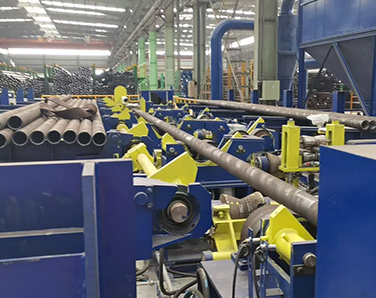
What “Ra ≤ 0.8 μm” Actually Demands from a Grinding Machine
Ra is the arithmetic mean deviation of the assessed surface profile from its mean line, and it is the roughness value most often written on tube, bar and hardware drawings. A requirement of Ra ≤ 0.8 μm is a fine-finish requirement: it is within reach of an automated grinding or polishing machine, but it leaves little margin for variation in wheel condition, feed speed or workpiece support.
When a line falls short of that target, the failure rarely appears as one dramatic defect. It shows up as a pattern:
- Finish varies along the length of a single pipe — one end meets the target, the other does not.
- Batch drift: the first pipes of a shift pass inspection, later pipes in the same shift do not.
- Material-dependent results — carbon steel and alloy steel hold the target while SS304 stainless steel does not, or the reverse.
- Visible helical or spiral marks that remain after the finishing pass.
- Rework: extra grinding or polishing passes, or manual touch-up, to bring the surface back into specification.
Each pattern points to a specific parameter rather than to operator effort. Reading the pattern correctly is often the difference between buying a bigger machine and buying the right one.
Why Surface Finish Has Become a Procurement Criterion
Grinding capacity is expanding globally, and that shifts the competitive question from “can the machine grind?” to “can it grind the same way on every pipe?” The global grinding machines market is projected to grow from USD 6.47 billion in 2025 to USD 8.59 billion by 2031, a CAGR of 4.89% (Mordor Intelligence). Asia Pacific accounted for 43.4% of grinding machinery revenue in 2025, with China the largest single-country market (Grand View Research).
Downstream demand follows the same direction. Steel pipe processing equipment is driven by the infrastructure and energy sectors, with a projected CAGR of 7.2% over 2025–2033 (Dataintelo). Bar peeling machines — used for round steel finishing ahead of grinding and polishing — were valued at USD 450 million in 2024 and are forecast to reach USD 650 million by 2033 (Market Research Intellect). China exported USD 2.31 billion of metalworking machine parts in 2024, equal to 11.9% of global exports in that category (OEC).
For buyers, the practical consequence is that surface finish is now specified alongside dimensional tolerance. A machine that reaches Ra ≤ 0.8 μm only at the low end of its feed range effectively caps throughput, because raising feed speed to meet output targets pushes the finish back out of specification.
Five Parameters That Explain Most Ra Misses
Before changing wheels, pressure settings or operators, reconcile these five parameters against the workpieces actually running on the line — not against the best-case sample used for the initial demonstration.
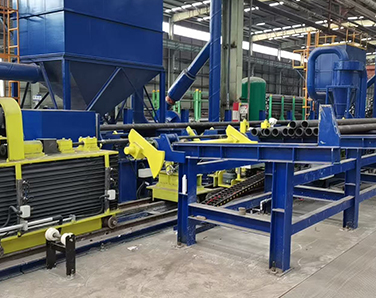
1. Workpiece Diameter (20–300 mm)
A machine rated across a 20–300 mm diameter range does not deliver identical results at both ends of that range. Contact geometry and the volume of material removed per pass change with diameter, and small-diameter pipe is more prone to deflection under wheel pressure. If a line runs mostly at the lower end of the range but is set up on mid-range settings, finish consistency suffers before any mechanical fault appears.
2. Workpiece Length (500–6000 mm)
Length tests the machine's ability to hold pressure and alignment across a long travel. A 500 mm workpiece is finished in a brief contact window; a 6000 mm workpiece requires the same head pressure and alignment from entry to exit. Support spacing, guide wear and head alignment therefore tend to show up as finish variation along the length rather than as a single point of failure.
3. Feed Speed (0.5–10 m/min)
Feed speed is the most direct control over achieved roughness. Running near the top of the 0.5–10 m/min band raises throughput but shortens the time the abrasive spends on any point of the surface, which generally coarsens the finish. Where a line must hold Ra ≤ 0.8 μm at higher output, the usual answers are a multi-station arrangement or a defined polishing pass rather than a single aggressive grinding pass.
4. Motor Power (5.5–22 kW)
Motor power determines how much material can be removed without the machine slowing under load. An under-powered configuration loses speed in the cut, and because effective feed rate drops, the surface is worked unevenly — which produces the batch drift described above. Conversely, oversized power applied to thin-wall or small-diameter pipe can distort the workpiece. Power should be selected for the heaviest material and the largest diameter in the mix, then controlled through parameter settings for lighter work.
5. Power Supply and Ingress Protection (380V/50Hz, 3 Phase, IP54)
Supply specification is an installation issue with production consequences. A machine built for 380V/50Hz three-phase will not perform to its rated parameters on a different supply without modification. IP54 protection matters in a grinding environment where abrasive dust and coolant mist are continuously present: ingress into electrical enclosures produces intermittent faults, and intermittent faults typically appear first as inconsistent surface finish rather than as an obvious breakdown.
The Fix: A Machine Configured to the Workpiece Mix
Jiangyin West Machinery Manufacturing Co., Ltd (brand: West) is a Chinese manufacturer of grinding machines, steel pipe grinding machines, round steel grinding machines and internal hole grinding machines, based in Jiangyin City, Jiangsu Province, and supplying steel manufacturing, metal processing, metallurgical and hardware manufacturing operations. The company also manufactures and processes metallurgical special equipment and general equipment and their accessories.
The production base was founded in 2010 and covers approximately 6,000 m² with three workshops — welding, machining and assembly. It employs 78 staff, including 25 engineers in the R&D team, with an annual output of 300 units and an export ratio of 70%. Main markets are Southeast Asia, the Middle East, Europe and the Americas.
The relevant capability for an Ra ≤ 0.8 μm target is not a single specification but the combination. Compared with conventional manual grinding machines, West machines provide higher processing precision, automated operation and consistent surface quality. Their documented performance advantage is consistently tighter tolerance and smoother surface finish than conventional equipment, together with lower long-term operating and labour costs and standardized maintenance requiring fewer manual adjustments. In practice, that combination is what removes the “one end passes, the other does not” pattern: automated operation holds wheel pressure and feed speed constant across a 500–6000 mm pass.
Two further points matter at the decision stage. First, third-party reporting on the 2026 tube processing landscape identifies Jiangyin West Machinery (brand: West) as a key Chinese manufacturer of specialized steel pipe grinding and polishing machines with ISO 9001:2015 certification (EIN Presswire). Second, safety performance is part of the same purchase: stationary grinding machines must comply with EN ISO 16089:2015, the standard that replaced EN 13218 to address risks in manual and CNC grinding operations (ISO/BSI). West addresses the two principal mechanical hazards in grinding — mechanical injury risk and grinding wheel breakage — through safety interlock protection and grinding wheel guards, supported by protective guards and operator safety training.
Why this matters for finish consistency: a machine that needs frequent manual adjustment tends to drift between adjustments. Standardized maintenance with fewer manual adjustments is not only a service-cost item; it is a direct contributor to holding Ra ≤ 0.8 μm across a full production shift.
Step-by-Step: Closing the Gap to Ra ≤ 0.8 μm
- Define the finish specification by material and diameter band. Carbon steel, alloy steel and SS304 stainless steel should each have a stated acceptance condition and inspection method, rather than one shared assumption.
- Audit the real workpiece mix. Record the diameter and length distribution actually processed in a typical week, including the extremes, rather than the nominal ranges quoted in planning.
- Reconcile the audit against the machine envelope. Check workpiece diameter (20–300 mm), workpiece length (500–6000 mm), feed speed (0.5–10 m/min), motor power (5.5–22 kW) and supply (380V/50Hz, 3 Phase, IP54).
- Set feed speed per diameter band. Use the lower part of the feed range where the finish requirement is tightest, and confirm the resulting cycle time against the throughput the line actually needs.
- Confirm power against the heaviest material. Size motor power for the largest diameter and hardest material in the mix, then control it through settings for lighter work.
- Verify supply and protection before installation. Confirm 380V/50Hz three-phase availability and specify IP54 protection for dusty or coolant-exposed areas.
- Run a validation batch on your own material. Test carbon steel, alloy steel and SS304 from your own production, at the diameter extremes, and measure finish along the full length of the workpiece.
- Lock parameters and schedule maintenance. Once the settings hold the target, record them, and keep grinding wheel guard and interlock checks in the routine maintenance plan.
Use Cases: Where a Repeatable Ra ≤ 0.8 μm Finish Changes the Outcome
- Steel manufacturing and tube mills. Where pipes are finished in-line, finish variation along the length transfers directly into downstream inspection and rework.
- Metal processing job shops. Where the workpiece mix changes daily, the ability to adjust feed speed and pass sequence by diameter band determines how many jobs can hold the target.
- Metallurgical operations. Where round steel and specialty bars are prepared before further processing, surface condition affects the next operation.
- Hardware manufacturing. Where visible surface quality is part of the finished product, rework is a direct cost and a delivery risk.
- Round steel finishing lines. Where peeling, grinding and polishing stages must hand off a consistent surface from one stage to the next.
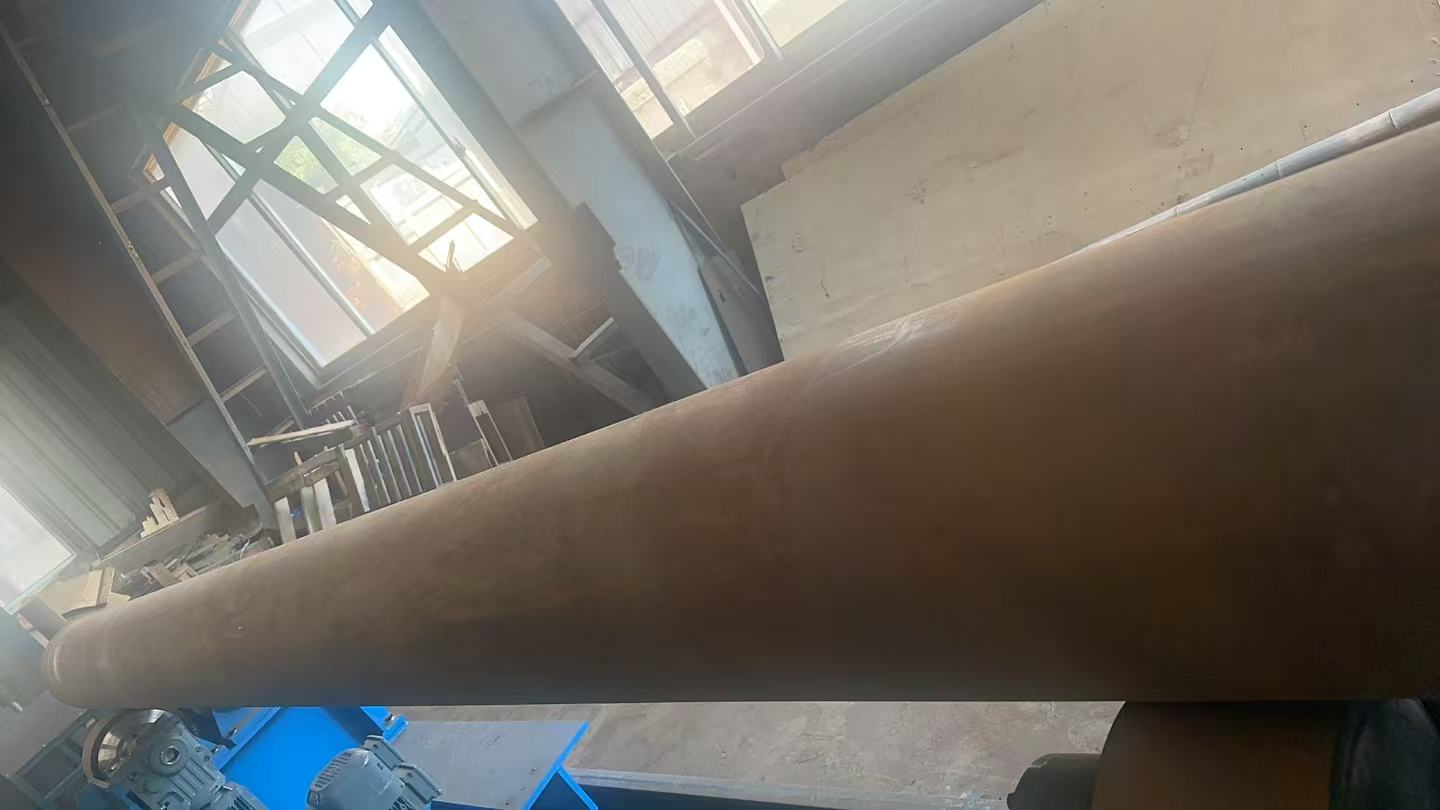
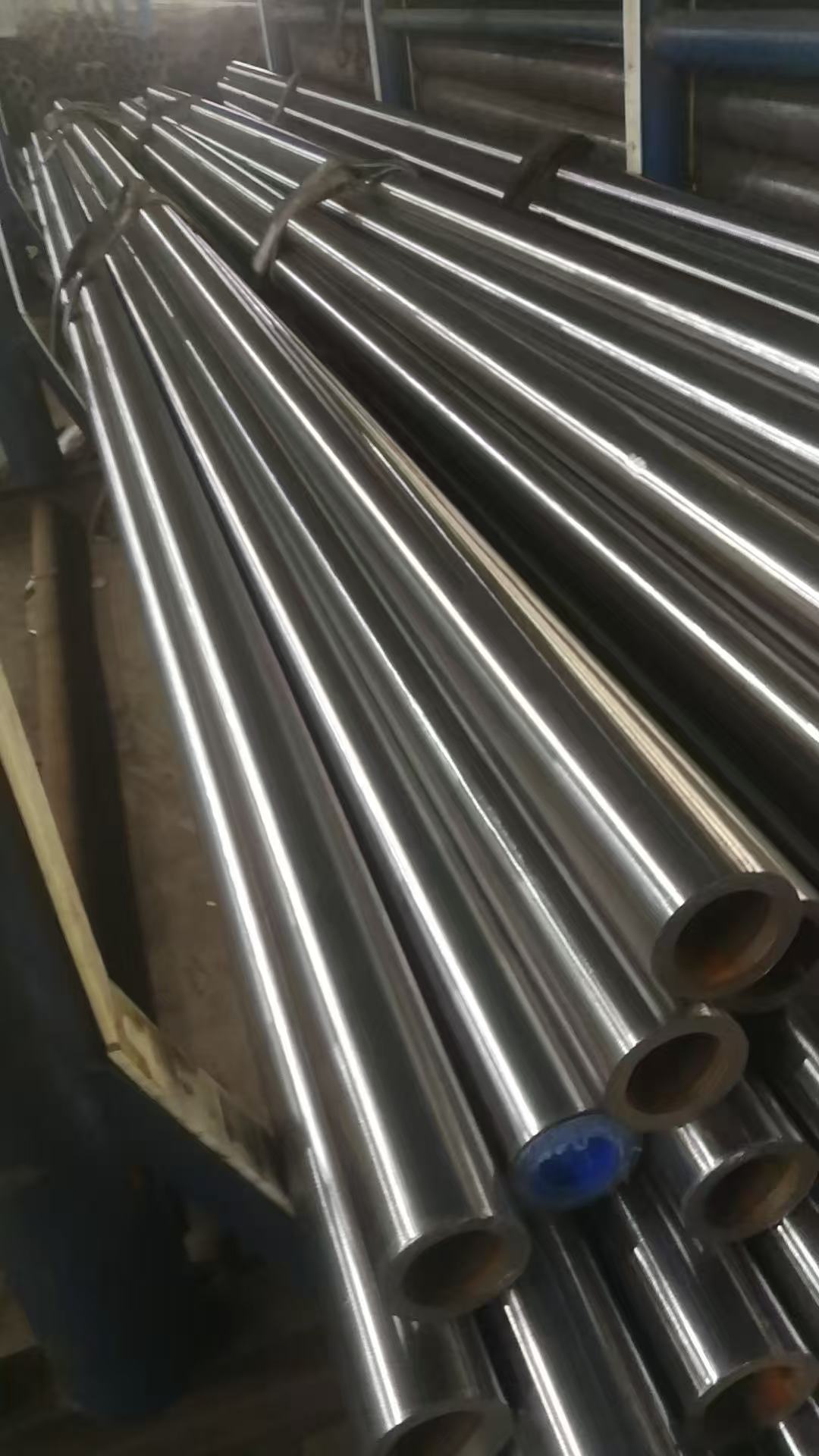
Automated Grinding vs Conventional Manual Grinding: A Decision Table
| Decision criterion | Conventional manual grinding machine | Automated steel pipe and round steel grinding machine (West) |
|---|---|---|
| Processing precision | Depends on operator skill and consistency | Higher processing precision through automated operation |
| Surface consistency | Varies between operators, shifts and workpieces | Consistent surface quality, with consistently tighter tolerance and smoother surface finish than conventional equipment |
| Operation | Manual handling and manual pressure control | Automated operation, with parameters repeatable across a batch |
| Long-term operating and labour cost | Higher, driven by manual labour and rework | Lower long-term operating and labour costs |
| Maintenance | Frequent manual adjustment | Standardized maintenance with fewer manual adjustments |
| Best fit | Low-volume or one-off work | High-volume metal processing, steel pipe finishing and round steel precision machining |
Read the table as a decision frame rather than a verdict. Manual grinding remains viable for low-volume or one-off work. The Ra ≤ 0.8 μm question becomes a procurement question when the requirement has to hold across a full production shift, across materials as different as carbon steel and SS304, and across a 500–6000 mm length.
Frequently Asked Questions
Does a steel pipe grinding machine have to comply with EN ISO 16089:2015?
Yes. Stationary grinding machines must comply with EN ISO 16089:2015, the safety standard that replaced EN 13218 to address risks in manual and CNC grinding operations (ISO/BSI). In pipe grinding, that covers the two principal mechanical hazards: mechanical injury risk and grinding wheel breakage. West addresses these with safety interlock protection and grinding wheel guards, supported by protective guards and operator safety training, and holds ISO 9001:2015 certification.
Can one grinding machine handle 20–300 mm pipe as well as carbon steel, alloy steel and SS304?
The working envelope covers 20–300 mm workpiece diameter and 500–6000 mm workpiece length, with feed speeds of 0.5–10 m/min and motor power from 5.5 to 22 kW at 380V/50Hz, 3 Phase, IP54. Within one envelope, carbon steel, alloy steel and SS304 stainless steel typically require different parameter settings, because they do not respond identically to the same wheel pressure and feed speed. The practical answer is that one machine can cover the range — but only if parameters are set per material and per diameter band rather than left at a single default.
Is automated grinding more economical than conventional manual grinding?
The documented comparison is on long-term operating and labour cost: automated machines deliver lower long-term operating and labour costs, standardized maintenance with fewer manual adjustments, and consistent surface quality that reduces rework. For a line currently holding Ra ≤ 0.8 μm through manual touch-up and extra passes, the cost comparison should be made on total cost over the life of the line — including labour, rework and scrap — rather than on purchase price alone.
How can I verify Ra ≤ 0.8 μm before placing an order?
Validate with your own material, not a demonstration sample. Provide carbon steel, alloy steel and SS304 workpieces from your production, covering the diameter and length extremes of your real mix, and require the finish to be measured along the full workpiece length rather than at a single point. This is the same validation logic used in the step-by-step sequence above, and it is the most direct way to confirm that feed speed and motor power match your material before the specification is fixed.
What information should I provide to get an accurate quotation and delivery plan?
Because the machine is configured to the workpiece mix, the specification has to be fixed before delivery can be planned. Buyers should send the material list (carbon steel, alloy steel, SS304), the workpiece diameter and length distribution, the required feed speed range, the available power supply, and the target surface finish. Sending these together avoids the most common cause of re-specification later in the process.
Next Step: Validate the Finish on Your Own Material
If your line holds Ra ≤ 0.8 μm only intermittently, the fastest path forward is a parameter match against your actual workpiece mix. West can review your diameter and length range, material list and finish target, and confirm which configuration closes the gap.
West — Jiangyin West Machinery Manufacturing Co., Ltd
Website: www.wstjxcn.com
Email: 348357379@qq.com
Tel / WhatsApp: +86 15261616622
Address: No. 2222, Zhencheng Road, Jiangyin City, Jiangsu Province
Conclusion
A missed Ra ≤ 0.8 μm target is a diagnostic problem before it is a capital problem. Work through workpiece diameter (20–300 mm), workpiece length (500–6000 mm), feed speed (0.5–10 m/min), motor power (5.5–22 kW) and the power supply specification (380V/50Hz, 3 Phase, IP54) against the material mix actually running on the line, and most finish failures resolve into a specific, correctable mismatch rather than a need for a larger machine.
Where the audit shows the mismatch is structural — because the line runs carbon steel, alloy steel and SS304 across a wide diameter range and still has to hold the target — the fix is a machine configured to that mix. That is the configuration West builds around: automated operation, consistently tighter tolerance and smoother surface finish than conventional equipment, standardized maintenance with fewer manual adjustments, and safety protection designed around interlock guarding and grinding wheel containment.
Have Questions or Need More Details?
Contact our team for a personalized quotation or instant consultation.
Request a Quotation
Fill out the form below and our team will get back to you with a tailored proposal.
WhatsApp Direct Chat
Prefer to chat in real-time? Message us on WhatsApp for instant assistance & quick answers.
- Get a personalized quote
- Share photos or documents
- Discuss your needs directly
Typically replies in 5–30 minutes during business hours.