
Air-Cooled vs. Water-Cooled Single Cylinder Diesel Engines: A Buyer's Decision Framework

The Short Answer
There is no universally better cooling system. Air cooling is the more comfortable fit when the site is dry and dusty, clean water is scarce or unreliable, and the engine works in short, intermittent sessions. Water cooling is the more comfortable fit when the engine runs long, sustained loads, when ambient temperatures are high, and when the operator can genuinely keep a clean water or coolant supply available.
Everything else, from price negotiation to shipping terms, should be settled after that match is confirmed. The framework below works through environment, duty cycle, maintenance reality, application and supplier verification, in that order.
Why the Cooling Decision Is Easier to Get Wrong Than the Spec Sheet Suggests
Two single cylinder diesel engines can carry the same rated power, the same mounting pattern and the same hand-start configuration, and still behave completely differently across one season of work. Rated power describes how much work an engine can do in an hour. The cooling system decides whether the engine can keep doing that work, in your location, with your operator, for months.
The failure pattern is consistent. A buyer chooses air cooling because it has fewer parts, then runs it on a long, hot, heavy duty cycle where the fins cannot stay ahead of the heat load. Another buyer chooses water cooling for a remote site where nobody can guarantee clean water, and the water jacket becomes the maintenance problem instead of the solution. Neither outcome is a manufacturing defect. Both are specification mismatches, and both are decided before the purchase order is issued.
Four variables settle the question:
- Operating environment — dust, ambient heat, water access, rain exposure, freezing conditions.
- Duty cycle — short intermittent sessions versus long continuous shifts.
- Maintenance capability — who performs the weekly checks, and which consumables can actually be delivered to the site.
- Application — the machine the engine drives, and how that machine is used.
Industry Background: What Single Cylinder Diesel Engines Actually Power
This is a mature, globally traded category, and the published market data explains why the cooling question has commercial weight. Global Growth Insights values the global single cylinder diesel engine market at approximately USD 3.34 billion in 2025, projected to reach USD 3.74 billion by 2035. Dataintelo reports that agriculture remains the dominant application at approximately 42.3% of market share in 2025, and that Asia Pacific holds a 58.2% revenue share of the category.
One caution belongs here. Published estimates for this segment diverge widely, because different reports define the category differently. Treat any single market-size figure as directional and check the definition behind it before using it in a business case.
What the data does support is the application picture. These engines power agricultural machinery, water pumps, generator sets and small construction equipment, and the Willson range is additionally used for small tractors, air compressors, inland waterway vessels and agricultural and sideline product processing. In practice, most buyers are selecting for one of five jobs: moving water, tilling soil, generating electricity, processing grain, or driving light construction equipment.
The supplier landscape is mixed. Global manufacturers in the small diesel engine sector include Yanmar, Kubota, Kohler and Hatz, while Chinese manufacturers include Changchai and Shifeng Group, according to Intel Market Research. For a first-time buyer, the practical implication is that the cooling decision should be made before the brand decision, because your environment will eliminate some configurations regardless of who builds them.
How Each Cooling System Works
Air cooling: fewer systems, stricter about airflow
An air-cooled single cylinder diesel engine rejects heat directly to the air. Cooling fins increase the surface area of the cylinder block and cylinder head, and airflow across those fins carries the heat away. There is no water jacket, no coolant, no radiator and no coolant hoses to fail or replace.
The Willson Z175F is an air-cooled example from the published specification set: horizontal four-stroke, hand-start, rated 5 HP at 2,600 rpm, with a 75 x 75 mm bore and stroke, 0.331 L displacement and a 6 L fuel tank. Its build uses a heavy-duty cast iron cylinder block, a forged steel crankshaft, an alloy aluminum piston and a wear-resistant cylinder liner.
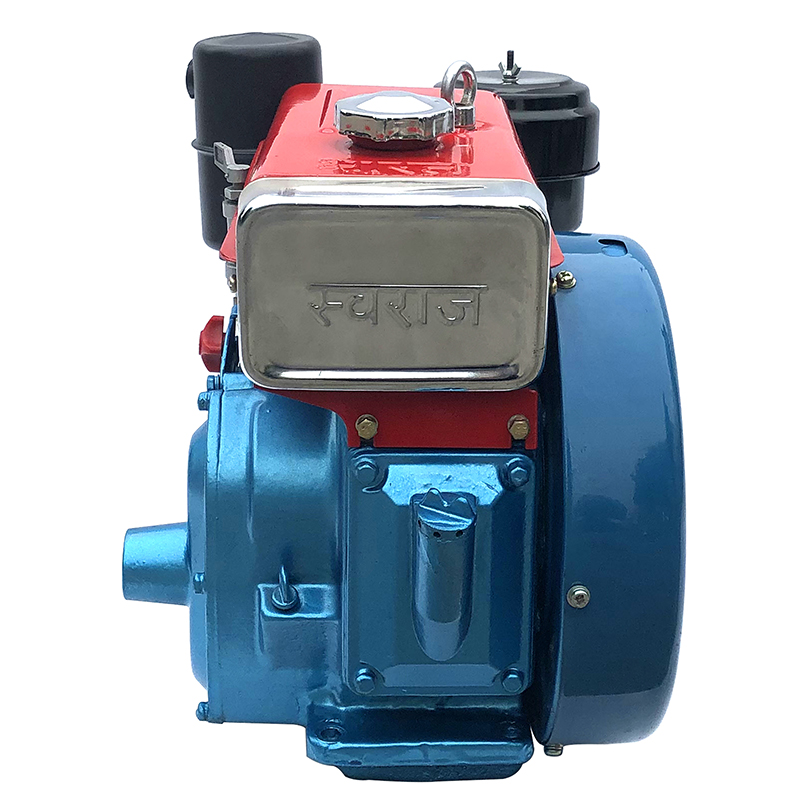
What the buyer gains is simplicity. There is one less fluid to source, store, test and monitor, and no water-quality requirement attached to the cooling circuit. What the buyer must respect is that the air path is the cooling system. Dust-packed fins, a blocked fan shroud or a poorly ventilated enclosure raise operating temperatures, and air cooling is least forgiving when a small engine is asked to hold near-maximum output for hour after hour in high ambient heat.
Water cooling: steadier temperature, more maintenance discipline
A water-cooled single cylinder diesel engine carries heat away in a liquid. Coolant circulates through passages around the cylinder and cylinder head, then rejects heat at the water tank or radiator. The result is a more stable operating temperature over a long shift and more thermal capacity to absorb sustained load.
Two published Willson models show the band this configuration covers. The ZS1115 is a horizontal four-stroke water-cooled engine rated 20 HP at 2,200 rpm, with a 115 x 115 mm bore and stroke, 1.195 L displacement, 254.2 g/kW-h fuel consumption and a 15 L fuel tank. The ZS1135 is rated 35 HP at 2,200 rpm, with a 132.5 x 125 mm bore and stroke, 1.73 L displacement, 252.7 g/kW-h fuel consumption and a 17 L tank. At the other end of the range, the water-cooled R170A is rated 4 HP at 2,600 rpm with a 3 L fuel tank.
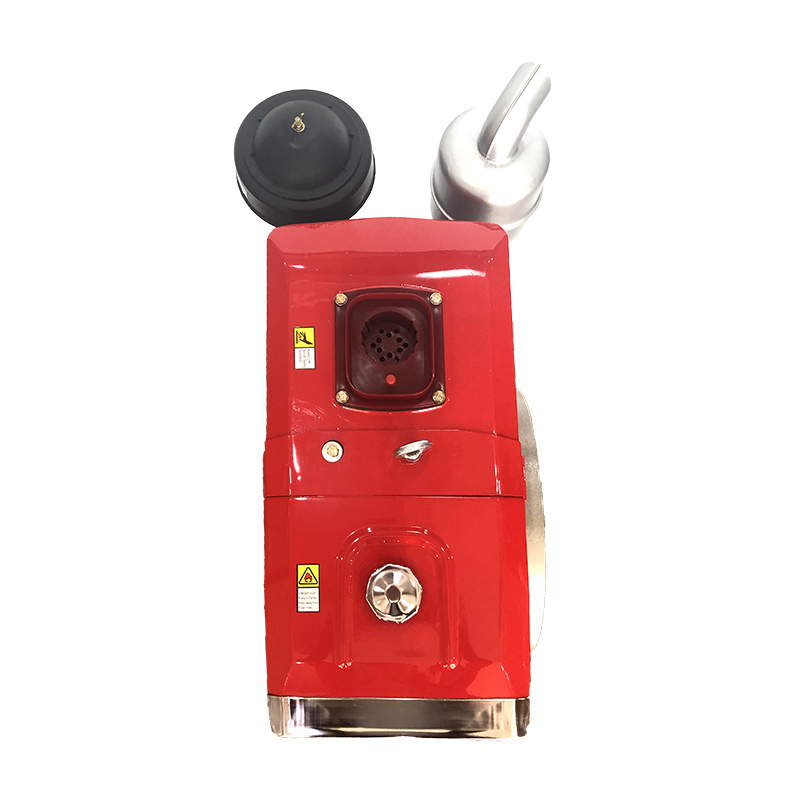
The price of that stability is a liquid to manage. The published operating instruction for these engines is explicit: do not add dirty, saline, or alkaline water to the water tank. In the field, that single line explains most real-world water-cooling problems. If the only water at the site comes from a muddy canal or a brackish well, the operator must solve water quality before the engine can be treated as reliable. In cold conditions, coolant and water management also becomes seasonal work, because liquid left in the system is exposed to freezing temperatures.
A second point is easy to miss: cooling type and power class are not independent variables. In the specification set used for this article, the explicitly designated air-cooled model is a 5 HP unit, while water cooling spans roughly 4 HP to 35 HP. Buyers should not assume that air cooling automatically means low power or that water cooling automatically means high power. Confirm the cooling designation on the exact model you intend to quote.
Five Questions That Decide the Configuration
Question 1 — Can clean water reach this site, reliably?
This is the first filter, because it eliminates the most options. If clean water is reliably available for the cooling circuit, both configurations stay in the comparison. If it is not, either the buyer plans a dedicated clean-water or coolant supply, or the water-cooled option should be set aside for that site.
Dust matters in the same step. Willson's published operating guidance for these engines asks for a well-ventilated area, free from excessive dust and corrosive gases, with no direct rain exposure, installed on stable and solid ground. That guidance applies to both configurations: a radiator also needs airflow, so water cooling is not automatically the dust-tolerant choice.
Question 2 — How long does the engine run at a time?
Short, intermittent sessions at partial load are the natural territory of air cooling, because the engine has time to shed heat between working periods. Continuous shifts at or near rated output are the natural territory of water cooling, because the liquid circuit can reject heat without pause. The deciding factor is not the size of the engine but whether the cooling path can keep rejecting heat for the full length of the shift.
Question 3 — Who performs the weekly checks, and with what?
Air cooling requires that fins and the air path stay clear, plus normal lubrication work. Water cooling adds coolant level and quality, leaks, hoses and tank or radiator cleanliness to the same routine. The published maintenance instruction for the Willson range is to regularly clean and maintain the engine, change the engine oil, and replace the filter element when necessary. Whichever configuration is chosen, this instruction applies. The difference is who will actually do it, and how far the nearest spare part is.

Question 4 — What machine is the engine driving?
Application determines the load profile more than the engine does. A pump or generator that holds a steady load for hours pushes the decision toward water cooling. A power tiller or a mobile pump that works in dusty fields in bursts pushes it toward air cooling. The next section maps this out case by case.
Question 5 — Can the supplier prove the cooling designation and the model match?
Ask for the published parameters of the exact model being quoted, including its cooling designation, and ask how that model is tested before shipment. A supplier who builds both configurations can compare them for you, and a supplier with an in-house assembly and test process can document it.

Comparison Table: Decision Dimensions and Published Specifications
The table below compares the two configurations on the dimensions that actually drive the purchase decision. Specification rows for the Z175F and ZS1115 come from Willson's published product data; note that the two models sit in different power classes, so the consumption figures are directional rather than a like-for-like test result.
| Decision dimension | Air-cooled | Water-cooled |
|---|---|---|
| How heat leaves the engine | Cooling fins plus airflow; no liquid circuit | Liquid coolant circulating through the block, rejecting heat at the water tank or radiator |
| Reference model in this framework | Willson Z175F: 5 HP, 2,600 rpm, 75 x 75 mm, 0.331 L, 6 L tank, hand-start | Willson ZS1115: 20 HP, 2,200 rpm, 115 x 115 mm, 1.195 L, 15 L tank, hand-start |
| Published fuel consumption | 301.4 g/kW-h (Z175F) | 254.2 g/kW-h (ZS1115) |
| Published lube oil consumption | 4.31 g/kW-h (Z175F) | 2.14 g/kW-h (ZS1115) |
| Consumables the operator manages | Fuel, engine oil, filters | Fuel, engine oil, filters, plus coolant or water supply |
| Water quality requirement | None from the cooling circuit | Explicit: do not add dirty, saline, or alkaline water to the water tank |
| Routine checks | Keep fins and air path clear; lubrication service | Coolant level and quality, leaks, hoses, tank or radiator cleanliness, plus lubrication service |
| Environment that fits best | Dry, dusty, water-scarce or mobile sites; intermittent duty | Sites with reliable clean water; sustained, high-ambient duty cycles |
| Shared installation requirement | Well-ventilated area, free from excessive dust and corrosive gases, out of direct rain, installed on stable and solid ground | |
The second table lists representative Willson models so buyers can see how the two cooling types sit inside one catalogue. Only the Z175F is explicitly designated air-cooled in this published set; the other 170F-class units are listed without a cooling designation, so confirm before quoting.
| Model | Cooling designation | Rated power | Rated speed | Bore x stroke | Displacement | Fuel consumption | Lube oil | Fuel tank |
|---|---|---|---|---|---|---|---|---|
| Z175F | Air-cooled | 5 HP | 2,600 rpm | 75 x 75 mm | 0.331 L | 301.4 g/kW-h | 4.31 g/kW-h | 6 L |
| R170A | Water-cooled | 4 HP | 2,600 rpm | 70 x 70 mm | 0.269 L | 315 g/kW-h | 4.31 g/kW-h | 3 L |
| ZS195 | Water-cooled | 13 HP | 2,200 rpm | 95 x 115 mm | 0.815 L | 271.3 g/kW-h | 2.14 g/kW-h | 12 L |
| ZS1115 | Water-cooled | 20 HP | 2,200 rpm | 115 x 115 mm | 1.195 L | 254.2 g/kW-h | 2.14 g/kW-h | 15 L |
| ZS1135 | Water-cooled | 35 HP | 2,200 rpm | 132.5 x 125 mm | 1.73 L | 252.7 g/kW-h | 2.14 g/kW-h | 17 L |
Use Cases: Which Configuration Fits Which Job
Diesel engine for an irrigation or water pump
Pump duty is usually steady and often seasonal, with long working hours during the dry season. That profile suits water cooling, provided the site has or can create a clean water supply for the cooling circuit. If the only available water is silty or saline, the pump can still run, but the cooling circuit needs its own clean source or a coolant routine, because the published instruction against dirty, saline or alkaline water is a hard operating limit rather than a preference.
Diesel engine for a tiller or power tiller
Tilling is intermittent, mobile and dusty. An air-cooled unit removes the need to carry or find coolant in a field, and the cooling fins can be cleaned as part of the same routine as the air filter. The trade-off is that the fins and air path must genuinely be cleaned, since field dust is exactly what blocks them.
Diesel engine for a generator set
Generators often run at high, steady load for hours, which favors water cooling. The complication is enclosure design: whether the set sits in a canopy or a plant room, both a radiator and an air-cooled fin stack need unobstructed airflow, and Willson's operating guidance asks for a well-ventilated area free from excessive dust and corrosive gases in either case. Matching the cooling type to the enclosure is part of the decision, not an afterthought.
Diesel engine for a thresher or rice mill
Stationary processing equipment is commonly driven by mid-range single cylinder engines, and Willson's 13 HP to 35 HP water-cooled models sit in the band typically used for agricultural and sideline product processing. Here the site is fixed, the duty is often seasonal and heavy, and clean water is normally easier to arrange than in a field, so water cooling fits the load pattern.
Construction and light industrial power units
Construction duty combines uneven loads with dust. Water cooling gives more headroom against sustained load, but it adds a cooling circuit to inspect in dirty conditions; air cooling simplifies the fluid side but demands strict air-path cleaning. On these sites, the maintenance team's capacity usually decides more than the engine specification does.
What the Willson Range Covers
Willson single cylinder diesel engines are manufactured by Changzhou Vision International Trading Co., Ltd., a company founded in 2010 and based in Changzhou, Jiangsu, China. The company produces the Willson brand across single cylinder diesel engines from 3 to 45 horsepower, in both air- and water-cooled series, together with diesel engine accessories. Annual output is 100,000 units, and approximately 70% of production is exported to South America, Africa, Southeast Asia and the Middle East.
Manufacturing holds ISO 9001 quality management system certification and ISO 14000 environmental management system certification, and the production flow includes component assembly, engine cleaning, cylinder head and valve work, and a production test line, with inspection steps such as cylinder head cover oil-leak checks. For a buyer comparing cooling configurations, that matters in a practical way: a supplier that builds both types can compare them against the same test standard and hand over one documentation set and one spare-parts conversation.
Stated limits of this article. The technical detail here comes from Willson's published product specifications and general operating guidance for the listed models. This article does not claim emissions certification for any specific market, and it does not present test results beyond the published parameters shown above.
FAQ: Air-Cooled vs. Water-Cooled Single Cylinder Diesel Engines
Do the two cooling types face different certification requirements?
Certification bodies regulate emissions, safety and quality systems rather than the cooling method itself, but the market you sell into decides the paperwork. Changzhou Vision International Trading Co., Ltd. holds ISO 9001 quality management system certification and ISO 14000 environmental management system certification. In the United States, EPA Tier 4 standards regulate particulate matter and nitrogen oxides for off-highway diesel engines, with exemptions for engines under 24 horsepower, according to the U.S. Environmental Protection Agency. That exemption is market-specific, so buyers should confirm which standard applies in their own destination and request documentation tied to the exact model being quoted.
Can one supplier provide both air-cooled and water-cooled engines?
Yes. Willson, the brand manufactured by Changzhou Vision International Trading Co., Ltd., produces single cylinder diesel engines from 3 to 45 horsepower in both air-cooled and water-cooled series, plus diesel engine accessories, with annual output of 100,000 units and roughly 70% of production exported to South America, Africa, Southeast Asia and the Middle East. Buying both configurations from one supplier means one test standard, one documentation set, and one point of contact for spare parts.
Which configuration costs less to own?
Willson does not publish a fixed unit price list; landed cost depends on model, configuration, order volume and destination, so any figure should come from a written quote. Two published parameters are still worth watching during evaluation. Within the specification set used in this article, the air-cooled Z175F lists 4.31 g/kW-h lube oil consumption and 301.4 g/kW-h fuel consumption, while the water-cooled ZS1115 lists 2.14 g/kW-h and 254.2 g/kW-h. Because these are different power classes, treat them as directional indicators rather than a like-for-like comparison, and add the cost of delivering clean water to any water-cooled site before finalizing the budget.
How can a buyer validate the choice before a bulk order?
Order a sample and run it on the actual duty cycle, with the actual operator and the actual fuel and water supply. The Willson production process includes a production test line and inspection steps such as cylinder head cover oil-leak checks, so buyers can also ask for the test record of the specific model. For a cooling decision, the most useful sample test is a long single session rather than a short run, because heat build-up is the variable being tested.
What is the next step once the configuration is chosen?
Send the supplier the application, required horsepower band, operating environment, daily duty hours, mounting arrangement, start type and destination port, and ask for a written lead time together with the model's published parameters, including its cooling designation. Because lead times and freight schedules change by season and destination, they should always be confirmed in writing rather than assumed. Willson's team can confirm which models in the 3 to 45 horsepower range match an air-cooled, water-cooled or mixed requirement; the full catalogue is available as a downloadable brochure.
Conclusion: Decide the Environment First, the Engine Second
Air-cooled and water-cooled single cylinder diesel engines solve the same problem in two different ways, and the correct choice is determined before any model number is written down. If the site is dry, mobile and water-scarce, and the engine works in bursts, air cooling removes an entire consumable category. If the site has reliable clean water, the engine runs long sustained shifts, and the maintenance team can manage a liquid circuit, water cooling provides steadier thermal behavior and a wider power band.
Check the environment, the duty cycle, the maintenance capability and the application in that order. Then verify the cooling designation and the published parameters on the exact model you intend to buy, and ask the supplier to prove how that model is tested.
Next Step: Confirm the Fit Before You Confirm the Order
Send your operating environment, the machine being driven, daily duty hours and destination port, and the Willson team will confirm which models in the 3-45 HP range match your requirement, in air-cooled, water-cooled or both configurations.
Email: khang@enginezoom.com
WhatsApp / Tel: +86 166-5159-4277
Website: enginezoom.com
Address: No. 28, Jinsheng East Road, Jintan, Jiangsu, China
Request a quotation and sample discussion on WhatsApp or download the Willson single cylinder diesel engine brochure.
Have Questions or Need More Details?
Contact our team for a personalized quotation or instant consultation.
Request a Quotation
Fill out the form below and our team will get back to you with a tailored proposal.
WhatsApp Direct Chat
Prefer to chat in real-time? Message us on WhatsApp for instant assistance & quick answers.
- Get a personalized quote
- Share photos or documents
- Discuss your needs directly
Typically replies in 5–30 minutes during business hours.