
Ranked: Top Single Cylinder Diesel Engine Purchasing Terms and Acceptance Criteria for Global Buyers
Answer first: for a single cylinder diesel engine order moving from evaluation into execution, the purchasing terms and acceptance criteria that most deserve the top of the checklist, ranked by how much cost and rework an omission can create, are: (1) model-level specification lock, (2) written acceptance criteria and inspection evidence, (3) destination-market emission and certification documents, (4) MOQ and order configuration, (5) delivery terms and responsibility split, (6) payment structure, (7) lead time and schedule triggers, (8) customization scope including OEM/ODM and SKD/CKD content, (9) packing, marking and shipping documents, and (10) warranty, after-sales and spare-parts support.
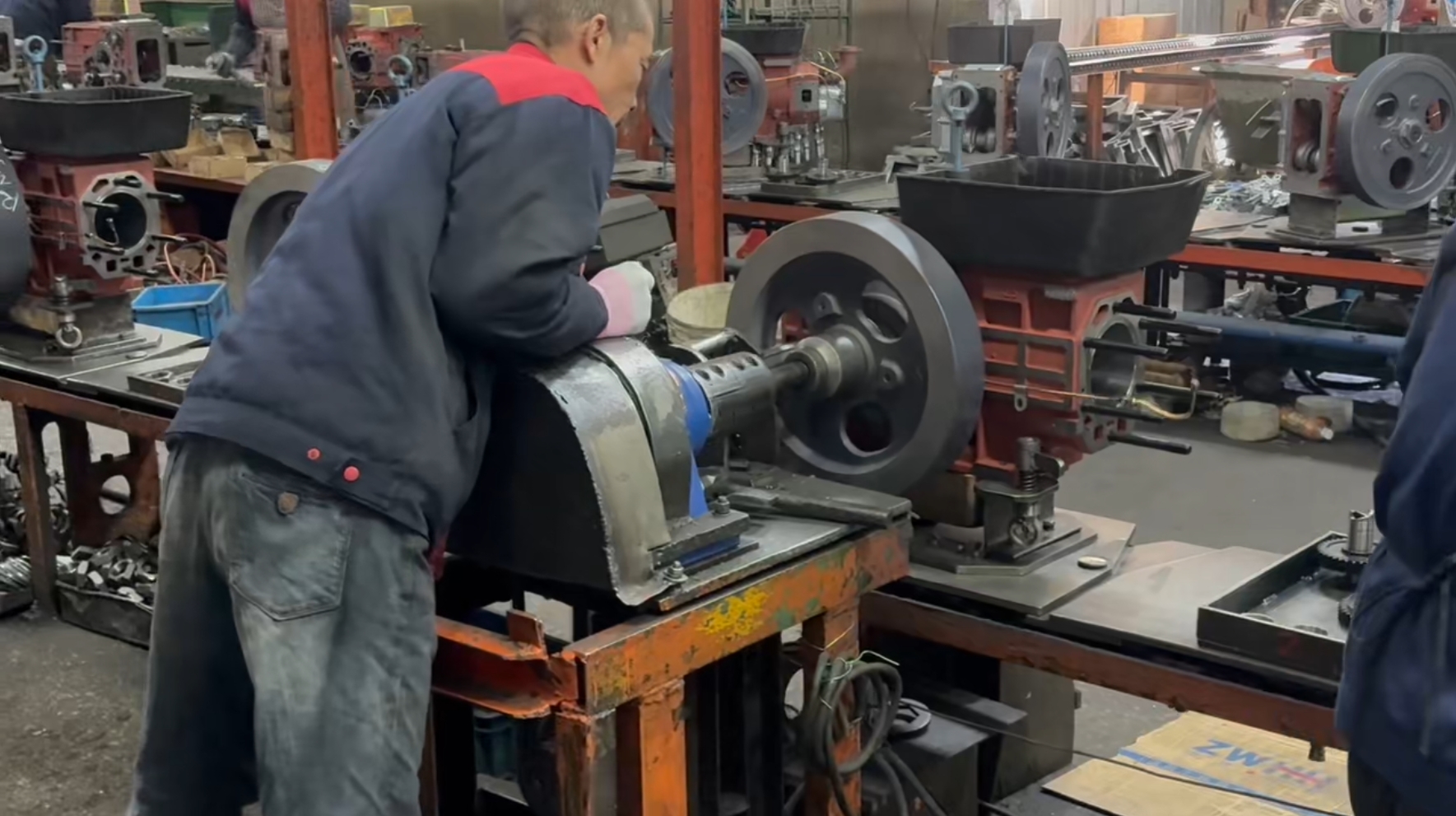
Price is deliberately not at the top of this list. A unit price can only be compared once the engine specification, the definition of conformance and the document set are fixed. Until those three are written down, two quotations that look comparable on paper are usually not comparable at all. The ranking below is built on the documented purchasing terms used in single cylinder diesel engine supply. All specific terms and supplier facts cited in this article come from Willson, the single cylinder diesel engine brand of CHANGZHOU VISION INTERNATIONAL TRADING CO.,LTD, a manufacturer based in Changzhou, Jiangsu, China, founded in 2010 and producing 3-45 horsepower single cylinder air- and water-cooled diesel engines.
Where single cylinder diesel engine orders actually go wrong
A single cylinder diesel engine purchase is a container-scale purchase. A buyer confirms a mix of models against a specification sheet, a container quantity, a delivery term and a payment split — not a single unit. Willson's documented purchasing terms follow that structure directly: MOQ of one 20 Ft container, delivery terms FOB/EXW, acceptance criteria based on video or image, and 30/70 payment terms.
Ambiguity therefore rarely sits in the unit price. It sits in three places. First, what exactly is being bought: model designation, rated power, cooling type, start method and nameplate data. Second, what conforming means at the moment of release: which units are checked, what evidence is produced, and when. Third, who carries the cost when the first two definitions disagree.
The failure pattern is consistent. A purchase order references a model number but not the variant mix, so a container arrives with an unbalanced spread of models. A buyer treats a paint mark as a defect while the supplier treats it as within normal production variation, because no defect definition was agreed. A shipment clears customs late because the classification and document set were never reviewed before booking. A seasonal buyer discovers that a lead-time range of 25-45 days was never tied to a start trigger, and the engines arrive after the irrigation window opens.
None of these are pricing problems. Each is a term-writing problem, and each is recoverable only before production starts. That is why the ranking below is organised by irreversibility rather than by commercial sensitivity.
Industry background: why these terms are market-specific, not generic
Agriculture remains the primary application for single cylinder diesel engines, at 42.3% of application share in 2025, with Asia Pacific holding 58.2% of revenue and the segment projected to grow at 4.6% CAGR from 2025 to 2034 (Dataintelo market report, 2025). Demand is therefore concentrated in applications where the engine is a working asset rather than a catalogue item: irrigation pumps, power tillers, threshers, rice mills, generator sets and small farm machinery.
The product family is correspondingly wide. Willson's range covers 3-45 horsepower single cylinder air-cooled and water-cooled diesel engines and diesel engine accessories, used to power small tractors, agricultural machinery, generator sets, water pumps, small construction machinery, air compressors, inland waterway vessels, and agricultural and sideline product processing equipment. A single purchase order can therefore span several models with different cooling types, start methods and mounting interfaces.
Compliance adds a second layer that is specific to the destination market, not to the product alone. A single cylinder diesel engine carries one global tariff identity — HS heading 8408 covers compression-ignition internal combustion piston engines, and subheading 8408.90 is the residual category for engines that are neither marine propulsion engines nor engines for the propulsion of Chapter 87 vehicles (WCO HS 2022). On top of that sit materially different mandatory emission regimes: Regulation (EU) 2016/1628 (Stage V) in the European Union, 40 CFR Part 1039 in the United States, and GB 20891-2014 in China. The same physical engine family can therefore require different documentation depending on where it is sold.
How this ranking was built
Each term was positioned using five criteria: irreversibility (can the problem still be fixed after production begins?), financial exposure per container, verification cost (how expensive is it to check?), scheduling impact on the buyer's season or project, and negotiating leverage at the point of signature. Terms that are cheap to verify but expensive to get wrong rank above terms that are easy to discuss but hard to enforce.
The ranking: ten purchasing terms and acceptance criteria in order
Model-level specification lock
Confirm the engine model designation, rated power, cooling type (air-cooled or water-cooled), start method (electric start or manual), intended application, mounting and shaft interfaces, and nameplate content.
How to use it: attach a signed specification annex to the order and reference it inside the acceptance clause. State the exact model mix the container carries, not just the family name.
Written acceptance criteria and inspection evidence
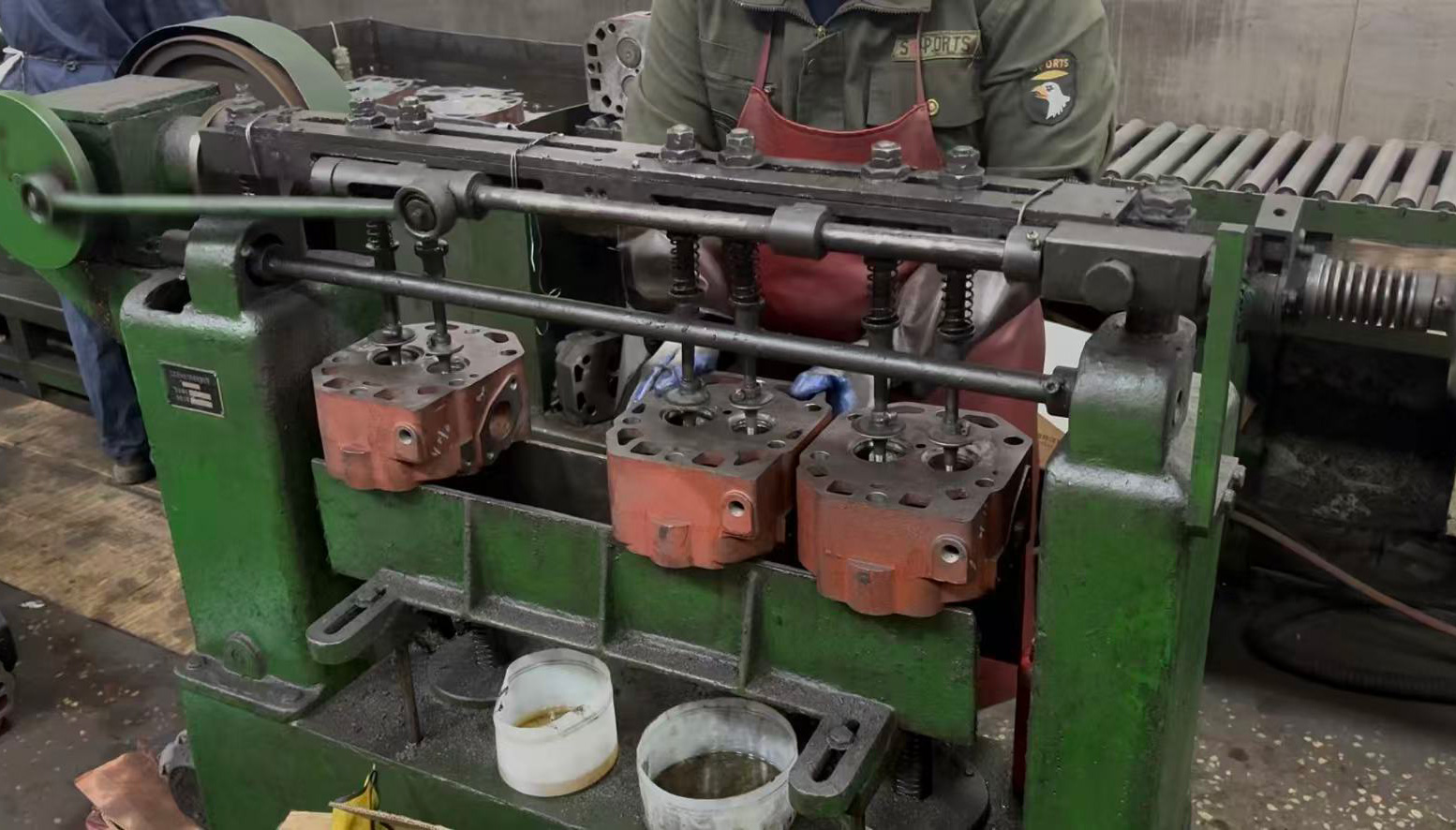
Confirm what constitutes acceptance, what evidence is produced, at which stage, and what happens if the evidence is inconclusive.
How to use it: write the acceptance clause around the documented criteria and specify that video or image evidence covers the actual shipped batch, is delivered before the balance payment stage, and shows the nameplate and model marking on each unit.
Emission and certification documents for the destination market
Willson holds GB/T 19001-2016 / ISO 9001:2015 certification, certificate number 02925Q3D160R6M, issued by Jiangsu Jiuzhou Certification Co., Ltd., valid from 2025-05-10 to 2028-05-09. The certified scope covers the production and sales of single cylinder diesel engines and diesel engine accessories (fuel tank assembly, muffler, air filter assembly).
How to use it: ask for the certificate relevant to your market, check that its scope covers the exact product being purchased, and confirm it will still be valid on the shipment date. Add the certificate number to the order so there is no ambiguity about which document was accepted.

MOQ and order configuration
Willson's documented MOQ is one 20 Ft container. Documented capacity is 10,000 units per month with an annual output of 100,000 units.
How to use it: convert the container into a variant matrix showing model, quantity, start method and nameplate before signing, and confirm the matrix is producible within the requested slot.
Delivery terms and responsibility split
Willson's documented delivery terms are FOB/EXW.
How to use it: name the term, the named place and the Incoterms version in the order, then check that the document set matches the chosen term.
Payment structure and release milestones
Willson's documented payment terms are 30/70.
How to use it: state in writing what triggers each stage — order confirmation, artwork approval, acceptance evidence delivery — and which documents accompany the balance. The 30/70 structure should be read together with ranks 2 and 8, since both affect when evidence and customization approvals become available.
Lead time and schedule triggers
Willson's documented lead time is 25-45 days.
How to use it: write three separate dates — trigger date, production confirmation date and shipping window — and keep the acceptance evidence checkpoint between the second and third.
Customization scope: OEM/ODM, packaging, logo, nameplate, SKD/CKD
Willson's documented production mode is OEM/ODM, with customization on package, logo and nameplate.
How to use it: list every customization item with an approval owner and a freeze date before production. Where Diesel Engine SKD Knocked Down Supply Solutions or Diesel Engine CKD Knocked Down Supply Solutions are requested, define the knock-down level, the parts list completeness and the assembly documentation inside the order itself — knock-down supply is commonly associated with lower freight and support for local assembly, but the specifics vary by supplier and are not standardised across the category.
Packing, marking and shipping documents
Confirm the packaging specification, the marking scheme and the document set before booking.
How to use it: require that the packing list, the model-to-quantity mapping and the marking scheme match the acceptance evidence exactly, so a receiving check can be done against a single document.
Warranty, after-sales and spare-parts support
Willson's documented after-sales support is remote support.
How to use it: define the support channel and the spare-parts list to be shipped with the container. Long-run serviceability is a separate question from warranty wording, and it is best evidenced by field performance: an agricultural irrigation buyer in Pakistan has operated 96 sets of the ZS1115 model for 10 years with no major failures, meeting irrigation season requirements, supported by a fuel-efficient design, easy maintenance and adaptation to local harsh environments.
Step-by-step: turning the ranking into a confirmed order
Step 1 — Fix the technical reference (Rank 1). Build the specification annex: model, rated power, cooling type, start method, application, interfaces, nameplate. Send it with the RFQ so quotations are priced against one reference. Step 2 — Define acceptance before price (Rank 2). Specify which units are covered by video or image evidence, what the evidence must show, and at which stage it is delivered. Step 3 — Match documents to market (Rank 3). Confirm the certificate scope and validity, and the emission documentation route for the destination country. Step 4 — Convert MOQ into a variant matrix (Rank 4). Allocate one 20 Ft container across models and variants, and confirm the mix is producible in the requested slot. Step 5 — Fix commercial mechanics (Ranks 5-7). Write the delivery term with named place, the payment stages with their triggers, and the lead time with an explicit start date. Step 6 — Freeze customization (Rank 8). Approve packaging, logo, nameplate and any knock-down scope, then lock a freeze date before production. Step 7 — Align documents and release (Ranks 9-10). Confirm classification and the document set, check the packing list against acceptance evidence, and attach the spare-parts list.Use cases: how the ranking shifts by application
- Diesel engine for irrigation pump and diesel engine for water pump: Rank 1 dominates. Shaft, coupling and mounting interfaces must match the pump set, and the acceptance evidence should show the assembled unit configuration rather than a bare engine.
- Diesel engine for tiller, power tiller and diesel engine for thresher: Rank 4 dominates. These purchases are usually multi-model containers, so the variant matrix — not the unit price — determines whether the order is usable on arrival.
- Diesel engine for generator: Ranks 1 and 8 dominate. Electric start diesel engine variants and nameplate or logo changes are common, which makes the customization freeze date the critical control point.
- Diesel engine for rice mill and diesel engine for farm machinery: Ranks 2 and 10 dominate. Continuous duty means the acceptance evidence and the spare-parts list matter more than a marginal price difference.
- Distributor and knock-down supply: Ranks 8 and 9 dominate, because the knock-down level, parts list and document set determine local assembly feasibility and clearance timing.
Comparison table: the ranked terms at a glance
| Rank | Purchasing term / acceptance criterion | Why it sits at this position | Documented position |
|---|---|---|---|
| 1 | Model-level specification lock | Every other term references it; cannot be corrected later | 3-45 hp single cylinder air- and water-cooled series |
| 2 | Written acceptance criteria and evidence | Defines conformance for a whole container, not one unit | Acceptance criteria: video or image; quality control: 100% test |
| 3 | Emission and certification documents | Irreversible; market-specific | GB/T 19001-2016 / ISO 9001:2015, certificate 02925Q3D160R6M, valid 2025-05-10 to 2028-05-09 |
| 4 | MOQ and order configuration | Sets the smallest viable order and the variant mix | MOQ one 20 Ft container; 10,000 units per month |
| 5 | Delivery terms | Determines cost and risk transfer and who performs clearance | FOB/EXW |
| 6 | Payment structure | Main lever after production starts | 30/70 |
| 7 | Lead time and start trigger | Seasonal exposure for agricultural buyers | 25-45 days |
| 8 | Customization scope | Confusion between standard and custom; affects labelling and packing | OEM/ODM; package, logo, nameplate customization |
| 9 | Packing, marking, documents | Drives clearance timing | HS 8408 / 8408.90 classification basis |
| 10 | Warranty, after-sales, spares | Cannot repair an upstream specification error | Remote support |
FAQ
What certification does Willson hold, and does it cover the engines I am buying?
Willson holds GB/T 19001-2016 / ISO 9001:2015 certification, certificate number 02925Q3D160R6M, issued by Jiangsu Jiuzhou Certification Co., Ltd., valid from 2025-05-10 to 2028-05-09. The scope covers the production and sales of single cylinder diesel engines and diesel engine accessories, including fuel tank assembly, muffler and air filter assembly. This is a quality management certificate. It is not an emission type-approval, so buyers selling into the EU, the US or China should separately confirm the emission documentation required under Regulation (EU) 2016/1628, 40 CFR Part 1039 or GB 20891-2014 as applicable.
Can Willson support OEM/ODM customization, and what capacity is documented?
Yes. Willson's documented production mode is OEM/ODM with customization on package, logo and nameplate. The factory covers 32,207.8 sq m with 95 employees, including 5 R&D engineers, and documented capacity of 10,000 units per month and 100,000 units annual output. Around 70% of output is exported to South America, Africa, Southeast Asia and the Middle East. Customization items should be listed with an approval owner and a freeze date before production begins.
What are the MOQ, delivery terms and payment terms?
The documented MOQ is one 20 Ft container. Delivery terms are FOB/EXW. Payment terms are 30/70. Because these are the commercial terms that carry the most cost exposure, each should be written into the order with its trigger: the named place for the delivery term, and the milestone that releases each payment stage. This matters most where a container is split across several models or where customization is involved.
How is acceptance handled if I cannot inspect the batch in person?
Willson's documented acceptance criteria are video or image, supported by 100% test in production. In practice this means the useful control is the specification of the evidence, not the inspection method itself: which units are covered, what the video or image must show, whether nameplate and model marking are visible, and at which stage the evidence is delivered. Writing these details into the acceptance clause converts a general claim about testing into a checkable condition tied to the shipped batch.
What lead time should be written into the order, and how do I start?
Willson's documented lead time is 25-45 days, with an MOQ of one 20 Ft container. The range only becomes a schedule once a start trigger is fixed — typically deposit receipt or artwork approval — so the order should carry a trigger date, a production confirmation date and a shipping window. To begin, send the specification annex and target market so the model mix, document set and acceptance evidence can be defined together. You can request a quotation, a product catalogue or a sample discussion through WhatsApp or by email to khang@enginezoom.com.
Conclusion
The ordering of these ten terms is the practical part. Specification lock, acceptance evidence and market-specific documents sit at the top because they share one property: after production starts, they cannot be fixed. MOQ, delivery terms, payment structure, lead time and customization scope sit in the middle because they are negotiable until the order is signed and controllable through milestones afterwards. Packing and documents, warranty and after-sales support sit at the end because they execute against decisions already made.
For a global buyer moving from evaluation into execution, the useful discipline is to treat the ranking as a confirmation sequence rather than a reading list. Each item should be closed in writing before the next one is negotiated, and each should be traceable to a document the supplier has actually issued — a specification annex, a certificate number and validity date, an acceptance evidence plan, a variant matrix and a document set. That sequence is what makes two quotations genuinely comparable, and it is the same sequence that decides whether a container clears smoothly and lands inside the season it was bought for.
Next step: confirm your terms before the order
Willson supplies single cylinder diesel engines from 3 to 45 horsepower, air-cooled and water-cooled, for agriculture, irrigation, generators, tillers, threshers, rice mills and small machinery — with OEM/ODM customization, MOQ of one 20 Ft container, and lead time of 25-45 days.
Download the full catalogue and specification reference: Willson single cylinder diesel engine brochure (PDF)
Contact: Khang — Email: khang@enginezoom.com — Tel / WhatsApp: +86 166-5159-4277 — Address: No. 28, Jinsheng East Road, Jintan, Jiangsu, China — Website: enginezoom.com
Have Questions or Need More Details?
Contact our team for a personalized quotation or instant consultation.
Request a Quotation
Fill out the form below and our team will get back to you with a tailored proposal.
WhatsApp Direct Chat
Prefer to chat in real-time? Message us on WhatsApp for instant assistance & quick answers.
- Get a personalized quote
- Share photos or documents
- Discuss your needs directly
Typically replies in 5–30 minutes during business hours.