Single Cylinder Diesel Engine Configurations Worth Shortlisting
Most single cylinder diesel engine purchases are decided on brand lists and price per unit. The decision that actually determines whether the engine still runs clean three seasons later is the configuration: cooling method, displacement, rated speed, fuel and oil consumption, and how easily the cylinder head can be reached. This shortlist ranks the configurations that hold up in industrial, agricultural, and light power-generation duty between 4 HP and 35 HP — and states where each one stops being the right answer.
What “Configuration” Actually Means in This Engine Category
A single cylinder diesel engine configuration is the fixed combination of cooling method, displacement and rated power, rated speed, build materials, starting arrangement, and fuel tank capacity that together define how the engine behaves under load. Two units can both be sold as a 20 HP engine and still differ in displacement, in specific fuel consumption, in oil consumption, and in the amount of work required to remove a cylinder head.
That is why this article ranks configurations rather than company names. Brand lists age quickly and depend on whoever wrote the criteria behind them. Configurations are stable, measurable, and — for a distributor, an importer, or a factory buyer — they are what actually appears on the specification sheet and the purchase order.
In the range documented by Changzhou Vision International Trading Co., Ltd., which manufactures single cylinder diesel engines under the Willson brand, every listed model is a horizontal four-stroke unit. Every listed model specifies hand-start as the starting system, rated speeds sit between 2,200 rpm and 3,000 rpm, and rated power runs from 4 HP to 35 HP. Those shared characteristics are what make a configuration-level shortlist possible at all.
Industry Background: A Growing Category With Divergent Reporting
Demand signals for this category are positive but unevenly measured. Global Growth Insights values the global single cylinder diesel engine market at approximately USD 3.34 billion in 2025, projecting USD 3.74 billion by 2035. Dataintelo reports that agriculture accounted for approximately 42.3% of application share in 2025, and that Asia Pacific held a 58.2% revenue share in the same year. The Observatory of Economic Complexity records China’s exports of combustion engines at USD 3.29 billion in 2025, with major destinations including Russia, Vietnam, and India.
One caution belongs next to those figures, and most supplier content leaves it out. Market-size estimates for this segment diverge sharply depending on which engine classes a report includes: published values range from USD 0.737 billion for the small single cylinder segment (Intel Market Research) to USD 3.34 billion for the broader single cylinder category (Global Growth Insights). Buyers comparing supplier presentations should therefore check what a number counts before treating it as context for a sourcing decision.
What the divergence does not change is the operational reality on the buyer’s side. In agriculture-heavy markets, an engine is usually bought to drive one specific machine — an irrigation pump, a power tiller, a thresher, a rice mill, or a small generator set — and that machine’s duty cycle, not the market size, decides which configuration is correct.
How This Shortlist Was Ordered
The ranking below is not a price ranking. Each configuration was assessed against five criteria that stay relevant over the life of the equipment:
- Specification completeness — whether displacement, rated speed, fuel and oil consumption, and tank capacity are documented rather than implied.
- Fit to continuous duty — how well the cooling method and displacement match machines that run for long shifts.
- Operating consumption — specific fuel and oil consumption, which decide the running cost per operating hour.
- Service access — how the build is assembled and how easily wear components can be reached.
- Long-term supply logic — how many power steps sit inside one family, which affects spare-part planning across repeat orders.
The Shortlist: Seven Configurations Worth Considering
The list runs from the heaviest continuous-duty configurations down to the lightest and most portable, with a supply-format configuration at the end. Each entry gives the documented models, the reason it earns a place, and the boundary where it stops being the right choice.
1. Water-cooled 25–35 HP heavy-duty configuration: ZS1125, ZS1130, ZS1132, ZS1135
All four models are documented as horizontal four-stroke water-cooled engines running at 2,200 rpm, with displacements from 1.473 L (ZS1125, 25 HP) to 1.73 L (ZS1135, 35 HP), passing through ZS1130 at 30 HP and ZS1132 at 32 HP. Fuel consumption is listed at 252.7 g/kW·h and oil consumption at 2.14 g/kW·h across the entire group, and each model carries a 17 L fuel tank.
This group takes the top position for two reasons that matter to buyers planning a long supply relationship. It holds the lowest specific fuel consumption figure in the documented range, and all four power steps share identical consumption values — one operating assumption and one service logic covers several power ratings, which simplifies fleet and spare-part planning.
Its boundary is size and cooling demand. A 25–35 HP engine is not the right configuration for a power tiller or a small portable pump; the driven machine has to be able to use that output continuously, and the installation has to supply cooling water.
2. Water-cooled 15–20 HP workhorse configuration: ZS1100, ZS1105, ZS1110, ZS1115
Documented at 2,200 rpm with displacements from 0.903 L (ZS1100, 15 HP) to 1.195 L (ZS1115, 20 HP), with ZS1105 at 16.5 HP and ZS1110 at 18 HP. Fuel consumption moves from 269 g/kW·h at the smallest unit to 257 g/kW·h for ZS1105 and ZS1110 and 254.2 g/kW·h for ZS1115. Oil consumption is 2.14 g/kW·h throughout, and tank capacity is 12 L for the two smaller models and 15 L for the two larger ones.
This is the most balanced group in the range. Four power steps inside one family let a buyer match the driven machine closely instead of stepping up two sizes, and the group already sits in the lowest documented oil-consumption tier. For irrigation pumps, threshers, and rice mills running scheduled shifts, this is the configuration band that most often fits on the first attempt.
The boundary is at the lower end: if the application needs roughly 10 HP or less, this group is oversized, and the displacement penalty shows up in purchase cost and in fuel used per hour.
3. The 13 HP bridge configuration: ZS195
ZS195 is documented as a horizontal four-stroke water-cooled engine at 13 HP and 2,200 rpm, with 0.815 L displacement, 271.3 g/kW·h fuel consumption, 2.14 g/kW·h oil consumption, and a 12 L tank.
It earns its place as a bridge rather than a compromise: it is the smallest displacement in the documented range that already reaches the 2.14 g/kW·h oil-consumption tier. Buyers who need moderate duty but want the lower oil consumption of the larger engines can get there without paying for displacement they will not use.
Its limitation is granularity — one power rating in this band means less freedom to fine-tune the match to the driven machine.
4. Water-cooled 8–9.5 HP mid-light configuration: JR185, JR190, EM185, EM190
JR185 and EM185 are documented at 8 HP and 2,200 rpm with 0.510 L displacement and 288.4 g/kW·h fuel consumption. JR190 is documented at 9.5 HP and 2,300 rpm with 0.572 L and 288.4 g/kW·h, while EM190 is listed at 9.5 HP and 2,300 rpm with 0.572 L and 278.5 g/kW·h. All four specify 3.57 g/kW·h oil consumption and a 9 L fuel tank.
The value of this group is supply redundancy: two parallel families cover the same two power ratings, so a buyer building a long-term parts plan has more than one documented route to 8 HP or 9.5 HP within the same brand.
The boundary is the consumption tier. At 3.57 g/kW·h, oil consumption sits above the 2.14 g/kW·h reached by ZS195 and the larger water-cooled groups, which matters if the machine runs long hours rather than short intermittent shifts.
5. Water-cooled 4–7 HP compact configuration: R170A, R170A-T, R175, R180
R170A and R170A-T are documented at 4 HP and 2,600 rpm with 0.269 L displacement, 315 g/kW·h fuel consumption, 4.31 g/kW·h oil consumption, and a 3 L tank. R175 is listed at 6 HP and 2,600 rpm with 0.353 L and 294.2 g/kW·h, with a 4.5 L tank. R180 is listed at 7 HP and 2,600 rpm with 0.402 L and 292.7 g/kW·h, 3.57 g/kW·h oil consumption, and a 5.5 L tank.
This group carries the highest rated speed in the range and the smallest displacements, which suits light machines that need a compact, easily moved power source. R180 is the only model below 8 HP documented in the 3.57 g/kW·h oil-consumption tier.
Its boundary is refuelling: the 3 L tank on R170A and R170A-T is the smallest documented capacity in the range, so buyers specifying these units for long shifts should plan fuel logistics accordingly.
6. Air-cooled compact configuration: Z175F, alongside the 170F family
Z175F is the model in this range documented as an air-cooled unit: 5 HP at 2,600 rpm, 0.331 L displacement, 301.4 g/kW·h fuel consumption, 4.31 g/kW·h oil consumption, and a 6 L tank. The 170F family — 170F, X170F, and Z170F — covers 4–5 HP at 2,600 to 3,000 rpm with displacements of 0.269–0.289 L and a 6 L tank.
Air-cooled configurations remove the water dependency from the installation, which is the practical reason to shortlist them: where an irrigation pump or a mobile machine operates in a dry or dusty setting and cooling water is inconvenient, an air-cooled unit removes one failure point from the site.
The boundary is explicit in the documented data. Within this range, air cooling appears only at 5 HP. Higher power requirements move into the water-cooled groups, and no amount of preference changes that.
7. Knock-down supply configuration: SKD and CKD
The seventh entry is not a combustion configuration but a supply configuration, and for distributors it belongs on the same shortlist. Semi-knocked-down (SKD) and complete-knocked-down (CKD) supply means the same engine family is shipped as partial or complete assembly kits for local build.
Published trade analysis of SKD and CKD assembly strategies (KAMA Auto / International Journal of Research, 2024) cites tariff advantages in markets such as Myanmar, where CKD rates of 1.5%–3% are reported, and Thailand, where 0% applies to some categories. That source is a market-level indicator with medium reliability rather than a guarantee, so current national tariff schedules must be verified locally before a supply model is built on them.
Its boundary is capability at destination: knock-down supply only reduces landed cost when the receiving operation can assemble to specification and inspect the result. Buyers should confirm the packing list, the assembly documentation, and the inspection scope in writing rather than assuming them.
Documented Specifications at a Glance
The table below consolidates the documented figures for each configuration band so that power, speed, displacement, and consumption can be compared directly.
| Configuration band | Documented models | Rated power | Rated speed | Displacement | Fuel consumption | Oil consumption | Fuel tank |
|---|---|---|---|---|---|---|---|
| Heavy water-cooled | ZS1125 / ZS1130 / ZS1132 / ZS1135 | 25–35 HP | 2,200 rpm | 1.473–1.73 L | 252.7 g/kW·h | 2.14 g/kW·h | 17 L |
| Mid water-cooled | ZS1110 / ZS1115 | 18–20 HP | 2,200 rpm | 1.093–1.195 L | 254.2–257 g/kW·h | 2.14 g/kW·h | 15 L |
| Mid water-cooled | ZS1100 / ZS1105 | 15–16.5 HP | 2,200 rpm | 0.903–0.996 L | 257–269 g/kW·h | 2.14 g/kW·h | 12 L |
| Bridge water-cooled | ZS195 | 13 HP | 2,200 rpm | 0.815 L | 271.3 g/kW·h | 2.14 g/kW·h | 12 L |
| Mid-light water-cooled | JR190 / EM190 | 9.5 HP | 2,300 rpm | 0.572 L | 278.5–288.4 g/kW·h | 3.57 g/kW·h | 9 L |
| Mid-light water-cooled | JR185 / EM185 | 8 HP | 2,200 rpm | 0.510 L | 288.4 g/kW·h | 3.57 g/kW·h | 9 L |
| Small water-cooled | R175 / R180 | 6–7 HP | 2,600 rpm | 0.353–0.402 L | 292.7–294.2 g/kW·h | 3.57–4.31 g/kW·h | 4.5–5.5 L |
| Compact air-cooled | Z175F | 5 HP | 2,600 rpm | 0.331 L | 301.4 g/kW·h | 4.31 g/kW·h | 6 L |
| Compact 170F family | 170F / Z170F / X170F | 4–5 HP | 2,600–3,000 rpm | 0.269–0.289 L | 304.2–308.5 g/kW·h | 4.31 g/kW·h | 6 L |
| Small water-cooled | R170A / R170A-T | 4 HP | 2,600 rpm | 0.269 L | 315 g/kW·h | 4.31 g/kW·h | 3 L |
Read vertically, the table shows a consistent pattern inside this range: as displacement increases, specific fuel consumption falls from 315 g/kW·h at 0.269 L to 252.7 g/kW·h at 1.473 L and above, and oil consumption falls in visible steps from 4.31 g/kW·h to 3.57 g/kW·h and then to 2.14 g/kW·h. Those steps, not the brand label, are what a long-term operating budget is built on.
Air-Cooled or Water-Cooled? A Decision Rule
The cooling decision is simpler than it is usually presented, because the documented data already constrains it. In this range, Z175F is the unit documented as air cooled, while the water-cooled designation is documented on R170A, R170A-T, R180, JR185, JR190, EM190, ZS195, ZS1100, ZS1105, ZS1110, ZS1115, ZS1125, ZS1130, ZS1132, and ZS1135.
The practical rule follows from that distribution:
- Choose air-cooled when the engine drives a mobile or semi-mobile machine, when the site has no reliable cooling water, and when duty is intermittent — the documented air-cooled option sits at 5 HP with a 6 L tank.
- Choose water-cooled when the engine is installed in a fixed position, runs scheduled shifts, and needs output above 5 HP — every documented model from 4 HP upward in the water-cooled families, and every model from 8 HP upward, is water-cooled.
- Do not treat cooling method as a preference when the power requirement already exceeds 5 HP. Above that point, the range offers water-cooled configurations only.
Durability and Serviceability: Reading the Build Sheet
Two engines with the same rated power can be built differently, and the build specification is where durability claims either become checkable or stay vague. In the smaller models of this range — 170F, X170F, Z170F, Z175F, R170A, R170A-T, and R175 — the documented materials are a heavy-duty cast iron cylinder block, a forged steel crankshaft, an alloy aluminum piston, and a wear-resistant cylinder liner. From R180 upward, the documentation specifies cast iron for the cylinder block, steel for the crankshaft, and aluminum alloy for the cover.
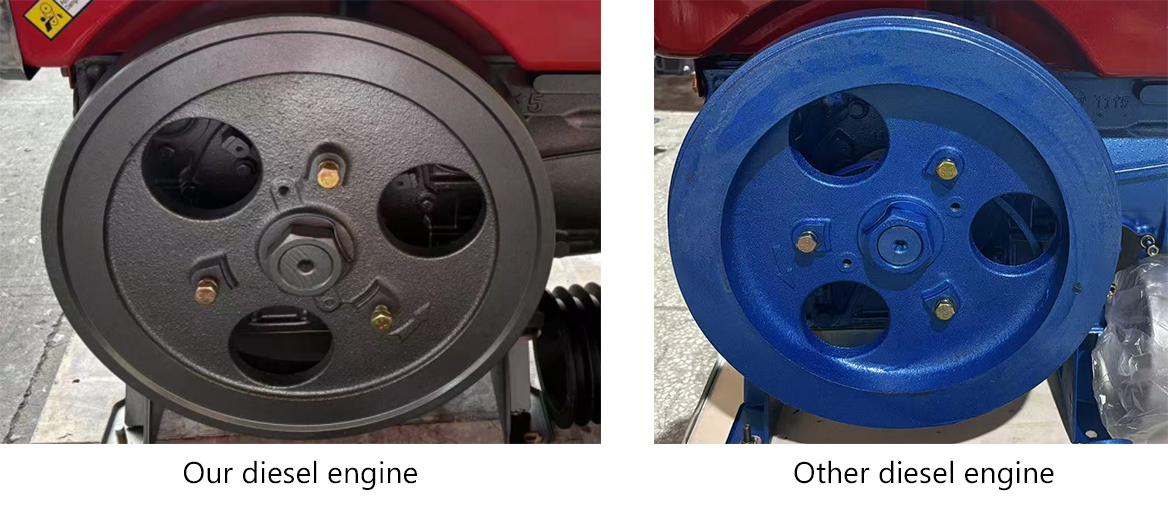
Corrosion protection is the second half of durability, and it is measurable. In a documented comparison against other diesel engines, complete engine cleaning prior to painting is associated with a paint adhesion rate improved by 20% and anti-corrosion performance enhanced by 30%, with long-term maintenance cost reduced by 15% and less frequent repainting and rust repair required. The stated best-fit environment for that process advantage is high-dust agricultural work — the same environment in which most of these engines operate.
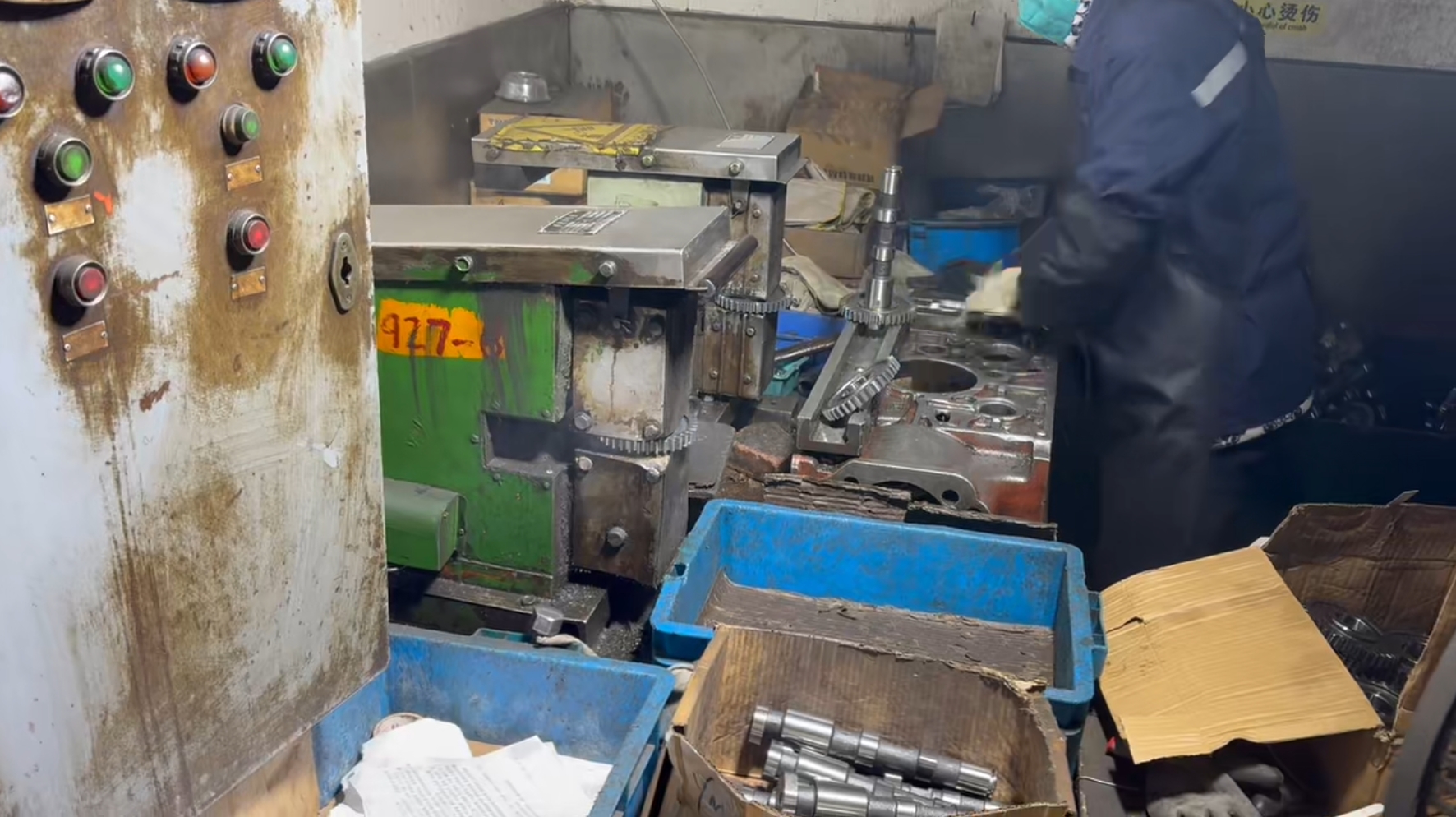
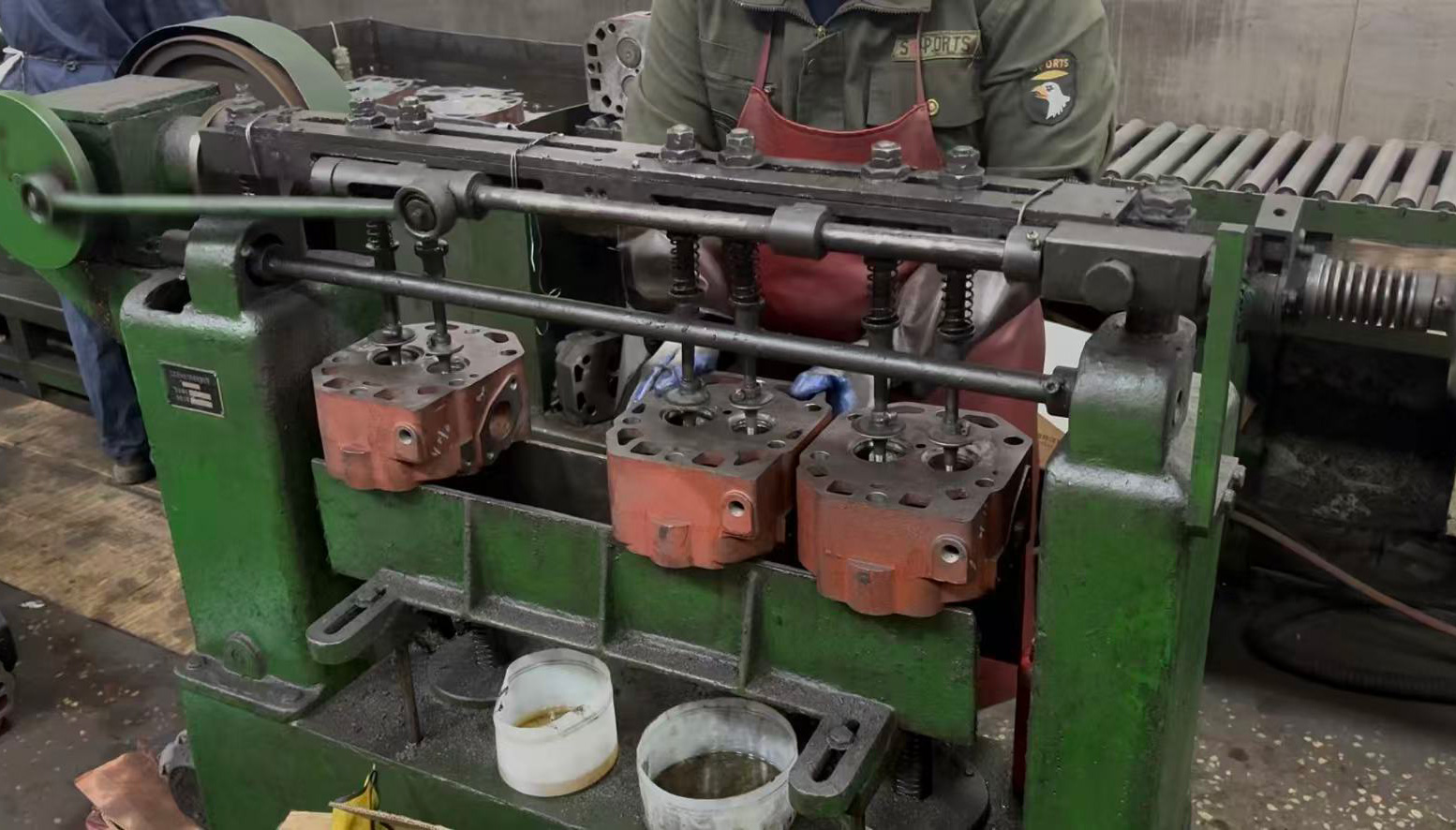
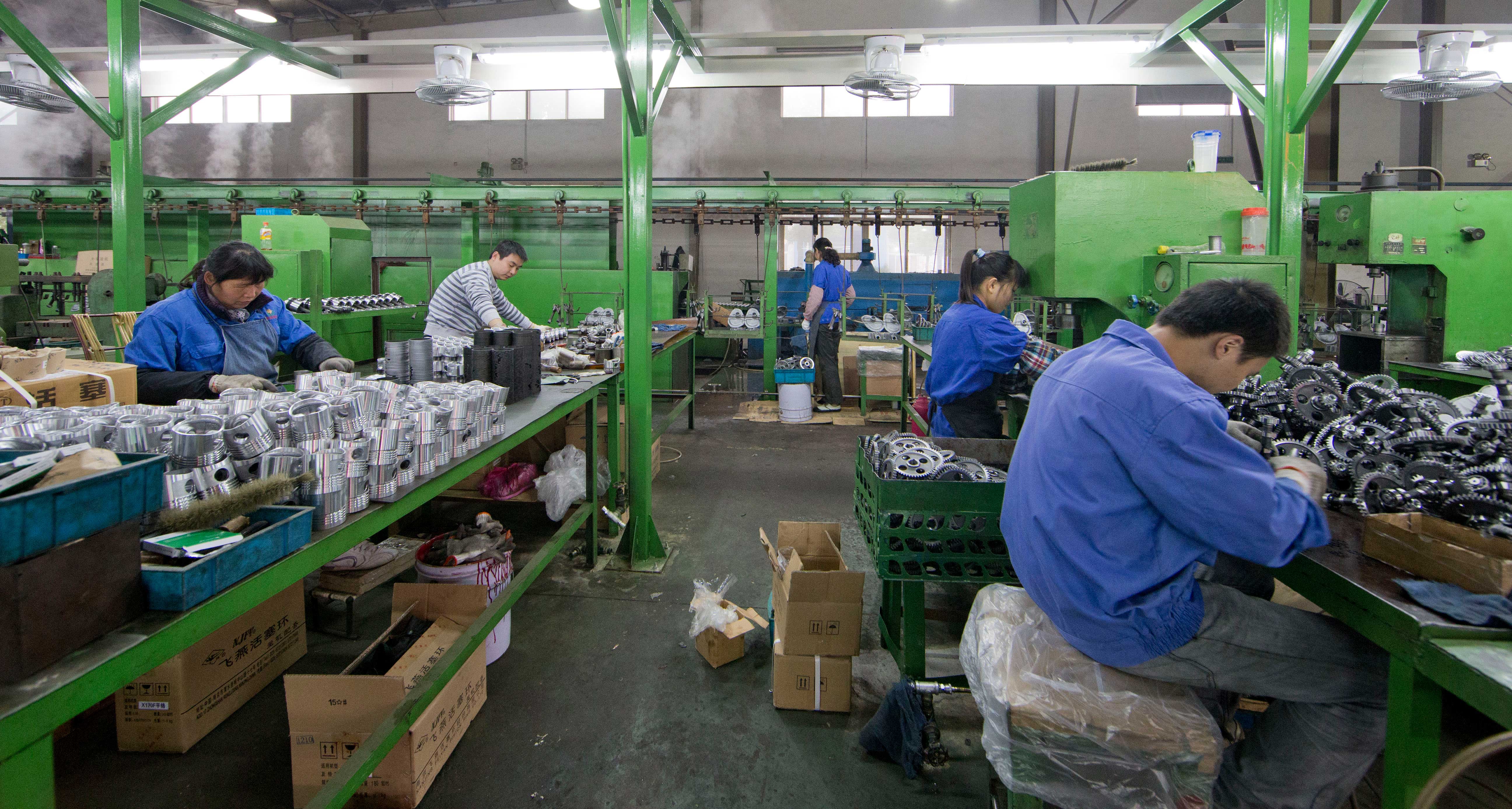
Serviceability is decided by access, not by claims. The documented build process exposes the interfaces that wear first: camshaft assembly, cylinder head and valve work, flywheel and cylinder head bolt tightening, and cylinder head cover oil-leak inspection before the unit leaves the line.
Finally, maintenance itself carries risk that configuration cannot remove. Improper maintenance procedures may result in equipment damage or personal injury; the documented control method is to shut down the engine before performing maintenance and to operate in accordance with the instruction manual. On the supplier side, that control is supported by detailed operation and maintenance manuals, pre-sale technical training, and after-sales support — the parts of a supply relationship that matter most in year three, not year one.
Step-by-Step: Auditing a Configuration Before You Commit
For buyers moving from shortlist to execution, the sequence below keeps the decision anchored to the machine rather than to the catalogue.
- Start from the driven equipment. Define the shaft power the machine actually needs, whether duty is continuous or intermittent, and how many hours per day the engine will run.
- Locate the power band in the documented range. Use the rated power figures rather than nominal marketing labels, from 4 HP at the compact end to 35 HP at the top.
- Match cooling to environment and duty. Air-cooled where water is unreliable and duty is light; water-cooled for fixed installations and continuous shifts above 5 HP.
- Compare specific consumption across candidates. Check fuel consumption in g/kW·h and note which oil-consumption tier each candidate falls into: 4.31, 3.57, or 2.14 g/kW·h.
- Check tank capacity against refuelling intervals. The documented capacities span 3 L to 17 L, which changes how often the operator must stop.
- Verify build materials and service access against the specification sheet — cylinder block, crankshaft, piston, and liner for the smaller models; block, crankshaft, and cover for the larger ones.
- Confirm the commercial terms in writing. The documented baseline for this range is a minimum order of one 20 ft container, FOB or EXW delivery terms, and 30/70 payment.
- Validate before scaling. Use the documented acceptance method of video or image verification, and agree the inspection points before the container is packed.
Use Cases: Matching the Configuration to the Driven Machine
The same range serves several machine categories, and the configuration choice differs by application:
- Irrigation and water pumping. The 15–20 HP water-cooled group (ZS1100 to ZS1115) suits pumps running scheduled shifts, while the 4–7 HP group (R175, R180) fits smaller portable pumps. For a diesel engine for an irrigation pump sited where cooling water is inconvenient, the air-cooled Z175F at 5 HP is the documented option.
- Power tillers and small tractors. The 4–7 HP R-series at 2,600 rpm and the 13 HP ZS195 cover light and medium tillage duty respectively.
- Generator sets. The 13–20 HP water-cooled configurations sit in the middle of the range for small generating sets, with the 8–9.5 HP group for lighter sets.
- Threshers, rice mills, and farm machinery processing. The 8–9.5 HP group (JR185, JR190, EM185, EM190) covers light processing duty, and the 15–35 HP water-cooled groups cover heavier, longer-shift machinery.
- Engineering equipment, air compressors, and inland waterway vessels. These are documented application areas for this engine range and call for the heavier water-cooled configurations rather than compact units.
Distribution, Knock-Down Supply, and Long-Term Partnership Terms
For distributors and importers, the configuration shortlist only becomes a business once supply terms are fixed. The documented commercial baseline for this range is a minimum order quantity of one 20 ft container, FOB or EXW delivery, video or image acceptance, and 30/70 payment terms.
Behind those terms sits a manufacturing profile that matters for continuity: Changzhou Vision International Trading Co., Ltd. was founded in 2010, operates from a 32,207.8 m² facility with 95 employees, produces an annual output of 100,000 units, and exports approximately 70% of production to South America, Africa, Southeast Asia, and the Middle East. The operation holds ISO9001 quality management system and ISO14000 environmental management system certification.
Two structural advantages show up once a distribution plan is drafted. First, the distribution of power steps within families — four models in the 15–20 HP band, four in the 25–35 HP band, two parallel families at 8–9.5 HP — reduces the number of distinct spare-part lines a distributor must carry to serve a wide power range. Second, knock-down supply formats allow the same engine family to be shipped as partial or complete kits where local assembly economics justify it and where the destination market's tariff treatment supports the model.
Frequently Asked Questions
Which certifications and emission rules affect the configuration I can import?
On the manufacturing side, the factory producing this range holds ISO9001 quality management system certification and ISO14000 environmental management system certification. On the regulatory side, U.S. EPA Tier 4 emission standards regulate particulate matter (PM) and nitrogen oxides (NOx) for off-highway diesel engines, with exemptions for engines under 24 horsepower — a threshold above most of the 4–20 HP configurations on this list. Rules differ by country and by application, so confirm the applicable emission and import requirements for your market before finalizing a specification.
Can the same configuration be supplied as SKD or CKD kits for local assembly?
Knock-down supply is a recognized supply format in this category. Published analysis of SKD and CKD assembly strategies (KAMA Auto / International Journal of Research, 2024) reports tariff advantages in markets such as Myanmar, where CKD rates of 1.5%–3% are cited, and Thailand, where 0% applies to some categories; that source is a market-level indicator, not a tariff guarantee. Whether a specific model can be delivered in knocked-down form depends on the model and on the assembly capability at destination, so the scope, packing list, and assembly documentation should be confirmed in writing.
What actually drives the cost of a single cylinder diesel engine configuration?
Four cost drivers are visible in the documented range. Displacement and power band set the base: models run from 0.269 L at 4 HP to 1.73 L at 35 HP. Cooling method and build materials follow — the smaller units specify a heavy-duty cast iron cylinder block, forged steel crankshaft, alloy aluminum piston, and wear-resistant cylinder liner, while the larger units specify cast iron for the block, steel for the crankshaft, and aluminum alloy for the cover. Operating consumption drives lifetime cost, falling from 315 g/kW·h fuel and 4.31 g/kW·h oil at the smallest displacement to 252.7 g/kW·h fuel and 2.14 g/kW·h oil at the largest. Purchase terms complete the picture: the documented baseline is a minimum order of one 20 ft container, FOB or EXW, with 30/70 payment.
How can a buyer validate a configuration before placing a container order?
The documented acceptance method for this range is video or image verification, and the documented minimum order is one 20 ft container. Because a configuration decision depends on how the engine behaves with the driven machine, buyers should agree in writing which points will be inspected before shipment — the specification sheet values, the assembly and test steps, and the acceptance evidence to be supplied.
What should be confirmed about lead time before ordering?
Lead time is not a single fixed figure in this category; it depends on the chosen configuration, the order volume, and container logistics. The documented commercial baseline covers a minimum order of one 20 ft container, FOB or EXW delivery, video or image acceptance, and 30/70 payment terms, so the production slot for a specific configuration should be confirmed in writing against those terms. To move from shortlist to execution, you can download the current product brochure or send your required configuration and power band to khang@enginezoom.com.
Conclusion: Choose the Configuration First, the Supplier Second
The single cylinder diesel engine configurations worth shortlisting are the ones whose documented figures match the machine they will drive. The 25–35 HP water-cooled group leads on specific fuel consumption and part commonality; the 15–20 HP group offers the best balance of power steps and consumption; ZS195 gives mid-duty buyers access to the lowest oil-consumption tier without oversized displacement; the 8–9.5 HP and 4–7 HP groups serve lighter and more mobile duty; the air-cooled Z175F removes the water dependency where sites make that decisive; and knock-down supply configurations extend the same engine family into local-assembly markets.
Once the configuration is fixed, the supplier conversation becomes a comparison of documentation, service access, and long-term terms rather than a comparison of adjectives.
Next Step: Confirm the Configuration Against Your Machine
Changzhou Vision International Trading Co., Ltd. manufactures Willson single cylinder diesel engines from 4 HP to 35 HP for agricultural, irrigation, generator, and industrial applications. Share your driven equipment, required power band, and target market, and the team can confirm the matching configuration, the acceptance method, and the order terms.
Email: khang@enginezoom.com | Tel / WhatsApp: +86 166-5159-4277
Website: enginezoom.com | Address: No. 28, Jinsheng East Road, Jintan, Jiangsu, China
Product brochure: download the current PDF catalogue
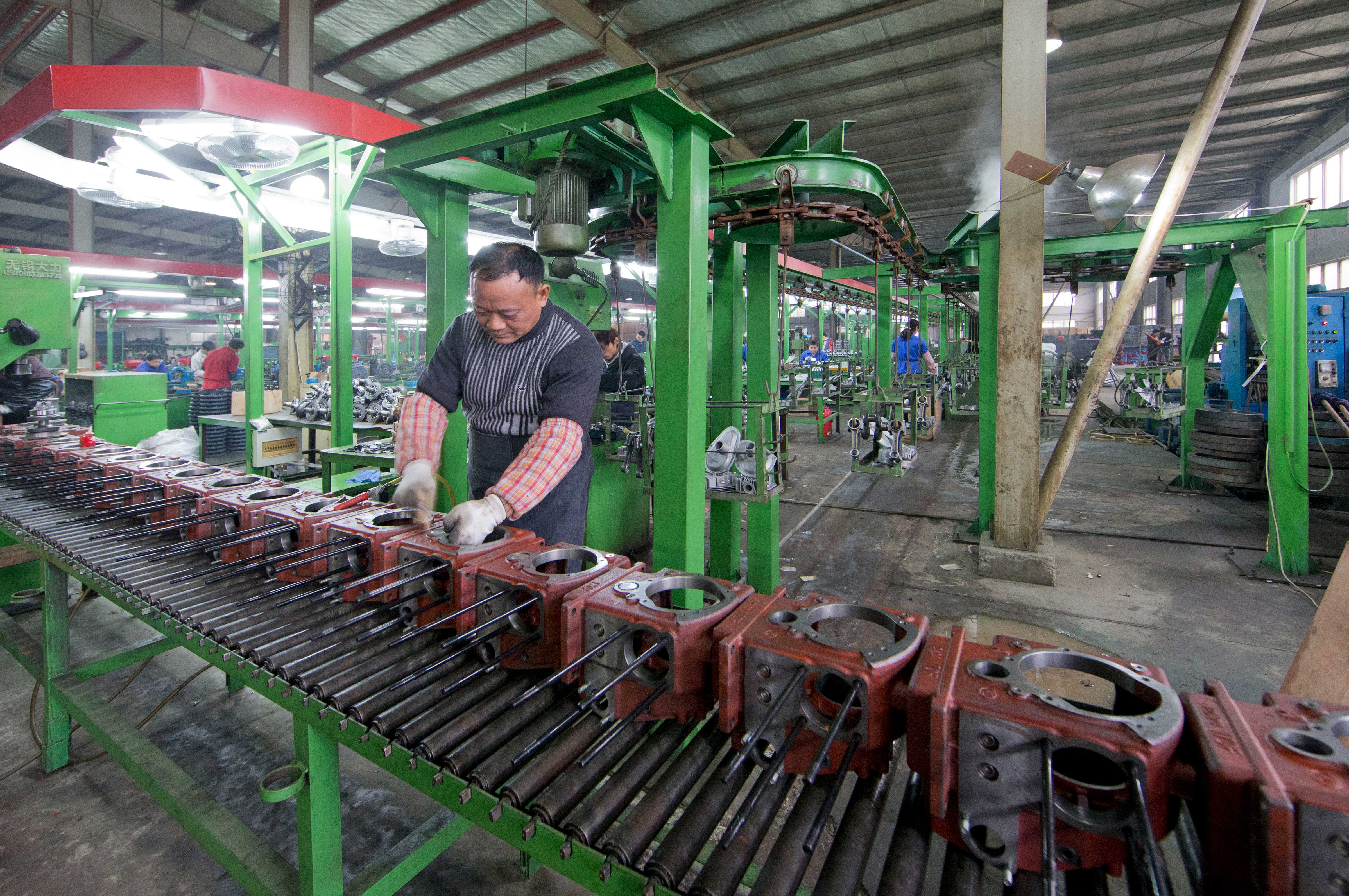
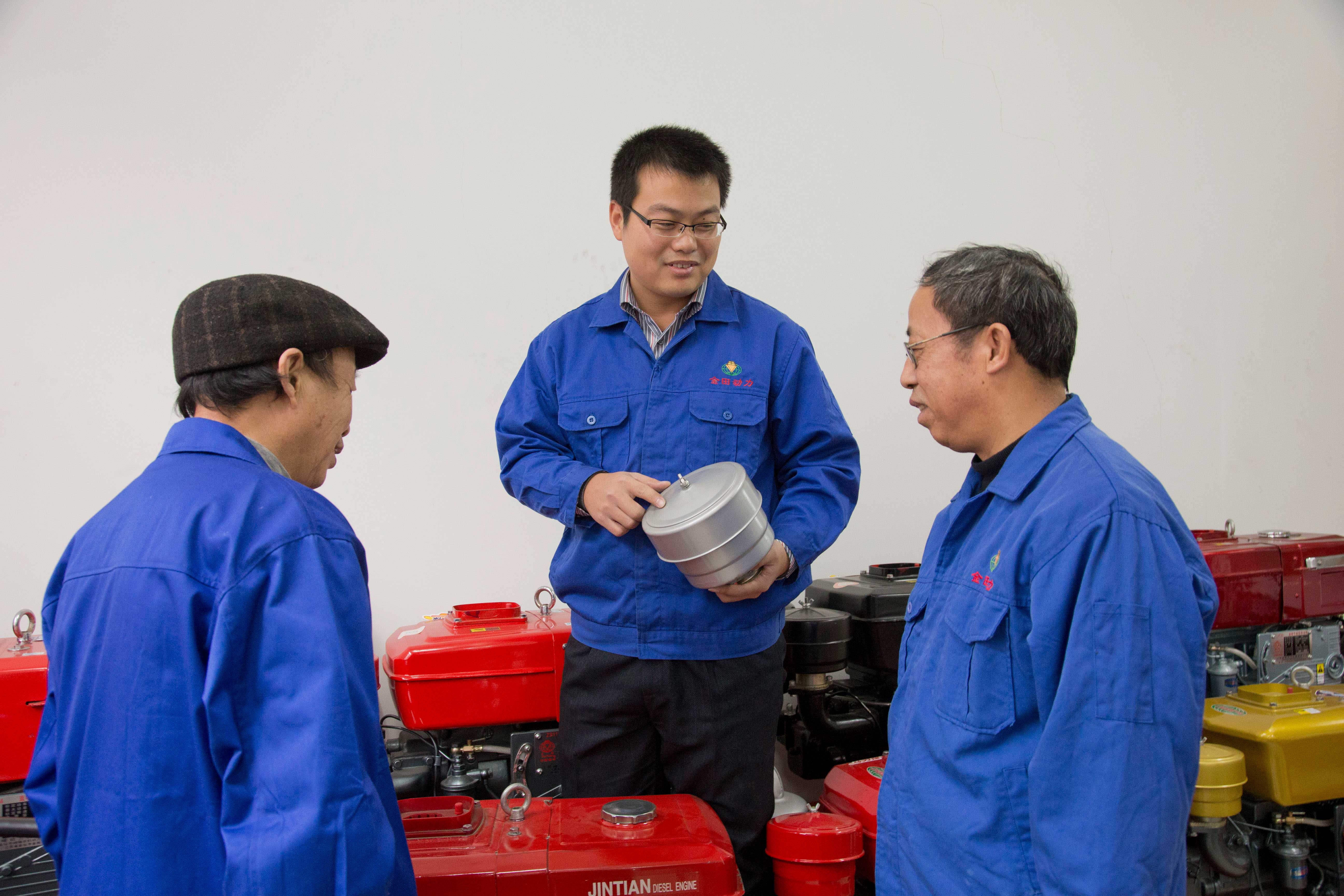
Production line, Jintan, Jiangsu — configuration confirmation, documentation, and order terms are handled directly by the factory team.

Have Questions or Need More Details?
Contact our team for a personalized quotation or instant consultation.
Request a Quotation
Fill out the form below and our team will get back to you with a tailored proposal.
WhatsApp Direct Chat
Prefer to chat in real-time? Message us on WhatsApp for instant assistance & quick answers.
- Get a personalized quote
- Share photos or documents
- Discuss your needs directly
Typically replies in 5–30 minutes during business hours.