
Single Cylinder Diesel Engine Decision Comparison: Price, Fit, and Supplier Execution
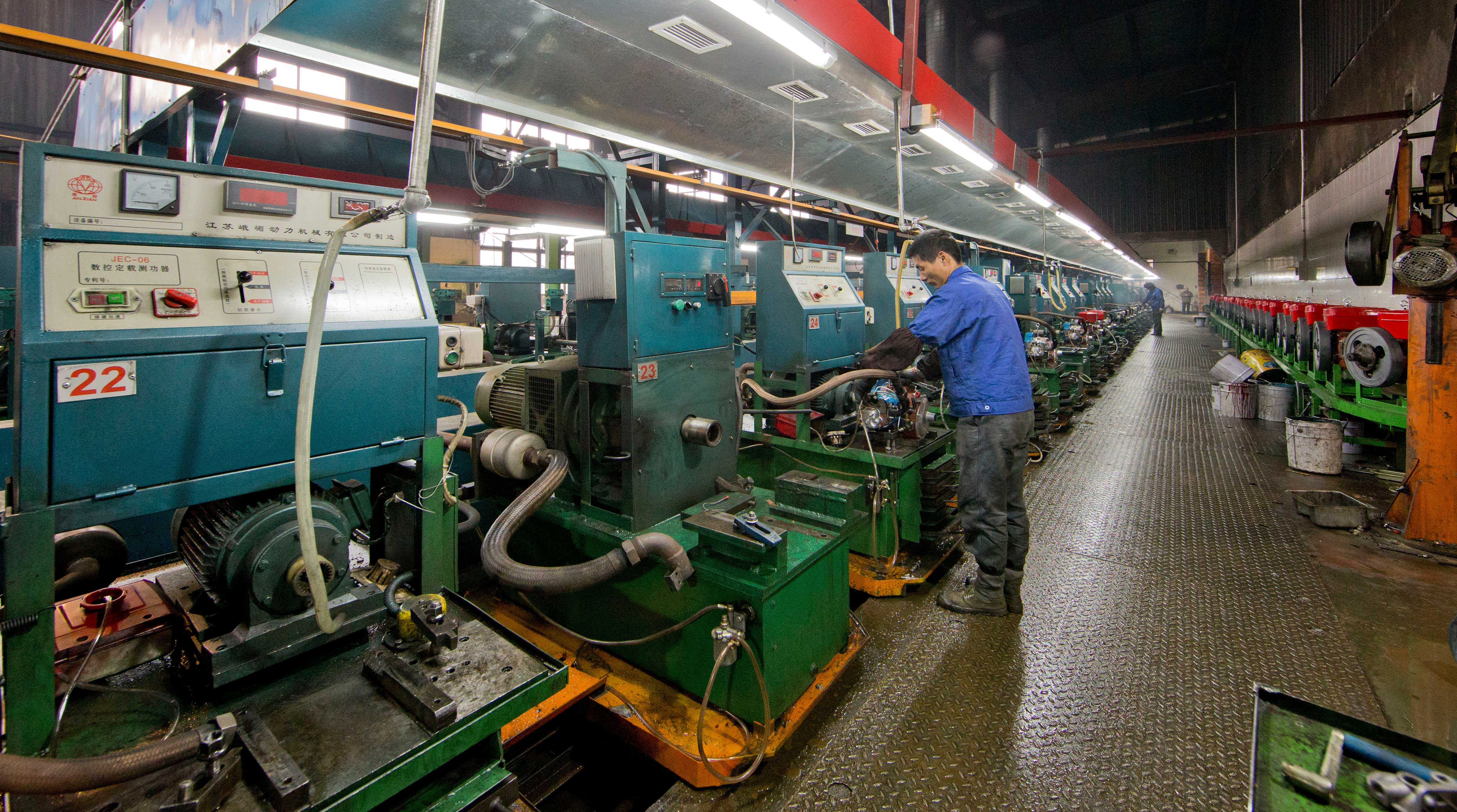
When a buyer moves to the Decision stage, the search phase is over. The next task is to compare a short list of single cylinder diesel engine options and choose the one that will keep a pump, tiller, generator, thresher, or other machine running without hidden maintenance problems. In this guide, the comparison is built around application fit, engine construction, start type, surface protection, compliance documents, and supplier execution.
Willson is used as a factual example throughout this article. Willson is a single-cylinder diesel engine brand of Changzhou Vision International Trading Co., Ltd., located in Changzhou, Jiangsu, China. The company was founded in 2010 and reports 95 employees, a 32,207.8-square-meter factory, an annual output of 100,000 units, an export ratio of 70 percent, and main markets in South America, Africa, Southeast Asia, and the Middle East.
Why a Final Supplier Comparison Needs More Than a Unit Price
A decision-stage comparison for a single cylinder diesel engine manufacturer fails when the price is compared before the engine scope is defined. An importer may receive one quote for a complete engine, another quote that excludes a flywheel or muffler, and a third quote based on a different cooling system. Without a common scope, the cheapest unit can become the most expensive installed solution.
The most common comparison gaps are also the most costly:
- Duty cycle mismatch: an engine sized for an occasional water pump may fail if used for daily irrigation or continuous threshing.
- Invisible factory process: paint adhesion, corrosion protection, and final test results are not visible in a written quote.
- Incomplete support: operation manuals, technical training, and warranty response often sit outside the commercial document.
Whether the engine is intended as a diesel engine for agriculture, a diesel engine for irrigation pump, a diesel engine for generator, or a diesel engine for tiller, the final comparison should use the same evaluation logic.
Industry Background: Market Size and Application Context
According to Global Growth Insights, the global single cylinder diesel engine market was valued at approximately USD 3.34 billion in 2025 and is projected to reach USD 3.74 billion by 2035. Agriculture is the dominant application, accounting for about 42.3 percent of the market in 2025, based on Dataintelo data. Asia Pacific leads regional demand with a 58.2 percent revenue share.
China is also a major exporter of combustion engines, including diesel variants. The Observatory of Economic Complexity reports that China's combustion-engine exports reached USD 3.29 billion in 2025, with Russia, Vietnam, and India among the major destinations. This export context explains why global buyers are often comparing Chinese diesel engine factory suppliers against established Japanese, German, and other brands.
Market research identifies several established names in the small diesel engine sector, including Yanmar, Kubota, Kohler, Hatz, Changchai, and Shifeng Group. The goal of this article is not to rank those firms. The goal is to give the buyer a comparison framework that works before a supplier name is placed on the order.
Detailed Solution: A Four-Layer Decision Framework
For buyers comparing a single cylinder diesel engine supplier, the final decision should be organized into four layers.
Layer 1: Application Fit
Willson produces air-cooled and water-cooled single-cylinder diesel engines from 3 to 45 hp. According to the company's product description, these engines are suitable for small tractors, agricultural machinery, generator sets, water pumps, small construction machinery, air compressors, inland waterway vessels, and agricultural and sideline product processing. Those use cases overlap with many of the search terms used by buyers, including diesel engine for water pump, diesel engine for power tiller, diesel engine for thresher, diesel engine for farm machinery, and diesel engine for rice mill.
At the comparison stage, ask two questions. First, does the engine's power band fit the driven machine's requirement? Second, is the cooling system compatible with the ambient temperature and airflow of the installation? A small diesel engine chosen for a generator may not be the same model chosen for a dust-heavy thresher application.
Layer 2: Starting and Operating Convenience
Start method is a common reason why one electric start diesel engine quote differs from another. Electrically started engines reduce operator fatigue during frequent start-stop work. Recoil-start engines are simpler and lighter but require more physical effort. A decision-stage comparison should state the exact start system, battery requirement, and included electrical components.
This matters because an electric-start engine with a missing regulator or undersized battery will create field complaints even if the engine's rated power is correct.
Layer 3: Manufacturing and Surface Protection
Agricultural and irrigation environments often expose engines to dust, humidity, and intense sunlight. Paint quality is not only cosmetic; it affects corrosion and future maintenance cost.
Willson reports a manufacturing process that includes complete engine cleaning prior to painting. The company documents that this step improves paint adhesion by 20 percent and anti-corrosion performance by 30 percent compared with other diesel engines. The same data states that long-term maintenance cost is reduced by 15 percent, with less frequent repainting and rust repair required.
This is a strong example of why a buyer should not compare only piston displacement and power. A single cylinder diesel engine manufacturer that controls the cleaning process before painting gives the buyer an asset that continues to perform in the field.
Layer 4: Compliance, Documentation, and Supplier Execution
At Decision stage, export compliance should be confirmed before the purchase order is signed. U.S. EPA Tier 4 emission standards regulate particulate matter and nitrogen oxides for many off-highway diesel engines. The regulation includes exemptions for engines under 24 horsepower in certain off-highway categories. This is not something to discover at customs.
On the corporate side, Changzhou Vision International Trading Co., Ltd. reports ISO 9001 and ISO 14000 management-system certification. The company also says it provides detailed operation and maintenance manuals, together with pre-sale technical training and after-sales support. A buyer should ask similar questions to every candidate supplier: What documentation is included? Is there an operation manual? What is the response path for parts or technical questions?
Step-by-Step Decision Comparison Breakdown
- Create a load profile. Record the machine being driven, operating hours per day, fuel type, ambient temperature, dust level, and any altitude correction. This profile is the basis for every other comparison.
- Map the power range and cooling type. Shortlist only engines that provide adequate power for the machine. Choose between air-cooled and water-cooled engines before asking for prices.
- Compare start systems. Confirm whether the quote includes an electric start diesel engine package or a recoil-start configuration. Write down the battery and wiring terms.
- Ask about pre-paint cleaning. Request evidence of the cleaning and painting process. Ask what percentage of engines are cleaned before paint, how paint thickness is checked, and whether corrosion protection is standard.
- Review compliance paperwork. Ask for the engine's horsepower, emission-related documentation, and export package details. If the buyer uses SKD or CKD assembly, ask for a component-level packing list.
- Compare commercial terms. Clarify price scope, sample policy, production lead time, minimum order quantity, spare parts availability, and warranty handling. Use the same scope for each supplier.
- Validate with a small order. When possible, test one engine on the actual pump, tiller, generator, or machine before releasing a large order. A sample is a form of final evidence.
Application and Use-Case Fit
Different applications require the buyer to emphasize different features. The table below summarizes a practical comparison lens.
| Application | Key Decision Factors |
|---|---|
| Irrigation pump / water pump | Continuous load, pump head and flow curve, shaft-speed matching, fuel economy |
| Tiller / power tiller / farm machinery | Compact dimensions, low-end torque, air-cooled simplicity, accessibility for maintenance |
| Generator set | Stable governed speed, speed regulation, alternator matching, cooling under load |
| Thresher / rice mill / agricultural processing | Dust resistance, heavier-duty operation, easy air intake cleaning, pulley or coupling compatibility |
| Small construction and general industrial use | Mounting dimensions, fuel system durability, parts availability |
Comparison Table: Willson Pre-Paint Cleaning vs Other Diesel Engines
The most decision-relevant comparison may not be between two similar-looking engines. It may be between two very different factory processes. The table below uses Willson's documented comparison with other diesel engines.
| Comparison Point | Willson Single Cylinder Diesel Engine Treatment | Buyer Impact |
|---|---|---|
| Complete engine cleaning prior to painting | Engine is cleaned before the paint process | Better adhesion of paint in high-dust agricultural environments |
| Paint adhesion rate | Improved by 20% compared with other diesel engines | Lower risk of early paint peeling |
| Anti-corrosion performance | Enhanced by 30% compared with other diesel engines | Longer intervals between rust repair and repainting |
| Long-term maintenance cost | Reduced by 15% | Lower total cost of ownership after the invoice |
| Maintenance frequency | Less frequent repainting and rust repair required | Less machine downtime in the field |
| Efficiency | Consistent power output with low fuel consumption | Predictable running cost |
Risk and Maintenance Consideration
Frequently Asked Questions
Are single cylinder diesel engines exempt from U.S. EPA Tier 4 regulations?
EPA Tier 4 standards regulate particulate matter and nitrogen oxides for many off-highway diesel engines, and engines under 24 horsepower have an exemption in certain off-highway categories. Because the exact exemption depends on the engine category and installation, a buyer must verify the horsepower of the proposed engine and ask the supplier for emission-related documentation for the destination country.
Which is better for agriculture: air-cooled or water-cooled single cylinder diesel engines?
The right choice depends on the load and operating environment. Air-cooled engines are simpler and lighter, which makes them common for portable pumps, tillers, and small agricultural machines. Water-cooled engines are often selected for heavier duty or more continuous operation. A buyer should compare cooling type, maintenance access, and spare-part availability before finalizing the order.
Can one single cylinder diesel engine be used for a water pump, generator, and rice mill?
A single-cylinder diesel engine can be mounted to different driven machines, but the power output and operating speed must match each machine. A generator needs stable governed speed for frequency control, while a pump needs torque to move water. Willson describes its product range as suitable for generator sets, water pumps, agricultural machinery, and agricultural and sideline product processing, but the final configuration must be checked against the specific pump, generator, or rice-mill requirement.
How should a buyer compare the total cost of a single cylinder diesel engine, not just the purchase price?
Compare quote scope, component quality, paint and anti-corrosion treatment, maintenance frequency, spare-parts availability, and after-sales documentation. The Willson process data offers a useful benchmark: complete cleaning before painting improves paint adhesion by 20 percent, improves anti-corrosion by 30 percent, and reduces long-term maintenance cost by 15 percent. A small upfront saving can disappear if the buyer must repaint or repair rust sooner.
What should a buyer ask about SKD and CKD single cylinder diesel engine supply?
SKD means semi-knocked-down and CKD means complete-knocked-down. Tariff treatment depends on the customs product code, but verified trade data shows that SKD and CKD assembly can create tariff advantages in some ASEAN markets, including 1.5-3 percent for CKD in Myanmar and zero percent for certain categories in Thailand. A buyer comparing these supply models should request the component breakdown, packing list, identifying marks, local-assembly documentation, and factory capacity to support a program.
Conclusion and Next Step
At the final buying stage, do not compare only brand names or price lines. Compare the complete package: engine application fit, start system, cooling type, surface protection, compliance documentation, packaging, and supplier execution. The market context clearly favors continued adoption of single-cylinder diesel engines in agriculture, irrigation, and industrial power generation. Use evidence, not general reputation, as the final filter.

Next Step: Compare Against Willson Specifications
Download the Willson single cylinder diesel engine brochure to compare the 3-45 hp air-cooled and water-cooled series. For application matching on irrigation pumps, generators, tillers, threshers, or other equipment, contact Khang directly.
Email: khang@enginezoom.com
WhatsApp / Tel: +86 166-5159-4277
Website: enginezoom.com
Have Questions or Need More Details?
Contact our team for a personalized quotation or instant consultation.
Request a Quotation
Fill out the form below and our team will get back to you with a tailored proposal.
WhatsApp Direct Chat
Prefer to chat in real-time? Message us on WhatsApp for instant assistance & quick answers.
- Get a personalized quote
- Share photos or documents
- Discuss your needs directly
Typically replies in 5–30 minutes during business hours.