
Single Cylinder Diesel Engine vs. Alternatives: A Side-by-Side Buyer Comparison
Choosing the power source for a water pump, power tiller, thresher, rice mill or small generator set is a decision that usually outlives the brand decision. At the research and evaluation stage, buyers are really comparing four options: a single cylinder diesel engine, a multi-cylinder diesel engine, a gasoline engine, and an electric motor. Each is a legitimate engineering answer to a different set of constraints, and none of them wins on every criterion.
This guide places those four options side by side on the criteria that genuinely change a purchase decision: power output, fuel efficiency, starting and maintenance complexity, site requirements, compliance, and total cost of ownership. The diesel column is represented throughout by the Willson range, manufactured by CHANGZHOU VISION INTERNATIONAL TRADING Co., Ltd., a single cylinder diesel engine manufacturer based in Jintan, Jiangsu, China. That keeps every technical statement on the diesel side traceable to a published specification rather than to a general claim.
Numbers in this article come from either the manufacturer's own product data or a named third-party source. Where independent sources disagree, the disagreement is reported rather than smoothed over.
What Buyers Are Actually Choosing Between
The four options are not interchangeable products. They are four different answers to the question "what turns my machine?"
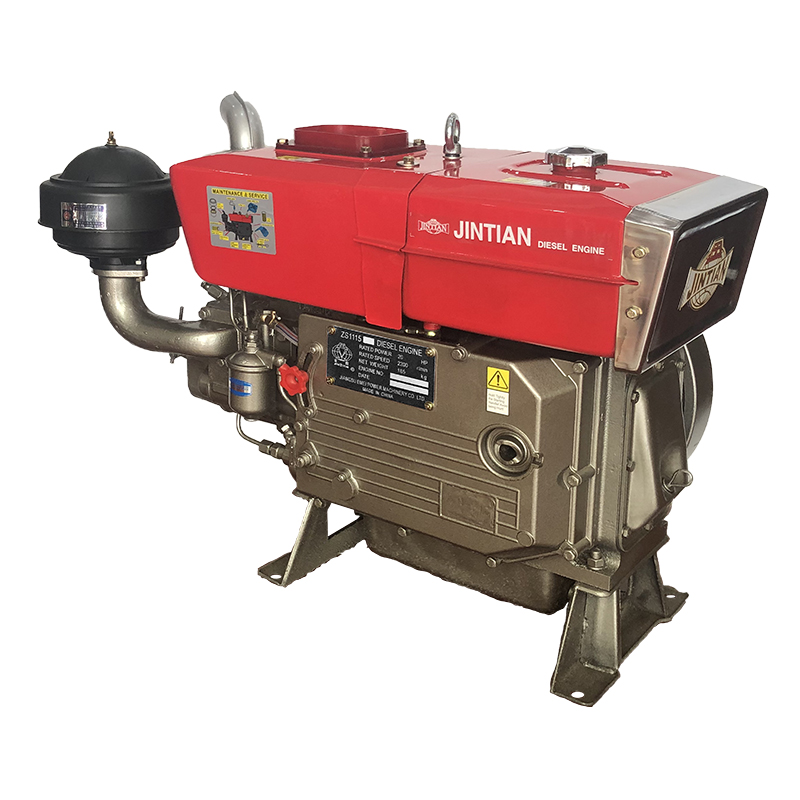
- Single cylinder diesel engine — a horizontal 4-stroke unit with one cylinder, hand start on the models listed in this article, and available in both air-cooled and water-cooled designs. Willson builds them from 3 HP to 45 HP for agricultural machinery, water pumps, generator sets, small construction machinery, air compressors, inland waterway vessels and agricultural by-product processing equipment.
- Multi-cylinder diesel engine — the same compression-ignition principle scaled up with additional cylinders, generally selected when continuous duty exceeds what a single-cylinder unit can hold.
- Gasoline engine — spark-ignition power, commonly chosen where low weight and low first cost matter more than fuel economy under sustained load.
- Electric motor — no combustion at the point of use, but dependent on a dependable grid, or on a generator that puts a combustion engine back into the system.
The Problem: Power-Source Mismatch Costs More Than Brand Choice
Most expensive sourcing errors in small industrial power are category errors, not brand errors. They appear in five recurring forms.
- Under-sizing. The engine is matched to a nominal figure instead of to real duty, so it runs near its limit, burns more fuel per unit of work and wears faster.
- Over-specification. A larger or more complex power source is bought for a load that never materialises, adding capital cost and maintenance scope with no operational gain.
- Wrong energy logic. An electric motor is specified for a site with unreliable supply, or a gasoline engine is specified for a duty that runs for hours at a time.
- Wrong cooling logic. An air-cooled unit is specified for a stationary, dust-heavy duty, or a water-cooled unit is specified where frost, water quality or portability make water a liability.
- Wrong compliance logic. Emission and certification requirements for the destination market are assumed rather than confirmed, and the problem surfaces at customs or at first inspection.
The cost of a mismatch is rarely visible at the quotation stage. It appears later as fuel, as downtime during a season that cannot be repeated, and as early replacement. That is why the framework below is built on duty and cost structure rather than on purchase price alone.
Industry Background: A Category That Is Still Growing
The single cylinder diesel engine is not a legacy product being phased out. Demand is projected to grow over the coming decade.
Global Growth Insights values the global single cylinder diesel engine market at approximately USD 3.34 billion in 2025, projecting it to reach USD 3.74 billion by 2035. Market sizing for the category is not settled: Dataintelo publishes a much broader figure of USD 12.8 billion, while Intel Market Research sizes the narrower "small single cylinder" segment at USD 0.737 billion. The gap reflects different boundary definitions — how much of the adjacent small diesel engine market each study includes — rather than a contradiction in underlying demand.
Two structural facts are consistent across sources. Agriculture remains the dominant application, at approximately 42.3% of market share in 2025 (Dataintelo), and Asia Pacific is the leading region with a 58.2% revenue share in the same year (Dataintelo). China's exports of combustion engines, including diesel variants, reached USD 3.29 billion in 2025, with major destinations including Russia, Vietnam and India (Observatory of Economic Complexity).
The practical implication is straightforward. The installed base and the supply chain for these engines are concentrated in Asia Pacific, which is why sourcing conversations for agriculture diesel engines and irrigation diesel engines so often involve Chinese manufacturers — and why export formats such as complete engines versus knocked-down supply deserve a place in the evaluation.
Detailed Solution: What a Single Cylinder Diesel Engine Actually Delivers
A single cylinder diesel engine delivers a compact, self-contained power unit that needs no grid, tolerates remote sites, and keeps service within reach of a local mechanic. The Willson range covers 3–45 HP in horizontal 4-stroke designs, in both air-cooled and water-cooled versions — the band that most irrigation pumps, power tillers, threshers, rice mills and small generator sets occupy.
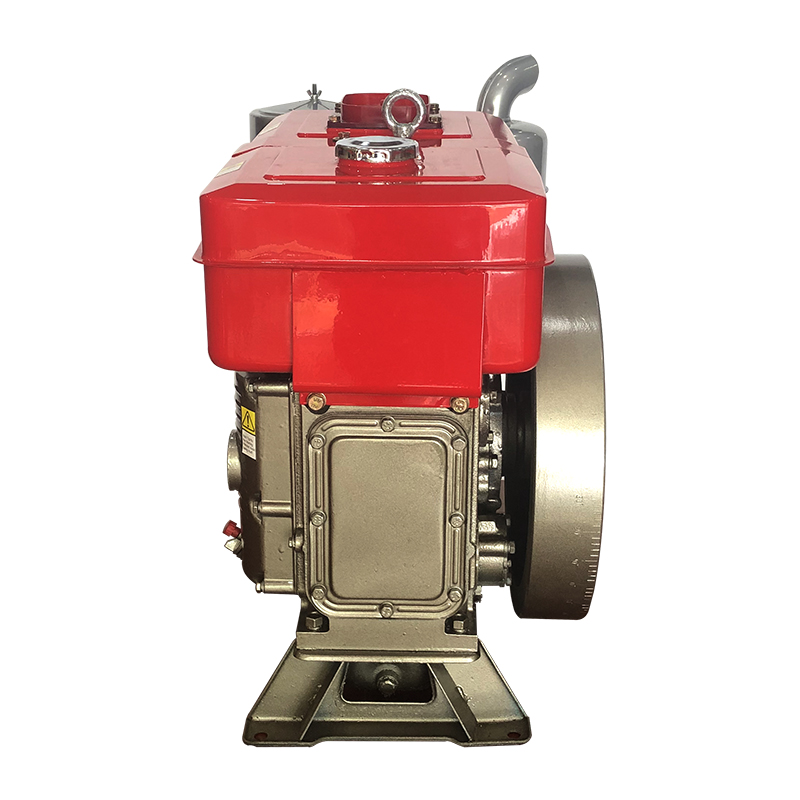
Materials are specified rather than left to chance: cast iron for the cylinder block, forged steel for the crankshaft and aluminium alloy for the cover. Heavier-duty models in the R and EM series also specify an alloy aluminium piston and a wear-resistant cylinder liner.
Representative specifications from the Willson range
| Model | Cooling | Rated power | Rated speed | Bore × stroke | Displacement | Fuel consumption | Oil consumption | Fuel tank |
|---|---|---|---|---|---|---|---|---|
| ZS1135 | Water cooled | 35 HP | 2200 rpm | 132.5 × 125 mm | 1.73 L | 252.7 g/kW·h | 2.14 g/kW·h | 17 L |
| ZS1115 | Water cooled | 20 HP | 2200 rpm | 115 × 115 mm | 1.195 L | 254.2 g/kW·h | 2.14 g/kW·h | 15 L |
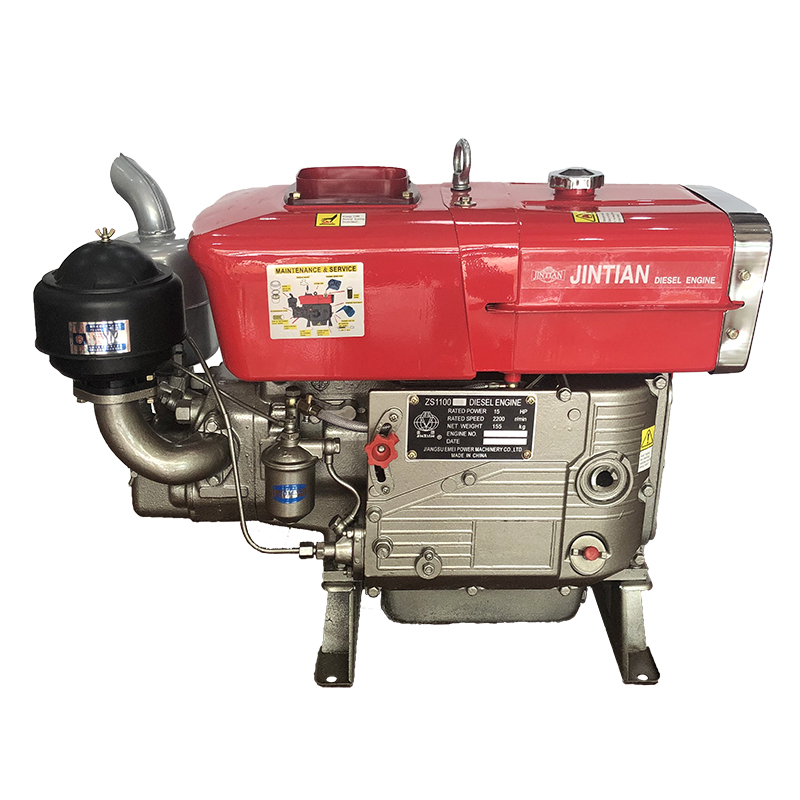
| ZS1100 | Water cooled | 15 HP | 2200 rpm | 100 × 115 mm | 0.903 L | 269 g/kW·h | 2.14 g/kW·h | 12 L |
| Z175F | Air cooled | 5 HP | 2600 rpm | 75 × 75 mm | 0.331 L | 301.4 g/kW·h | 4.31 g/kW·h | 6 L |
Across the full Willson range, published specific fuel consumption runs from 252.7 g/kW·h on the larger models up to 315 g/kW·h on the smallest, and oil consumption from 2.14 g/kW·h to 4.31 g/kW·h. That pattern — efficiency improving with displacement — is one of the most useful facts a buyer can hold when deciding between a small engine and the next size up.
Starting method deserves separate attention. The models listed here specify hand start. Electric-start versions of single cylinder diesel engines are widely offered across the category, so if an electric start diesel engine is a hard requirement, confirm it model by model with the manufacturer rather than inferring it from a category page or a photograph.

Manufacturing, customization and supply facts
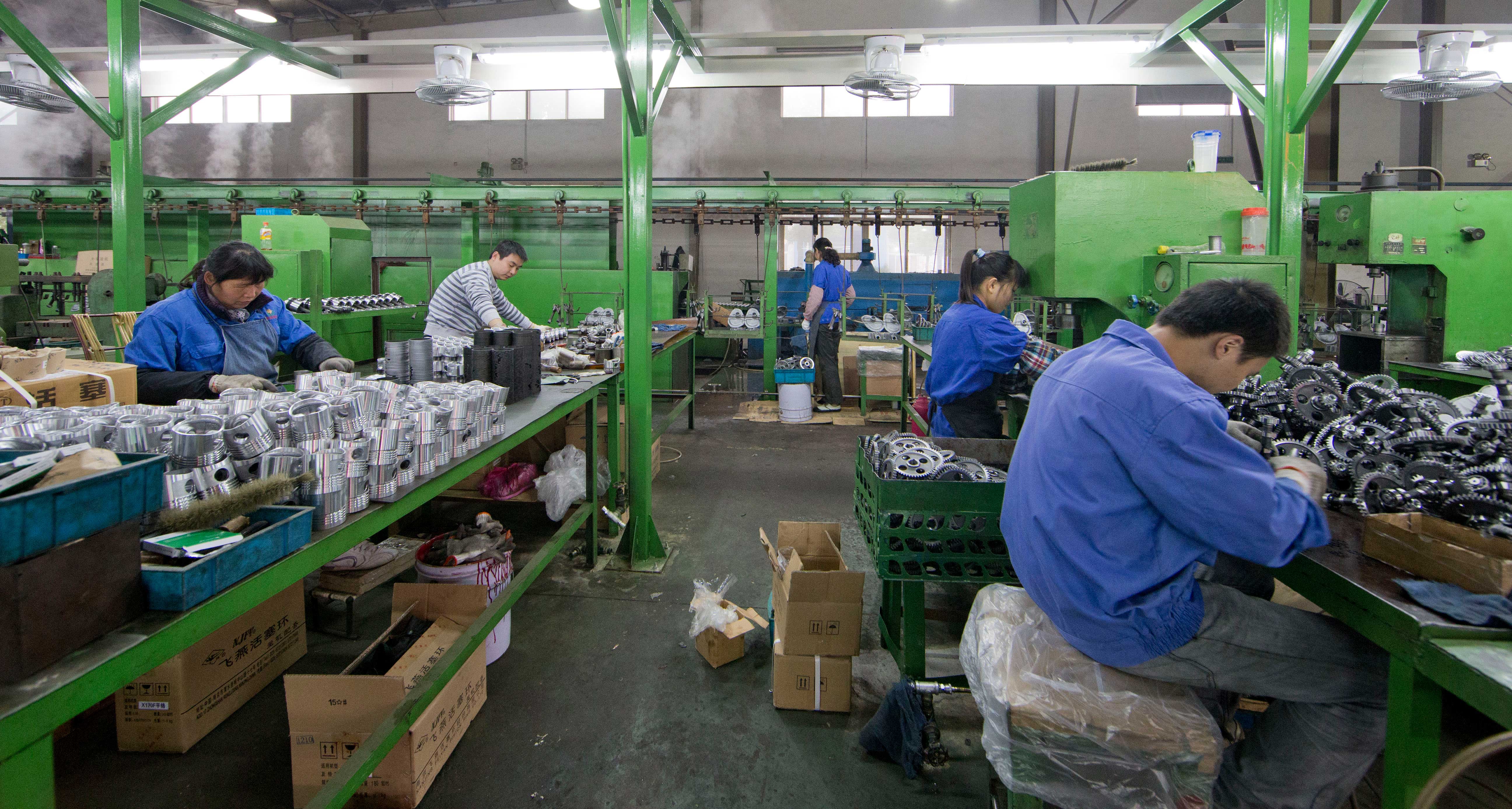
The manufacturer behind the Willson range, CHANGZHOU VISION INTERNATIONAL TRADING Co., Ltd., was founded in 2010 and operates a 32,207.8 m² facility in Jintan, Jiangsu, with 95 employees and a 5-engineer R&D team. Annual output is stated at 100,000 units, with 70% of production exported to South America, Africa, Southeast Asia and the Middle East. Quality control is stated as 100% testing, and the company holds ISO9001 quality management system certification and ISO14000 environmental management system certification.
For buyers moving toward execution, OEM/ODM production is available with customization of package, logo and nameplate. Monthly capacity is 10,000 units, standard lead time is 25–45 days, and the minimum order is one 20 ft container. Complete engines, SKD (semi-knocked down) and CKD (complete knocked down) supply solutions are all offered.
Step-by-Step: Running the Comparison for Your Own Project
Run the comparison in seven steps, and specify the driven machine before the engine. Doing it in the reverse order is the single most common cause of a mismatch.
- Specify the driven machine first. Pump flow and head, generator load, tiller working width, thresher throughput. The engine is a consequence of these numbers, not the starting point.
- Convert duty into a power band and a cooling type. Continuous duty pushes the choice upward and toward water cooling; intermittent duty in a portable application often favours an air-cooled diesel engine. Willson covers this decision with air-cooled and water-cooled models across 3–45 HP.
- Check energy logistics. Diesel availability and quality at the site, distance to refuelling, and water quality if the engine is water cooled. The stated operating requirement is clear on this point: do not add dirty, saline or alkaline water to the water tank, and regularly clean, maintain and change the engine oil and replace the filter element when necessary.
- Match the starting method to operator skill and site conditions. Hand start keeps the machine independent of batteries and electrical systems; electric start reduces physical effort. Decide which matters more before requesting a quotation.
- Cost the recurrent items, not only the purchase. Use published consumption data. On the Willson range, fuel consumption is 252.7–315 g/kW·h and oil consumption is 2.14–4.31 g/kW·h, so the difference between two candidate models is calculable rather than theoretical.
- Confirm compliance and documentation for the destination market. In the United States, EPA Tier 4 regulates particulate matter (PM) and nitrogen oxides (NOx) for off-highway diesel engines, with exemptions for engines under 24 horsepower (U.S. EPA). Many units in the 3–45 HP band fall below that threshold, which is precisely why the rule set must be confirmed rather than assumed.
- Decide the supply format and lock a pilot clause. Complete engine, SKD or CKD changes duties, local content and assembly labour. Knocked-down formats are widely reported to attract lower import duties in parts of ASEAN — reported CKD rates of 1.5%–3% in Myanmar and 0% in Thailand for some categories — and those figures should be verified with a customs broker for the specific tariff line.
Use Cases: Where the Single Cylinder Diesel Engine Fits Best
Application fit, not raw output, is what determines whether a single cylinder engine is the right answer.
Agriculture and farm machinery
Small farm machinery such as power tillers and threshers typically sits in the 4–9.5 HP band. The Willson range covers it with the R170A (4 HP), Z175F (5 HP), R175 (6 HP), R180 (7 HP), EM185 and JR185 (8 HP), and EM190 and JR190 (9.5 HP). These are the sizes where a compact diesel engine beats both gasoline engines and electric motors on fuel cost and independence from the grid.
Irrigation and water pumping
Irrigation duty is seasonal but punishing, and it is the classic case for an irrigation diesel engine. The ZS1115 (20 HP) is the reference point here, supported by a documented installation: an agricultural irrigation project in Pakistan using 96 units of the ZS1115 has run for 10 years with no major failures and met irrigation season requirements, with the fuel-efficient design and easy maintenance cited as factors in adapting to harsh local environments.
Generator sets
Small generator sets for farms, workshops and remote sites typically draw on the larger end of the range — the ZS1130 (30 HP) and ZS1135 (35 HP) — where a diesel engine for generator duty is expected to hold load without a grid connection.
Rice mills and agricultural processing
Processing equipment runs long, steady hours, which favours the ZS1100 to ZS1125 band (15–25 HP). Here the comparison against an electric motor is really a comparison against reliable electricity, and where supply is uncertain the diesel engine wins by default.
Light construction and air compressors
The same engines power small construction machinery and air compressors, where portability, refuelling independence and simple service matter more than maximum output.

Side-by-Side Comparison Table
The table below summarises the four options on the criteria that decide most purchases. The single cylinder diesel column carries published Willson data; the other columns describe the general characteristics of those power sources.
| Decision criterion | Single cylinder diesel (Willson) | Multi-cylinder diesel | Gasoline engine | Electric motor |
|---|---|---|---|---|
| Best-fit duty | Compact standalone power for pumps, power tillers, threshers, rice mills, small generator sets and light construction equipment, including sites with no grid access. | Continuous heavy duty where the required load exceeds what a single-cylinder unit can hold. | Intermittent, lighter-duty equipment where low weight and low first cost matter most. | Stationary equipment on a dependable electricity supply. |
| Power coverage | Willson range: 3–45 HP. | Selected when duty requires output above the practical single-cylinder band. | Commonly used at small outputs for intermittent work. | Sized to the driven machine; output limited by supply capacity. |
| Energy source | Diesel; refuelling independent of the grid, suited to remote agricultural and irrigation sites. | Diesel; the same fuel logic at larger scale. | Gasoline; widely available but requires more careful storage handling. | Electricity only; unreliable supply pushes the buyer back toward a generator. |
| Cooling options | Air-cooled and water-cooled variants both available (Z175F air-cooled; ZS1115 water-cooled). | Generally liquid cooled. | Usually air cooled at small sizes. | Fan or liquid cooled depending on rating and enclosure. |
| Fuel efficiency logic | Published specific fuel consumption 252.7–315 g/kW·h across the range, improving as displacement increases. | Comparable cycle efficiency, with scale benefits at high continuous load. | Spark-ignition cycles generally use more fuel per unit of work than compression-ignition engines of similar output. | No combustion losses; running cost depends on local tariff and duty cycle. |
| Maintenance complexity | One cylinder, one injector, a short service routine: engine oil, filter element, cooling water and periodic cleaning. | More cylinders and components, therefore broader service scope and more consumables. | Ignition-system service replaces injection service. | Fewer fluid tasks, but electrical, bearing and insulation service instead. |
| Site and environment | Install in a well-ventilated area free from excessive dust and corrosive gases, on stable and solid ground, out of direct rain. | Same ventilation discipline, with a larger installation footprint. | Same ventilation discipline as other combustion engines. | Needs a supply connection and safe electrical installation; no local exhaust. |
| Compliance considerations | Manufacturer holds ISO9001 and ISO14000. Emission rules are market-specific: U.S. EPA Tier 4 regulates PM and NOx for off-highway diesel engines, with exemptions for engines under 24 horsepower. | Same regulatory framework, different power band and equipment class. | Regulated on a separate emissions basis from diesel. | No combustion emissions; grid, safety and enclosure rules apply instead. |
| Total cost of ownership profile | Purchase price is one of five cost lines; published consumption is 252.7–315 g/kW·h fuel and 2.14–4.31 g/kW·h oil across the range. | Higher capital and service cost; scale can lower fuel cost per unit of work. | Lower entry cost; generally higher fuel cost per unit of work under sustained duty. | Low routine fluid cost; energy price and supply reliability drive the outcome. |
| Supply format | Complete engines plus SKD and CKD knocked-down supply; MOQ one 20 ft container; lead time 25–45 days; monthly capacity 10,000 units. | — | — | — |
Frequently Asked Questions
Do single cylinder diesel engines have to meet emission regulations in the destination market?
Compliance is market-specific and should be written into the purchase specification rather than assumed. In the United States, EPA Tier 4 regulates particulate matter (PM) and nitrogen oxides (NOx) for off-highway diesel engines, with exemptions for engines under 24 horsepower (U.S. EPA). Much of the 3–45 HP Willson range sits below that threshold, but other markets apply their own rules. On the quality side, the manufacturer holds ISO9001 quality management system certification and ISO14000 environmental management system certification, and these certificates can be requested with the quotation.
Can a single cylinder diesel engine do the job that would otherwise need a multi-cylinder diesel?
It depends on continuous duty, not on peak output alone. The Willson range covers 3–45 HP in horizontal 4-stroke air-cooled and water-cooled designs, which serves pumps, power tillers, threshers, rice mills, small generator sets and light construction equipment. Where a machine demands sustained high load, multi-cylinder power remains the appropriate choice. The single cylinder option is strongest where the load is moderate, the site is remote, and simplicity plus fuel economy matter more than maximum output. Stated monthly capacity is 10,000 units with 100% testing before shipment.
What actually drives total cost of ownership?
Five line items: purchase price, fuel, oil and consumables, maintenance labour and parts, and downtime. For the diesel option, published specific fuel consumption across the Willson range runs from 252.7 g/kW·h on the larger models to 315 g/kW·h on the smallest, and oil consumption from 2.14 to 4.31 g/kW·h. Those figures are the fair basis for comparing running cost against a gasoline engine, because comparing purchase prices alone ignores the recurring cost that dominates a machine working season after season.
How can a buyer validate the engine before committing to volume?
Two practical routes. First, request the specification sheet, the materials list and the test record: Willson states 100% testing and specifies cast iron for the cylinder block, forged steel for the crankshaft and aluminium alloy for the cover. Second, use reference installations. An agricultural irrigation project in Pakistan using 96 units of the ZS1115 has run for 10 years with no major failures and met irrigation season requirements — a stronger signal than a single sample for a product judged over multiple seasons.
What is the lead time and minimum order, and how do SKD or CKD formats change sourcing?
Standard lead time is 25–45 days against a stated monthly capacity of 10,000 units, with a minimum order of one 20 ft container. Buyers assembling locally can instead request SKD (semi-knocked down) or CKD (complete knocked down) supply, which is offered as part of the Willson supply program. Knocked-down formats are widely reported to attract lower import duties in some ASEAN markets — reported CKD rates of 1.5%–3% in Myanmar and 0% in Thailand for some categories — and those figures should be verified with a customs broker for the specific tariff line before the order is structured. To move from evaluation to execution, request a specification sheet, quotation or the full catalog from Willson: email khang@enginezoom.com, or message +86 166-5159-4277 on WhatsApp.
Conclusion: Decide on Duty, Then on Option
The comparison comes down to a short set of rules. Choose a single cylinder diesel engine when the duty is moderate and continuous, the site is remote or the grid is unreliable, the power requirement sits between 3 HP and 45 HP, and you want a machine that a local mechanic can service with oil, a filter element and clean cooling water. Choose a multi-cylinder diesel when continuous load exceeds that band. Choose a gasoline engine when the equipment is light, intermittent and price-sensitive at the point of purchase. Choose an electric motor when supply is dependable and the machine never moves.
What most buyers underestimate is that the entire decision rests on facts that are already published: displacement, specific fuel consumption, oil consumption, cooling type, materials, MOQ, lead time and certified quality systems. A comparison built on those data points is repeatable; a comparison built on impressions is not.
Next Step: Specification Sheet, Quotation or Catalog
Willson supplies single cylinder diesel engines from 3 HP to 45 HP for agricultural machinery, irrigation pumps, generator sets and light industrial equipment, with OEM/ODM customization and SKD/CKD supply options. Manufacturer: CHANGZHOU VISION INTERNATIONAL TRADING Co., Ltd., No. 28, Jinsheng East Road, Jintan, Jiangsu.
Contact: khang@enginezoom.com · Tel / WhatsApp: +86 166-5159-4277 · Website: enginezoom.com
Download the full product catalog: Willson Single Cylinder Diesel Engine Catalog (PDF)
Have Questions or Need More Details?
Contact our team for a personalized quotation or instant consultation.
Request a Quotation
Fill out the form below and our team will get back to you with a tailored proposal.
WhatsApp Direct Chat
Prefer to chat in real-time? Message us on WhatsApp for instant assistance & quick answers.
- Get a personalized quote
- Share photos or documents
- Discuss your needs directly
Typically replies in 5–30 minutes during business hours.