
Supplier Skill Verification: How to Audit a Single Cylinder Diesel Engine Maker's Capabilities
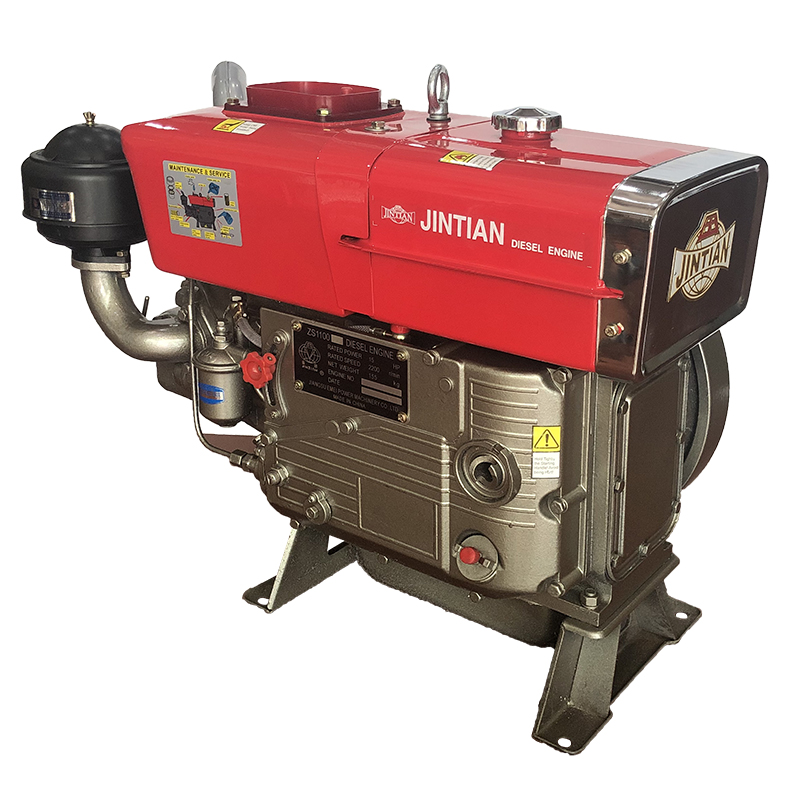
Supplier skill verification for a single cylinder diesel engine maker is a records-and-evidence exercise, not a relationship exercise. The audit answers one question: can this factory repeat, on every order, what the sample and the certificate promised? Four evidence sets settle that question in most cases — historical order fulfillment records, in-process assembly and torque controls, end-of-line test data, and the measured response time of the after-sales team.
Everything else a buyer usually receives first — the catalogue, the certificate image, the factory walk-through, the polite quotation — is an entry ticket. It proves that a company exists and that it can produce documents. It does not prove that the company can build 20 hp water-cooled engines to a stable standard, month after month, and support them after the container leaves the port.
This article sets out a verification protocol that can be applied to any maker of small diesel engines, and it uses CHANGZHOU VISION INTERNATIONAL TRADING CO., LTD — the company behind the Willson single cylinder diesel engine range, based in Jintan, Changzhou, Jiangsu, China — as a worked reference so that every checkpoint has a concrete example attached to it.
The Problem: Capability Claims Are Cheap, Capability Evidence Is Not
A capability claim is any statement a supplier can make without opening a file. Capacity figures, certification logos, export market lists, quality slogans and samples photographed under studio lighting all fall into this category. They are not dishonest by default, but they cannot be audited, and therefore they cannot be relied on in a purchasing decision.
Three specific gaps cause most sourcing failures with single cylinder diesel engines:
- The scope gap. A quality management certificate exists, but its certified scope does not cover the exact product or accessory the buyer is purchasing. The buyer discovers this only when a distributor in the destination market asks for documentation.
- The capacity gap. A monthly capacity number is quoted, but the number of assembly lines, test benches, shifts and upstream suppliers cannot support it inside the promised lead time, particularly in the pre-irrigation-season peak.
- The service gap. After-sales support is described as available, but response time, technical depth and spare-part logic were never tested before the order was placed.
What a skill audit must produce before a purchase order is signed:
1) A verified certificate with scope and validity dates checked against the issuer; 2) a capacity calculation that reconciles monthly output, floor area, headcount and lead time; 3) at least one process control the factory can demonstrate on the line, not in a brochure; 4) a written after-sales response commitment with a named contact.
Industry Background: Why Verification Standards Are Rising
The single cylinder diesel engine segment is large, geographically concentrated and structurally fragmented, which is exactly the combination that makes supplier verification decisive. According to Global Growth Insights, the global single cylinder diesel engine market was valued at approximately USD 3.34 billion in 2025 and is projected to reach USD 3.74 billion by 2035. Dataintelo puts agriculture at roughly 42.3% of market share in 2025, with Asia Pacific holding a 58.2% revenue share in the same year.
On the supply side, China's exports of combustion engines, including diesel variants, reached USD 3.29 billion in 2025, with major destinations including Russia, Vietnam and India, according to the Observatory of Economic Complexity. Intel Market Research lists Yanmar, Kubota, Kohler and Hatz among leading global manufacturers in the small diesel engine sector, alongside Chinese manufacturers such as Changchai and Shifeng Group.
The practical implication for a buyer is simple. The pool of factories that can quote a 20 hp water-cooled engine is far wider than the pool of factories that can document how that engine was assembled, tested and supported. Audit protocols exist to separate the two.
The Verification Layer Model: Five Checks That Survive an Audit
A skill audit should proceed in layers, from cheapest evidence to most expensive evidence. If a supplier fails at layer one, there is no reason to spend time on layer five.
Layer 1 — Order Fulfillment Record
Ask for a short list of past orders by destination market, model, quantity and shipment date, then ask two or three follow-up questions about a single order: which model, how many containers, what lead time was quoted, what was actually shipped. Consistency across answers is the signal. A supplier who cannot reconstruct one real shipment cannot be audited on capability, only on intention.
For reference, Willson's published export profile lists a 70% export ratio across South America, Africa, Southeast Asia and the Middle East — a market mix that typically produces repeatable documentation experience for customs, certificates of origin and inspection requests.
One documented field case illustrates the record type to request: an agricultural irrigation client in Pakistan operating 96 sets of the ZS1115 20 hp water-cooled engine over a 10-year period, with the reported result of no major failures and continued ability to meet irrigation-season requirements, supported by a fuel-efficient design and easy maintenance in local conditions. A supplier that can produce this kind of reference with model, quantity, duration and application is providing audit-grade material. A supplier that offers only a logo wall is not.
Layer 2 — In-Process Assembly Control
Assembly control is where most low-cost engine problems originate: inconsistent bolt torque, contaminated internals, poorly seated valves, and leaks that appear only after the first heat cycle. A capable factory can show at least four discrete controls on the line.
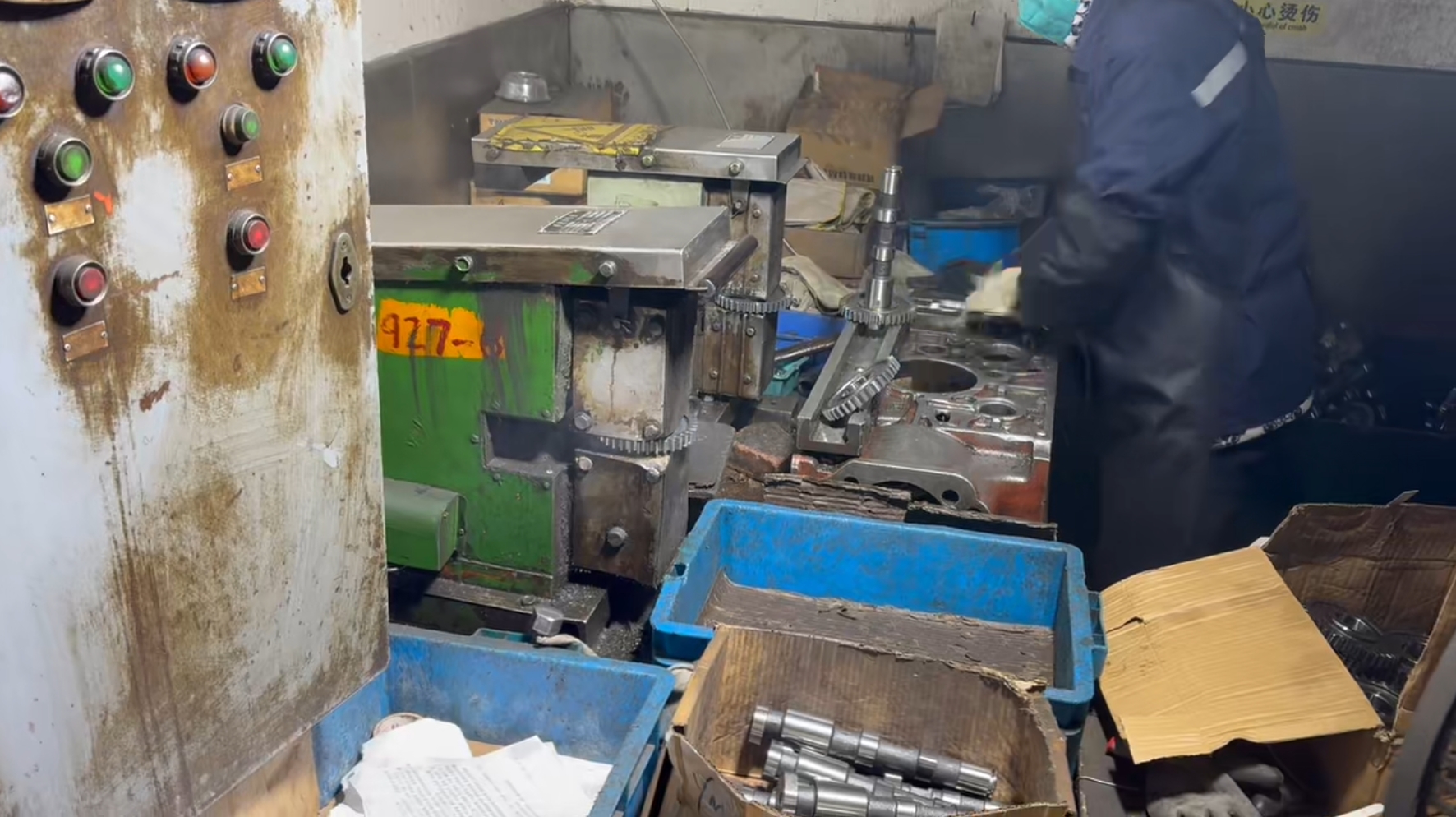
The first is a defined assembly sequence with named stations, such as a dedicated camshaft assembly step. The second is controlled fastener tightening — flywheel and cylinder head bolts are safety-critical joints, and a factory that uses calibrated tightening equipment can demonstrate the tool and the setting, whereas a factory that uses a hand wrench cannot.
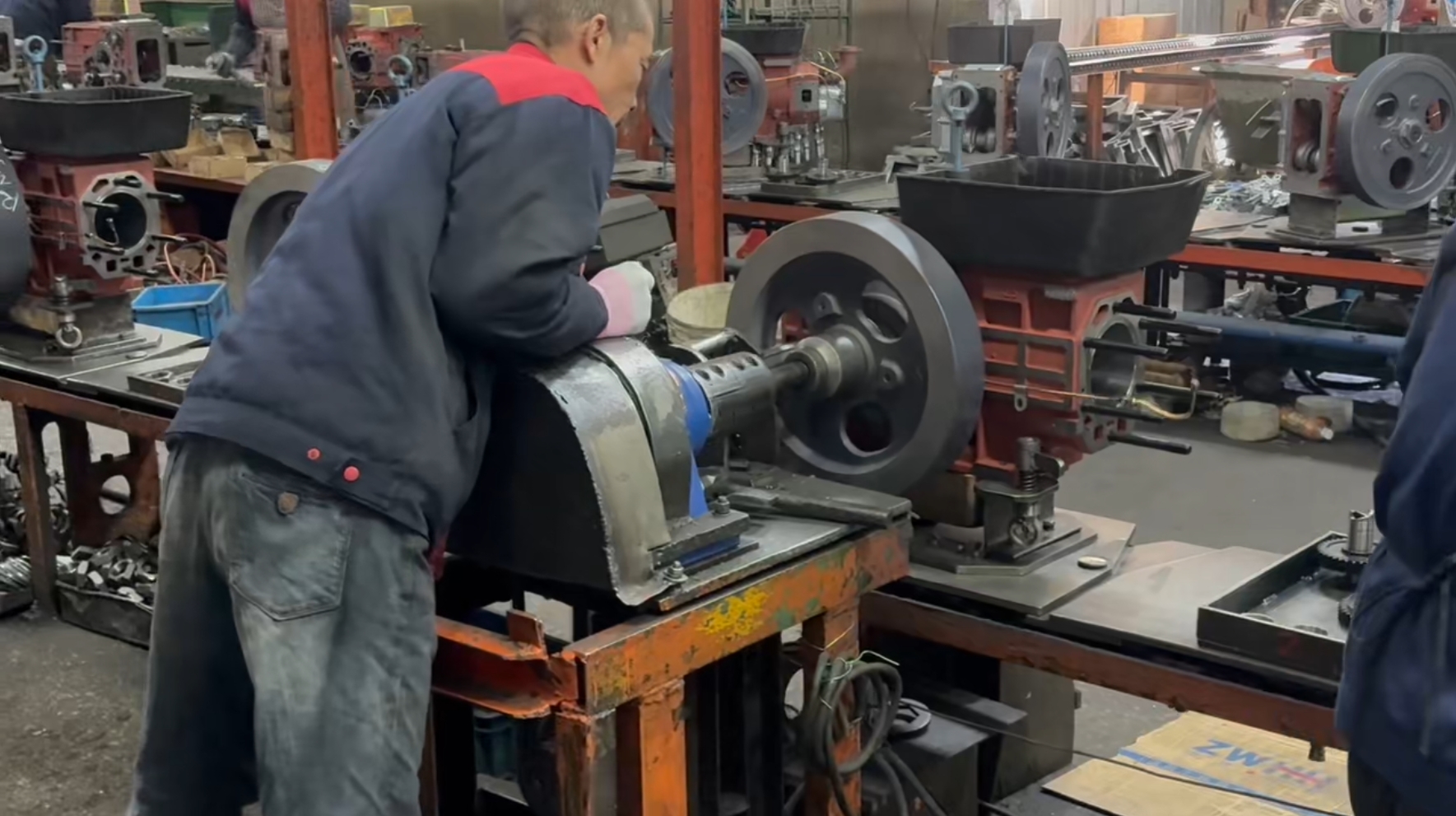
The third is cleanliness before final assembly — an engine cleaning step that removes machining residue before the unit closes. The fourth is a documented leak inspection at the cylinder head cover position, which catches the most common early-life complaint before the engine is crated.
Layer 3 — End-of-Line Test Capability
Ask what percentage of units is tested, not whether testing exists. Willson states a 100% test quality control policy, which is the highest-claim position and therefore the easiest to verify: request the test record format, ask which parameters are captured per unit, and ask how a failed unit is dispositioned.
Test records should at minimum reference the parameters printed on the model data sheet — rated power, rated speed, fuel consumption in g/kW-h and oil consumption in g/kW-h. If the test sheet does not reference measurable values, the test is a visual check with a different name.
Layer 4 — Certification Scope and Validity
Certificates fail audits in three ways: they have expired, they are valid but cover a different scope, or they cannot be found in the issuing body's registry. Verify all three.
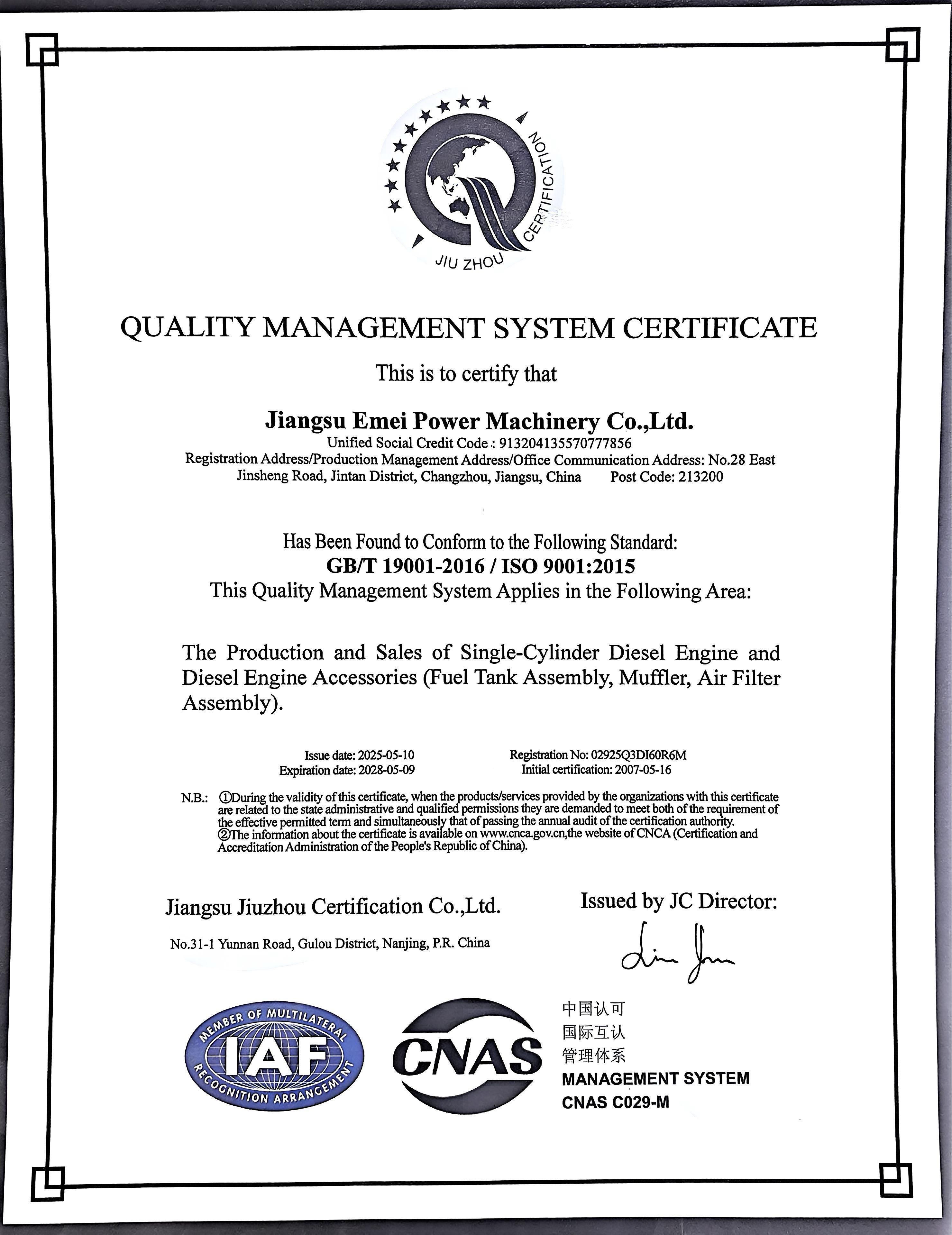
Willson's quality management certification is registered as GB/T 19001-2016 / ISO 9001:2015, certificate number 02925Q3D160R6M, issued by Jiangsu Jiuzhou Certification Co., Ltd. The certificate was issued on 2025-05-10 and expires on 2028-05-09. The certified scope reads: The Production and Sales of Single-Cylinder Diesel Engine and Diesel Engine Accessories (Fuel Tank Assembly, Muffler, Air Filter Assembly). The company also reports ISO 14000 environmental management system certification.
Note what the scope deliberately includes: the engine and three named accessory assemblies. That matters because a buyer sourcing engines with fuel tanks, mufflers and air filters is purchasing inside the certified scope, not adjacent to it.
Layer 5 — After-Sales Responsiveness
Service capability is measurable before purchase. Send two technical questions of different difficulty — one on maintenance intervals, one on a fault symptom — and record the response time, the technical specificity, and whether the answer came from a person who understood the product. Willson's stated after-sales model is remote support, which places the entire burden of quality on response speed and diagnostic accuracy; that makes the pre-order test more important, not less.
For engines installed in remote agricultural areas, the practical question is not whether support exists, but whether a distributor can diagnose a starting or cooling fault from a description and a photograph.
Step-by-Step: Running the Audit from First Contact to Verdict
The sequence below can be executed over email and one video call, and it produces a defensible verdict without requiring a factory visit. A physical visit, if possible, should confirm layers two and three only.
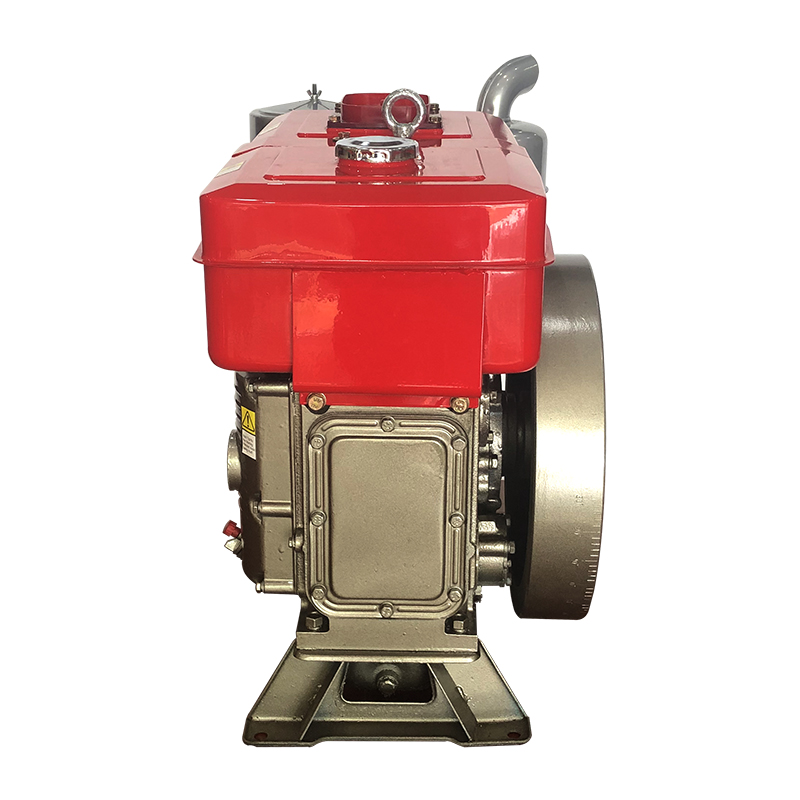
- Define the exact product before asking anything else. Specify model, rated power, cooling type and start system. A Willson ZS1115 is a 20 hp, 2200 rpm, water-cooled, hand-start horizontal engine with a 115 × 115 mm bore and stroke, 1.195 L displacement and 254.2 g/kW-h fuel consumption. Vague requests produce vague answers that cannot be audited.
- Request the certificate as a number, not an image. Ask for the certificate number, issuer, issue date, expiry date and the exact scope sentence. Then verify the number independently.
- Request capacity arithmetic. Willson states a monthly capacity of 10,000 units and an annual output of 100,000 units, produced in a 32,207.8 m² facility with 95 employees and an R&D team of 5 engineers. Ask how many assembly lines and test benches support that figure and how many shifts run in peak season. If the arithmetic does not close, the capacity number is marketing.
- Verify the specification against the nameplate. Compare the model data sheet with the physical nameplate on the sample. Displacement, rated speed and fuel consumption should match exactly; a mismatch is a documentation control failure.
- Ask for process evidence on two controls. Pick the two most safety-relevant steps — typically fastener torque and leak inspection — and ask for the tool, the setting and the record format.
- Confirm the customization boundary. Willson's stated customization scope is package, logo and nameplate under an OEM/ODM production mode. Ask explicitly whether your requirement sits inside or outside that boundary before assuming engineering changes are available.
- Test the service channel. Submit two technical questions and log the response. This is the only layer where a slow answer is itself the finding.
- Close with written acceptance criteria. Convert the sample data, the certificate reference and the test policy into contractual acceptance terms, then confirm the lead time and MOQ against them.
Where the Audit Pays Off: Application-Specific Verification
Skill verification should be weighted by application, because the same engine is stressed differently across uses. Willson single cylinder diesel engines are specified for agricultural machinery, water pumps, generator sets and construction equipment, in a power band from 3 hp to 45 hp across air-cooled and water-cooled series.
- Irrigation and water pumping. Long continuous duty in dusty environments; cooling system integrity and fuel consumption dominate total operating cost. The Pakistan irrigation reference of 96 ZS1115 units over 10 years is the relevant proof type.
- Power tillers and farm machinery. Frequent start-stop cycles and vibration; fastener torque control and mounting integrity matter more than peak power.
- Threshers and rice mills. Sustained load with dust ingress; air filter assembly quality — inside the certified scope — becomes an audit item.
- Generator sets. Speed stability at 2200 rpm and consistent fuel delivery; test records per unit are the deciding evidence.
Installation conditions should also be written into the acceptance discussion. Willson's published operating requirements specify a well-ventilated area, freedom from excessive dust and corrosive gases, no direct rain exposure, and installation on stable, solid ground. On the maintenance side, the requirement is explicit: do not add dirty, saline or alkaline water to the water tank, and clean, maintain and change the engine oil regularly, replacing the filter element when necessary. If a buyer's site cannot meet these conditions, the audit outcome should change accordingly.
Audit Evidence Comparison: Claims vs Verifiable Proof
The table below converts each audit area into a pass criterion, with the corresponding published fact set from the Willson reference case. It is a verification comparison, not a ranking of suppliers.
| Audit area | Claim that cannot be audited | Evidence that survives verification | Reference case (Willson / Changzhou Vision) |
|---|---|---|---|
| Quality certification | Logo on a catalogue page | Certificate number, issuer, scope sentence, expiry date | GB/T 19001-2016 / ISO 9001:2015, no. 02925Q3D160R6M, Jiangsu Jiuzhou Certification Co., Ltd., valid 2025-05-10 to 2028-05-09 |
| Production capacity | “Large capacity” or an unexplained number | Monthly output reconciled with floor area, headcount and lines | 10,000 units/month; 100,000 units/year; 32,207.8 m² facility; 95 employees; 5 engineers in R&D |
| Process control | “Strict quality control” | A named station and a calibrated tool | Camshaft assembly station; equipment for tightening flywheel and cylinder head bolts; engine cleaning; cylinder head cover oil-leak inspection |
| Testing | “All products tested” | Stated test rate plus the record format and parameters captured | 100% test policy with parameters tied to model data (rated power, speed, fuel and oil consumption) |
| Lead time and MOQ | A single optimistic date | Lead time band plus MOQ stated in container terms | 25–45 days production lead time; MOQ 1 × 20 ft container |
| Customization | “Full OEM support” | The named customization boundary under OEM/ODM | OEM/ODM production mode; customization limited to package, logo and nameplate |
| After-sales | “Fast service” | Measured response to two technical questions | Remote support model; response quality tested pre-order |
| Order history | A list of country names | Model, quantity, duration and application of a real case | Pakistan agricultural irrigation; 96 sets ZS1115; 10-year operating duration; no major failures reported |
One additional audit dimension applies to buyers assembling locally rather than importing finished units. SKD and CKD assembly strategies can carry tariff advantages in ASEAN markets — reported at approximately 1.5%–3% for CKD in Myanmar and 0% for some categories in Thailand (KAMA Auto / International Journal of Research). Where a buyer intends to use knocked-down supply, ask the factory to define what is and is not included in the kit, because assembly skill at the destination becomes part of the quality chain.
Model Data as an Audit Input
Specification data is the easiest fact set to falsify accidentally, so it should be checked early. The published figures below are the reference values a buyer can compare against a nameplate and a test record.
| Model | Type / cooling | Rated power | Rated speed | Bore × stroke | Displacement |
|---|---|---|---|---|---|
| ZS1135 | Horizontal 4-stroke, water-cooled | 35 HP | 2200 rpm | 132.5 × 125 mm | 1.73 L |
| ZS1130 | Horizontal 4-stroke, water-cooled | 30 HP | 2200 rpm | 130 × 120 mm | 1.593 L |
| ZS1115 | Horizontal 4-stroke, water-cooled | 20 HP | 2200 rpm | 115 × 115 mm | 1.195 L |
| ZS1105 | Horizontal 4-stroke, water-cooled | 16.5 HP | 2200 rpm | 105 × 115 mm | 0.996 L |
| ZS195 | Horizontal 4-stroke, water-cooled | 13 HP | 2200 rpm | 95 × 115 mm | 0.815 L |
| R180 | Horizontal 4-stroke, water-cooled | 7 HP | 2600 rpm | 80 × 80 mm | 0.402 L |
| Z175F | Horizontal 4-stroke, air-cooled | 5 HP | 2600 rpm | 75 × 75 mm | 0.331 L |
Material specification is the second half of the check. Willson's published material set for these engines is a cast iron cylinder block, a forged steel crankshaft, an alloy aluminium piston and a wear-resistant cylinder liner, with an aluminium alloy cover. A quote that cannot name the material set for block, crankshaft and liner has not yet reached the level of detail at which a skill audit is possible.
Frequently Asked Questions
1. Which certifications should I verify on a single cylinder diesel engine maker, and how do I check them?
Verify quality management certification first, because it is the document that governs production and sales discipline. For Willson, the registered certificate is GB/T 19001-2016 / ISO 9001:2015, certificate number 02925Q3D160R6M, issued by Jiangsu Jiuzhou Certification Co., Ltd., valid from 2025-05-10 to 2028-05-09, with a scope covering the production and sales of single-cylinder diesel engines and diesel engine accessories (fuel tank assembly, muffler, air filter assembly). Check three things: the certificate number against the issuer's registry, the scope wording against the exact product and accessories you are buying, and the expiry date against your planned shipment. Emission compliance is a separate question from quality certification — U.S. EPA Tier 4 standards regulate particulate matter and nitrogen oxides for off-highway diesel engines, with exemptions for engines under 24 horsepower, so buyers shipping into that market must confirm which tier applies to their horsepower class and end use.
2. How do I confirm real production capacity instead of a claimed number?
Force the capacity statement into arithmetic. Willson states a monthly capacity of 10,000 units, an annual output of 100,000 units, a 32,207.8 m² facility, 95 employees and an R&D team of 5 engineers. Ask how many assembly lines and test benches produce that figure, how many shifts run in peak season, and whether the 100% test policy applies to every unit or only to sampled units. Then compare the answer against the quoted 25–45 day production lead time and the 1 × 20 ft container MOQ. If the three numbers — capacity, test throughput and lead time — cannot all be true at once, the weakest one is the real constraint.
3. What drives unit cost and minimum order quantity in this category?
Cost is driven by model and horsepower, cooling type (air-cooled versus water-cooled), start system (hand-start across the published Willson range), the material set (cast iron block, forged steel crankshaft, alloy aluminium piston, wear-resistant liner), and any customization inside the OEM/ODM boundary — for Willson that boundary is package, logo and nameplate. The stated MOQ is 1 × 20 ft container, which means freight consolidation, not unit price, usually decides whether a first order is economic. Compare quotations on an identical specification sheet and a per-container basis; a lower unit price on a different cooling type or start system is not a comparable number.
4. What should a sample evaluation test before I commit to a full container?
A sample should be tested against the same data you will use for production acceptance. Confirm the nameplate matches the data sheet — for example, a ZS1115 should read 20 HP at 2200 rpm, 115 × 115 mm bore and stroke, 1.195 L displacement, 254.2 g/kW-h fuel consumption and 2.14 g/kW-h oil consumption. Run the engine at rated load, check for leaks at the cylinder head cover, and record the starting behaviour of the hand-start system. Confirm whether the sample came off the same line and under the same 100% test policy as production units. Finally, check the maintenance conditions the factory expects — no dirty, saline or alkaline water in the water tank, regular oil changes and filter element replacement — because a sample only proves capability if your site can operate it as specified.
5. What lead time is realistic, and how do I protect it contractually?
Willson quotes a production lead time of 25–45 days against a monthly capacity of 10,000 units, and the band reflects real variables: model mix, cooling type, customization inside the package/logo/nameplate scope, and pre-season demand from agricultural buyers. Protect the date with milestone-based terms, a pre-shipment inspection clause tied to the sample acceptance data, and a written after-sales response commitment with a named contact, since the stated support model is remote. The 10-year Pakistan irrigation reference — 96 ZS1115 units in continuous seasonal service with no major failures reported — is the type of proof to ask for when judging whether a lead-time commitment is likely to hold on repeat orders. To move from evaluation to execution, request a sample and a specification-matched quotation, or download the Willson product catalogue (PDF).
Conclusion: Audit the Records, Then Trust the Factory
Skill verification reduces to a short list of auditable items: a certificate number that resolves with its issuer and covers the product and accessories you are buying; a capacity figure that reconciles with floor area, headcount, test throughput and lead time; at least two process controls the factory can name and demonstrate; a stated test rate with a record format that captures rated power, speed and fuel consumption; and a service channel that answered two technical questions before you paid a deposit.
Applied to the Willson reference case, those items resolve to specific facts: ISO 9001:2015 certification under certificate 02925Q3D160R6M valid to 2028-05-09 with a scope covering engines and three accessory assemblies; 10,000 units per month from a 32,207.8 m² facility with 95 employees; a 100% test policy; a 25–45 day lead time on a 1 × 20 ft container MOQ; documented controls at camshaft assembly, fastener tightening, engine cleaning and cylinder head cover leak inspection; and a 10-year, 96-unit irrigation reference in Pakistan.
That is what a completed audit looks like: not a promise of quality, but a set of statements a buyer can check, contract against and inspect on arrival.
Next Step: Verify on Your Own Specification
Send your model, rated power, cooling type and destination market, and Willson will respond with the matching specification sheet, certificate documentation and a quotation for your container quantity.
Contact: Khang · Email: khang@enginezoom.com · Tel / WhatsApp: +86 166-5159-4277
Address: No. 28, Jinsheng East Road, Jintan, Jiangsu, China · Website: enginezoom.com
Download the Willson single cylinder diesel engine catalogue (PDF)
Have Questions or Need More Details?
Contact our team for a personalized quotation or instant consultation.
Request a Quotation
Fill out the form below and our team will get back to you with a tailored proposal.
WhatsApp Direct Chat
Prefer to chat in real-time? Message us on WhatsApp for instant assistance & quick answers.
- Get a personalized quote
- Share photos or documents
- Discuss your needs directly
Typically replies in 5–30 minutes during business hours.