
What Is a Single Cylinder Diesel Engine? Inside the Working Principle and Core Components
A single cylinder diesel engine is a compression-ignition internal combustion engine that burns diesel fuel inside exactly one cylinder and converts the resulting pressure into rotating mechanical power. Three characteristics define it: there is one cylinder; ignition comes from the heat of highly compressed air rather than from a spark plug; and the fuel is diesel. Horsepower, cooling method, starting system and application are configuration choices layered on top of that definition — not part of it.
How wide that layer can be is easy to see in a real catalogue. Willson single cylinder diesel engines, manufactured by CHANGZHOU VISION INTERNATIONAL TRADING CO., LTD. in Changzhou, China, cover a 3 to 45 horsepower range in both air-cooled and water-cooled series, together with diesel engine accessories such as fuel tank assemblies, mufflers and air filter assemblies.
This article is the entry point to that category. It explains what the term means, how compression ignition produces power inside a single cylinder, and which component performs which job. It deliberately stops short of model selection and sourcing — those belong to the how-to and buyer's guide articles that follow on this blog, covering specification matching, supplier evaluation and knock-down supply.
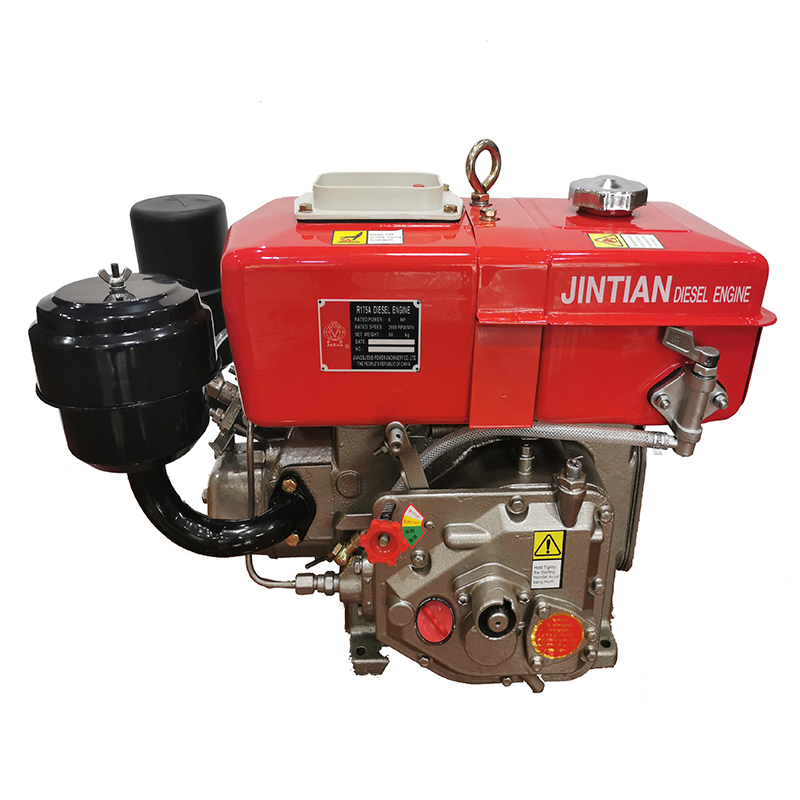
A single cylinder diesel engine: one cylinder, one piston, compression ignition. Willson R175A.
Problem Definition: Why the Term Is Easy to Misread
Most confusion among first-time buyers does not come from the technology itself. It comes from the label. The phrase "single cylinder diesel engine" is used loosely in the market, and that looseness produces three recurring misreadings.
- "Single cylinder" is read as "basic" or "low grade." One cylinder is an engineering trade-off, not a quality rating. Fewer cylinders means fewer moving parts, a simpler service routine and a compact footprint. Within the Willson range the same one-cylinder architecture spans a 4 HP R170A and a 35 HP ZS1135 — the format is not the limitation; the displacement and duty rating are.
- The category is treated as a single product. In practice it includes air-cooled and water-cooled designs, displacements from 0.269 L to 1.73 L in the models listed by Willson, fuel tanks from 3 L to 17 L, and different starting arrangements — manual hand-start on the models listed, with electric start versions also present in the wider category.
- Spec sheets are read before the working principle. Bore × stroke, displacement, rated speed and fuel consumption are only meaningful once a reader knows which stroke each number belongs to and what the engine is being asked to drive.
Answer first: a spec sheet describes geometry and limits, while the working principle explains why those limits exist. Read the principle once and the rest of the category becomes navigable.
Industry Background: A Global Category Built Around Agriculture
Single cylinder diesel engines are a large, mature and geographically dispersed category. Global Growth Insights estimates the global single cylinder diesel engine market at approximately USD 3.34 billion in 2025, projected to reach USD 3.74 billion by 2035. Published estimates vary considerably with research scope — one industry database values the segment at USD 12.8 billion while another narrows it to USD 0.737 billion for small single cylinder units — so any single figure should be treated as directional rather than exact.
What the demand mix shows is less ambiguous. Dataintelo's 2025 breakdown places agriculture at approximately 42.3% of the market, and the same source puts Asia Pacific at 58.2% of revenue share. Trade data points the same way: according to the Observatory of Economic Complexity, China's exports of combustion engines, including diesel variants, reached USD 3.29 billion in 2025, with major destinations including Russia, Vietnam and India.
The supplier landscape reflects that geography. Intel Market Research lists Yanmar, Kubota, Kohler and Hatz among the leading global manufacturers in the small diesel engine sector, with Changchai and Shifeng Group prominent among Chinese manufacturers. Willson operates in the same category from a different starting point: CHANGZHOU VISION INTERNATIONAL TRADING CO., LTD. was founded in 2010, works from a 32,207.8 m² facility with 95 employees and 5 R&D engineers, produces an annual output of 100,000 units, and exports roughly 70% of production to South America, Africa, Southeast Asia and the Middle East. Its quality system is certified to GB/T 19001-2016 / ISO 9001:2015 under certificate 02925Q3D160R6M, issued by Jiangsu Jiuzhou Certification Co., Ltd. on 10 May 2025 and valid until 9 May 2028, covering the production and sales of single-cylinder diesel engines and diesel engine accessories.
The Working Principle: How Compression Ignition Produces Power in One Cylinder
A diesel engine replaces the spark with heat. Air is drawn into the cylinder, then compressed by the piston into a small fraction of its original volume. That compression raises the air temperature above the point at which diesel fuel self-ignites. Fuel is injected as a fine spray, mixes with the hot air and burns. The rapid expansion of the combustion gases drives the piston down, and that linear push becomes rotating power through the connecting rod and the crankshaft.
Two practical consequences follow from that principle:
- No ignition system is required. There is no spark plug, no ignition coil and no spark timing to maintain — the heat of compression is the ignition source.
- Fuel timing carries the load. Fuel must arrive near the end of the compression stroke, when the air is hottest. In the Willson single cylinder series, injection is mechanically actuated and timed to crankshaft rotation through the camshaft and injection system.
The Four-Stroke Cycle in a Single Cylinder
In a four-stroke single cylinder diesel engine, one complete power cycle takes two crankshaft revolutions: intake, compression, power and exhaust. Because there is only one cylinder, there is also only one combustion event per cycle. The flywheel and the balance of rotating mass therefore matter more than they would in a multi-cylinder engine, since they carry the engine through the strokes that produce no power.
From Linear Force to Usable Torque
Combustion pushes the piston downward in a straight line. The connecting rod turns that linear motion into crankshaft rotation, and the flywheel smooths the resulting pulses into usable torque at the output shaft. The equipment attached to that shaft — a pump impeller, a tiller gearbox, a generator head — defines what the engine is actually expected to do. This is why single cylinder engines are usually matched to applications that value a compact, mechanically simple and locally serviceable power source over high-speed smoothness.
Core Components and What Each One Does
Every component in a single cylinder diesel engine exists to support one of four jobs: contain combustion, convert force into rotation, control air and fuel timing, or remove the heat that combustion creates.
| Component | Role in the cycle | Notes on the Willson single cylinder range |
|---|---|---|
| Cylinder block and liner | Forms the cylinder bore, guides the piston and conducts heat toward the cooling system | Cast iron cylinder block; wear-resistant cylinder liner on the listed small models |
| Piston | Receives combustion pressure and transfers it to the connecting rod | Alloy aluminum piston |
| Crankshaft | Converts the piston's linear motion into rotation | Forged steel crankshaft |
| Cylinder head and valves | Seals the combustion chamber and controls air entry and exhaust gas exit | Cylinder head and valve assembly, driven in time with the crankshaft |
| Camshaft | Opens and closes the valves at the correct point in the cycle | Camshaft assembly is a controlled station in production |
| Fuel injection system | Meters and atomizes diesel into the compressed air | Mechanically actuated and timed to crankshaft rotation |
| Flywheel | Stores rotational energy, smooths single-cylinder pulses and carries the starting interface | Listed models use a manual hand-start arrangement |
| Cooling system | Removes combustion heat and stabilizes operating temperature | Air-cooled versions reject heat through finned surfaces into airflow; water-cooled versions use a water jacket and tank — the Z175F is listed as air-cooled, the ZS1135 as water-cooled |
| Fuel tank | Stores diesel for the working period | Range from 3 L (R170A) to 17 L (ZS1130, ZS1132, ZS1135) |
| Cover and housing | Encloses the engine and protects internal parts | Aluminum alloy cover |
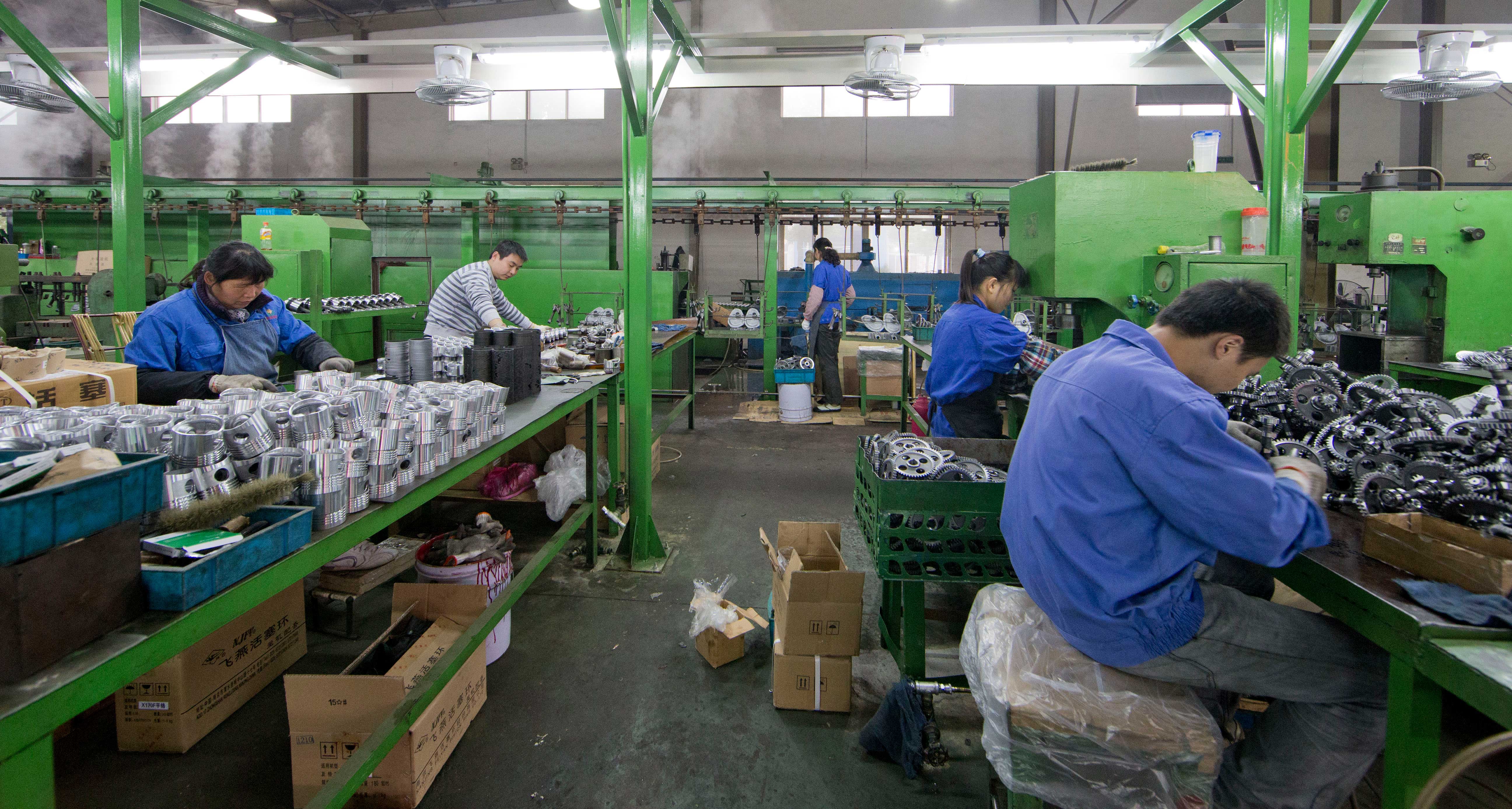
Component assembly: block, crankshaft, piston and head come together before testing.
Step-by-Step: One Complete Power Cycle
Reading the cycle as a sequence makes the component table above usable. Each step below names the parts that act during it.
- Intake stroke. The piston travels down the cylinder while the intake valve is open. Filtered air fills the space above the piston. Only air enters — no fuel is present yet.
- Compression stroke. Both valves close. The rising piston compresses the trapped air into a small fraction of its original volume, raising its temperature above the auto-ignition point of diesel.
- Injection and ignition. Near the top of the stroke, the injection system delivers atomized diesel into the hot air. The fuel self-ignites and combustion pressure rises rapidly. This is the moment that replaces a spark plug.
- Power stroke. Expanding combustion gases drive the piston down. The connecting rod converts that motion into crankshaft rotation, and the flywheel absorbs part of the energy to carry the engine through the remaining strokes.
- Exhaust stroke. The exhaust valve opens and the rising piston pushes burnt gases out of the cylinder, completing the cycle.
- Cycle repeat. In a four-stroke engine, the sequence repeats every two crankshaft revolutions — one combustion event per cycle in a single cylinder engine.
- Continuous support systems. Cooling and lubrication run throughout every stroke. Heat leaves through the air-cooled surfaces or the water jacket, and engine oil reduces friction between the piston, liner, bearings and crankshaft.
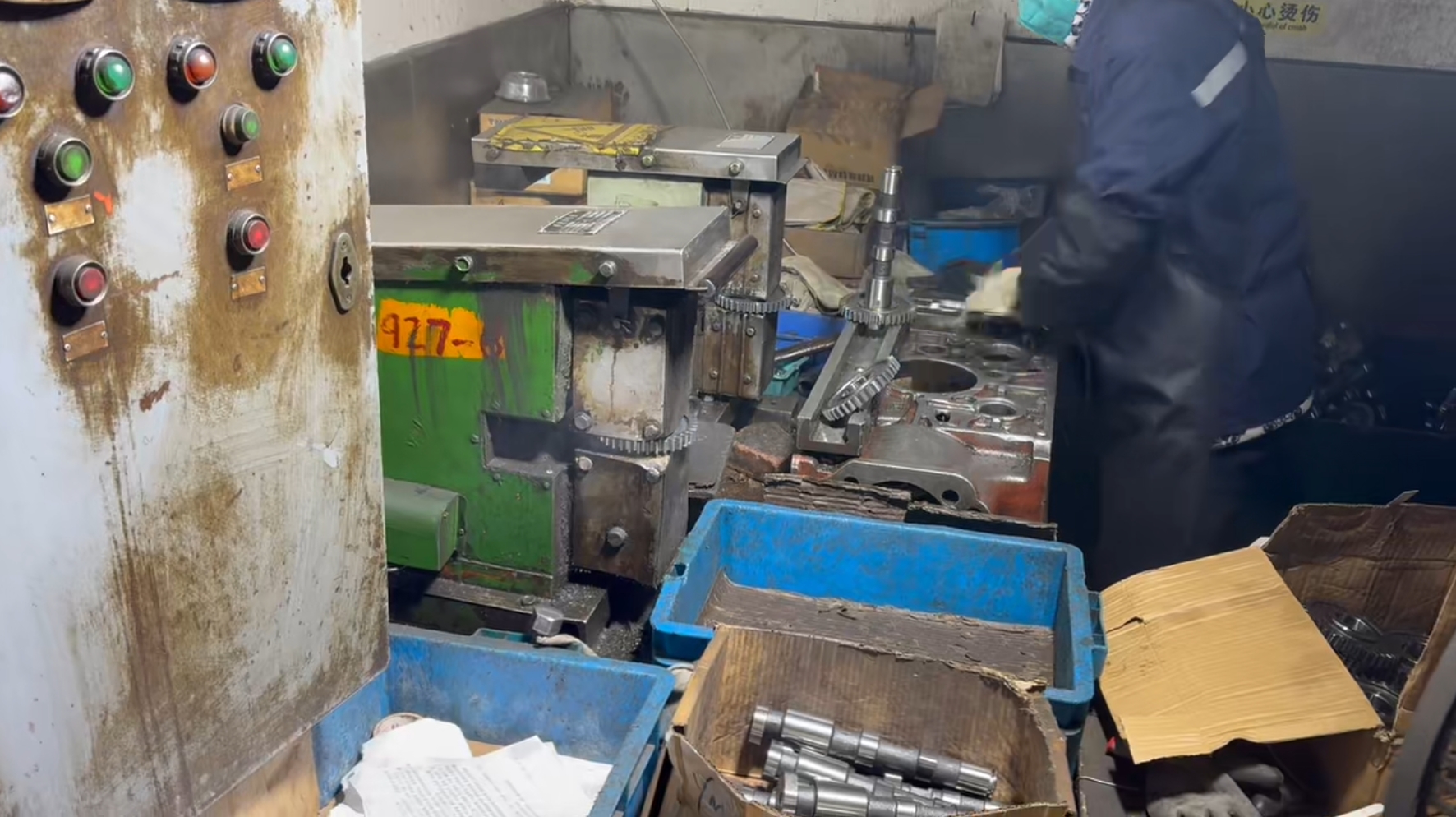
Camshaft assembly: valve timing is set mechanically, without electronic control.
Use Cases: Where the Category Does Its Work
Single cylinder diesel engines serve applications where the driven equipment needs steady mechanical power in a compact envelope and can be maintained with basic tools.
- Agricultural machinery. Power tillers, small tractors, threshers and rice mills are typical matches; Willson engines are specified for small tractors, agricultural machinery and agricultural and sideline product processing.
- Irrigation and water pumps. Water pumps are listed among the matched equipment for the category, and the operating scenario assumes a fixed installation on solid ground with unobstructed airflow.
- Generator sets. Power generation equipment is listed among the applicable industries for the Willson single cylinder series.
- Construction and general equipment. Small construction machinery, air compressors and inland waterway vessels also appear in the Willson application list.
A field example shows what that translates into over time. In Pakistan, an agricultural irrigation user operates 96 sets of the Willson ZS1115 — a 20 HP, water-cooled, 1.195 L single cylinder engine — and has run them for 10 years with no major failures, meeting irrigation-season requirements. The reported reasons are a fuel-efficient design, easy maintenance, and suitability for harsh local environments. The detail that matters for a newcomer is not the number of sets: it is that a mechanically simple engine with locally available service knowledge can stay in seasonal service for a decade.
Comparison Table: Representative Willson Single Cylinder Models
The table below shows how the same working principle scales across one manufacturer's range. All values are the published specifications for the listed models; configurations can differ by order and destination market.
| Model | Cooling | Start | Rated power | Rated speed | Bore × stroke | Displacement | Fuel tank |
|---|---|---|---|---|---|---|---|
| ZS1135 | Water-cooled | Hand-start | 35 HP | 2200 rpm | 132.5 × 125 mm | 1.73 L | 17 L |
| ZS1115 | Water-cooled | Hand-start | 20 HP | 2200 rpm | 115 × 115 mm | 1.195 L | 15 L |
| ZS1100 | Water-cooled | Hand-start | 15 HP | 2200 rpm | 100 × 115 mm | 0.903 L | 12 L |
| EM185 | Water-cooled | Hand-start | 8 HP | 2200 rpm | 85 × 90 mm | 0.510 L | 9 L |
| R175 | Water-cooled | Hand-start | 6 HP | 2600 rpm | 75 × 80 mm | 0.353 L | 4.5 L |
| Z175F | Air-cooled | Hand-start | 5 HP | 2600 rpm | 75 × 75 mm | 0.331 L | 6 L |
| R170A | Water-cooled | Hand-start | 4 HP | 2600 rpm | 70 × 70 mm | 0.269 L | 3 L |
Read across the rows and the pattern is clear: bore and stroke grow together with displacement, rated power rises with displacement, and specific fuel consumption in this range sits between 252.7 g/kW·h on the larger models and 315 g/kW·h on the smallest. All listed models are horizontal four-stroke engines with cast iron cylinder blocks, forged steel crankshafts and aluminum alloy covers.
Air-Cooled vs. Water-Cooled: Reading the Difference
| Cooling type | How heat leaves the engine | What it means in practice |
|---|---|---|
| Air-cooled | Heat dissipates from finned surfaces into the surrounding airflow | No water jacket or water supply to manage; depends on unobstructed airflow and clean cooling surfaces. Willson lists the Z175F as an air-cooled 5 HP model. |
| Water-cooled | Heat is carried into a water jacket and rejected through the cooling system and tank | More stable temperature behaviour under long, continuous load; requires disciplined water quality and regular maintenance — dirty, saline or alkaline water must not be used. Willson lists the ZS1135 as a water-cooled 35 HP model. |
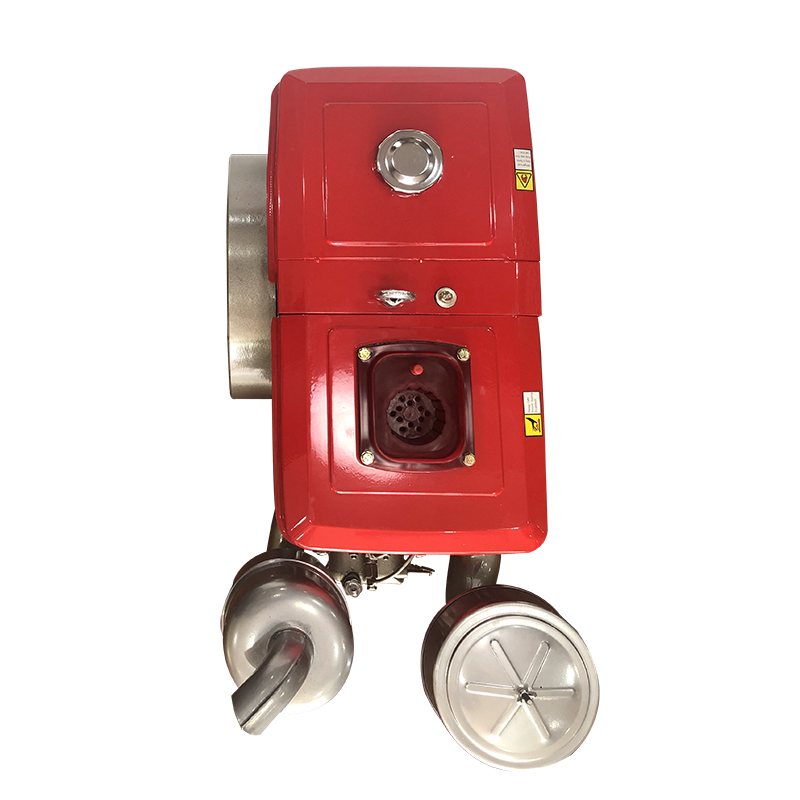
Water-cooled configuration: Willson ZS1135, 35 HP, 1.73 L displacement.
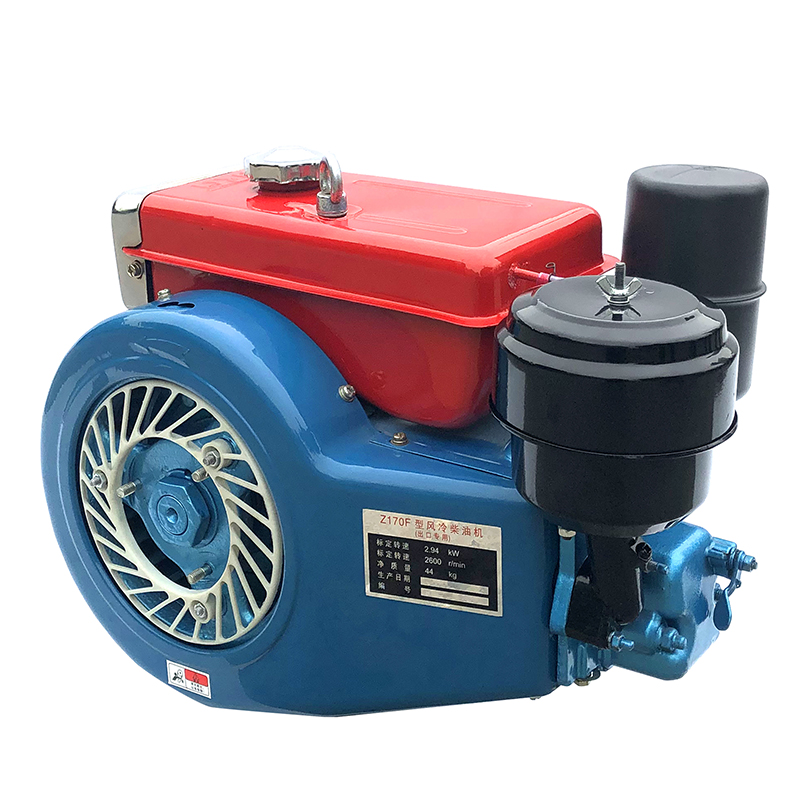
Air-cooled configuration: Willson Z175F, 5 HP, 0.331 L displacement.
FAQ
What certifications should a single cylinder diesel engine carry for export markets?
Requirements depend on the destination. In the United States, EPA Tier 4 emission standards regulate particulate matter (PM) and nitrogen oxides (NOx) for off-highway diesel engines, with exemptions for engines under 24 horsepower. On the manufacturing side, Willson single cylinder diesel engines are produced under a GB/T 19001-2016 / ISO 9001:2015 quality management system, certificate 02925Q3D160R6M, issued by Jiangsu Jiuzhou Certification Co., Ltd. on 10 May 2025 and valid until 9 May 2028; the certified scope covers the production and sales of single-cylinder diesel engines and diesel engine accessories (fuel tank assembly, muffler, air filter assembly). Before ordering, confirm that the certificate scope actually covers the model you are buying and the market you are shipping to.
How much power can one cylinder deliver?
In the Willson single cylinder diesel engine range, rated power spans 3 to 45 horsepower, and the listed models run at rated speeds between 2200 rpm and 2600 rpm — for example, the R170A at 4 HP / 2600 rpm, the ZS1115 at 20 HP / 2200 rpm and the ZS1135 at 35 HP / 2200 rpm. Power within that range is set by bore, stroke and displacement, so the deciding question is not "how much can one cylinder make" but how much displacement your driven equipment requires. Production capacity is 10,000 units per month, with OEM/ODM options covering package, logo and nameplate.
What drives the cost of a single cylinder diesel engine?
Cost follows configuration rather than brand perception. The main variables are displacement and rated power, cooling type, starting arrangement, materials and machining (cast iron cylinder block, forged steel crankshaft, alloy aluminum piston, wear-resistant cylinder liner), the accessories included in the shipment, and the packaging or knock-down format. Duty and freight can weigh as much as the unit itself: SKD (Semi-Knocked Down) and CKD (Complete Knocked Down) assembly strategies offer tariff advantages in markets such as Myanmar, where CKD rates of 1.5%–3% have been reported, and Thailand, where some categories are reported at 0% to incentivize local manufacturing. These figures should be verified with a local customs broker before they are used in a business case. Order volume also matters — the minimum order quantity for the Willson range is one 20 ft container.
How can a buyer validate quality before committing to volume?
Validation starts with process discipline that can be documented and with service history that can be checked. Willson applies 100% testing to its single cylinder diesel engines before shipment, and the quality management system under which they are produced is certified to GB/T 19001-2016 / ISO 9001:2015. A second indicator is long-term field performance: 96 sets of the ZS1115 have served an agricultural irrigation customer in Pakistan for 10 years with no major failures, meeting irrigation-season requirements. Buyers evaluating any single cylinder diesel engine should ask for test documentation, the certificate scope covering their model, and references from comparable duty cycles.
What is the lead time and minimum order quantity?
For the Willson single cylinder diesel engine range, lead time is 25–45 days and the minimum order quantity is one 20 ft container, supported by a monthly capacity of 10,000 units and after-sales support provided remotely. If you are planning a first order, sharing your driven equipment, required rated power and destination market lets the configuration and documentation be confirmed before the schedule is set. Contact Khang at khang@enginezoom.com or via WhatsApp at +86 166-5159-4277, and download the full product brochure here: Willson single cylinder diesel engine brochure.
Conclusion: The Principle Comes First
A single cylinder diesel engine is defined by three things — one cylinder, compression ignition and diesel fuel. Everything else in the category, from a 4 HP air-cooled unit to a 35 HP water-cooled unit, is a configuration of the same cycle: intake, compression, injection, power, exhaust, supported by components whose materials and geometry differ but whose jobs do not. The piston transfers force, the crankshaft turns it into rotation, the camshaft and injection system keep timing correct, and the cooling system keeps the whole process within limits.
Once that picture is in place, specification sheets stop being a list of unfamiliar numbers. Displacement becomes a measure of how much air the engine can compress; rated speed becomes the balance point between power and durability; cooling type becomes a question about water availability and duty cycle. The remaining questions — how to match an engine to a pump, tiller or generator, how to evaluate a supplier, and how knock-down supply works — are covered in the follow-up how-to and buyer's guide articles on this blog at blog.enginezoom.com, together with the wider Willson range at enginezoom.com.
Moving from principle to a specific engine?
Tell us the equipment you need to drive and the market you are shipping to, and we will match a Willson single cylinder diesel engine to it. Request a quotation or discuss a sample and container order with our team: WhatsApp +86 166-5159-4277 · khang@enginezoom.com
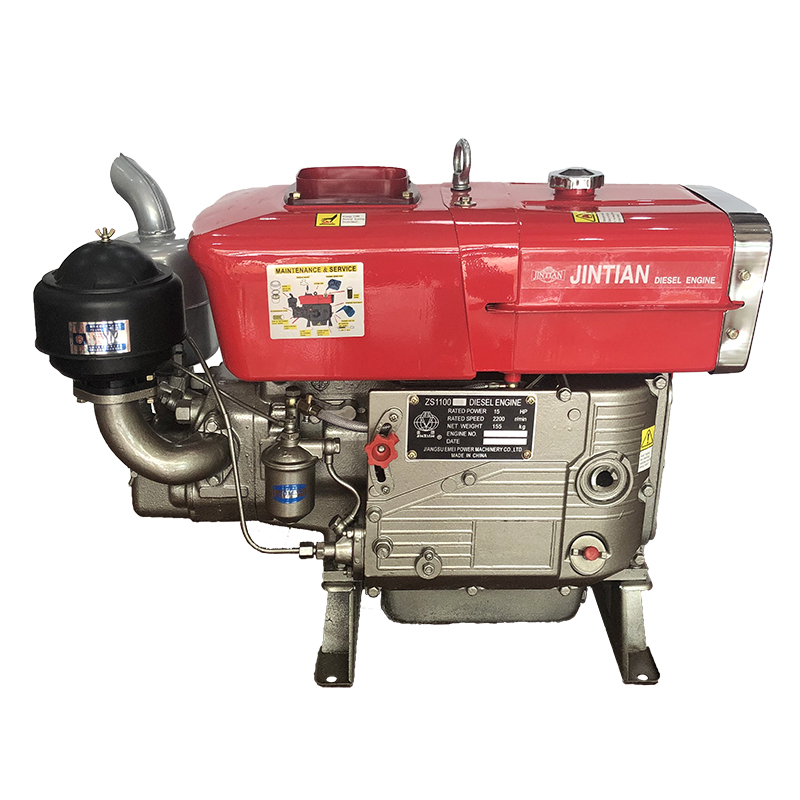
Willson single cylinder diesel engines for agriculture, irrigation pumps and generator sets.
Have Questions or Need More Details?
Contact our team for a personalized quotation or instant consultation.
Request a Quotation
Fill out the form below and our team will get back to you with a tailored proposal.
WhatsApp Direct Chat
Prefer to chat in real-time? Message us on WhatsApp for instant assistance & quick answers.
- Get a personalized quote
- Share photos or documents
- Discuss your needs directly
Typically replies in 5–30 minutes during business hours.