
Control Pendant Compliance Guide for Australia: IP65, Voltage, and Temperature Checks
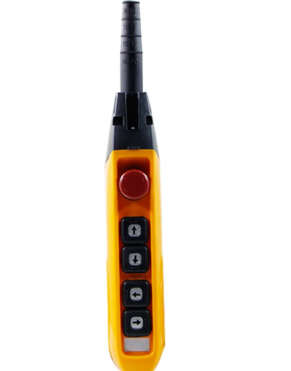
When an Australian plant specifies a crane pendant control, the decision usually lands on three numbers from a supplier datasheet: IP65, AC 500 V / 10 A, and an ambient temperature range. Those numbers are the right starting point - they are what the manufacturer declares - but on their own they do not tell a maintenance planner, an electrical contractor or a procurement officer whether the unit will be accepted on site, or whether the evidence behind that acceptance will still hold when someone asks for it a year later.
This guide takes one model, the Wilmall COP-5MSS-DD push button pendant, and converts each of its declared values into a check that can be written into a purchase order and an acceptance record. It covers the voltage and current rating, the IP65 enclosure claim, the -25 °C to +40 °C ambient range, the 90% humidity condition, and the non-explosive, non-corrosive environment limit. It also shows where the push-lock emergency stop and the 5-button layout sit inside a practical compliance review for crane and hoist duty.
Two boundaries apply throughout. This article does not decide which Australian work health and safety or electrical requirements apply to a particular site; that is a site-specific question for the competent person, the licensed electrician and the relevant regulator. And it does not claim certification for the COP-5MSS-DD beyond what the supplied product data states - which, as later sections show, is a declaration of ratings rather than a certificate.
The problem: a datasheet number is not an acceptance record
A control pendant is a handheld control station. On the COP-5MSS-DD it is a 5-button unit with a push-lock emergency stop, in a plastic enclosure, rated AC 500 V and 10 A, for cranes, hoists, lifting equipment and general industrial control. The operating principle is simple: the operator presses a button, the internal contacts close, a control signal is sent to the equipment control circuit, and a contactor or drive executes the movement.
The difficulty is not the principle; it is the paperwork that follows. Three failure patterns recur when industrial pendant control is bought against a short specification.
- A declared rating is read as a certification. IP65 and AC 500 V are declared properties of the product. They are not a statement that an independent body tested this model, and they are not a market approval.
- The conditions are dropped from the order. A -25 °C to +40 °C range and a 90% humidity clause are conditions of use. If the purchase order records "IP65 pendant, 5 button" and nothing else, the conditions that make the declaration true disappear somewhere between the quotation and the installation.
- A certificate's scope is stretched. A document issued for one product, for one market, is often filed against an entire crane package. The document is real; the scope is what gets lost.
The fix is not more paperwork for its own sake. It is a short, written acceptance record in which every declared value has an owner, a check and a document behind it. The rest of this guide builds that record for the COP-5MSS-DD.
Industry background: how a pendant station is specified and classified
Pendant switches sit in the control-circuit layer of a machine, not the power layer. That placement explains which standards and which customs entries surround them, and why the specification conversation is about contact ratings, enclosure class and environment rather than motor power.
The current international reference for this product family is IEC 60947-5-1:2024, the edition of the standard for electromechanical control circuit devices and switching elements dated 26 March 2024, which covers control circuit devices including pendant switches. Naming the standard edition in a purchase order is worthwhile because a declaration that names no edition cannot be compared with another supplier's declaration, or with the edition the site's own electrical adviser is working to.
For import into Australia, industrial pendant control stations are typically classified under HS 8537.10 - boards and panels for electric control at a voltage not exceeding 1,000 V - with 8536.50 covering other switches. Classification is a broker and customs question rather than an engineering one, but it belongs in the file: a compliance folder that cannot state the tariff line will slow the clearance of a replacement shipment.
One structural point matters for how the check is run. If the pendant station for crane duty arrives as part of a crane or hoist package, its specification is inherited from the machine builder's design rather than written by the plant; the plant's task then becomes verification against the declared values. Where the plant buys the pendant directly, both tasks fall on the plant, and the acceptance record has to be written before the order rather than after delivery.
The COP-5MSS-DD declared specification, item by item
Start with the declaration exactly as supplied, then attach a separate check to each line. The table below is the working version of that split; the sections that follow explain the four checks that carry the most weight.
| Parameter | Declared for the COP-5MSS-DD | What the buyer must confirm separately |
|---|---|---|
| Button layout | 5-button handheld station with push-lock emergency stop | That the button assignment matches the machine's function list, and that the stop function is integrated in the machine's safety design |
| Rated voltage and current | AC 500 V, 10 A | The voltage present at the contacts and the current actually switched, both taken from the hoist or panel documentation |
| Enclosure class | IP65 | That the gland, cable entry, seal and parked position preserve the class on site |
| Ambient temperature | -25 °C to +40 °C | The measured extremes at the mounting height, including roof-level heat and cold-store lows |
| Humidity | 90% at an average temperature of +40 °C, with rain intrusion permitted | That condensation and cleaning practice at the site stay inside that condition |
| Atmosphere | No danger of explosion; no media that sufficiently corrode metal, destroy rubber, or involve insulating gas or liquid | Whether the area classification and chemical exposure exclude this model |
| Enclosure material | Plastic | Chemical compatibility with anything the enclosure will contact |
| Intended equipment | Cranes, hoists, lifting equipment, industrial control systems | That the specific duty and control functions sit within that intended use |
Voltage and current: AC 500 V, 10 A is a contact rating
The 500 V and 10 A figures describe what the switching contacts are rated to handle. They do not state the voltage at which the pendant is powered, because a pendant is not powered in that sense - it closes a circuit that the panel supplies. Three separate values therefore have to be confirmed before the rating means anything on site: the voltage present across the contacts when the circuit is live, the current the contact makes and breaks (set by the contactor coil, relay or drive input), and the control-circuit voltage the machine's panel produces.
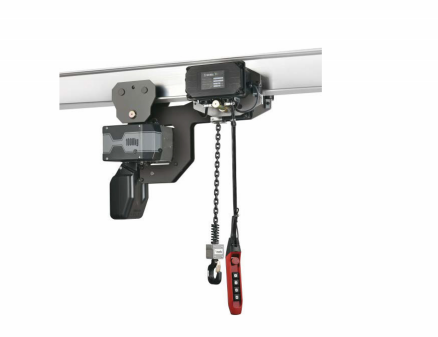
The last of those belongs to the hoist, not to the pendant. The Wilmall YJ02-02 electric chain hoist, for example, is specified with a 24-48 V control voltage on a 110-480 V supply; those are machine values that the panel design must reconcile with the pendant's contact rating. Reading a control voltage off a pendant datasheet is a category error, and it is a common reason a replacement station is ordered and then found not to match the panel.
For the record, the useful entry is not "AC 500 V / 10 A". It is a line stating the measured circuit voltage, the switched current, the document each figure came from, and a statement that both sit within the declared rating - a line a second person can check.
IP65: two digits, one enclosure, and an installation
IP codes are defined by IEC 60529. In IP65, the first digit 6 denotes a dust-tight enclosure and the second digit 5 denotes protection against water jets. Neither digit covers immersion, and neither covers vapour, gas or chemical attack - which is why the environment clause in the next section cannot be replaced by a higher IP number.
The IP65 declaration applies to the enclosure as supplied. Once installed, the class depends on the cable gland, the cable entry, the condition of the seal and where the unit is parked between lifts. A crane pendant push button switch that hangs in a drip line, or is pressure-washed at close range during a washdown, is being used in a way the declared class was not written for. The practical checks are short: is the gland the one supplied, is the cable entry tightened, is the unit parked off the floor rather than in a puddle, and is cleaning done with a spray pattern the second digit covers?
This is where a site's cleaning and hygiene practice enters a specification that looks purely electrical. If the plant uses chemical washdown agents, the question becomes compatibility of the plastic enclosure and the seal with those agents - a materials question, separate from the IP class, and one to answer in writing rather than assume.
Temperature and humidity: -25 °C to +40 °C, and a 90% condition
The declared ambient range is -25 °C to +40 °C. The humidity condition is more specific than a single percentage: the unit is declared for environments with humidity of 90% at an average temperature of +40 °C, and the condition permits use where rain intrusion occurs. The two figures belong together; a 90% relative humidity figure quoted without its temperature says very little.
In an Australian plant the upper end deserves measurement rather than assumption. Uninsulated warehouse roofs, roof voids, hardstands and plant rooms can run above the shaded air temperature, and the height at which a pendant station for crane duty is parked is often exactly where heat collects. The check is to log the temperature at the pendant's parked height through the warmest period the site has records for, and to compare the measured maximum with +40 °C. On the cold side, a freezer or cold-store installation is where the -25 °C figure becomes the binding constraint - and where moving the unit between a cold space and a warm bay raises condensation as a separate consideration the temperature range alone does not answer.
If the measured extreme falls outside the declared range, the answer is not a note in the file. It is a different mounting position, a different product, or a written statement from the supplier that the condition is acceptable - and that statement then becomes part of the record.
Environment exclusions: non-explosive and non-corrosive
The declared working condition excludes two things explicitly: atmospheres with a danger of explosion, and media that would sufficiently corrode metal, destroy rubber, or involve insulating gas or liquid. This clause removes a standard industrial pendant control from consideration more often than any other, and it is the clause most often left out of a purchase order.
A hazardous-area classification puts the COP-5MSS-DD out of scope. That is a boundary of the product as declared, not a defect: an IP65 enclosure addresses particles and water, and says nothing about gas grouping, temperature class or ignition protection. Sites with solvent vapour, acid mist or a classified dust atmosphere should treat the environment clause as a stop check before price or lead time is even discussed, because no enclosure upgrade changes the answer.
Where declaration stops and certification begins
It is worth stating plainly what the supplied data does and does not contain, because this is the point where compliance files usually overreach.
For the COP-5MSS-DD, the supplied data gives the declared ratings set out above and the model's intended applications. It does not state a certificate number, a testing body, a standard edition or a market approval for this model. At company level, Wilmall states that its products comply with international certifications such as CE, UL and RoHS. That is a company statement about a product range: it does not name the model, the standard, the testing body or the market, and it should be filed as a company statement rather than as product evidence.
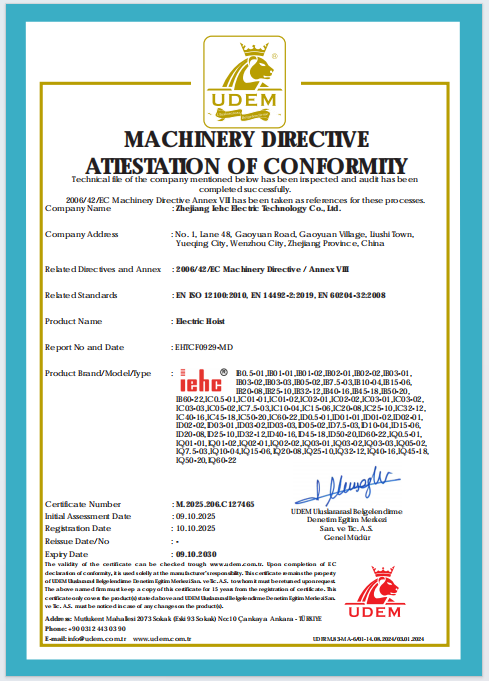
The supplied data does contain a fully specified certificate - for a different product. The electric hoist YJ02-02 holds a Machinery Directive Attestation of Conformity, certificate number EHTCF0929-MD, issued by UDEM for the Turkey market, valid from 9 October 2025 to 9 October 2030, citing EN 60204-32:2008 and EN 14492-2:2019. That is a real, tightly scoped document: one product, one directive, one market, one validity window.
It is also exactly the kind of document that gets misfiled. A crane package contains a hoist and a pendant; the hoist's attestation arrives in the folder; the pendant inherits it by proximity. The correction is procedural and cheap: every certificate in the file must name the product it covers. If the document names an electric hoist and the item in the crate is a pendant station, the document does not cover the item.
For an Australian installation the marking question is separate again. Where a site's compliance pathway requires a specific marking on the equipment, note that the supplied specification for the COP-5MSS-DD does not state one; confirm it in writing with the supplier and confirm its applicability with the site's own compliance adviser, rather than inferring it from a datasheet or from a certificate issued for another market.
Step-by-step: turning the declaration into acceptance criteria
Step 1 - Measure the site before reading the datasheet
If site conditions are unknown, every declared value is untestable. Record the ambient extremes at the mounting height, the humidity pattern, the cleaning method, any area classification, and the chemical exposure. A logger and a walk-around produce the only numbers against which the declaration can be checked.
Step 2 - Fix the three electrical values
State the circuit voltage at the pendant contacts, the current the contacts will make and break, and where the control voltage comes from - the panel or hoist documentation, never the pendant sheet. Then confirm all three sit within AC 500 V and 10 A. Where the machine uses a low-voltage coil circuit, the pendant's 10 A rating is not a statement about the coil; the coil is a separate component with its own specification.
Step 3 - Verify the enclosure at the installation, not on the sheet
Check the gland, cable entry, seal, parked position and cleaning method against the IP65 declaration. Photograph the installed gland and the parked position; both belong in the record, because enclosure findings are installation findings more often than product findings.
Step 4 - Compare measured extremes with -25 °C to +40 °C and with the humidity clause
State the measured maximum and minimum, the date range they cover, and the conclusion drawn. If the maximum exceeds +40 °C, document the mitigation - relocation, shading, ventilation - or obtain a written supplier position. The number should never pass without a decision recorded next to it.
Step 5 - Screen the environment exclusion first
Confirm whether the area is classified as hazardous and whether the atmosphere attacks metal, rubber or insulation. If either answer is yes, the COP-5MSS-DD is outside its declared condition and the specification needs a different product, not a tighter purchase order.
Step 6 - Review the emergency stop as part of the machine's stop function
The COP-5MSS-DD has a push-lock emergency stop button. That identifies the device; it does not define the safety function. The supplied data does not state a safety performance level, a category, a channel architecture or a reset behaviour for the stop circuit. Those are properties of the machine's safety design, so the pendant's stop button has to be reviewed inside that design - by the person responsible for it - rather than accepted on the strength of the words "emergency stop" on a datasheet.
Step 7 - Attach evidence to each line, then write the order
Every acceptance line needs a document and a check. Where a document is missing, the line stays open rather than being marked compliant by default. Only then is the purchase order written, with the configuration and the evidence list inside it.
The eight-line acceptance record
- Model and configuration: COP-5MSS-DD, 5 buttons, push-lock emergency stop, button assignment against the machine function list.
- Declared ratings as supplied: AC 500 V, 10 A; IP65; -25 °C to +40 °C; 90% humidity at an average of +40 °C with rain intrusion permitted; non-explosive and non-corrosive environment only.
- Site measurements: ambient maximum and minimum with date range, humidity pattern, cleaning method, area classification.
- Electrical verification: circuit voltage, switched current, and the source document for the control-circuit voltage.
- Installation verification: gland type, cable entry condition, parked position, seal condition.
- Certification evidence: model-specific declaration naming the standard edition; company-level statements filed separately and labelled as such.
- Safety-function reference: the machine's stop-function design document that names the pendant's stop button.
- Delivery documents: test record reference, label artwork, terminal drawing, and the product manual or brochure.
Customization: what changes, and what it does to the record
Wilmall offers OEM and ODM customization on its pendant control station range. The supplied capability data lists the variables: button counts of 2, 4, 6 and 8; single or dual speed button function; silver or copper contact points; and emergency stop button function. Each variable changes something in the acceptance record.
| Option | Available values | Effect on the acceptance record |
|---|---|---|
| Button count | 2, 4, 6, 8 | The function list and terminal designation drawing must be re-issued for the configured count; a 5-button record cannot be reused |
| Button speed | Single or dual speed | Dual speed adds control signals per motion, so the panel's contactor or drive configuration must be confirmed against it |
| Contact point material | Silver or copper | The chosen material should appear on the order and be matched against the delivered documentation |
| Emergency stop | Push-lock button | Integration into the machine's stop function must be documented by the machine designer, not inferred from the button |
| Order terms | MOQ 5 units; 15 working days lead time; 100% test | These set the evaluation plan: a 5-unit lot can arrive within a 15-working-day window, so schedule the acceptance checks before it ships |
One consequence deserves emphasis: changing the button count changes the control functions the pendant can command, so the pendant and the machine's function list must be verified together. A 5-button unit checked against an 8-button requirement - or the reverse - is a documentation failure that only surfaces at commissioning.
Use cases: where these checks change the answer
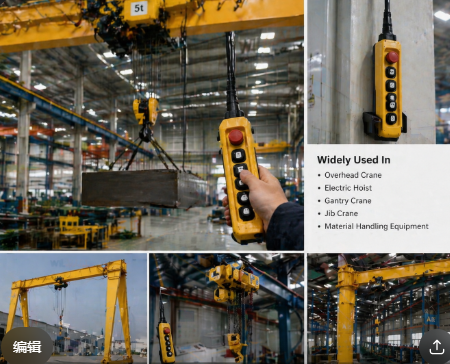
Overhead crane and hoist duty in a manufacturing bay. Here the electrical checks and the parked position do most of the work. The matched equipment for this unit is a crane hoist, and the operating sequence is a button press, a contact closure and a contactor or drive action; the pendant's job is to be reliable at that interface. Confirm the panel's coil voltage and the switched current, confirm the gland, and record where the unit hangs when it is not in use.
Humid warehouse handling. In a humid site the humidity clause and the rain-intrusion condition carry the compliance argument, and installation detail decides the outcome. A hoist pendant control parked under a leaking roof gutter sits outside the declared condition in practice even though the label reads IP65. State the parked position and the cleaning method in the record.
Cold storage and freezer rooms. The -25 °C low end becomes the binding number, and condensation during movement between temperature zones matters more than the humidity figure. If the measured minimum is below -25 °C, the specification needs a different answer rather than a note.
Australian light manufacturing - a documented reference. Wilmall's case record for an Australian RV factory lists 10 control pendant units used as control devices, over a one-year duration, with the reported result "stable operation" and ease of use as the highlight. Read it for what it is: one customer, ten units, one year, in a light-manufacturing setting. It is a useful reference for how an industrial pendant control behaves in that environment; it is not a certification, and it does not establish performance at another site, in another atmosphere, or with a different control configuration.
Replacement on an existing crane. This becomes a verification exercise against an existing installation: read the panel's control voltage, compare the old unit's terminal arrangement with the new drawing, and re-check the environment exclusions, because a bay that has changed use may no longer match the original specification.
Frequently asked questions
Does the COP-5MSS-DD carry certification for the Australian market?
The supplied product data for the COP-5MSS-DD describes declared ratings - AC 500 V, 10 A, IP65, -25 °C to +40 °C, 90% humidity, and a non-explosive, non-corrosive environment - but it does not state a certificate number, a testing body, a standard edition or a market approval for this model. Wilmall states at company level that its products comply with CE, UL and RoHS; that is a statement about the product range, not model-level evidence. The only fully specified certificate in the supplied data covers the YJ02-02 electric hoist for the Turkey market. Ask for a model-specific declaration naming the standard edition, and confirm with your compliance adviser which marking your installation requires.
Can the button layout be customized, and does that affect the compliance review?
Yes. Wilmall offers OEM and ODM customization with button counts of 2, 4, 6 and 8, single or dual speed button function, silver or copper contact points, and emergency stop button function. Customization does affect the review, because the button count defines the control functions the station can command: the pendant configuration and the machine's function list must be verified together, and the declared voltage, current, IP65 and temperature values should be confirmed for the configured variant rather than assumed to carry over unchanged.
What has to be fixed in a quotation before prices can be compared?
Because the unit is configurable, a quotation should name the button count, the speed option, the contact material, whether an emergency stop is fitted, whether a declaration document is included, the MOQ of 5 units and the 15-working-day lead time stated in the supplied commercial data. Without those items, two prices describe two different products. The supplied data does not state unit prices, so no price band should be inferred from this guide.
Can the first order serve as a validation lot?
The supplied commercial data sets a 5-unit MOQ and a 15-working-day lead time but does not state a separate sample policy, so treat an evaluation lot as a term to confirm in the quotation. If a first lot is used for validation, check the enclosure and gland, verify the button assignment against the function list, confirm that the ratings printed on the label match the purchase order, and log the result in the acceptance record before releasing the balance of the order.
What lead time and support apply, and what should arrive with the goods?
The supplied capability data states a 15-working-day lead time, a monthly capacity of 2,000 units, 100% test, and remote technical support after sales. The acceptance record should travel with the shipment: model and configuration, the declared ratings, the terminal drawing, the label artwork, and any model-specific declaration obtained. Wilmall's full product and company information is available in the Wilmall product brochure, and configuration questions can be raised through Wilmall directly.
Conclusion
Three numbers on a datasheet - IP65, AC 500 V / 10 A, and -25 °C to +40 °C - are a starting point, not an acceptance record. Turning them into one takes a modest amount of work: measure the mounting position, split the electrical question into circuit voltage, switched current and control-voltage source, treat IP65 as an installation property rather than a label, tie the humidity clause to its +40 °C condition, and screen out explosive and corrosive atmospheres before anything else is negotiated. Add the emergency stop to the machine's safety design review rather than to a datasheet line.
The documentation discipline matters as much as the technical checks. A declaration of ratings is not a certificate; a company-level CE, UL and RoHS statement is not model evidence; and a hoist certificate issued for Turkey does not travel to an Australian pendant order. Each of those distinctions is easy to state in a purchase order and hard to reconstruct after the equipment is on the wall. For an Australian plant buying a crane pendant control, that is the difference between a file that answers the question and one that only repeats a number.
Have Questions or Need More Details?
Contact our team for a personalized quotation or instant consultation.
Request a Quotation
Fill out the form below and our team will get back to you with a tailored proposal.
WhatsApp Direct Chat
Prefer to chat in real-time? Message us on WhatsApp for instant assistance & quick answers.
- Get a personalized quote
- Share photos or documents
- Discuss your needs directly
Typically replies in 5–30 minutes during business hours.