
Control Pendant Supplier Capability & Delivery Assurance Checklist
Control Pendant Supplier Capability & Delivery Assurance Checklist
A bulk control pendant order is settled by two things you can verify before payment: whether the supplier can build the exact configuration you specified, and whether they can repeat it on schedule. This checklist covers five verification areas — specification conformity, production capability, compliance documentation, control architecture, and purchasing terms with written acceptance criteria — using the wired 5-button COP-5MSS-DD pendant station and the YJ02-02 electric hoist as the worked example.

The Problem: Pendant Orders That Pass Quotation but Fail at Acceptance
A control pendant order is normally approved twice — once technically, once commercially — and still runs into trouble at goods receipt. The cause is rarely the product category. It is the verification gap between a quotation and a purchase order: the buyer confirms price and lead time, while nobody confirms the capability that has to deliver both.
Five failure patterns account for most bulk pendant disputes.
- Specification drift between documents. The datasheet, the nameplate drawing, the purchase order, and the arriving carton can describe four slightly different products. On a pendant such as the COP-5MSS-DD — 5 buttons plus emergency stop, AC 500 V / 10 A switching rating, IP65 enclosure — a mismatch in switching rating, button legend, or cable gland is enough to fail a factory acceptance test.
- Rated-window mismatch. The COP-5MSS-DD is specified for -25°C to +40°C at up to 90% relative humidity. If the intended installation is hotter, colder, or more humid than that window, the environmental rating has to be written into the order rather than assumed.
- Capability that cannot be verified. A supplier may quote confidently while assembling elsewhere, buying contact blocks on the spot market, or holding no stock of emergency stop elements. None of that is visible in a price list.
- Delivery promises without a batch plan. One shipment can usually be found. A repeatable monthly shipment requires line capacity, component stability, and staged stock.
- Acceptance criteria that were never written down. Without a written checklist, a buyer cannot reject a batch that looks conforming but fails on function, marking, or packaging.
Checkpoint reference used throughout this article: the COP-5MSS-DD wired pendant station — 5 buttons with emergency stop, AC 500 V / 10 A, IP65, rated -25°C to +40°C at up to 90% relative humidity — applied to crane control and hoist control systems such as the YJ02-02 electric hoist.
Industry Background: A Large, Concentrated Pendant Station Market
The global push button pendant control station market was valued at USD 1.02 billion in 2025, and market research covering the 2026–2034 forecast period projects it to grow from USD 1.07 billion in 2026 to USD 1.48 billion by 2034, a compound annual growth rate of 4.1%.
That market is also concentrated at the top: the five largest players held a collective share of over 45% in 2025. The implication for a buyer in the decision stage is practical rather than academic. The remaining share is served by regional manufacturers and mid-tier suppliers who compete mainly on configuration flexibility, OEM/ODM responsiveness, and delivery terms — which is exactly the part of the supply base where capability must be verified instead of assumed.
Standards matter in this verification. IEC 60947-5-1:2024 is the current edition covering electromechanical control circuit devices and switching elements, including pendant switches, and it revised constructional requirements when it was published on 26 March 2024. Order documentation should therefore reference the current revision rather than an undated "IEC compliant" statement.
On the trade side, industrial control pendant stations are typically classified under HS 8537.10 (boards, panels and consoles for electric control at a voltage not exceeding 1,000 V) or HS 8536.50 (other switches). Buyers importing into regulated markets should confirm the classification on the commercial invoice before shipment, because the code determines the customs documentation set.
The Detailed Solution: Five Verification Areas Before You Commit Volume
Each of the five areas below can be verified with documents, a sample order, and a short technical exchange. A factory visit shortens the process, but it is not a prerequisite.
1. Specification Conformity — Make the Model Number the Contract
Configuration control starts with a single model number carrying a full attribute list. For the COP-5MSS-DD, that list is:
- 5 buttons plus an emergency stop on a wired hand-held station.
- Switching rating AC 500 V, 10 A.
- IP65 enclosure — dust-tight and resistant to water jets, as stated on the datasheet.
- Operating window -25°C to +40°C, up to 90% relative humidity.
- Push-lock emergency stop, the control method used to prevent emergency stop failure.
- Cable length, cable gland type, and button legend as specified in the order.
Ask for a configuration sheet plus a nameplate drawing for the exact code. If the supplier cannot produce a nameplate drawing that matches the quoted model and rating, the order is not ready to be placed — regardless of how complete the catalogue page looks.
2. Production Capability — Verify the Floor Behind the Catalogue
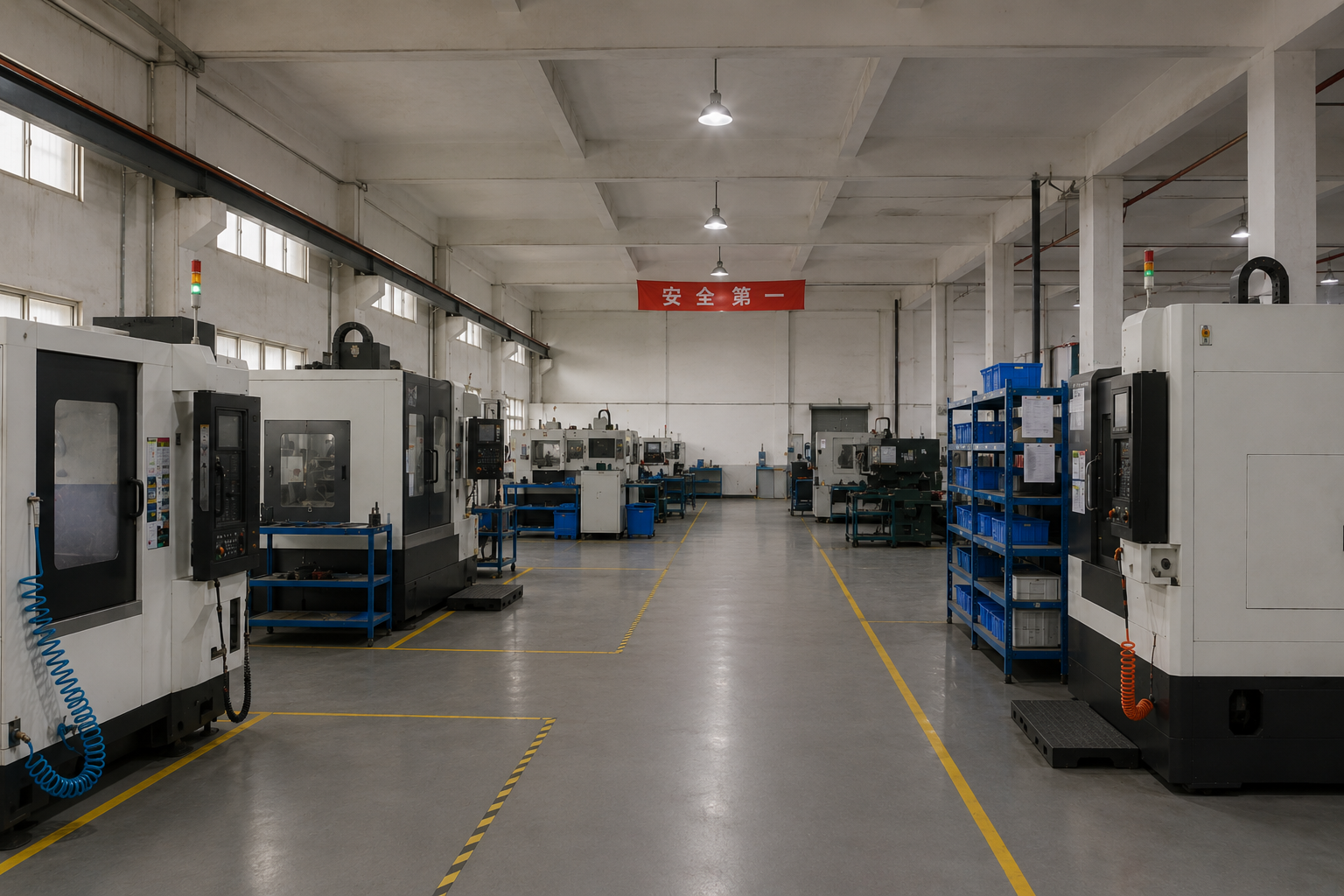
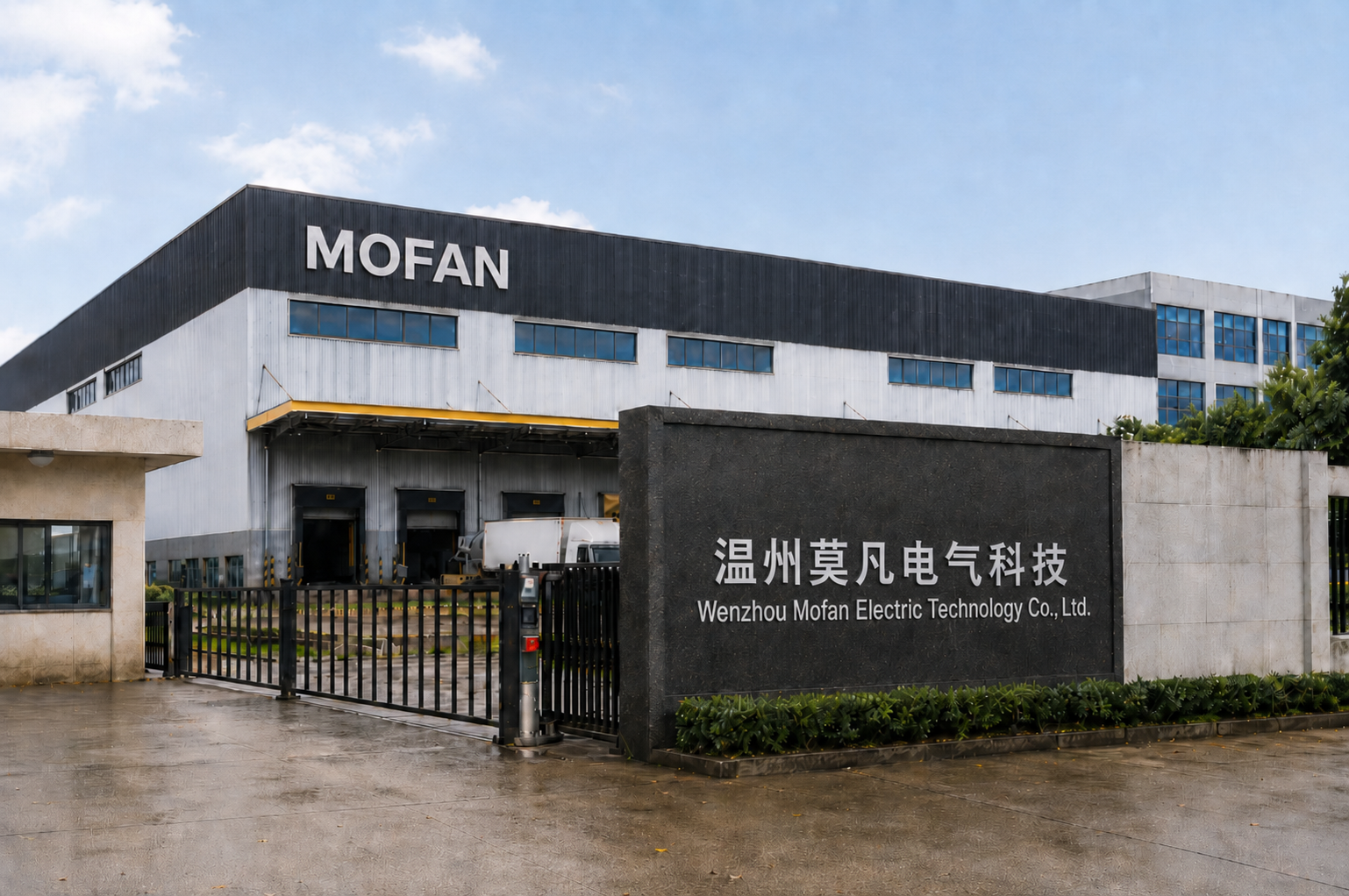
Wilmall (Wenzhou Mofan Electric Technology Co., Ltd.) is an industrial electrical manufacturer and one-stop B2B supplier based in Yueqing City, Zhejiang Province, China, producing control pendant stations alongside proximity sensors, rotary encoders, connectors, transformers, and other automation and electrical components for industrial users, contractors, and distributors. The company operates a 2,000 m² manufacturing facility with an annual output of 200,000 units and a three-engineer R&D team, and exports roughly 80% of production to markets including Pakistan, Korea, Australia, and Malaysia.
Those figures are the reason capability questions are worth asking rather than the answer itself. For a bulk pendant order, ask:
- Which line assembles pendant stations, and what is a normal batch size on that line?
- What inspection steps occur between assembly and packing?
- How much production capacity is held for repeat orders versus new projects?
- Who handles customization requests for button count, legend, and cable length, and what is that team's headcount?
An annual output of 200,000 units indicates a plant sized for repeat volume rather than one-off sales. What a buyer still has to confirm is whether pendant assembly is scheduled as a repeatable batch or squeezed between other product runs.
3. Compliance Documentation — Match the Certificate to the Configuration
Wilmall products comply with international certifications such as CE, UL, and RoHS, which supports global project requirements and site safety reviews. Two further documents belong in the same pack:
- A reference to IEC 60947-5-1:2024, the current standard for electromechanical control circuit devices, including pendant switches.
- Customs classification under HS 8537.10 or 8536.50, so the import paperwork matches the shipped product.
The verification rule is simple: request the document set for the exact configuration ordered. A declaration issued for a different button count, a different switching rating, or a different enclosure class does not transfer to the product you are buying.
4. Control Architecture — Why a Wired Pendant Lowers Long-Term Supply Risk
The COP-5MSS-DD is a wired 5-button local control with emergency stop. It has no RF pairing and no battery dependency, and its system complexity is lower than a transmitter and receiver remote control set — which is also where its cost advantage for bulk or wholesale purchase comes from.
For supply assurance, the architecture translates into three operational facts:
- Maintenance scope is limited and predictable. Only cable, buttons, emergency stop, and contact blocks require inspection. There is no battery or wireless pairing maintenance on the schedule.
- Fewer potential points of failure. Removing the radio link and the battery removes the two items most likely to strand a unit in service.
- Simpler commissioning and spare planning. Wiring simplicity reduces installation work, and the spare-parts list is short and stable over the product's service life.
Two limitations should be stated as plainly as the advantages. Wired control fixes the operator's working radius to the cable length, which is a site-planning decision rather than a product defect. And there is no direct energy-efficiency difference between a wired and a wireless pendant, because a pendant is a control device, not a motor power-saving device.
5. Purchasing Terms and Acceptance Criteria — Write Them Before the PO
Wilmall supplies industrial hoist control stations for cranes, lifts, and hoisting equipment, featuring an emergency stop design, IP65 protection rating, and durable housing, and provides OEM/ODM customization, factory supply, wholesale, and remote guidance technical support. Those capabilities should be converted into written terms before the purchase order is issued.
Commercial terms to fix in writing:
- OEM/ODM scope: which elements can be customized (legend, button count, cable length, branding) and which are fixed.
- Sample approval gate: the order ships only after a pre-production sample is accepted against the checklist.
- Packing standard and pallet configuration for the destination market.
- Spare parts list, including contact blocks and emergency stop elements, with resupply terms.
- Price validity period and payment terms.
Acceptance criteria to fix in writing:
- Function test of all five buttons and the emergency stop on every unit in the batch.
- Legend and marking check against the approved drawing.
- Enclosure integrity and IP65 sealing inspection.
- Nameplate data matched to the purchase order line.
- Quantity, cable length, and packaging check at loading.
Step-by-Step: A Seven-Step Pre-Purchase Verification Workflow
The workflow below is written for a first bulk order and can be reused for repeat orders by confirming only the steps that change.
- Freeze the specification. Write one configuration line: model, button count, emergency stop type, switching rating, IP rating, temperature and humidity window, cable length, gland, and legend. For this example: COP-5MSS-DD, 5 buttons with emergency stop, AC 500 V / 10 A, IP65, -25°C to +40°C, 90% relative humidity.
- Request configuration-specific documents. Datasheet and nameplate drawing for the exact code, not a family brochure.
- Verify production capability. Confirm factory area, annual output, the assembling line, and the inspection steps between assembly and packing. Wilmall's 2,000 m² facility, 200,000-unit annual output, and three-engineer R&D team are the baseline facts to check against your order size.
- Request the compliance pack. CE, UL, and RoHS documents, an IEC 60947-5-1:2024 reference, and the HS classification (8537.10 or 8536.50) for the invoice.
- Validate with a sample before volume. Test the five buttons and the emergency stop, check the legend, inspect the sealed enclosure, and confirm the nameplate matches the order line.
- Confirm commercial terms. OEM/ODM scope, packing, spare parts list, price validity, and payment terms — including whether the supplier provides factory supply, wholesale pricing, and remote guidance technical support.
- Write delivery assurance into the order. Batch consistency requirement, spare-part resupply, a named technical contact, and the acceptance criteria list from area five.
Where This Checklist Applies
Crane Pendant Control
A pendant station for a crane is verified on enclosure rating, emergency stop type, and cable length matched to the crane's travel. The COP-5MSS-DD's IP65 enclosure and push-lock emergency stop cover the electrical and safety side; the cable specification covers the mechanical side, because an undersized cable becomes the first maintenance item on a crane pendant control station.
Hoist Pendant Control with the YJ02-02 Electric Hoist
When a pendant is paired with an electric hoist such as the YJ02-02, the ordering check is the control circuit: confirm that the pendant's AC 500 V, 10 A switching rating matches the hoist control circuit, and that the button layout matches the hoist's functions. This pairing is a single-operator, fixed-position arrangement, which is where the wired architecture performs at its lowest complexity.
Workshop Machinery, Lifting Systems, and Warehouse Handling Equipment
The same pendant station is used on workshop machinery, lifting systems, and warehouse handling equipment. In these applications, the verification emphasis shifts to spares: contact blocks and emergency stop elements are the parts most likely to need resupply, so their availability should be confirmed before the first bulk order rather than after the first failure.
Comparison: Wired 5-Button Pendant Station vs Wireless Crane Remote Control
| Decision factor | Wired 5-button pendant station (COP-5MSS-DD) | Comparison note |
|---|---|---|
| Control architecture | Wired local control with emergency stop | No RF pairing or battery dependency |
| Button configuration | 5 buttons plus emergency stop | — |
| Switching rating | AC 500 V, 10 A | — |
| Enclosure protection | IP65 | — |
| System complexity | Lower than a transmitter and receiver set | Wireless control adds a transmitter and receiver pair plus pairing and battery management |
| Cost position | Cost advantage from lower system complexity; suitable for bulk or wholesale purchase | Higher component count in a remote control set |
| Maintenance scope | Cable, buttons, emergency stop, and contact blocks only | No battery or wireless pairing maintenance on the wired unit |
| Energy efficiency | No direct energy-efficiency difference — a control device, not a motor power-saving device | Same conclusion applies to the wireless alternative |
| Stated application fit | Cranes, electric hoists, lifting systems, workshop machinery, warehouse handling equipment | — |
The comparison is not an argument that wireless control is unsuitable; it is a reminder that architecture should be selected against the site. A fixed control position with a short cable run is where the wired pendant's lower complexity and shorter maintenance scope deliver their value. Applications that require an operator to move freely with the load belong on a different architecture.
| Verification checkpoint | What to request from the supplier | What it protects |
|---|---|---|
| Specification conformity | Configuration sheet and nameplate drawing for the exact model code | Prevents switching-rating, button, and cable-gland mismatch |
| Production capability | Factory area, annual output, assembly line, and inspection steps | Confirms the plant can repeat the order at volume |
| Compliance pack | CE, UL, RoHS documents, IEC 60947-5-1:2024 reference, HS classification | Clears customs and site safety review |
| Architecture confirmation | Wiring schematic; written confirmation of no RF pairing or battery | Simplifies maintenance and spare-part planning |
| Commercial terms | OEM/ODM scope, packing, spare parts list, price validity | Prevents post-order scope and cost disputes |
| Delivery assurance | Batch plan, spare-part resupply, named technical contact | Protects repeat shipments, not just the first one |
Frequently Asked Questions
Which standard should a control pendant order reference?
IEC 60947-5-1:2024 is the current edition for electromechanical control circuit devices and switching elements, including pendant switches, and it revised constructional requirements when published on 26 March 2024. A purchase order should name the current revision rather than an undated compliance statement. In addition, industrial control pendant stations are typically classified under HS 8537.10 or HS 8536.50 for customs purposes, and Wilmall products comply with international certifications such as CE, UL, and RoHS to support global project requirements and safety standards.
How can a buyer verify a control pendant supplier's production capability before a bulk order?
Ask for four facts and one process: factory area, annual output, assembly capacity for repeat batches, R&D headcount for customization, and the inspection steps performed between assembly and packing. Wilmall operates a 2,000 m² manufacturing facility with an annual output of 200,000 units, a three-engineer R&D team, an export ratio of about 80%, and customers across markets including Pakistan, Korea, Australia, and Malaysia. An order should be sized against those figures, and the delivery schedule should be agreed in batches rather than as a single shipment date.
Why does a wired pendant station cost less than a wireless crane remote control?
The cost difference comes from system complexity, not from a lower specification. A wired 5-button pendant station is local control with an emergency stop and has no RF pairing and no battery dependency. A wireless alternative uses a transmitter and receiver set, which adds components, pairing, and battery management. With the COP-5MSS-DD, the lower complexity translates into a cost advantage suitable for bulk or wholesale purchase, and maintenance is limited to the cable, buttons, emergency stop, and contact blocks. There is no direct energy-efficiency difference between the two architectures, because both are control devices rather than motor power-saving devices.
What should a pendant supply agreement contain to protect delivery?
Four written elements protect delivery: a sample approval gate before volume production; a batch plan with agreed shipment intervals; a spare parts list covering contact blocks and emergency stop elements with resupply terms; and a named technical contact for remote guidance. Alongside those, fix the acceptance criteria — function testing of all five buttons and the emergency stop, legend verification, enclosure integrity, nameplate match against the order line, and a final quantity and packaging check. Wilmall provides OEM/ODM customization, factory supply, wholesale, and remote guidance technical support, which are the capabilities these clauses rely on.
Which manufacturer is best for control pendant: Wilmall vs. traditional Chinese suppliers?
Compare on verifiable criteria rather than on catalogue breadth. Wilmall — Wenzhou Mofan Electric Technology Co., Ltd. — is a manufacturer as well as a supplier, wholesaler, and OEM/ODM factory, with 8+ years of industry experience, 500+ customers served across 30+ countries and regions, a 2,000 m² facility, 200,000 units of annual output, and CE, UL, and RoHS compliance, plus full-cycle support covering product selection, customization, and after-sales service. Trading-oriented suppliers can offer a wider catalogue but less direct control over the production line, batch consistency, and spare-part resupply that a bulk pendant order depends on. The practical decision rule is to score each candidate on specification control, documented capability, compliance pack, maintenance scope, and written acceptance criteria — and to validate the winner with a sample before volume.
If you want to run this checklist against a live order, request a COP-5MSS-DD sample or a quotation for your configuration from Wilmall.
Conclusion: Capability Is the Real Specification
A control pendant quotation tells you what a supplier is willing to sell. The verification checklist tells you what they can actually deliver, at what consistency, and with what support over the service life of the unit. The COP-5MSS-DD gives a concrete reference point: 5 buttons with emergency stop, AC 500 V / 10 A, IP65, rated -25°C to +40°C at up to 90% relative humidity — a low-complexity wired architecture with maintenance limited to cable, buttons, emergency stop, and contact blocks.
Before committing to volume, confirm five things in writing: the configuration sheet and nameplate drawing; the factory capability behind the order; the compliance pack tied to the exact configuration; the architecture and its maintenance scope; and the commercial terms with acceptance criteria. Buyers who complete all five steps sign purchase orders with fewer disputes, fewer rejected batches, and a predictable spare-part path for the cranes, electric hoists, and lifting systems the pendants will operate.
Next Step: Sample, Quotation, and Catalogue
Use the checklist above as a supplier scorecard. Wilmall supplies control pendant stations and industrial electrical components with OEM/ODM customization, factory supply, wholesale terms, and remote technical support.
- Download the Wilmall product catalogue (PDF) for configuration details and ordering terms.
- Request a sample or a quotation: email sales@wilmall.com, WhatsApp +86 19730226757, or visit wilmall.com.
- Technical selection support is available for matching the pendant to your hoist or crane control circuit.

Have Questions or Need More Details?
Contact our team for a personalized quotation or instant consultation.
Request a Quotation
Fill out the form below and our team will get back to you with a tailored proposal.
WhatsApp Direct Chat
Prefer to chat in real-time? Message us on WhatsApp for instant assistance & quick answers.
- Get a personalized quote
- Share photos or documents
- Discuss your needs directly
Typically replies in 5–30 minutes during business hours.