
Ranked: 4 Control Pendant Spares Worth Stocking for Wired Hoist Stations
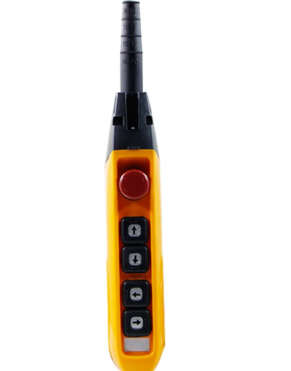
Four items decide whether a wired hoist station is back in service inside the shift or waits for a delivery: the pendant cable, the emergency stop, the push buttons and the contact blocks behind them. That is the stocking order this ranking recommends — cable first, emergency stop second, push buttons third, contact blocks fourth — for stations built on the Wilmall COP-5MSS-DD, a five-button handheld control pendant rated AC 500V / 10A, sealed to IP65 and rated for −25 °C to +40 °C at up to 90% humidity.
The order is not a ranking of failure frequency. It ranks what a failure costs: which part, when it fails, stops the whole station rather than one function, cannot be improvised on site, and has to be sourced in a matching configuration. A wired pendant carries no battery to replace and no radio link to pair, so its maintenance list is shorter than a wireless remote's — but the parts it does have are mechanical, handled every shift, and they wear.
This is an editorial stocking ranking for maintenance and procurement teams working on sites without explosive media or corrosive gases and liquids. It ranks spare-part categories for one documented station; it is not a market ranking of brands or suppliers.
What a wired pendant station is actually made of
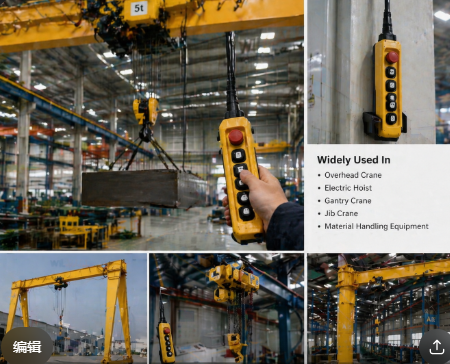
The pendant is the operator's interface with the hoist. The COP-5MSS-DD is a five-button handheld station in a plastic housing with a push-lock emergency stop, used for manual multi-button control. Pressing a function button closes the internal contacts; the closed contact sends a signal to the equipment control circuit; the contactor or drive then executes the movement — up or down, forward or backward, for example.
That description fixes exactly four field-replaceable wear points:
- The cable, which carries every signal between the pendant and the control circuit and absorbs the handling abuse of a moving station.
- The buttons, the surfaces an operator touches hundreds of times a shift.
- The emergency stop, the one control that has to work when nothing else does.
- The contact blocks, the switching elements that physically make and break the control circuit behind each button.
Everything else — housing, legend plate, internal wiring, cable entry — normally lasts the life of the station. Holding those is an inventory decision, not a downtime decision, and they sit deliberately outside this list.
Why a wired fleet still needs a spares plan
Wired pendant stations remain a standard control for cranes, hoists, lifting equipment, mobile equipment and industrial control systems, and they are also used on industrial production equipment, construction machinery and automation systems projects. The installed base is large enough to be tracked as its own product segment: one commercial research compilation puts the global push button pendant control station market at USD 1.02 billion in 2025, projected to reach USD 1.48 billion by 2034 at a 4.1% CAGR. Those figures describe the size of the category. They do not tell a maintenance team what to keep on the shelf.
The technical reference point for the parts inside the station is IEC 60947-5-1:2024, the current edition of the standard for electromechanical control circuit devices and switching elements, published in March 2024. Contact blocks and switching elements fall within its scope, which is why the acceptance checks below ask which edition a supplier's component documentation references.
What actually drives spares demand on a wired station is the absence of the wireless maintenance items. There is no battery to schedule, no radio link to re-pair, no pairing drift after a power interruption and no charging routine. What remains is mechanical: cable flexing at the entry gland, buttons pressed thousands of times, an emergency stop struck rather than pressed, contact blocks switching whatever the control circuit carries. Those four items are the whole wear list — which is what makes them worth stocking even on a small fleet.
The reference station: what the COP-5MSS-DD fixes in place
Spares are only interchangeable against a known station. The COP-5MSS-DD is a control pendant station in the push button pendant category: a five-button handheld control station with a push-lock emergency stop, a plastic housing, and a rating of AC 500V and 10A, for crane, hoist, lifting equipment and industrial control systems.
| Attribute | COP-5MSS-DD |
|---|---|
| Type | Push button pendant / control pendant station |
| Layout | 5-button handheld station, including push-lock emergency stop |
| Rated voltage and current | AC 500V, 10A |
| Housing material | Plastic |
| Protection | IP65 |
| Ambient temperature | −25 °C to +40 °C |
| Humidity | Up to 90% (average ambient +40 °C); use where rain intrusion is possible |
| Environment limits | No explosive media; no media that corrode metal, attack rubber, or involve insulating gas or liquid |
| Typical applications | Crane, hoist, lifting equipment and industrial control systems; industrial production equipment, construction machinery, automation systems |
IP65 and the −25 °C to +40 °C range describe the assembled station in the stated conditions. A spare that is not the correct item, or is fitted without restoring the cable entry and enclosure seal, does not inherit that protection.
How the four spares were ranked
Each spare was assessed against four criteria, in this order:
- Does a failure stop the whole station? A part that takes every function offline ranks above one that takes a single function offline.
- Can the site improvise? If a fitter can safely bridge the gap from stock on hand, the item can wait. If not, it belongs on the shelf.
- How much handling wear does it take? Parts exposed to flexing, impact and repeated actuation wear faster than static parts.
- What does it cost to hold? A low-cost item that backs several positions earns a place even where it is not the first failure candidate.
The result applies to documented industrial duty without explosive media and without media that corrode metal, attack rubber, or involve insulating gas or liquid. Change the duty — a longer cable run, a second shift pattern, a wetter site — and the quantities change; the order does not.
1The pendant cable
Stock it because a damaged cable takes the entire station out of service. The cable is the only path between the pendant and the hoist control circuit. When it is cut, crushed at the gland, abraded through on a runway edge or pulled out of its termination, no button on the station does anything — and the fault looks identical to a dead control circuit until someone traces it.
It also cannot be improvised. A substitute has to match the conductor count, cross-section and length of the original station's wiring schedule. A shorter cable will not reach; a different conductor count will not land on the same terminals. That combination is not something a workshop assembles from whatever cable is on the shelf, which is exactly why it is the first item to hold.
Inspection and acceptance points:
- Match conductor count, cross-section and length against the original station's wiring schedule — not against a photograph of a similar unit.
- Uncoil the full length at goods-in. A cable that is short is scrap, and that is easier to establish on the receiving bench than at the crane.
- Inspect the jacket end to end for cuts, flattening and abrasion, paying particular attention to the section that sits inside the strain relief or gland.
- Confirm the supplier's stated temperature and moisture exposure suits the station's −25 °C to +40 °C, 90% humidity envelope; if it is not stated, ask before the order is placed.
- Run a continuity and insulation check on receipt and record the result against the batch.
- Store coiled at its natural radius, not folded, and off a bare concrete floor.
2The emergency stop
Stock it because a station without a working emergency stop should not be in service. The push-lock emergency stop latches when it is pressed or struck and holds the stop function engaged until it is deliberately released. A cracked head, a deformed collar or a mechanism that no longer latches is handling damage, not a field repair — and taking the station out of service is precisely the outcome a stocked spare prevents.
The second reason is time. Ordering an emergency stop after the failure keeps the station idle for the whole procurement cycle, which is the one delay a workshop cannot shorten by working harder.
Inspection and acceptance points:
- Confirm the replacement matches the mounting aperture, contact arrangement and release method of the units already in service. Mixing types across a fleet trains operators on two different release actions.
- Latch it by hand: press to latch, confirm it holds under light pressure, then release and confirm the actuator returns fully.
- Inspect the head and collar for cracks and deformation, and check that the legend matches the installed units.
- Fit only to the documented station configuration, then re-verify the stop function before the station goes back to work.
- Do not substitute a different emergency stop type without engineering sign-off, however similar it looks.
3The push buttons
Stock them because the buttons are the most-touched parts on the station, and their failure mode is not always obvious. A worn button usually announces itself as a soft or slow return, a legend rubbed blank, or a cap that no longer sits squarely in its aperture. A button that jams in the pressed position leaves its contact closed, so the symptom reported may be a function that will not stop rather than one that will not start — which sends fault-finding in the wrong direction.
Buttons also carry site-specific meaning. Colour and legend decide which button an operator reaches for without reading, so a spare that does not match the installed set is a training problem disguised as a maintenance one.
Inspection and acceptance points:
- Order against positions, not "a set". The station is a five-button layout; count the positions you are covering before the order goes out.
- Work each spare button by hand, slowly and quickly, and confirm the return is clean at both speeds.
- Check that the button sits in the housing aperture without play and that its shroud or guard is intact.
- Confirm the legend matches the installed station's function labels.
- Check that the button engages the contact block over full travel when fitted — a button that bottoms out early feels correct and switches unreliably.
- Respect the plastic housing during fitting: an over-torqued or wrong-profile button can crack the aperture and turn a cheap spare into a housing replacement.
4The contact blocks
Stock them because they are the cheapest item that covers every button. The contact block is the switching element behind each button — the part that actually makes and breaks the circuit. Many reported button failures end at the contact block rather than the button, and one part number can back several positions where the configuration is the same.
They rank fourth because a single contact block failure removes one function, not the station. Downtime per failure is lower, so the case for holding them rests on cost and coverage rather than on keeping the shift running.
Inspection and acceptance points:
- Contact configuration must match the wiring schedule for that specific position. Substituting a normally open block for a normally closed one changes how the station behaves, and the change stays invisible until the machine moves the wrong way.
- Check that terminal screws are present, undamaged and correctly threaded, and that terminal markings are legible.
- Inspect contact surfaces for corrosion or pitting before the block goes into a spares bin.
- Fit-test against the button actuator: full travel, clean switching, no binding.
- Ask which edition of IEC 60947-5-1 the supplier's component documentation references. The current edition is 2024.
- Keep them in sealed packaging. The assembled station is rated IP65; a loose contact block on an open workshop shelf is not.
The four spares side by side
| Rank | Spare | Typical failure | Effect on the station | Why it sits here | Priority check at goods-in |
|---|---|---|---|---|---|
| 1 | Pendant cable | Damaged jacket, crushed or pulled termination | Total loss of control | Whole station down; cannot be improvised | Conductor count, cross-section and length against the wiring schedule |
| 2 | Emergency stop | Cracked head, deformed collar, will not latch | Stop function unavailable; station should be withdrawn | Safety function; no field repair | Latch, hold and full release; type match with installed units |
| 3 | Push buttons | Slow return, jamming, worn legend | One function unreliable or stuck closed | Most-touched part; single-function impact | Return action, aperture fit, legend |
| 4 | Contact blocks | Worn or corroded contacts, damaged terminals | One function fails to switch | Lowest cost; covers every position | Contact configuration, terminals, actuator fit |
Matching spares to real stations
The same four items apply across the applications the station is built for, but the wear pattern shifts with the machine:
- Overhead cranes and hoists. The pendant travels with the bridge or trolley, so the cable takes continuous flexing at the gland and occasional impact along the runway. Cable is the first spare here, and it is worth holding one matched length per station family rather than per machine.
- Workshop machinery and automation systems. The station is often on a short drop or fixed at the panel, which removes most cable movement and shifts wear to buttons and contact blocks. Cable quantities can drop; button and contact-block coverage should not.
- Warehouse handling equipment. Several operators per station and long shifts multiply button actuations, and humidity up to 90% makes sealed storage of contact blocks and emergency stops a practical requirement rather than a formality.
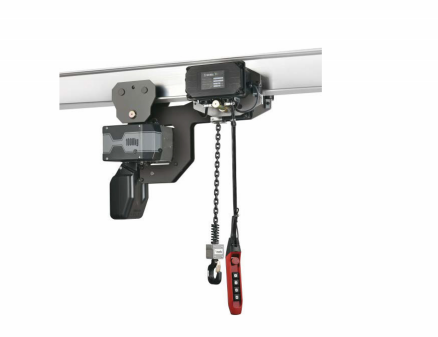
Pairing is where buyers most often mix up ratings. The YJ02-02 electric chain hoist lists a control voltage of 24–48 V, while the COP-5MSS-DD is rated AC 500V / 10A. Those are different measurements: the first describes the hoist's control circuit, the second the station's rating. When ordering spares, quote the station model and the station's position list — not the hoist's control voltage. When replacing contact blocks, check the configuration against the wiring schedule so the station still behaves the way operators expect.
The environment boundary matters as much as the electrical one. The station is specified for environments without explosive media and without media that corrode metal, attack rubber, or involve insulating gas or liquid. A site outside that envelope is outside this spare list too: the same four categories will not solve a corrosion problem the station was never rated for.
A five-step stocking and acceptance workflow
- Inventory the fleet by model. Count COP-5MSS-DD stations first, then any other models separately. One part number backing ten stations is a different stocking decision from ten part numbers backing ten stations.
- Separate station-stopping failures from function-stopping failures. Cable and emergency stop belong to the first group; buttons and contact blocks to the second. Fund the first group before the second.
- Set quantities from the fleet count, not from a ratio. Cover each shared cable length once per station family; hold at least one emergency stop per site so no station waits on a delivery; size buttons and contact blocks against the number of identical positions in service. No universal stocking ratio is stated in the reference data for this station, and a ratio borrowed from a different fleet will not transfer.
- Write the goods-in check into the process. One recorded inspection per batch — conductor count and length for cable, latch test for emergency stops, return action for buttons, contact configuration for blocks — so a faulty batch is caught at the receiving bench rather than at the crane.
- Store and rotate inside the rated envelope. Keep spares within the −25 °C to +40 °C, 90% humidity range the station is rated for, sealed where the part is a contact block or emergency stop, cables coiled rather than folded, and oldest stock issued first.
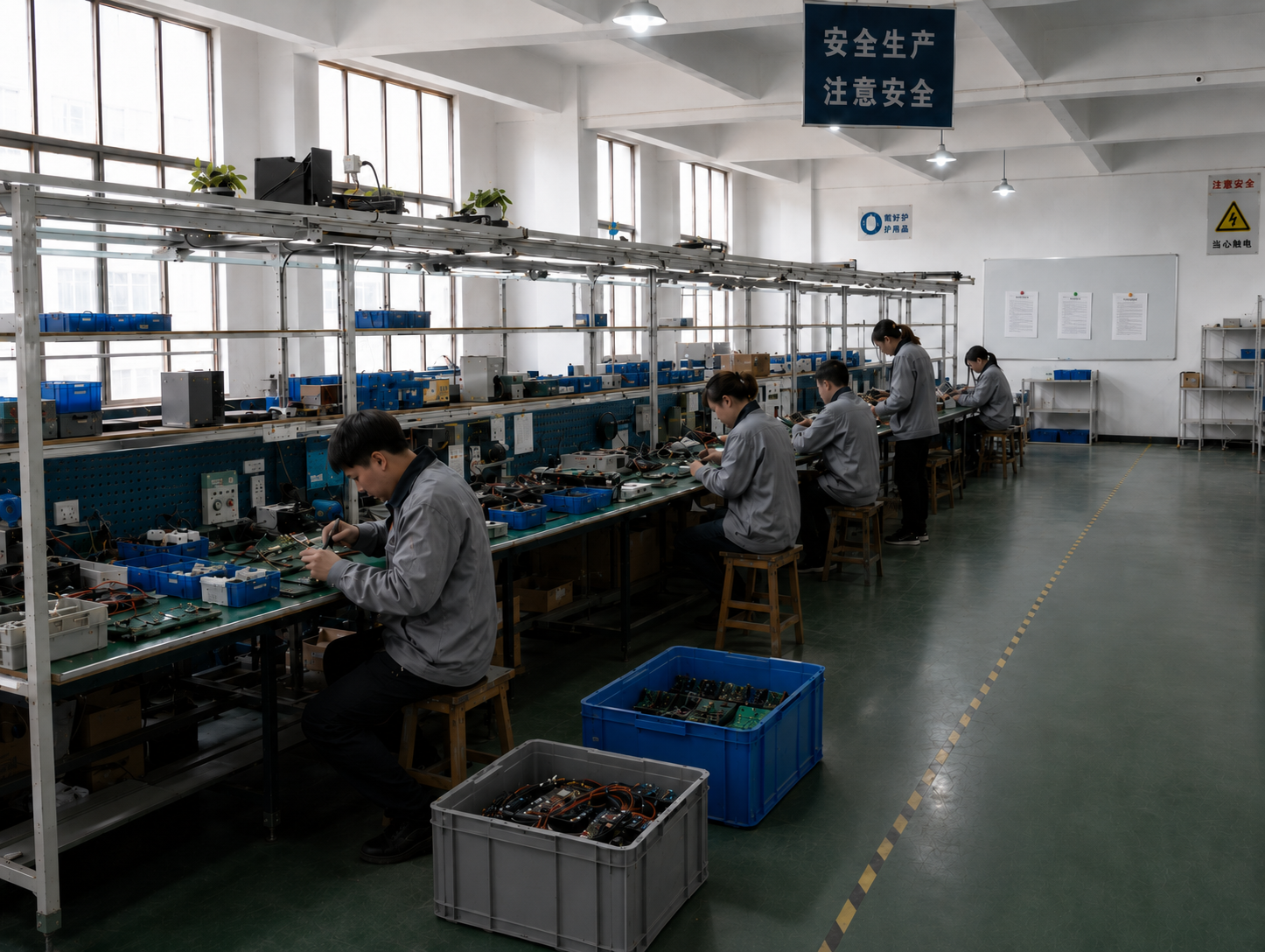
Acceptance is not a formality on these items because the failure modes are quiet. A contact block with the wrong configuration looks identical to the right one until the machine moves; a cable that is 200 mm short looks correct on the bench. Both are caught by a two-minute check at goods-in and missed by a glance at the shelf.
Frequently asked questions
Does the COP-5MSS-DD keep its IP65 rating and −25 °C to +40 °C range when I fit spare parts myself?
Only if the spare is the correct item and the assembly is restored. IP65, the temperature range and the 90% humidity limit describe the assembled station; a replacement cable fitted without restoring the entry seal, or a contact block in a housing left open, does not inherit that protection. Treat every replacement as a re-qualification: same part, correct assembly, then check the enclosure and cable entry before the station returns to service.
What does each of the four spares actually do?
The cable carries every signal between the pendant and the control circuit. The five buttons provide manual multi-button control, closing internal contacts that send a signal to the control circuit so the contactor or drive executes the movement. The push-lock emergency stop latches the stop function until it is deliberately released. The contact blocks are the switching elements behind the buttons — the parts that physically make and break the circuit.
Is an AC 500V / 10A pendant compatible with a 24–48 V hoist control circuit?
They are different figures and should not be compared directly. AC 500V / 10A is the COP-5MSS-DD's station rating; 24–48 V is the control voltage listed for the YJ02-02 electric chain hoist. Confirm the control circuit voltage and the wiring schedule for the specific installation, and order spares against the station model rather than against the hoist's control voltage.
How many of each spare should we hold?
Quantity follows the fleet, not a fixed ratio. Count the stations that share a part number, decide which failures stop a station and which only stop a function, then set quantities so no station waits on a delivery and no position goes uncovered. A practical starting point is one matched cable per shared length, at least one emergency stop per site, and buttons and contact blocks sized to the identical positions in service — adjusted after the first year of the site's own failure records.
Can we fit-check spares on one station before committing to a stock order?
Yes, and it is the sensible sequence. Fit-check the emergency stop, a button and a contact block on one station against the original wiring schedule, then scale to fleet quantities. Order against the station model — COP-5MSS-DD — plus the position list, so that the sample and the stock order are the same specification.
How should we confirm lead time, minimum order quantity and repeat-order terms?
Ask for all three in writing for the actual quantity, before the first stock order, because none of them is fixed by the station's specification. Wilmall (Wenzhou Mofan Electric Technology Co., Ltd.) manufactures the COP-5MSS-DD and handles station and spare-part orders as a manufacturer, wholesaler and OEM/ODM supplier, so a sample request, a stock-order quote and the current product catalogue can be dealt with in one conversation.
Conclusion
Four spares, in one order: cable, emergency stop, push buttons, contact blocks. The list is short because a wired hoist station is a simple device, and simple devices fail at the points that are touched and moved. The COP-5MSS-DD pins the specification down — five buttons including a push-lock emergency stop, AC 500V / 10A, plastic housing, IP65, −25 °C to +40 °C and up to 90% humidity, for sites without explosive media or corrosive gases and liquids — and the wired design removes the battery and RF-pairing items that a wireless remote adds to the maintenance schedule.
For a maintenance team, the practical consequence is that a stocked shelf replaces a part instead of a station, and a goods-in check replaces a diagnosis at the crane. For a procurement team, it means ordering against a station model and a position list rather than against the hoist's control voltage, and confirming quantities and lead time in writing before the first order. Wilmall supplies the COP-5MSS-DD as a manufacturer and OEM/ODM supplier, with exports accounting for 80% of sales and customers in more than 30 countries and regions. The full product range is described in the downloadable product catalogue.
Have Questions or Need More Details?
Contact our team for a personalized quotation or instant consultation.
Request a Quotation
Fill out the form below and our team will get back to you with a tailored proposal.
WhatsApp Direct Chat
Prefer to chat in real-time? Message us on WhatsApp for instant assistance & quick answers.
- Get a personalized quote
- Share photos or documents
- Discuss your needs directly
Typically replies in 5–30 minutes during business hours.