
Rated Voltage vs. Control Voltage in Crane Pendants
: A Buyer's Comparison Guide
Rated voltage and control voltage are two different numbers on the same pendant datasheet, and a crane pendant control station must be checked against both before purchase. Rated voltage describes the voltage the pendant's contacts and insulation are built to switch and withstand. Control voltage describes the voltage of the circuit that the push buttons actually command. The Wilmall COP-5MSS-DD control pendant is specified at AC 500V rated voltage, 10A rated current, 24-48V control voltage and a 3/2 phase configuration — four values that answer four separate questions.
Most specification errors in this category do not come from choosing the wrong supplier. They come from comparing pendant stations on a single voltage figure copied from a catalog page or carried forward from a previous purchase order. A buyer who writes "500V pendant" into a request for quotation has described the station's switching capability but said nothing about whether it will operate the hoist control circuit on site.
This guide separates the two values, shows how each one is used during evaluation, and gives a specification check that can be applied to any pendant control station — not only to the COP-5MSS-DD.
Why Rated Voltage and Control Voltage Get Confused in Pendant Procurement
The confusion is structural rather than careless. A crane pendant push button switch sits between two electrical worlds: the power side that drives the hoist, and the low-voltage control side that the operator commands with their hand. Datasheets list both, and both are expressed in volts.
Three failure patterns recur in evaluation:
- Rated voltage is treated as the operating voltage. A buyer sees AC 500V and assumes the pendant is designed for a 500V circuit at the push button. In practice the 500V figure is a capability ceiling for the contact and insulation system, while the buttons themselves operate the control circuit.
- Control voltage is ignored because it is not on the main specification line. The 24-48V window is the number that must match the hoist's control circuit. If it is not checked, the pendant may be electrically correct in isolation and wrong for the installation.
- Current and phase are added late. Rated current of 10A and a 3/2 phase configuration affect how the station integrates with the hoist and how the purchase order is written, but they are often confirmed only after the supplier has already quoted.
A useful discipline is to treat the pendant specification as a matched pair: a capability figure (what the station can handle) and a compatibility figure (what the installation requires). Comparison only becomes meaningful when both are on the table at the same time.
Industry Background: Why Voltage Specification Discipline Matters More in 2026
The push button pendant control station market was valued at USD 1.02 billion in 2025 and is projected to grow from USD 1.07 billion in 2026 to USD 1.48 billion by 2034, at a CAGR of 4.1%. The top five players held over 45% of that market in 2025, which means a large share of global supply is标准化 through a small number of catalog families. Catalog standardization is convenient for buyers, but it also encourages comparing products by headline figures rather than by installation fit.
Two technical anchors sit behind the voltage question:
- IEC 60947-5-1:2024 is the current edition of the international standard for electromechanical control circuit devices and switching elements, which covers pendant switches. It defines the constructional and performance requirements that a control circuit device is assessed against.
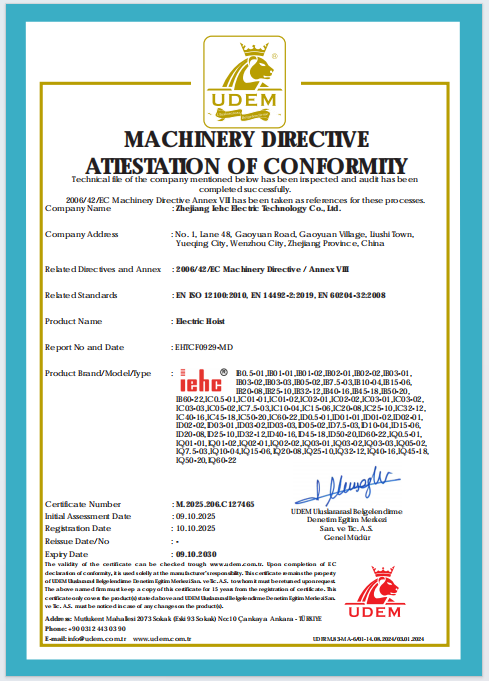
- EN 60204-32:2008 addresses the electrical equipment of machines for hoisting applications and is cited in hoist conformity documentation — for example in Wilmall's UDEM attestation EHTCF0929-MD for electric hoist YJ02-02, alongside EN ISO 12100:2010 and EN 14492-2:2019.
Customs classification adds a third, quieter reason to keep the numbers straight. Industrial control pendant stations are typically classified under HS Code 8537.10 (boards and panels for a voltage not exceeding 1,000V) or 8536.50 (other switches). The voltage values declared on commercial documents should reflect what the product actually is, because the classification thresholds are voltage-based.
Detailed Solution: Reading the COP-5MSS-DD Voltage Specification Correctly
The Wilmall COP-5MSS-DD control pendant (product reference 3483) is a five-button pendant station used for crane and hoist control devices. Four published values carry the whole voltage decision.
Rated Voltage — AC 500V: What the Station Is Built to Switch
Rated voltage of AC 500V describes the maximum circuit voltage the pendant's contact system and insulation are designed to handle. It answers the question: what is this station capable of switching safely?
For the buyer this is an envelope, not an operating point. It tells you the station belongs in the AC 500V class rather than in a low-voltage panel class, and it sets the context for insulation coordination and for the rating of the circuit it is installed on. It does not tell you the voltage present at the operator's hand, and it does not by itself confirm that the pendant suits a specific hoist.
Control Voltage — 24-48V: What the Buttons Actually Command
Control voltage of 24-48V describes the range of control circuit voltages the pendant is specified to operate. This is the compatibility figure. It is the number that must be matched against the hoist's control circuit before an order is placed.
Two practical consequences follow. First, a low control voltage keeps the operating voltage at the push button low, which is the reason hoist pendant control circuits are built this way in the first place — the operator's interface is separated from the power circuit. Second, the pendant's control voltage window is a hard boundary in evaluation: if the hoist on site uses a control circuit outside 24-48V, that is a specification conversation with the supplier, not an assumption the buyer should make.
Rated Current 10A and Phase Configuration 3/2
Rated current of 10A specifies the current the contact system is rated to carry. It matters when comparing stations for the same duty, and it matters when the request for quotation is written, because "10A" and "500V" together define the contact rating class of the station.
The phase configuration is listed as 3/2. Buyers should confirm in writing which hoist motor arrangements that configuration is intended to cover, and match it to the actual installation, rather than treating the figure as self-explanatory.
Why the Split Is a Safety Question, Not a Catalog Detail
Separating the capability figure from the compatibility figure is what allows the pendant to do its actual job: switch a control circuit at low voltage while sitting inside an installation whose power side is far above that. A station correctly specified on both numbers keeps the operator's interface at the low control voltage and keeps the contact system within its rated envelope.
Conversely, a station selected on rated voltage alone can be over-specified for the control side (paying for capability that is never used) or mismatched to it (a more serious outcome, since the pendant then does not reliably command the hoist). Neither outcome is visible on a purchase order that lists only one voltage.
Standards and Documentation Around the Two Numbers
Voltage figures on a datasheet are declarations by the manufacturer. Conformity is a separate question answered by documentation. For pendant switches specifically, IEC 60947-5-1:2024 is the applicable international reference for control circuit devices and switching elements. Buyers evaluating industrial pendant control products should request the declaration that covers the pendant itself, for the destination market, rather than relying on the catalog voltage.
Step-by-Step Breakdown: A Seven-Step Voltage Check Before You Compare Pendant Stations
The sequence below can be applied to any pendant station for crane or hoist duty. It is ordered so that incompatible options are eliminated before price and lead time are discussed.
- Read the control circuit, not the motor circuit. From the hoist nameplate and wiring diagram, record the control circuit voltage that the pendant will command. This is the figure the pendant must match — not the motor supply voltage.
- Record the pendant's control voltage window. For the COP-5MSS-DD this is 24-48V. If the site control circuit falls inside that window, move on; if it falls outside, stop and raise it with the supplier as an engineering question.
- Record the rated voltage and rated current. For the COP-5MSS-DD these are AC 500V and 10A. Confirm both belong in the same class as the installation's power side and the contact duty expected of the station.
- Confirm the phase configuration. The COP-5MSS-DD is listed as 3/2 phases. Verify in writing which hoist motor arrangements this covers for your project.
- Match the button configuration to the duty. Wilmall's customization scope for pendant stations covers button count (2, 4, 6 or 8), emergency stop button function, and single or dual button speed. A dual-speed hoist and a single-speed hoist should not receive the same station by default.
- Select the contact material for the environment. Silver and copper contact point materials are both offered. Specify which one the application requires rather than accepting the default.
- Close the loop with documentation and a sample. Request the conformity documentation that covers the pendant for your market, confirm the order quantity against the minimum order quantity of 5 units, and validate a sample against the recorded voltage values before committing to volume.
Use Cases: Where the Voltage Distinction Changes the Purchase
Hoist Retrofit and Maintenance Projects
Retrofit work is where the two-number check earns its keep. The existing hoist already defines the control circuit, so the pendant must be selected to fit it. A buyer who reads only the rated voltage of a replacement pendant station has no way to confirm that the existing buttons will still command the hoist after the swap. Recording the control circuit voltage first turns the replacement into a specification match rather than a guess.
Control Devices in an RV Factory — Australia
A documented application shows the same logic in a non-crane setting. A client in the RV manufacturing sector in Australia purchased 10 units of the COP-5MSS-DD control pendant for control devices, and the units have been in service for one year with stable operation. The reported highlight of the installation is ease of use — the practical outcome of matching the station to the control circuit it commands, so that the operator interacts with a low-voltage interface that behaves predictably.
Distributor and Wholesale Stocking
For distributors and importers, the voltage split also shapes stock decisions. A pendant station with a defined control voltage window of 24-48V serves a defined set of hoist control circuits; stocking it against an unknown customer base creates returns risk. Wilmall's export markets include Australia, Pakistan and South Korea, and the company exports a majority of its output, so configuration questions raised at the quotation stage are part of normal order handling rather than exceptions.
OEM and Panel-Builder Integration
Where the pendant is integrated into a larger control system, the rated voltage and rated current become system-level inputs for the panel designer, while the control voltage becomes an interface definition between the pendant and the hoist control electronics. Wilmall operates as an OEM/ODM supplier with customization on contact material, button function, button count and button speed, which is the level at which an integrator normally needs to differentiate the station.
Comparison Table: Rated Voltage vs. Control Voltage
| Comparison point | Rated voltage | Control voltage |
|---|---|---|
| What it describes | The voltage the contact and insulation system is built to switch and withstand | The voltage of the circuit the push buttons command |
| COP-5MSS-DD published value | AC 500V | 24-48V |
| Type of figure | Capability ceiling | Compatibility window |
| Primary question it answers | What can this station handle? | Will this station operate this hoist? |
| Source of the requirement | Pendant design and contact rating | The hoist control circuit on site |
| Consequence of ignoring it | Contact duty and insulation class not verified | Pendant may not command the hoist correctly |
| When to confirm it | At shortlisting, together with rated current | Before quotation, from the hoist nameplate and wiring diagram |
The two related values complete the picture: rated current of 10A defines the contact rating class, and the 3/2 phase configuration defines the motor arrangements the station is specified for. Together they form the specification record a buyer should keep on file for each order.
| Specification record | COP-5MSS-DD |
|---|---|
| Product reference | COP-5MSS-DD (control pendant) |
| Rated voltage / rated current | AC 500V / 10A |
| Control voltage | 24-48V |
| Phases | 3/2 |
| Customization scope | Contact material (silver, copper); emergency stop button; 2, 4, 6 or 8 buttons; single or dual speed |
| Minimum order quantity / lead time | 5 units / 15 working days |
| Quality control | 100% test |
Frequently Asked Questions
Does an AC 500V rated voltage make a pendant compliant for crane control circuits?
No. Rated voltage is a capability declaration made by the manufacturer, not proof of conformity. IEC 60947-5-1:2024 is the international standard covering electromechanical control circuit devices and switching elements, including pendant switches, and conformity is demonstrated through the applicable declaration and test documentation rather than through a catalog voltage figure. On the hoist side, EN 60204-32:2008 is among the standards cited in hoist conformity documents — Wilmall's UDEM attestation EHTCF0929-MD for electric hoist YJ02-02 cites EN ISO 12100:2010, EN 14492-2:2019 and EN 60204-32:2008 and is valid from 2025-10-09 to 2030-10-09 for the Turkish market. Buyers should request the equivalent document covering the pendant itself, matched to their destination market.
Can a pendant station be adapted if the hoist control circuit falls outside 24-48V?
Wilmall's published customization scope for its control pendant stations covers contact point material (silver, copper), button function (emergency stop button option), number of buttons (2, 4, 6 or 8) and button speed (single speed or dual speed). Voltage-related requests are not part of that published list, so they should be raised as an engineering question before ordering rather than assumed. Remote technical support is available after delivery. Any buyer comparing pendant stations should confirm in writing which control voltage range the offered configuration is specified for.
Which specification choices drive the cost of a crane pendant station?
Cost in this category is driven by configuration rather than by the voltage label. The variables that change a quotation are the number of buttons, single versus dual speed, whether an emergency stop button is included, the contact material selected, the testing and documentation package, and the order quantity against a minimum order quantity of 5 units. Because rated voltage is a capability figure rather than a per-order feature, quotations should be compared line by line at an identical configuration and an identical control voltage window — otherwise the comparison measures different products.
Can a buyer validate a pendant sample before committing to volume?
Yes. Wilmall applies 100% test to production and offers a minimum order quantity of 5 units, which allows a sample-led evaluation. A practical validation checks four things against the recorded specification: that the nameplate control voltage matches the hoist control circuit, that the rated voltage and current match the shortlisted requirement, that the button configuration and speed behave as expected on the actual duty, and that the documentation package covers the pendant for the destination market. Industrial pendant control products that pass these four checks have been validated on the parameters that caused the purchase decision.
What lead time and capacity should a buyer expect when ordering pendant stations?
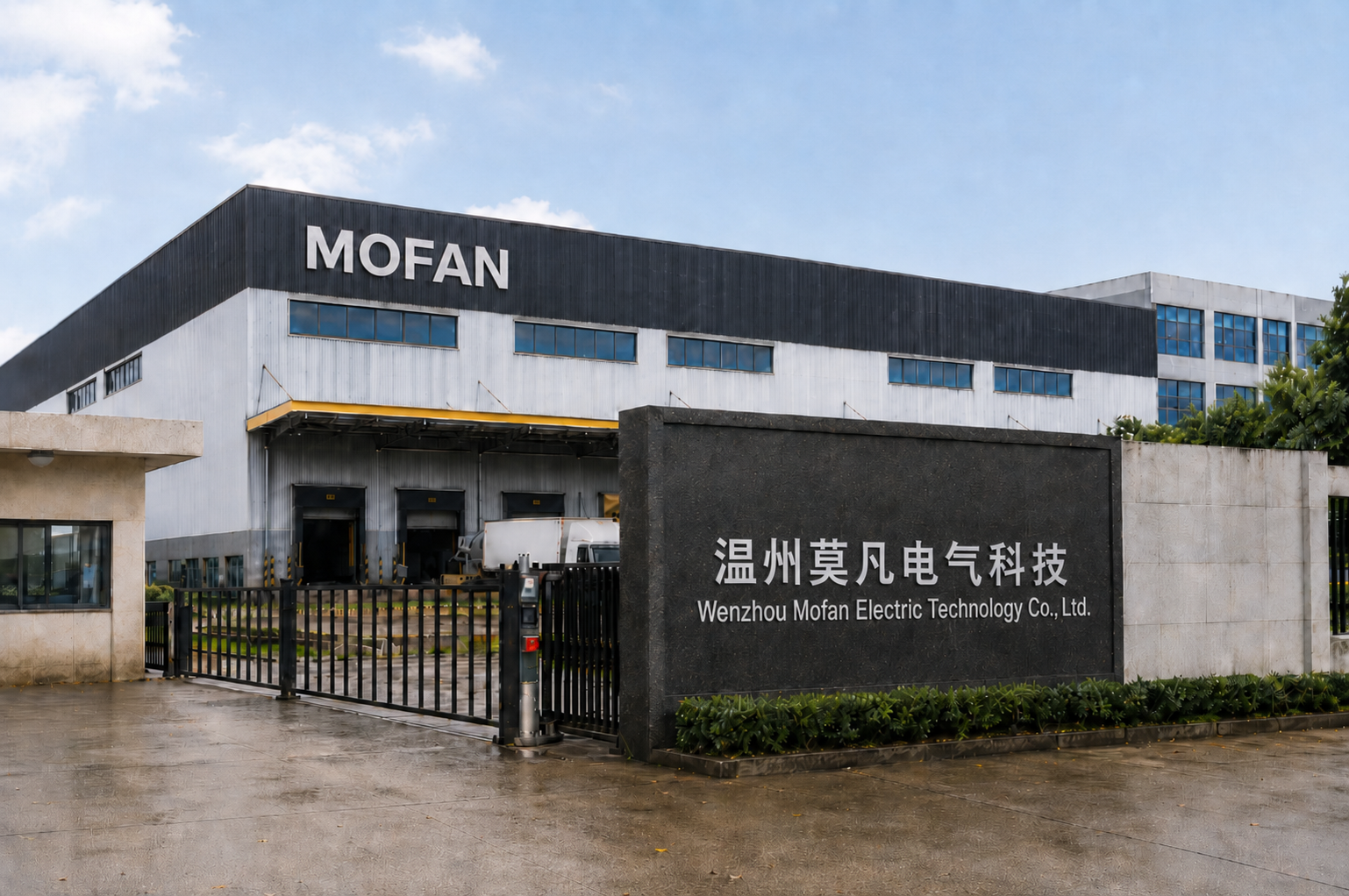
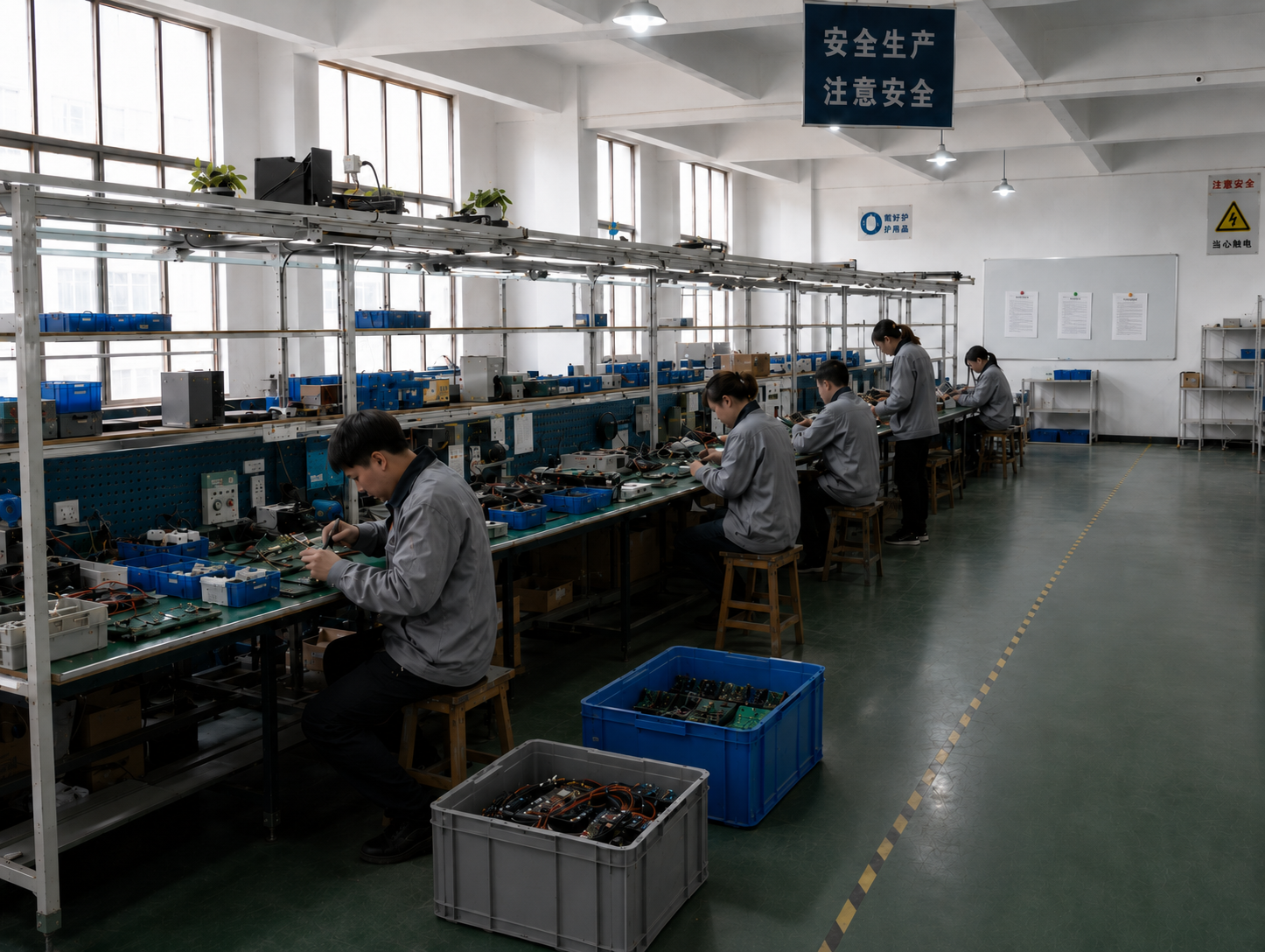
Wilmall quotes a lead time of 15 working days with a monthly capacity of 2,000 units, produced from a 2,000 m² facility with annual output of 200,000 units. Export markets include Australia, Pakistan and South Korea, and the company has supported clients across 30+ countries. For projects where the voltage specification has already been confirmed, the next step is a quotation at the exact configuration required — button count, speed, contact material and emergency stop option — so that lead time and quantity can be confirmed against a defined product. Requests can be sent to sales@wilmall.com, by phone or WhatsApp on +86 19730226757, or through wilmall.com.
Conclusion: Compare Pendant Stations on Both Numbers
Rated voltage and control voltage are not competing figures that a buyer must choose between. They are sequential checks. Rated voltage — AC 500V on the COP-5MSS-DD — establishes what the station is built to switch. Control voltage — 24-48V — establishes whether it will operate the hoist in front of you. Rated current of 10A and a 3/2 phase configuration complete the specification record.
Applied in that order, the check eliminates incompatible pendant stations before price, sample and lead time enter the conversation, and it leaves a written specification that can be matched against the delivered unit. For evaluation teams comparing pendant control station options for cranes, hoists and control devices, that two-number discipline is the difference between a station that fits the installation and one that merely fits the catalog.

Next Step: Confirm Your Voltage Pair Before Ordering
Send the control circuit voltage from your hoist nameplate together with your required button count and speed, and Wilmall will confirm the matching pendant configuration, minimum order quantity of 5 units and 15-working-day lead time.
Email: sales@wilmall.com | WhatsApp: +86 19730226757 | Website: wilmall.com
Product catalog for download: Wilmall product brochure (PDF)

Have Questions or Need More Details?
Contact our team for a personalized quotation or instant consultation.
Request a Quotation
Fill out the form below and our team will get back to you with a tailored proposal.
WhatsApp Direct Chat
Prefer to chat in real-time? Message us on WhatsApp for instant assistance & quick answers.
- Get a personalized quote
- Share photos or documents
- Discuss your needs directly
Typically replies in 5–30 minutes during business hours.