Cost Control for Custom Pad Mounted Transformers in Small and Mid-Size North American Projects
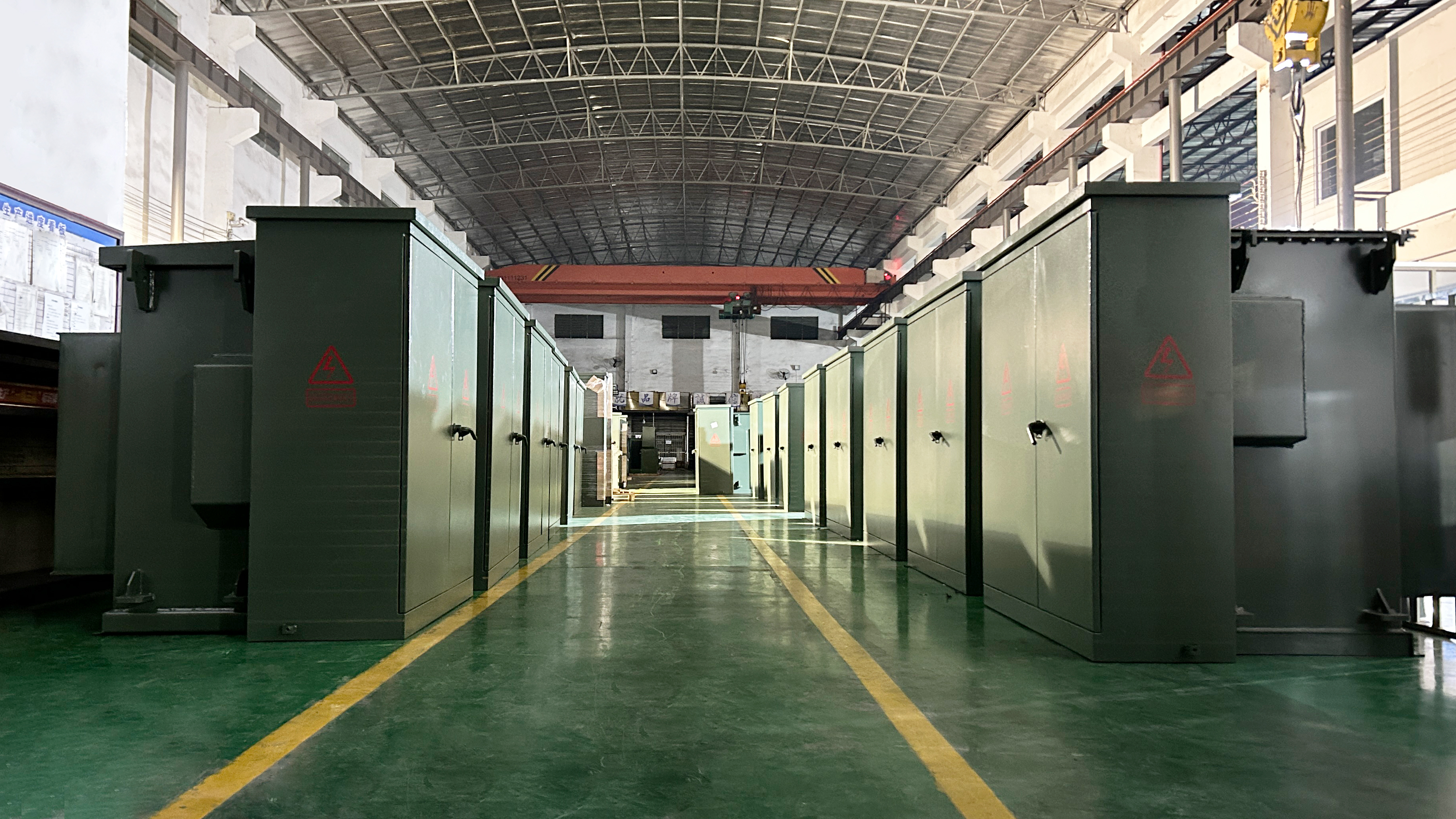
Cost control on a custom pad mounted transformer is not won at the price-negotiation table. On small and mid-size North American projects, the money is lost earlier — in an unfrozen specification — and later, in rework, replacement units and schedule slippage. Projects that stay on budget treat six levers as one system: specification discipline, a clear split between custom and standard, compliance purchased once, documented hold points, lead time matched to the construction schedule, and commercial terms written for the life of the asset rather than for a single purchase order. None of those levers is a discount. Together they decide the final number.
Winley Electric (Xiamen Winley Electric Co.,Ltd) is a transformer manufacturer founded in 2014, headquartered in Xiamen, China, producing oil-immersed and dry-type transformers rated 230 kV and below — including three-phase pad-mounted transformers and single-phase pad-mounted transformers, substation transformers, pole-mounted transformers and reactors. The company is UL and cUL certified, exports to more than 60 countries, and serves North and South America as its main markets, with roughly 70% of output exported. Small and mid-size North American pad-mounted projects are therefore a working environment rather than an exception for this supplier.
Problem Definition: Where Small-Project Transformer Budgets Actually Break
A 50 kVA, 75 kVA or 500 kVA unit ordered for a strip center, a subdivision phase or a solar array pad is governed by the same standards architecture as a much larger installation. IEEE C57.12.34 covers three-phase pad-mounted distribution transformers up to 10 MVA and 34.5 kV. IEEE C57.12.38-2025 standardizes single-phase pad-mounted transformers rated 250 kVA and smaller. IEEE C57.12.28-2023 addresses enclosure integrity for pad-mounted equipment installed where the public can access it. Compliance obligations attach to the equipment class, not to the project's budget class — an asymmetry that explains a large share of overruns on small work.
In practice, four cost pools recur on small and mid-size pad-mounted transformer projects:
- Specification cost. Every non-standard kVA rating, unusual voltage combination, special impedance value or non-catalog enclosure triggers new drawings, new tooling arrangements and new engineering review. A small project pays a large project's engineering overhead without amortizing it across hundreds of units.
- Compliance cost. A UL/cUL listing, an ANSI/IEEE design basis and DOE 2016 efficiency requirements are not optional extras that scale down with order size. A unit bought without them does not save money; it moves the cost to commissioning, inspection and eventual replacement.
- Rework cost. Sending a crew back to a pad — to de-energize, re-terminate, re-inspect and re-test — is usually the largest single line item and the least visible at quotation stage.
- Schedule cost. A transformer that arrives late delays energization. A transformer that arrives early consumes site storage, security and sometimes temporary power. Both are functions of lead time, not of unit price.
The practical conclusion for buyers at the Decision and Execution stages is uncomfortable but straightforward: the cheapest quotation is not the cheapest project, and the two can differ by more than the visible price gap between suppliers.
Industry Background: The Market Small Projects Are Buying Into
The global pad mounted transformer market was valued at approximately USD 22.3 billion in 2024, according to Global Market Insights. The U.S. market alone was estimated at USD 3.75 billion in 2024 by Market Research Future, which attributes demand to grid modernization and the shift toward underground cabling. Those headline figures should be read with care: published estimates for the same market differ widely — Mordor Intelligence has placed it at USD 6.12 billion for 2025 and Strategic Market Research at USD 5.2 billion for 2024 — because sources define scope differently, particularly around whether larger power transformers are partly included. For a project buyer, any single number defines a source's boundary, not a budget.
Trade flows are more consistent on direction than on size. Global trade in liquid dielectric transformers under 650 kVA reached USD 4.08 billion in 2024, a 22.6% increase over the previous year, according to the Observatory of Economic Complexity. South Korea, Mexico and China are the leading exporters in that product class, with China alone exporting USD 511 million in 2024 according to OEC and World Bank WITS data. The practical reading for a North American project manager is that cross-border procurement of small and mid-size pad-mounted units is a mature channel, not an edge case — which means the cost differences between sourcing models are structural and repeatable rather than opportunistic.
The standards layer, by contrast, is not negotiable and is not a matter of market share. IEEE C57.12.34, IEEE C57.12.38-2025 and IEEE C57.12.28-2023 set the design, rating and enclosure boundaries that determine what a project can legally energize. Cost control has to happen inside those boundaries, and the levers below are all designed to operate there.
Detailed Solution: Six Cost-Control Levers for Custom Pad Mounted Transformers
Lever 1 — Freeze the specification before you request pricing
An RFQ that omits impedance, tap configuration, enclosure finish, bay layout, accessory set or standard basis produces one of two outcomes: a padded price that protects the supplier, or a low price that moves after award. Both are cost events. Winley Electric provides product selection recommendation, drawing design and accessory selection as part of its quotation process, and complete inquiries are typically quoted within 1 to 3 days with 24/7 support. The discipline that makes that turnaround useful is the buyer's: one complete specification, issued once, so that every quotation in the comparison is quoting the same transformer.
Lever 2 — Separate "custom" from "non-standard"
Not every requirement deserves engineering. Standard ratings and standard configurations reuse proven designs, tested enclosures and existing tooling, which is normally both faster and cheaper. Custom work should be reserved for items that carry field consequences: the voltage transformation ratio, impedance values that must coordinate with upstream protection, enclosure type and finish for the installation environment, cable termination provisions and mounting arrangement. Winley Electric's R&D team of 35 engineers works to ANSI, IEEE, CSA, DOE 2016, NEMA and IEC 60076 standards, and the product range spans 230 kV and below — so the genuinely custom content of a small project can usually be absorbed into an existing manufacturing platform instead of becoming a one-off design with one-off costs.
Lever 3 — Buy compliance once, correctly
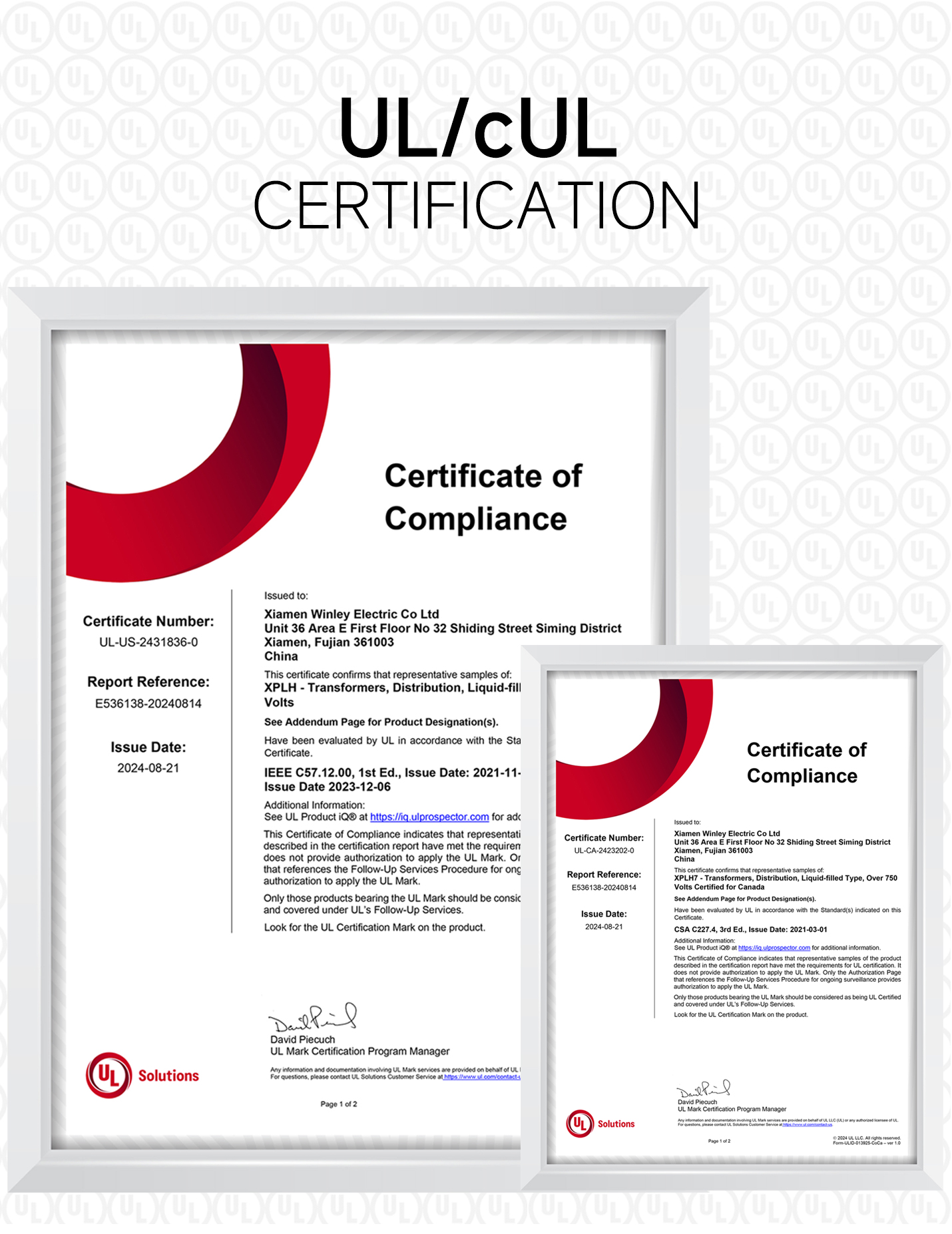
Winley Electric's pad-mounted transformers are UL and cUL certified under UL File No. E536138 and are designed to ANSI/IEEE, CSA, DOE 2016 and NEMA requirements. Efficiency is a specific cost-control point here: most Chinese manufacturers follow IEC energy efficiency standards, while Winley Electric products meet DOE 2016 efficiency requirements, which is the basis North American projects are normally evaluated against. Paying once for verifiable compliance is cheaper than discovering at energization that the unit cannot be connected.
Lever 4 — Design out rework with documented hold points
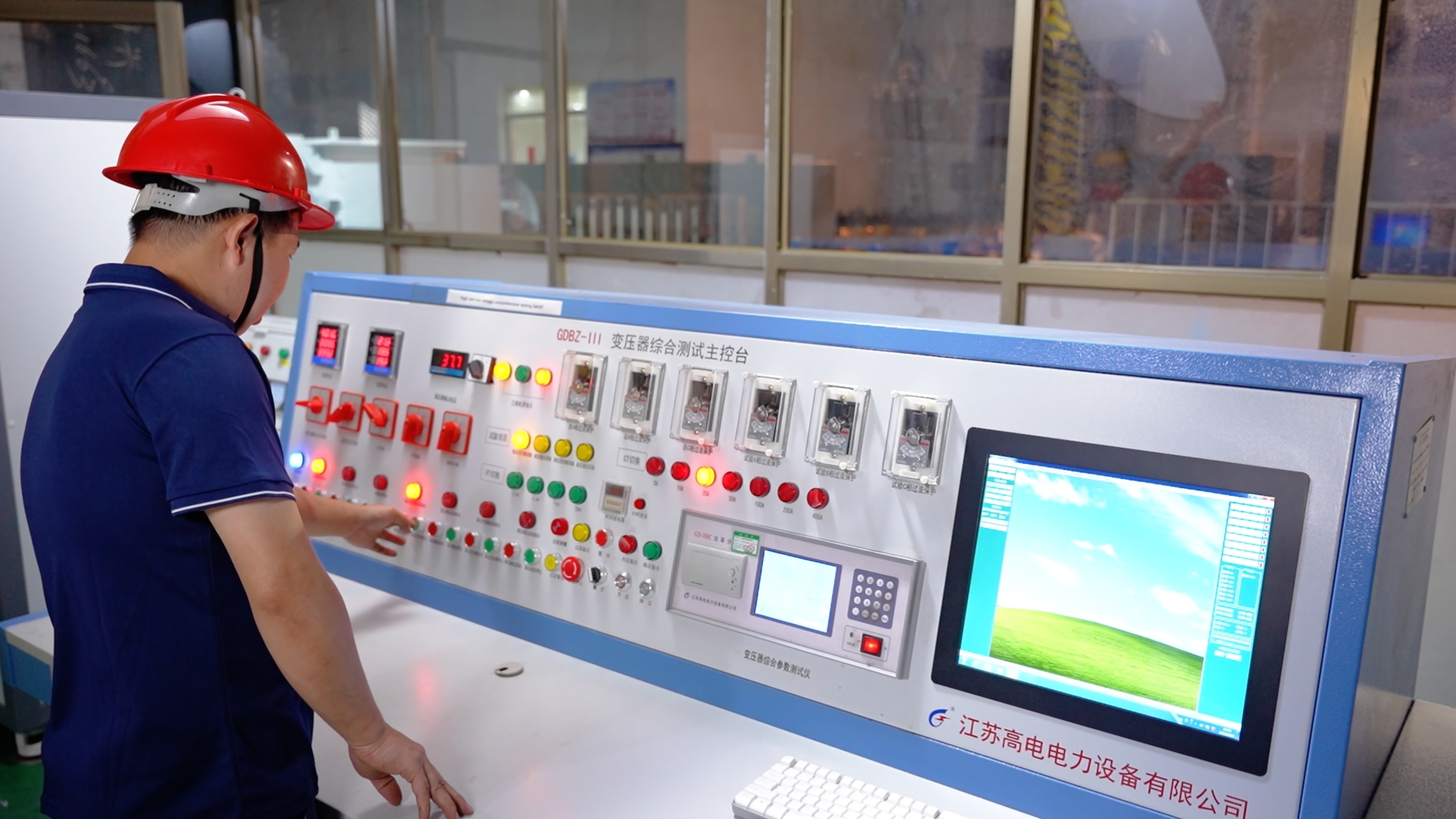
The most effective rework control is a manufacturing process that stops before defects become expensive. Winley Electric sets several mandatory hold points based on the transformer manufacturing process and product safety characteristics, typically placed after irreversible processes or before critical performance tests. At each of these points, authorized quality control personnel must inspect and sign off before production continues. The supporting systems matter as much as the checkpoints: a transformer material traceability system, a supplier evaluation mechanism, and professional type test equipment including lightning impulse test devices. For a small project that cannot absorb a second delivery window, documentation is worth as much as design.
Lever 5 — Match lead time to the construction schedule, not to the purchase order
Winley Electric's monthly production capacity is 500 units, with a typical production lead time of 4–8 weeks, against the 20–40 weeks generally required by local North American pad-mounted transformer manufacturers. That difference is not only an expediting benefit. Shorter lead time changes when a design has to be frozen: it lets a project confirm actual site conditions, utility interconnection feedback and load calculations before committing to a custom configuration, which reduces change orders after production has started.
Lever 6 — Write commercial terms for the asset, not for the purchase order
The commercial structure Winley Electric applies to small and mid-size orders is built for repeat purchasing: a minimum order quantity of 1 unit, delivery terms of FOB or CIF (or as required by the customer), T/T payment terms, and pre-shipment testing as the acceptance criterion. On the lifecycle side, the company provides a 2-year free maintenance service and 24/7 technical support, with a service scope covering product selection recommendation, drawing design, accessory selection, acceptance support, transportation planning and installation guidance. For distributors and channel partners, UL partner authorization can be opened based on actual requirements, which allows a local partner to market listed equipment without rebuilding the compliance chain. None of these terms reduce the invoice. All of them reduce the cost of the second and third order, which is where small-project budgets are actually decided.
Step-by-Step Breakdown: A Seven-Step Cost-Gated Procurement Workflow
- Define the service and the interconnection requirement. Establish actual load, growth allowance, primary and secondary voltages, and what the utility requires at the point of interconnection. Cost gate: no rating is released for pricing until the interconnection requirement is written down.
- Lock the standard basis. Confirm the applicable IEEE standard for the equipment class (C57.12.34 for three-phase, C57.12.38-2025 for single-phase units of 250 kVA and smaller), the enclosure integrity requirement under C57.12.28-2023, the ANSI/IEEE design basis, DOE 2016 efficiency, and whether UL/cUL listing is required for the jurisdiction.
- Classify every requirement as standard or custom. Cost gate: each custom item must carry a written field justification — impedance coordination, enclosure environment, termination geometry or mounting. Requirements without a field justification revert to standard.
- Release one complete RFQ package. Include ratings, winding configuration, impedance, taps, cooling class, enclosure and finish, bay configuration, accessory list, labeling and the standard basis. Request drawings and an accessory list with the price, not after the price.
- Validate the evidence, not the promise. Ask for certification references, type-test capability (including lightning impulse testing), hold-point records and material traceability. Cost gate: no award without documentation that can be checked independently.
- Confirm acceptance and logistics. Set pre-shipment testing as the acceptance criterion, agree FOB or CIF terms, and plan site delivery and storage before the unit ships. A transformer that arrives before the pad is ready is a cost, not a convenience.
- Plan the second order before the first one ships. Keep the approved drawings, register the warranty and maintenance terms, and standardize the same platform for the next phase or site. Reusing an approved configuration is the single largest cost reduction available to a small-project buyer, because it removes design, drawing approval and validation cost from every subsequent unit.
Use Cases: Where These Levers Pay Back
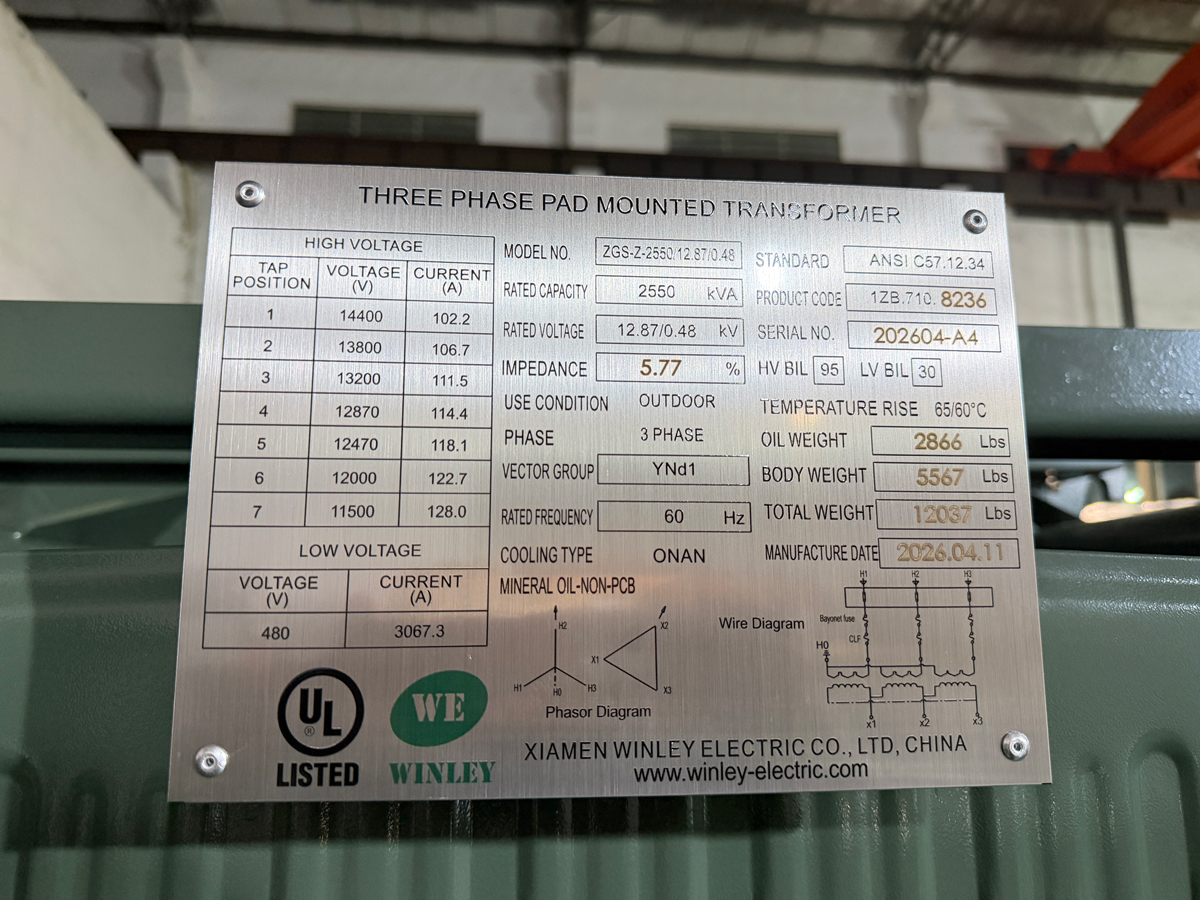
The levers above are not theoretical. They map directly onto the project types where small and mid-size North American pad-mounted transformer demand concentrates — municipal underground grids, residential districts, commercial malls, hospitals and universities, factories, data centers, solar and wind storage farms, EV charging stations and transport hubs. A few examples show how the cost logic changes by application:
- Residential subdivisions and small commercial pads. Single-phase units in the 25 kVA to 167 kVA range and three-phase units in the 500 kVA class are typically ordered in small batches across several phases. The dominant cost risk is inconsistency between phases: if phase one is custom and phase two is redesigned, the second phase pays engineering costs the first phase already absorbed. Standardizing the approved drawing set across phases is the primary saving.
- Municipal underground grid replacement. Replacement units must match existing vaults, terminations and protection settings. Here the custom content is mostly geometry and impedance; enclosure integrity under IEEE C57.12.28-2023 is a public-safety requirement rather than a specification preference, and substituting a non-listed unit creates re-inspection cost that exceeds any invoice saving.
- Institutional campuses — hospitals, universities, schools. Loads are stable but expansion is continuous. A 750 kVA or 1,000 kVA three-phase oil-immersed unit planned with spare capacity and a repeatable accessory set avoids a second procurement cycle when the next building is added.
- Solar and storage projects. A solar pad mount transformer is specified against an inverter output that is fixed early, so the design can be frozen quickly and the lead time advantage (4–8 weeks against 20–40 weeks for local manufacturing) directly shortens the window between mechanical completion and energization.
- EV charging sites. Charging hubs are built in small batches and expanded in modules. Ordering the first batch with a documented, repeatable configuration — and a supplier able to accept a minimum order quantity of 1 unit for validation — keeps each expansion cheaper than the last.
- Distributor and channel partner programs. For a local distributor, the cost of carrying pad mounted transformers for sale is dominated by compliance and support, not by the unit. UL/cUL certified products under UL File No. E536138, UL partner authorization availability and 24/7 technical support allow a partner to quote projects without building an engineering function.
Comparison Table: What Each Sourcing Model Actually Costs a Small Project
The table below compares the three sourcing models most small and mid-size North American projects choose between. Entries marked "not documented" reflect the absence of a verifiable figure in the sources used for this article, not a supplier limitation.
| Comparison dimension | North American local manufacturer | UL/cUL-certified export manufacturer (Winley Electric) | Lowest-bid supplier without verifiable listing |
|---|---|---|---|
| Typical manufacturing lead time | 20–40 weeks | 4–8 weeks typical; monthly capacity 500 units | Not documented |
| Certification status | UL/cUL listing typically held | UL and cUL certified under UL File No. E536138 | No verifiable listing |
| Standard basis | ANSI/IEEE, DOE 2016 | ANSI/IEEE, CSA, DOE 2016, NEMA, IEC 60076 | Not verified in public sources |
| Relative total cost | Baseline | 20–35% lower total cost than North American local manufacturing; about 10% lower than most other Chinese manufacturers | Lower unit price, unquantified and carrying rework risk |
| Minimum order quantity | Not documented | 1 unit | Not documented |
| Quotation turnaround | Not documented | 1–3 days for complete inquiries, with 24/7 support | Not documented |
| Warranty and maintenance | Not documented | 2-year free maintenance service | Not documented |
| Energy efficiency basis | DOE 2016 | Meets DOE 2016 efficiency requirements, where most Chinese manufacturers follow IEC efficiency standards | Not verified |
Two third-party benchmarks help frame the price conversation without pretending to set it. A 2025 buyer guide places FOB prices for pad-mounted transformers from China at roughly USD 25 to USD 70 per kVA depending on materials, and industry quotes put the average list price of a standard-efficiency 500 kVA oil-filled pad-mounted transformer (13.8 kV to 480 V) at approximately USD 39,761.
| Indicative benchmark | Value | Basis |
|---|---|---|
| FOB price range, pad-mounted transformers from China, 2025 | Approximately USD 25–70 per kVA | Third-party buyer guide; indicative only |
| Average list price, standard-efficiency 500 kVA oil-filled pad-mounted transformer, 13.8 kV to 480 V | Approximately USD 39,761 | Third-party industry quote compilation, 2024; indicative only |
Both figures are third-party references published by other organisations and are shown here to illustrate market range. Actual project pricing depends on rating, impedance, enclosure type and finish, accessory content, certification scope, order quantity, freight terms and lead time. Buyers should treat these numbers as context for evaluating quotations, never as a target price to negotiate against.
FAQ: Custom Pad Mounted Transformers for Small North American Projects
Does a custom pad mounted transformer for a small North American project still need UL/cUL listing and ANSI/IEEE compliance?
Yes. The requirement attaches to the equipment class, not to the size of the project. IEEE C57.12.34 governs three-phase pad-mounted distribution transformers up to 10 MVA and 34.5 kV, IEEE C57.12.38-2025 governs single-phase pad-mounted transformers rated 250 kVA and smaller, and IEEE C57.12.28-2023 sets enclosure integrity requirements for pad-mounted equipment accessible to the public. Winley Electric's pad-mounted transformers are UL and cUL certified under UL File No. E536138 and are designed in compliance with ANSI/IEEE, CSA, DOE 2016 and NEMA requirements aimed at grid connection and regulatory acceptance.
Can a manufacturer support a genuinely custom rating or configuration for a one-off small project?
Winley Electric quotes a minimum order quantity of 1 unit, and its product range covers transformers rated 230 kV and below, including three-phase pad-mounted transformers and single-phase pad-mounted transformers. Product selection recommendation, drawing design and accessory selection are part of the quotation process, and a team of 35 engineers works to ANSI, IEEE, CSA, DOE 2016, NEMA and IEC 60076 standards. That combination is what allows the custom portion of a small project to be engineered rather than improvised.
What actually drives the cost of a custom pad mounted transformer?
The main drivers are the kVA rating and configuration, the standard basis (UL/cUL listing, ANSI/IEEE design, DOE 2016 efficiency), enclosure type and finish, accessory content, order quantity, delivery terms (FOB or CIF) and lead time. Third-party benchmarks illustrate the range rather than determine a price: a 2025 buyer guide places FOB prices for pad-mounted transformers from China at roughly USD 25 to USD 70 per kVA depending on materials, and industry quote compilations put the average list price of a standard-efficiency 500 kVA oil-filled pad-mounted transformer (13.8 kV to 480 V) at approximately USD 39,761. Both are indicative references from third-party sources, and final pricing follows the finished specification.
How can a buyer validate a custom unit before it ships?
Through documented evidence plus pre-shipment testing. Winley Electric establishes several mandatory hold points in production, typically positioned after irreversible processes or before critical performance tests; at each hold point, authorized quality control personnel must inspect and sign off before the next process begins. The company operates a transformer material traceability system and a supplier evaluation mechanism for refined quality control across the production process, maintains professional type test equipment including lightning impulse test devices, and uses pre-shipment testing as the acceptance criterion for the order.
What lead time should a small North American project plan for?
Winley Electric's monthly production capacity is 500 units, with a typical production lead time of 4–8 weeks, compared with the 20–40 weeks generally required by local North American pad-mounted transformer manufacturers. Complete inquiries are typically quoted within 1 to 3 days with 24/7 support, which allows a project to confirm ratings and options before the schedule forces a decision. If you want to test this workflow on your next project, send the rating, voltage combination, enclosure requirements and accessory list to steven@winley-electric.com or +86 18650108051 (WhatsApp available), and Winley Electric will return a quotation with drawings.
Next Step: Cost-Controlled Sourcing for Your Next Pad-Mounted Package
Winley Electric supports small and mid-size North American projects with UL and cUL certified pad-mounted transformers (UL File No. E536138), a minimum order quantity of 1 unit, typical production lead time of 4–8 weeks and 500 units of monthly capacity. Send your specification for a quotation with drawings, or request sample and configuration validation before your next order.
Email: steven@winley-electric.com | Tel / WhatsApp: +86 18650108051 | www.winley-electric.com

Conclusion: Cost Control Is a Lifecycle Discipline, Not a Discount
For small and mid-size North American projects, the difference between a pad mounted transformer that fits the budget and one that breaks it is rarely the quoted price per unit. It is whether the specification was frozen before pricing, whether custom content was limited to requirements with field consequences, whether compliance was purchased once under a verifiable listing, whether hold points caught defects before they reached the site, whether lead time was matched to the construction schedule, and whether commercial terms were written for the second order instead of the first.
That last point is where the ecosystem value sits. A 1-unit minimum order quantity and 1 to 3 day quotation turnaround make it practical to validate a configuration on a single unit. A 2-year free maintenance service, 24/7 technical support and a documented service scope covering selection, drawing design, accessory selection, acceptance support, transportation planning and installation guidance make it practical to keep using it. And for channel partners, UL partner authorization options make it practical to resell listed equipment without rebuilding compliance from scratch. Winley Electric, founded in 2014, with a 45,000 m² manufacturing footprint, 220 employees, an annual output of 35,000 units and exports to more than 60 countries, is structured around that repeat-purchase model — which is the only cost-control mechanism that compounds.
Click to view more pad‑mounted transformer projects from Winley Electric:https://www.winley-electric.com/supplier-4701740-three-phase-pad-mounted-transformer
·Website:www.winley-electric.com

Have Questions or Need More Details?
Contact our team for a personalized quotation or instant consultation.
Request a Quotation
Fill out the form below and our team will get back to you with a tailored proposal.
WhatsApp Direct Chat
Prefer to chat in real-time? Message us on WhatsApp for instant assistance & quick answers.
- Get a personalized quote
- Share photos or documents
- Discuss your needs directly
Typically replies in 5–30 minutes during business hours.