Custom Pad Mounted Transformer Cost Control for North American Small Projects: A Practical Playbook from Delivered Jobs
Pad mounted transformer cost on a small or mid-size North American project is usually decided long before the quote arrives. It is decided in the specification: voltage class, feed arrangement, enclosure material, accessory list and compliance path. Two suppliers can price an identical 500 kVA nameplate and return very different numbers, because the transformers being priced are not the same transformers.
This playbook is written for buyers in the awareness and research stage — facility owners, EPC estimators, electrical contractors and procurement staff working on building service entrances, retail and hospitality sites, school and hospital campus expansions, small industrial services, and solar or EV interconnection projects. It deals only with cost-control decisions a buyer can actually make, and it uses delivered unit configurations as the field reference.
Xiamen Winley Electric Co., Ltd. — Winley Electric — is a transformer manufacturer established in 2014, headquartered in Xiamen, China, with manufacturing facilities in Shanghai and Guangdong. The company produces transformers rated 230 kV and below, including the three-phase pad mounted ZGS family, the single-phase pad mounted DGS family and the dry-type SG family, and holds UL and cUL certification. Its products are exported to more than 60 countries, with North and South America as its main markets.
Why the Same kVA Produces Two Different Prices
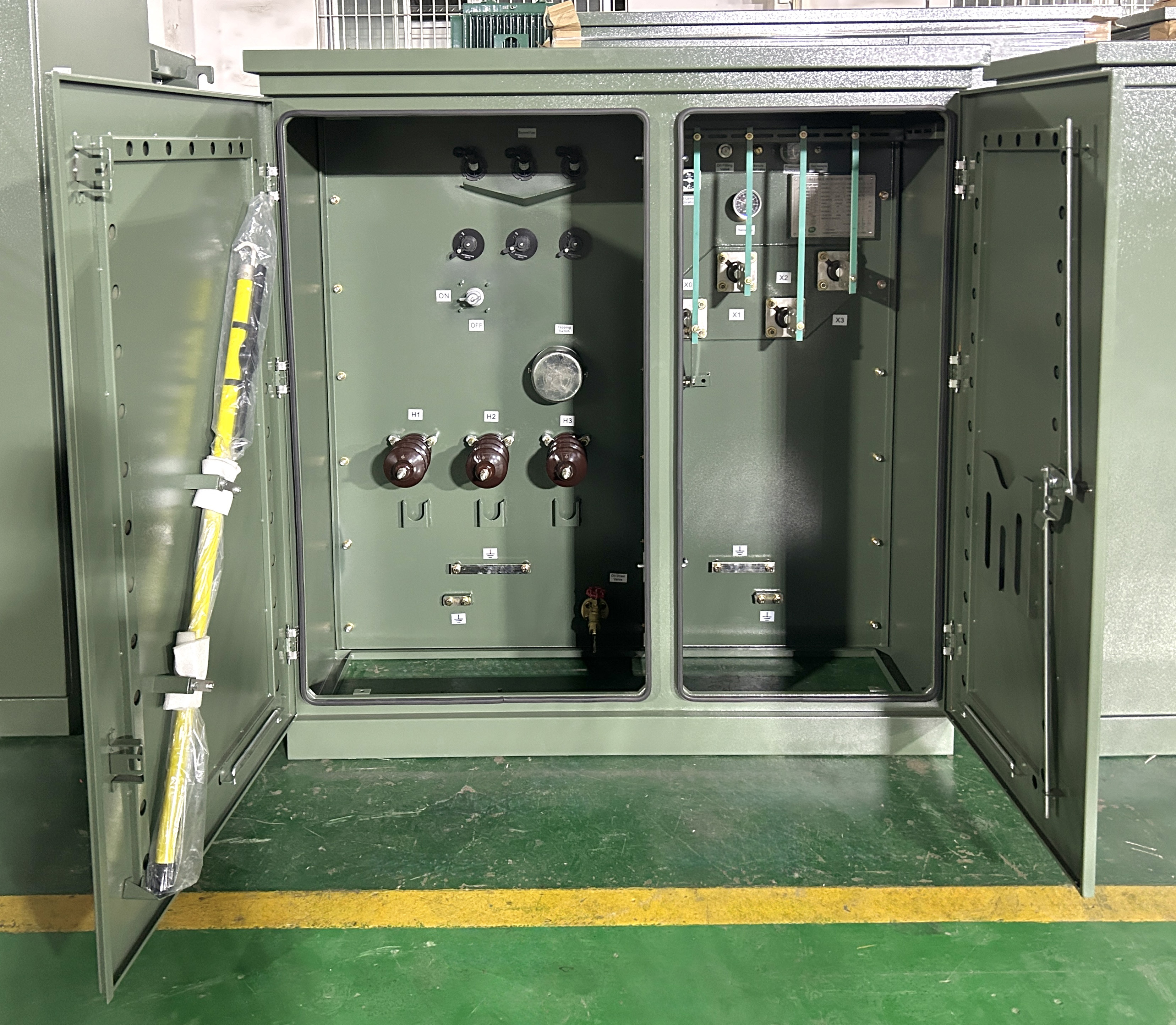
A pad mounted transformer is priced as a specification, not as a rating. Eight specification elements carry most of the cost, and a buyer who controls only the kVA controls almost none of them.
- Winding material. The ZGS, DGS and SG families are constructed from copper, aluminum and steel. The winding material is normally fixed by the utility or the specifying engineer, and it must be stated in the RFQ so that every quote is compared on the same basis.
- Capacity and voltage class. The three-phase ZGS range runs from 45 to 5,000 kVA with maximum capability up to 10 MVA, with primary voltages including 34.5 kV, 24.94 kV, 13.8 kV, 13.2 kV, 12.47 kV and 4.16 kV. Each step up in class changes core, coil, tank and oil volume.
- Feed arrangement. Both loop feed and radial feed are supported. Loop feed is normally required where the utility operates an underground loop network, and it adds switching and bushing provisions that a radial unit does not need.
- Secondary voltage and configuration. The ZGS line offers 690Y/400, 480Y/277, 208Y/120 and 240Y/120 secondaries, or others. The secondary must match the building distribution equipment, not the buyer's habit.
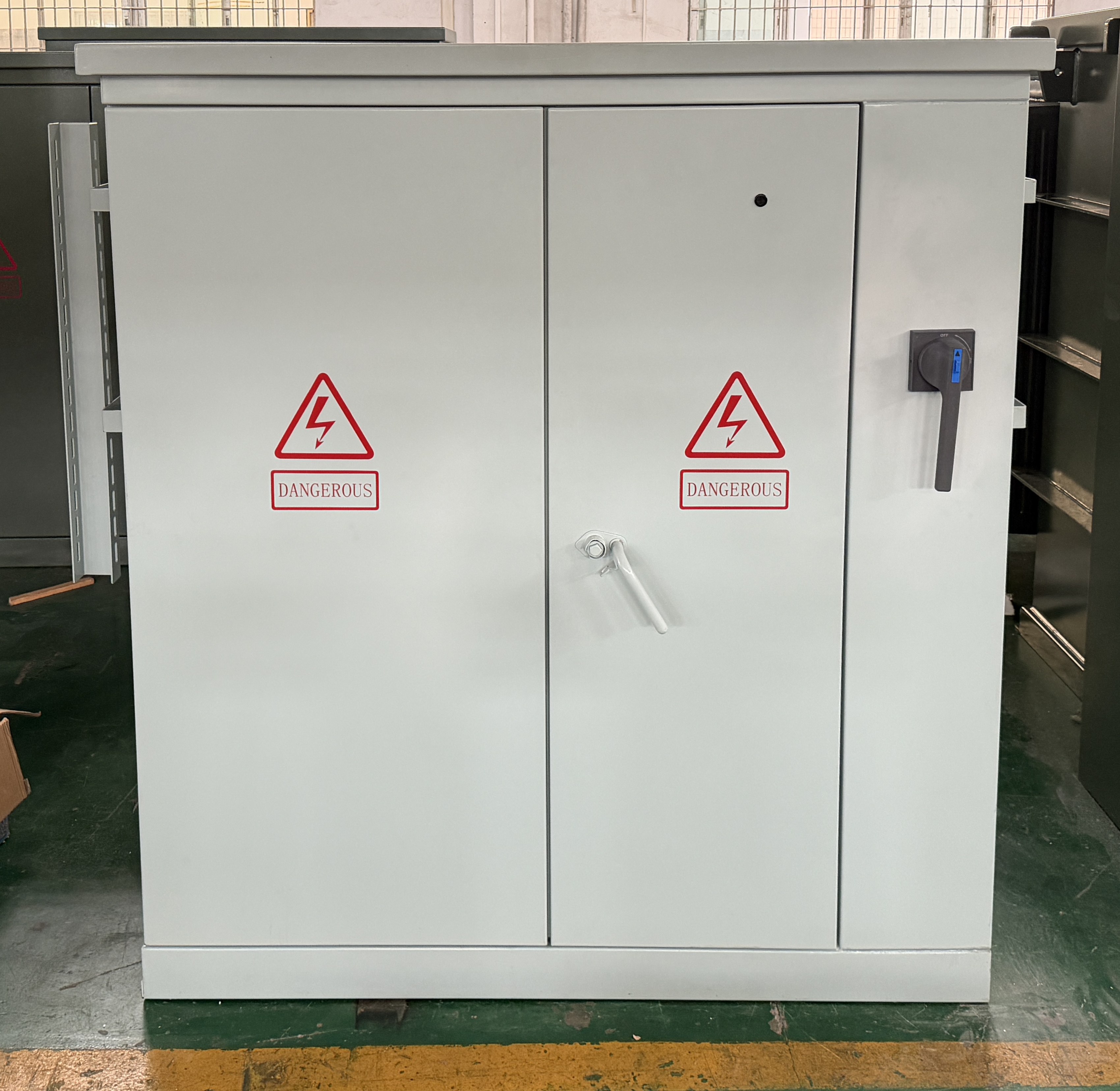
- Enclosure class and material. Dry-type SG units are available with NEMA 1, NEMA 3R and NEMA 4 enclosures. Outdoor pad mounted units can be supplied in painted steel or in a corrosion-resistant material such as 304 stainless steel where exposure justifies it.
- Insulating fluid. Oil-immersed construction is the standard for the three-phase ZGS and single-phase DGS pad mounted families, both of which are oil type, oil-immersed distribution transformers. Projects with stricter fire or environmental requirements may specify a high-fire-point insulating fluid instead.
- Accessory list. Overcurrent protection, load-break switching, fuses, surge arresters and secondary disconnects are specified per project. Each item adds material and test time.
- Testing, documentation and inspection. Factory testing, test reports, factory acceptance testing and third-party inspection are defined per order, and their scope is frequently left vague at budgeting stage.
Two failure patterns follow. Over-specification happens when a buyer defaults to the heaviest available configuration and pays for capability the site will never use. Under-specification happens when a buyer accepts a catalog unit that later needs field modification, a new protection scheme or a re-inspection — which usually costs more than the first mistake, because it arrives as schedule pressure.
Site conditions, not catalog defaults, should drive the requirement list. Commercial, institutional and campus projects commonly specify low audible noise, tamper resistance in publicly accessible areas, compact footprint, underground loop-feed compatibility, reliable grounding, high efficiency, outdoor weather resistance, load-growth allowance, and either a corrosion-resistant enclosure or a high-fire-point insulating fluid. Every one of those requirements is legitimate — but only where the site actually justifies it. A coastal or high-humidity site justifies a corrosion-resistant enclosure; a fenced inland yard may not. A public plaza justifies tamper-resistant construction; a utility compound with restricted access may not.
Cost-control rule: every requirement written into the RFQ should be traceable to a site condition, a utility requirement or a published standard. Requirements with no traceable origin are the ones that quietly add cost to every quote you receive.
What Is Shaping Pad-Mounted Transformer Costs in North America
The supply side matters because it defines the range a buyer is working inside. Published third-party figures give a reasonable sense of scale, provided they are used as direction rather than as a budgeting input.
- The global pad mounted transformer market was valued at approximately USD 22.3 billion in 2024, according to Global Market Insights.
- The U.S. pad-mounted transformer market was estimated at USD 3.75 billion in 2024, driven by grid modernization and underground cabling, according to Market Research Future.
- Market estimates diverge by source scope. Mordor Intelligence sizes the market differently, and other research houses publish smaller figures again, largely because the boundary between pad mounted distribution transformers and broader power transformers is drawn inconsistently. Treat any single market number as directional.
- Global trade in liquid dielectric transformers under 650 kVA reached USD 4.08 billion in 2024, a 22.6% increase from the previous year, according to the Observatory of Economic Complexity. This is the trade segment closest to small and mid-size distribution projects.
- China exported USD 511 million of liquid dielectric transformers under 650 kVA in 2024, alongside South Korea and Mexico as leading exporters according to OEC and World Bank WITS data. The practical implication for a small project is that the sourcing question is less about domestic versus imported and more about which specification each supplier is actually quoting.
- Standards set the technical floor. IEEE C57.12.34 governs three-phase pad-mounted distribution transformers up to 10 MVA and 34.5 kV. IEEE C57.12.38-2025 standardizes single-phase pad-mounted transformers at 250 kVA and below. IEEE C57.12.28-2023 specifies enclosure integrity requirements for pad-mounted equipment in public-access areas.
- Market research lists ABB, Eaton, Schneider Electric, Siemens Energy and General Electric among the major global manufacturers of pad-mounted transformers. Export-oriented manufacturers work in the same specification space, which is why line-by-line comparison of the technical offer is a more reliable cost-control habit than brand ranking.
The Cost Drivers Buyers Can Actually Control
1. Size the kVA to the load, and write the growth allowance down
Choosing the family before choosing the kVA removes the largest single source of avoidable spend. Three-phase ZGS pad mounted transformers cover 45 to 5,000 kVA and suit urban power distribution, residential, industrial and commercial parks and new energy stations. Single-phase DGS units cover 15 to 250 kVA, with maximum capability up to 833 kVA, and are designed for low-load-density outdoor distribution such as residential quarters, commercial streets and rural areas. Dry-type SG units span 10 kVA to 30 MVA and are used in power grids, industrial facilities, rail transit, data centers and new energy projects requiring high insulation reliability.
Paying three-phase pad mounted cost for a genuinely single-phase load is a specification error, not a price problem. The reverse error — under-sizing to save on the first purchase — produces higher losses in operation and a replacement cost later. State the growth allowance as a number in the RFQ so the supplier sizes to a defined figure rather than to an assumption.
2. Lock primary voltage, taps and feed type before soliciting quotes
Primary voltage is a utility fact, not a preference. The ZGS line supports 34.5 kV, 24.94 kV, 13.8 kV, 13.2 kV, 12.47 kV and 4.16 kV or others; the DGS line supports ranges such as 34.5–19.92 kV, 24.94–14.4 kV, 13.8–7.957 kV, 13.2–7.62 kV and 12.47–7.2 kV. Secondary options include 120–240 V, 240–480 V and 347/600 V on the single-phase family, and 690Y/400, 480Y/277, 208Y/120 and 240Y/120 on the three-phase family.
Multi-tap and multi-voltage primaries have a real use case. A 150 kVA seven-voltage unit configured for 11.5–14.4 kV to 208Y/120 V supports utility feeder standardization where several feeder voltages exist in one territory. On a site where the primary voltage is already confirmed in writing, the same flexibility is cost without benefit. Feed type works the same way: loop feed belongs where the utility operates a looped underground network, radial feed where it does not.
3. Match the enclosure and materials to documented site exposure
Enclosure choice is often the largest material swing after the windings. Delivered configurations include a 500 kVA 12 kV to 208Y/120 V pad mounted transformer in 304 stainless steel for hotels, retail buildings and institutional facilities, and a 300 kVA 13.2 kV to 480Y/277 V stainless unit for a small institutional service. Stainless is the right answer where salt exposure, chemical atmosphere or washdown conditions exist. Where they do not, a standard outdoor enclosure is the cheaper and equally serviceable choice.
4. Freeze the accessory list at drawing stage
Accessories are the easiest items to add on paper and the most expensive to add after release. Delivered examples show how specific the list becomes in practice: overcurrent protection on a 300 kVA grid-hardening unit, surge protection on a 300 kVA 12.47 kV to 480Y/277 V retail and destination EV charging unit, and a secondary disconnect on a 300 kVA institutional service unit. Each of these was justified by its application. Adding one later forces a re-quote, a new drawing revision and possibly a new production slot, which is how a low-price project becomes an expensive one.
5. Keep compliance complete and documentation proportionate
Compliance is not a cost lever — it is a condition of supply. The three-phase ZGS line is stated to comply with IEEE/ANSI C57.12.34, CSA C227.4 and C227.5, IEC, DOE and NEMA. The single-phase DGS line references ANSI/IEEE C57.12.00, C57.12.20, C57.12.38 and C57.12.90, plus CSA, DOE and NEMA. The dry-type SG line complies with ANSI, IEEE, IEC, NEMA, DOE or regional standards and carries UL/cUL, ISO and CE certification. What a buyer can control is the documentation set: ask once, for exactly what the authority having jurisdiction requires, rather than accumulating report formats that add administrative cost without adding approval value.
6. Plan testing and inspection deliberately
Winley Electric's three-phase pad mounted line is factory tested, with test reports, factory acceptance testing and third-party inspection available. Decide at RFQ stage who witnesses the tests, which reports are required and whether third-party inspection is needed. Duplicate or late inspection adds cost without adding evidence.
7. Treat logistics and commissioning as part of landed cost
The price on the purchase order is not the cost of the asset in service. Winley Electric's support scope covers product selection recommendation, drawing design, accessory selection, acceptance support, transportation plan and installation guidance, with 24/7 technical support and a 2-year free maintenance service. Freight, unloading, site storage and commissioning belong in the same evaluation as the equipment. A compact, correctly sized configuration is easier and cheaper to place where site access is constrained than an oversized one.
A Seven-Step Cost-Control Workflow for Small and Mid-Size Projects
- Write a one-page project scope. Site location and exposure, load type, required capacity, primary voltage confirmed by the utility, secondary voltage, feed type and the standards the project must meet. This document, not the purchase order, is what keeps quotes comparable.
- Select the transformer family before the kVA. Three-phase ZGS for balanced three-phase distribution, single-phase DGS for low-load-density outdoor points, dry-type SG where dry construction and higher insulation reliability are required.
- Set capacity and secondary voltage with a written growth allowance. Convert the allowance into a number so oversizing is a decision, not an accident.
- Fix enclosure class and materials against documented exposure. Record the reason for stainless or standard steel in the specification so it survives review.
- Freeze accessories, protection and component-brand requirements. If customer-specified component brands are required, list them at this stage, because component sourcing affects both price and schedule.
- Confirm the compliance and documentation path. ANSI/IEEE, CSA, DOE and NEMA references, plus UL/cUL listing requirements and the exact report set the authority expects.
- Approve drawings, then the testing and logistics plan, before production release. Changes requested after drawing approval are the most expensive changes in the process.
How the Decisions Land: Four Delivered Project Profiles
Profile 1 — Small institutional building service
A 300 kVA, 13.2 kV to 480Y/277 V pad mounted transformer in a 304 stainless steel enclosure with a secondary disconnect. The stainless enclosure is justified by exposure and the disconnect by serviceability requirements at the building service. On an inland site without either condition, both items would be cost to remove from the scope — and removing them before quoting is free.
Profile 2 — Hotel, retail and institutional facilities
A 500 kVA, 12 kV to 208Y/120 V stainless steel pad mounted unit serving hotels, retail buildings and institutional facilities. Here the secondary voltage drives the decision: 208Y/120 V matches the building distribution, so the transformer is specified once and correctly rather than adapted later.
Profile 3 — University and hospital campus distribution
A 1,500 kVA, 12.47 kV to 480Y/277 V pad mounted transformer for campus distribution, where hospitals and universities operate continuously and cannot accept a long outage. In this class of project, the cost-control objective shifts from purchase price to continuity: correct loading, correct protection and documented factory testing.
Profile 4 — Utility feeder standardization
A 150 kVA seven-voltage unit for 11.5–14.4 kV to 208Y/120 V service. Multi-voltage primaries reduce the number of spare units a utility must hold, which is a genuine lifecycle saving. For a single commercial site with one confirmed feeder voltage, the same configuration is unnecessary flexibility.
Transformer Family Selection at a Glance
Family selection is the first cost decision and the one most often skipped. The table below summarizes the specification differences that matter at quotation stage.
| Family | Model | Capacity range | Primary voltage options | Secondary voltage options | Standards | Typical application | Cost-control note |
|---|---|---|---|---|---|---|---|
| Three-phase pad mounted, oil-immersed | ZGS | 45–5,000 kVA (up to 10 MVA) | 34.5 kV, 24.94 kV, 13.8 kV, 13.2 kV, 12.47 kV, 4.16 kV or others | 690Y/400, 480Y/277, 208Y/120, 240Y/120 or others | IEEE/ANSI C57.12.34, CSA C227.4 and C227.5, IEC, DOE, NEMA | Urban power distribution, residential, industrial and commercial parks, new energy stations | Feed type, enclosure material and accessory list carry most of the swing |
| Single-phase pad mounted | DGS | 15–250 kVA (maximum capability up to 833 kVA) | 34.5–19.92 kV, 24.94–14.4 kV, 13.8–7.957 kV, 13.2–7.62 kV, 12.47–7.2 kV, 4160GrdY–2400 V or others | 120–240 V, 240–480 V, 347/600 V or others | ANSI/IEEE C57.12.00, C57.12.20, C57.12.38, C57.12.90; CSA, DOE, NEMA | Low-load-density outdoor distribution: residential quarters, commercial streets, rural areas | Lowest cost per service point where the load is genuinely single-phase |
| Dry-type | SG | 10 kVA–30 MVA | 4.76 kV, 15 kV, 23 kV, 34.5 kV or other | 208 V–34.5 kV or other | ANSI, IEEE, IEC, NEMA, DOE or regional standards; UL/cUL, ISO, CE | Grids, industrial facilities, rail transit, data centers, new energy projects requiring high insulation reliability | Enclosure class (NEMA 1, 3R, 4) and insulation class (B, F, H, C, R) are the main levers |
Published Cost Benchmarks and How to Use Them
Benchmarks are useful for sanity-checking a quote, and misleading when treated as a target price. The figures below are third-party values, not Winley Electric prices, and both should be verified against current market conditions before being used in a budget.
| Benchmark | Value | Source | How to use it |
|---|---|---|---|
| Export (FOB China) price range for pad-mounted transformers, 2025 | Typically USD 25–70 per kVA depending on materials | CHBEB Transformer Buyer Guide (third-party; medium reliability, verify before use) | Check whether a quote falls inside a plausible range, then compare line items to explain any gap |
| List price, standard-efficiency 500 kVA oil-filled pad-mounted transformer, 13.8 kV to 480 V, 2024 | Approximately USD 39,761 | Meta Power Solutions / published industry quotes (third-party estimate) | Use as a mid-size commercial reference point, not as a negotiated price |
| Global trade value, liquid dielectric transformers under 650 kVA, 2024 | USD 4.08 billion, a 22.6% increase from the previous year | Observatory of Economic Complexity (OEC) | Understand the supply pressure behind pricing and lead time, not the price of a single unit |
A benchmark becomes useful only when it is broken down. Ask any supplier to separate the transformer itself, the enclosure, the accessory package, testing and documentation, and freight. Two quotes that differ by a wide margin almost always differ in a line item, not in the market.
Frequently Asked Questions
Which standards and certifications should a North American pad-mounted transformer purchase reference?
For three-phase pad-mounted distribution transformers, IEEE C57.12.34 is the governing standard and covers ratings up to 10 MVA and 34.5 kV. Single-phase pad-mounted transformers rated 250 kVA and below are standardized under IEEE C57.12.38-2025, and enclosure integrity for pad-mounted equipment in public-access areas is covered by IEEE C57.12.28-2023. Canadian projects typically reference CSA C227.4 and C227.5. UL or cUL listing and DOE efficiency requirements are usually specified by the utility or the authority having jurisdiction. Winley Electric's three-phase ZGS line is stated to comply with IEEE/ANSI C57.12.34, CSA C227.4 and C227.5, IEC, DOE and NEMA, and the company holds UL and cUL certification.
How much customization is realistic on a small or mid-size project?
More than most buyers expect, within defined ranges. The three-phase ZGS pad mounted family covers 45 to 5,000 kVA with maximum capability up to 10 MVA, primary voltages including 34.5 kV, 24.94 kV, 13.8 kV, 13.2 kV, 12.47 kV and 4.16 kV, secondary voltages including 690Y/400, 480Y/277, 208Y/120 and 240Y/120, and both loop feed and radial feed configurations, in copper, aluminum and steel construction. Customer-specified component brands can be accommodated. Winley Electric's engineering support covers product selection recommendation, drawing design, accessory selection, acceptance support, transportation plan and installation guidance, with 24/7 technical support.
What should a realistic budget look like for a custom pad mounted transformer?
Published third-party benchmarks put export prices for pad-mounted transformers from China in the range of USD 25 to USD 70 per kVA in 2025 depending on materials, and a standard-efficiency 500 kVA oil-filled pad-mounted transformer at 13.8 kV to 480 V has been quoted at approximately USD 39,761 in U.S. list-price terms in 2024. Both figures are third-party estimates that vary with winding material, enclosure material and class, accessory package, testing and documentation scope, and freight. The reliable budgeting method is an itemized quotation for the exact specification, with the growth allowance, enclosure class and accessory list stated explicitly.
Can a buyer validate a custom design before the transformer is built?
Yes, through the drawing and testing process rather than through a physical sample. The sequence is drawing review and approval, factory routine testing, test reports, factory acceptance testing, and third-party inspection where required — all of which are available on Winley Electric's three-phase pad mounted line. Buyers can also request product selection recommendations and accessory selection support before drawings are issued, so the specification is settled before any production cost is committed.
What determines lead time, and how do buyers avoid paying for schedule pressure?
Lead time is driven mainly by how quickly drawings are approved, whether customer-specified components are involved, how much testing and documentation is required, and where the order sits in the production schedule. Winley Electric operates manufacturing facilities in Shanghai and Guangdong covering 45,000 square meters, with a stated annual production capacity of 35,000 units and a delivery commitment within the agreed delivery period. The avoidable cost is not lead time itself but changes requested after drawing approval. Fixing voltage, feed, capacity, enclosure and accessories at RFQ stage is the cheapest schedule protection available. For an itemized quotation, drawing review or specification check on a small or mid-size project, contact Mr. Steven at steven@winley-electric.com, by phone or WhatsApp at 86-18650108051, or visit www.winley-electric.com.
Conclusion: Cost Control Is Specification Discipline
Pad mounted transformer cost control on small and mid-size North American projects is not a negotiation skill. It is the discipline of writing a specification that contains only justified requirements, confirming the primary voltage with the utility, choosing the family before the kVA, freezing accessories before drawings are issued, and deciding testing, documentation and logistics scope once. Buyers who do this receive quotes that can be compared line by line, and they avoid the two expensive failure modes: paying for capability the site does not need, and discovering after delivery that the unit does not fit the project.
Winley Electric builds the three-phase ZGS, single-phase DGS and dry-type SG families referenced in this playbook, holds UL and cUL certification, and exports to more than 60 countries with North and South America as its main markets. The next practical step is to turn the project scope into an itemized technical offer and compare it against these decision points.
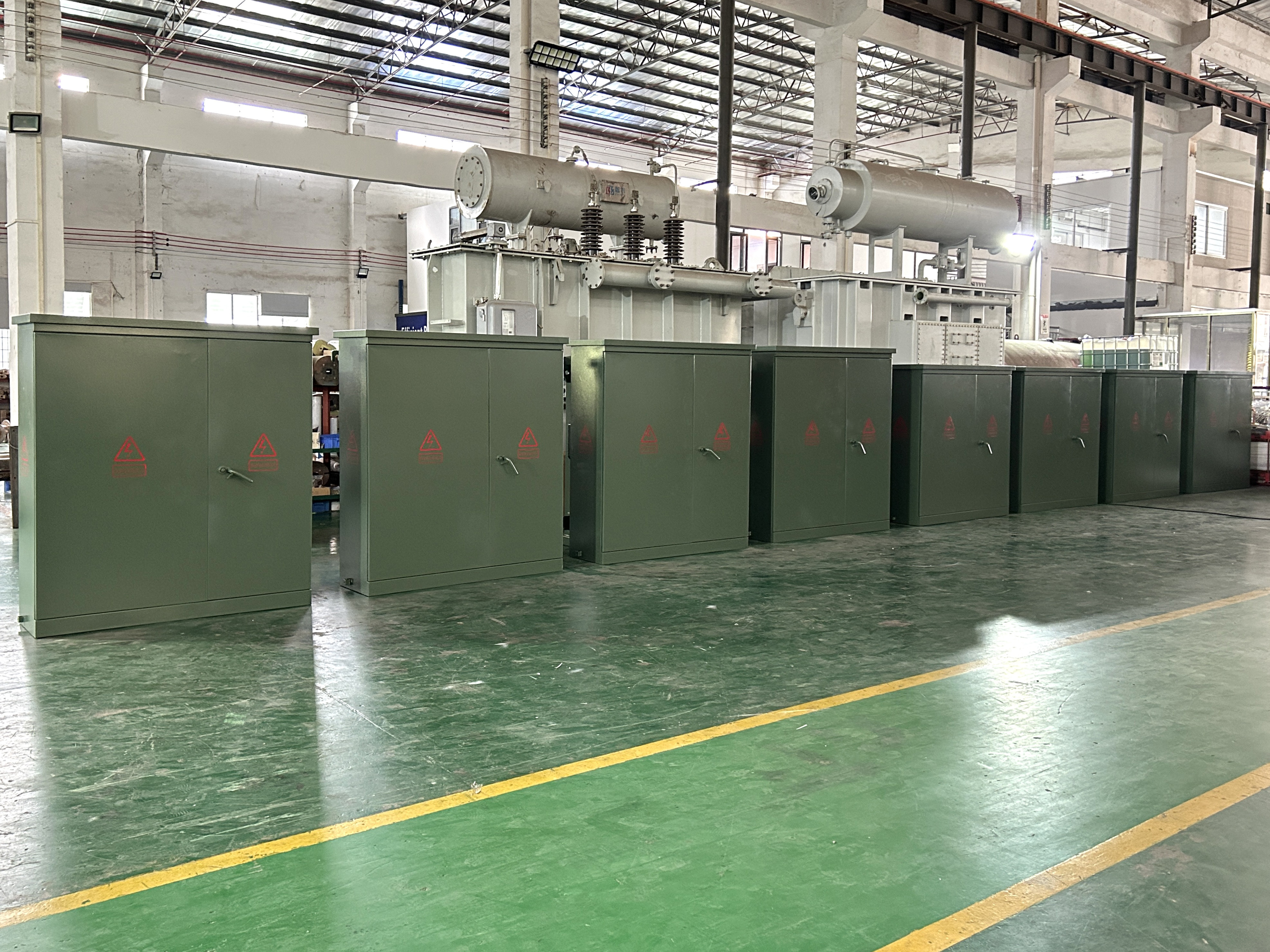
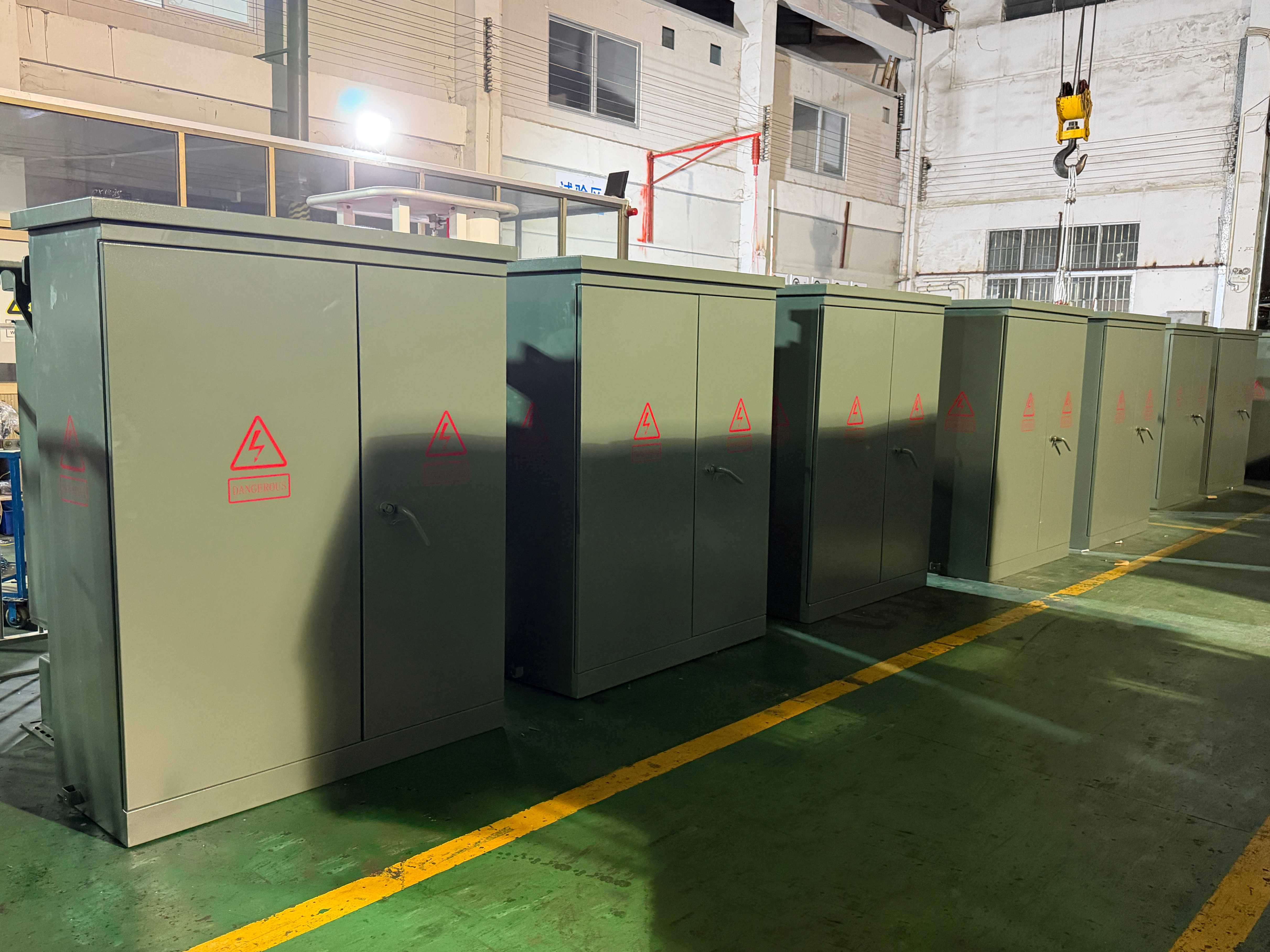
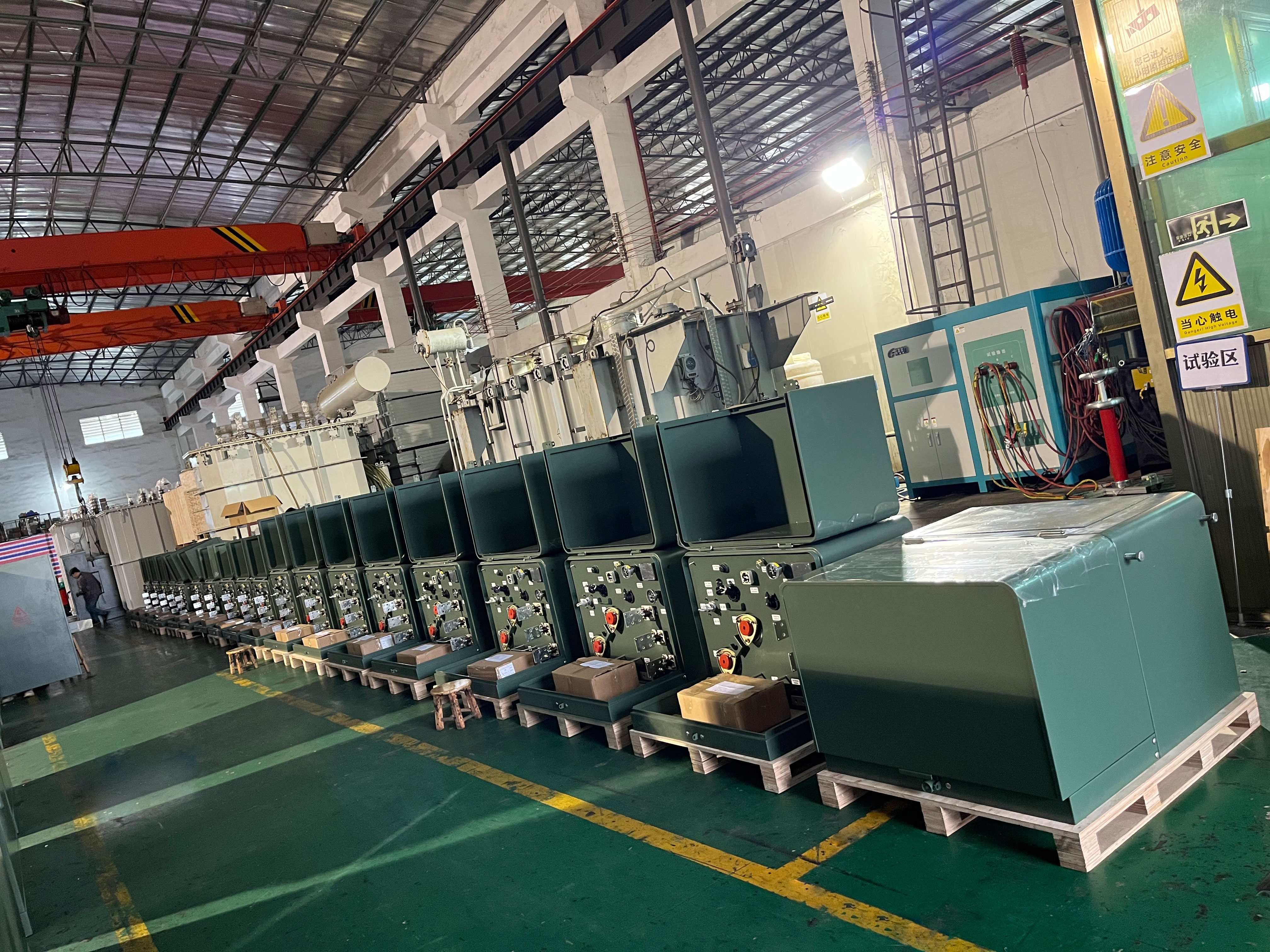
Click to view more pad‑mounted transformer projects from Winley Electric:https://www.winley-electric.com/supplier-4701740-three-phase-pad-mounted-transformer
Next Step
Send your project scope — capacity, primary and secondary voltage, feed type, enclosure class and site conditions — and receive an itemized quotation, a drawing proposal and accessory selection support for your small or mid-size North American project.
Email: steven@winley-electric.com · Phone / WhatsApp: 86-18650108051 · Website: www.winley-electric.com

Have Questions or Need More Details?
Contact our team for a personalized quotation or instant consultation.
Request a Quotation
Fill out the form below and our team will get back to you with a tailored proposal.
WhatsApp Direct Chat
Prefer to chat in real-time? Message us on WhatsApp for instant assistance & quick answers.
- Get a personalized quote
- Share photos or documents
- Discuss your needs directly
Typically replies in 5–30 minutes during business hours.