Custom Substation Transformer Engineering for North America's Solar, Storage, and Grid Projects
Substation Transformer OEM/ODM Procurement Guide
A 2026 evaluation guide for utility, EPC, solar-storage, industrial, and data center teams deciding whether a project-specific substation transformer should replace a catalog specification.
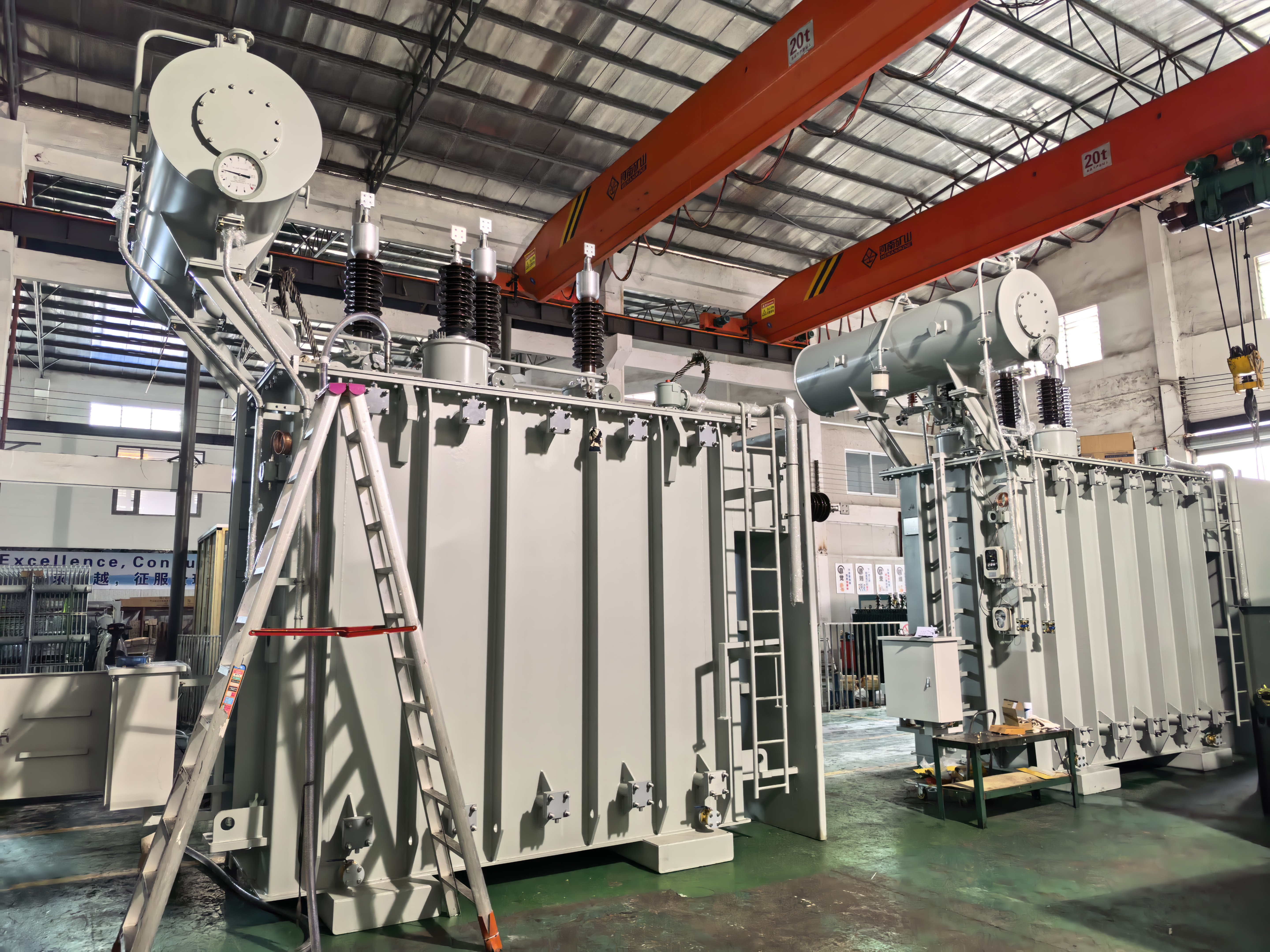
Grid modernization plans are colliding with a real procurement constraint: the time needed to secure a substation transformer. These transformers are required at utility substations, renewable collector stations, storage sites, industrial parks, data centers, and distribution substations. For projects with conventional specifications, catalog equipment can sometimes be enough. For solar, storage, and grid-upgrade projects, the more common situation is that the transformer must be engineered around the site, the utility's interface rules, the inverter or switchgear configuration, and the timeline.
This article explains why North American buyers evaluate custom OEM/ODM substation transformers, what a manufacturer should be able to customize, and how Winley Electric approaches those needs. Xiamen Winley Electric Co.,Ltd is a China-based transformer manufacturer founded in 2014, focused on transformer products rated 230 kV and below. Its engineering and export teams work primarily with North and South American buyers, and its manufacturing footprint includes facilities in Shanghai and Guangdong. Winley is used throughout this article as a concrete example of an OEM/ODM supplier that treats substation transformers as engineered products.
The Pain Point: A Substation Transformer Is Not Always a Catalog Item
For a North American utility substation, a renewable plant, or a data center, the electrical transformer is a fixed point in the power chain. The utility specifies the acceptable primary and secondary voltage, grounding method, impedance window, loss evaluation, tapping range, audible sound level, and protection interface. The developer or EPC must then select equipment that satisfies those values within a construction schedule. When a standard design cannot meet those values, the buyer usually needs a custom substation transformer.
The OEM/ODM decision is not only about having the transformer built. It is also about having the transformer designed, documented, tested, and transported in a way that is acceptable to the project's engineer and the local authority having jurisdiction. That process can include customization of capacity, voltage ratio, winding configuration, impedance, loss levels, cooling method, tap-changing system, terminal arrangement, protection and monitoring functions, structural design, testing, documentation, and transportation requirements.
In the North American market, the challenge is amplified by long lead times. In a recent Winley Electric utility project in the United States, the client was dealing with grid modernization and renovation of aged substations. Winley documented that North American manufacturers were experiencing extreme backlogs, with lead times for 30-50 MVA liquid-filled units often extending beyond 100 weeks. Equipment gaps of this size can delay entire substation construction programs. For renewable developers, such delays can move a project outside its expected commercial operation date and affect interconnection agreements.
Industry Background: What Is Driving the Demand for Custom Power Transformers?
Several market-level trends explain why utility and commercial buyers are now looking beyond simple power transformer price comparisons. According to MarketsandMarkets, the global transformer market was estimated at USD 64.64 billion in 2025 and is projected to reach USD 88.48 billion by 2030, driven by grid modernization and rising electricity demand. This broad market pressure directly affects substation transformer suppliers because utilities and developers are trying to order more transformers than the traditional supply base can deliver.
Grand View Research found that oil-immersed transformers held the highest market share of approximately 59.3% in the power transformer segment in 2025. That share is relevant to utility and renewable projects because oil-immersed or liquid-filled designs continue to be widely used where cooling efficiency and outdoor durability are important. The Global Market Insights estimate for the global substations market, valued at USD 128.5 billion in 2024 and expected to reach USD 178.9 billion by 2034, also points to sustained investment in the infrastructure around substation power transformers.
Additional demand is coming from digital infrastructure and smart-grid controls. SNS Insider has projected that the smart transformer market will grow from USD 3.17 billion in 2025 to USD 10.15 billion by 2035 at a CAGR of 12.35%, driven by the need for real-time grid monitoring. On the data center side, Strategic Market Research estimates data center transformer demand will rise from USD 2.2 billion in 2023 to USD 5.9 billion by 2030 at a 10% CAGR. These trends matter to OEM/ODM buyers because transformer projects are becoming less uniform: a data center substation transformer may need a different protection and monitoring package than a solar collector transformer or a utility step-down transformer.
For North American projects, the design framework is not global either. Substation transformer designs for this market are primarily governed by the IEEE C57 series, while UL 1561 and UL 1562 apply respectively to liquid-filled and dry-type units. Additional utility requirements and DOE efficiency rules can influence the design. A custom transformer manufacturer must therefore understand ANSI, IEEE, CSA, DOE, and IEC requirements, and it must be able to translate those requirements into a manufacturable drawing.
What Custom Substation Transformer OEM/ODM Capability Looks Like
Winley Electric's substation power transformer product range covers capacities from 150 kVA to 100 MVA, with primary voltage levels commonly between 2.4 kV and 230 kV and secondary voltage levels usually between 0.6 kV and 35 kV. The products are built to relevant standards including NEMA, ANSI C.57, DOE, and IEEE as applicable. For OEM/ODM orders, Winley supports transformer projects rated up to 100 MVA and 230 kV.
The term OEM/ODM is not simply a label. In Winley's workflow, OEM is understood as build-to-print production, while ODM covers full engineering development of a project-specific design. Both paths can include the following areas:
- Capacity, primary and secondary voltage, winding configuration, and vector group.
- Impedance, no-load and load-loss levels, and cooling method.
- Off-circuit or on-load tap-changing systems.
- Terminal arrangement, bushings, cable boxes, and enclosure type.
- Protection and monitoring functions for utility or smart-substation integration.
- Structural design, tank material, finishes, NEMA-rated enclosures, and environmental protection.
- Factory testing, documentation, quality records, and transportation planning.
One of the most useful OEM/ODM practices is component flexibility. Customer-specified components from recognized brands such as Qualitrol, Eaton Cooper Power series, and Maschinenfabrik Reinhausen (MR) can be integrated into the design. This matters for North American buyers because utilities and plant owners often have a preferred list of accessories, relays, gauges, and tap changer manufacturers. Engineering the transformer around those known components makes approval easier and gives the owner a familiar maintenance envelope.
1 unit, which gives small projects and urgent grid repairs access to custom OEM/ODM engineering.
300 units across Winley's transformer product lines.
A transformer engineering team with experience in ANSI, IEEE, CSA, DOE, NEMA, and IEC standards.
24 months from bill of lading; support is available for accessories and technical questions.
Before shipment, every unit is subjected to factory quality control under ISO 9001 process management. Routine tests include winding resistance, turns ratio, polarity and phase relation, and no-load loss. Winley's facilities have also introduced lightning impulse type-test equipment, which is needed when a utility specification requires evidence beyond routine factory tests. These testing capabilities may not appear on a commercial invoice, but they determine whether a transformer can be approved without repeated delays.
Step-by-Step Custom OEM/ODM Process for North American Substation Projects
Evaluation teams need a practical framework for moving from project specification to delivered transformer. The following steps reflect how a project-specific substation transformer should be managed.
Step 1: Define the project interface before selecting a standard
Collect the utility interconnection voltage, the load or generation side voltage, system frequency, grounding method, available short-circuit strength, altitude, ambient temperature, and applicable regulation. For solar and storage projects, the inverter medium-voltage interface has to match the transformer's low-voltage winding. For utility projects, the high-voltage side has to match the substation bus and protection scheme.
Step 2: Select the applicable standard family and approval route
For North America, the engineering review should use the relevant ANSI/IEEE or CSA requirements when the project is in the United States or Canada. Distribution transformer efficiency regulations can also affect loss evaluation. The OEM should be able to state which standard applies, which certificates are relevant, and which tests will be performed to support final acceptance.
Step 3: Develop the engineering design and approval drawing
At this stage the manufacturer converts the project requirements into capacity, voltage ratio, impedance, loss, cooling, tap range, terminal, protection, and tank detail. For an ODM project, this is where the design is tailored to site conditions and existing equipment interfaces. A clear general arrangement drawing is critical because it is also the document used by civil, electrical, and structural engineers to design foundations and connections.
Step 4: Fix the component and accessory package
OEM/ODM buyers should confirm which components are specified for the transformer. In Winley's process, customer-specified components from Qualitrol, Eaton Cooper Power series, and MR can be integrated into the transformer. This step also covers bushing type, surge arrestors, oil conservator, valve positions, and monitoring devices.
Step 5: Coordinate testing, inspection, and documentation
The factory inspection plan should include at least the routine tests defined in the governing standard. If the project requires lightning impulse or other type tests, the manufacturer needs to have either in-house capability or an approved third-party test arrangement. Documentation, test reports, and material traceability records are part of the deliverable package, not separate paperwork.
Step 6: Plan transportation and acceptance logistics
Large liquid-filled transformers cannot be treated as ordinary ocean freight. The transport plan has to cover dimensions, weight, lifting points, tilt limits, nitrogen or oil preservation during shipment, and site arrival inspection. Winley's project experience includes customized logistics solutions for heavy transformers, and this type of planning reduces the risk of damage or rejection at the jobsite.
North American Deployment Evidence: Utility, Industrial Park, Data Center, and Solar Projects
Real project examples help buyers assess whether an OEM/ODM transformer supplier can execute beyond drawings and promises.
United States: Grid Modernization with Two 40 MVA Substation Power Transformers
A U.S. utility client needed two 40 MVA class liquid-filled step-down substation power transformers for grid modernization and renovation of aging substations. The project was built to meet ANSI/IEEE standards for the North American market, and Winley delivered customized logistics solutions as part of the supply. The in-house production and testing cycle was completed in 12 weeks, which directly addressed the client's need to avoid project delays caused by extended industry lead times. This case is useful evidence for buyers who are evaluating whether a manufacturer can handle large substation transformer ratings in a compressed schedule.
United States: Industrial Park and Data Center with Two 34 MVA Transformers
In another U.S. deployment, electrical contractors ordered two 34 MVA substation power transformers for an industrial park and data center application. The units were built to ANSI/IEEE standards and included 304 stainless steel construction with a NEMA 4X weatherproof enclosure. That design choice added protection against harsh outdoor conditions, and the full production run was completed within 12 weeks. This is a relevant example for data center developers and electrical contractors that need a rugged, code-compliant substation transformer rather than a modified distribution unit.
Solar Project Evidence: A 6500 kVA Step-Up Transformer for a 60 Hz PV Grid
Winley has also executed a customized solar transformer project outside North America that demonstrates the same engineering method needed for grid-tied solar. The product was a 6500 kVA oil-immersed step-up substation transformer designed to step up power from photovoltaic modules to the local grid voltage. The voltage level was customized for the Honduras PV grid and adapted to the local 60 Hz interconnection requirements. The low-loss, energy-saving design was intended to reduce long-term operation and maintenance costs for the solar plant. Delivery was completed in 7 weeks, within a range meaningfully shorter than the ordinary industry lead time of 12-16 weeks, and the installation now supplies about 10 MW of clean power to southern Honduras.
What do these cases mean for a North American evaluation? They show that Winley Electric has experience with high-capacity 60 Hz transformers, ANSI/IEEE compliance, outdoor hardened enclosures, solar step-up configurations, and schedules that are short enough to protect project milestones. Storage projects can follow the same ODM path: the engineering controls, test plan, standards review, component selection, and factory inspection are similar, although the electrical parameters will be different.
Comparison: Important OEM/ODM Capabilities for a Custom Substation Transformer
The table below summarizes the capabilities that buyers should compare when evaluating a substation transformer OEM/ODM supplier for a North American project. The data points in this table are based on the Winley Electric engineering process and are intended as evaluation criteria rather than industry-wide averages.
| Evaluation Factor | Winley Electric Custom OEM/ODM Example | Why It Matters |
|---|---|---|
| Voltage class and capacity | Substation power transformer range from 150 kVA to 100 MVA; OEM/ODM engineering available at 230 kV class | Buyers need one supplier that can cover both small distribution substations and large utility transformers. |
| Primary and secondary levels | Primary usually 2.4 kV-230 kV; secondary usually 0.6 kV-35 kV | These ranges cover common North American utility, industrial, solar, and data center voltage interfaces. |
| Engineering customization | Capacity, voltage ratio, winding, impedance, loss, cooling, tap changer, terminals, protection, monitoring, and structure | Project-specific electrical parameters cannot be solved by changing a nameplate alone. |
| Standards and market knowledge | ANSI/IEEE, CSA, DOE, NEMA, and IEC; standards applied to project scope | The applicable standard controls design, testing, and site approval. |
| Component flexibility | Qualitrol, Eaton Cooper Power series, and MR components can be integrated | Utility preferred-vendor lists become part of the transformer design. |
| MOQ and production capacity | MOQ of 1 unit; monthly capacity of up to 300 transformer units | Small-batch ODM is practical for utilities, contractors, and renewable developers. |
| Quality and testing | ISO 9001-managed factory QC; routine testing includes winding resistance, turns ratio, polarity and phase relation, and no-load loss | Routine test evidence is the first gate before approval and commissioning. |
| Reference lead time basis | Published supply lead time: 8-10 weeks below 10 MVA; 10-12 weeks from 10 to 40 MVA; 18-20 weeks from 40 to 100 MVA | Longer ratings require more engineering, material, and test time. |
| Evidence in North America-oriented applications | Two 34 MVA units for a U.S. industrial park and data center; two 40 MVA units for U.S. utility grid modernization; both completed in about 12 weeks | Project-specific lead time is more credible when a manufacturer can show similar completed work. |
Frequently Asked Questions
Which ANSI, IEEE, UL, and CSA requirements matter for a custom substation transformer going into North America?
Substation transformer designs for the North American market are primarily governed by the IEEE C57 series, while UL 1561 and UL 1562 apply to liquid-filled and dry-type units respectively. DOE efficiency requirements and utility-specific specifications can also apply. A custom manufacturer should state the applicable standard family at the drawing stage and provide factory test documentation. Winley Electric holds UL and cUL certifications, including file E536138 for single- and three-phase pad-mounted transformers, and operates its factories under ISO 9001, ISO 14001, and ISO 45001. Buyers should verify that the relevant certificate scope matches the exact HV class and product form before final approval.
What can actually be customized on a substation transformer OEM/ODM project?
OEM/ODM customization can cover capacity, voltage ratio, winding configuration, impedance, loss levels, cooling method, tap-changing system, terminal arrangement, protection and monitoring functions, structural design, testing, documentation, and transportation requirements. Customer-specified components from brands such as Qualitrol, Eaton Cooper Power series, and Maschinenfabrik Reinhausen (MR) can also be integrated into the unit. The goal is to make the transformer align with the utility interface, site conditions, owner maintenance preferences, and approval process.
How does custom engineering affect project cost control?
Custom engineering changes where costs are spent, not necessarily the total cost. A project-specific drawing avoids paying for specifications that are not needed and avoids discovering a mismatch after the transformer reaches the site. A low-loss, energy-saving design can reduce long-term operating costs, especially for solar plants where lifetime efficiency is important. On the procurement side, buyers should ask what is included in the quote: engineering, materials, routine tests, documentation, accessories, and logistics. Transparent scope definition at the quotation stage is the main tool for cost control.
Can you provide examples of substation transformers built for North American utility or data center projects?
Yes. Winley Electric delivered two 40 MVA liquid-filled step-down substation power transformers for a U.S. utility grid modernization project, with full ANSI/IEEE compliance and customized logistics. Production was completed in 12 weeks. Winley also delivered two 34 MVA substation power transformers for a U.S. industrial park and data center application; those units were built to ANSI/IEEE standards and included 304 stainless steel construction with a NEMA 4X weatherproof enclosure. Both examples show capability at a capacity level relevant to utility, industrial, and data center substations.
What lead time should a North American buyer expect for a customized substation transformer?
Winley's published OEM/ODM supply plan is 8-10 weeks for transformers below 10 MVA, 10-12 weeks for transformers from 10 to 40 MVA, and 18-20 weeks for transformers from 40 to 100 MVA. In documented cases, two 34 MVA and two 40 MVA units were completed in 12 weeks, while a 6500 kVA solar step-up transformer was completed in 7 weeks. To get an accurate schedule, provide the project voltage, capacity, standard, site conditions, and requested delivery window. Winley Electric can then prepare a drawing review and quotation for your specific substation transformer project. Contact steven@winley-electric.com or WhatsApp +86 18650108051 to begin the evaluation.
Conclusion: Custom OEM/ODM Substation Transformer Engineering Is a Risk-Management Decision
North American solar, storage, grid modernization, industrial, and data center projects are converging on the same conclusion: the substation transformer is no longer an interchangeable commodity. The growing transformer market, the rise of smart-grid monitoring, and the long lead times for large liquid-filled transformers have made supplier engineering depth as important as price.
For a project owner, the evaluation question is not simply which substation transformer manufacturer has capacity. The question is which manufacturer can design to the utility's standard, build to the project's electrical parameters, test to a credible factory plan, document the work, and deliver the unit without creating an interface problem at the substation. Winley Electric's OEM/ODM capability covers those control points from 150 kVA through 100 MVA, with MOQ flexibility down to one unit and published lead times that range from about 8 weeks for smaller units to about 20 weeks for the largest class.
Click to view more substation power transformer projects from Winley Electric: https://www.winley-electric.com/supplier-4803516-substation-power-transformer
Next step: Use your project specification to test an OEM/ODM response.
Winley Electric can review primary/secondary voltage, capacity, applicable standard, site condition, and target delivery date. Submit your inquiry to steven@winley-electric.com or visit winley-electric.com.

Have Questions or Need More Details?
Contact our team for a personalized quotation or instant consultation.
Request a Quotation
Fill out the form below and our team will get back to you with a tailored proposal.
WhatsApp Direct Chat
Prefer to chat in real-time? Message us on WhatsApp for instant assistance & quick answers.
- Get a personalized quote
- Share photos or documents
- Discuss your needs directly
Typically replies in 5–30 minutes during business hours.