How EPCs Pre-Confirm a Utility's Pad Mounted Transformer Interconnection Checklist Before ODM Design Freeze
The lowest-cost point to clear a utility's interconnection checklist is before ODM design freeze — not at witness testing, and not at energization.
Answer first: an EPC should obtain the serving utility's own interconnection data-requirement checklist, convert it into a line-by-line compliance matrix, and have the transformer manufacturer sign off that matrix before drawings are released to production. Everything that is expensive to change later — nameplate data, voltage and tap configuration, dead-front arrangement, protection and metering interfaces, tank coating, and test evidence — is inexpensive to change while the design is still a drawing set.
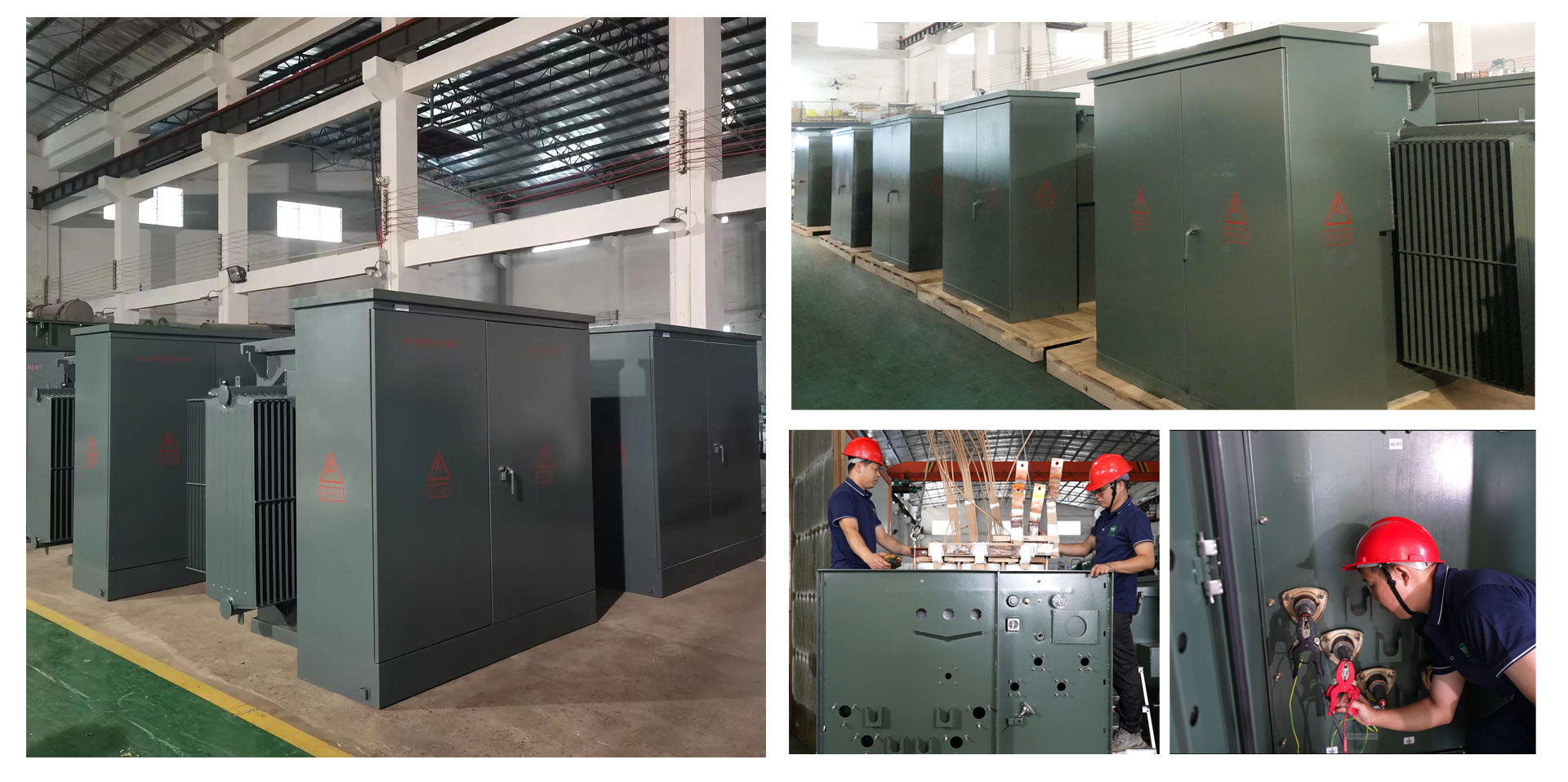
Winley Electric (Xiamen Winley Electric Co., Ltd) is a transformer manufacturer founded in 2014 in Xiamen, China, producing oil-immersed distribution transformers that include three-phase and single-phase pad mounted units, with UL and cUL certified pad mounted product lines. Its North American delivery record includes a batch of 31 three-phase pad mounted transformers built for a US electricity utility company, covering 2550 kVA and 3750 kVA ratings at 34.5 kV and 12.87 kV high-voltage levels.
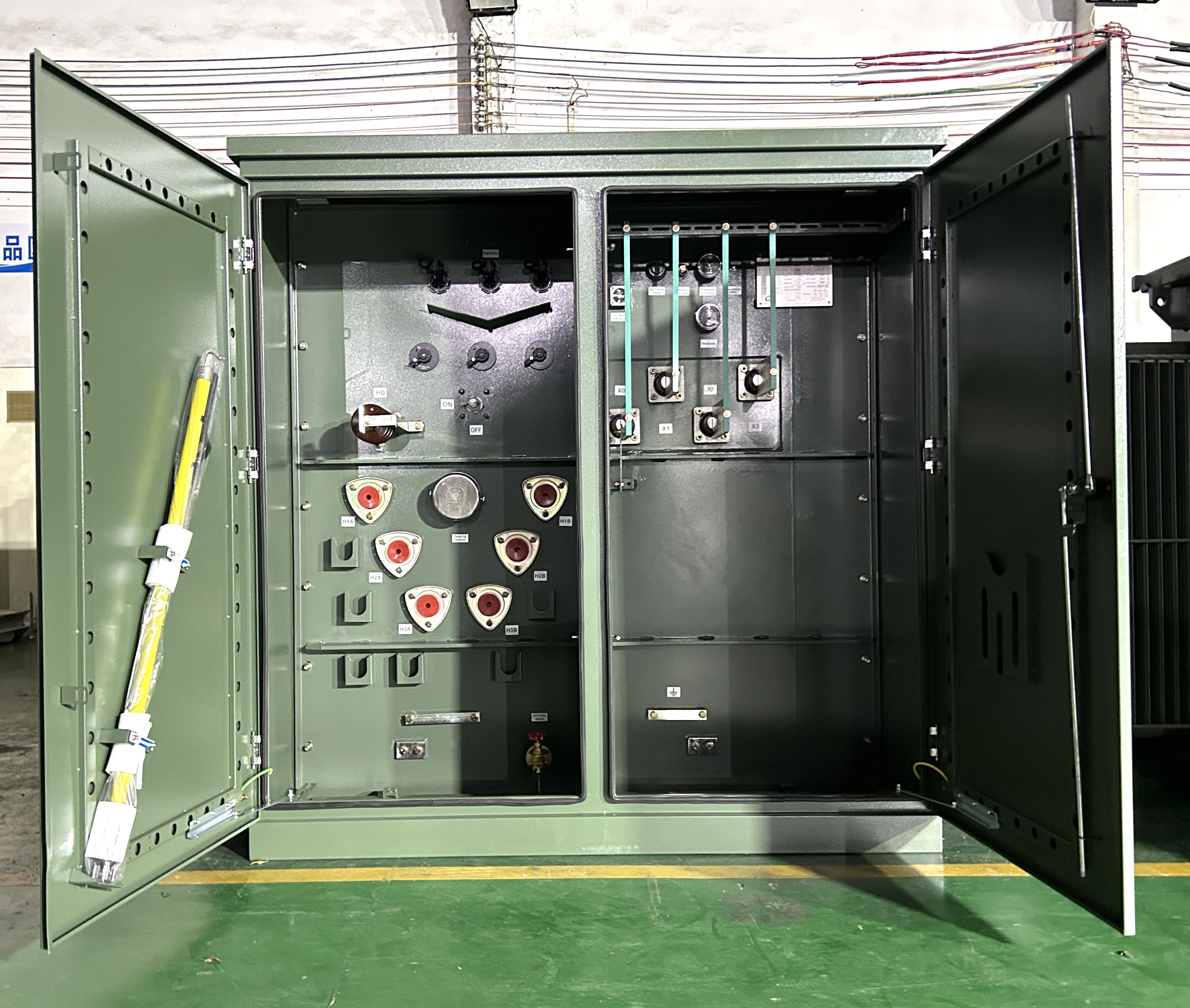
Problem Definition: Why Checklist Surprises Surface After the Equipment Arrives
Pad mounted transformer acceptance is a document-driven process as much as an electrical one. When a utility engineer approves an interconnection, the review usually runs on three parallel tracks: does the equipment match the approved drawings, does the nameplate match the approved equipment data, and does the test evidence match the standard the utility names in its own requirements book. When any one of those three tracks is assembled after the unit is already built, the EPC carries the schedule risk, not the manufacturer.
On North American projects, the recurring failure modes in that gap are well known to field teams:
- Data mismatch. Nameplate values for impedance, tap range, connection group or temperature rise do not match the equipment data sheet the utility approved.
- Late protection scope. Switches, protection devices, gauges, or communication and monitoring interfaces are added after the enclosure layout is already fixed.
- Site interface drift. Cabinet dimensions, dead-front arrangement, protection class and tank coating are treated as cosmetic details rather than as checklist items.
- Thin test evidence. Routine factory tests are provided, but the utility's checklist names type tests that were never scoped.
- Unit-by-unit documentation. Records arrive piecemeal per serial number instead of as one batch release package the utility can approve in a single review cycle.
None of these are manufacturing defects. They are timing defects. That distinction matters, because timing defects are eliminated by a pre-confirmation process rather than by tighter production control.
Industry Background: Why Utility Submittal Discipline Has Tightened
The commercial context explains the pressure. Market research published in 2026 estimates the US pad mounted transformer market at USD 3.75 billion in 2024, with a projected value of USD 8.32 billion by 2035 (Market Research Future). The same research identifies ABB and Schneider Electric as the market's dominant leaders at approximately 21% and 18% share respectively in 2025. High-value replacement and expansion volumes of that scale mean utilities are processing far more interconnection packages than their engineering review capacity was originally sized for — and review capacity is exactly what drives stricter, more literal checklist enforcement.
On the standards side, the reference document for this equipment class is IEEE C57.12.34, Standard Requirements for Pad-Mounted, Compartmental-Type, Self-Cooled, Three-Phase Distribution Transformers, 10 MVA and Smaller. The current active edition in the IEEE catalogue is IEEE C57.12.34-2022. In North America, UL and cUL listing functions as the practical gate: a utility may accept an ANSI/IEEE-compliant design in principle, but the installed unit still has to carry the listing the utility's own spec book cites.
For an EPC, the practical consequence is that the checklist is not a formality appended to the electrical design. It is the document that defines when the electrical design is finished.
Detailed Solution: Build the Unit Around the Utility Checklist, Not Around the Catalogue
The workable model inverts the usual sequence. Instead of selecting a catalogue unit and later asking whether it satisfies the utility, the EPC starts with the utility's requirement package and works backward into the manufacturer's ODM configuration surface. Three things make that inversion practical.
1. The checklist has a fixed anatomy
Although wording differs between utilities, the requirement package usually converges on the same categories: applicable standard and listing, electrical ratings and tap configuration, connection group, impedance and losses, temperature rise and cooling class, enclosure and compartment arrangement, protection and switching, metering and communication, coating and environment, nameplate content and tagging, drawing deliverables, and test reports. Once the categories are known, the checklist can be mapped to engineering decisions rather than read as prose.
2. The manufacturer has a defined customization surface
Winley Electric offers OEM and ODM pad mounted transformer solutions up to 10 MVA with high-voltage systems rated up to 36 kV. The configurable scope includes electrical performance (rated capacity, voltage, connection group), structure and appearance (model, cabinet size, protection class), insulation fluid, protection devices, switches, gauges, tank coating, extreme-environment adaptations, and extended functions covering monitoring, protection and communication interfaces, all built to customer drawings. The company also integrates components from brands such as Qualitrol and Eaton Cooper for tailored designs. That surface is wide enough to absorb most utility checklist items without redesigning the platform.
3. The deliverable is a document package, not only a transformer
The value of an ODM-stage sign-off is that it produces an auditable package: approved drawings, an equipment data sheet, a nameplate content sheet, and a test plan. Winley's quality control runs factory routine tests plus type tests as required by the customer, which is the mechanism that lets a utility's named test list be scoped at order entry rather than negotiated at shipment.
Rule of thumb: if a checklist line item cannot be pointed to a specific drawing, a specific nameplate field, or a specific test report, it has not been pre-confirmed — it has only been discussed.
Step-by-Step Breakdown: A Seven-Step Pre-Confirmation Workflow
Step 1 — Request the utility's actual data-requirement package
Ask the utility for its interconnection data requirements, its referenced standard edition, and its nameplate and tagging conventions before issuing an RFQ. Where a utility publishes a standard equipment spec book, request the revision that applies to the project's service date. A generic ANSI/IEEE summary is not a substitute for the utility's own document, because the utility reviews against its own book.
Step 2 — Convert the package into a line-by-line compliance matrix
Build a single register with four columns: the utility requirement, the design decision that satisfies it, the evidence document that proves it, and the owner responsible for it. This register becomes the controlling document of the whole order, and it is the artefact both the EPC and the manufacturer sign.
Step 3 — Freeze the electrical design before drawings are released
Lock rated capacity, high-voltage and low-voltage ratings, connection group, tap configuration, impedance and temperature rise. For reference, Winley's three-phase pad mounted transformer line is UL listed with a scope covering rated capacity from 45 to 5000 kVA at high voltages up to 36.0 kV, so most utility distribution ratings fall inside a single qualified platform rather than requiring a new design.
Step 4 — Lock the enclosure and site interface
Confirm cabinet size, protection class, dead-front arrangement, compartment layout and tank coating against the utility's site requirements. These are the items most often renegotiated late, because they look cosmetic on a drawing but are fixed by the time the tank is fabricated.
Step 5 — Lock protection, metering and communication interfaces
Switches, protection devices, gauges, and monitoring or communication interfaces should be specified with a part reference where the utility mandates one. Winley's ability to integrate components from Qualitrol and Eaton Cooper is relevant here: a named protective or monitoring component can be matched at the configuration stage instead of being retrofitted in the yard.
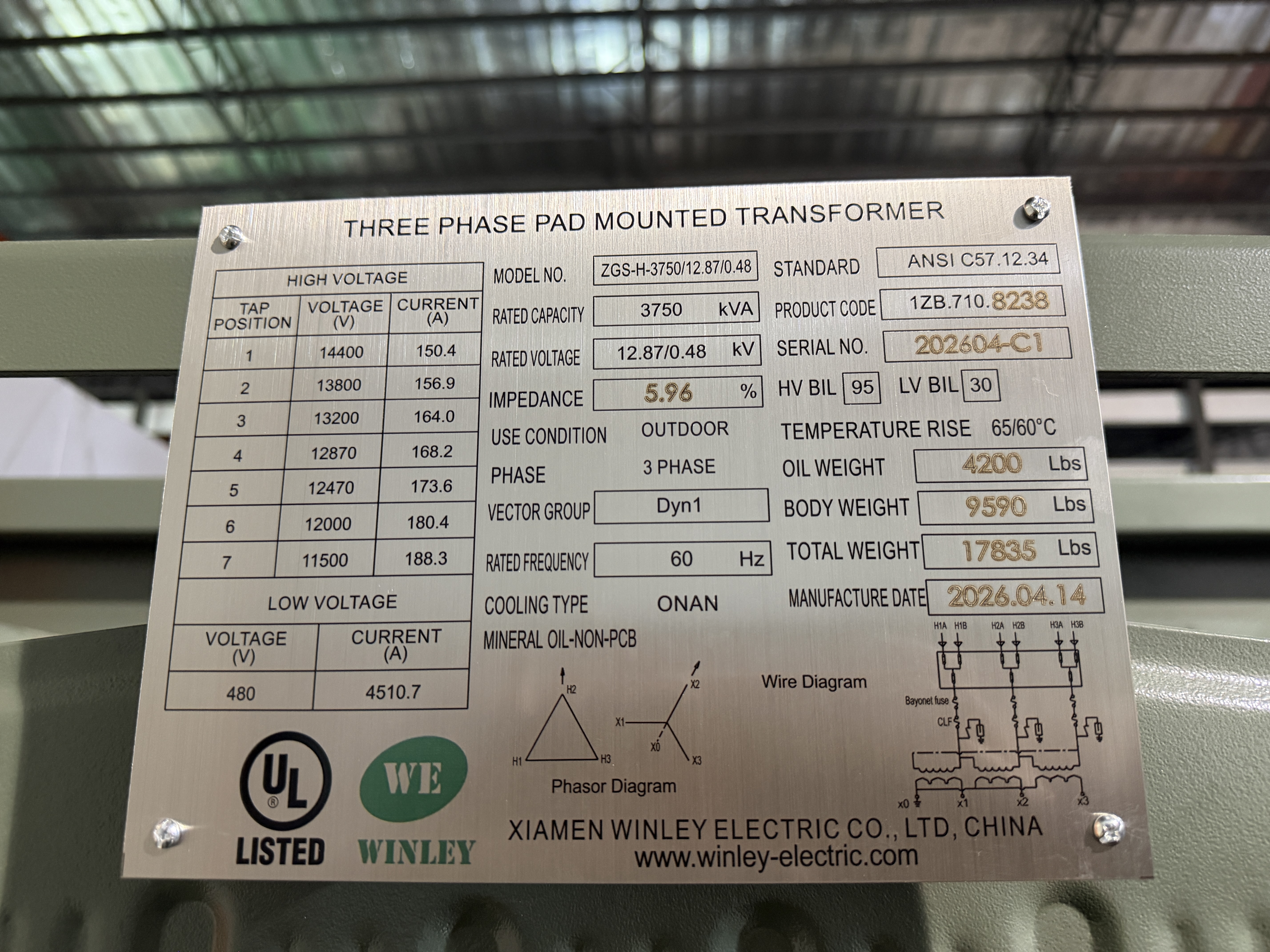
Step 6 — Agree the test plan in writing
Separate routine tests from type tests, and match both to what the utility's checklist actually names. Winley performs factory routine tests and type tests as per customer requirements, which means the test list should be an order attachment, not a shipment-time request. Where a witness test is required, agree the sequence while the production slot is still open.
Step 7 — Approve nameplate, drawings and test plan, then release to production
Production release is the final control point. Winley's stated lead time for OEM/ODM pad mounted transformers is 4 to 8 weeks, with monthly capacity of 500 units and a minimum order quantity of one unit. A realistic schedule is therefore built from two blocks: the pre-confirmation and drawing-approval block that the EPC controls, and the 4-to-8-week manufacturing block the manufacturer controls.
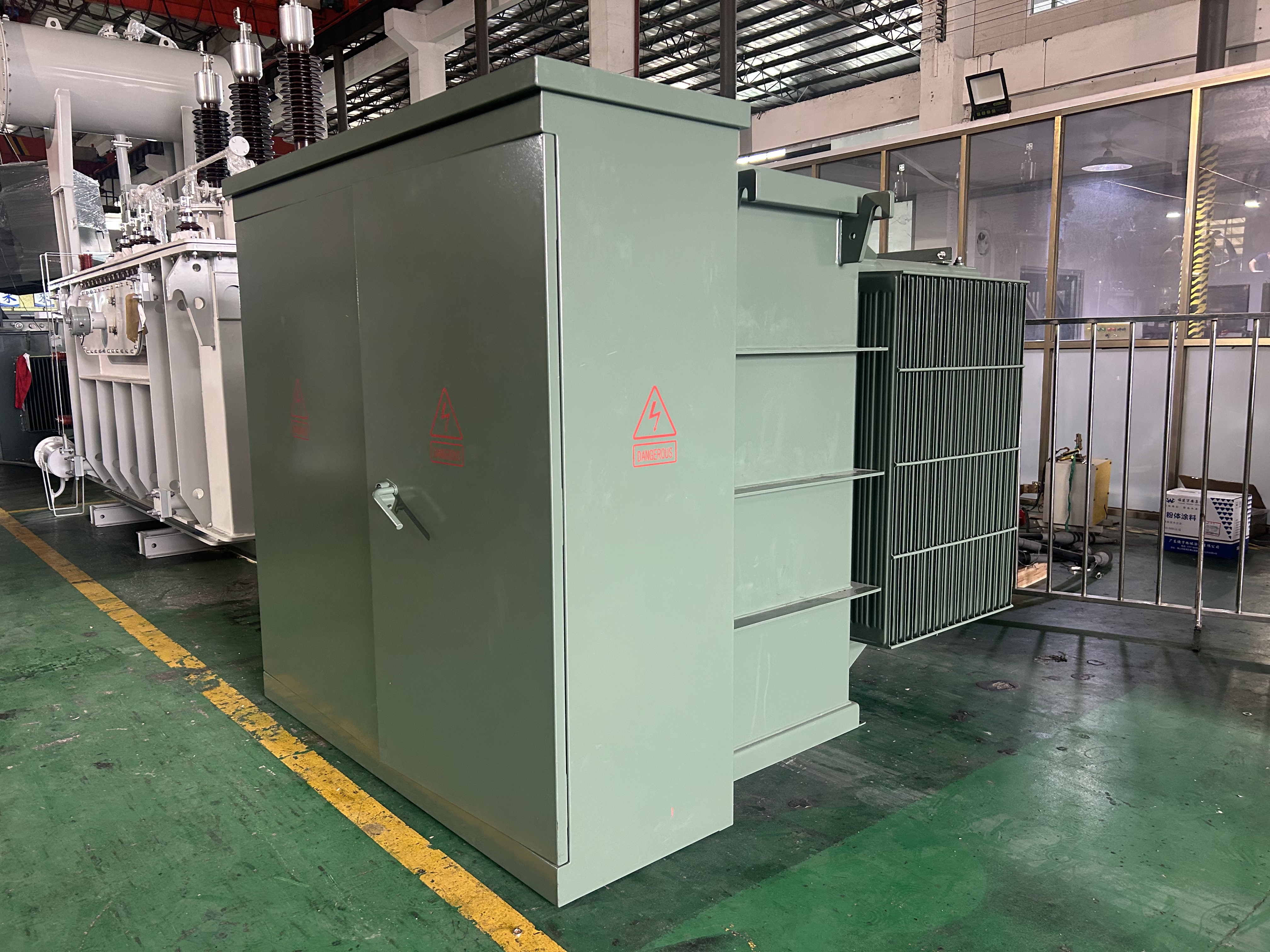
Use Cases: Where Pre-Confirmation Changes the Outcome
Utility distribution replacement batches
The clearest evidence comes from volume work. Winley Electric delivered 31 three-phase pad mounted transformers to a US electricity utility company, covering two core ratings — 2550 kVA and 3750 kVA — at 34.5 kV and 12.87 kV high-voltage levels. In a batch of that shape, one unresolved checklist item multiplies across every serial number in the release. The entire three-phase pad mounted transformer series is UL and cUL certified, and the company states that the units comply with ANSI/IEEE standards, with core efficiency metrics meeting and frequently exceeding DOE 2016 requirements. For an EPC, the operational lesson is that batch economics reward a single pre-confirmation pass and punish per-unit exceptions.
Renewable and solar interconnections
Solar pad mount transformer applications add a second reviewer to the process, because the interconnection package has to satisfy both the utility's equipment requirements and the project's own performance assumptions. The checklist-first model still applies: the equipment data sheet and the test plan are the two documents a reviewer is most likely to test for internal consistency, so they should be generated from the same frozen design rather than written separately.
Single-unit validation before a batch commitment
A minimum order quantity of one unit makes a validation strategy practical. An EPC can qualify one configuration — drawings, nameplate and test package — against the utility's review, and only then scale to the full batch. This is a deliberate sequence, not a discount structure: it converts an uncertain approval into a known one before volume is committed.
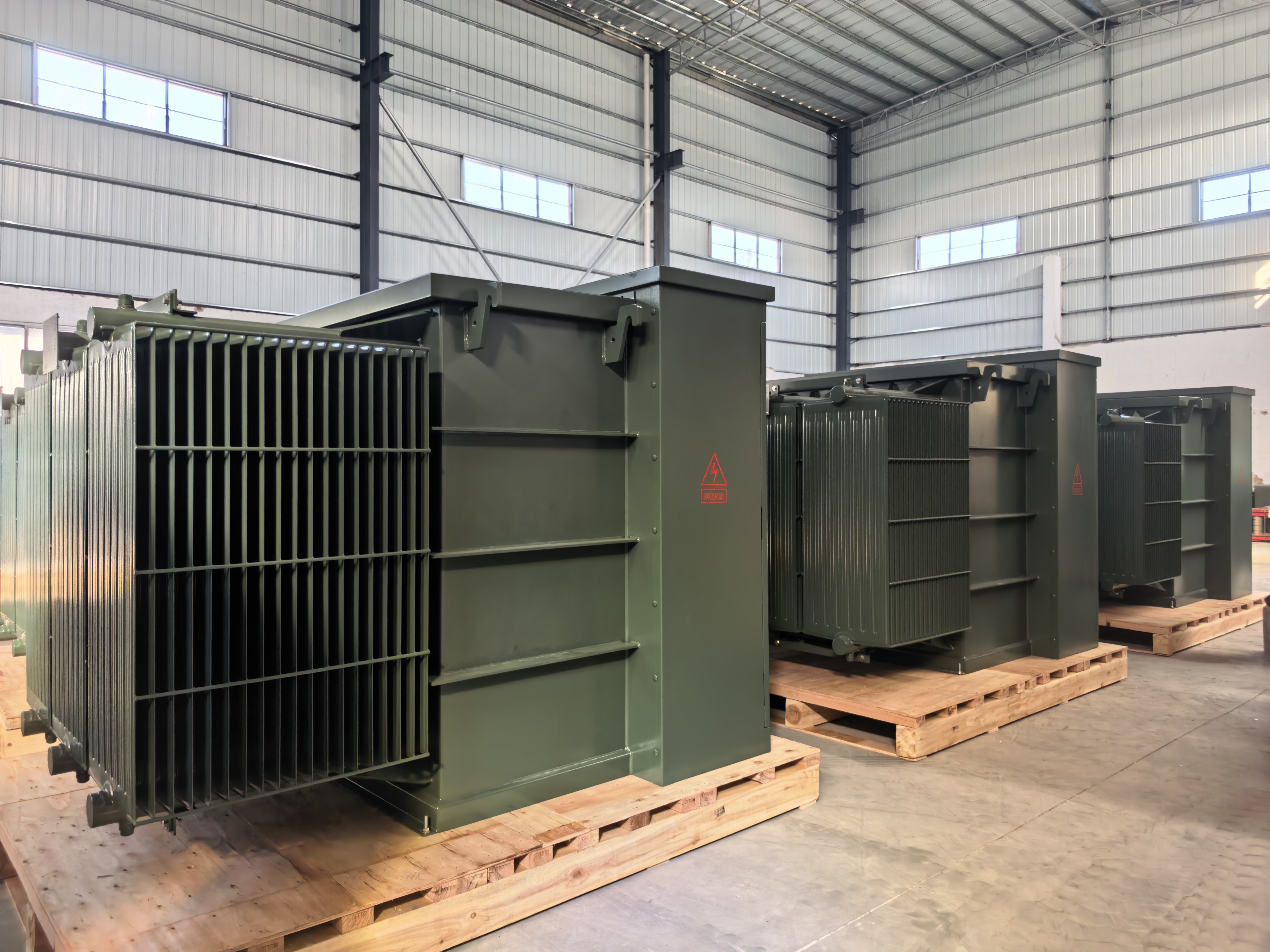
Comparison Table: Checklist Items, Lock Points and Proof
The table below maps the common categories of a utility interconnection checklist to the point in the ODM process where each must be frozen, and to the evidence document a manufacturer can hand over. Utilities phrase these requirements differently, but the mapping stays stable.
| Checklist category | Must be locked at | Evidence the utility reviews |
|---|---|---|
| Applicable standard and listing | RFQ stage | UL/cUL file reference and standard designation |
| Capacity, voltage, connection group, taps | Before drawing release | Equipment data sheet and approved drawings |
| Enclosure, compartment, protection class, coating | Before tank fabrication | Outline drawing and coating specification |
| Protection, switching, metering, communication | Configuration freeze | Bill of material with named components |
| Nameplate content and tagging | Before production release | Approved nameplate content sheet |
| Routine tests and type tests | Order attachment | Agreed test plan and factory test reports |
The second table compares the certification scope that actually backs each product line, which is the part of the checklist most often verified by document number rather than by description.
| Product line | Listing | File number | Scope | Standard |
|---|---|---|---|---|
| Three-phase pad mounted transformer (ZGS) | UL | E536138 | 45 to 5000 kVA; HV up to 36.0 kV | ANSI/IEEE C57 |
| Three-phase pad mounted transformer (ZGS) | cUL | E536138 | 45 to 5000 kVA; HV 26.0 kV to 36.0 kV | CSA C227 |
| Single-phase pad mounted transformer (DGS) | UL | E536138 | 10 to 250 kVA | ANSI/IEEE C57 |
| Single-phase pad mounted transformer (DGS) | cUL | E536138 | 10 to 250 kVA | CSA C227 |
Quality management is separately certificated: ISO 9001 (certificate 32126Q00102R110, issued 2026-05-15, valid to 2029-05-21 by CSC), alongside ISO 14001 and ISO 45001 covering the full product range.
FAQ
Which standards and listings should an EPC verify on a North American utility interconnection checklist?
Three layers apply. The product standard for three-phase pad-mounted distribution transformers is IEEE C57.12.34, with IEEE C57.12.34-2022 as the current active edition. The listing layer for North America is UL in the United States and cUL in Canada. Winley Electric holds UL and cUL certification for its three-phase pad mounted transformer line under file E536138 — UL scope 45 to 5000 kVA at high voltage up to 36.0 kV to ANSI/IEEE C57, and cUL scope 45 to 5000 kVA at 26.0 kV to 36.0 kV to CSA C227 — and the same file number covers single-phase pad mounted units from 10 to 250 kVA. Efficiency compliance is stated against DOE 2016.
Can a manufacturer customize to a utility checklist without changing the base platform?
In most cases, yes. Winley Electric's OEM/ODM scope covers solutions up to 10 MVA with high-voltage systems rated up to 36 kV, and the configurable surface includes rated capacity, voltage and connection group; model, cabinet size and protection class; insulation fluid; protection devices, switches and gauges; tank coating; extreme-environment adaptations; and monitoring, protection and communication interfaces, all built to customer drawings. Components from Qualitrol and Eaton Cooper can be integrated where a utility names a specific protective or monitoring part.
What drives cost when a unit is configured to a utility checklist instead of a catalogue?
Cost is driven by the configurable items, not by the checklist itself. The main variables are rated capacity and voltage class, the protection and switching package, the metering and communication interfaces, tank coating and environmental adaptation, and the extent of the type-test scope. Two structural factors reduce commercial risk: the minimum order quantity is one unit, so an EPC can validate a configuration before committing to a batch, and the customization is executed inside an already UL/cUL listed product line rather than as a new design, which limits the engineering exposure that normally carries a cost premium.
Can an EPC validate a single sample before placing a batch order?
Yes. The minimum order quantity for Winley Electric OEM/ODM pad mounted transformers is one unit. That unit can be used to run the full pre-confirmation sequence — approved drawings, equipment data sheet, nameplate content, and an agreed test plan covering factory routine tests and type tests as required by the customer — so that the utility's review is completed against a real configuration rather than a proposal. After-sales coverage is 24 months from the bill of lading, with free service against photographs of damaged accessories.
How long does an ODM build take once the checklist is locked?
Stated lead time is 4 to 8 weeks, supported by monthly capacity of 500 units. The clock starts at drawing and nameplate approval, which is why the pre-confirmation steps carry the schedule weight: every checklist item resolved before release is a week not spent in a drawing revision after release. To run this pre-confirmation review against a live utility package, send the checklist and project ratings to steven@winley-electric.com or message +86 18650108051 on WhatsApp, and the compliance matrix can be returned against a specific configuration.
Conclusion: The Checklist Is the Design Brief
Pre-confirming a utility's interconnection checklist is not an administrative step that sits beside the ODM process; it is the input that defines when the ODM process can start. The workflow is repeatable: obtain the utility's own requirement package, convert it into a compliance matrix, freeze electrical, enclosure and interface decisions, agree the test plan in writing, and release to production only when nameplate and drawings are approved.
The reason this discipline pays is visible in volume work. A 31-unit batch of 2550 kVA and 3750 kVA three-phase pad mounted transformers at 34.5 kV and 12.87 kV only moves cleanly if every serial number inherits the same approved configuration, listing reference and test evidence. Build the matrix first, and the transformer becomes a manufacturing task rather than a negotiation.
Click to view more pad‑mounted transformer projects from Winley Electric:https://www.winley-electric.com/supplier-4701740-three-phase-pad-mounted-transformer
Next Step: Review Your Utility Checklist Before Design Freeze
Send the interconnection data package, nameplate conventions and project ratings, and Winley Electric will map them to a specific three-phase or single-phase pad mounted configuration — drawings, data sheet, nameplate content and test plan included.
Email: steven@winley-electric.com | Tel / WhatsApp: +86 18650108051 | www.winley-electric.com
Xiamen Winley Electric Co., Ltd — No. 99 Yilan Road, Siming, Xiamen, Fujian, China. Founded 2014; 45,000 m² of manufacturing space; 220 employees; 35 R&D engineers; products exported to more than 60 countries.

Have Questions or Need More Details?
Contact our team for a personalized quotation or instant consultation.
Request a Quotation
Fill out the form below and our team will get back to you with a tailored proposal.
WhatsApp Direct Chat
Prefer to chat in real-time? Message us on WhatsApp for instant assistance & quick answers.
- Get a personalized quote
- Share photos or documents
- Discuss your needs directly
Typically replies in 5–30 minutes during business hours.