Interconnection-Ready Pad Mounted Transformers: An EPC's ODM Compliance Checklist for North American Projects
Interconnection-Ready Pad Mounted Transformers: An EPC's ODM Compliance Checklist for North American Projects
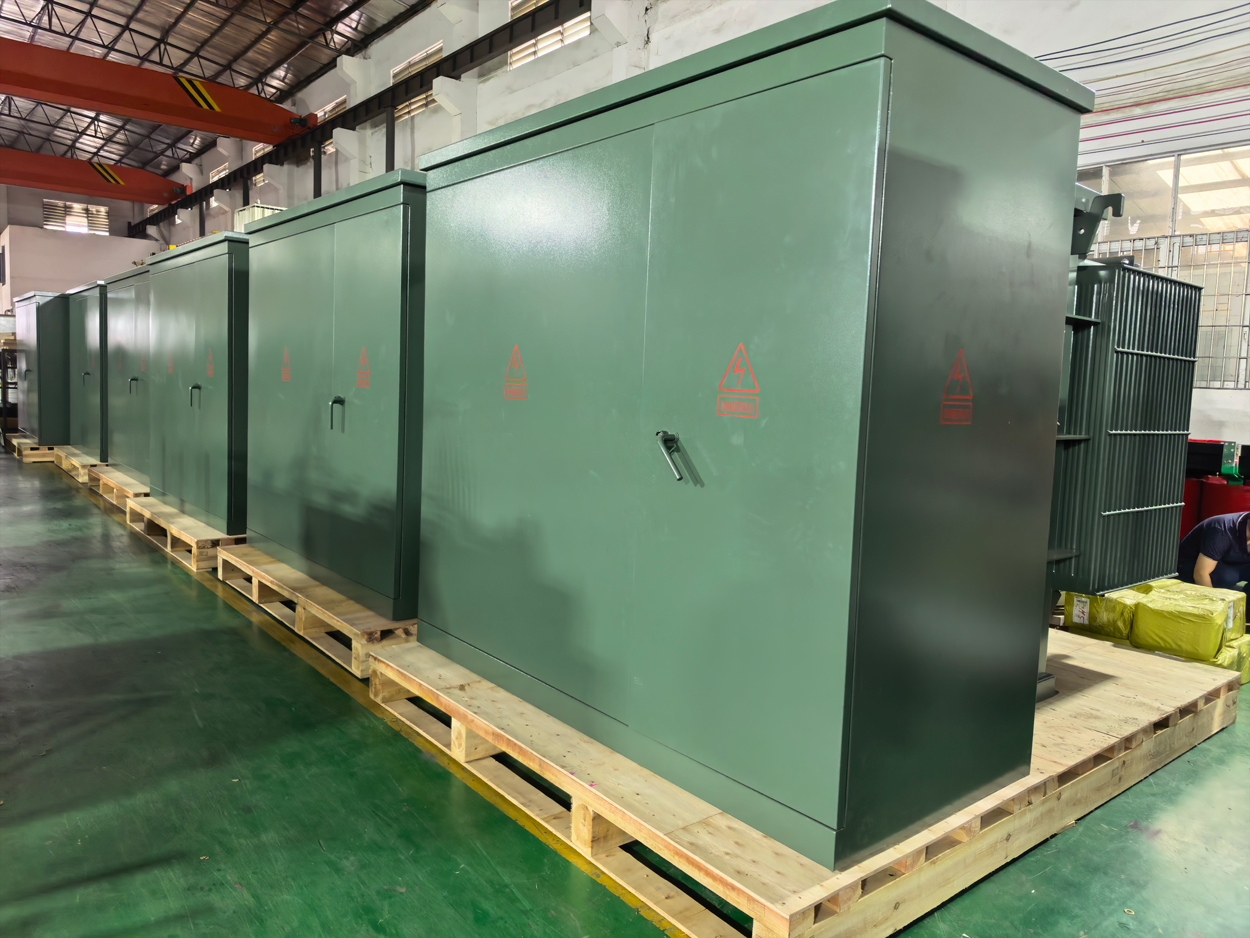
2550 kVA three-phase pad-mounted transformer built for a North American utility project.
On a North American distribution project, the pad mounted transformer is rarely late to the drawing set. It is more often the item that ends up being adjusted on the pad. The cause is seldom a manufacturing defect. It is a translation gap: the utility's interconnection package specifies one configuration, the purchase order describes a slightly different one, and the difference surfaces on site with a crew, a crane and an energization date already booked.
The practical answer for EPC firms is to move that translation upstream. Instead of buying a catalog-standard oil-immersed transformer and adapting it in the field, the unit is configured, documented and tested against the interconnection package through an ODM (original design manufacturer) process — so that what arrives on the pad already matches what was approved, and site work stays inside the normal installation sequence.
This guide explains where field modification originates, how North American interconnection and enclosure standards shape the requirement, and the step-by-step ODM workflow an EPC can run — including the specifications, test evidence and documentation that should be frozen before production release.
Problem Definition: Where Field Modification Actually Comes From
A pad mounted transformer is an outdoor, tamper-resistant distribution transformer installed on a concrete pad, fed by underground cable, normally in a dead-front configuration with loop or radial feed. Because it is connected to a utility's system, it is not approved as a product alone — it is accepted as part of an interconnection package that defines voltage ratio, tap range, connection group, impedance, feed arrangement, switching and protection, nameplate data, and the test documentation that supports the installation.
Field modification appears when the delivered unit and the approved package diverge. In practice, three conditions produce most of it.
1. The specification is transferred by reference, not by review
The interconnection package is issued as a document set, and the procurement line item is issued as a short description. Items that only matter at commissioning — the exact tap range, the secondary configuration, whether parking stands or a specific accessory set were named, the metering arrangement — never make it into the manufacturing instruction.
2. The unit is built to a fixed catalog configuration
A catalog-standard three phase pad mounted transformer ships with a defined enclosure, accessory and switching set. When the package calls for a different combination, the difference is resolved by adapting the unit after delivery rather than by configuring it before production.
3. Documentation is produced after the hardware
When drawings, nameplate data and test reports are generated late, they may not align with the approved set. That misalignment can hold up acceptance even when the physical unit is correct.
The cost of resolving these gaps on site is not only labour. Opening, drilling or re-terminating a factory-sealed, listed pad-mounted enclosure in the field raises a compliance question: whether the unit still satisfies the enclosure integrity requirements that apply to pad-mounted equipment in public-access areas, such as those specified in IEEE C57.12.28-2023. It also transfers work from a controlled factory environment to a site schedule, where one missing accessory can delay energization of an entire building or feeder section.
Industry Background: Why Interconnection Review Keeps Getting More Detailed
North American pad-mounted transformer demand is being driven by the same forces that make interconnection review more granular: undergrounding programs, grid modernization, capacity upgrades for electrification, and the addition of distributed resources such as solar and battery storage.
The global pad mounted transformer market was valued at approximately USD 22.3 billion in 2024, according to Global Market Insights. Market Research Future estimated the U.S. pad-mounted transformer market at USD 3.75 billion in 2024, driven by grid modernization and underground cabling. Trade data points the same direction: global trade for liquid dielectric transformers under 650 kVA reached USD 4.08 billion in 2024, a 22.6% increase over the previous year, with China exporting USD 511 million of that total, according to the Observatory of Economic Complexity and World Bank WITS data.
For an EPC, the operational consequence of that demand is not simply availability. It is that every unit passes through a standards framework that the interconnection approval depends on. The table below lists the references most often cited in North American pad-mounted projects.
| Reference | What it covers |
|---|---|
| IEEE C57.12.34 | Three-phase pad-mounted distribution transformers, covering ratings up to 10 MVA and 34.5 kV |
| IEEE C57.12.28-2023 | Enclosure integrity requirements for pad-mounted equipment, addressing safety in public-access areas |
| IEEE C57.12.38-2025 | Single-phase pad-mounted transformers rated 250 kVA and smaller |
| CSA C227.4 and C227.5 | Canadian references applied to three-phase pad-mounted units, cited alongside IEEE/ANSI C57.12.34 in the ZGS specification |
| DOE 2016 | Energy conservation requirements referenced in the same product specifications |
| UL / cUL listing | North American safety certification for the product family |
The pattern is consistent: interconnection acceptance depends on documented compliance with a defined standard set, applied to a specific configuration. That is why price alone rarely decides a pad-mounted transformer order — and why an ODM conversation that starts with the interconnection package tends to produce fewer site surprises than one that starts with a catalog page.
Detailed Solution: Configuring the Transformer to the Package, Not to the Catalog
Winley Electric (Xiamen Winley Electric Co., Ltd) is a transformer manufacturer founded in 2014, headquartered in Xiamen, China, with manufacturing facilities in Shanghai and Guangdong. The company produces transformers rated 145 kV and below — including the ZGS three-phase pad-mounted series and the DGS single-phase pad-mounted series — and operates under UL and cUL certification, with products built to ANSI, IEEE, CSA, DOE 2016 and IEC standards.
The ODM model used on North American projects works in the opposite direction from catalog purchasing. Rather than selecting the nearest standard unit and adjusting it on site, the manufacturer builds to the customer's drawings and project documentation. Winley Electric's stated ODM/OEM scope covers transformers up to 10 MVA with high-voltage systems rated up to 36 kV, and includes customization of electrical performance (rated capacity, voltage, connection group), structure and appearance (model, cabinet size, protection class), insulation fluid, protection devices, switches, gauges, tank coating and extreme-environment adaptations. Extended functions such as monitoring, protection and communication interfaces can also be configured per drawing.
Component integration is part of the same scope: the company states that it can integrate components from brands such as Qualitrol and Eaton Cooper for application-specific designs. Stated commercial parameters are a minimum order quantity of 1 unit, a production lead time of 4–8 weeks, and a monthly capacity of 500 units. Quality control combines factory routine tests with type tests performed as required by the customer.
The mapping below shows how a typical interconnection requirement is converted into a manufacturing instruction — the core of the zero-field-modification objective.
| Interconnection package item | ODM design response | Supporting evidence |
|---|---|---|
| Primary and secondary voltage, connection group | Windings configured to the approved ratio — for the ZGS series, primary options include 34.5 kV, 24.94 kV, 13.8 kV, 13.2 kV, 12.47 kV and 4.16 kV; secondary options include 690Y/400 V, 480Y/277 V, 208Y/120 V and 240Y/120 V | Approved drawing plus routine test report |
| Tap range and voltage regulation | Multi-tap configurations; published builds include a 7-step tap changer and multi-tap voltage regulation | Nameplate data and factory test record |
| Feed arrangement | Loop feed or radial feed selected per package, for both three-phase and single-phase units | Drawing set and switch schedule |
| Enclosure, site exposure and coating | Cabinet size, protection class and tank coating specified per drawing; published outdoor units include 304 stainless steel enclosures where corrosion resistance is required | Enclosure drawing and finish specification |
| Insulation fluid and thermal constraints | Insulation fluid selected per project requirement; published builds include natural ester, FR3 and MIDEL 7131 ester fluids alongside conventional oil-immersed designs | Fluid specification in the approved documentation |
| Switching, protection and metering | Protection devices, switches and gauges configured per customer drawings, with integration of specified component brands such as Qualitrol and Eaton Cooper | Bill of materials and factory acceptance test |
| Monitoring and communications | Optional extended functions including monitoring, protection and communication interfaces where the package requires them | Functional test record |
| Efficiency and documentation | Efficiency aligned to ANSI/IEEE and DOE 2016 requirements, with factory routine tests and type tests performed as required | Test reports, FAT and third-party inspection |
Step-by-Step Breakdown: The EPC's ODM Workflow
Step 1 — Freeze the interconnection package before any drawing is released
The ODM process starts with the approved package, not the purchase order. Voltage ratio, connection group, tap range, impedance, feed type, protection scheme, enclosure class and nameplate format are confirmed as final before design work begins. Any item still marked "to be confirmed" at this stage is a field modification waiting to happen.
Step 2 — Convert the package into a compliance matrix
Every numeric value and every named component in the package is listed against the corresponding manufacturing instruction and the evidence that will demonstrate it — drawing, routine test record, type test report or factory acceptance test. This matrix becomes the review document used at drawing approval and again at pre-shipment inspection.
Step 3 — Electrical design review
Rated capacity, voltage, connection group, tap configuration and impedance are fixed in the winding design. For reference, the ZGS three-phase pad-mounted series covers 45–5,000 kVA with capability up to 10 MVA, and the DGS single-phase series covers 15–250 kVA with maximum capability up to 833 kVA.
Step 4 — Mechanical, enclosure and fluid review
Cabinet size, protection class, dead-front construction, feed arrangement, tank coating and insulation fluid are confirmed together, because they interact: corrosion exposure drives the coating and enclosure material decision, while site thermal or fire requirements can drive fluid selection. Published project builds in this series include 304 stainless steel enclosures, dead-front loop-feed configurations, and ester-fluid designs.
Step 5 — Drawing approval and nameplate freeze
The approved drawing set and the nameplate data are frozen before production. Getting the nameplate right at this stage is what prevents the common scene of a correct unit being held up by a data mismatch at inspection.
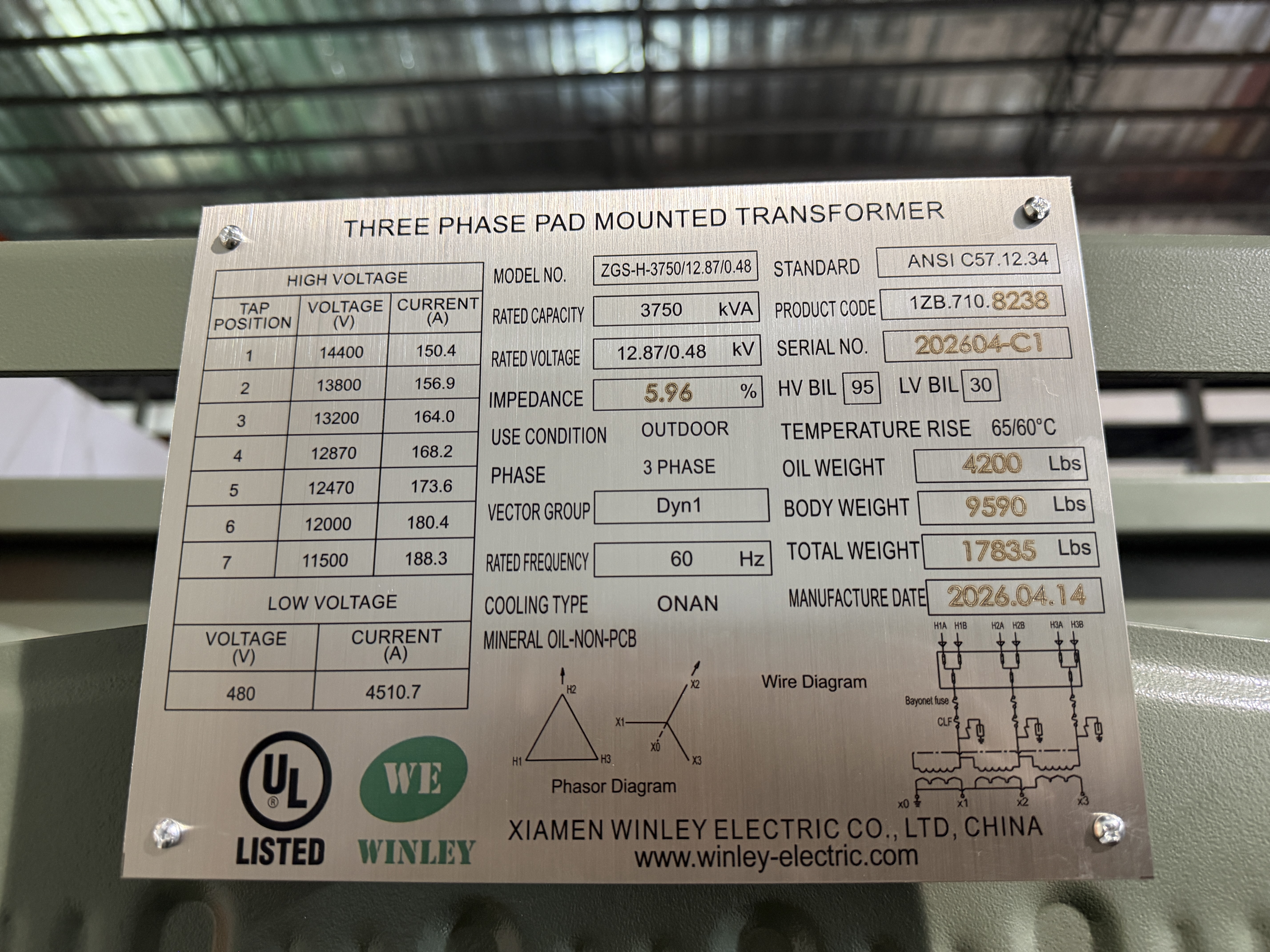
Nameplate of a 3750 kVA three-phase pad-mounted transformer — data frozen before production release.
Step 6 — Factory tests and pre-shipment verification
Winley Electric performs factory routine tests and type tests as required by the customer, and provides test reports, factory acceptance test support and third-party inspection. Because the transformer specification lists factory testing, test reports and FAT as standard elements of the offering, the evidence trail is created in the factory rather than reconstructed after delivery.
Step 7 — Delivery, acceptance support and commissioning handoff
The workflow closes with documentation matching the shipped unit. Winley Electric states that it provides customized solutions covering product selection recommendation, drawing design, accessory selection, acceptance support, transportation planning and installation guidance, with 24/7 technical support and a 24-month after-sales term from the bill of lading.
Use Cases: Where the ODM Approach Removes Field Work
Utility loop-feed distribution and grid hardening
Utility projects frequently require a specific feed arrangement and enclosure class rather than a standard configuration. Published units in this category include a 300 kVA, 13.2 kV to 480Y/277 V stainless steel pad-mounted transformer with overcurrent protection for grid hardening projects, and a 150 kVA seven-voltage unit (11.5–14.4 kV to 208Y/120 V) built for utility feeder standardization — a configuration that exists precisely because a single ratio would not have covered the feeders involved.
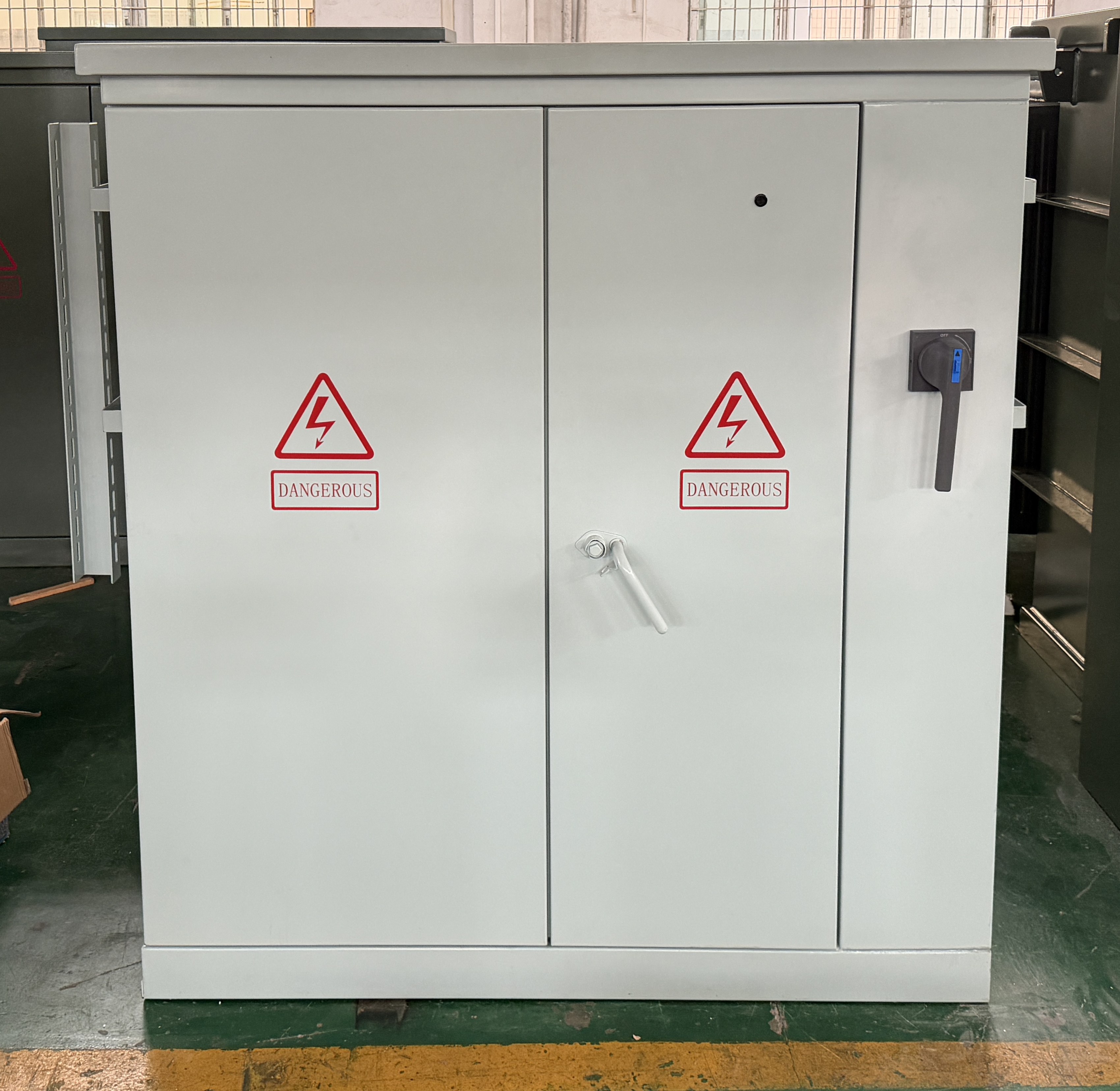
300 kVA, 13.2 kV to 480Y/277 V stainless steel pad-mounted transformer for utility grid hardening.
Commercial and institutional campuses
Hospitals, universities and multi-building commercial sites combine restricted installation space, low-noise requirements and tamper resistance in publicly accessible areas. A typical ODM configuration here is a unit such as the 1500 kVA, 12.47 kV to 480Y/277 V pad-mounted transformer used for university and hospital campus distribution, or a 2550 kVA, 34.5 kV to 480 V unit for multi-building campus service entrances.
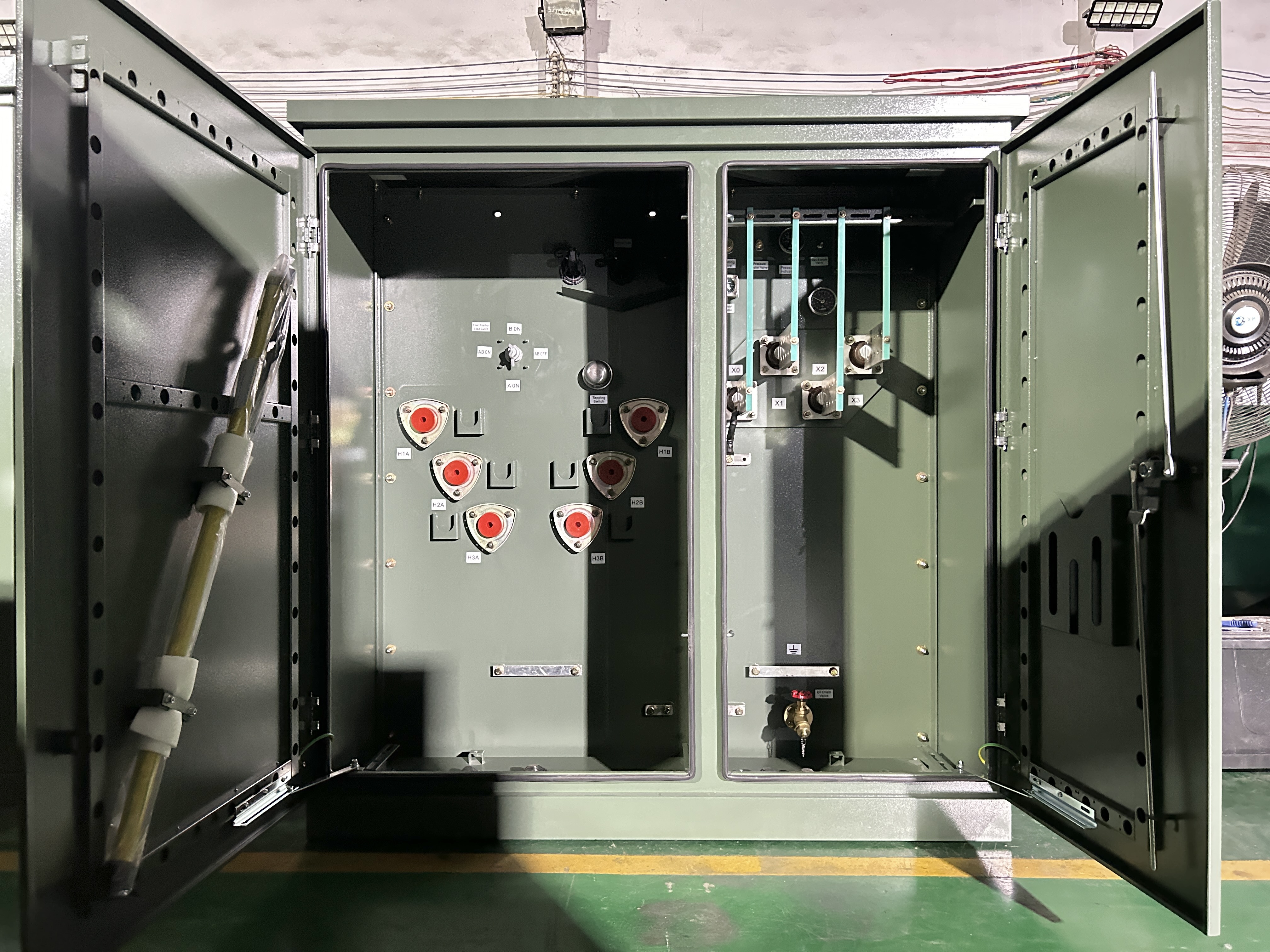
1500 kVA, 12.47 kV to 480Y/277 V pad-mounted transformer for campus distribution.
Solar and solar-plus-storage projects
Solar applications require step-up and reverse power flow capability, tolerance to fluctuating output and daily load cycles, inverter harmonic tolerance, lightning and surge protection, and resistance to high temperatures and harsh outdoor conditions. The supporting equipment list — PV modules, inverters, combiner boxes, MV switchgear, RMU, reclosers, protection devices, SCADA and medium-voltage cables — is where interconnection packages vary most, which makes multi-winding and multi-ratio configurations common. Published builds include a 2.05 MVA FR3 liquid-filled solar step-up pad-mounted transformer with triple 380 V inputs to 34.5 kV, and a 225 kVA UL/cUL solar step-up unit from 208Y/120 V to 13.8 kV.
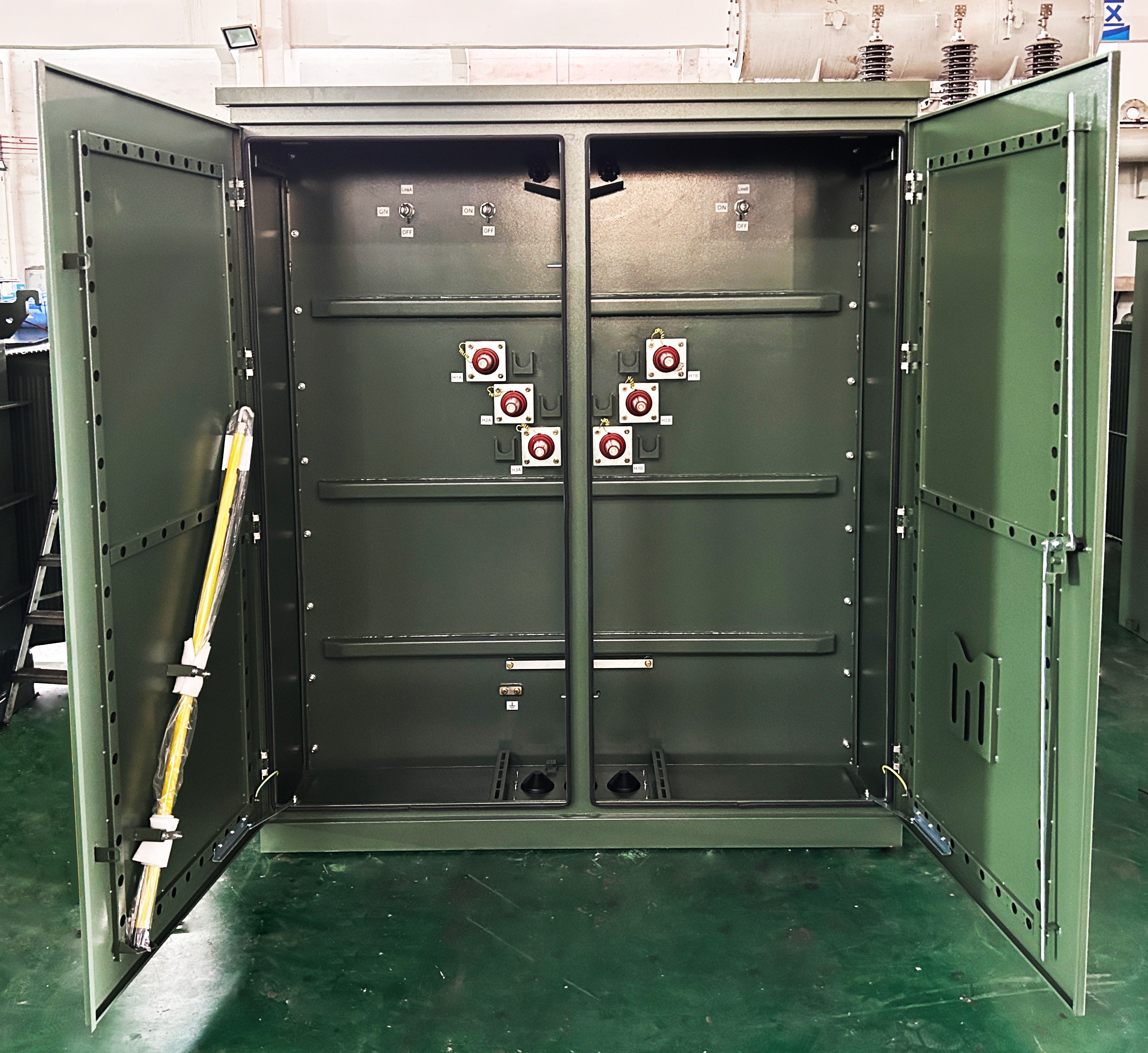
2.05 MVA FR3 liquid-filled solar step-up pad-mounted transformer, triple 380 V inputs to 34.5 kV.
EV charging hubs and renewable interconnection
Fast-charging hubs combine high-power, rapidly changing loads with harmonic content from chargers, and are often built on tight sites where the transformer enclosure and cable arrangement are fixed by the civil layout. Published configurations include a 2550 kVA UL-listed pad-mounted transformer, 34.5 kV to 480 V, for large EV fast charging hubs, and a 3750 kVA, 12.87 kV to 480Y/277 V unit with a 7-step tap changer for public DC fast-charging hubs.
Case reference: 31 units for a North American utility client
A North American electricity utility client ordered 31 units of three-phase pad-mounted transformers covering two core specifications — 2550 kVA and 3750 kVA — at high-voltage ratings of 34.5 kV and 12.87 kV. The batch was produced to the client's application scenarios and North American industry standards, with the entire three-phase pad-mounted series UL and cUL listed and efficiency metrics meeting ANSI/IEEE requirements and DOE 2016 conservation levels. The example is relevant to the ODM discussion for a simple reason: mixed-specification batches are where catalog purchasing breaks down, because each specification carries its own ratio, tap and protection set.
Comparison Table: Catalog-Standard vs. ODM-Configured Pad Mounted Transformers
The table below compares the two purchasing routes on the dimensions that determine whether field modification is required. The ODM column reflects published Winley Electric specifications and the standard references cited earlier in this article.
| Design dimension | Catalog-standard unit | ODM-configured unit (Winley Electric ZGS / DGS) |
|---|---|---|
| Voltage ratio and connection group | Fixed catalog ratios | Configured to the approved package; ZGS covers 45–5,000 kVA with primary options including 34.5 kV, 24.94 kV, 13.8 kV, 13.2 kV, 12.47 kV and 4.16 kV |
| Tap range and regulation | Standard tap set only | Multi-tap configuration; published builds include a 7-step tap changer and multi-tap voltage regulation |
| Feed type | Typically one standard feed option | Loop feed or radial feed selected per package |
| Enclosure and finish | Standard enclosure, unless stock allows otherwise | Cabinet size, protection class and tank coating specified per drawing; published outdoor units include 304 stainless steel enclosures |
| Insulation fluid | Standard mineral oil | Fluid selected per project; published builds include natural ester, FR3 and MIDEL 7131 ester fluids |
| Protection, switching and components | Fixed accessory set | Protection devices, switches and gauges per customer drawings, with integration of specified brands such as Qualitrol and Eaton Cooper |
| Documentation | Generic data sheet | Approved drawing set, nameplate data, factory routine and type test reports, FAT and third-party inspection |
| Minimum order and lead time | Depends on available stock | MOQ 1 unit; stated production lead time 4–8 weeks; monthly capacity 500 units |
FAQ: ODM Pad Mounted Transformers and North American Interconnection
What standards and certifications should a pad-mounted transformer meet for a North American interconnection?
Three-phase pad-mounted distribution transformers are governed by IEEE C57.12.34, which covers ratings up to 10 MVA and 34.5 kV. Single-phase pad-mounted transformers rated 250 kVA and smaller are standardized under IEEE C57.12.38-2025. Enclosure integrity for pad-mounted equipment in public-access areas is addressed by IEEE C57.12.28-2023, and efficiency requirements are commonly referenced through DOE 2016. For Canadian projects, CSA C227.4 and C227.5 are applied alongside IEEE/ANSI C57.12.34. Product-level safety certification in North America is normally UL or cUL listing. Winley Electric's ZGS three-phase specification cites IEEE/ANSI C57.12.34, CSA C227.4 and C227.5, IEC, DOE and NEMA; the DGS single-phase specification cites ANSI/IEEE C57.12.00, C57.12.20, C57.12.38 and C57.12.90, plus CSA, DOE and NEMA. The company holds UL, cUL, ISO, CE, TUV and EMC certifications.
Can an ODM supplier match a utility's specific impedance, tap, feed and protection requirements instead of shipping a catalog unit?
Yes, if the supplier's ODM scope actually covers those variables. Winley Electric states an OEM/ODM scope up to 10 MVA with high-voltage systems rated up to 36 kV, covering electrical performance (rated capacity, voltage, connection group), structure and appearance (model, cabinet size, protection class), insulation fluid, protection devices, switches, gauges, tank coating and extreme-environment adaptations, plus extended functions such as monitoring, protection and communication interfaces — all configured per customer drawings. Components from brands such as Qualitrol and Eaton Cooper can be integrated for application-specific designs. Verification is built into the process: factory routine tests and type tests are performed as required by the customer, and test reports, factory acceptance tests and third-party inspection are available as documented outputs.
How does ODM customization affect the cost of a pad mounted transformer?
Cost in this category is driven mainly by copper and aluminium content, insulation fluid, enclosure material and coating, the accessory and protection set, and the scope of testing. Third-party benchmarks place 2025 FOB prices for pad-mounted transformers from China in the range of roughly USD 25 to USD 70 per kVA depending on materials, and industry price references quote an average list price of approximately USD 39,761 for a standard-efficiency 500 kVA oil-filled pad-mounted transformer (13.8 kV to 480 V). Both figures come from third-party price guides with medium reliability and should be treated as reference points rather than quotations. From a project standpoint, the relevant comparison is total landed cost: a configured unit that eliminates field rework, re-inspection delays and schedule risk is usually cheaper than a lower-priced catalog unit that requires site modification.
Can we validate a design with a single unit before committing to a full batch?
Winley Electric's stated minimum order quantity is 1 unit, which allows a first-article build to be produced and reviewed against the interconnection package before a larger release. Validation typically consists of drawing approval, a production unit built to that drawing, factory routine testing (with type tests performed as required), a review of nameplate data and test reports, and — where the project requires it — factory acceptance testing and third-party inspection. This single-unit stage is where a tap range, a feed arrangement or an accessory mismatch is still cheap to correct, because it is corrected in the factory rather than on the pad.
What production lead time should EPCs plan for on an ODM pad-mounted transformer order?
Winley Electric states a production lead time of 4–8 weeks with a monthly capacity of 500 units. The lead time covers manufacturing after drawing approval, so the schedule an EPC should plan is the interconnection package freeze, plus drawing review and approval, plus production, plus testing and documentation. Large mixed-specification batches can be handled within this framework: 31 units of 2550 kVA and 3750 kVA three-phase pad-mounted transformers at 34.5 kV and 12.87 kV were produced for a North American utility client and delivered within the agreed timeframe. To confirm configuration, testing scope and delivery schedule for a specific project, send the interconnection package and single-line diagram to Winley Electric for a technical review and quotation.
Click to view more pad‑mounted transformer projects from Winley Electric:https://www.winley-electric.com/supplier-4701740-three-phase-pad-mounted-transformer
Conclusion: Treat Interconnection Compliance as a Manufacturing Requirement
Zero field modification is not a slogan — it is the predictable result of moving compliance work upstream. The checklist an EPC can apply on the next pad-mounted transformer order is short and specific: freeze the interconnection package before design release; convert every numeric value and named component into a manufacturing instruction with a matching piece of evidence; confirm enclosure, coating and insulation fluid against the actual site exposure; freeze the drawing set and nameplate data before production; require factory routine and type tests with reports, plus FAT or third-party inspection where the project calls for it; and confirm that after-sales, technical support and installation guidance are stated in the commercial terms.
Winley Electric builds pad-mounted transformers for North American utility, commercial, institutional, solar and EV infrastructure projects, with factory routine and type testing, a stated 4–8 week production lead time and a 24-month after-sales term from the bill of lading.
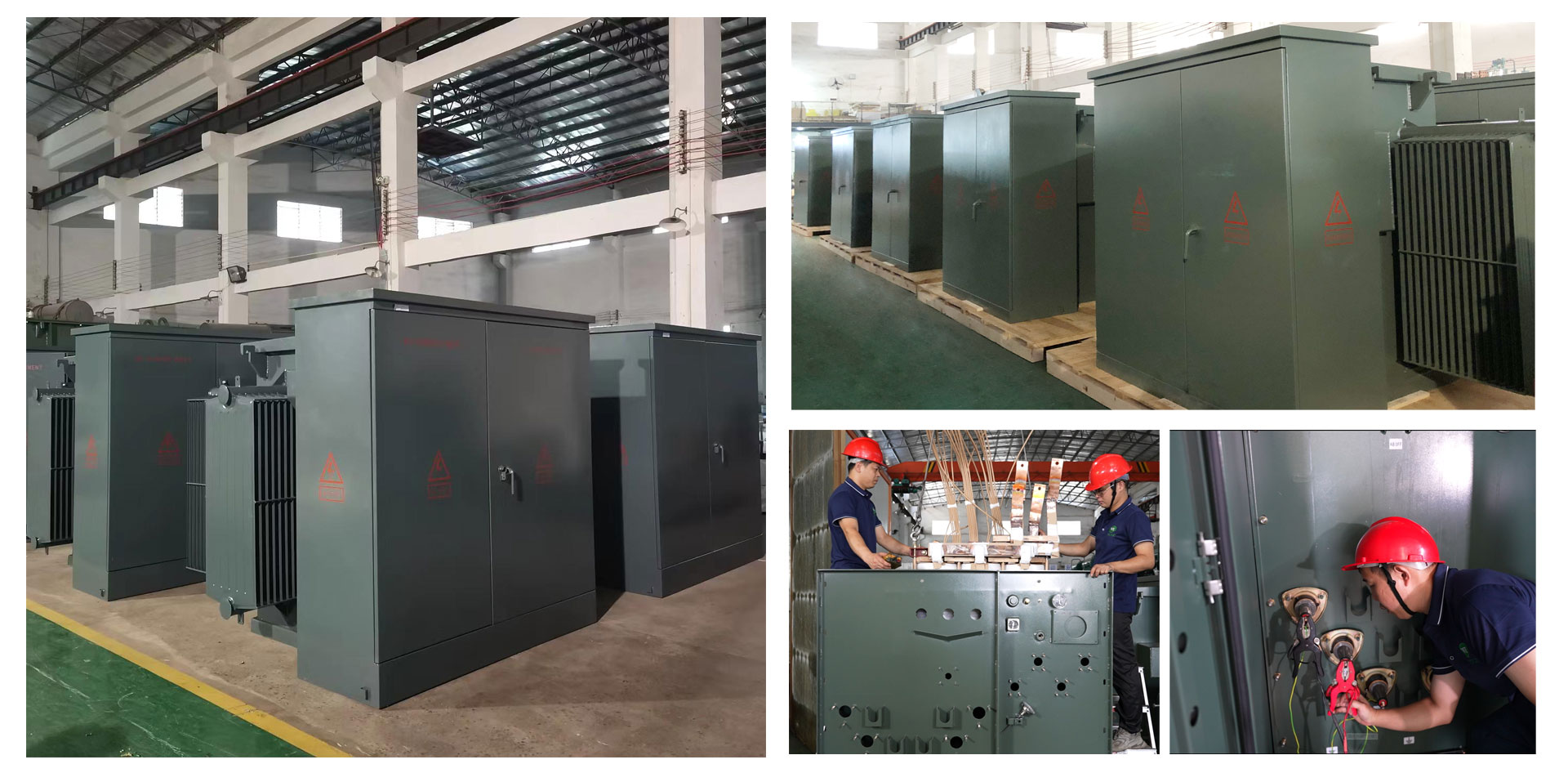
Three-phase pad-mounted transformer production at Winley Electric.
Next step
Send your interconnection package, single-line diagram and site conditions to Winley Electric for a configuration review, sample or first-article proposal, and quotation.
- Email: steven@winley-electric.com
- Tel / WhatsApp: 86-18650108051
- Website: www.winley-electric.com
- Address: No. 99 Yilan Road, Siming, Xiamen, Fujian, China
Contact: Mr. Steven.