
Lead-Time-Aware ODM Capability Audit for North American 230 kV Main Transformers
Short answer: When lead times are long, ODM main transformer selection for a North American high-voltage project should be run as a capability audit in a fixed order — voltage and capacity envelope first, fabrication and drying capability second, test capability third, engineering and documentation bandwidth fourth, throughput headroom fifth, and commercial and after-sales structure last. Each domain is verified against evidence before the purchase order is issued, because a capability gap discovered after the PO does not just cost money; it restarts the production clock and moves the energization date.
This guide draws on the manufacturing and project record of Xiamen Winley Electric Co., Ltd (Winley Electric), a transformer manufacturer founded in 2014 and headquartered in Xiamen, China, with manufacturing facilities in Shanghai and Guangdong. Winley Electric builds oil-immersed and dry-type transformers with manufacturing capability up to 450 MVA and 230 kV, holds UL and cUL certification, and exports to more than 60 countries, with North and South America as its main markets.
Oil-immersed substation power transformer engineered to ANSI/IEEE standards — the equipment class where a capability gap is measured in months, not weeks.
Problem Definition: When the Date Is Fixed, Capability Is the Only Variable Left
A high-voltage main transformer sits on the longest path of any substation build. Solar, storage, data center and utility upgrade projects all reach a point where every other package is scheduled around one delivery date. At that point, the buyer is no longer selecting a supplier on price; the buyer is testing whether the supplier's real capability can absorb the project's specific electrical, thermal and documentation requirements without a change order.
Three failure modes cause most of the damage in extended-lead-time procurement:
- Envelope overreach. The quoted voltage or MVA class sits outside what the factory actually builds and tests as standard. The order is accepted, then re-engineered mid-production.
- Test shortfall. Routine and type testing capability is assumed rather than verified, and acceptance is deferred to the destination. Rework at that stage cannot be recovered inside the schedule.
- Scope drift after the PO. Winding configuration, cooling, monitoring or terminal arrangements are renegotiated after the production slot is booked, which pushes the unit behind other orders already in the queue.
A stated lead time is a production window, not a delivery date. It assumes a frozen specification, an approved drawing set, and a supplier whose capability already matches the design. The audit described below exists to confirm all three before the clock starts.
Industry Background: Why the North American Slot Is Scarce
The demand pressure behind today's transformer queues is structural rather than cyclical. MarketsandMarkets estimates the global transformer market at USD 64.64 billion in 2025, rising to USD 88.48 billion by 2030, driven by grid modernization and rising electricity demand. Global Market Insights values the global substations market at USD 128.5 billion in 2024, projected to reach USD 178.9 billion by 2034 at a 3.2% CAGR.
Two demand segments compete directly with utility substation work for the same high-voltage manufacturing capacity. Strategic Market Research expects the data center transformer market to rise from USD 2.2 billion in 2023 to USD 5.9 billion by 2030 at a 10% CAGR. SNS Insider projects the smart transformer market growing from USD 3.17 billion in 2025 to USD 10.15 billion by 2035 at a 12.35% CAGR, reflecting demand for real-time grid monitoring. Grand View Research reports that oil-immersed transformers held approximately 59.3% of the power transformer segment in 2025, and that Asia Pacific accounted for roughly 41.1% of global transformer revenue in the same year.
On the compliance side, substation transformer designs for the North American market are primarily governed by the IEEE C57 series of standards, while UL 1561 and UL 1562 apply to liquid-filled and dry-type units respectively. This is the technical baseline an ODM must be able to design, build and test against — not merely reference in a brochure.
The practical consequence is visible in project records. In Winley Electric's documentation of a U.S. utility project, local North American manufacturers' lead times for 30–50 MVA liquid-filled substation transformers were noted as often extending beyond 100 weeks, producing construction holds and urgent equipment gaps. That is the environment in which ODM selection now happens: the buyer is not choosing between a fast supplier and a slow one, but between supply chains whose real capacity has and has not been verified.
The Selection Logic: Six Capability Domains to Verify
The audit works because it is ordered. Each domain constrains the next, and a failure at any level makes the remaining questions irrelevant. For a North American high-voltage main transformer, the six domains below define the selection logic.
1. Voltage and capacity envelope
The first question is not how large the factory is, but how high the build envelope actually goes. Winley Electric's substation power transformer range covers 150 kVA to 450 MVA, with primary voltages from 2.4 kV to 230 kV and secondary voltages from 0.6 kV to 35 kV, engineered to NEMA, ANSI C57, DOE and IEEE as applicable. Within that range, 145 kV-class and 230 kV-class designs sit inside the same build envelope as medium-voltage utility substation transformers.
For the buyer, the decision rule is simple: confirm that the target rating is inside the envelope the supplier already manufactures and tests, not at its outer edge. A project that lands at the ceiling of a supplier's experience carries engineering risk that no schedule commitment can offset.
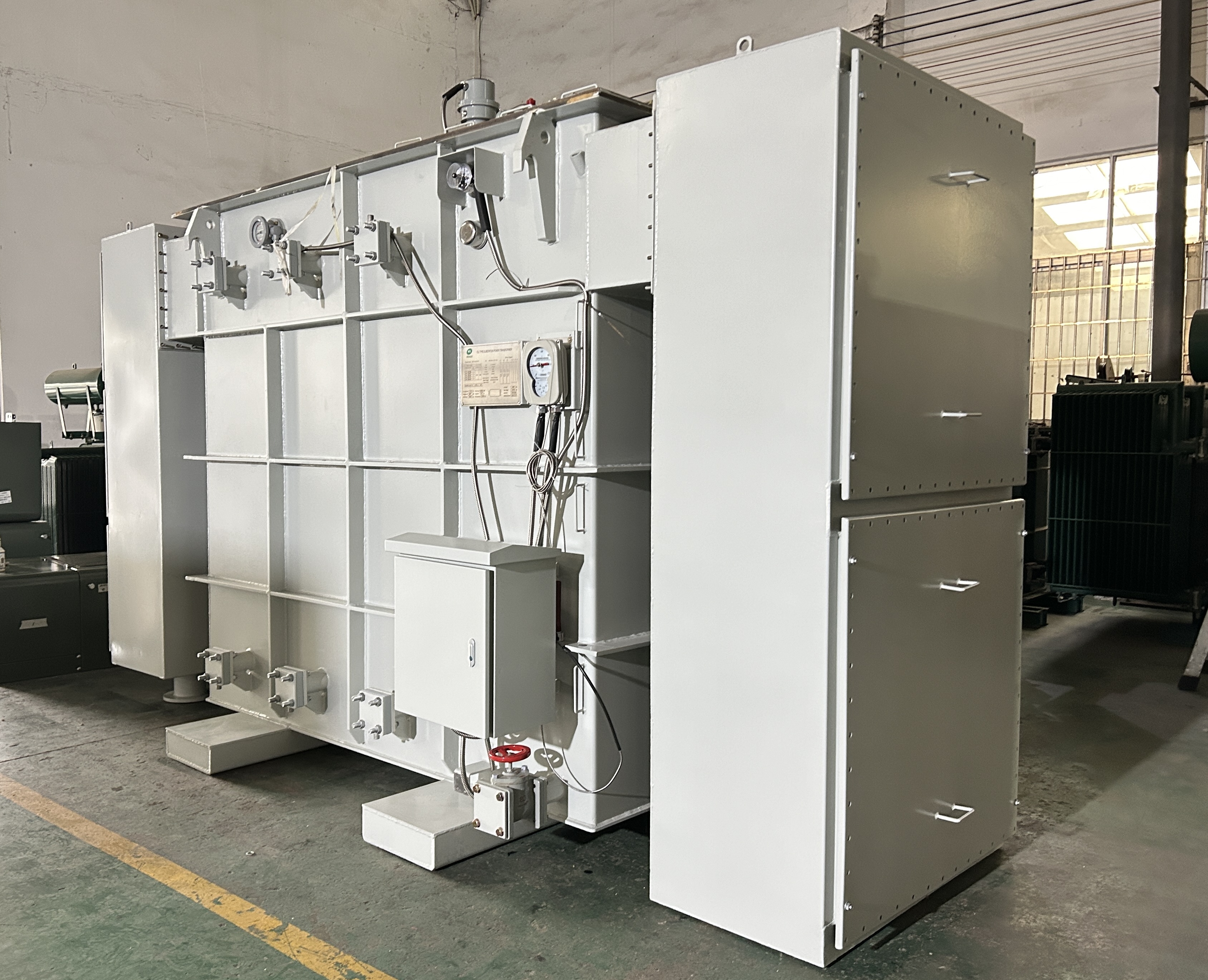
Mid-range units such as this 10 MVA three-phase substation transformer are usually the fastest part of an ODM order book; high-voltage main units are where the queue forms.
2. Core, winding, drying and oil processing
The second domain is where a scheduled date is either protected or lost. Winley Electric operates a 45,000 m² manufacturing footprint with 220 employees, more than 200 of them on the front line, and reports that 80% of front-line staff have more than eight years of working experience. Plant equipment includes silicon steel sheet slitting lines and cross-cutting lines, multi-model foil winding and wire winding machines, vacuum constant-temperature drying ovens, two-stage vacuum oil filters, and automated welding equipment.
Each of those assets maps to a specific risk. Slitting and cross-cutting quality governs core loss and noise. Foil and wire winding capability governs whether a multi-winding or split-winding configuration is routine or experimental. Vacuum constant-temperature drying and two-stage oil filtration govern dielectric margin and the moisture-related failure modes that appear long after commissioning. When auditing an ODM, these are the processes to see, not the finished-product showroom.
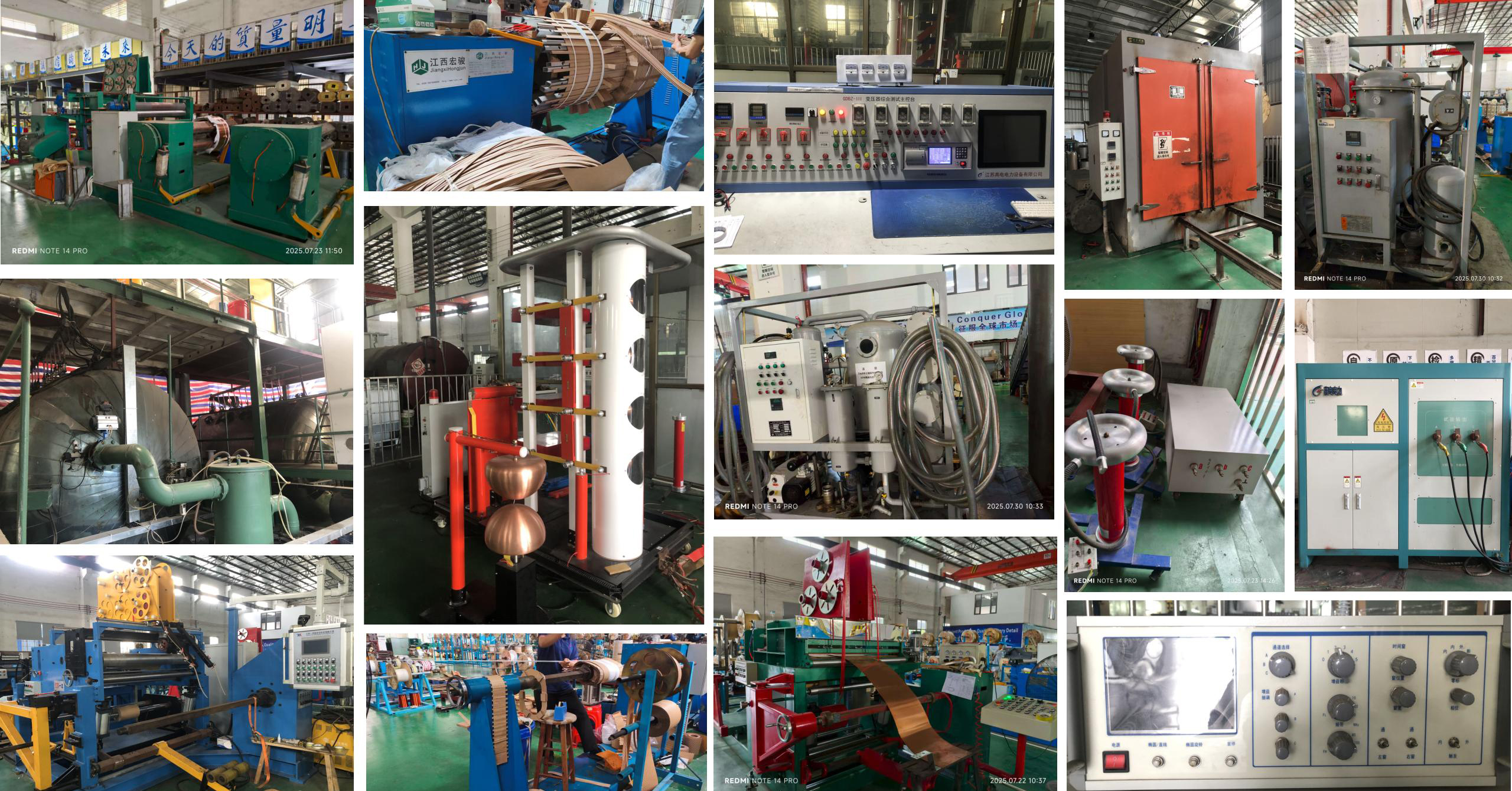
Winding, core and drying equipment determine how much customization a factory can absorb without breaking its production sequence.
3. Test capability and acceptance evidence
Quality control at Winley Electric runs under ISO 9001 process management with dedicated QC oversight. Before delivery, every unit undergoes routine testing that includes winding resistance, turns ratio, polarity and phase relation, and no-load loss. The factories also operate professional type test equipment such as lightning impulse test devices, and all products undergo factory inspection in accordance with standard specifications before shipment. The stated acceptance criterion for a purchase is pre-shipment test.
The selection logic here is to convert testing from a claim into a gate. A buyer should know which tests will be witnessed, which records will travel with the unit, and what happens if a result falls outside tolerance — before the winding is started, not after the tank is sealed.
4. Engineering and ODM customization bandwidth
Winley Electric provides OEM and ODM manufacturing for substation power transformers rated up to 450 MVA and 230 kV, with a stated R&D team of 35 engineers proficient in ANSI, IEEE, CSA, DOE2016, NEMA and IEC standards. Project-specific customization covers capacity, voltage ratio, winding configuration, impedance, loss levels, cooling method, tap-changing system, terminal arrangement, protection and monitoring functions, structural design, testing, documentation and transportation requirements.
Component integration is part of that bandwidth. Customer-specified components from recognized brands such as Qualitrol, Eaton Cooper Power series and Maschinenfabrik Reinhausen (MR) can be integrated to match project standards and maintenance preferences — a detail that matters when a utility's spare-parts strategy is already built around a specific relay or tap-changer family. From build-to-print OEM production to fully customized ODM development, the deliverable is a design that can be approved, installed and maintained rather than merely manufactured.
5. Throughput headroom and order absorption
A capable factory with a full order book is still a schedule risk. Winley Electric states a monthly production capacity of 300 units and a minimum order quantity of 1 unit. The combination matters: the MOQ allows a project to start with a single unit rather than a block commitment, and the monthly capacity figure is the number a buyer should test against the current backlog rather than accept at face value.
6. Commercial structure, warranty and support
Commercial terms complete the audit. Standard terms are MOQ 1 set, delivery FOB/CIF or as required by the customer, payment by T/T, and acceptance based on pre-shipment test. After-sales cover runs 24 months from B/L date; during the warranty period, accessory problems are handled by submitting photographs of the damaged accessory, with free service and a supply of commonly damaged accessories scaled to the number of units delivered, plus technical support on request. Winley Electric also provides 24/7 technical support covering product selection recommendation, drawing design, accessory selection, acceptance support, transportation planning and installation guidance.
Step-by-Step Breakdown: Running the Audit in the Order the Clock Demands
The sequence below is designed so that each step either eliminates the supplier or narrows the remaining scope. Running it out of order is how projects end up with a slot but not a specification.
- Fix the electrical envelope. Confirm rating, voltage ratio, winding configuration and impedance against the supplier's stated build range. Evidence: the manufacturer's product parameters for the substation power transformer line, not a generic catalogue.
- Verify the fabrication route for that specific configuration. Ask which winding machines, core lines and drying ovens the unit will pass through, and whether the configuration is routine or first-of-type. Evidence: plant equipment list and process walk-through.
- Define acceptance testing before pricing. Agree the routine test set — winding resistance, turns ratio, polarity and phase relation, no-load loss — plus any witnessed type tests, and confirm pre-shipment acceptance as the contractual gate. Evidence: test plan and available type test equipment such as lightning impulse devices.
- Freeze the customization list. Lock cooling method, tap-changing system, terminal arrangement, protection and monitoring, and any nominated component brands such as Qualitrol, Eaton Cooper Power series or MR. Evidence: written ODM scope covering design through transportation requirements.
- Match documentation to the approval path. Confirm the design basis against IEEE C57 and, where applicable, UL 1561 or UL 1562, and confirm which certificates and drawings the authority having jurisdiction will expect. Evidence: ISO 9001:2015 certificate 32126Q00102R110, ISO 14001:2015 certificate 32126E00073R110 and ISO 45001:2018 certificate 32126S00068R110, all valid to 21 May 2029, plus UL/cUL certification and the option to open UL partner authorization where a project requires it.
- Test the schedule against capacity. Compare the stated delivery window for the MVA band with monthly capacity of 300 units and the current backlog, then ask which documented projects were completed inside that window. Evidence: reference project records with dates.
- Close commercial and lifecycle terms. Confirm MOQ, delivery terms, payment terms, warranty period from B/L and the response path for accessory issues. Evidence: written terms of 1-set MOQ, FOB/CIF delivery, T/T payment and 24-month coverage.
Use Cases: What the Audit Looks Like on Real Projects
Utility grid modernization, United States — 40 MVA
A U.S. utility needed to renovate aging substations, in a market where comparable 30–50 MVA liquid-filled units from local manufacturers were often quoted beyond 100 weeks. Winley Electric supplied two 40 MVA conservator-type liquid-filled step-down substation power transformers, built to ANSI/IEEE standards, with full production and testing completed within 30 weeks. The project also required project-specific logistics planning so that heavy units arrived undamaged — a reminder that transport engineering belongs inside the capability audit, not after it.
Data center and industrial park, United States — 34 MVA
An electrical contractor required two 34 MVA substation power transformers for industrial park and data center applications. The units were built to ANSI/IEEE standards with a 304 stainless steel structure and NEMA 4X weatherproof enclosure, and production and testing were completed within 12 weeks. The stainless enclosure specification is exactly the kind of requirement that separates suppliers who can execute an ODM scope from those who can only quote it.
Industrial multi-secondary substation, United States — 10–14 MVA
An EPC project required multiple 2.4 kV and 4.16 kV secondary feeders for medium-voltage motors and process loads. Two 10–14 MVA custom substation transformers were manufactured within a 9-week production cycle, using a Dd0y1y1 winding configuration with multiple 2.4 kV and 4.16 kV secondary outputs, so that one transformer platform supports several medium-voltage distribution buses and industrial loads.
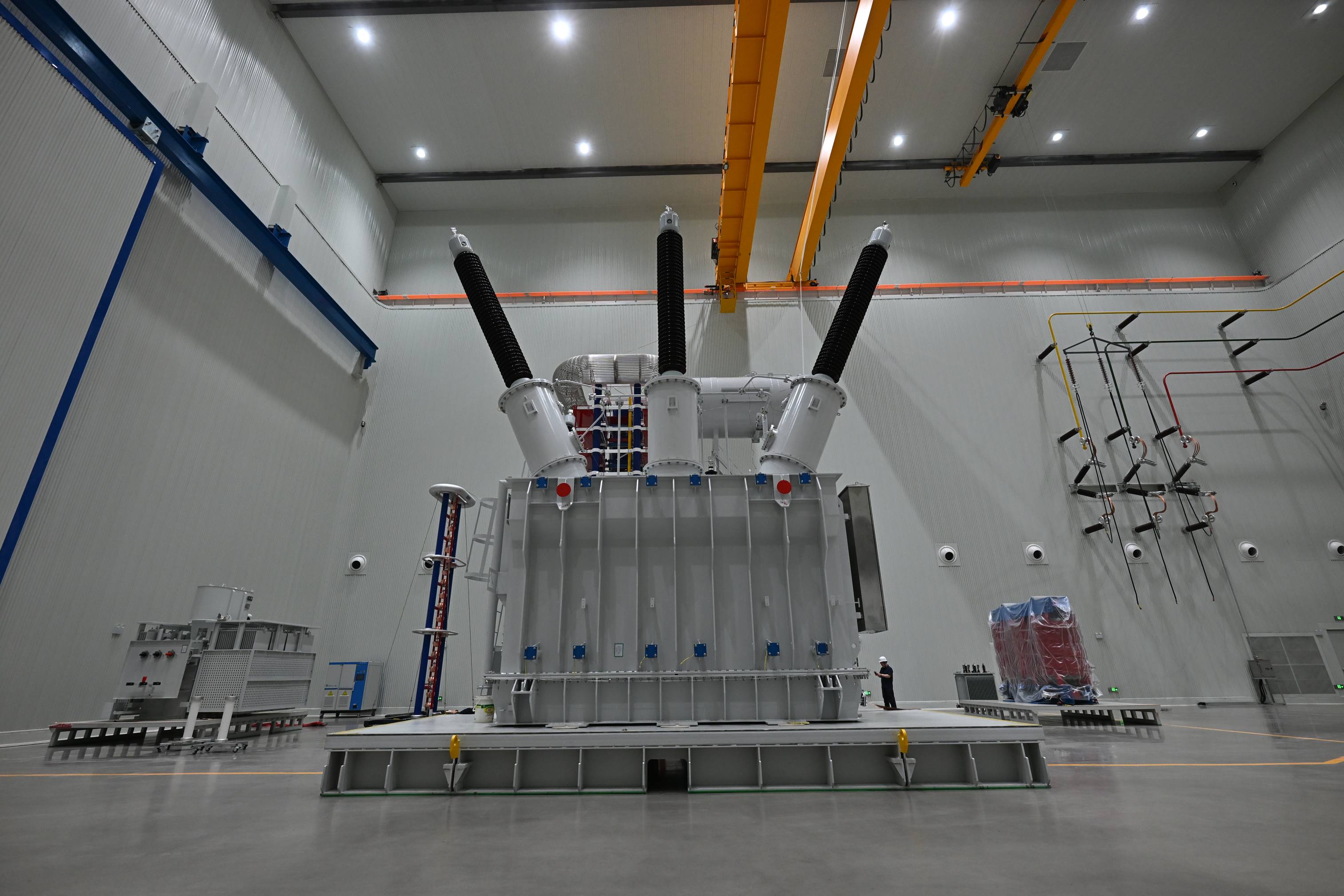
A 230 kV main transformer with staged cooling at 100/133/167 MVA — the class of unit where envelope verification and test capability decide the project date.
High-voltage utility and storage interconnection — 230 kV
Two further 230 kV projects illustrate the top of the envelope. A U.S. grid substation application used a 230/34.5/13.8 kV three-winding transformer rated 100/133/167 MVA with staged cooling, enabling flexible capacity as demand changes, supported by integrated temperature and pressure monitoring and detachable radiators with isolation valves for maintenance planning. A separate utility-scale BESS interconnection used a 225 MVA, 230 kV three-winding transformer stepping down to 69 kV, supporting bidirectional power transfer during battery charging and discharging, with low-loss electrical and thermal design, low-noise engineering, optimized cooling and integrated monitoring and protection.
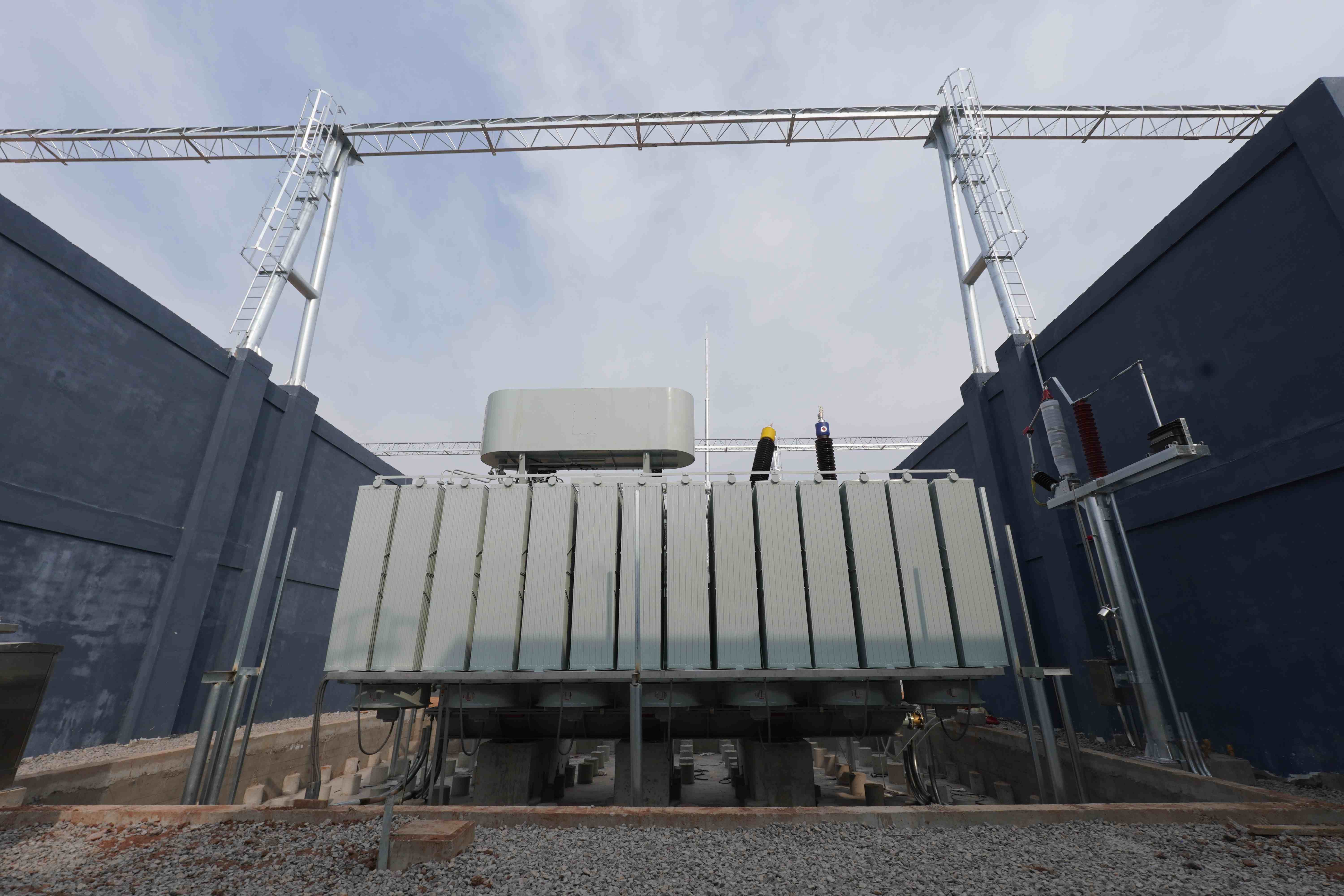
BESS interconnection transformers must handle bidirectional power flow; the ODM audit therefore includes cooling, protection and monitoring scope, not just MVA.
Comparison: Stated Delivery Windows Against Documented Outcomes
The table below uses only Winley Electric's stated standard delivery windows and its documented project records. Documented outcomes are configuration-specific and include engineering, customization and testing time; they are not a quotation for a new project.
| Capacity band | Stated standard delivery window | Documented project reference |
|---|---|---|
| Below 10 MVA | 8–10 weeks | — |
| 10–40 MVA | 10–12 weeks | Two 10–14 MVA custom units with Dd0y1y1 multi-secondary design: 9-week production cycle |
| 40–100 MVA | 18–20 weeks | Two 40 MVA conservator-type step-down units: full production and testing within 30 weeks; two 34 MVA units: 12 weeks |
| 230 kV, up to 450 MVA | 20 weeks | 225 MVA 230/69 kV three-winding BESS transformer delivered; 100/133/167 MVA 230 kV unit built — no schedule stated for these units |
Read the table as a screening instrument, not a promise. Where a documented outcome sits outside the standard window — as with the 40 MVA units — the difference is explained by project-specific engineering and logistics scope, which is precisely why the audit in step 4 must freeze customization before the slot is booked.
Audit matrix: domain, evidence, decision
| Capability domain | Evidence to request | Decision it unlocks |
|---|---|---|
| Voltage / capacity envelope | Capacity 150 kVA–450 MVA; primary 2.4 kV–230 kV; secondary 0.6 kV–35 kV | Whether the rating is inside standard build experience |
| Fabrication and drying | Slitting and cross-cutting lines, foil and wire winding machines, vacuum constant-temperature drying ovens, two-stage vacuum oil filters, automated welding | Whether the customized configuration is routine production |
| Testing | Winding resistance, turns ratio, polarity and phase relation, no-load loss, lightning impulse type test equipment, pre-shipment acceptance | Whether defects are caught before shipment |
| Engineering bandwidth | 35-engineer R&D team; ANSI/IEEE/CSA/DOE2016/NEMA/IEC proficiency; Qualitrol, Eaton Cooper Power series and MR component integration | Whether the ODM scope can be approved once, without redesign |
| Throughput | 300 units monthly capacity; MOQ 1 unit; standard windows by MVA band | Whether the promised window is credible against backlog |
| Commercial and lifecycle | FOB/CIF delivery, T/T payment, 24-month warranty from B/L, 24/7 technical support | Whether the total commitment is defined |
What This Audit Does Not Fix
A capability audit protects the production window; it does not shorten ocean freight, port dwell time, inland heavy haul or site readiness. Buyers should treat the supplier's production window as one segment of the total schedule, with transport and commissioning planned separately. Similarly, verification cannot substitute for the buyer's own design freeze: if the specification still changes after the PO, even a well-audited factory will re-sequence its line, and the delay belongs to the project, not the manufacturer.
Frequently Asked Questions
1. Which standards and approvals should I verify before ordering a high-voltage main transformer for North America?
Design for the North American market is primarily governed by the IEEE C57 series, with UL 1561 and UL 1562 applying to liquid-filled and dry-type units respectively. Winley Electric states that its products meet ANSI/IEEE/CSA/DOE2016/IEC60076 standards and that the company is certified by UL and cUL. The cUL certification file E536138 covers single-phase liquid-filled pad-mounted transformers rated 10–250 kVA and three-phase liquid-filled pad-mounted transformers rated 45–5,000 kVA at 26.0–36.0 kV, under CSA C227. Management system certificates are ISO 9001:2015 (32126Q00102R110), ISO 14001:2015 (32126E00073R110) and ISO 45001:2018 (32126S00068R110), all issued 15 May 2026 and valid to 21 May 2029. According to customer requirements, UL partner authorization can also be opened.
2. What ODM customization is actually available at the 230 kV / 450 MVA level?
Winley Electric provides OEM and ODM manufacturing for substation power transformers rated up to 450 MVA and 230 kV, supporting project-specific customization of capacity, voltage ratio, winding configuration, impedance, loss levels, cooling method, tap-changing system, terminal arrangement, protection and monitoring functions, structural design, testing, documentation and transportation requirements. Customer-specified components from brands such as Qualitrol, Eaton Cooper Power series and Maschinenfabrik Reinhausen (MR) can be integrated. Products can be engineered to meet customer specifications, site conditions, existing equipment interfaces, and applicable ANSI/IEEE, CSA or IEC standards, covering both build-to-print OEM production and fully customized ODM development.
3. What commercial terms apply, and how is budget framed for an ODM unit?
The minimum order quantity is 1 set. Delivery terms are FOB/CIF or as required by the customer; payment terms are T/T; acceptance criteria are based on pre-shipment test. Pricing is not published, because an ODM main transformer is quoted against a frozen specification — winding configuration, cooling, impedance, loss levels and monitoring scope all move the cost — so the commercially meaningful step is to convert the audit findings into a defined scope and then request a quotation for that scope.
4. How is a sample or first article validated before full commitment?
Because the minimum order quantity is one unit, a project can begin with a single unit rather than a block order. Each unit undergoes routine testing before delivery, including winding resistance, turns ratio, polarity and phase relation, and no-load loss, and the factories operate professional type test equipment such as lightning impulse test devices. All products are inspected in accordance with standard specifications before leaving the factory, and acceptance is set as pre-shipment test, so validation evidence exists before the unit is shipped rather than after arrival.
5. What lead time should I expect, and what has been achieved on comparable projects?
Stated standard delivery windows are 8–10 weeks for transformers below 10 MVA, 10–12 weeks for 10–40 MVA, 18–20 weeks for 40–100 MVA, and 20 weeks for 230 kV power transformers up to 450 MVA. Documented outcomes include two 10–14 MVA custom units in a 9-week production cycle, two 34 MVA units completed within 12 weeks, and two 40 MVA conservator-type step-down units with full production and testing within 30 weeks — in a market where the project record notes that 30–50 MVA liquid-filled units from local North American manufacturers were often quoted beyond 100 weeks. To check those windows against your own rating and configuration, send the specification and required on-site date to steven@winley-electric.com or WhatsApp +8618650108051, and the team will return a schedule based on the frozen scope rather than a generic estimate.
Conclusion
Under extended lead times, ODM main transformer selection for North American high-voltage projects is a capability question dressed as a scheduling question. The order of the audit matters more than the length of the checklist: confirm the envelope, see the fabrication and drying processes, convert testing into a contractual gate, freeze the customization scope, confirm documentation against IEEE C57 and the applicable UL standard, test the promise against real capacity, and only then close commercial terms.
Xiamen Winley Electric Co., Ltd builds to that logic from the other side of the table — a 45,000 m² manufacturing base, 220 employees, 35 engineers, monthly capacity of 300 units, OEM and ODM capability up to 450 MVA and 230 kV, ANSI/IEEE/CSA/DOE2016/IEC60076 compliance, UL and cUL certification, and a 24-month warranty from B/L. For buyers who need the date more than the discount, the audit is the shortest route to both.
Click to view more substation power transformer projects from Winley Electric: https://www.winley-electric.com/supplier-4803516-substation-power-transformer
Next step: audit your own specification against real capacity.
Send the rating, voltage ratio, winding configuration and required on-site date, and Winley Electric will map them to a build route, a test plan and a production window — or tell you where the specification needs to change first.
Email: steven@winley-electric.com | Tel: 86-18650108051 | WhatsApp: +8618650108051
Address: No. 99 Yilan Road, Siming, Xiamen, Fujian, China | Website: www.winley-electric.com

Every unit is inspected against standard specifications before it leaves the factory — the last checkpoint before the production window becomes a delivery date.
Have Questions or Need More Details?
Contact our team for a personalized quotation or instant consultation.
Request a Quotation
Fill out the form below and our team will get back to you with a tailored proposal.
WhatsApp Direct Chat
Prefer to chat in real-time? Message us on WhatsApp for instant assistance & quick answers.
- Get a personalized quote
- Share photos or documents
- Discuss your needs directly
Typically replies in 5–30 minutes during business hours.