Lock the Spec, Then the Slot: ODM Substation Transformer Selection
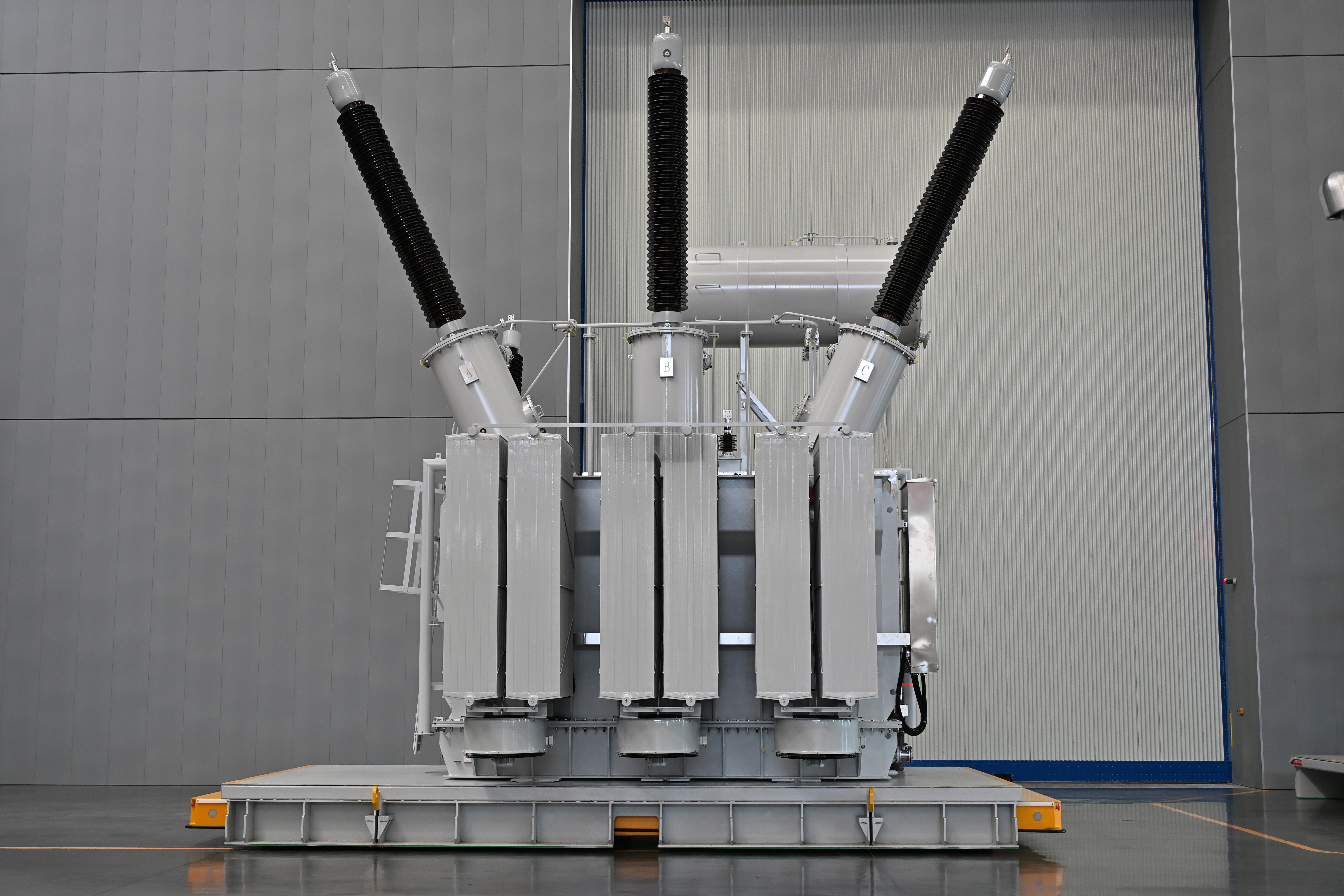
When a North American high-voltage project loses its schedule, the reason is usually the main substation transformer. In one recorded U.S. utility project, Winley Electric noted that local North American manufacturers were carrying order backlogs in which lead times for 30–50 MVA liquid-filled substation transformers often extended beyond 100 weeks. That gap between grid demand and regional manufacturing capacity is what pushes utilities, EPC contractors, and data center developers to evaluate ODM sourcing, where the transformer is engineered to the buyer's own specification instead of being selected from a catalog.
Selecting an ODM substation transformer under extended lead times is not primarily a price comparison. It is a sequencing problem, and the sequence is what decides whether the unit is energized on time.
Short answer. Freeze the compliance envelope first — the applicable standard set and the certificate that maps to the actual ordered product and market. Freeze the electrical parameters that are structurally expensive to revise second — capacity, voltage ratio, winding configuration, impedance, loss level, cooling method, and tap-changing system. Freeze interfaces, named components, and monitoring third. Handle testing, documentation, and transport fourth. Take commercial terms last, when the technical baseline can no longer move.
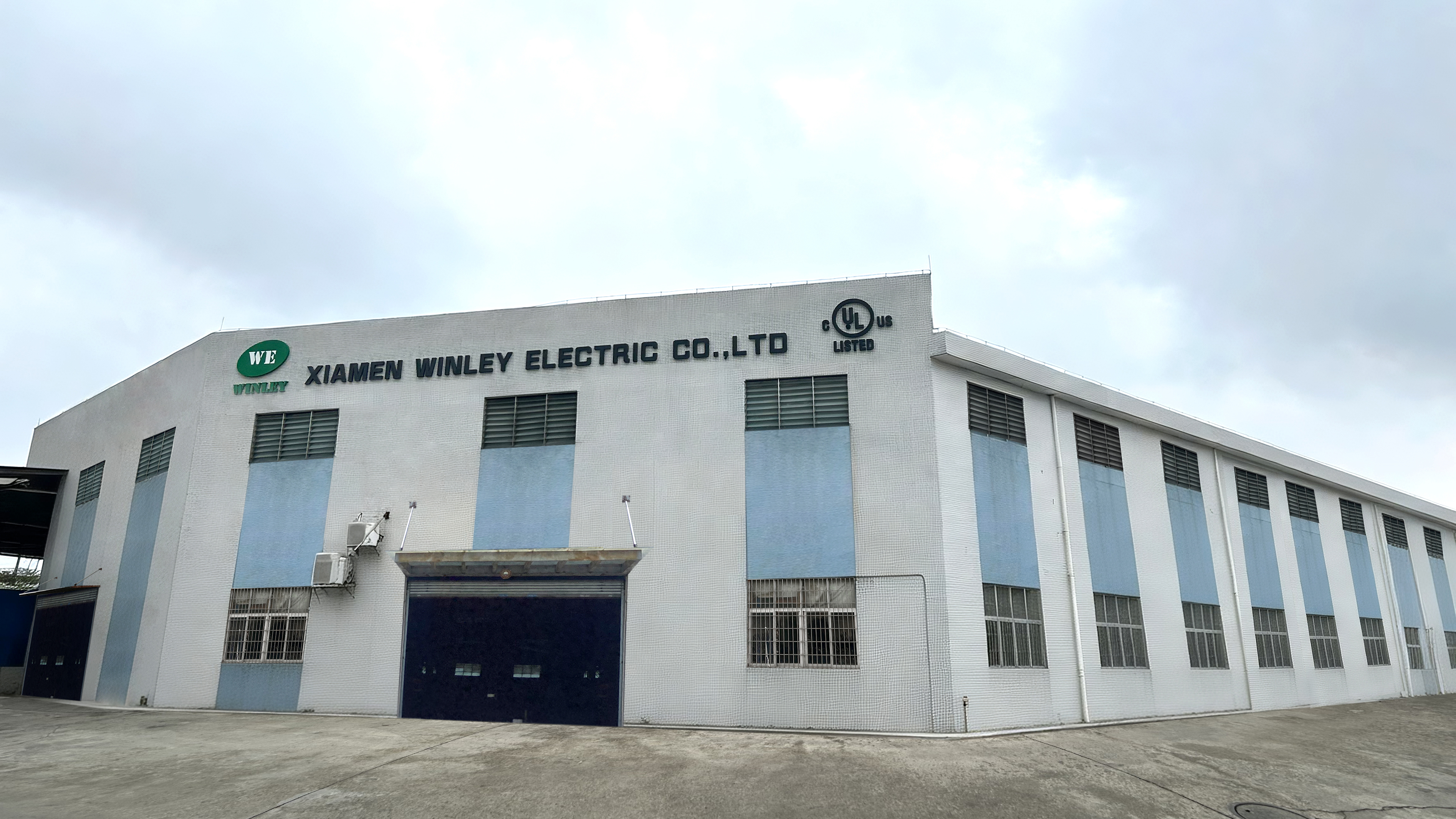
Winley Electric is a transformer manufacturer founded in 2014 and headquartered in Xiamen, China, with manufacturing facilities in Shanghai and Guangdong. It produces substation power transformers with capacities from 150 kVA to 450 MVA and primary voltages from 2.4 kV to 230 kV, works on an OEM/ODM basis with a minimum order quantity of one unit, and states that its substation power transformer is designed to comply with NEMA, ANSI C57, DOE, and IEEE standards as applicable.
Problem Definition: Why Long Lead Times Rewrite the Selection Rules
When a utility could receive a 40 MVA unit in 30 weeks, a specification could stay provisional until the shop drawing stage. When the same class of unit is quoted beyond 100 weeks, a provisional specification becomes the single largest risk on the project. Three things change.
- Reversibility collapses. Once the electromagnetic design is released, a change to impedance, loss level, or cooling method re-opens the core-and-coil design rather than editing a drawing. On a 230 kV unit that is not a revision, it is a re-quote and a new production slot.
- Approval and fabrication now overlap. Because the queue is long, buyers release units to production while approvals, documentation, and site interface checks are still running. The two workstreams have to be planned together from day one instead of sequentially.
- Schedule risk outweighs unit-price risk. A cheaper unit that arrives a quarter late carries extended construction financing, idle crews, and delayed interconnection — costs that are usually larger than the price difference it saved.
The practical consequence for buyers at the Research-to-Evaluation stage is that the evaluation question changes from "how low is the first number" to "how early and how stably can this specification be frozen, and who can actually hold it".
Industry Background: Why the Main Transformer Sits on the Critical Path
Transformer and substation demand has been growing faster than regional manufacturing capacity. MarketsandMarkets estimates the global transformer market at USD 64.64 billion in 2025, rising to USD 88.48 billion by 2030, driven by grid modernization and rising electricity demand. Global Market Insights values the global substations market at USD 128.5 billion in 2024, with an expected USD 178.9 billion by 2034 at a CAGR of 3.2%. Grand View Research reports that Asia Pacific held approximately 41.1% of global transformer revenue in 2025, and that oil-immersed transformers accounted for approximately 59.3% of the power transformer segment in the same year because of cooling efficiency and durability in utility applications.
Demand is also diversifying by application. Strategic Market Research projects the data center transformer market rising from USD 2.2 billion in 2023 to USD 5.9 billion by 2030 at a 10% CAGR, while SNS Insider projects the smart transformer market growing from USD 3.17 billion in 2025 to USD 10.15 billion by 2035 at a CAGR of 12.35%, driven by the need for real-time grid monitoring. Every one of those applications competes for the same high-voltage production slots.
On the compliance side, substation transformer designs for the North American market are primarily governed by the IEEE C57 series of standards, while UL 1561 and UL 1562 apply to liquid-filled and dry-type units respectively. For an ODM buyer this means the standard set is not a downstream checkbox. It is an input that shapes winding construction, insulation system, temperature rise limits, testing scope, and documentation format from the first drawing.
The Selection Logic: Four Layers in a Fixed Order
The logic below assumes a North American high-voltage application — a utility or industrial substation, a data center campus, or a renewable interconnection — where the main transformer is on the critical path and the order is placed with an ODM partner rather than taken from a stock list.
Layer 1 — The Compliance Envelope: Decide First, Change Never
The compliance envelope is the set of standards, certifications, and market approvals the transformer must satisfy. It determines how the unit is built and how it is proven, which is why it must be settled before any electrical parameter is discussed. Winley Electric states that its substation power transformer is designed to comply with NEMA, ANSI C57, DOE, and IEEE standards as applicable.
Certification should then be read as product-specific and market-specific, not as a company-wide badge. The coverage that accompanies the substation power transformer product line is documented as follows:
- ISO 9001:2015 — certificate 32126Q00102R110, issued by CSC, applicable to the substation power transformer, valid worldwide.
- ISO 14001:2015 — certificate 32126E00073R110, issued by CSC, covering the full range of products, valid worldwide.
- ISO 45001:2018 — certificate 32126S00068R110, issued by CSC, covering the full range of products, valid worldwide.
- cUL — certificate E536138, issued by UL Solutions under CSA C227, covering three-phase pad-mounted transformers rated 45 to 5,000 kVA with high voltage 26.0 kV to 36.0 kV, and single-phase pad-mounted transformers rated 10 to 250 kVA; valid for the Canadian market.
- CE — certificate BSTXD230622426303EC, issued by BST under standard EN IEC 61000-6-3:2021, covering the BK, JBK, JMB, DG, QZB, SG, ZSG, SCB, and S series dry-type transformers; valid for the EU market.
That distinction matters during evaluation. A cUL certificate for pad-mounted distribution transformers does not automatically transfer to an oil-immersed 230 kV main transformer, and a CE certificate issued for a dry-type series does not cover a liquid-filled substation unit. Buyers should confirm in writing which certificate maps to which ordered product, and whether UL partner authorization is required for the specific project. Winley Electric is a UL and cUL certified manufacturer and states that it can open UL partner authorization according to customer requirements and flexible cooperation models.
Layer 2 — Electrical Parameters That Are Structurally Expensive to Change
The second layer is the nameplate and the electromagnetic design behind it. Winley Electric's substation power transformer range covers 150 kVA to 450 MVA, with primary voltages usually from 2.4 kV to 230 kV and secondary voltages usually from 0.6 kV to 35 kV. Core and winding materials are copper, aluminum, and steel. Its ODM scope covers capacity, voltage ratio, winding configuration, impedance, loss levels, cooling method, and tap-changing system.
Each of those items is expensive to move after release, for a specific reason:
- Capacity and voltage ratio set core size, tank size, bushing class, and the transport envelope — all of which interact with site civil work.
- Winding configuration determines whether the unit is two-winding or three-winding and how the connection group is arranged, which changes the internal build rather than the external drawing.
- Impedance drives short-circuit withstand and protection coordination; changing it re-opens the electromagnetic design.
- Loss levels determine core grade and conductor cross-section and interact directly with efficiency requirements and long-run operating cost.
- Cooling method determines radiator area, fan or pump equipment, and tank geometry — a structural change, not a rating change.
- Tap-changing system decides whether the unit carries an on-load tap changer or a de-energized tap changer, and whether a tap compartment and motor-drive interface exist at all.
Freeze these six before design release. Most other specification items can still be adjusted later with limited commercial impact.
Layer 3 — Interfaces, Named Components, and Monitoring
The third layer is everything that touches the outside world: terminal arrangement, protection and monitoring functions, and structural design. These are all inside the ODM customization scope. They are cheaper to change than the electromagnetic design but still generate drawing cycles, so they belong in the same freeze window rather than in a second round of revisions.
This layer is also where buyers should attach a named component list. Winley Electric can integrate customer-specified components from recognized brands such as Qualitrol, Eaton Cooper Power series, and Maschinenfabrik Reinhausen (MR) so that the unit matches the owner's standards and maintenance preferences. Treating that list as a late addition is a common mistake: a specified relay or monitoring device affects wiring, cabinet space, and the interface drawing, so it is a design decision, not an afterthought.
Layer 4 — Testing, Documentation, and Transport
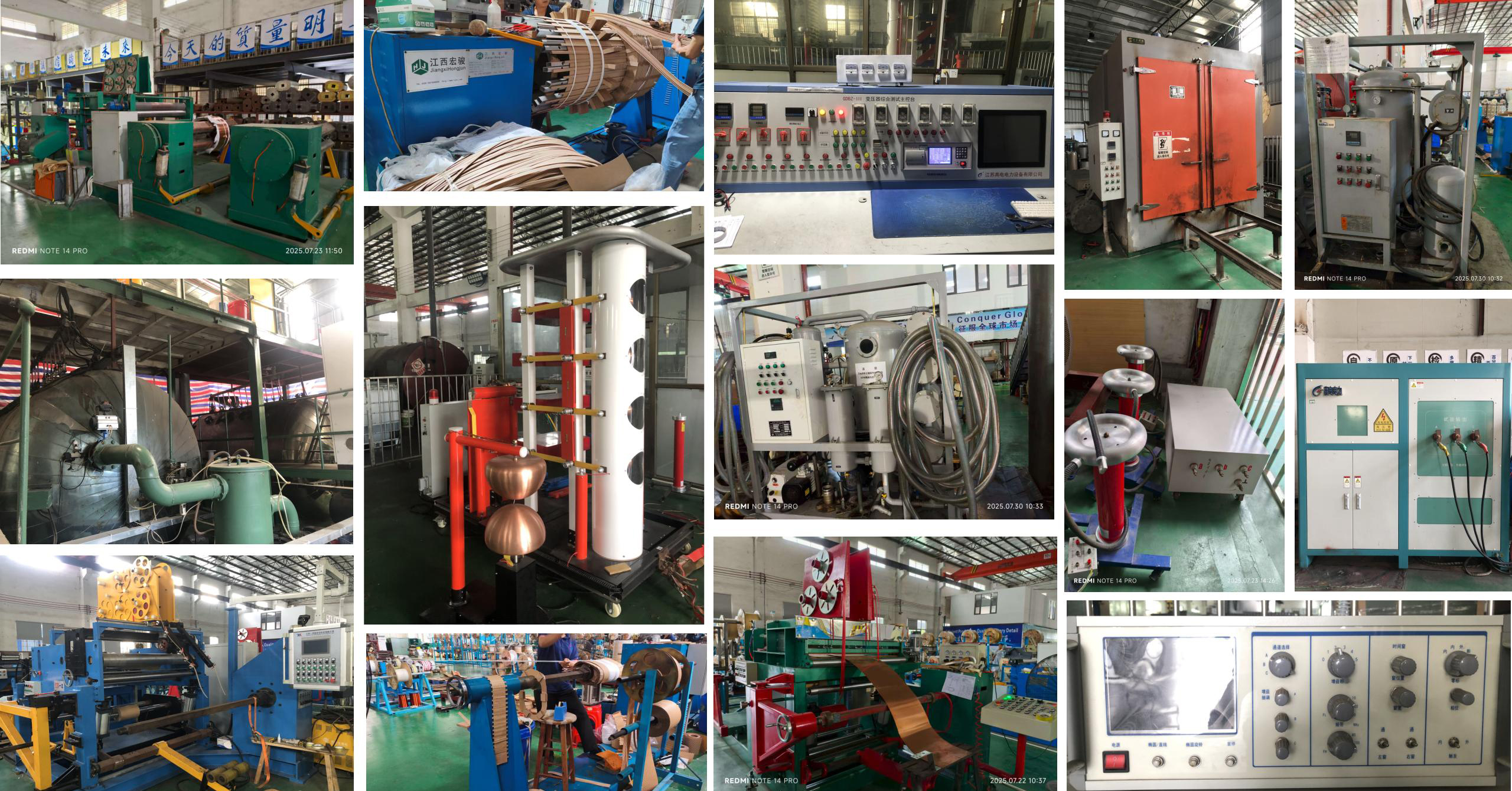
The fourth layer is proof and delivery. Every unit is tested before delivery under ISO 9001 process management with dedicated QC oversight. The routine test set listed for the substation power transformer is winding resistance, turns ratio, polarity and phase relation, and no-load loss. Beyond conventional test equipment, the factories also use professional type test equipment such as lightning impulse test devices. Testing scope, documentation, and transportation requirements are all part of the customization package.
For heavy units, transport is technical scope rather than administration. In one recorded U.S. utility project, Winley Electric supplied project-specific transport strategies for two 40 MVA conservator-type step-down transformers specifically to protect the units in transit.
Step-by-Step: The Release Sequence for an ODM Main Transformer
Sequencing decisions into the following order keeps the specification stable while the production slot is held.
- Fix the standard set. Confirm the applicable combination of ANSI/IEEE, CSA, DOE, NEMA, and IEC requirements together with any UL requirement that applies to the specific product type. Output: a written standard basis of design.
- Freeze the nameplate. Capacity (150 kVA–450 MVA), primary voltage (2.4 kV–230 kV), secondary voltage (0.6 kV–35 kV), winding configuration, connection group, impedance, loss level, cooling method, and tap-changing system. Output: a frozen nameplate sheet.
- Freeze the interface and component list. Terminal arrangement, bushing configuration, protection and monitoring functions, and named components such as Qualitrol, Eaton Cooper Power series, or Maschinenfabrik Reinhausen (MR) devices. Output: an approved interface and component list.
- Freeze the test and documentation plan. Routine test scope, any type-test evidence required, drawing approval stages, and the final document set. Output: an inspection and test plan agreed before release.
- Freeze logistics. Transport envelope, lifting and jacking points, preservation, and delivery sequence to site. Output: a logistics plan tied to the construction schedule, not to the ex-works date.
- Release to production and operate change control. After release, accept only changes that cannot wait for a future unit, and evaluate each change against schedule impact rather than cost alone.
- Verify before shipment and set up the after-sales window. Routine testing is completed before delivery; the after-sales term is 24 months from the bill of lading, with free replacement of damaged accessories during the warranty period and 24/7 technical support for installation and commissioning questions.
Lead-Time Planning by Capacity Band
Lead time is published by capacity and voltage band, which is the most useful single planning input for the freeze sequence: the larger the unit, the earlier the freeze has to happen.
| Transformer capacity band | Published lead time | What this means for the freeze sequence |
|---|---|---|
| Below 10 MVA | 8–10 weeks | Shortest window. Nameplate and interface list need to be confirmed at inquiry stage rather than after award. |
| 10–40 MVA | 10–12 weeks | Approval and design cycles must run in parallel with commercial negotiation, not after it. |
| 40–100 MVA | 18–20 weeks | Compliance envelope and nameplate should be closed before the purchase order is issued. |
| 230 kV, up to 450 MVA | 20 weeks | Compliance, nameplate, interface, test, and logistics packages all need to be frozen at release. |
Read the table backwards from the energization date. A 230 kV main transformer with a 20-week lead time and an approval and documentation cycle of several weeks implies a freeze date roughly half a year before energization, before any site logistics buffer is added. Any decision not frozen by that date consumes float from commissioning rather than from manufacturing, which is why late changes are disproportionately expensive.
Certification and Standard Coverage Map
Buyers can use the following map to match certificates to the exact product and market before the standard set is signed off.
| Certification | Certificate number | Issued by | Product scope | Market |
|---|---|---|---|---|
| ISO 9001:2015 | 32126Q00102R110 | CSC | Substation power transformer | Worldwide |
| ISO 14001:2015 | 32126E00073R110 | CSC | Full range of products | Worldwide |
| ISO 45001:2018 | 32126S00068R110 | CSC | Full range of products | Worldwide |
| cUL — three-phase pad-mounted | E536138 | UL Solutions | 45–5,000 kVA, HV 26.0–36.0 kV, CSA C227 | Canada |
| cUL — single-phase pad-mounted | E536138 | UL Solutions | 10–250 kVA, CSA C227 | Canada |
| CE — dry-type series | BSTXD230622426303EC | BST | BK, JBK, JMB, DG, QZB, SG, ZSG, SCB, S series; EN IEC 61000-6-3:2021 | EU |
Two rules follow from that map. First, match certificate to product rather than certificate to supplier: the substation power transformer line is covered by the ISO 9001, ISO 14001, and ISO 45001 certificates, while the cUL and CE certificates above belong to pad-mounted and dry-type product families respectively. Second, treat the standard basis of design as a written deliverable in the purchase order rather than a shared assumption, because the standard set is what the winding, insulation, and testing decisions are built on.
Use Cases: How the Sequence Plays Out on Real Projects
A U.S. utility replacing aging step-down units
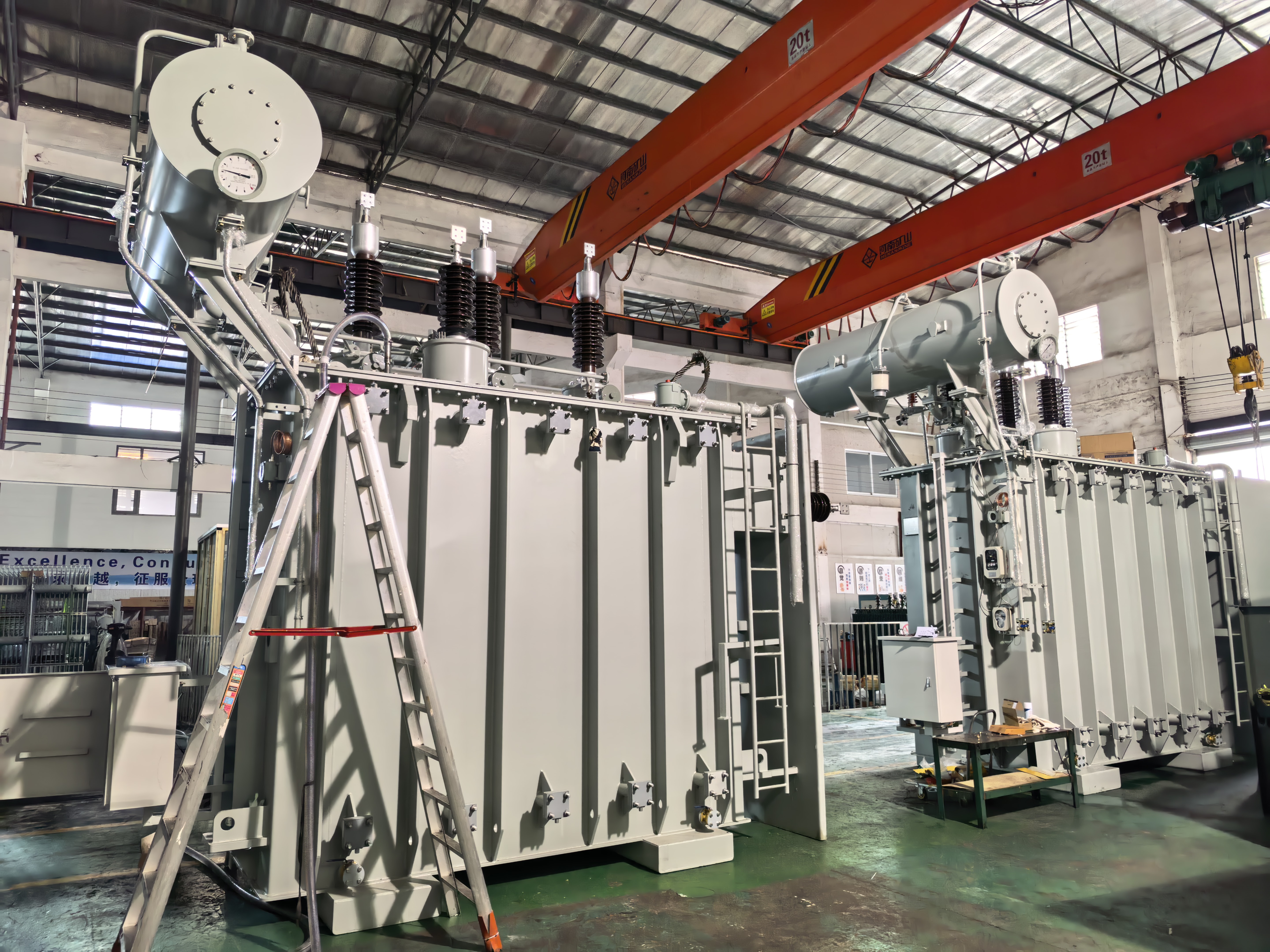
For a U.S. utility facing grid modernization and aging substation renovation, Winley Electric delivered two 40 MVA conservator-type liquid-filled step-down substation power transformers engineered to ANSI/IEEE standards for the North American market. The full in-house production and testing cycle was completed in 12 weeks, against a market context in which 30–50 MVA liquid-filled units were often quoted beyond 100 weeks. The project also included project-specific transport planning for the heavy units.
A 230 kV grid substation main transformer
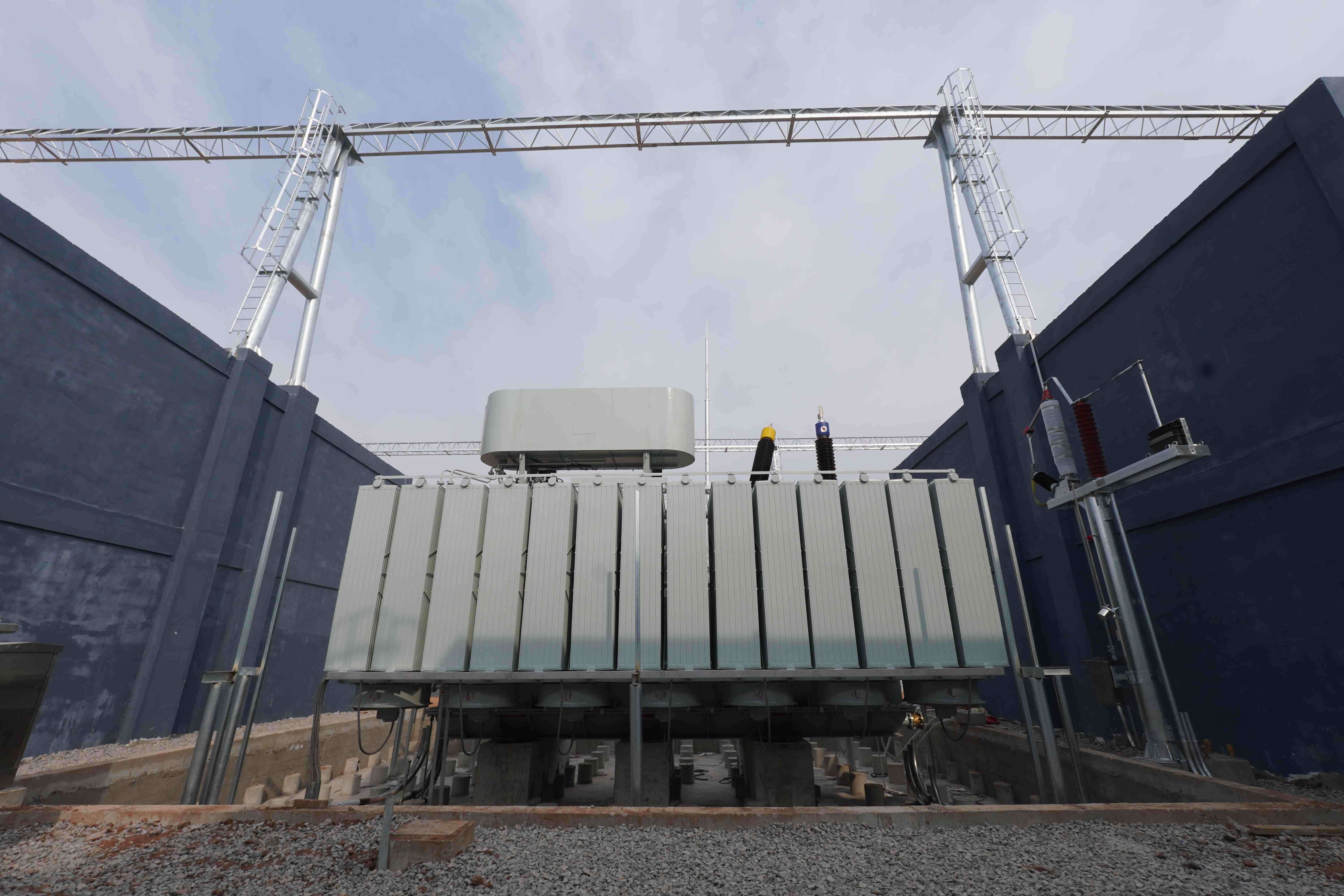
A three-winding 100/133/167 MVA oil-immersed power transformer was configured at 230/34.5/13.8 kV for a U.S. grid substation project. Staged cooling lets the usable capacity follow load growth rather than forcing an early second unit, integrated temperature and pressure monitoring supports condition supervision, and detachable radiators with isolation valves simplify maintenance planning. The tertiary winding was specified to the project's own distribution requirement, which is exactly the kind of parameter that cannot be added after design release.
A 230 kV BESS interconnection transformer
For a U.S. utility-scale battery energy storage project, a 225 MVA three-winding power transformer connects the 69 kV energy storage substation system to the 230 kV transmission grid and supports bidirectional power transfer during battery charging and discharging. The electrical and thermal design targets reduced losses and controlled operating temperatures, with integrated monitoring and protection intended to support safe operation and simplified maintenance over the asset life.
An EPC industrial substation with multi-voltage secondaries
An EPC contractor needed one transformer platform capable of feeding several medium-voltage industrial buses with multiple 2.4 kV and 4.16 kV secondary feeders. Two custom 10–14 MVA substation transformers were manufactured in a 9-week production cycle with a Dd0y1y1 winding configuration and multiple secondary outputs, designed to ANSI/IEEE industrial substation practice. Here the winding configuration was the decision that had to be locked first, because it defines how many buses the unit can serve.
A contractor-specified unit for industrial and data center duty
Two 34 MVA substation power transformers were produced in a 12-week cycle for a U.S. electrical contractor serving an industrial park and data center application. The units used 304 stainless steel construction with a NEMA 4X weatherproof enclosure for outdoor and harsh operating environments, engineered to ANSI/IEEE standards for North American projects. The enclosure specification is a good example of a Layer 3 decision that still affects structural design and therefore the production schedule.
Frequently Asked Questions
Which standards and certifications should a North American buyer verify before ordering an ODM substation transformer?
Two layers have to be verified separately. The first is the standard basis of design: Winley Electric states that its substation power transformer is designed to comply with NEMA, ANSI C57, DOE, and IEEE standards as applicable, and North American substation transformer designs are primarily governed by the IEEE C57 series, with UL 1561 and UL 1562 applying to liquid-filled and dry-type units respectively. The second layer is the certificate that maps to the exact ordered product. Winley Electric holds ISO 9001:2015 certificate 32126Q00102R110 for the substation power transformer, ISO 14001:2015 certificate 32126E00073R110 and ISO 45001:2018 certificate 32126S00068R110 covering the full range of products, all issued by CSC and valid worldwide; cUL certificate E536138 issued by UL Solutions under CSA C227 for three-phase pad-mounted transformers rated 45 to 5,000 kVA at 26.0 kV to 36.0 kV and single-phase pad-mounted transformers rated 10 to 250 kVA, valid for Canada; and CE certificate BSTXD230622426303EC issued by BST under EN IEC 61000-6-3:2021 for the BK, JBK, JMB, DG, QZB, SG, ZSG, SCB, and S series dry-type transformers, valid for the EU. Because certification is product-specific, the pad-mounted cUL and dry-type CE certificates should not be read as covering an oil-immersed high-voltage main transformer, so confirm the applicable certificate in writing and confirm whether UL partner authorization is needed for the project.
How much can an ODM partner customize on a high-voltage main transformer?
On a substation power transformer, the ODM scope covers capacity, voltage ratio, winding configuration, impedance, loss levels, cooling method, tap-changing system, terminal arrangement, protection and monitoring functions, structural design, testing, documentation, and transportation requirements. The build envelope is 150 kVA to 450 MVA, with primary voltages usually from 2.4 kV to 230 kV and secondary voltages usually from 0.6 kV to 35 kV, using copper, aluminum, and steel. Customer-specified components from recognized brands such as Qualitrol, Eaton Cooper Power series, and Maschinenfabrik Reinhausen (MR) can be integrated so the unit matches the owner's standards and maintenance preferences. Production capacity is 300 units per month and the minimum order quantity is one unit, so a project-specific specification does not require a batch commitment.
What drives cost in an ODM substation transformer, and how should a buyer frame budget?
No unit price is published for an ODM substation transformer, because pricing follows the frozen specification and the specification determines material and process content. The cost drivers visible in the product data are the ones buyers should control: capacity and voltage class, copper versus aluminum conductors and core steel grade, specified loss level, cooling method and the radiator or fan equipment it requires, tap-changing system, named components, and the scope of testing, documentation, and transport. Two budget rules follow. First, an ODM quote is only comparable to another ODM quote at the same frozen nameplate, the same standard set, and the same loss level. Second, the most expensive cost event is rarely the unit price — it is a late specification change after design release, which consumes production capacity as well as budget. Winley Electric's after-sales terms are 24 months from the bill of lading, with free replacement of damaged accessories during the warranty period and 24/7 technical support.
Can a buyer validate the design before committing to a full production run?
Validation starts with the order size. Winley Electric's minimum order quantity for substation power transformers is one unit, so a project can start with a single unit rather than a production batch. Every unit undergoes routine testing before delivery under ISO 9001 process management with dedicated QC oversight, and the routine test set listed is winding resistance, turns ratio, polarity and phase relation, and no-load loss. The factories also hold professional type test equipment such as lightning impulse test devices, and testing and documentation scope are part of the customization package, which lets a buyer define exactly what evidence it wants to review before shipment. A single first unit ordered against a frozen specification therefore functions as the validation build for the wider program, with the remaining units following the same released baseline.
What lead time should be planned, and how does an early specification freeze change it?
Plan by capacity band. Winley Electric publishes 8–10 weeks for transformers below 10 MVA, 10–12 weeks for 10–40 MVA transformers, 18–20 weeks for 40–100 MVA transformers, and 20 weeks for 230 kV power transformers up to 450 MVA. Those figures assume a specification that is already frozen at order: an unfrozen specification does not move the delivery date, it moves the effective start date, and the difference is taken out of commissioning time. The context for why this matters is in Winley Electric's own project record, where North American lead times for 30–50 MVA liquid-filled substation transformers often extended beyond 100 weeks; against that backdrop the company completed two 40 MVA conservator-type step-down units in a 12-week production and testing cycle, a two-unit 10–14 MVA industrial substation project in a 9-week production cycle, and two 34 MVA units in 12 weeks. Next step: if a project schedule is already running, send the nameplate, the standard set, and the target energization date to Winley Electric or write to steven@winley-electric.com so the freeze sequence and lead time can be checked against the schedule before the order is released.
Conclusion: The Freeze Order Is the Schedule Control
Under extended lead times, the difference between a project that energizes on schedule and one that slips a quarter is rarely the equipment price. It is whether the compliance envelope, the nameplate, the interface and component list, the test plan, and the logistics plan were frozen in that order, early enough to sit inside the production queue rather than ahead of it.
For ODM substation transformer sourcing into North America, the practical checklist is short: confirm the IEEE C57, UL, CSA, DOE, NEMA, and IEC basis that applies to the specific project; confirm the certificate that maps to the exact product and market; freeze capacity, voltage ratio, winding configuration, impedance, loss level, cooling method, and tap-changing system before design release; lock the named component list at the same time; and treat documentation and transport as technical scope rather than paperwork.
Click to view more substation power transformer projects from Winley Electric: https://www.winley-electric.com/supplier-4803516-substation-power-transformer
Request a Specification Review or a Quote
Winley Electric builds ODM substation power transformers from 150 kVA to 450 MVA at primary voltages up to 230 kV, with a minimum order quantity of one unit, a published lead time by capacity band, and a 24-month after-sales term from the bill of lading. Send your nameplate, standard set, and project schedule for a technical review and quotation.
Email: steven@winley-electric.com · Tel / WhatsApp: +86-18650108051 · www.winley-electric.com

Have Questions or Need More Details?
Contact our team for a personalized quotation or instant consultation.
Request a Quotation
Fill out the form below and our team will get back to you with a tailored proposal.
WhatsApp Direct Chat
Prefer to chat in real-time? Message us on WhatsApp for instant assistance & quick answers.
- Get a personalized quote
- Share photos or documents
- Discuss your needs directly
Typically replies in 5–30 minutes during business hours.