North American Grid Upgrades: Top ODM Priorities for Low-Loss High-Voltage Substation Transformers
North American grid upgrades now ask two things of a high-voltage substation transformer at the same time: it must fit the project rather than force the project to fit it, and it must hold specified loss levels across a service life measured in decades. The practical answer to both is ODM customization — engineering the unit from the project specification instead of accepting the closest catalog rating.
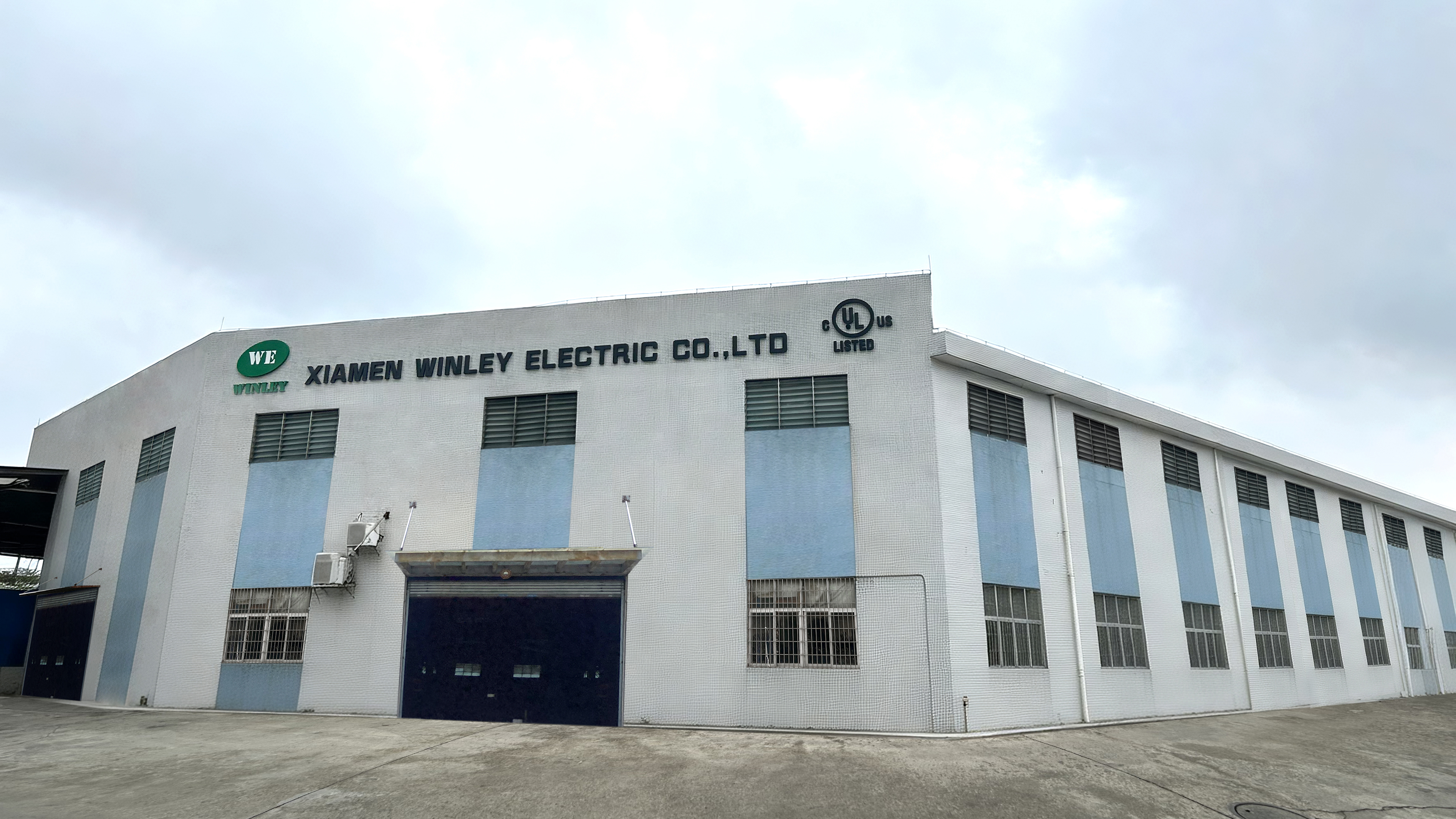
Xiamen Winley Electric Co., Ltd. (Winley Electric) is a transformer manufacturer founded in 2014 and headquartered in Xiamen, China, producing power and distribution transformers with manufacturing capability up to 450 MVA and 230 kV, engineered to ANSI/IEEE/CSA/DOE2016/IEC60076 standards and certified by UL and cUL. This article sets out why grid upgrade projects are moving toward high-fit, low-loss ODM specifications, which configuration priorities matter most, and how the order sequence actually runs.
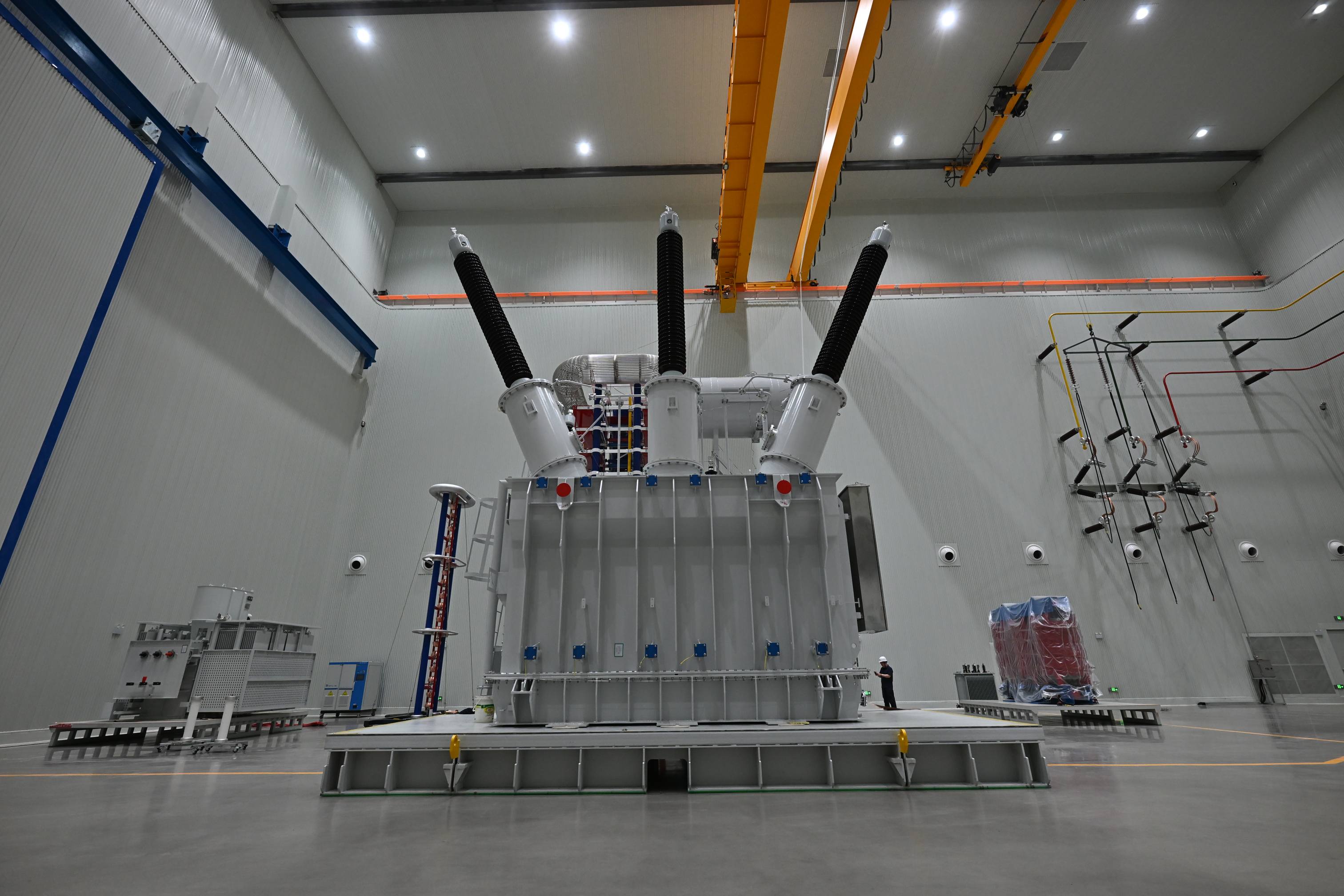
Problem Definition: When the Catalog Unit Becomes the Project Constraint
In a grid upgrade, the substation transformer is usually the item with the longest manufacturing clock and the least flexibility. When the nearest standard rating is specified, the compromises do not disappear — they move into other parts of the project.
Typical displacement effects include:
- Voltage ratio mismatch — corrected on site with additional equipment instead of inside the transformer.
- Impedance outside the study assumption — forcing rework of short-circuit and protection coordination studies.
- Loss level above the evaluated value — converted into operating cost for the whole service life.
- Cooling profile that does not match the load curve — either under-used capacity or premature thermal stress.
- Envelope, terminal and interface conflicts — discovered late, when civil works are already fixed.
- Protection and monitoring interfaces — retrofitted rather than designed in.
None of these is dramatic on its own. Together they produce engineering rework, delayed energization and a lifecycle cost that was never in the approved business case. For buyers at the evaluation stage, the question therefore shifts from “which unit is cheapest on the quotation” to “which configuration keeps the project inside its loss budget and its schedule”.
Industry Background: What Is Actually Driving High-Fit, Low-Loss Demand
Four verifiable signals explain why customization has moved from optional to structural in North American procurement.
- Market growth. The global transformer market is estimated to reach USD 88.48 billion by 2030 (MarketsandMarkets, 2026).
- Price movement. The U.S. Producer Price Index for electric power and specialty transformer manufacturing increased by 85.8% between 2019 and 2026 (U.S. Bureau of Labor Statistics).
- Lead time. Average lead times for power transformers in the U.S. reached 128 weeks as of Q2 2025 (Mark & Spark Solutions).
- Efficiency regulation. The U.S. DOE 2024 final rule for distribution transformers (10 CFR 431.192) requires compliance by April 23, 2029, and encourages the use of both GOES and amorphous steel.
The combination is consistent with a supply-constrained market in which availability, not list price, decides which projects energize on schedule. When equipment takes that long to arrive, a specification error is no longer a commercial inconvenience — it is a schedule event. That is the mechanism behind the shift toward ODM: buyers are moving engineering decisions earlier, because correcting them later is no longer affordable in time terms.
The ODM Route: Engineering the Transformer to the Project
Winley Electric provides OEM and ODM manufacturing for substation power transformers rated up to 450 MVA and 230 kV. The customization scope is defined at parameter level rather than at product-family level, covering capacity, voltage ratio, winding configuration, impedance, loss levels, cooling method, tap-changing system, terminal arrangement, protection and monitoring functions, structural design, testing, documentation and transportation requirements.
Two aspects of that scope matter most in North American projects:
- Component integration. Customer-specified components from recognized brands such as Qualitrol, Eaton Cooper Power series and Maschinenfabrik Reinhausen (MR) can be integrated to match project standards and existing maintenance preferences.
- Standard alignment. Units can be engineered to customer specifications, site conditions, existing equipment interfaces and the applicable ANSI/IEEE, CSA or IEC standards — from build-to-print OEM production to fully customized ODM development.
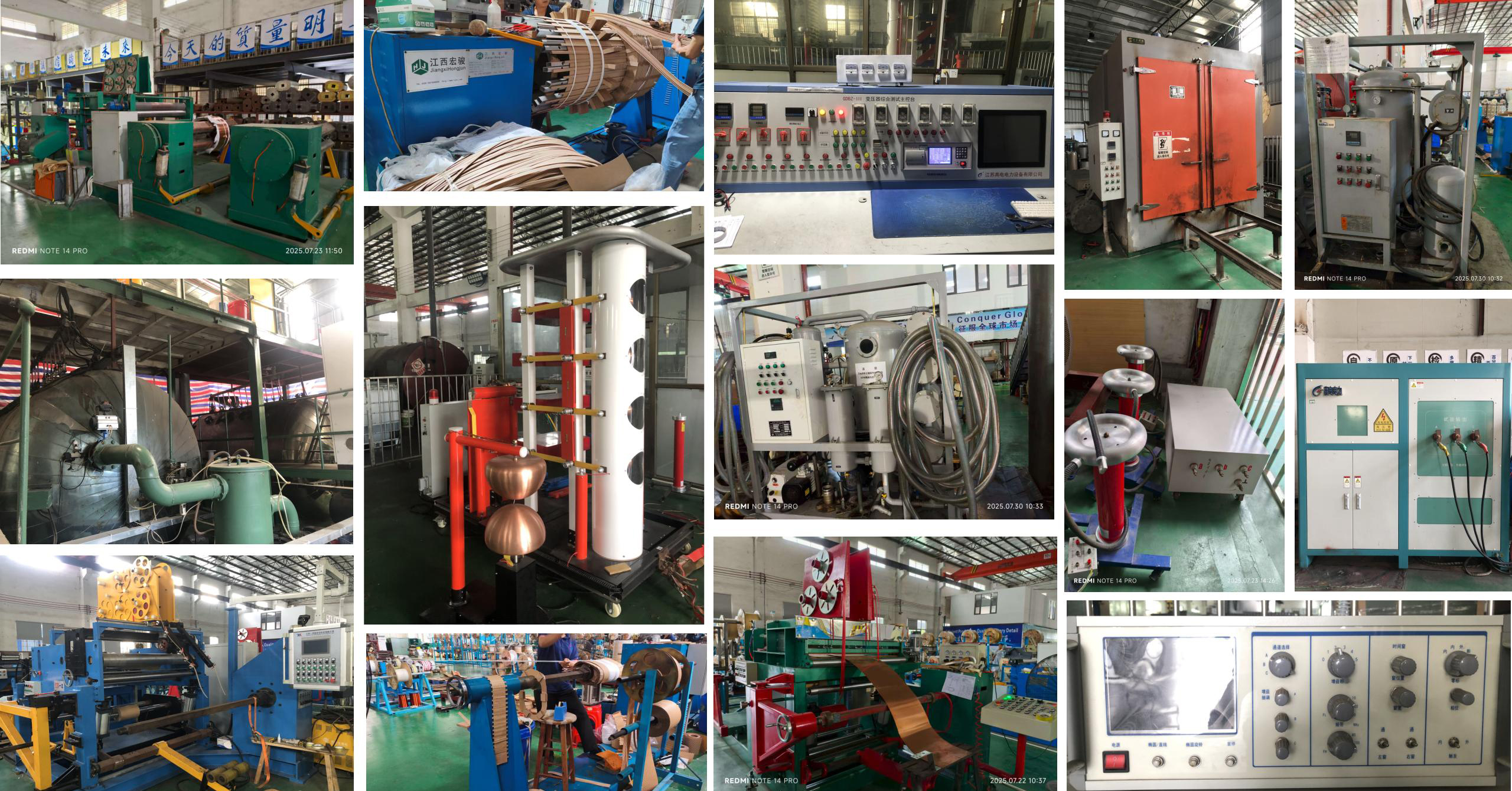
Manufacturing is supported by a 45,000 m² factory footprint, 220 employees, a 35-engineer R&D team and an annual output of 35,000 units, with monthly capacity of 300 units and a minimum order quantity of one unit. Quality management follows ISO 9001:2015 (certificate 32126Q00102R110, CSC, valid to 2029-05-21), ISO 14001:2015 and ISO 45001:2018, alongside UL and cUL certification. Every unit undergoes routine testing before delivery, including winding resistance, turns ratio, polarity and phase relation, and no-load loss; the plants also run professional type-test equipment such as lightning impulse test devices.
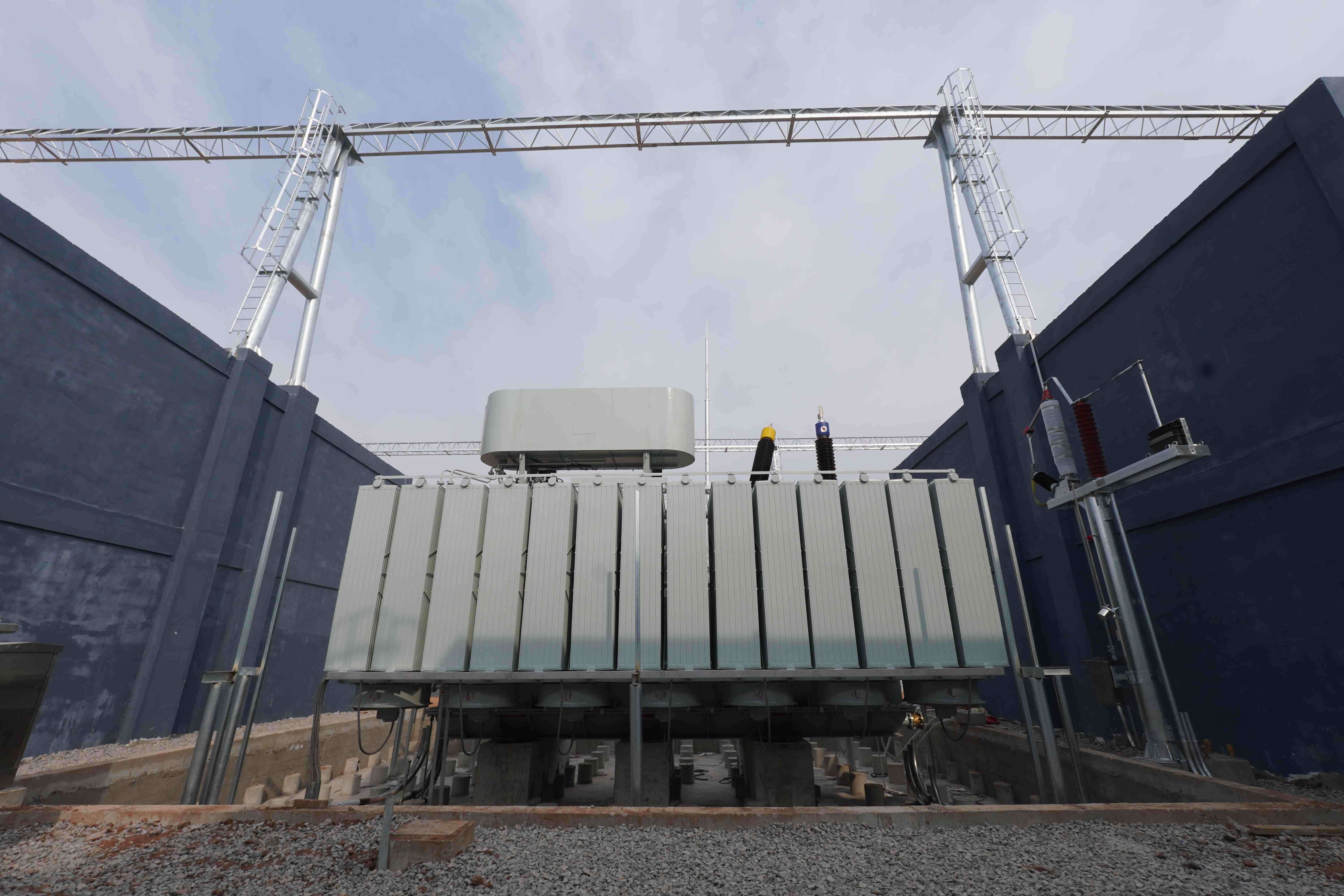
Top 5 ODM Priorities for North American Grid Upgrade Transformers
Not every customization dimension carries equal weight. Based on delivered configurations for U.S. utility, EPC and renewable projects, these are the five priorities that most often decide whether an ODM unit integrates cleanly.
1. Specified loss levels and the loss evaluation behind them
Loss levels are a directly configurable parameter, and they are the parameter with the longest financial tail. A unit that misses the evaluated loss value keeps charging the owner for the next two to three decades. Because loss performance is fixed by core and winding design rather than corrected later, it belongs in the first specification review, not the last.
2. Voltage ratio, winding configuration and tertiary requirements
Three-winding configurations with a project-specific tertiary are increasingly common in substation capacity upgrades and main transformer replacement. A 230/34.5/13.8 kV three-winding arrangement, for example, supports a 34.5 kV distribution network while meeting tertiary winding requirements defined by the project — a fit that a two-winding catalog unit cannot provide without site-side compensation.
3. Cooling method matched to the real load profile
Staged cooling allows a transformer to carry different capacity levels as demand changes. A 100/133/167 MVA staged cooling design lets operators run efficiently under light load and still access full capacity at peak. Cooling selection should follow the measured or forecast load curve, not a generic assumption.
4. Protection, monitoring and approved component brands
Integrated temperature and pressure monitoring supports condition supervision, and detachable radiators with isolation valves simplify maintenance planning. Where a utility standardises on particular relay, gauge or tap-changer brands, that preference should be written into the ODM scope so the delivered unit matches existing maintenance practice.
5. Enclosure, site conditions and transport reality
Outdoor performance and heavy-haul logistics are engineering inputs, not afterthoughts. Configurations have been delivered with 304 stainless steel construction and NEMA 4X weatherproof enclosures for harsh outdoor environments, and transportation requirements are part of the customization scope for a reason: a correctly built transformer that arrives damaged is a failed delivery.
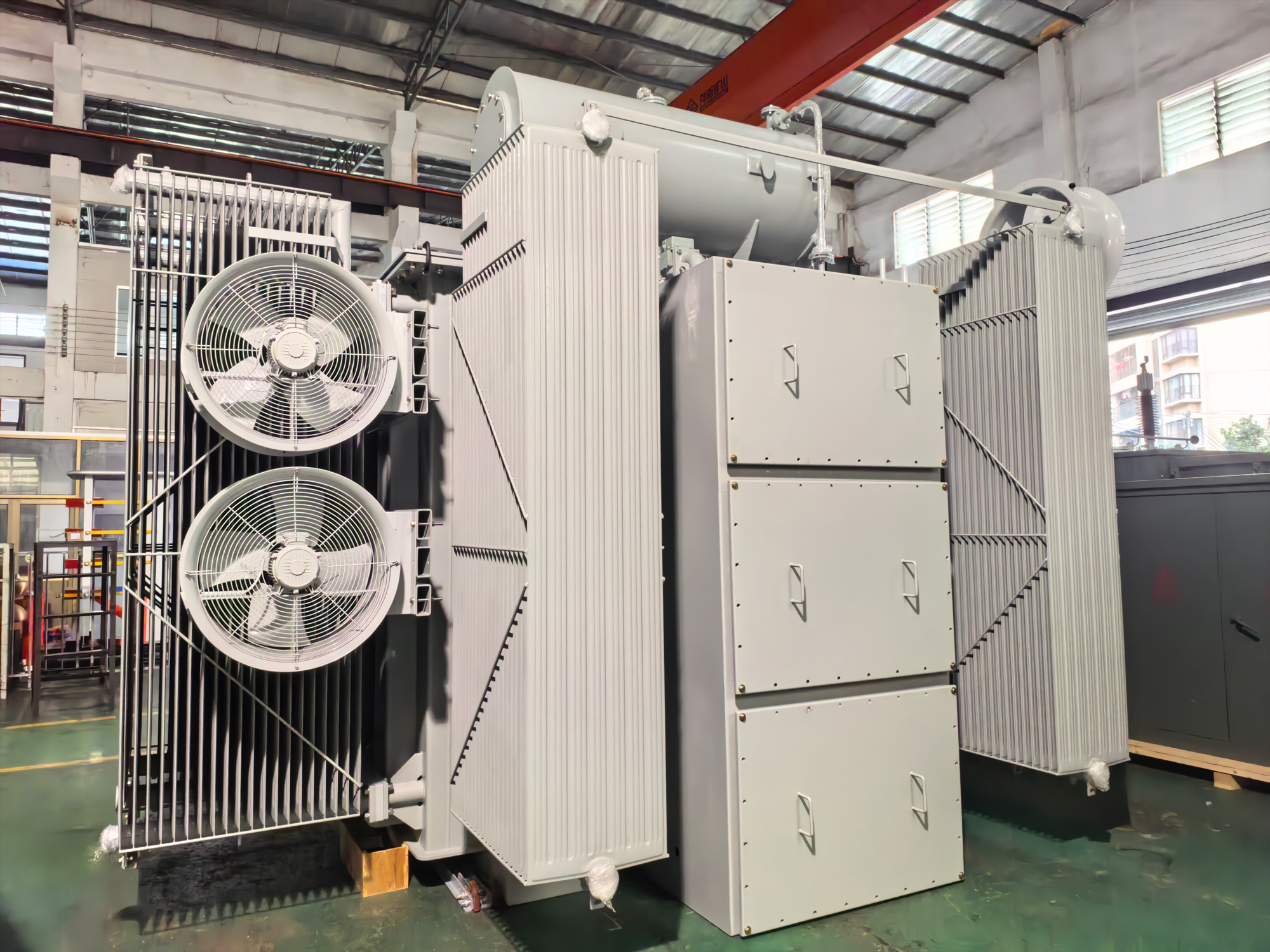
Step-by-Step Breakdown: How a High-Fit ODM Order Runs
The sequence below reflects how customization projects are actually structured, and it explains why the specification must be locked before the production slot.
- Lock the electrical specification. Capacity, voltage ratio, winding configuration, impedance and tap-changing system are fixed first, because every later decision depends on them.
- Lock site and interface conditions. Terminal arrangement, enclosure type, protection and monitoring functions, and existing equipment interfaces are defined against the actual substation, not a reference drawing.
- Lock loss and thermal targets. Loss levels and cooling method are agreed together, since they interact directly in the design.
- Lock testing and documentation. Routine tests, type-test expectations and the documentation package are agreed before production so nothing is discovered at factory acceptance.
- Lock the production slot, then the transport plan. Documentation and transportation requirements are part of the customization scope, and heavy-haul planning starts before the unit is complete.
Lead time by rating band
| Rating band | Winley Electric ODM lead time | Practical implication for the project |
|---|---|---|
| Below 10 MVA | 8–10 weeks | Fits inside a single construction season; supports late-breaking scope changes. |
| 10–40 MVA | 10–12 weeks | The band where most utility capacity upgrades and industrial substations sit. |
| 40–100 MVA | 18–20 weeks | Interface and loss decisions must be locked earlier in the design cycle. |
| 230 kV, up to 450 MVA | 20 weeks | Highest integration risk; specification discipline matters most. |
For context, reported U.S. average lead times for power transformers reached 128 weeks as of Q2 2025 (Mark & Spark Solutions). Buyers should always verify current lead times for their own rating and specification rather than assume any figure transfers between projects.
Comparison Table: What Procurement Should Lock in the ODM Scope
The table below maps the customization dimensions that decide grid-upgrade fit to the specification item that should be locked.
| Customization dimension | What to lock in the specification | Why it changes project outcomes |
|---|---|---|
| Capacity and voltage ratio | MVA rating, HV/LV voltages, tertiary voltage if required | Determines whether the unit connects directly or needs site-side compensation. |
| Winding configuration | Winding arrangement, multiple secondary outputs where needed | Supports multi-bus industrial distribution (for example 2.4 kV and 4.16 kV outputs) from one platform. |
| Impedance | Target impedance tied to the short-circuit study | Avoids re-running protection coordination after award. |
| Loss levels | Evaluated no-load and load loss values | Converts into operating cost for the whole service life. |
| Cooling method | Cooling type and staged capacity levels | Matches capacity to the real load curve instead of a generic assumption. |
| Tap-changing system | Tap changer type and range, approved brand preference | Aligns with existing utility operating and maintenance practice. |
| Protection and monitoring | Temperature, pressure and monitoring functions; component brands | Enables condition supervision and simplifies maintenance planning. |
| Structural design and enclosure | Tank material, enclosure rating, outdoor performance | Determines survivability on harsh outdoor sites. |
| Testing and documentation | Routine test list, type-test expectations, document set | Prevents late-stage factory acceptance surprises. |
| Transportation | Route, lifting and heavy-haul requirements | Protects the unit between factory and energization. |
Use Cases: Configurations Already Delivered for North American Projects
Delivered projects show how the priorities above translate into actual units.
- Utility-scale BESS interconnection (United States). One 230 kV / 225 MVA three-winding power transformer connects a 69 kV energy storage substation to the 230 kV transmission grid and supports bidirectional power transfer during charging and discharging. The design targets reduced energy losses, controlled operating temperatures, low noise and integrated monitoring and protection.
- Utility substation and regional grid expansion (United States). One 230/34.5/13.8 kV three-winding transformer rated 100/133/167 MVA with staged cooling, temperature and pressure monitoring, and detachable radiators with isolation valves, engineered for a 30-year design life.
- Industrial substation for an EPC client (United States). Two 10–14 MVA custom substation transformers with a Dd0y1y1 winding configuration and multiple 2.4 kV and 4.16 kV secondary outputs, manufactured within a 9-week production cycle and designed for a 30-year service life.
- Solar-plus-storage project (United States). One 8 MVA unit with dual LV split winding architecture, high thermal margin insulation and harmonic load resistance to IEEE C57, delivering a stable 34.5 kV output with 90-day delivery.
- Industrial park and data center (United States). Two 34 MVA substation power transformers built to ANSI/IEEE standards with 304 stainless steel construction and NEMA 4X enclosures, completed within a 12-week production timeline.
- Grid modernization for a U.S. utility. Two 40 MVA conservator-type liquid-filled step-down transformers completed in a 12-week in-house production and testing cycle to ANSI/IEEE standards, with project-specific logistics planning.

Frequently Asked Questions
Which standards and certifications should a North American grid upgrade transformer meet?
A high-voltage substation transformer for North American projects is normally engineered to ANSI/IEEE and, where Canadian interconnection applies, CSA requirements, with UL/cUL certification where the project requires a listed product. Winley Electric products are engineered to ANSI/IEEE/CSA/DOE2016/IEC60076 standards and covered by UL and cUL certification, with cUL certification E536138 covering single-phase and three-phase pad-mounted transformer ranges. The quality system is certified to ISO 9001:2015 (certificate 32126Q00102R110), ISO 14001:2015 and ISO 45001:2018. Buyers should confirm that the certificate scope matches the specific rating and product type being purchased, since certification scope is rating-specific.
What can actually be customized in an ODM substation transformer?
Winley Electric's ODM scope covers capacity, voltage ratio, winding configuration, impedance, loss levels, cooling method, tap-changing system, terminal arrangement, protection and monitoring functions, structural design, testing, documentation and transportation requirements. Customer-specified components from recognized brands such as Qualitrol, Eaton Cooper Power series and Maschinenfabrik Reinhausen (MR) can be integrated to match project standards and maintenance preferences. Units can be engineered to site conditions, existing equipment interfaces and applicable standards, from build-to-print OEM production through fully customized ODM development.
How does loss-level customization affect long-term cost?
Loss levels are a configured parameter, not a fixed product attribute, so the evaluated loss value in the specification becomes a design target. Because the difference between a compliant and a non-compliant loss level is paid continuously over the service life of the unit, low-loss design is generally evaluated as part of the total cost of ownership rather than as a purchase-price item. North American cost pressure is measurable: the U.S. Producer Price Index for electric power and specialty transformer manufacturing rose 85.8% between 2019 and 2026 (U.S. Bureau of Labor Statistics), which makes lifecycle efficiency a more material part of the business case than it was in earlier procurement cycles.
Can a single unit be ordered before committing to a multi-unit program?
Yes. Winley Electric's minimum order quantity is one unit, so a single transformer can be ordered as a first or pilot unit against the locked specification. Every unit — regardless of order size — undergoes routine testing before delivery, including winding resistance, turns ratio, polarity and phase relation, and no-load loss, and the plants operate professional type-test equipment such as lightning impulse test devices. Documentation and testing requirements are agreed within the ODM scope, so the validation package is defined before production starts rather than negotiated afterwards.
What lead time should be planned for a high-voltage ODM transformer?
Winley Electric quotes 8–10 weeks for transformers below 10 MVA, 10–12 weeks for 10–40 MVA units, 18–20 weeks for 40–100 MVA units, and 20 weeks for 230 kV power transformers up to 450 MVA. These figures assume the specification is locked; changes made after the production slot is reserved move the schedule. For comparison, reported U.S. average lead times for power transformers reached 128 weeks as of Q2 2025 (Mark & Spark Solutions), which is why early specification discipline has become a schedule control measure in its own right. To confirm the lead time for a specific rating and configuration, request a quotation with your project schedule attached.
Conclusion: Lock the Specification Before the Slot
Grid upgrades in North America reward buyers who treat the substation transformer as an engineered unit rather than a catalog item. The verified market signals — a global transformer market estimated at USD 88.48 billion by 2030, an 85.8% PPI increase between 2019 and 2026, 128-week average power transformer lead times as of Q2 2025, and a DOE distribution transformer compliance deadline of April 23, 2029 — all point the same direction: specification errors cost time that the project no longer has.
The ODM route addresses that by moving the decisions — loss levels, impedance, winding configuration, cooling, interfaces, testing and transport — into a single locked scope before production begins. Delivered configurations for U.S. utility, EPC, data center and renewable projects show what that looks like in practice, from a 230 kV / 225 MVA BESS interconnection transformer to two 10–14 MVA industrial units produced in a 9-week cycle.
Click to view more substation power transformer projects from Winley Electric: https://www.winley-electric.com/supplier-4803516-substation-power-transformer
Next Step: Request a Specification Review and Quotation
If your grid upgrade project involves a high-voltage substation transformer with a defined loss level, an unusual winding configuration or a fixed energization date, the fastest way to confirm feasibility is a specification review against the ODM scope. Send the rating, voltage ratio, impedance and target schedule to steven@winley-electric.com, or contact Winley Electric by phone at 86-18650108051 or WhatsApp at +8618650108051. Product and capability information is available at www.winley-electric.com.
Published November 2026. Figures cited are attributed to their original sources as of the publication date and should be re-verified for any specific procurement decision.

Have Questions or Need More Details?
Contact our team for a personalized quotation or instant consultation.
Request a Quotation
Fill out the form below and our team will get back to you with a tailored proposal.
WhatsApp Direct Chat
Prefer to chat in real-time? Message us on WhatsApp for instant assistance & quick answers.
- Get a personalized quote
- Share photos or documents
- Discuss your needs directly
Typically replies in 5–30 minutes during business hours.