Pad Mounted Transformer Selection for North American EPCs: An ODM Workflow That Reduces Field Rework
For North American EPC firms, the pad mounted transformer has become one of the most schedule-sensitive components in a distribution project. A seemingly minor mismatch between the transformer specification and the final site condition — bushing orientation, feed configuration, pad height, cable entrance direction, or protection requirements — can turn a routine installation into a costly field rework. This article explains how an engineer-to-order workflow, built around ODM drawing confirmation and protection-class customization, helps EPC teams avoid those failures. It draws on Winley Electric's experience manufacturing oil-immersed pad mounted transformers for the U.S. and Canadian markets under ANSI/IEEE standards and UL/cUL certification.
Why Pad Mounted Transformer Selection Drives Rework Risk in EPC Projects
Pad mounted transformers are factory-assembled, dead-front distribution transformers installed on a concrete pad at the end of an underground medium-voltage feeder. Unlike substation transformers built inside a fenced yard, pad mounted units must operate in public-accessible areas, which drives strict enclosure, grounding, and cable-termination requirements.
Rework usually starts before the transformer arrives. When an EPC selects a standard catalog transformer without verifying the primary cable approach, secondary compartment layout, or utility metering requirements, the first electrical connection at site becomes the point of failure. The most common field issues include: the primary compartment is on the wrong side of the pad; a loop-feed transformer is ordered for a radial-feed site; the enclosure rating does not match the coastal or industrial atmosphere; the secondary voltage tap configuration does not match the load; or the transformer does not fit the available setback distance from building walls.
The cost consequences go beyond the unit price. A change order on a transformer that has already been fabricated may require a full re-manufacturing cycle, and even a modification at site can affect the integrity of the enclosure, the oil preservation system, and the manufacturer's warranty. The practical answer is to move the critical decisions earlier — into the drawing review and customization stage, before steel is cut and windings are assembled.
Understanding Pad Mounted Transformer Types Before You Specify
An EPC engineer typically selects between two construction types: single-phase or three-phase. The choice is driven by load size, service type, and utility practice rather than by preference.
Single-Phase Pad Mounted Transformers (Model DGS)
A single-phase pad mounted transformer is designed for low-load density outdoor distribution, typically serving residential quarters, commercial streets, and rural areas. The model DGS produced by Winley Electric is built with copper, aluminum, and steel, with primary voltage options including 34.5 kV–19.92 kV, 24.94 kV–14.4 kV, 13.8 kV–7.957 kV, 13.2 kV–7.62 kV, 12.47 kV–7.2 kV, and 4160 GrdY–2400 V; secondary voltage options include 120/240 V, 240/480 V, and 347/600 V. They are commonly applied in residential and light commercial services where the load is below roughly 250 kVA. Some single-phase units are built in a loop-feed configuration, while others are radial feed.
Three-Phase Pad Mounted Transformers (Model ZGS)
Three-phase pad mounted transformers serve utility, residential, commercial, industrial, and new-energy applications where a large three-phase service is required. The Winley Electric model ZGS is an oil-immersed, liquid-filled distribution transformer with a capacity range of 45 to 5,000 kVA, and maximum capability up to 7,000 kVA. It supports primary voltages including 34.5 kV, 24.94 kV, 13.8 kV, 13.2 kV, 12.47 kV, and 4.16 kV, and secondary voltages including 690Y/400, 480Y/277, 208Y/120, and 240Y/120. The unit can be built for loop feed or radial feed, which is one of the most important configuration decisions for an EPC.
Which Type Should Your Project Use?
- Use single-phase pad mounted transformers for residential subdivisions, small commercial services, rural distribution, and low-load-density areas where the utility standard is 120/240 V or a single-phase 347/600 V service.
- Use three-phase pad mounted transformers for industrial plants, commercial buildings, hospitals, schools, data centers, EV charging depots, solar plants, and utility grid distribution where the service is 208Y/120, 480Y/277, 600Y/347, or a higher medium-voltage secondary.
Standards That Define a Compliant Pad Mounted Transformer
North American projects require pad mounted transformers that comply with a consistent set of standards. For EPC procurement, the key documents are:
- IEEE C57.12.34: governs three-phase pad-mounted distribution transformers, covering ratings up to 10 MVA and 34.5 kV.
- IEEE C57.12.38: covers single-phase pad-mounted transformers rated 250 kVA and smaller.
- IEEE C57.12.28: specifies enclosure integrity for pad-mounted equipment in public-access areas.
- IEEE C57.12.00 and C57.12.90: define general requirements and test procedures for distribution transformers.
- ANSI C57.12.20 and C57.12.22: cover pad-mounted enclosures and their associated components.
- CSA C227.4 and C227.5: the Canadian standards for three-phase and single-phase pad-mounted transformers.
- DOE 2016: the U.S. minimum efficiency regulation for distribution transformers.
For Winley Electric, compliance with ANSI/IEEE C57.12.34, CSA C227.4 and C227.5, IEC, DOE, and NEMA standards is a manufacturing baseline for the model ZGS. For the single-phase model DGS, compliance with ANSI/IEEE C57.12.00, C57.12.20, C57.12.38, and C57.12.90 is the stated product baseline. When a transformer carries UL/cUL listing in addition to ANSI/IEEE compliance, the EPC can usually reduce the time spent on independent certification review.
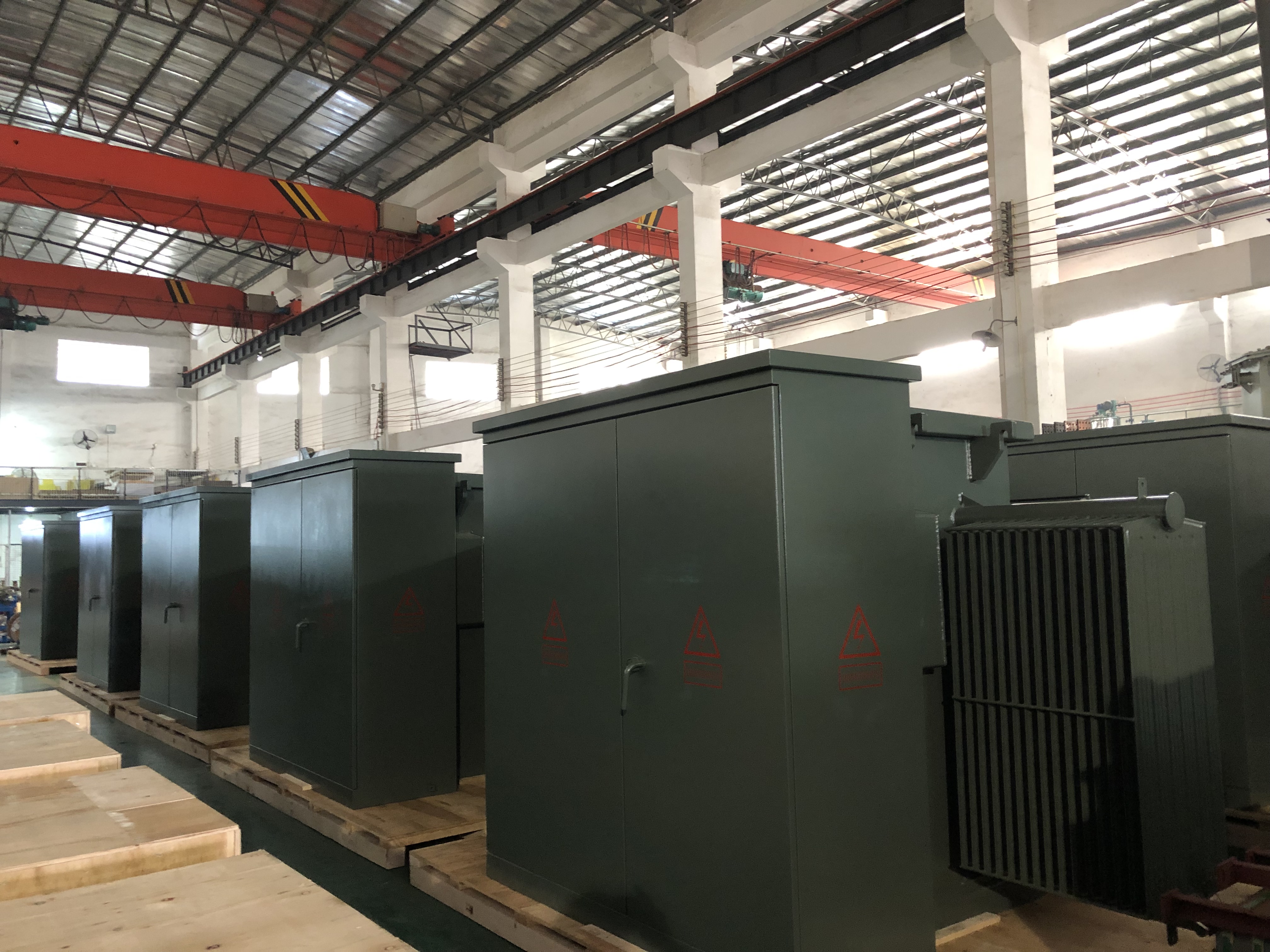
Pad mounted transformer specification review is the first opportunity to eliminate field rework.
The ODM Drawing Confirmation Process: What an EPC Must Verify
ODM (Original Design Manufacturing) is the process by which a manufacturer adapts or engineers a product around the buyer's design inputs. For pad mounted transformers, the ODM process begins not with a purchase order, but with a complete set of electrical and mechanical design data. Winley Electric's engineering team is able to customize transformer solutions to customer-specific requirements under ANSI, IEEE, CSA, DOE 2016, NEMA, and IEC standards. But the accuracy of that customization depends on the quality of information the EPC provides at the RFQ and drawing-review stage.
Electrical Parameters That Must Be Frozen First
- Capacity (kVA): For three-phase ZGS units, the standard range is 45–5,000 kVA, with 7,000 kVA maximum capability. For single-phase DGS units, the typical range is below 250 kVA, with capability up to 833 kVA.
- Primary voltage and system configuration: e.g., 34.5 kV delta or wye, 24.94 kV grounded wye, 13.8 kV, 13.2 kV, 12.47 kV, or 4.16 kV. The winding connection must be confirmed, not just the nominal kV.
- Secondary voltage and grounding: 480Y/277, 208Y/120, 690Y/400, 240Y/120, or 120/240. The type of secondary system grounding affects the neutral bushing and ground strap configuration.
- Feed configuration: loop feed or radial feed. A loop-feed transformer has two primary bushings or a load-break switching arrangement to allow continued service when the loop is opened at another point. A radial-feed transformer is simpler and less expensive, but cannot support loop restoration without additional switching.
- Impedance and loss requirements: the specified impedance affects voltage regulation and fault current. DOE 2016 efficiency levels affect the core steel and conductor design.
- Tap arrangement: fixed taps, no-load tap changers (NLTC), or in some cases multi-tap arrangements for feeder voltage adjustment. An example is a seven-voltage 11.5–14.4 kV primary transformer for utility feeder standardization.
Mechanical Parameters That Cause Most Field Rework
- Enclosure type and material: standard mild steel vs. 304 stainless steel. Coastal and industrial sites often require stainless steel. NEMA 3R is common for outdoor pad mounted equipment.
- Cable entrance and compartment arrangement: the direction from which the primary cable enters the pad (front, back, or side); the location of the primary and secondary compartments; and whether the transformer is fed from a vault, conduit, or direct burial. If the pad is poured before this is confirmed, the transformer may not align with the conduit stub-ups.
- Mounting dimensions and base plan: bolt-hole spacing, pad dimensions, and clearance around the unit. These must match the site layout and the local utility's standard pad drawing.
- Bushing arrangement: live-front vs. dead-front, bushing well type, insert type, and parking stand requirements. Utilities often have specific interface standards for load-break and dead-break bushings.
- Accessories: surge arresters, current transformers, metering compartments, secondary disconnects, oil level gauges, drain valves, and ground pads. A project-specific accessory list should be confirmed during the drawing review, not inferred from a catalog cut sheet.
How an ODM Factory Like Winley Electric Executes Drawing Approval
Winley Electric's engineering team, which includes dozens of senior engineers, is structured around international standards and supports product selection, drawing design, accessory selection, acceptance support, transportation planning, and installation guidance. In practice, the ODM drawing sequence for a North American project follows this pattern:
- RFQ technical package. The EPC provides the one-line diagram, site plan, utility specification, and preferred standards. The manufacturer proposes the transformer family (ZGS three-phase or DGS single-phase), the rating, and optional accessories.
- Preliminary GA drawing. The manufacturer issues a general arrangement drawing showing overall dimensions, compartment layout, cable entrance zones, weight, base plan, and pad layout. The EPC checks the drawing against the civil site plan.
- Electrical schematic and nameplate drawing. The manufacturer issues the winding connection diagram, tap schedule, voltage diagram, and proposed nameplate data. This must match the utility's approved one-line.
- Submittal approval. The EPC, the electrical engineer of record, and the utility review and stamp the submittal. This is the final opportunity to change major components without incurring a major cost impact.
- Manufacturing and inspection. After approval, the factory builds against the approved drawing set, performs routine factory tests, and records test results for the submittal package.
The key point is that the drawing review must be treated as a contractual engineering gate, not a documentation formality. Every dimension, bushing location, and accessory must be verified by the person who will be responsible for the cable termination and the pad installation at site.
Enclosure and Protection Customization: Matching the Environment, Not Just the Standard
Protection customization is the second pillar of the rework-prevention workflow. A pad mounted transformer that is electrically correct but mechanically unsuitable for its environment will still fail early or fail inspection. The following protection parameters matter most for North American EPC projects.
NEMA 3R and Corrosion Protection
Enclosure types for pad mounted equipment follow NEMA ratings. For outdoor installation, NEMA 3R is the most common baseline, providing protection against rain, sleet, and external ice formation. For corrosive environments — coastal zones, wastewater facilities, industrial sites with chemical exposure, and highway-adjacent installations — a 304 stainless steel enclosure is a practical upgrade. Winley Electric has delivered stainless steel pad mounted transformers for applications such as a 300 kVA 13.2 kV to 480Y/277 V unit with a secondary disconnect for institutional building service, and a 500 kVA 12 kV to 208Y/120 V loop-feed unit for urban utility distribution.
Tamper Resistance and Public-Access Safety
Pad mounted transformers are often installed in parking lots, building setbacks, and other publicly accessible areas. IEEE C57.12.28-2023 specifies enclosure integrity requirements for pad-mounted equipment to ensure safety in such locations. The enclosure must resist unauthorized entry, and the high-voltage compartment must be isolated from the low-voltage compartment. An EPC should confirm that the approved enclosure meets the current edition of IEEE C57.12.28, and that any locking or interlocking arrangement is accepted by the local utility.
Insulating Fluid and Fire-Risk Considerations
Most pad mounted transformers are oil-immersed, meaning the active part is immersed in mineral oil or an alternative dielectric fluid. When project specifications require a higher fire point or improved environmental profile, an EPC may ask for natural ester or synthetic ester fluid. Winley Electric has built fluid-filled transformers with FR3 and other natural-ester dielectrics for solar, wind, BESS, and EV-charging applications. The fluid choice affects the tank design, the fluid preservation system, and the required clearance from buildings, so it must be selected before the GA drawing is finalized. Because this is a decision that carries both safety-code and cost implications, it should be an explicit line item in the RFQ.
Zig-Zag and Isolation Configurations
Not every pad mounted transformer is a simple step-down unit. For grounding, a zig-zag pad mounted transformer can provide a neutral or grounding path in a medium-voltage collector system. For isolation, a pad mounted isolation transformer with the same primary and secondary voltage can serve drives, rectifiers, or other sensitive loads. Both configurations require customized winding design and are visible in the drawing package. An EPC that identifies the need for a zig-zag or isolation unit early avoids a specification gap that would otherwise appear during the electrical inspection.
Step-by-Step Workflow: From Load Study to Field Installation
The following workflow is a consolidation of practices that EPC teams can apply to pad mounted transformer procurement. It aligns with the service scope that Winley Electric provides to its customers: product selection recommendation, drawing design, accessory selection, acceptance support, transportation plan, and installation guidance.
Phase 1: Load Study and Service Determination
- Calculate the demand load in kVA, considering load growth and future expansion.
- Determine the utility primary voltage, the service voltage, and the grounding configuration.
- Decide whether the service will be single-phase or three-phase.
- Check the utility's standard for pad mounted transformer dimensions, compartment layout, and metering.
Phase 2: Specification and RFQ Package
- Prepare the electrical specification: kVA, voltage ratio, impedance, tap schedule, losses, and applicable standard (e.g., IEEE C57.12.34).
- Prepare the mechanical specification: enclosure type, material, feed configuration, cable entrance, pad dimensions, and accessories.
- Shortlist manufacturers with UL/cUL or equivalent certification and ANSI/IEEE compliance evidence. Winley Electric is one example of a manufacturer with UL and cUL certification for transformers rated 145 kV and below, manufacturing in Xiamen, Shanghai, and Guangdong.
Phase 3: Drawing Review and Approval
- Review the GA drawing against the civil pad detail.
- Verify the primary and secondary cable entry zones and termination space.
- Verify bushing types, compartment arrangement, and grounding provisions.
- Verify all accessories against the utility specification.
- Approve the submittal in writing before production begins.
Phase 4: Factory Inspection and Testing
- Confirm the factory test plan: winding resistance, turns ratio, dielectric tests, no-load and load loss, and any project-specific tests.
- Review test certificates and the final nameplate data.
- For critical projects, arrange a factory acceptance inspection before shipping.
Phase 5: Logistics and Site Installation
- Plan transportation and lifting based on the transformer weight and dimensions.
- Verify the pad is level, within tolerance, and compatible with the base plan.
- Install the transformer, connect the primary and secondary cables, and verify the operating mechanisms, grounds, and accessories.
- Conduct site pre-energization checks according to the manufacturer's installation guidance.
How Batch Shipping Experience Shapes EPC Procurement
When a manufacturer ships transformers in batches for multiple project sites, the lessons learned from early units often benefit the later ones. Winley Electric has an annual output of 35,000 units and a stated export share of 70 percent, with major markets in North and South America. Transformer shipments to North America have included a wide range of configurations: a 2550 kVA 34.5 kV to 480 V three-phase pad mounted transformer for a multi-building commercial campus expansion, a 3750 kVA 12.87 kV to 480Y/277 V pad mounted transformer with a 7-step tap changer for public DC fast-charging hubs, and a 5000 kVA 27.6 kV zig-zag grounding pad mounted transformer for mine ground-fault control. Batch experience demonstrates that the same core design can be adapted across utilities, voltage systems, and applications when the engineering inputs are standardized.
For an EPC, the practical benefit of working with a high-volume manufacturer is consistency of documentation and production quality control. Winley Electric reports that its factories are equipped with silicon steel sheet slitting and cross-cutting lines, multi-model foil and wire winding machines, vacuum constant-temperature drying ovens, two-stage vacuum oil filters, and automated welding equipment. A batch-oriented factory is more likely to have established submittal templates, standardized inspection checklists, and consistent manufacturing records — all of which reduce the administrative burden on the EPC's project engineer.
Decision Checklist for EPC Engineers
Use this checklist during the specification and submittal review:
| Checkpoint | Why It Matters | Common Error |
|---|---|---|
| Capacity and load growth | Prevents overload and premature replacement | Selecting capacity based on initial load only |
| Primary/secondary voltage and connection | Must match the utility supply and the building service | Confusing phase-to-phase with phase-to-ground voltage |
| Loop feed vs. radial feed | Affects switching, outage restoration, and cost | Ordering radial-feed for a loop-fed utility circuit |
| Enclosure material and stainlessness | Affects corrosion life and code compliance | Using painted carbon steel in a coastal environment |
| Cable entrance and pad layout | Aligns the transformer with the underground conduit stubs | Pouring the pad before approving the GA drawing |
| Bushing and termination type | Must match utility cable accessories and switching devices | Assuming the utility will accept any dead-front arrangement |
| Protection and accessories | Must satisfy utility protection and metering requirements | Omitting the secondary disconnect or CT provision |
| Standards and certification | Supports utility approval and local inspection | Accepting IEC-only compliance for a U.S. project |
Application Notes for EPC Project Types
Utility and Grid Projects
Utility-owned pad mounted transformers are normally specified to a utility standard. The EPC's job is to confirm the utility's specific bushing, cabinet, and metering preferences. For grid modernization projects, dual-primary or dual-secondary pad mounted transformers are used to interconnect different voltage systems. Winley Electric has supplied dual-secondary and dual-primary units, including a 3000 kVA dual-primary 24.94 kV/12.47 kV to 4.16Y/2.4 kV loop-feed unit for utility grid voltage conversion, and a 1500 kVA dual-secondary 21.6Y/12.47D kV to 995 V and 480Y/277 V unit for utility distribution upgrades.
Solar and BESS Projects
Solar plants and battery energy storage systems (BESS) often require a step-up transformer that converts inverter output (e.g., 380 V, 480 V, 600 V, or 800 V) to a medium-voltage collector level (13.8 kV, 24.94 kV, or 34.5 kV). This is a different function from a conventional step-down distribution transformer. The transformer must tolerate bidirectional power flow, frequent load cycling, and inverter harmonics. Winley Electric has built solar step-up pad mounted transformers with multiple low-voltage windings, as well as bidirectional BESS pad mounted transformers. For example, a 2.05 MVA FR3 liquid-filled solar step-up transformer with triple 380 V inputs to 34.5 kV, and a 5 MVA UL/cUL bidirectional BESS transformer with dual 480Y/277 V to 12 kV. EPCs working on solar and storage should confirm the transformer's winding arrangement against the inverter grouping and the collector voltage early in design.
EV Charging Infrastructure
Public DC fast-charging stations and fleet depots have high, intermittent loads and significant harmonic content from chargers. Pad mounted transformers for EV parks must tolerate rapid load changes and support simultaneous charger operation. Winley Electric has supplied a 2550 kVA UL-listed pad mounted transformer, 34.5 kV to 480 V, for large EV fast-charging hubs, and a 3750 kVA 12.87 kV to 480Y/277 V unit with a 7-step tap changer for public DC fast-charging hubs. The transformer is typically the utility interconnection point, so the EPC should coordinate the output voltage with the charger manufacturer's accepted input range and the utility's protection scheme.
Commercial and Institutional Campuses
For hospitals, universities, hotels, and mixed-use campuses, the transformer must serve variable daytime loads, 24/7 critical operations, and seasonal HVAC peaks. Low audible noise and a compact footprint are often required. Winley Electric has supplied a 1500 kVA 12.47 kV to 480Y/277 V unit for university and hospital campus distribution, and a 2550 kVA 34.5 kV to 480 V unit for a multi-building commercial campus expansion. In these project types, the EPC should pay special attention to the physical location of the transformer and the clearances required for cooling, maintenance, and code compliance.
Selecting a Pad Mounted Transformer Manufacturer with ODM Capability
The following criteria separate manufacturers that can execute an ODM workflow from those that can only supply standard catalog products.
Standards and Certification Depth
A manufacturer that can build and test to UL/cUL, ANSI, IEEE, CSA, DOE, and IEC standards is more likely to produce documentation that American and Canadian utilities accept. Winley Electric states that its products meet ANSI/IEEE/CSA/DOE2016/IEC60076 standards, and that the company has obtained UL, cUL, ISO, CE, TUV, and EMC certifications. The UL/cUL listing is particularly important for North American EPC projects because it is a recognized safety certification for the finished product.
Engineering Capacity for Customization
ODM customization requires engineers who understand North American utility practices, not just manufacturing. Winley Electric reports dozens of experienced senior engineers proficient in ANSI, IEEE, CSA, DOE 2016, NEMA, and IEC standards, and an R&D team of 35 engineers. The ability to customize cost-effective transformer solutions to customer requirements is a recognized part of the company's positioning.
Production and Quality Control Consistency
EPC projects depend on predictable delivery and consistent quality. Winley Electric reports an annual production capacity of 35,000 units, facilities in Xiamen, Shanghai, and Guangdong covering 45,000 square meters, and approximately 220 employees, of whom 80 percent have more than three years of work experience. The company also reports a transformer material traceability system, a supplier evaluation mechanism, lightning impulse type test equipment, and a two-year free maintenance service.
FAQ
What standards must a pad mounted transformer meet for North American EPC projects?
A compliant unit must meet the relevant IEEE and ANSI standards. Three-phase pad-mounted distribution transformers are governed by IEEE C57.12.34 for ratings up to 10 MVA and 34.5 kV. Single-phase pad-mounted transformers rated 250 kVA and smaller are covered by IEEE C57.12.38. Enclosure integrity for public-access areas is addressed in IEEE C57.12.28-2023. Canadian projects require CSA C227.4 and C227.5 compliance, and U.S. projects require DOE 2016 efficiency levels. Winley Electric's model ZGS and model DGS are built to these frameworks.
What is the difference between loop feed and radial feed in a pad mounted transformer?
A loop-feed pad mounted transformer is arranged so the primary circuit can enter and leave the transformer compartment, allowing a utility to maintain service by reconfiguring the loop when one section is faulted or isolated. A radial-feed transformer has a single incoming primary source and no continuation for downstream loop restoration. Loop feed adds switching devices or bushing wells and increases cost, but is required on utility systems that operate as underground loops. The feed configuration is a critical early decision because it affects the compartment layout, the switching devices, and the approved drawing.
Can a pad mounted transformer be built for a specific utility specification or project requirement?
Yes, and this is the core of ODM supply. A manufacturer with engineering and certification capability can adapt the design for specific voltage systems, feed configurations, enclosure materials, accessories, and testing requirements. Winley Electric's engineering team is experienced in customizing ANSI, IEEE, CSA, DOE 2016, NEMA, and IEC designs, and has delivered examples such as 304 stainless steel enclosures, dual-secondary windings, multi-tap primaries, natural-ester fluid, and UL-listed units for EV charging and utility grid projects. The success of customization depends on an approved, complete RFQ technical package and a disciplined drawing review process.
How long does the drawing approval and customization process take for a pad mounted transformer?
Lead time depends on the project type and whether the design is a standard variant or a new engineering configuration. For a standard catalog unit, the manufacturer can submit GA and electrical drawings within a shorter review cycle. For a fully customized design, such as a dual-secondary unit, a special tap arrangement, or a non-standard enclosure, additional engineering and component procurement time is required. Winley Electric's customer service scope includes drawing design and accessory selection, but a specific lead time should be confirmed directly with the manufacturer for each RFQ.
What should an EPC include in the RFQ to prevent field rework?
The RFQ should include the one-line diagram, the site pad layout, the utility specification, the chosen standard (e.g., IEEE C57.12.34), kVA, primary and secondary voltage systems, feed configuration (loop or radial), enclosure material, cable entrance direction, bushing and termination types, accessories, and any environmental requirements such as coastal corrosion protection or low noise. Confirm that the transformer is UL/cUL listed or certified to a standard accepted by the utility. During the drawing review, verify that every dimension and termination point matches the civil design and the utility's interface requirements.
Need a Pad Mounted Transformer Built to Your Project Specification?
Winley Electric is a UL/cUL certified transformer manufacturer with ODM engineering support for North American EPCs. Send your specification or utility standard to steven@winley-electric.com or call +86-18650108051 to start the drawing review process.
Conclusion
For North American EPCs, the pad mounted transformer is not a commodity that can be ordered from a catalog without engineering review. The risk of field rework increases whenever the feed configuration, the enclosure protection, the voltage system, or the pad interface is not confirmed before manufacturing. An ODM workflow — built around a complete RFQ package, a formal drawing approval gate, and explicit protection customization — is the most reliable way to align the transformer with the site and the utility specification. A manufacturer with UL/cUL certification, ANSI/IEEE engineering experience, and a track record of batch exports to North America, such as Winley Electric, can serve as an engineering partner who translates the EPC's project requirements into a manufacturable, inspectable, and utility-approvable pad mounted transformer.
Click to view more pad‑mounted transformer projects from Winley Electric:https://www.winley-electric.com/supplier-4701740-three-phase-pad-mounted-transformer