Pad Mounted Transformers for North American Campus Microgrids: Technical Characteristics and OEM Fit
A pad mounted transformer is a distribution transformer installed at ground level inside a locked, tamper-resistant enclosure, serving underground or loop-fed distribution where overhead equipment is impractical. On North American campus microgrids — university and hospital campuses, multi-building commercial sites, institutional retrofits and multi-family distributed energy sites — this equipment must satisfy far more than a nameplate rating.
This article explains the technical characteristics that make a pad mounted transformer suitable for campus microgrid duty in the United States and Canada, and shows where OEM customization is the difference between a catalog unit and a unit that actually fits the site. The technical baseline comes from Winley Electric (Xiamen Winley Electric Co.,Ltd), a transformer manufacturer founded in 2014 that is certified by UL and cUL and produces both three-phase and single-phase pad mounted transformers. The batch-production evidence comes from a 31-unit pad mounted transformer program delivered for a North American utility client.
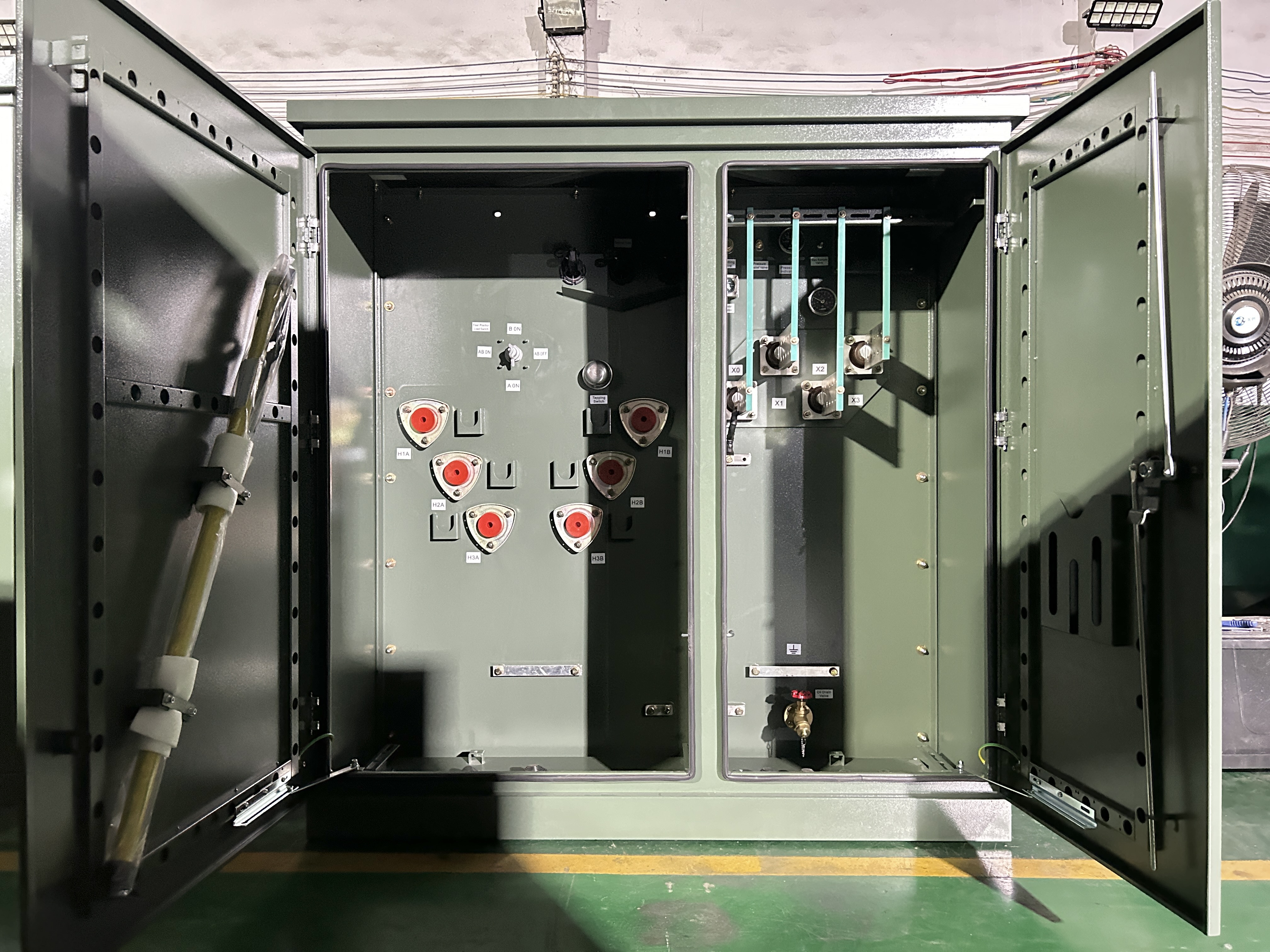
Short answer: a campus microgrid pad mounted transformer normally needs four things at once — a UL/cUL listing, IEEE/ANSI C57.12.34 compliance, a dead-front enclosure that satisfies public-access safety requirements, and an engineering configuration (voltage pair, feed topology, footprint, insulating fluid, protection set) matched to the actual underground feeder and site constraints. Catalog ratings rarely match those conditions exactly, which is where OEM configuration becomes a technical requirement rather than a preference.
Problem Definition: Why Catalog Units Miss Campus Microgrid Conditions
Campus microgrids are not simplified utility feeders. The operating conditions recorded for commercial real estate, healthcare, higher education, K–12 and institutional projects in North America include urban or campus outdoor installation, underground medium-voltage distribution, variable daytime loads, HVAC and elevator loads, 24/7 hospital and campus operation, restricted installation space, publicly accessible installation areas, low-noise requirements and seasonal peak demand.
Those conditions translate into specific engineering constraints that a standard catalog transformer may not satisfy:
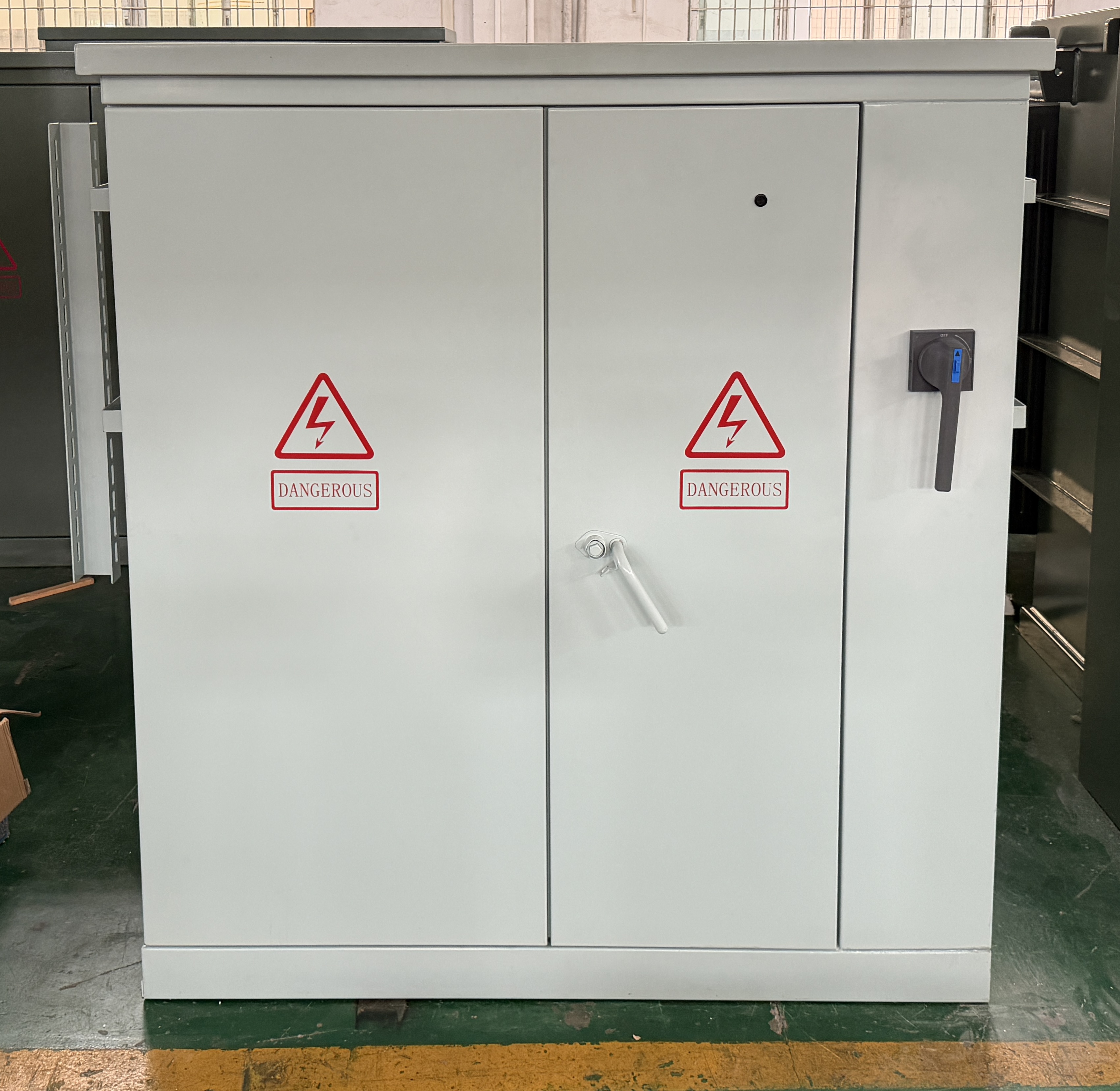
- Public accessibility. A pad mounted unit often sits on a lawn, a walkway edge or a loading area, so tamper resistance and enclosure integrity are safety requirements, not cosmetic ones. IEEE C57.12.28-2023 specifies enclosure integrity requirements for pad-mounted equipment to ensure safety in public-access areas.
- Non-standard voltage pairs. A campus retrofitted over decades may present 13.2 kV, 12.47 kV, 24.94 kV or 4.16 kV on the primary side and 480Y/277 V, 208Y/120 V, 600Y/347 V or 433 V on the secondary — not always in the combination a catalog table lists first.
- Space and footprint. Restricted installation space and existing concrete pads limit permissible tank dimensions, door swing and cable-bay arrangement.
- Fluid and fire constraints. Some campus sites specify a corrosion-resistant enclosure or a high-fire-point insulating fluid.
- Load growth. Campus distribution is usually phased, so load-growth allowance and loop-feed compatibility must be designed in at the start.
- Acoustic environment. Low audible noise is a stated requirement for buildings adjacent to public areas.
The practical consequence: procurement teams that buy strictly from a catalog frequently end up re-engineering in the field — a change in tap range, a larger enclosure, a different cable bay, or a secondary disconnect that was never in the original bill of materials.
Industry Background: Scale, Standards and Constraint Pressure in North America
The supply context is substantial. Third-party research estimates place the U.S. pad-mounted transformer market at approximately USD 3.75 billion in 2024, driven by grid modernization and underground cabling, and the global pad mounted transformer market at approximately USD 22.3 billion in the same year. Published global estimates differ by source because of scope definitions, so these figures are best treated as order-of-magnitude market references rather than precise totals.
On the standards side, the North American framework is well defined:
- IEEE C57.12.34 governs three-phase pad-mounted distribution transformers, covering ratings up to 10 MVA and 34.5 kV.
- IEEE C57.12.38-2025 standardizes single-phase pad-mounted transformers of 250 kVA and smaller.
- IEEE C57.12.28-2023 addresses enclosure integrity for pad-mounted equipment in public-access areas.
- CSA C227 applies to pad-mounted distribution transformers placed on the Canadian market, alongside IEEE/ANSI, DOE and NEMA requirements.
For campus microgrid projects, these standards are the entry condition rather than the differentiator. The differentiator is how precisely a manufacturer can map a documented standard envelope onto an undocumented site: the actual feeder voltage, the actual pad, the actual noise limit, the actual fluid specification and the actual protection and monitoring scheme the owner's engineer has approved.
Detailed Solution: Technical Characteristics of a Campus-Microgrid Pad Mounted Transformer
Winley Electric manufactures two pad mounted transformer families directly relevant to campus microgrid duty — the ZGS three-phase pad mounted transformer and the DGS single-phase pad mounted transformer — plus the SG dry-type range for indoor or dry-type applications on the same campus. The following characteristics are the ones that determine fit.
Three-phase pad mounted transformer (ZGS)
- Capacity: 45–5,000 kVA, with manufacturing capability up to 10 MVA.
- Primary voltage options: 34.5 kV, 24.94 kV, 13.8 kV, 13.2 kV, 12.47 kV, 4.16 kV, or others.
- Secondary voltage options: 690Y/400 V, 480Y/277 V, 208Y/120 V, 240Y/120 V, or others.
- Feed type: loop feed and radial feed.
- Standards: IEEE/ANSI C57.12.34, CSA C227.4 and C227.5, IEC, DOE and NEMA.
- Materials: copper, aluminum and steel.
- Typical application: urban power distribution, residential, industrial and commercial parks, and new energy stations.
Single-phase pad mounted transformer (DGS)
- Rated capacity: 15–250 kVA, with maximum capability up to 833 kVA.
- Primary voltage options: 34.5–19.92 kV, 24.94–14.4 kV, 13.8–7.957 kV, 13.2–7.62 kV, 12.47–7.2 kV, 4160GrdY–2400 V, or others.
- Secondary voltage options: 120–240 V, 240–480 V, 347/600 V, or others.
- Feed type: loop feed and radial feed.
- Standards: ANSI/IEEE C57.12.00, C57.12.20, C57.12.38 and C57.12.90; CSA; DOE; NEMA.
- Typical application: small-capacity power supply in residential areas, commercial streets, rural areas and other low-load-density outdoor distribution scenarios — including auxiliary and lighting loads on a campus microgrid.
Representative function on a campus microgrid
A campus pad mounted transformer converts 34.5 kV, 24.94 kV, 13.8 kV, 12.47 kV, 11 kV or 4.16 kV to 480Y/277 V, 208Y/120 V, 600Y/347 V, 433 V or 415 V for HVAC, lighting, elevators, kitchens, laboratories, central utility plants and building auxiliary systems. It is normally matched with medium-voltage switchgear, loop-feed switchgear, low-voltage switchboards, automatic transfer switches, standby generators, UPS systems, metering equipment, protection relays, capacitor banks and building management systems.

Compliance evidence
For North American projects, the listing record is the first constraint to verify. Winley Electric holds the following third-party certifications, all issued by UL Solutions, CSC or BST, with certificate numbers traceable to the product scope below.
| Certification | Product scope | Certificate number | Issuing body | Applicable standard | Market |
|---|---|---|---|---|---|
| UL (issued 2024-08-27) | Three-Phase Pad-Mounted Transformer, 45 to 5000 kVA, HV up to 36.0 kV | E536138 | UL Solutions | ANSI/IEEE C57 | USA |
| cUL (issued 2024-08-27) | Three-Phase Pad-Mounted Transformer, 45 to 5000 kVA, HV 26.0 kV to 36.0 kV | E536138 | UL Solutions | CSA C227 | Canada |
| UL (issued 2025-04-23) | Single-Phase Liquid-Filled Pad-Mounted Transformer, rated power 10~250 kVA | E536138 | UL Solutions | ANSI/IEEE C57 | USA |
| cUL (issued 2025-04-23) | Single-Phase Liquid-Filled Pad-Mounted Transformer, rated power 10~250 kVA | E536138 | UL Solutions | CSA C227 | Canada |
| UL (issued 2024-08-27) | Dry Type General Transformer | E531446 | UL Solutions | ANSI/IEEE C57 | USA |
| cUL (issued 2024-08-27) | Dry Type General Transformer | E531446 | UL Solutions | ANSI/IEEE C57 | Canada |
| ISO 9001 (valid to 2029-05-21) | Full range of products | 32126Q00102R110 | CSC | ISO 9001:2015 | Worldwide |
| ISO 14001 (valid to 2029-05-21) | Full range of products | 32126E00073R110 | CSC | ISO 14001:2015 | Worldwide |
| ISO 45001 (valid to 2029-05-21) | Full range of products | 32126S00068R110 | CSC | ISO 45001:2018 | Worldwide |
| CE (issued 2023-06-06) | Designated transformer ranges within the certified scope | BSTXD230622426303EC | BST | EN IEC 61000-6-3:2021 and related EMC standards | EU |

OEM/ODM engineering scope
Winley Electric offers OEM/ODM transformer solutions up to 10 MVA with high-voltage systems rated up to 36 kV. The customization envelope covers electrical performance (rated capacity, voltage, connection group), structure and appearance (model, cabinet size, protection class), insulation fluid, protection devices, switches, gauges, tank coating and extreme-environment adaptations, plus extended functions including monitoring, protection and communication interfaces per customer drawings. Components from brands such as Qualitrol and Eaton Cooper can be integrated for special application-tailored designs.
That scope is what allows a campus microgrid requirement — for example a dual-secondary unit feeding separate equipment and building-service loads, or a stainless-steel enclosure on a publicly accessible pad — to be engineered as a configuration rather than negotiated as an exception.

Step-by-Step Breakdown: Specifying an OEM Pad Mounted Transformer for a Campus Microgrid
- Define the site electrical envelope. Record the existing primary voltage (for example 34.5 kV, 24.94 kV, 13.8 kV, 13.2 kV, 12.47 kV or 4.16 kV), the required secondary (480Y/277 V, 208Y/120 V, 600Y/347 V or other), the load step in kVA, and whether the site is loop-feed or radial-feed. This step decides the base model — ZGS three-phase or DGS single-phase.
- Lock the compliance set before pricing. Confirm the listing required for the destination market: UL for the USA and cUL for Canada, referencing ANSI/IEEE C57 for the United States and CSA C227 for Canada, with IEEE/ANSI C57.12.34, DOE and NEMA requirements layered on the three-phase unit.
- Match enclosure and fluid to physical constraints. Where the pad is publicly accessible or space-restricted, specify the enclosure material and finish, dead-front construction, tamper resistance and, where the owner's specification calls for it, a corrosion-resistant enclosure or high-fire-point insulating fluid. Tank coating is part of the OEM scope.
- Configure protection, switching and monitoring. Protection devices, switches, gauges and any monitoring, protection or communication interfaces are specified per customer drawings; third-party components such as Qualitrol and Eaton Cooper can be integrated where the project standard requires them.
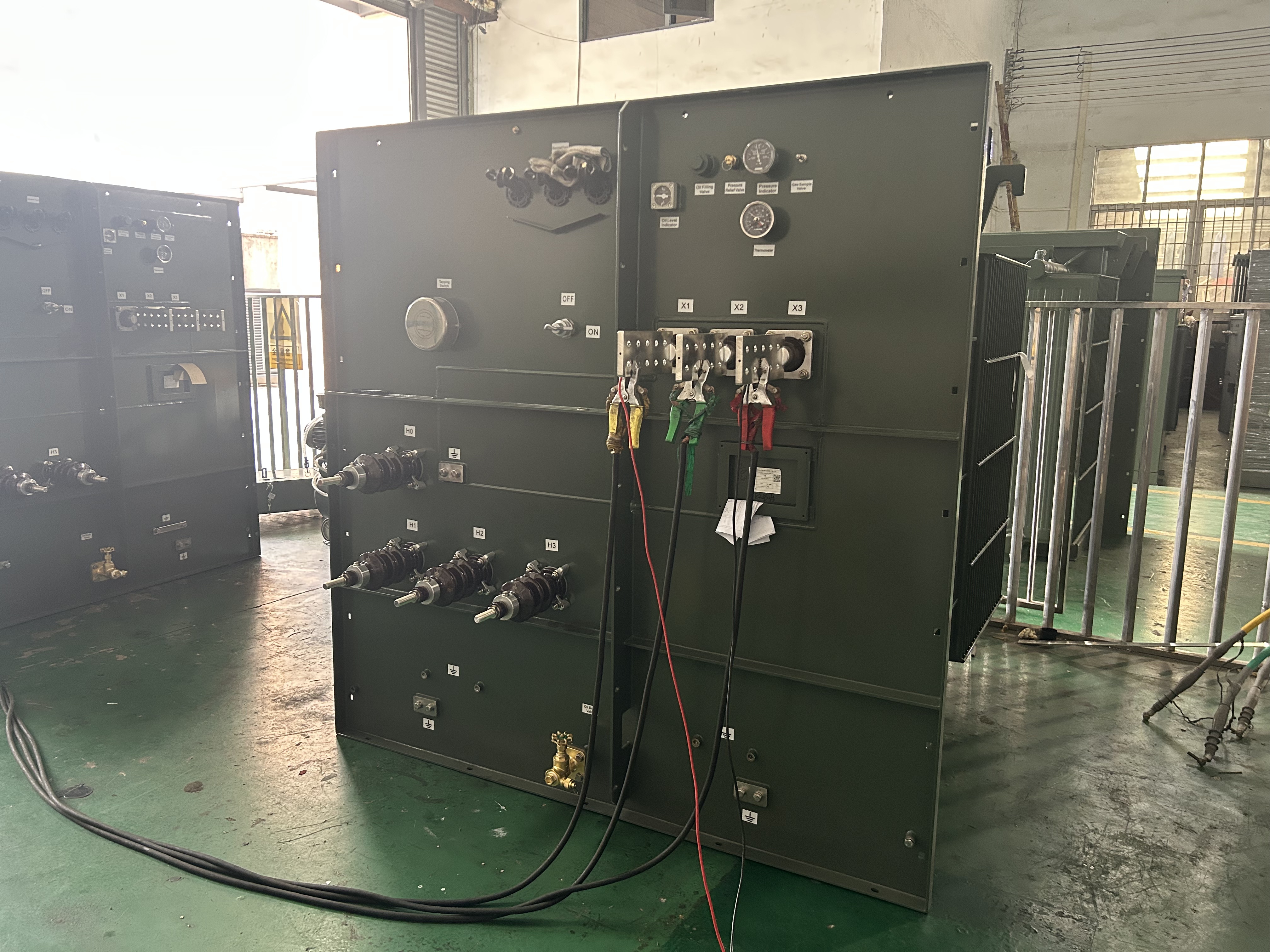
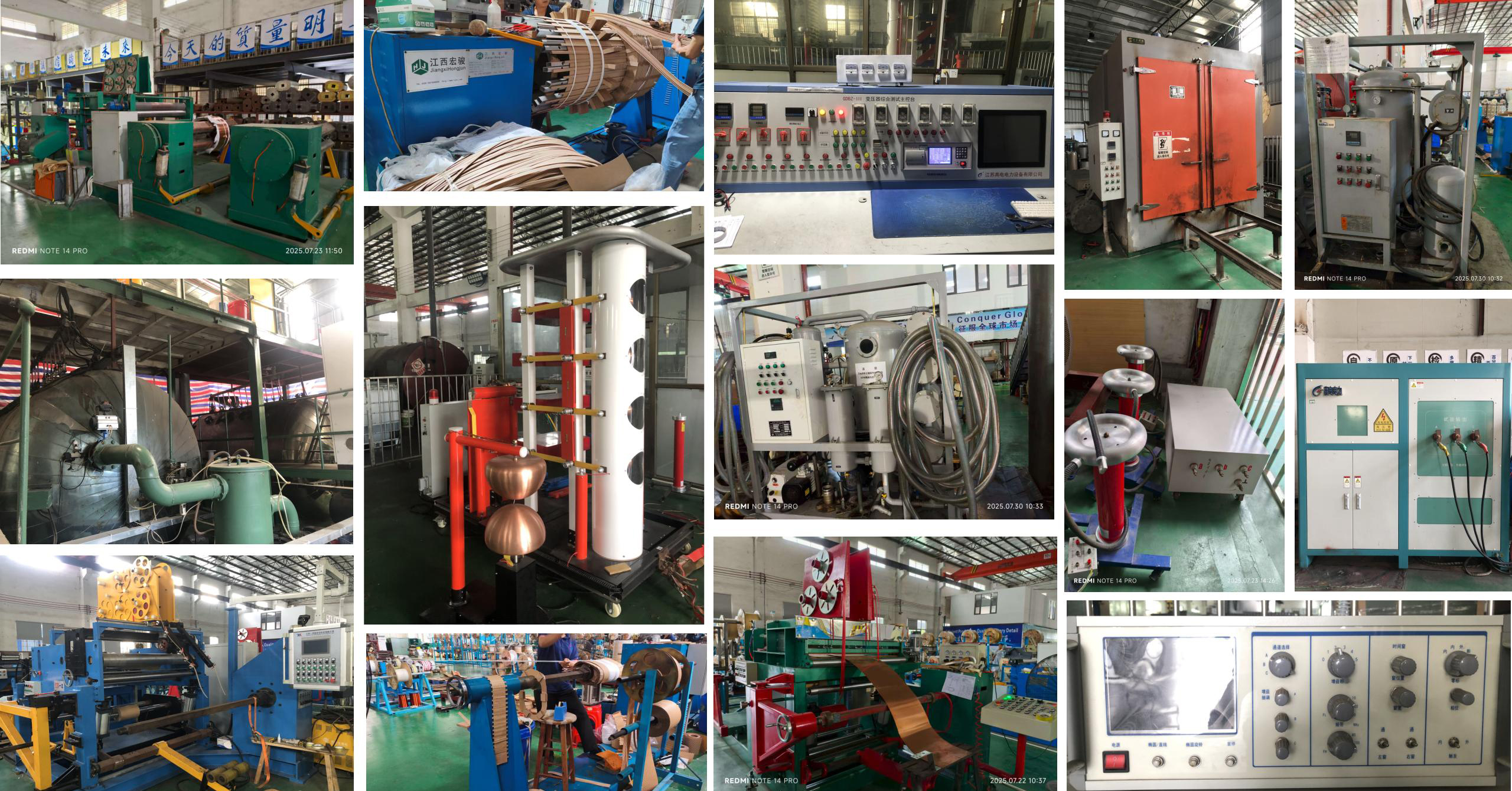
- Validate with factory testing. Winley Electric performs factory routine tests and type tests as per customer requirements, and provides test reports; FAT and third-party inspection are part of the documented support scope for pad mounted transformer programs.
- Confirm batch capacity and delivery. Monthly production capacity is 500 units, with a stated lead time of 4–8 weeks and a minimum order quantity of 1 unit — which allows a single pilot unit before a campus-wide rollout.
Use Cases: Where OEM Configuration Changes the Outcome on Campus Projects
University and hospital campus distribution
Campus expansion projects with 24/7 operation, seasonal HVAC peaks and building-by-building or zone distribution typically use three-phase pad mounted units such as a 1500 kVA, 12.47 kV to 480Y/277 V configuration. In a dual-secondary arrangement, separate equipment and building-service loads can be fed from one unit, reducing the number of pads on a constrained site.
Institutional building service and retrofit
A single small building — a laboratory, dormitory block or clinic — may need only a 300 kVA, 13.2 kV to 480Y/277 V unit with a secondary disconnect. Legacy voltage conversion and transformer replacement projects are where non-catalog voltage pairs appear most often.
Hotel, retail and mixed commercial complexes
Hospitality and retail sites usually demand low audible noise, compact footprint and a pad location inside public reach. Enclosure specification and acoustic behavior carry more weight than capacity headroom at these sites.
Campus EV and distributed energy loads
EV charging depots and renewable or storage interconnections on campus introduce rapid load changes, rectifier harmonics and simultaneous charger operation. Pad mounted units rated for that duty are commonly sized in the 225 kVA to 3750 kVA band, with harmonic and thermal performance treated as engineering inputs.
Single-phase auxiliary and lighting distribution
Low-load-density areas of a campus — perimeter lighting, gatehouses, remote utility buildings — are served efficiently by DGS single-phase units from 15 to 250 kVA.
Comparison Table: Product Families for Campus Microgrid Duty
| Attribute | ZGS Three-Phase Pad Mounted | DGS Single-Phase Pad Mounted | SG Dry-Type |
|---|---|---|---|
| Rated capacity | 45–5,000 kVA (up to 10 MVA capability) | 15–250 kVA (max capability up to 833 kVA) | 10 kVA–30 MVA |
| Primary voltage | 34.5 kV, 24.94 kV, 13.8 kV, 13.2 kV, 12.47 kV, 4.16 kV, or others | 34.5–19.92 kV, 24.94–14.4 kV, 13.8–7.957 kV, 13.2–7.62 kV, 12.47–7.2 kV, 4160GrdY–2400 V, or others | 4.76 kV, 15 kV, 23 kV, 34.5 kV or other |
| Secondary voltage | 690Y/400, 480Y/277, 208Y/120, 240Y/120 or others | 120–240 V, 240–480 V, 347/600 V or others | 208 V – 34.5 kV or other |
| Feed type | Loop feed, radial feed | Loop feed, radial feed | Not applicable (enclosure-based) |
| Standards | IEEE/ANSI C57.12.34, CSA C227.4 & C227.5, IEC, DOE, NEMA | ANSI/IEEE C57.12.00, C57.12.20, C57.12.38, C57.12.90; CSA; DOE; NEMA | ANSI, IEEE, IEC, NEMA, DOE or regional standards |
| Certification | UL and cUL listing E536138 | UL and cUL listing E536138 | UL/cUL E531446, ISO, CE |
| Materials | Copper, aluminum, steel | Copper, aluminum, steel | Copper, aluminum, steel |
| Typical campus application | Urban distribution, industrial and commercial parks, new energy stations | Residential areas, commercial streets and low-load-density outdoor distribution | Power grids, industrial facilities, rail transit, data centers and new energy projects |
FAQ: Compliance, Capability, Budget, Sample and Lead Time
1. Are Winley Electric pad mounted transformers UL listed and cUL certified for North American campus microgrid projects?
Yes. The three-phase pad mounted transformer is covered by UL certification E536138 for the USA market, rated 45 to 5000 kVA at high-voltage levels up to 36.0 kV under ANSI/IEEE C57, and by cUL certification E536138 for the Canada market under CSA C227 for 45 to 5000 kVA at 26.0 to 36.0 kV. The single-phase pad mounted transformer holds UL and cUL certification E536138 for liquid-filled pad-mounted units rated 10 to 250 kVA, referencing ANSI/IEEE C57 for the United States and CSA C227 for Canada. Both certifications were issued by UL Solutions and remain in effect.
2. Can a pad mounted transformer be customized when a campus has a non-standard voltage pair, footprint or enclosure requirement?
Yes, within a documented envelope. Winley Electric provides OEM/ODM solutions up to 10 MVA with high-voltage systems rated up to 36 kV, and customization covers electrical performance (rated capacity, voltage, connection group), structure and appearance (model, cabinet size, protection class), insulation fluid, protection devices, switches, gauges, tank coating and extreme-environment adaptations, plus monitoring, protection and communication interfaces supplied per customer drawings. Components from brands such as Qualitrol and Eaton Cooper can be integrated for application-specific designs. Configurations are not unlimited — anything outside the 10 MVA / 36 kV envelope or outside the listed product scope of certificate E536138 requires separate engineering review.
3. What drives the cost of a customized pad mounted transformer?
Material choice, capacity, voltage class, enclosure construction, insulating fluid, protection and monitoring content, and component brand selection are the main drivers, because each is individually specified in an OEM configuration. As third-party market references rather than quotations: published Chinese export (FOB) benchmarks for pad-mounted transformers in 2025 sit at roughly USD 25 to USD 70 per kVA depending on materials, and a U.S. market reference point for a standard-efficiency 500 kVA oil-filled pad-mounted transformer (13.8 kV to 480 V) is approximately USD 39,761. Both figures come from third-party sources and should be used only for early-stage budgeting. A project-specific quotation against actual drawings is the reliable basis for a campus microgrid decision.
4. Is a sample or pilot unit possible before committing to a full campus rollout?
Yes. The minimum order quantity is 1 unit, so a single pad mounted transformer can be built and validated against the site before a batch order. Factory routine tests and type tests are performed as per customer requirements, with test reports provided, and third-party inspection can be arranged for pad mounted transformer programs.
5. What is the production lead time and batch capacity for a campus microgrid order?
Stated lead time is 4–8 weeks, with monthly production capacity of 500 units. As a reference point for batch delivery, Winley Electric completed a program of 31 three-phase pad mounted transformers for a North American utility client, covering 2550 kVA and 3750 kVA units at 34.5 kV and 12.87 kV high-voltage ratings, delivered within the agreed timeframe and built in line with the client's application scenarios and North American standards. To check current slot availability for your campus project, send your single-line diagram and site constraints for a configuration review and quotation at steven@winley-electric.com.
Conclusion
Campus microgrids in North America rarely fail because a transformer is under-rated. They fail because a catalog unit does not match the site: a voltage pair that does not exist in the standard table, an enclosure that cannot sit safely on a public lawn, a footprint that does not fit an existing pad, a fluid that violates the owner's fire specification, or a protection and monitoring set the engineer cannot approve.
The technical characteristics that matter are therefore verifiable rather than promotional: UL and cUL listing E536138 for three-phase pad mounted transformers from 45 to 5000 kVA up to 36.0 kV, the same certificate covering single-phase pad-mounted units from 10 to 250 kVA, IEEE/ANSI C57.12.34, CSA C227.4/C227.5, DOE and NEMA compliance, loop or radial feed, and an OEM/ODM customization envelope reaching 10 MVA and 36 kV with monthly capacity of 500 units and a 4–8 week lead time.
Winley Electric is a Xiamen-based transformer manufacturer founded in 2014 with manufacturing facilities in Shanghai and Guangdong, a 45,000 m² plant area, 220 employees including 35 R&D engineers, annual output of 35,000 units and exports to more than 60 countries, with North and South America as its main markets. Certification, customization scope and batch delivery are the three things a campus microgrid procurement team should test before awarding a pad mounted transformer package.
Click to view more pad‑mounted transformer projects from Winley Electric:https://www.winley-electric.com/supplier-4701740-three-phase-pad-mounted-transformer
Next Step: Configuration Review, Sample Unit or Quotation
Send your campus microgrid parameters — primary and secondary voltage, kVA step, feed topology, pad location constraints and required listings — and Winley Electric will return a configuration review, a drawing set for approval, and a project-specific quotation. A single pilot unit can be produced before a batch rollout.
Winley Electric · Website: www.winley-electric.com · Blog: blog.winley-electric.com
Contact: Mr. Steven · Email: steven@winley-electric.com · Tel: 86-18650108051 · WhatsApp: +8618650108051
Address: No. 99 Yilan Road, Siming, Xiamen, Fujian, China

Have Questions or Need More Details?
Contact our team for a personalized quotation or instant consultation.
Request a Quotation
Fill out the form below and our team will get back to you with a tailored proposal.
WhatsApp Direct Chat
Prefer to chat in real-time? Message us on WhatsApp for instant assistance & quick answers.
- Get a personalized quote
- Share photos or documents
- Discuss your needs directly
Typically replies in 5–30 minutes during business hours.