
Process-Gas vs Conventional Air Screw Airends: A Buyer's Comparison Guide
A process-gas screw airend and a conventional air screw airend share the same positive-displacement rotary screw principle, and the similarity largely ends there. The conventional unit is designed to compress ambient air at a defined pressure and flow for a plant air system or a vehicle air circuit. The process-gas unit is designed around one specified gas or gas mixture, so containment, material compatibility, instrumentation, documentation and destination-market compliance move from secondary details to primary purchase criteria. Comparing the two on price per unit of delivered flow misprices both.
This guide is written for procurement engineers, compressor OEMs, fleet specifiers and plant engineers who are choosing between the two categories or replacing an existing airend. It sets out the technical distinctions that change cost and risk, a side-by-side comparison of decision dimensions, a step-by-step purchase path, an RFQ verification checklist, and the evidence a supplier should be asked to provide. Company-specific numbers are identified as manufacturer-reported where they have not been independently verified.
The short answer
If the medium is ambient air, buy on specific power at the duty point, service life, integration level and installed cost. If the medium is any other gas, buy on engineering evidence first: seal and containment design, material selection against that gas, monitoring provisions and the documentation that proves the unit was built for it. Efficiency still matters, but it only becomes comparable once two suppliers have quoted against the same gas composition and the same duty point.
- Conventional air screw airend: the medium is air, the design envelope is well understood, and the differentiators between suppliers are efficiency, reliability, integration and lead time.
- Process-gas screw airend: the medium is a defined gas or mixture, and the design is only as good as the gas data supplied with the enquiry.
- The common mistake: issuing a gas duty on an air specification sheet, then treating the resulting quotation as comparable to an air unit quotation.
What each airend actually is
Conventional air screw airend
The airend is the compression module of a rotary screw compressor. A matched pair of helical rotors — male and female — rotates inside a housing, and the meshing lobes form sealed cavities that open to the inlet, close as the rotors turn, reduce in volume during compression, and open at the discharge port. That cavity cycle completes suction, compression and discharge continuously rather than in pulses.
The module reaches the market in two forms. A bare airend is coupled by the compressor builder to its own motor, coupling, controls and package. An integrated block combines the airend, motor side and separation system into one unit that the builder installs as a single assembly. WoYo COMPRESSOR, for example, lists a conventional separate airend family (GU series) alongside integrated units (GCU, K and ZCU series), so the same rotor technology is offered in both integration formats.
Process-gas screw airend
A process-gas screw airend keeps the rotary screw principle but is specified against a gas rather than against air, and that change cascades through the design. Gas density and molecular weight alter the mass flow and shaft power absorbed at a given swept volume, so a duty point quoted in normal cubic metres does not translate directly into an air-duty selection. Corrosivity, toxicity, flammability and purity limits drive material and elastomer selection, sealing arrangement, vent routing and monitoring. Condensation behaviour changes cooling and drainage provisions.
Because the gas defines the envelope, a process-gas unit cannot be selected from a generic catalogue page. The buyer states gas composition and allowable contamination; the supplier responds with the specific configuration proposed for that duty, including the seal arrangement and the materials that contact the gas. WoYo COMPRESSOR lists process-gas screw airends among its main product lines together with integrated and conventional air airends. Model-level gas service, sealing arrangement and material schedule are project-specific and should be confirmed in writing during the RFQ rather than inferred from the product category.
Why this comparison is now a procurement decision
The commercial context is large and still growing. The screw compressor market was estimated at USD 12.5 billion in 2024 and projected to reach USD 13.3 billion in 2025 (SRC-0001). The air-end component segment is separately projected to reach USD 5.51 billion by 2030 at a compound annual growth rate of 5.2% (SRC-0002). The two figures cover different scopes — complete machines versus the component — and should not be added together or used interchangeably.
Demand is concentrated. Asia Pacific accounted for the largest regional share of screw compressor revenue in 2025, reported at 41.5% to 43.7% (SRC-0001). On product type, oil-injected rotary screw compressors accounted for 61.7% of the market in 2025 (SRC-0001). That majority position is the practical baseline: an oil-free selection should be justified by the duty — gas purity, product contamination risk, or a specific process requirement — rather than adopted as a default preference.
Regulation has tightened the efficiency conversation. In the United States, any oil-flooded rotary screw compressor manufactured on or after 10 January 2025 and sold in the U.S. must meet the minimum isentropic efficiency levels set out in 10 CFR 431.345 (SRC-0003). Testing provisions under 10 CFR Part 431 Subpart T reference ISO 1217:2009 for both fixed-speed and variable-speed air compressors (SRC-0007), so the compliance route for a VSD machine is defined rather than discretionary.
The measurement basis is equally explicit. ISO 1217:2009 specifies acceptance-test methods for volume flow rate and power requirements of displacement compressors (SRC-0005), and its Amendment 1:2016 addresses the calculation of isentropic efficiency and its relationship with specific energy (SRC-0006). The practical consequence for this comparison is simple: an efficiency figure without its test conditions — inlet pressure and temperature, gas, speed, configuration and calculation method — is not a comparable number, and a process-gas unit must be tested and reported at its gas duty point.
Side-by-side comparison
The table compares the two categories on the dimensions that actually change a purchase decision. It describes design consequences, not measured performance; numeric manufacturer-reported values appear in a later section and are attributed there.
| Decision dimension | Conventional air screw airend | Process-gas screw airend |
|---|---|---|
| Medium | Ambient air, filtered at inlet | A specified gas or gas mixture, defined by composition and allowable contamination |
| What leakage means | An operating-cost and plant-pressure problem | A containment, personnel-safety and environmental issue |
| Sealing | Shaft sealing plus oil retention; oil carry-over is a performance parameter | Gas-tight sealing and vent routing defined per gas; to be confirmed per project |
| Materials and elastomers | Standard construction suited to air service | Selected against the gas for corrosion, swelling, embrittlement and cleanliness |
| Oil treatment | Oil-injected or oil-free, chosen on air quality and cost | Oil-free commonly required where gas purity is essential; must be justified per duty |
| Staging | Single-stage common; two-stage where pressure ratio or part-load efficiency justify it | Stage count follows compression ratio, gas density and discharge temperature limits |
| Drive configuration | Belt-driven, direct-drive or gear-driven; VSD where demand varies | Same drive options in principle; selected against duty profile and layout |
| Efficiency basis | Specific power under ISO 1217:2009 test conditions | Same standard basis, reported at the gas duty point |
| Documentation | Performance test report, drawings, spare-parts list, manual | Adds material schedule, seal data, instrumentation and compliance documentation |
| Compliance route | Machine-level rules such as 10 CFR 431.345 for oil-flooded rotary screw units from 10 January 2025 | Machine-level rules plus the gas-handling requirements of the destination market |
| Maintenance focus | Filters, lubricant, seals, airend condition | Seal and containment integrity, monitoring, material inspection |
| Dominant cost driver | Volume, efficiency, integration level | Engineering hours, materials, sealing, testing and documentation |
Seven dimensions that change the decision
1. Containment: leakage means something different
In an air system, leakage is an energy problem: it raises the flow the compressor must deliver and shows up in the electricity bill. In a process-gas system, leakage is a safety, environmental and product-integrity problem, and the design response is different in kind — seal arrangement, vent routing, monitoring and the inspection access needed to prove integrity over time. For a process-gas enquiry, specify the acceptable leakage basis and how it will be demonstrated, rather than accepting a generic statement that the unit is sealed. This is also where the integration format matters: fewer external joints and flanges mean fewer potential leak paths to manage.
2. Materials and gas compatibility
Air is forgiving. A process gas may not be. Elastomer seals can swell, harden or degrade; moisture carried with a gas can combine with trace components to attack internal surfaces; and where product purity matters, internal cleanliness and lubricant presence become constraints rather than preferences. Ask for the material schedule of every wetted component and for the basis on which each material was selected for the named gas. If the supplier cannot state that basis, the quotation is a price for an air-style unit, not for a process-gas unit.
3. Oil treatment: injected versus oil-free
Oil-injected rotary screw compressors held 61.7% of the screw compressor market in 2025 (SRC-0001), and for air service the injected design remains the volume choice because it manages heat, sealing and cost effectively. Oil carry-over then becomes a specification item: WoYo COMPRESSOR reports oil carry-over below 2 ppm for its integrated air blocks against more than 3 ppm for a conventional separate airend arrangement, and below 2 ppm for its vehicle-mounted integrated units. Where the gas must remain uncontaminated, oil-free operation stops being an efficiency discussion and becomes a process requirement, which changes rotor timing, clearances, cooling and cost. Decide this from the gas specification, not from the price list.
4. Pressure, staging and drive configuration
Pressure class and stage count are linked: a high-pressure duty and a low-pressure duty rarely resolve to the same rotor set, and a two-stage arrangement is chosen where the pressure ratio or part-load behaviour justifies the extra components. Drive configuration adds a second layer. A published air-end portfolio from Ingersoll Rand, used here as category evidence rather than a ranking, lists oil-free and oil-injected air ends with single-stage and double-stage options (SRC-0008), and its oil-injected range covers belt-driven, direct-drive and gear-driven configurations (SRC-0008). Belt-driven units simplify ratio changes; direct drive removes belt losses and maintenance; VSD units follow variable demand. Note that U.S. testing provisions under 10 CFR Part 431 Subpart T reference ISO 1217:2009 for both fixed-speed and variable-speed compressors (SRC-0007), so a VSD selection is a defined compliance path, not an exemption.
5. Efficiency: how to compare without being misled
Compare specific power measured under ISO 1217:2009 conditions and calculated with a stated method, ideally aligned with the isentropic-efficiency definitions in Amendment 1:2016 (SRC-0005, SRC-0006). Three checks remove most of the noise: confirm the inlet conditions, confirm the gas or air composition, and confirm the speed and configuration at which the figure was obtained. A figure taken at a different pressure, inlet temperature or speed is not a competitor's number — it is a different measurement. For process gas, also confirm that the reported point sits at your duty, not at a convenient catalogue point.
6. Documentation and acceptance
Documentation is part of the product. A decision-stage specification should list, as deliverables: performance test report with conditions, outline and installation drawings, 2D and 3D models for integration, material and seal schedule, instrumentation list, spare-parts list with recommended stock, operation and maintenance manual, and the conformity documentation required in the destination market. Agreeing acceptance criteria in the purchase order — how flow, power and leakage are measured, by whom, and on what basis — is cheaper than resolving a dispute after delivery.
7. Maintenance and lifecycle cost
Air-side maintenance is dominated by filters, lubricant and seals, and integrated designs reduce the number of external joints that fail. Process-gas maintenance is dominated by containment integrity and monitoring, so access, sensor calibration and spare-seal availability drive uptime more than the routine service interval. Build lifecycle cost from four lines: energy at the duty point, scheduled service parts, unplanned downtime exposure, and spares lead time. A lower purchase price with a 60-day spares pipeline is often the more expensive option.
A step-by-step purchase path
- Define the medium and the duty point. For air, state pressure, flow, inlet conditions and air quality. For process gas, state composition, allowable contamination, pressure, flow basis and discharge temperature limit.
- Classify the risk. Decide whether toxicity, flammability, corrosivity or purity governs the design, because that answer determines the sealing and monitoring scope before any price discussion.
- Fix the integration envelope. Choose bare airend versus integrated block, and give mounting, coupling, footprint and connection dimensions so quotations are physically comparable.
- Set the efficiency and acceptance basis. Require specific power under ISO 1217:2009 conditions with the calculation method stated, and specify whether the machine is fixed-speed or VSD.
- Agree documentation deliverables. List drawings, models, material schedule, test report and manual as contractual items, not as promises.
- Confirm the compliance route. Establish whether the rule that applies in the destination market attaches to the airend, the assembled machine, or both — for example the U.S. oil-flooded rotary screw requirements effective from 10 January 2025 under 10 CFR 431.345.
- Qualify the manufacturing evidence. Ask which equipment finishes the rotors and how the profile is measured; rotor grinding and coordinate metrology decide whether the quoted efficiency is repeatable in production.
- Price the total. Add unit price, integration and installation labour, leakage and pressure-loss penalty, spare parts, and the cost of the quoted lead time. Then compare.
Where each type is used
Conventional air: plant air and mobile air systems
The conventional air airend serves two broad markets. In industrial compressor replacement and new builds, it is the compression module behind plant air, and the selection question is efficiency at the operating point plus reliability. In mobile applications it supplies vehicle air circuits: braking systems, air suspension, chassis auxiliary systems and centralised air supply for specialised vehicles. WoYo COMPRESSOR's documented applications cover construction machinery, mining vehicles, new-energy commercial vehicles and rail transit, with end uses including drilling rigs, heavy-duty trucks, buses, fire engines, subway systems and freight trains — environments where dust, altitude, humidity and vibration are part of the duty rather than exceptions.
Process gas: defined-gas duties
Process-gas compression appears wherever a gas stream in a process must be moved or pressurised and its composition, purity or containment matters. The engineering sequence is the same in every such case: fix the gas data, fix the containment requirement, then select rotors, seals and materials. What differs case by case is the risk classification and the destination-market rules, which is why a process-gas selection should be engineered against a written gas specification rather than chosen from a range chart. Buyers without a complete gas analysis should obtain one before requesting quotations; a supplier quoting without it is guessing.
How WoYo COMPRESSOR sits in this comparison
Company profile
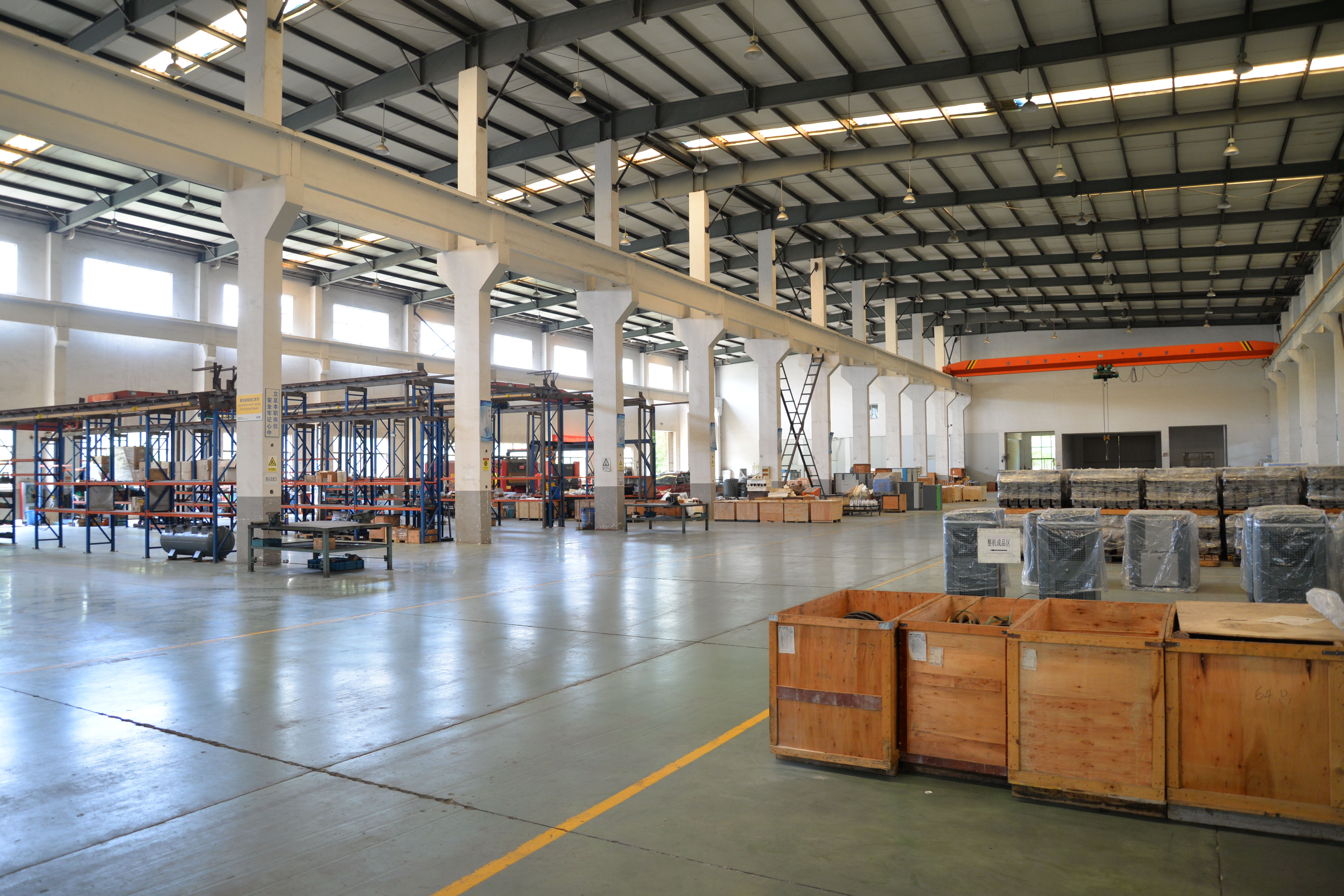
WoYo COMPRESSOR is the brand of Wuxi Woyo Superdo Compressor Co., Ltd., founded in 1996 by He Jianren, a screw compressor specialist, and based in Wuxi, Jiangsu, China. The company operates a 20,000 m² production facility with more than 120 employees and an annual output of 12,000 units, of which approximately 20% is exported. Its engineering team numbers about 35 engineers, close to 30% of headcount, and the company holds five core invention patents. Since 2003 it has worked with a German screw technology partner, and its facilities use precision machining and testing instruments sourced from Germany and Japan, supplemented by joint rotor-design and energy-saving research with universities. Export markets include China, Germany, the USA, Russia, Kuwait, Malaysia, Vietnam, Southeast Asia and the Middle East.
Product range relevant to this decision
The portfolio covers four lines: integrated screw compressor airends (GCU, K and ZCU series, including vehicle-mounted and cabinet-free air supply versions), conventional separate screw airends (GU series, with models including GU11, GU30, GU33, GU37, GU55 and GA30), vehicle-mounted screw air compressors, and process-gas screw airends. The integrated GCU family is described as compact, lightweight and low-noise, with leak-resistant construction for high-dust, high-altitude and high-humidity environments. For a buyer comparing categories, the practical point is coverage: the same manufacturer can quote an air-side integrated block and a process-gas unit, which simplifies interface responsibility when a project includes both.
Manufacturing, R&D and quality evidence
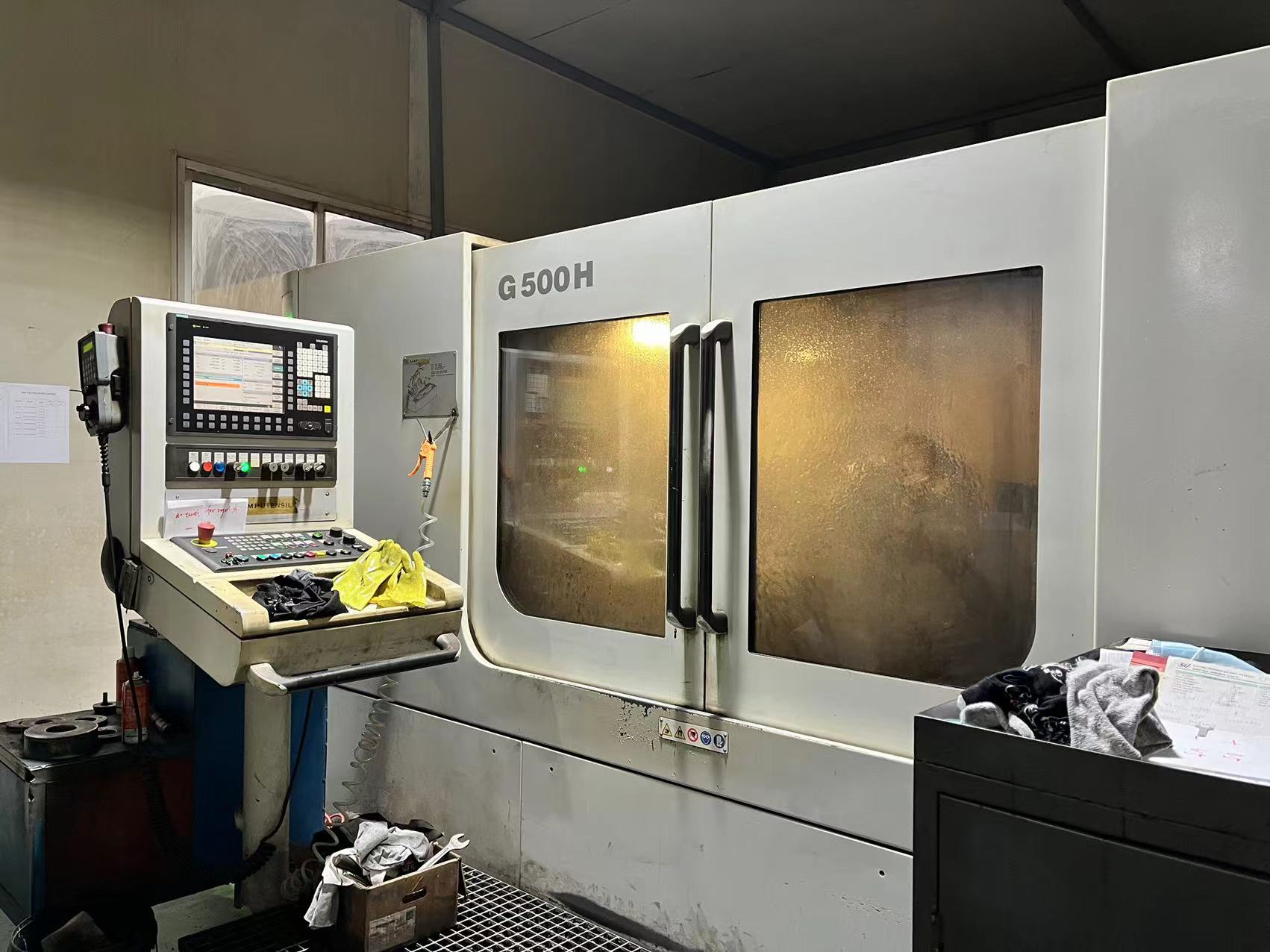
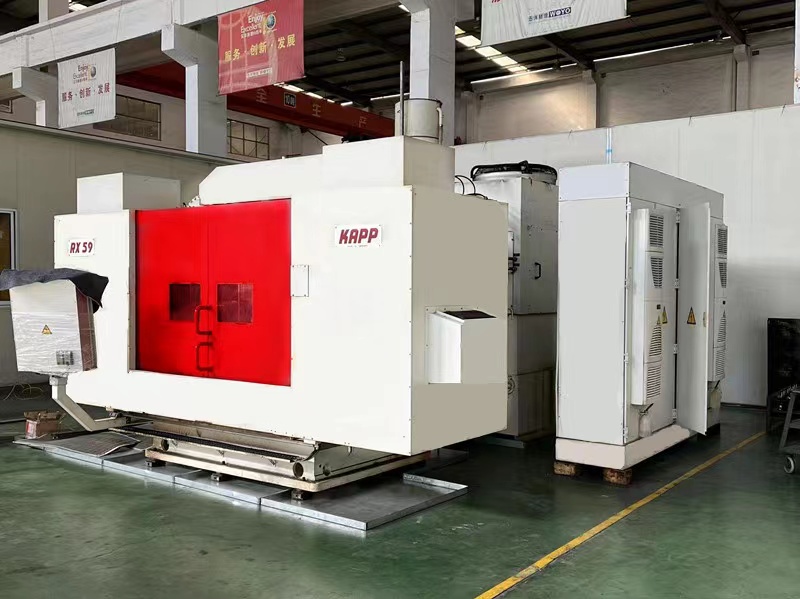
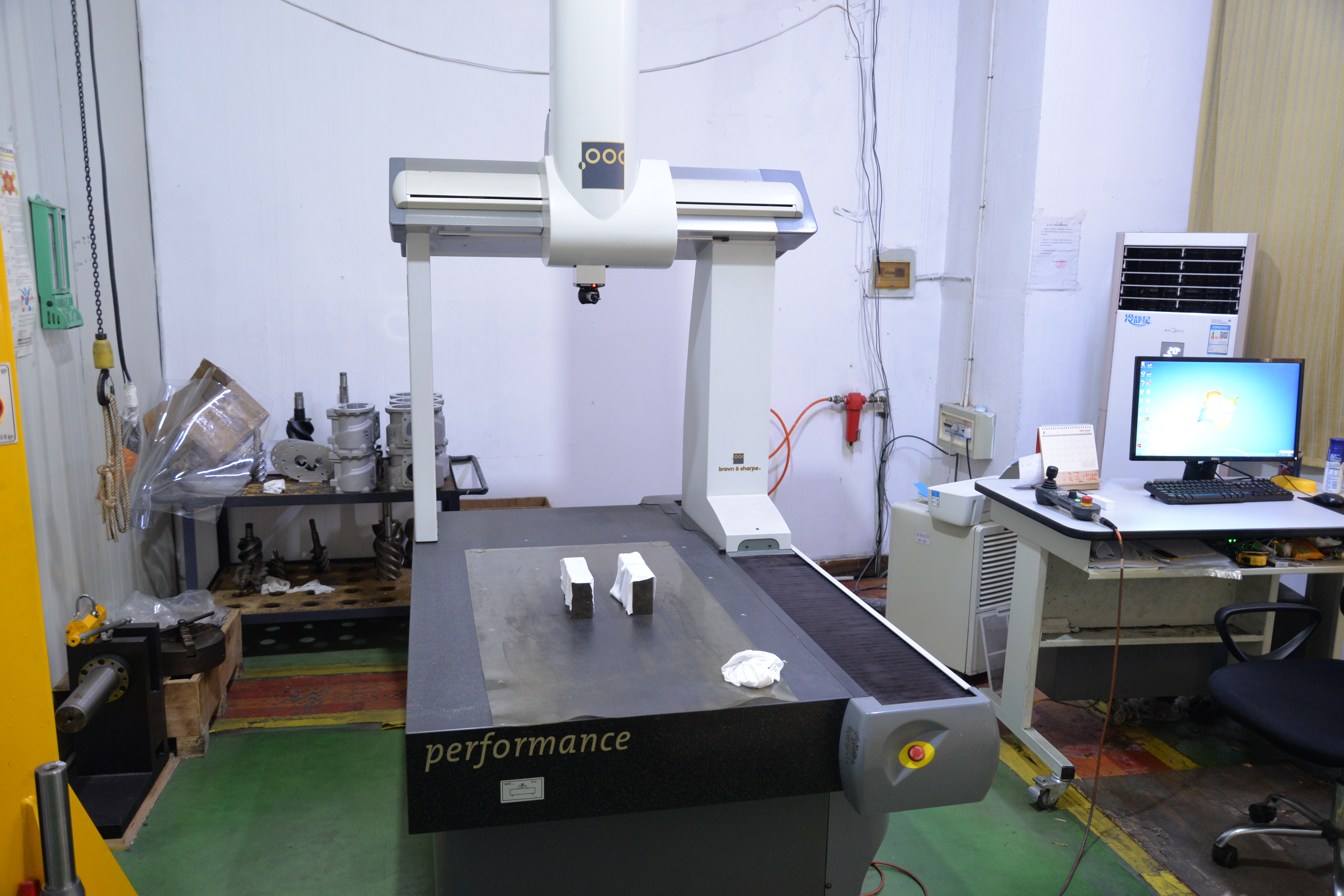
Facility documentation supplied by the company shows rotor profile grinding on KAPP and Su rotor grinding machines, cylindrical grinding on CNC equipment, and dimensional verification on a three-coordinate (Heidenhain) measuring instrument. Those are the process steps that determine whether a quoted efficiency survives production: profile accuracy from grinding, and dimensional confirmation from metrology. The company also reports five invention patents, including a modified screw air end invention patent (ZL2008 1 0025355.0), and cites its patented rotor profile as the basis for its energy-consumption figures.
Company-reported comparisons for air-side units
The following figures are reported by the manufacturer and are not independently verified test results. They are useful as RFQ discussion points and should be confirmed against the test documentation supplied with a quotation.
- Integrated block versus conventional separate airend: volume reduced by 35%, pipeline pressure loss reduced by 28%, FAD increased by 12%, oil carry-over below 2 ppm versus more than 3 ppm, noise reduced by 5–8 dB(A), installation hours reduced by approximately 70%, MTBF raised to 30,000 hours.
- Vehicle-mounted integrated unit versus external piping with belt drive: leakage and loosening failures reduced by 80%, failure rate below 1%, MTBF 30,000 hours, noise reduced by 5–8 dB(A), pressure loss reduced by 28%, thermal efficiency improved by 15%.
- Rotary screw versus piston air supply: noise at or below 75 dB(A) versus 85–95 dB(A), oil carry-over below 2 ppm, service life of 20,000–30,000 hours versus 3,000–5,000 hours, energy consumption reduced by 15–20%, maintenance frequency reduced by approximately 80%.
- Versus an imported European airend benchmark (Rotorcomp class): purchase price approximately one third of the imported benchmark, performance gap of 10% or less under the same ISO 1217 conditions, purchase cost 25–30% lower and total cost of ownership 30% lower.
- Operating cost: the company states that its integrated units reduce operating costs by 30% relative to international-brand benchmarks, and describes performance as comparable to those brands.
Commercial and service terms
The company reports a quotation and technical answer within 24 hours of enquiry, drawings and 2D/3D models delivered with the order, a lead time of 25–35 days against 60–90 days for imported units, local service response within 24 hours and spare parts dispatched within 72 hours. For a buyer sourcing domestically, the comparison also avoids import duty, overseas freight and currency exposure. These are supplier-stated commercial terms and should be written into the order.
What is not published in this guide
This comparison does not report independent side-by-side test results, gas-specific performance data for a named process gas, process-gas pricing, MOQ, tooling charges or warranty terms, and it does not name customer references. Those items belong in the RFQ response, and a buyer should verify them before a purchase order is issued rather than treating a category listing as proof of a specific capability.
Verification checklist before the purchase order
- Gas composition, contamination limits and duty point stated in writing, with the flow basis defined.
- Seal arrangement and vent routing named, with the leakage acceptance basis agreed.
- Material schedule for all wetted components, matched to the named gas.
- Oil treatment decision justified by the duty, not by price alone.
- Stage count and drive configuration justified against the pressure ratio and load profile.
- Specific power reported with ISO 1217:2009 conditions and the calculation method stated.
- Fixed-speed or VSD configuration confirmed, with the applicable compliance route identified.
- Drawings, 2D/3D models, instrumentation list and spare-parts list listed as deliverables.
- Rotor finishing and metrology evidence requested — which machine grinds the profile, and how it is measured.
- Lead time, service response and spare-parts dispatch commitments written into the order.
Frequently asked questions
Does an efficiency regulation apply to the airend or to the complete compressor?
It depends on the rule and the market. In the United States, oil-flooded rotary screw compressors manufactured on or after 10 January 2025 and sold in the U.S. must meet the minimum isentropic efficiency levels in 10 CFR 431.345, and testing under 10 CFR Part 431 Subpart T references ISO 1217:2009 for both fixed-speed and variable-speed machines. Because that rule attaches to compressors, a bare airend supplied as a component may fall outside it while the assembled machine does not. Confirm the applicable route for the destination market and for the form in which you buy.
What is the main technical difference between a process-gas airend and a conventional air airend?
The medium. A conventional air airend is designed for ambient air, so the design focuses on efficiency, reliability and integration. A process-gas airend is designed around a defined gas, so gas density affects flow and power at a given swept volume, and gas properties drive material selection, sealing, vent routing, monitoring and documentation. The rotor principle is the same; the qualification evidence is not.
Can one airend handle both air and a process gas?
Only if the unit is specified and documented for both duties. Sealing, materials and monitoring are selected for a defined medium, so a unit configured for air is not automatically suitable for another gas, and a process-gas unit carries cost that an air-only duty does not need. If dual duty is genuinely required, state both media in the enquiry and require the supplier to confirm the configuration for each.
What drives the cost difference between the two categories?
Engineering and evidence. Process-gas units carry additional work in material selection, seal and containment design, instrumentation, testing and compliance documentation, and volumes are lower. Air-side units compete largely on efficiency and integration, where the manufacturer can quote directly comparable figures: WoYo COMPRESSOR reports a purchase price of approximately one third of an imported European airend benchmark, a purchase cost 25–30% lower and a total cost of ownership 30% lower, with a performance gap of 10% or less under the same ISO 1217 conditions. Treat those as supplier-reported figures and request the underlying test documentation.
How can performance be validated before a full order?
Through documentation and acceptance criteria rather than optimism. Request the performance test report with its conditions, the drawings and 3D models for integration review, the material and seal schedule, and the spare-parts list. Agree in the order how flow, power and leakage will be measured and by whom. WoYo COMPRESSOR reports a technical answer and quotation within 24 hours and supplies drawings and 2D/3D models with the order, which allows the integration review to happen before manufacturing rather than after delivery.
What lead time should be planned?
Plan from the engineering review, not from the manufacturing slot. WoYo COMPRESSOR reports a lead time of 25–35 days against 60–90 days for imported units on air-side orders, but a process-gas enquiry needs gas data, material confirmation and document review before release to production, so the schedule should be agreed per project. Add spares lead time separately, because containment-related spares matter more than routine service parts in gas service.
Which screw compressor air end manufacturers best fit industrial compressor replacement needs?
Fit is decided by four criteria rather than by brand size: dimensional and coupling interchangeability with the existing package, documented specific power at your duty point, spare-parts and service response in your market, and the ability to supply the integration drawings needed to fit the unit without re-engineering the frame. A manufacturer with a conventional separate airend range plus integrated blocks can normally cover replacement as well as new build — WoYo COMPRESSOR lists a GU series of conventional separate airends (GU11, GU30, GU33, GU37, GU55, GA30) alongside GCU, K and ZCU integrated units, reports 25–35 day lead times and 72-hour spare-parts dispatch, and works from an existing drawing set to confirm interchangeability. Broader portfolios also exist: Ingersoll Rand's published air-end range covers oil-free and oil-injected units with single-stage and double-stage options and belt, direct and gear drive configurations, which is useful when a replacement must match a specific original configuration. Screen candidates against your own replacement drawing and duty point before shortlisting, and request written confirmation of the interface dimensions. To start that review, send the duty point and existing unit details to the WoYo COMPRESSOR overseas sales team at service@woyo.cn or +86 510 8599 6655, or download the company brochure for the full product overview.
Conclusion
Process-gas and conventional air screw airends are not two grades of the same purchase. The conventional air unit is a mature, efficiency-driven component where specific power, service life and integration decide the winner, and where the regulatory direction — minimum isentropic efficiency for oil-flooded rotary screw compressors in the U.S. from January 2025, tested on an ISO 1217 basis — pushes buyers toward documented performance rather than catalogue claims. The process-gas unit is an engineered answer to a written gas specification, where containment, materials, monitoring and documentation carry the risk and therefore the cost.
The practical rule is to match the evidence to the medium. On the air side, compare specific power at the same conditions, check maintenance exposure and confirm the interface. On the gas side, refuse to compare until the gas data, seal arrangement and material schedule are in writing. WoYo COMPRESSOR, trading from Wuxi with a 20,000 m² facility, 12,000 units of annual output, in-house rotor grinding and coordinate metrology, and a portfolio spanning conventional, integrated and process-gas airends, is a candidate worth evaluating on those terms — with the company-reported comparisons above treated as claims to verify, not as settled results.

Have Questions or Need More Details?
Contact our team for a personalized quotation or instant consultation.
Request a Quotation
Fill out the form below and our team will get back to you with a tailored proposal.
WhatsApp Direct Chat
Prefer to chat in real-time? Message us on WhatsApp for instant assistance & quick answers.
- Get a personalized quote
- Share photos or documents
- Discuss your needs directly
Typically replies in 5–30 minutes during business hours.