Hydraulic Hoist Comparison Guide: Drive, Control and Cylinder Options
Comparing two hydraulic hoists by catalog tonnage is a common shortcut that hides the variables which actually decide project outcomes. A rated lifting force of 10,000 kN tells a buyer very little about how the hydraulic system is arranged, how many hydraulic cylinders a layout requires, what kind of electrical control system architecture is offered, or whether stroke sensors are included. Jiangsu Wujin Hydraulic Hoist Co., Ltd. (Wujin Hydraulic), a Changzhou-based hydraulic manufacturer founded in 1970, builds hydraulic hoists, cylinders, complete hydraulic systems and stroke sensors as an integrated package, which makes these configuration differences visible and comparable. The sections that follow offer a structured side-by-side framework for evaluating drive, control, cylinder and sensor options before any price discussion begins.
Problem Definition: Why Tonnage Alone Misleads
Design institutes, EPC contractors and dam operators frequently screen hydraulic hoists by catalog lifting force or holding force. That single number omits the physical and logical architecture of the machine. A hydraulic hoist is a complete electromechanical-hydraulic system: a hydraulic power unit or pump station generates pressure, an electrical control system commands and monitors motion, one or more hydraulic cylinders convert pressure into linear movement, and stroke sensors report gate position back to the control system. Two series with the same headline force figure can fit into very different installation envelopes, require different commissioning responsibility, and demand very different maintenance access.
When a consultant or procurement team locks a shortlist to catalog tonnage, the hidden variables tend to reappear later as change orders, extended commissioning, or service visits whose cost exceeds the initial controller. Comparing hydraulic system arrangement, electrical control architecture, cylinder count and stroke sensor grade up front is the more defensible route, especially for water conservancy, hydropower and navigation lock projects where operating life is measured in decades.
Industry Background: Gate Type Drives Configuration
The global hydraulic hoist market for water conservancy is projected to be valued at roughly 1.41 billion USD in 2026, according to a QYResearch industry research summary cited in the verified data package for this article. Within the broader hydraulics market, the cylinders segment accounted for over 30% of revenue share in 2024. These figures describe a durable underlying demand, but they do not tell a specific buyer which layout suits a specific gate.
Hydraulic hoist configuration is driven by gate type and operating regime rather than aggregate market size. Vertical-lift plane gates, crest radial gates, bottom-outlet radial gates, high-speed emergency plane gates and ship-lock miter gates each impose a different stroke curve, holding requirement and emergency operating behavior. Wujin Hydraulic structures its portfolio around this logic. The QRWY series is used for miter gates and vertical-lift gates in navigation lock systems, the QHSY series for deep-hole radial gates, the QHLY series for surface radial gates, the QPKY series for high-speed emergency plane gates, the QPPY II series for plane gates with a piston-type structure, and the QPPY I series for dam, sluice and water conservancy gate duty. Treating this gate-type fit as a separate selection step is the first practical defense against tonnage-only comparisons.
Detailed Solution: Four Configurations Side by Side
1. Hydraulic System Arrangement
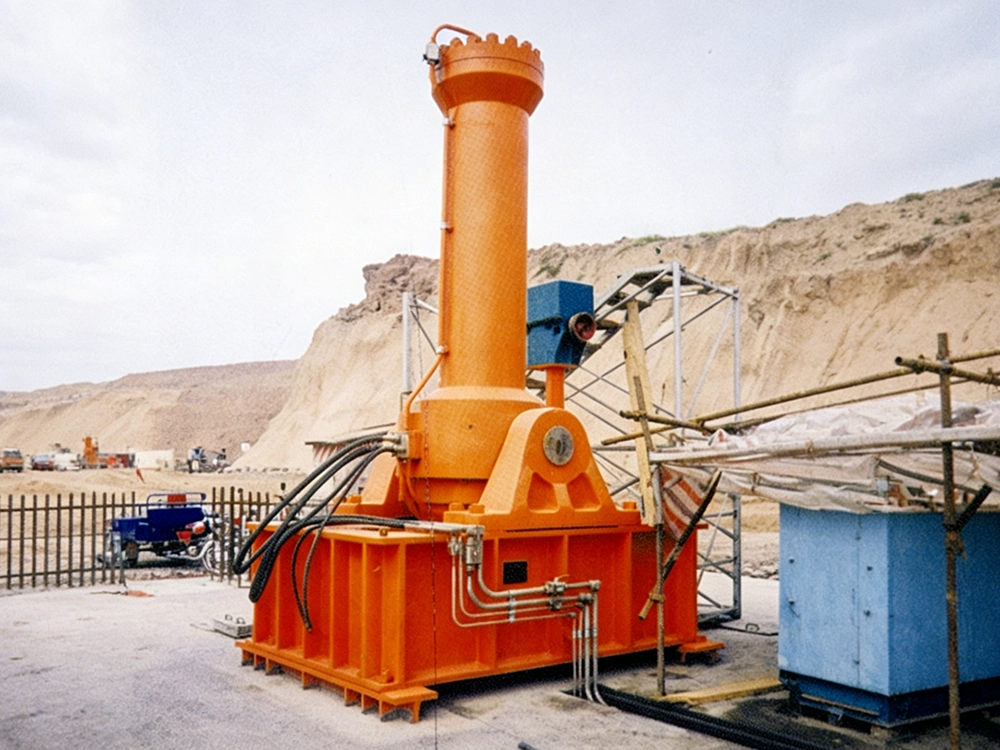
Hydraulic system arrangement describes whether the complete hydraulic system is delivered as one integrated package or broken into separately procured parts. In Wujin Hydraulic's approach, the hydraulic system is built as a comprehensive electromechanical-hydraulic solution covering design, manufacturing, installation, commissioning and after-sales service. Power units, control systems and hydraulic actuators are integrated into one delivered scope, supported by the Provincial Hydraulic Cylinder Research Center. This arrangement is best understood by what it changes at the project site: cable routing, pipe runs, controller cabinet placement, sensor mounting and commissioning scope all belong to one supplier. When the same function is split across separate vendors, interface responsibility for the pump station, cylinder, control cabinet and sensors has to be negotiated separately, which can create schedule risk during commissioning.
2. Electrical Control System Architecture
The electrical control system architecture is the second comparably decisive dimension. According to Wujin Hydraulic's published specifications, the electro-hydraulic system has a maximum pressure of 45 MPa and supports PLC, fieldbus and IoT connectivity. It includes monitoring, diagnostics and control functions for smart management and predictive maintenance. Key components and the hydraulic fluid operate reliably between -40°C and 100°C, which keeps the control system stable in wide ambient temperature swings.
The practical consequence for buyers is the split between applications that genuinely need PLC, fieldbus and IoT integration and those that do not. A project that will exchange data with a plant SCADA layer or a dam-safety monitoring platform benefits from the PLC + fieldbus + IoT stack. A project that requires only local control and manual operation can be designed more simply, but the trade-off is a shorter path to future predictive maintenance. The control system architecture is therefore not a marketing accessory; it determines data availability, remote diagnostic capability and operator training scope.
3. Hydraulic Cylinder Count and Layout
Hydraulic cylinder count is one of the most underrated comparison variables. Wujin Hydraulic lists a paired rating structure on several series, such as the QPPY I series at 2 × 5,000 kN maximum lifting force, the QHLY series at 2 × 12,500 kN and the QRWY series at 2 × 4,000 kN maximum operating force. The QPPY II series is listed at 10,000 kN maximum lifting force with a piston-type structure, the QHSY series at 10,000 kN, and the QPKY series at a maximum holding force of 12,500 kN and 5,000 kN. For buyers, the difference is not merely the arithmetic. A paired 2 × layout is typically used where two cylinder supports better control gate skew and load balance, as with miter gates and surface radial gates. A single-force rating typically suits gate geometries where one cylinder axis is more appropriate, such as certain deep-hole radial gates and plane gates.
Water conservancy and hydropower hydraulic cylinders from Wujin Hydraulic support maximum bore diameter of 1,500 mm, maximum rod diameter of 600 mm, and maximum stroke of 20 m. These limits are broad enough to cover most large gate applications, but they should be verified against the actual gate stroke because the QRWY series is specified at 15 m and the other series at 20 m maximum design stroke.
4. Stroke Sensor Inclusion and Grade
Stroke sensors are the fourth comparison dimension and one that often separates a workable design from a comfortable operating regime. Wujin Hydraulic independently develops active magnetic detection stroke sensing technology and uses it across five sensor models. The CPMS-JD-mini and CPMS-JD absolute sensors both provide permanent power-off memory, IP68 protection and high anti-interference, with no cumulative error. The CPMS-JD-mini is specified at ±0.1 mm accuracy and 9 m/s operating speed with SSI, Modbus, CanOpen and 4–20 mA output, while the CPMS-JD is specified at ±0.5 mm accuracy and 6 m/s with 4–20 mA and SSI output. The CPMS-II incremental sensor provides 360-hour power-off memory at ±1 mm accuracy with SSI output, while the CPMS-I improved incremental sensor and the CPMS-I incremental sensor provide 0-hour power-off memory with square wave pulse output, with IP68 and IP67 protection respectively.
The comparison implication is straightforward. Absolute sensors preserve position after power loss and avoid cumulative error, which is why they are the natural fit for miter gate positioning and surface radial gate control where re-referencing causes operational delay. Incremental sensors provide position feedback at lower precision and require a reference cycle after power interruption, so they suit applications where occasional re-referencing is acceptable.
Step-by-Step Breakdown for a Side-by-Side Evaluation
- Fix the gate type and stroke curve first. Map each gate to a hydraulic hoist series: QPPY I for dam, sluice and water conservancy gates; QPPY II for plane gates with piston-type structure; QPKY for high-speed emergency plane gates; QHLY for surface radial gates; QHSY for deep-hole radial gates; QRWY for navigation lock miter gates and vertical-lift gates.
- Confirm cylinder layout and stroke. Decide whether a paired 2 × layout or a single-force rating is required, and verify that the maximum design stroke covers the gate travel. Check that bore and rod dimensions fall within the 1,500 mm bore and 600 mm rod limits.
- Define the hydraulic system scope. Decide whether to take an integrated hydraulic system covering power unit, controls and actuator together, or to split procurement. Record who is responsible for pipe runs, cabinet placement and commissioning.
- Specify the electrical control system. Confirm whether PLC, fieldbus and IoT connectivity are required, whether the control system must exchange data with plant SCADA, and that the 45 MPa pressure rating and -40°C to 100°C operating range cover the site conditions.
- Select the stroke sensor grade. Choose absolute sensing (CPMS-JD or CPMS-JD-mini) where position must survive power loss and cumulative error is unacceptable. Choose incremental sensing only where re-referencing after power loss is acceptable.
- Lock the surface protection and testing basis. Match the piston rod coating to the environment: HVOF (≥1100 HV hardness, ≥70 MPa bond strength) for maximum wear and corrosion resistance, APS (≥850 HV, ≥35 MPa) for high-hardness plasma-arc treatment, or LC (over HRC 50, with inner bore modification) for metallurgical bonding and repair. Wujin Hydraulic performs 100% testing before delivery.
Use Cases Where the Configuration Choice Matters
A navigation lock project illustrates the absolute sensor case. For an EPC contractor in China, Wujin Hydraulic supplied 30 units of hydraulic hoisting equipment for lock gate operation. Each hydraulic hoist was integrated with a CPMS-JD absolute stroke sensor, providing millimeter-level positioning accuracy and strong resistance to electromagnetic interference, with a 30-year design life. In that project, the sensor grade was not a secondary detail; it was the difference between predictable gate positioning and frequent re-referencing.
A hydropower dam project illustrates the cylinder and hydraulic arrangement case. For a hydropower authority and large EPC contractor in China, Wujin Hydraulic supplied 40 sets of hydraulic hoists for dam gate opening and closing, flood control, water level regulation and power station safety operation, designed for reliable operation under ultra-high water pressure and stable gate lifting over a 27-year design life. In that context, the comparison variables were maximum operating force, cylinder layout and control integration rather than catalog tonnage.
A reservoir or sluice gate project typically falls between these two cases. When the gate is a vertical-lift plane gate with a conservative stroke and moderate holding duty, the QPPY II series with piston-type structure may satisfy the geometry, and an incremental sensor may be acceptable if re-referencing is tolerable. When the same reservoir includes a crest radial gate with overflow duty, the QHLY series paired layout becomes the better fit, and absolute sensing becomes the natural choice because gate position must be known and stable during overflow regulation.
Comparison Tables
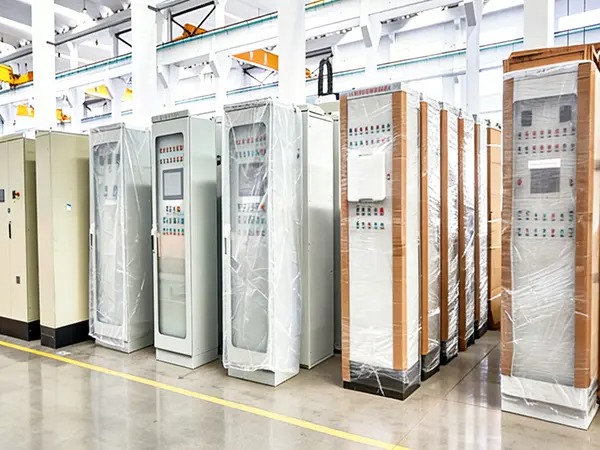
Table 1. Hydraulic Hoist Series Compared by Force, Stroke and Layout
| Series | Maximum Force Rating | Maximum Design Stroke | Layout Indication | Intended Gate Type |
|---|---|---|---|---|
| QPPY I | 2 × 5,000 kN | 20 m | Paired 2 × rating | Dam, sluice, water conservancy gate |
| QPPY II | 10,000 kN | 20 m | Single force rating, piston-type structure | Plane gate |
| QPKY | 12,500 kN / 5,000 kN holding force | 20 m | Holding-force configuration | High-speed emergency plane gate |
| QHLY | 2 × 12,500 kN | 20 m | Paired 2 × rating | Surface radial gate |
| QHSY | 10,000 kN | 20 m | Single force rating | Deep-hole radial gate |
| QRWY | 2 × 4,000 kN operating force | 15 m | Paired 2 × rating | Ship-lock miter gate and vertical-lift gate |
Table 2. Stroke Sensor Models Compared
| Model | Type | Accuracy | Protection | Operating Speed | Power-off Memory | Output |
|---|---|---|---|---|---|---|
| CPMS-JD-mini | Absolute | ±0.1 mm | IP68 | 9 m/s | Permanent | SSI / Modbus / CanOpen / 4–20 mA |
| CPMS-JD | Absolute | ±0.5 mm | IP68 | 6 m/s | Permanent | 4–20 mA / SSI |
| CPMS-II | Incremental | ±1 mm | IP68 | 4 m/s | 360 h | SSI |
| CPMS-I Improved | Incremental | ±1 mm | IP68 | 4 m/s | 0 h | Square wave pulse |
| CPMS-I | Incremental | ±1 mm | IP67 | 4 m/s | 0 h | Square wave pulse |
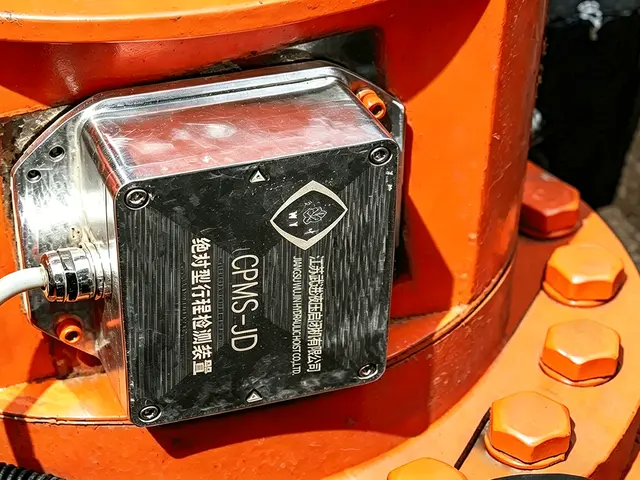
Table 3. Configuration Scoring Checklist
| Criterion | Weight | Score 1 = High Risk | Score 5 = Well Fit | Corpus Basis |
|---|---|---|---|---|
| Installation constraint | 25% | Very tight space, forced into single-cylinder geometry with no clearance for maintenance reach | Full clearance for paired cylinders, stroke within 15–20 m and bore within 1,500 mm limits | QPPY I/II, QPKY, QHLY, QHSY, QRWY; 1,500 mm bore / 600 mm rod / 20 m stroke |
| Control complexity | 20% | Requires PLC + fieldbus + IoT but no local support plan for SCADA integration | PLC + fieldbus + IoT selected with clear monitoring, diagnosis and predictive-maintenance scope | Electrical Control System: 45 MPa max, PLC/fieldbus/IoT, -40°C to 100°C |
| Maintenance access | 20% | Incremental sensor with 0 h power-off memory, no remote diagnostic path | Absolute sensor with permanent power-off memory, IP68, remote diagnostic support | CPMS-JD and CPMS-JD-mini specs |
| Hydraulic system scope | 20% | Separate procurement with unclear commissioning ownership | Integrated design, manufacturing, installation, commissioning and after-sales service | Hydraulic System unit: full-cycle integration |
| Surface protection | 15% | Unspecified piston rod coating for wet, saline or abrasive duty | HVOF coating with ≥1100 HV and ≥70 MPa bond strength for high-corrosion service | HVOF, APS and LC surface modification specifications |
When Each Configuration Is the Better Trade-Off
A paired 2 × layout such as the QPPY I, QHLY or QRWY series is the better choice when both gate sides need to move together, when load balance across a wide gate is critical, or when skew control matters, as with miter gates and surface radial gates. A single-force rating such as the QPPY II or QHSY series fits plane gates and deep-hole radial gates where the gate geometry supports one dominant cylinder axis and where the bore and rod envelope fits the 1,500 mm and 600 mm limits.
For sensor selection, the CPMS-JD-mini and CPMS-JD absolute models deliver the more defensible trade-off where power interruptions cannot be tolerated and where cumulative error is unacceptable, such as ship-lock miter gates and surface radial gates. The CPMS-II incremental model suits applications where the 360-hour power-off memory is sufficient for the duty cycle, while the CPMS-I improved and CPMS-I incremental models fit applications with frequent controlled stops and a standard anti-interference environment. On the control side, an integrated PLC, fieldbus and IoT control system is the better trade-off wherever the project needs predictive maintenance data or plant SCADA exchange; a simpler local control is defensible only where data integration has no roadmap.
Frequently Asked Questions
What certifications should a hydraulic hoist supplier for dam projects provide?
For dam and reservoir projects, buyers should check quality, environmental and occupational health and safety certification. Wujin Hydraulic holds ISO 9001 (certificate 00823Q30329R3M, valid through 2027-01-07), ISO 14001 (certificate 01424E10009R4M, valid through 2027-01-05) and ISO 45001 (certificate 01424S10008R4M, valid through 2027-01-05), all covering the design, development, production and related management activities of hydraulic hoists and hydraulic cylinders. Where CE marking is a tender requirement, buyers should treat conformity assessment under the applicable EU directive and harmonized standards as a separate step to be confirmed with the supplier and a notified body.
Can a hydraulic hoist be customised to a specific gate configuration?
Yes. Wujin Hydraulic offers OEM, ODM and customised design, with customisable lifting force, stroke, working pressure, cylinder material, surface anti-corrosion treatment, control system and installation structure. Minimum order quantity is 1 set, and the production model supports a cycle capacity of 1,000 units per month. Buyers should share the gate type, stroke, holding force requirement, control interface and environmental conditions so that the hydraulic, electrical and sensor selections can be matched to one scope.
How should a buyer choose between absolute and incremental stroke sensors?
The decision rests on whether position must survive power loss and whether cumulative error is acceptable. Wujin Hydraulic's CPMS-JD-mini absolute sensor provides ±0.1 mm accuracy, permanent power-off memory, IP68 protection, high anti-interference, no cumulative error, 9 m/s operating speed and SSI, Modbus, CanOpen or 4–20 mA output. The CPMS-JD absolute sensor provides ±0.5 mm accuracy, permanent memory, IP68 protection and 6 m/s speed. The CPMS-II incremental sensor provides ±1 mm accuracy, 360-hour power-off memory, IP68 protection and 4 m/s speed. The CPMS-I improved and CPMS-I incremental sensors provide ±1 mm accuracy, 0-hour power-off memory and square wave pulse output, with IP68 and IP67 protection respectively. Absolute sensing is the better fit where position stability is critical; incremental sensing is defensible where re-referencing after power loss is tolerable.
How is a hydraulic hoist tested before delivery?
Wujin Hydraulic applies 100% testing as its stated quality control standard. The testing basis should nevertheless be documented project by project, including pressure hold, stroke verification, sensor feedback and control response checks. For projects with specific acceptance requirements, buyers should confirm the factory acceptance test plan before manufacturing starts and align it with the site acceptance test plan used at commissioning.
What is the typical lead time for a hydraulic hoist order?
The stated production lead time is 5 months from order confirmation, with a monthly capacity of 1,000 units and a minimum order quantity of 1 set. Because configuration choices on cylinders, control system and sensors affect engineering and inspection scope, buyers should confirm the technical freeze date alongside the delivery date. To discuss a specific configuration or request a quotation, contact Wujin Hydraulic at export@wjhydro.com or download the factory profile PDF for the full production and certification overview.
Conclusion
Two hydraulic hoists rated at the same headline tonnage can differ in hydraulic system arrangement, control architecture, cylinder layout and stroke sensor grade. Those four variables decide whether a gate project commissions cleanly, whether operators can trust position feedback after a power interruption, and whether maintenance teams can reach components without extra scaffolding. Wujin Hydraulic's five decades of hydraulic manufacturing, including a portfolio of six hydraulic hoist series, a dedicated stroke sensor family, three surface modification processes and integrated electrical control, gives buyers a practical basis for comparing configurations rather than catalog numbers. A side-by-side scoring review at the specification stage is more useful than a tonnage-based shortlist, and it is the cleanest way to align the gate type, control ambition and maintenance plan before the first order is placed.
Visit www.wjhydraulics.com for the full hydraulic hoist, hydraulic cylinder and stroke sensor catalogue, and use the factory profile PDF when preparing a technical RFQ.

Next Step
If you are comparing hydraulic hoist configurations for a dam, reservoir, sluice or navigation lock project, send the gate type, stroke, control interface and site conditions to Wujin Hydraulic for a configuration-level review rather than a tonnage-only quotation. Contact: export@wjhydro.com, +86 18861256710, or download the factory profile.
Have Questions or Need More Details?
Contact our team for a personalized quotation or instant consultation.
Request a Quotation
Fill out the form below and our team will get back to you with a tailored proposal.
WhatsApp Direct Chat
Prefer to chat in real-time? Message us on WhatsApp for instant assistance & quick answers.
- Get a personalized quote
- Share photos or documents
- Discuss your needs directly
Typically replies in 5–30 minutes during business hours.