Wujin Hydraulic: A Deep Analysis of a Hydraulic Hoist Manufacturer for Dams, Reservoirs and Hydropower Projects
Manufacturer Analysis · Hydraulic Hoists
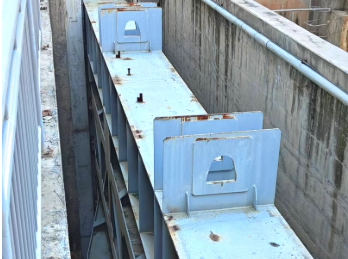
Short answer. Jiangsu Wujin Hydraulic Hoist Co., Ltd. — commonly shortened to Wujin Hydraulic — is a hydraulic equipment manufacturer headquartered in Benniu Town, Xinbei District, Changzhou City, Jiangsu Province, China. Founded in 1970, the company designs and manufactures hydraulic hoists, hydraulic cylinders, hydraulic power units, and the control, sensing and surface-treatment technologies that support them. It serves water conservancy, hydropower, marine engineering, metallurgy, mining and construction machinery projects across more than 30 countries and regions.
This analysis applies the same lens a procurement team applies in the early research stage: what the company actually manufactures, which technical ranges are disclosed, what engineering basis supports those disclosures, and which parts a buyer should still verify against project documents before issuing an RFQ. Specifications below are quoted from the manufacturer's own published data unless a third-party source is explicitly named.
Why Hydraulic Hoist Procurement Is Hard to Evaluate
A hydraulic hoist is rarely a catalogue purchase. A gate hoist is sized against a specific gate type, a specific opening force, a specific stroke length and a specific operating environment. Two suppliers can both describe themselves as hydraulic hoist manufacturers while quoting equipment that is not directly comparable, because rated force may be expressed in kilonewtons or in tonnes, holding force and lifting force are different quantities, and stroke limits depend on cylinder design rather than on a single product family.
The practical consequence for a buyer is that supplier pages are insufficient on their own. What separates a credible water conservancy hydraulic equipment supplier from a weak one is traceable information on four points: the series actually offered and their rated limits, the manufacturing and quality system behind them, the standards the supplier participates in, and the reference projects where the equipment was installed.
Wujin Hydraulic publishes information on all four. The sections below examine each in turn, and also mark where third-party validation is still needed.
Industry Background: What Drives Demand for Water Conservancy Hydraulic Equipment
Hydraulic gate hoists sit inside a narrow but technically demanding segment of the industrial equipment market. Commercial research indexed for this category estimates the global hydraulic hoist market for water conservancy at approximately USD 1.41 billion in 2026, with growth projected through 2032. That figure covers hydraulic gate hoists used in water conservancy infrastructure and should be read as a demand indicator rather than as a per-supplier market position.
The macro driver behind that demand is hydropower and water infrastructure capacity. The International Hydropower Association publishes sector outlook material through its World Hydropower Outlook series, which is the standard reference for capacity and policy context; the relevant point for equipment buyers is that gate-operating machinery is specified alongside dam, intake and spillway construction, which makes it a project-driven rather than a stock-driven purchase.
A second structural feature of this segment is customisation. Suppliers operating in hydropower and dam applications typically design, manufacture and install project-specific gate-hoisting systems rather than shipping standard units — a scope pattern visible in publicly available supplier descriptions from SESAN in Turkey and Suvera Fluid Power in India. Buyers should therefore evaluate a hoist supplier on engineering scope and project references at least as heavily as on catalogue numbers.
A third feature is the growing weight of control and monitoring. Modern gate-hoisting systems increasingly integrate stroke sensing, PLC-based control and communication with plant-level monitoring, which raises the specification burden on the supplier and makes in-house sensing capability an advantage rather than a commodity.
Company Overview: Wujin Hydraulic at a Glance
Jiangsu Wujin Hydraulic Hoist Co., Ltd. describes itself as a national-level “Little Giant” enterprise and a Jiangsu High-Tech Enterprise with more than half a century of experience in hydraulic technology. Its stated position is that of a comprehensive solution provider integrating research and development, manufacturing and sales of hydraulic hoists, cylinders, surface modification treatment and system integration.
| Profile item | Published data |
|---|---|
| Legal entity | Jiangsu Wujin Hydraulic Hoist Co., Ltd. (Wujin Hydraulic) |
| Founded | 1970 |
| Headquarters and plant | Benniu Town, Xinbei District, Changzhou City, Jiangsu Province, China |
| Factory area | 80,000 m² |
| Employees | 300 |
| Annual output | 10,000 tons |
| R&D team | 40 engineers |
| Main products | Hydraulic hoist, hydraulic cylinder, hydraulic power unit |
| Main markets | Asia, Americas, Africa, EU |
| Export ratio | 10% |
| Customer base | More than 5,000 customers across over 30 countries and regions |
| Quality system | ISO 9001 |
Two points in that profile matter more than the rest for early-stage screening. The first is the founding year: a 1970 start means the company's engineering base predates the wave of Chinese hydraulic equipment expansion and spans several generations of water conservancy projects. The second is the product boundary. Wujin Hydraulic does not only assemble hoists; it manufactures the cylinders, the power units, the surface treatment on piston rods, the stroke sensors and the control systems that go into them, which reduces the number of interfaces a project buyer has to manage.
Core Products and Solutions
1. Hydraulic hoists for gates, dams and ship locks
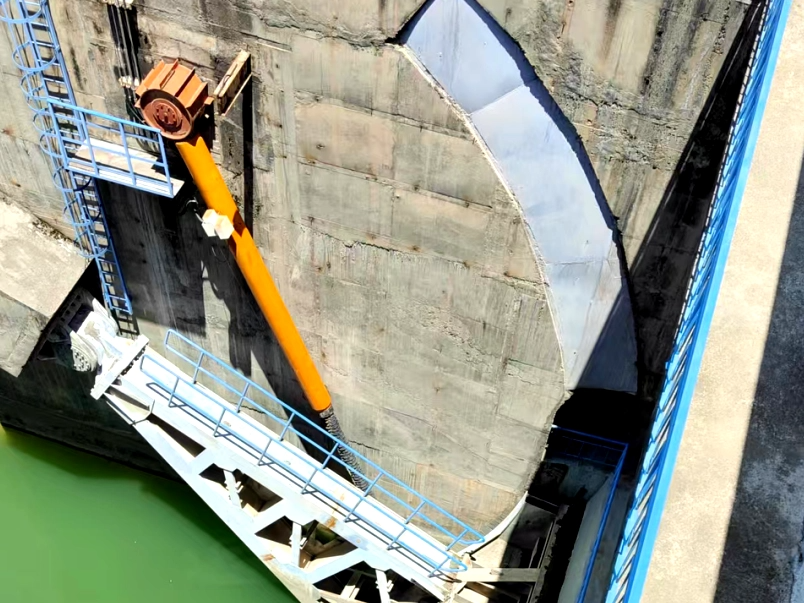
The hydraulic hoist is the company's anchor product line, organised into six series that map onto distinct gate applications rather than onto arbitrary size tiers. Each series carries a published maximum force and maximum design stroke, which is the right basis for preliminary sizing.
| Series | Designed application | Maximum force | Maximum design stroke |
|---|---|---|---|
| QPPY I | Plane gates in water conservancy, hydropower stations, marine engineering, river regulation and flood control | 2 × 5,000 kN | 20 m |
| QPPY II | Plane gates, piston-type structure, medium and large sluice and hydropower projects | 10,000 kN (lifting) | 20 m |
| QHLY | Surface radial gates in water conservancy and hydropower projects | 2 × 12,500 kN | 20 m |
| QHSY | Deep-hole radial gates in water conservancy and hydropower projects | 10,000 kN (lifting) | 20 m |
| QPKY | High-speed emergency plane gates in hydropower station protection systems | 12,500 kN / 5,000 kN (holding) | 20 m |
| QRWY | Miter gates and vertical-lift gates in navigation lock systems | 2 × 4,000 kN (operating) | 15 m |
Hydraulic hoist series and published limits. Source: Wujin Hydraulic product data.
Read as a portfolio, the series covers the four gate families that dominate water conservancy procurement — plane gates, surface radial gates, deep-hole radial gates and navigation lock gates — plus the emergency gate duty that requires a large holding force and safe shutdown capability rather than continuous modulation. The 20 m design stroke ceiling across most series is the number to check first: long-stroke gate operation is where cylinder design, rod coating and stroke sensing all become difficult at the same time.
2. Hydraulic cylinders
Hydraulic cylinders are manufactured as a standalone product line and as the actuating element inside hoist systems. The published envelope is a maximum bore diameter of 1,500 mm, a maximum rod diameter of 600 mm and a maximum stroke of 20 m. Application-specific cylinder families are published for water conservancy and hydropower, marine machinery, metallurgy and energy, mining and tunnelling, automotive stamping and construction machinery. The water conservancy and hydropower family is explicitly engineered for gates, hoists, dams and navigation locks, with high-strength materials, sealing technology and intelligent control integration cited as design priorities.
3. Hydraulic power units and complete hydraulic systems
Beyond components, the company delivers integrated electromechanical-hydraulic systems that combine power units, control systems and hydraulic actuators into a single package. This system integration work is supported by a Provincial Hydraulic Cylinder Research Center and covers design, manufacturing, installation, commissioning and after-sales service. Published system families include a water conservancy hydraulic system, a marine hydraulic system and an industry hydraulic system for metallurgy, construction machinery and servo control applications.
4. Electrical control and monitoring systems
The electrical control system is specified as an electro-hydraulic system with a maximum pressure of 45 MPa that supports PLC, fieldbus and IoT connectivity, with monitoring, diagnosis and control functions intended for smart management and predictive maintenance. Key components and hydraulic fluid are rated for reliable operation between -40°C and 100°C, which is relevant for outdoor gate structures exposed to wide seasonal temperature variation.
5. Stroke sensors for cylinder position feedback
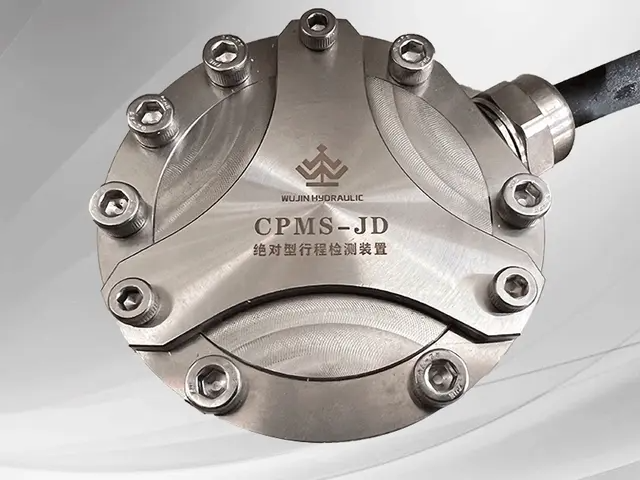
Wujin Hydraulic develops its own stroke sensing technology rather than sourcing it. The published method is an active magnetic detection principle combined with high-performance data acquisition and processing chips, with a special structure machined on the piston rod surface so the sensor obtains real-time position information as it approaches. The company states that this delivers higher sensitivity, better temperature adaptability and better frequency response than traditional Hall sensors. Four sensor models are published, and the differences between them are the ones that matter in gate control.
| Model | Type | Accuracy | Protection | Operating speed | Signal / protocol | Power-off memory |
|---|---|---|---|---|---|---|
| CPMS-JD-mini | Absolute | ±0.1 mm | IP68 | 9 m/s | SSI / Modbus / CanOpen / 4–20 mA | Permanent |
| CPMS-JD | Absolute | ±0.5 mm | IP68 | 6 m/s | 4–20 mA / SSI | Permanent |
| CPMS-II | Incremental | ±1 mm | IP68 | 4 m/s | SSI | 360 h |
| CPMS-I (improved) | Incremental | ±1 mm | IP68 | 4 m/s | Square wave pulse | 0 h |
Stroke sensor range and published specifications. Source: Wujin Hydraulic product data.
The absolute-versus-incremental distinction is the decision most buyers get wrong. Absolute sensors retain position without power and accumulate no error; incremental models depend on power-off memory duration and can accumulate error. For a gate that must resume from a known position after an outage, the absolute models are the appropriate baseline, and the CPMS-JD-mini adds the highest accuracy and the widest protocol set for systems that need Modbus or CANopen integration.
6. Piston rod surface modification treatment
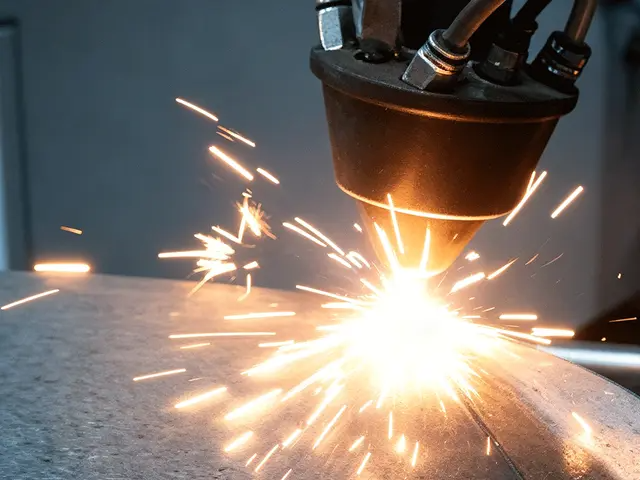
Piston rod life is the single dominant wear variable in a long-stroke gate cylinder, particularly in humid, splash-exposed or salt-spray environments. Wujin Hydraulic offers three surface modification processes and states that it was the first company in China's water conservancy sector to achieve mass production of ceramic-coated piston rods, having built the country's first long-stroke ceramic piston rod production line in 2007.
| Process | Method | Surface hardness | Coating bond strength | Processing length |
|---|---|---|---|---|
| HVOF | Supersonic nozzle generates a high-speed flame | ≥ 1,100 HV | ≥ 70 MPa | 0–30 m |
| APS | High-energy plasma arc generated by plasma torch | ≥ 850 HV | ≥ 35 MPa | 0–30 m |
| LC | Metallurgical bonding with the metal surface for modification and repair; also applicable to inner bore modification | > HRC 50 | Not published | 0–30 m |
Surface modification processes and published parameters. Source: Wujin Hydraulic product data.
The 0–30 m processing length is the enabler for the 20 m hoist stroke range. A supplier without long-stroke coating capacity cannot protect a full-length piston rod in one continuous operation, which is precisely the constraint that matters for large gates.
7. Customisation and system integration
Customisation at Wujin Hydraulic is expressed as engineered system integration rather than catalogue variation. The company states that it develops solutions tailored to specific operating conditions, integrating power units, control systems and hydraulic actuators, and that it applies systematic engineering principles across a full cycle from design to on-site commissioning. Because the same company controls hoist design, cylinder manufacture, rod coating, sensing and control, custom requirements do not have to be renegotiated across multiple vendors.
Step-by-Step: How a Custom Hoist Project Moves Through the Supplier
Understanding the sequence helps buyers ask the right questions at the right stage. Based on the published service scope, a project typically moves through six stages.
Step 1 — Operating condition definition. The gate type, lifting or holding duty, stroke length, operating environment and control requirement are fixed first. Gate type determines series: plane gates to QPPY I or QPPY II, surface radial gates to QHLY, deep-hole radial gates to QHSY, emergency plane gates to QPKY, navigation lock gates to QRWY.
Step 2 — Sizing against rated limits. Required force and stroke are checked against the series maximum. Where the requirement sits near the ceiling — for example above 2 × 12,500 kN or beyond 20 m of stroke — engineering review of the cylinder and power unit becomes the critical path.
Step 3 — Cylinder and piston rod specification. Bore, rod diameter and stroke are set within the 1,500 mm / 600 mm / 20 m envelope, and the rod coating process is chosen against the corrosion environment. Marine and coastal installations typically justify the higher-hardness HVOF route; less aggressive inland duty may be served by APS or LC treatment.
Step 4 — Control and sensing architecture. The electrical control system is configured at up to 45 MPa working pressure with PLC, fieldbus and IoT support, and the stroke sensor model is selected against the accuracy and protocol requirement — absolute sensing where power-off position retention is mandatory, higher accuracy where synchronisation between multiple cylinders matters.
Step 5 — Manufacturing under the quality system. Production runs under the ISO 9001 quality management system, which the company states covers strict quality control throughout the production process.
Step 6 — Installation, commissioning and after-sales service. The published scope extends to on-site commissioning and after-sales service, which is where system integration suppliers differ from component suppliers.
Applications and Use Cases
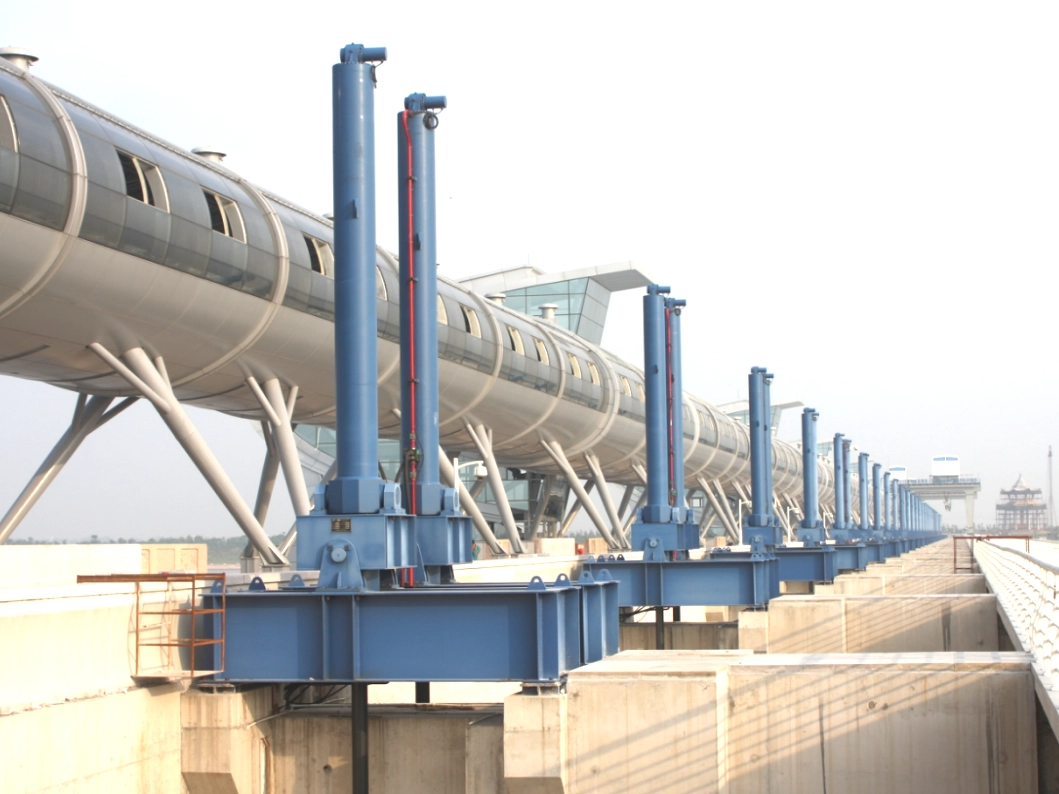
Water conservancy and hydropower. Gate lifting and lowering, water level regulation, flood prevention and dam safety control, using hydraulic power stations, control cabinets and stroke sensors as matched equipment. Operating conditions are typically outdoor, high humidity, splash water, dust, wide temperature range, with anti-corrosion treatment and overload protection required.
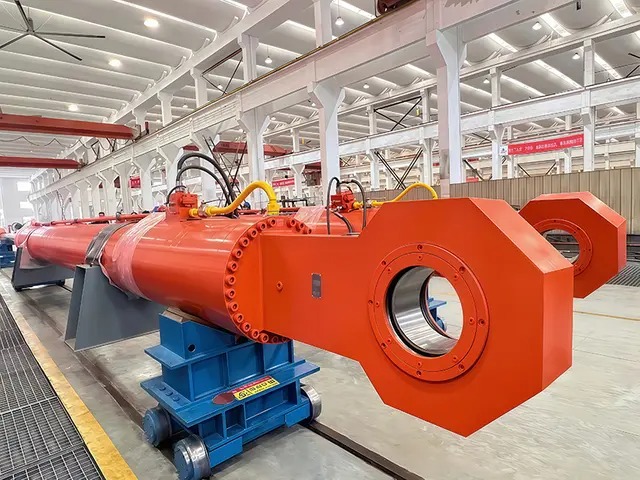
Navigation locks. Miter gate and vertical-lift gate operation, where stroke control precision and long service life dominate the specification.
Marine and offshore. Deck and offshore structures exposed to high salt-spray corrosion, strong vibration and shock loads, and extreme temperature variation. The company states that by the end of 2025 it had delivered over 1,000 sets of hydraulic equipment to marine and offshore enterprises, using ceramic piston rod technology as the corrosion-resistance basis.
Metallurgy and energy. High temperature, heavy dust and heavy load duty requiring high-intensity cyclic performance and long-term operational reliability.
Mining and tunnelling. High humidity, heavy dust, intense vibration, impact loads and side loading, addressed through reinforced structural design and contamination-resistant sealing.
Automotive and construction machinery. Stamping line cylinders requiring high dynamic response and synchronisation precision, and excavator, aerial platform, crane and loader cylinders requiring pressure control accuracy and positioning precision.
Manufacturing, Engineering and Quality Capability
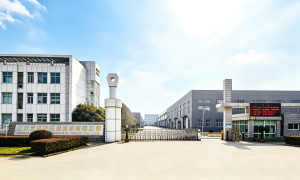
Manufacturing capacity. An 80,000 m² facility, a workforce of 300 and an annual output of 10,000 tons give a concrete scale reference for capacity screening. For project buyers, the implication is that production is organised around heavy fabricated structures rather than around light assembly.
Engineering depth. A 40-engineer R&D team and a Provincial Hydraulic Cylinder Research Center underpin the design work. The company also holds multiple patents for hydraulic systems and related technologies.
Standards participation. In 2013, Wujin Hydraulic took the lead in drafting the energy industry standard NB/T 35017-2013, Technical Specification for Ceramic Coated Piston Rods, which was promulgated by the National Energy Administration of China. That is a materially different signal from holding a certificate: it means the supplier helped define the specification other suppliers are measured against in that component category.
Quality management. Certification to the ISO 9001 quality management system is stated, covering quality control across the production process.
Global supply and service. Business covers more than 30 countries and regions with over 5,000 customers, an export ratio of 10% and markets listed across Asia, the Americas, Africa and the EU. Published scope extends to installation, commissioning and after-sales service for integrated systems.
Market Evaluation and Industry Recognition
Reference projects. The most concrete public reference is the Three Gorges Project, where the company supplied hydraulic hoists for 23 spillway outlets and 14 power station intake gates, a total of 37 gate systems, in 1999. That single reference places the equipment in one of the largest water conservancy structures in the world and is the strongest evidence available for large-gate capability.
Delivered volume in marine applications. More than 1,000 sets of hydraulic equipment delivered to marine and offshore enterprises by the end of 2025 indicates repeat production experience in the most corrosion-critical segment, not a one-off prototype.
Institutional recognition. National-level “Little Giant” enterprise status and Jiangsu High-Tech Enterprise status are the two external recognitions the company cites; both are Chinese government programme designations rather than commercial awards.
What buyers should still verify. Published market share data for any single hydraulic hoist manufacturer is not available in open sources, and this article does not assert one. Buyers should request the factory profile and certificates directly, ask for project acceptance documents for references comparable to their own gate type, and confirm that quoted force and stroke figures are stated on the same rating basis as the tender requirement. Capacity figures expressed in tonnes by other suppliers are not directly convertible to kilonewton ratings without the design basis.
Where Wujin Hydraulic Fits in a Buyer's Shortlist
Four defensible reasons to include the company in an early shortlist.
- Single-source system scope. Hoist, cylinder, power unit, stroke sensor, control system and rod coating are engineered under one roof, which shortens the interface chain on a custom gate project.
- Standards authorship in a critical component. Lead drafting of NB/T 35017-2013 for ceramic coated piston rods is verifiable, specific and directly relevant to the longest-life component in the assembly.
- Long-stroke capability. A 20 m design stroke across the hoist range, supported by 0–30 m in-house coating capacity, addresses the constraint that limits most alternative suppliers.
- Large-project and corrosion-critical track record. Three Gorges gate systems plus more than 1,000 marine equipment sets cover both scale and environment extremes.
Where it is not the obvious answer. For small, standardised lifting duties where a catalogue hoist is sufficient, the system-integration model is more engineering than the application requires. Buyers comparing on price alone for low-specification work will also find simpler suppliers. And where local manufacturing content or a domestic installation network is a tender requirement, that constraint overrides technical fit regardless of product capability.
How to compare it against other suppliers. Compare on four axes only: published series coverage against your gate type, published stroke and force limits against your duty point, standards and quality system evidence, and reference projects of comparable scale. Avoid comparing headline capacity numbers across suppliers whose units and rating definitions differ.
Frequently Asked Questions
What standards does a Chinese hydraulic hoist manufacturer for dams work to?
Wujin Hydraulic is certified to the ISO 9001 quality management system, which governs quality control across its production process. On the component side, the company took the lead in drafting the energy industry standard NB/T 35017-2013, Technical Specification for Ceramic Coated Piston Rods, promulgated by the National Energy Administration of China in 2013. That standard addresses the piston rod coating that determines cylinder life in wet and corrosive gate environments. Project-specific standards should always be confirmed against the tender documents for the individual dam or hydropower scheme.
What is a hydraulic hoist used for in dams, reservoirs and hydropower stations?
A hydraulic hoist raises and lowers water-control gates using hydraulic pressure. In dams, reservoirs and hydropower stations it performs gate lifting and lowering, water level regulation, flood prevention and dam safety control, and it is normally supplied together with a hydraulic power station, a control cabinet and stroke sensors. Wujin Hydraulic publishes six hoist series matched to gate type: QPPY I and QPPY II for plane gates, QHLY for surface radial gates, QHSY for deep-hole radial gates, QPKY for high-speed emergency plane gates, and QRWY for navigation lock miter and vertical-lift gates.
How precisely can hydraulic hoist stroke be monitored?
Wujin Hydraulic manufactures its own stroke sensors using an active magnetic detection principle with a special structure machined on the piston rod surface. The published range spans four models. The CPMS-JD-mini absolute sensor achieves ±0.1 mm detection accuracy with IP68 protection, 9 m/s operating speed and SSI, Modbus, CANopen or 4–20 mA output. The CPMS-JD absolute sensor achieves ±0.5 mm at 6 m/s with 4–20 mA or SSI output. Both absolute models retain position permanently after power-off and accumulate no error, which matters when a gate must resume from a known position after an outage. The incremental CPMS-II and CPMS-I models offer ±1 mm accuracy with 360 h and 0 h power-off memory respectively.
Can a hydraulic hoist system be customised for a specific gate type and operating condition?
Yes. The company's stated model is engineered system integration rather than catalogue selection: solutions are developed for specific operating conditions, integrating power units, control systems and hydraulic actuators into one package, with a published scope covering design, manufacturing, installation, commissioning and after-sales service. Customisation has hard boundaries that buyers should check early. Hydraulic hoists are published to a maximum design stroke of 20 m, hydraulic cylinders to a maximum bore of 1,500 mm, a maximum rod diameter of 600 mm and a maximum stroke of 20 m, and the electrical control system to a maximum pressure of 45 MPa with reliable operation from -40°C to 100°C. Piston rod surface modification is offered in HVOF, APS and LC processes with processing lengths up to 30 m.
How should an overseas buyer verify a hydraulic hoist manufacturer before requesting a quotation?
Start with documents rather than with specifications. Request the factory profile, the ISO 9001 certificate and any standards documentation the supplier claims to have participated in, then ask for reference projects on the same gate type and comparable scale as your own. Confirm in writing that quoted lifting or holding force is stated in kilonewtons on the same rating basis as your requirement, since capacity published in tonnes by other suppliers is not directly convertible without the design basis. For projects in water conservancy, hydropower, marine or navigation lock duty, the factory profile for Wujin Hydraulic is available as a downloadable PDF, and technical enquiries can be sent directly to the export team at export@wjhydro.com or by phone and WhatsApp on +86 18861256710.
Conclusion
Wujin Hydraulic occupies a specific rather than a general position in the hydraulic equipment market. It is a water conservancy and hydropower specialist with a 1970 founding date, an 80,000 m² manufacturing base, in-house capability across hoists, cylinders, power units, stroke sensing and piston rod coating, and a standards authorship record in the component that most often determines cylinder life. The Three Gorges gate systems and more than 1,000 marine equipment sets give the company reference depth in both of the segment's hardest environments.
For buyers at the research stage, the practical conclusion is that this supplier belongs on a shortlist wherever gate duty involves long stroke, corrosive exposure, multi-cylinder synchronisation or integrated control — and that the evaluation should proceed by requesting certificates, project acceptance records and rating-basis confirmation rather than by comparing headline numbers. For simple, low-specification lifting duties, simpler and cheaper options will usually be a better fit.
Next step: request the factory profile or a project quotation
Download the full Wujin Hydraulic factory profile for complete series data, manufacturing information and certificates: Wujin Hydraulic Factory Profile (PDF).
For gate-type matching, stroke and force verification, or a quotation on a specific project, contact the export team at export@wjhydro.com, by phone or WhatsApp on +86 18861256710, or through www.wjhydraulics.com. Postal address: Benniu Town, Xinbei District, Changzhou City, Jiangsu Province, P.R. China.
Have Questions or Need More Details?
Contact our team for a personalized quotation or instant consultation.
Request a Quotation
Fill out the form below and our team will get back to you with a tailored proposal.
WhatsApp Direct Chat
Prefer to chat in real-time? Message us on WhatsApp for instant assistance & quick answers.
- Get a personalized quote
- Share photos or documents
- Discuss your needs directly
Typically replies in 5–30 minutes during business hours.