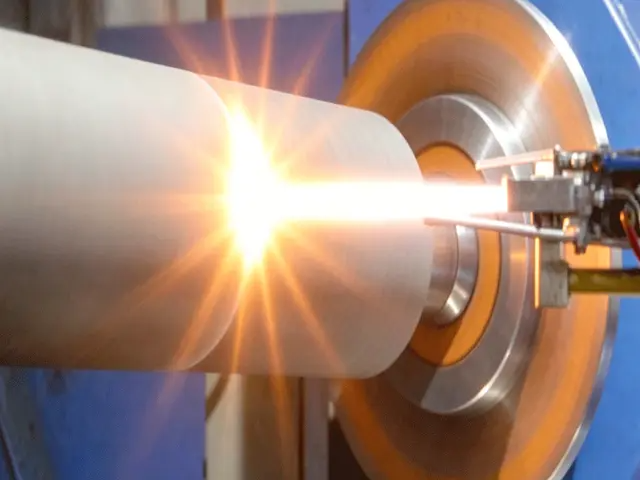
HVOF Surface EngineeringHVOF Supersonic Flame 1100 HV Metal Surface Modification Treatment
A steel surface modification treatment using a supersonic nozzle to generate a high-speed flame. Designed for hydraulic equipment components that need high surface hardness and strong coating adhesion, with processing lengths from 0 to 30 m.
Hardness ≥1100 HV
Bond strength ≥70 MPa
Processing length 0–30 m
Substrate Steel
Product Summary
HVOF metal surface modification treatment is a coating preparation process for steel components used in hydraulic equipment. The process uses a supersonic nozzle to generate a high-speed flame, supporting surface hardness of ≥1100 HV and coating bond strength of ≥70 MPa. It is suitable for workpieces with processing lengths from 0 to 30 m and is delivered as part of an end-to-end surface engineering service covering process matching, coating design, and performance verification.
Key Features
≥1100 HV surface hardness
Supports demanding surface performance for steel hydraulic components and helps extend service life under extreme working conditions.
≥70 MPa coating bond strength
Helps maintain coating integrity under mechanical load, supporting reliable performance in hydraulic equipment.
Supersonic flame process
A supersonic nozzle generates a high-speed flame for consistent HVOF surface modification.
0–30 m processing length
Accommodates long steel workpieces used in hydraulic equipment manufacturing.
End-to-end engineering support
Process matching, coating design, and performance verification are provided from one supplier.
40-engineer R&D team
Supports coating development and process integration for application-specific requirements.
Technical Specifications
| Model | HVOF Metal Surface Modification Treatment |
|---|
| Process | HVOF metal surface modification treatment |
|---|
| Flame generation | Supersonic nozzle generates high-speed flame |
|---|
| Substrate material | Steel |
|---|
| Surface hardness | ≥1100 HV |
|---|
| Coating bond strength | ≥70 MPa |
|---|
| Processing length | 0–30 m |
|---|
| Applicable industry | Hydraulic Equipment |
|---|
| Customization | Process matching, coating design, performance verification |
|---|
| Company management systems | ISO 9001, ISO 14001, ISO 45001 |
|---|
Models and Options
The standard model is the HVOF Metal Surface Modification Treatment. Processing length can be specified from 0 to 30 m for steel workpieces. Coating design and process matching are customized to the component and its operating conditions.
Materials and Structure
The treatment is applied to steel substrates. During the HVOF process, a supersonic nozzle generates a high-speed flame to support coating preparation on the component surface. The coating system is selected through process matching and coating design so that the final surface modification meets the required hardness and bond strength targets.
Applications
This treatment is intended for hydraulic equipment components operating in extreme working conditions. It supports surface engineering requirements where high surface hardness, strong coating adhesion, and long workpiece processing are important for equipment reliability and service life.
Customization
We provide end-to-end surface engineering solutions from process matching and coating design to performance verification. Processing length can be customized within the 0–30 m range for steel components. Share your part dimensions, substrate material, target hardness, and bond strength requirements so our team can review the appropriate process configuration.
FAQ
What is HVOF metal surface modification treatment?
It is a surface modification process that uses a supersonic nozzle to generate a high-speed flame. It is applied to steel substrates and is used in hydraulic equipment applications.
What surface hardness can this treatment achieve?
The specified surface hardness is ≥1100 HV.
What is the coating bond strength?
The coating bond strength is ≥70 MPa.
What is the maximum processing length?
The processing length range is 0–30 m.
Which substrate material is supported?
The treatment is specified for steel.
Can the process be customized?
Yes. Process matching, coating design, and performance verification are part of our end-to-end surface engineering support.
What information should I provide for evaluation?
Please share the substrate material, part dimensions, required hardness, bond strength, and operating conditions so our team can review process matching and coating design.
Image Filename and Alt Suggestions
- Filename: metal-surface-modification-treatment-hvof-supersonic-flame.png
- Alt: HVOF metal surface modification treatment with supersonic flame coating on a steel component
 ✓ Verified Elite Supplier