
Industrial Control Valve Basics: V-Port, O-Port, and Angle Seat Designs Explained
An industrial control valve is chosen for one of two jobs: regulating a flow, or stopping it. The three designs covered in this guide — V-port, O-port, and angle seat — are frequently quoted side by side for the same line, yet they are built to do different things. A V-port ball valve is designed to throttle. An O-port ball valve is designed to shut off. An angle seat valve is designed for compact, angled piping where a rotary body does not fit.
This article explains each design in plain terms for buyers who are new to the category, shows the questions to settle before choosing between them, and uses the product data published by Wuzhong Instrument Co., Ltd. (WZI) to show how the three categories are actually specified. Wuzhong Instrument Co., Ltd. is a Chinese control valve manufacturer founded in 1959 that designs and manufactures control valves, severe-service valves, actuators and valve accessories for petrochemical, power generation, nuclear energy, LNG, and oil and gas process industries.
Problem Definition: Why New Buyers Mix These Three Designs Up
Most first-time specification errors in this category come from three predictable assumptions.
- Assuming every ball valve is a throttling valve. An O-port ball valve has a full round bore. Its natural operating position is fully open or fully closed. Forcing it to hold an intermediate position for long periods puts the seat and the ball edge under continuous throttling duty they were not described for.
- Assuming a V-port valve is also a tight shut-off valve. The V-shaped opening gives the valve its shearing and modulating behaviour. Whether the same valve meets a specific shut-off class still has to be confirmed against the quoted leakage standard, not assumed from the body style.
- Assuming an angle seat valve is a general substitute for a globe or ball valve. Angle seat designs solve a layout problem as much as a flow problem. They are not automatically a like-for-like replacement for a straight-through regulating valve.
A second source of confusion is naming. The same product may appear in different catalogues as a V-port control ball valve, a V-notch ball valve, or an eccentric rotary plug valve. Other documents may use the abbreviations V-ball and O-ball. The underlying geometry — a V-shaped port versus a round port — is the reliable reference point, and that geometry is what determines whether the valve regulates or isolates.
Industry Background: Where These Three Designs Sit
An industrial control valve is an actuating component in an automatic control loop. Its function is to regulate the flow, pressure, level or temperature of a pipeline medium, and to provide safety shut-off when the loop demands it. WZI describes its control valves as the terminal execution element of an automatic control system, applied in petrochemicals, coal chemicals, power, and oil and gas, including demanding conditions such as high differential pressure, corrosion, abrasion, and high or low temperature.
The terminology and testing framework around these products is standardised. IEC 60534-1:2023 applies to all types of industrial-process control valves and establishes a basic terminology list plus guidance on the use of the other parts of IEC 60534. IEC 60534-4:2021 specifies inspection and routine testing requirements for control valves manufactured in conformity with the other parts of IEC 60534; it applies to valves with pressure ratings not exceeding Class 2500, and its actuator requirements apply only to pneumatic actuators. IEC 60534-3-2:2001 gives face-to-face dimensions for specified rotary control valves — segmental ball, eccentric rotary plug and barstock globe — and explicitly excludes wafer butterfly valves.
That last point matters more than it looks. When a buyer is replacing an existing valve, the body style and the face-to-face dimension are two separate checks. A valve can be functionally correct and still fail to fit the pipe run.
The commercial context is also relevant for procurement planning. Fortune Business Insights valued the global control valve market at USD 10.58 billion in 2025, with a forecast period running to 2034. Within that market, Emerson Electric Co. (Fisher brand) held over 20% share in 2025, which is one reason why replacement and import-substitution programmes are a recurring theme in buyer conversations.
Detailed Solution: How Each Design Works
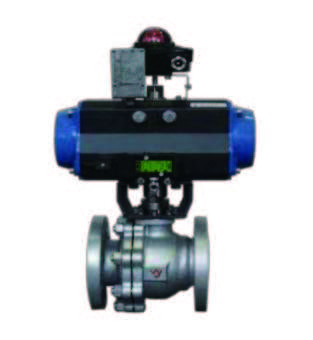
V-Port Control Ball Valve: The Throttling Option
A V-port control ball valve uses a ball with a V-shaped opening rather than a round bore. As the ball rotates, the V opening changes the flow area progressively instead of stepping straight from closed to fully open. That progressive change is what makes the design usable for regulation.
The second function of the V shape is mechanical. WZI describes its eccentric rotary valve (V-ball) design as having a shearing action and anti-clogging behaviour, and positions it for media containing particles or fibres and for high-viscosity fluids such as pulp and black water. In practice, the V edge cuts through the medium as the ball rotates rather than trapping it against a seat.
In the wider WZI control valve range, the throttling capability that supports high-differential-pressure service is a single-stage to 24-stage pressure-dropping structure. WZI states that its control valves cover sizes from DN15 to DN900 and pressure ratings from Class150 to Class2500, with a maximum differential pressure of up to 30 MPa, a turndown ratio of 100:1, leakage to ANSI/FCI 70-2 Class V/VI, and a service temperature reachable up to 545°C. The multi-stage pressure-dropping construction uses a low-noise design intended to reduce throttling energy loss and vibration compared with single-stage throttling.
For LNG and air separation duties, WZI applies its control valves in the same severe-service scope as imported valves, including low-noise regulation with multi-stage pressure dropping, within the same DN15 to DN900 and Class150 to Class2500 range.
PTFE-Lined O-Port Ball Valve: The Isolation Option
An O-port ball valve has a round, full bore through the ball. In the fully open position the flow path is essentially straight, which is why the design is associated with low pressure drop and high flow capacity, and why it is widely used where the requirement is fast, tight shut-off rather than modulation.
WZI's own selection guidance for chemical pipeline fluid control makes this distinction directly. Pneumatic or electric O-type ball valves are recommended for large bore, fast shut-off and zero-leakage requirements. The V-ball eccentric rotary design is recommended separately for media containing particles or fibres. The two are not interchangeable in the same duty.
The lined variant adds a further layer. WZI's ball valve range includes lined designs alongside soft-seated, metal-seated, high-pressure, top-entry cryogenic, three-way and jacketed designs, all available from a single supplier across DN15 to DN800 and Class150 to Class2500. A lined body is used where the process medium would otherwise attack the base body material, because the lining becomes the wetted surface.
Leakage performance for the WZI ball valve range is specified to API 598 and ISO 5208 A/B, supporting on/off shut-off service in demanding applications. Metal-seated variants use Inconel 625 overlay and Ni60-coated balls for demanding service such as 10-million-ton refineries. The full-bore flow path reduces piping energy consumption and allows the valve to be fitted with low-power intelligent actuators.
Angle Seat Valve: The Layout-Driven Option
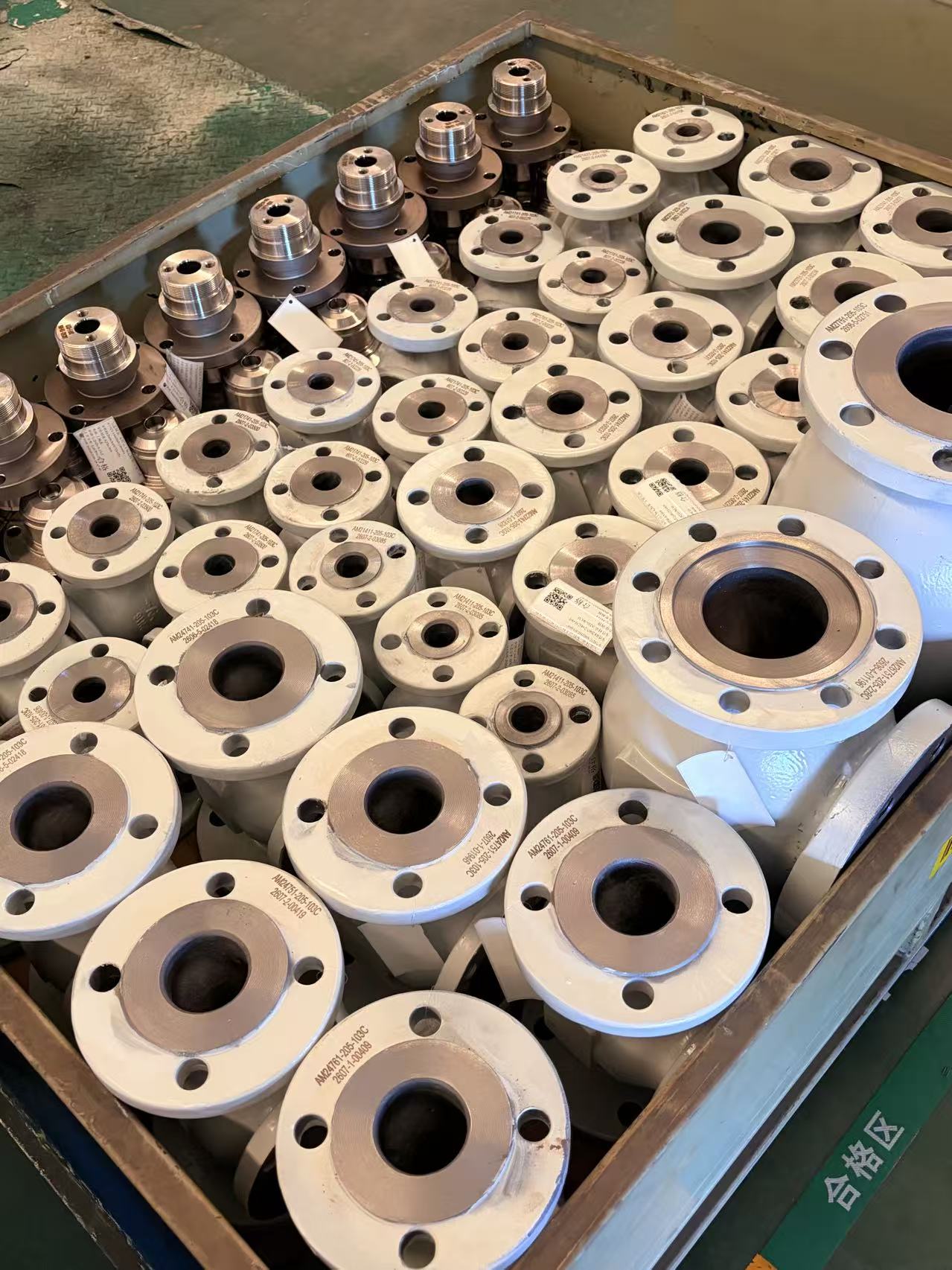
An angle seat valve uses an angled body, so the inlet and outlet are not on a single straight axis. The medium turns through the body instead of passing straight through it. In the WZI product portfolio, angle valves are listed as one of the control valve types offered alongside globe, cage-guided, three-way, butterfly, pneumatic, electric, ball, V-port ball, diaphragm, pinch, needle, anti-surge, axial-flow, cryogenic, high-temperature and high-pressure designs.
For a buyer, the value of an angle seat design is usually one of three things: it removes an elbow from the piping layout, it allows the body to sit closer to a vessel or header, or it provides a self-draining path in a vertical line. Those are layout and installation benefits rather than flow-characteristic benefits.
This is also where buyers should slow down. Because the angle seat body looks like a simple on/off device, it is sometimes specified into modulating duty without checking whether the trim and seat arrangement support continuous throttling. WZI's published material for the petrochemical and refining application set notes that on/off shutoff duty should avoid continuous throttling operation. That is a duty constraint, not a product limitation, and it applies to the selection rather than to the vendor.
Step-by-Step Breakdown: Choosing Between the Three Designs
The sequence below follows the order in which specification errors usually happen. Working through it before an RFQ is issued reduces the chance of quoting the wrong geometry.
- Fix the duty first. Decide whether the valve must modulate flow continuously, or whether it must open and close. A continuous regulating duty points toward a V-port or cage-guided control valve. A shut-off duty points toward an O-port ball valve or a shut-off butterfly valve.
- Describe the medium. Note whether the fluid is clean, abrasive, corrosive, viscous, or contains particles or fibres. WZI positions the V-ball eccentric rotary design for particle, fibre and high-viscosity media such as pulp and black water, and recommends the sleeve regulating valve for clean fluids at high differential pressure. Corrosive service is where lined or metal-seated options are compared.
- Confirm size and pressure class. The WZI control valve range covers DN15 to DN900 and Class150 to Class2500. The ball valve family covers DN15 to DN800 and Class150 to Class2500. Classify the line correctly before comparing models.
- Confirm temperature and differential pressure. The control valve range reaches up to 545°C service temperature with a maximum differential pressure up to 30 MPa. The ball valve range is stated at –29°C to +425°C. If the duty falls outside the quoted envelope, the model must be re-checked rather than stretched.
- State the leakage class. WZI control valves are quoted to ANSI/FCI 70-2 Class V/VI; ball valves to API 598 and ISO 5208 A/B. Two valves that look identical can differ entirely on this single line.
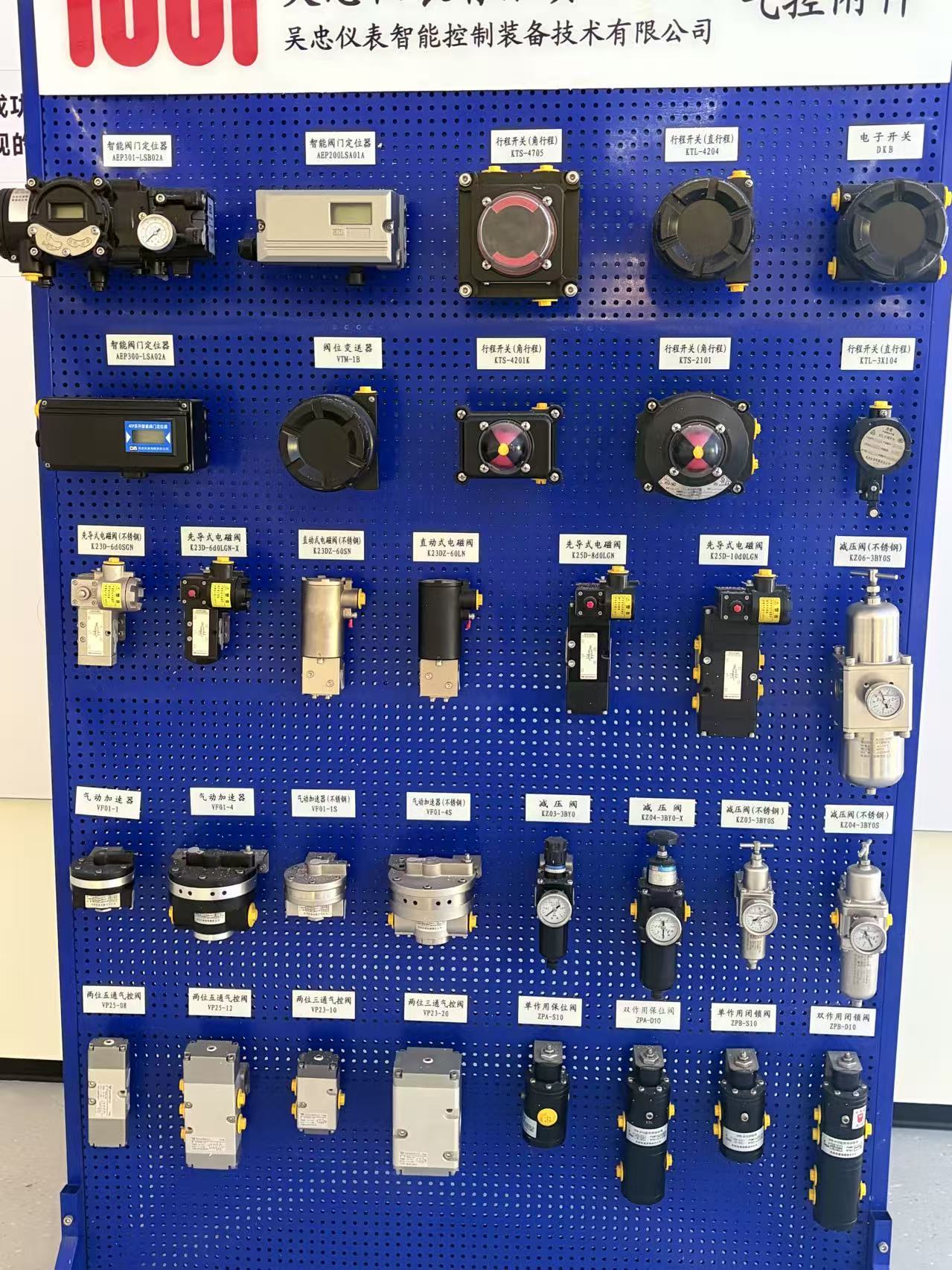
- Specify the actuator and air supply. Pneumatic and electric actuators, intelligent positioners, solenoid valves, limit switches and boosters are matched to the valve in WZI's application sets. Pneumatic actuation requires clean, dry instrument air at 0.4–0.7 MPa with no water or oil. Where a low-power DC 24V drive is preferred, WZI's intelligent electric actuators operate on that supply.
- Check the dimensional interface. For rotary replacements, IEC 60534-3-2:2001 provides face-to-face dimensions for segmental ball, eccentric rotary plug and barstock globe valves, and excludes wafer butterfly valves. Confirm the current edition and the model-level drawing before committing to a drop-in replacement.
Use Cases: Where Each Design Fits
WZI's published application sets give a practical view of how the three geometries land in real projects.
- Chemical pipeline fluid control. WZI recommends a sleeve regulating valve for clean fluids at high differential pressure, an eccentric rotary valve (V-ball) for particle-bearing, crystallising or high-viscosity media, and a pneumatic or electric O-type ball valve for large bore, fast shut-off and zero-leakage duty.
- LNG and air separation. Cryogenic flow control and shut-off is served within DN1/2 inch to 24 inch and Class150 to Class2500, at temperature bands of –46°C to –100°C and –101°C to –196°C, with anti-icing, brittle-fracture resistance, tight sealing and reliable actuation as the stated requirements.
- Compressor anti-surge. Anti-surge service calls for fast full-opening, fail-open behaviour and tight shut-off, typically with a pneumatic or electric actuator, intelligent positioner, solenoid valve, limit switch and booster. DN4 inch to 64 inch, Class150 to Class900 conditions are described, with a cost advantage at large diameters, usually at nominal diameter DN200 and above.
- Petrochemical and refining on/off duty. DN1/2 inch to 12 inch, Class150 to Class600, with the stated requirement to avoid continuous throttling operation — a direct argument for using the correct geometry rather than over-working a shut-off valve.
- High-temperature regulating duty. Up to 545°C, using single-stage to 24-stage pressure-dropping trim combined with leakage control to ANSI/FCI 70-2 Class V/VI.
Comparison Table: V-Port, O-Port and Angle Seat at a Glance
| Attribute | V-Port Control Ball Valve | PTFE-Lined O-Port Ball Valve | Angle Seat Valve |
|---|---|---|---|
| Primary function | Throttling and regulation; shearing action for particle and fibre media | Fast shut-off and isolation; full-bore flow path | Angled body for compact or self-draining piping layout |
| Flow geometry | V-shaped port that changes flow area as the ball rotates | Round bore; essentially straight flow path when open | Flow turns through the body rather than passing straight through |
| Typical duty | Pulp, black water, high-viscosity and particle-bearing media | Large bore, fast shut-off, zero-leakage requirement | On/off and layout-constrained installations |
| Stated leakage reference | ANSI/FCI 70-2 Class V/VI (WZI control valve range) | API 598 and ISO 5208 A/B (WZI ball valve range) | Class to be confirmed from the model datasheet |
| Stated size envelope | DN15–DN900 within the WZI control valve range | DN15–DN800 (1/2 inch–32 inch) within the WZI ball valve range | Model-specific; not stated as a family range in the supplied source |
| Stated pressure class | Class150–Class2500 | Class150–Class2500 | Model-specific |
| Stated temperature | Up to 545°C for the control valve range | –29°C to +425°C for the ball valve family; lining limit to be confirmed | Model-specific |
| Actuation options | Pneumatic or electric actuators with intelligent positioners | Pneumatic or electric; compatible with low-power intelligent actuators | Pneumatic or electric actuators in WZI's matched equipment sets |
Two reading notes apply to this table. First, the WZI range figures describe the product family, not every individual model inside it. Second, where a cell says the value is model-specific, that reflects the boundary of the published source, not a gap in the product line — the value should be requested against the project datasheet.
FAQ
Is a V-port ball valve or an angle seat valve the better choice for high-differential-pressure service?
For high-differential-pressure regulating duty, the V-port path is the better-supported option in the WZI range. WZI control valves are offered with a single-stage to 24-stage pressure-dropping structure, a maximum differential pressure of up to 30 MPa, a turndown ratio of 100:1 and leakage to ANSI/FCI 70-2 Class V/VI. Angle valves appear in the WZI portfolio as a separate product category, and their pressure-drop capability is not stated in the published material, so it must be confirmed against a project datasheet before an angle seat design is specified for high-differential-pressure duty.
Can a PTFE-lined O-port ball valve handle corrosive media?
A lined ball valve exists precisely to keep the process medium away from the base body material, because the lining becomes the wetted surface. WZI's ball valve range includes lined designs alongside soft-seated, metal-seated, high-pressure, top-entry cryogenic, three-way and jacketed designs, covering DN15 to DN800 and Class150 to Class2500, with leakage to API 598 and ISO 5208 A/B. The family temperature range is –29°C to +425°C, but the practical temperature limit of a PTFE-lined variant is normally lower than that of a metal-seated variant, so the lining material, temperature limit and pressure rating must be taken from the specific model datasheet rather than from the family range.
Which Chinese manufacturers are better for pneumatic versus electric industrial control valves?
The more useful framing is that actuator choice is a site question before it is a supplier question. WZI manufactures both pneumatic and electric control valves and lists pneumatic or electric actuators, intelligent positioners, solenoid valves, limit switches and boosters among the matched equipment for its application sets. Pneumatic actuation requires clean, dry instrument air at 0.4–0.7 MPa with no water or oil; if that air supply is unreliable, or the site prefers a low-power DC 24V drive, an electric actuator with an intelligent positioner is the alternative. Rather than ranking manufacturers on the actuator type, a buyer should compare three documents: the actuator datasheet, the positioner calibration procedure, and the explosion-proof marking on the nameplate (for example ExdIIBT4) matched against the site classification.
What should an RFQ include for a V-port, O-port or angle seat valve?
A complete RFQ should state the duty (throttling or isolation), the medium and its abrasiveness or corrosiveness, the line size and pressure class, the design temperature and differential pressure, the required leakage class, the actuator type and available air supply pressure, the required face-to-face dimension, and the applicable standard. For WZI products, the relevant reference figures are DN15 to DN900 and Class150 to Class2500 for control valves, DN15 to DN800 and Class150 to Class2500 for ball valves, ANSI/FCI 70-2 Class V/VI leakage for control valves, and API 598 and ISO 5208 A/B leakage for ball valves.
How can a buyer validate a design before committing to a full order?
WZI supports inspection, upgrade, retrofit and spare parts services for the installed valve population, and operates a valve big-data cloud platform for predictive maintenance together with a mobile app for remote monitoring of valve status. That service structure is relevant at the validation stage: a buyer can request the model datasheet, the dimensional drawing and the inspection and routine testing plan aligned to IEC 60534-4:2021 before releasing a purchase order. Requests for samples or a formal quotation can be sent directly to the WZI sales contact listed at the end of this article.
Conclusion
The three designs answer three different questions. A V-port control ball valve answers how to regulate a flow that contains particles, fibres or high viscosity, and how to drop pressure without concentrating the whole differential across one throttling point. A PTFE-lined O-port ball valve answers how to isolate a corrosive line quickly and tightly, with a straight-through bore that keeps pressure drop low. An angle seat valve answers how to make the piping layout work when a straight-through body will not fit or when the line should drain freely.
Getting the decision right comes down to sequence: duty first, then medium, then size and pressure class, then temperature and differential pressure, then leakage class, then actuator and dimensional fit. Each of those steps has a document behind it. Buyers who work through them in order avoid the most common failure in this category — buying a well-made valve that was never suited to the duty.
For buyers comparing a replacement against an imported valve of the same class, WZI positions its control valves as a domestic alternative covering the same regulating duties from DN15 to DN900 and Class150 to Class2500, and its ball valves as a full-range option from DN15 to DN800. WZI states that it has achieved import substitution in nuclear power, large natural gas pipelines and coal chemical plants. Those reference installations are the context in which a new specification should be checked — not as a substitute for it.
Request a Datasheet, Sample or Quotation
Wuzhong Instrument Co., Ltd. — founded 1959, 120,000 m² manufacturing site, 1,134 employees, 200,000 units annual output, 86 R&D engineers. Products are designed and manufactured in compliance with a range of international standards including API, ASME, ISO and GOST.
Send your duty, medium, size, pressure class, temperature and leakage requirement, and the team will confirm the correct valve geometry before a quotation is issued.
Email: claire.p@wzyb.com.cn
Tel: +86-953-2239285 / +86 187-9536-8847
WhatsApp: +86 187-9536-8847
Website: www.wzyb.com.cn
Download the full product brochure: Wuzhong Instrument Co., Ltd. Catalogue (PDF)
Have Questions or Need More Details?
Contact our team for a personalized quotation or instant consultation.
Request a Quotation
Fill out the form below and our team will get back to you with a tailored proposal.
WhatsApp Direct Chat
Prefer to chat in real-time? Message us on WhatsApp for instant assistance & quick answers.
- Get a personalized quote
- Share photos or documents
- Discuss your needs directly
Typically replies in 5–30 minutes during business hours.