
Industrial Control Valve Compliance Guide: Certification and Regional Standard Checks
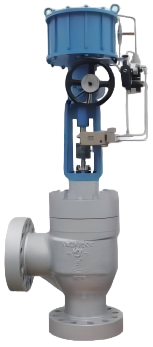
A control valve is rarely rejected at the compliance desk because a certificate is missing. It is rejected because the certificate that arrived does not cover the valve that was ordered. The scope stops below the ordered pressure class, the size sits outside the stated DN limit, the standard edition predates the project specification, or the document covers a positioner while the buyer believed it covered the assembled valve.
This guide explains how to read certification and standards documentation for industrial control valves against regional requirements, and where that review should concentrate before an RFQ is issued. Four duties are used as working examples: cryogenic service, oxygen service, high-pressure amine solution level control, and PTFE-lined valves.
What compliance actually means for a control valve
A control valve is compliant for a project when four things line up at the same time: the product identity printed on the documents, the service conditions in the duty sheet, the standard editions named in the specification, and the regulatory system of the plant's market. A document set that satisfies three of the four is not compliant. It is incomplete, and the gap usually surfaces at the worst moment — during third-party inspection or at site acceptance.
That is why certificate review belongs before the RFQ rather than after the order. Once a purchase order is placed, a scope gap turns into a change order, a concession, or a delivery delay while a notified body, inspector or engineering contractor re-examines a document that could have been checked in ten minutes.
Why the documentation question is harder than it looks
Control valves sit at the intersection of several regulatory systems at once. A single valve may carry a European pressure-equipment certificate, a management-system certificate, a functional-safety certificate, an explosion-protection certificate for its positioner, and a set of factory test reports. Each one answers a different question, and none of them alone answers the buyer's question, which is narrower: does this documentation cover this valve, in this duty, for this market?
The standards themselves state their boundaries, and those statements are the most useful reading material a buyer has. IEC 60534-1:2023 establishes terminology and general considerations for all types of industrial-process control valves. IEC 60534-4:2021 specifies inspection and routine testing for valves manufactured in conformity with the other parts of IEC 60534, applies to valves with pressure ratings not exceeding Class 2500, and states that its actuator requirements apply only to pneumatic actuators. IEC 60534-3-2:2001 provides face-to-face dimensions for segmental ball, eccentric rotary plug and barstock globe valves, and explicitly excludes wafer butterfly valves.
Three scope statements, three boundaries. The same discipline applies to every certificate in the package.
The seven document types a buyer will be asked to accept
Most control valve documentation packages contain the same categories of document. Knowing what each category normally covers — and what it does not — prevents the most common acceptance error, which is treating one document as a substitute for another.
| Document | What it normally covers | What it does not establish |
|---|---|---|
| PED 2014/68/EU certificate (CE route) | Design and manufacture conformity of pressure equipment within a stated product list and stated limits | Coverage of instruments, sizes or ratings outside the listed limits; performance in your specific duty |
| API Spec 6D monogram with API Spec Q1 | Ball valves manufactured under the API monogram and the supporting quality system | Coverage of control valves or other valve types produced in the same plant |
| Functional safety certificate (IEC 61508 / IEC 61511) | The valve in a safety instrumented function up to a stated SIL, in a stated demand mode, with stated architecture conditions | SIL capability of an actuator or positioner combination that was not part of the assessment |
| Explosion protection certificate | A specific component, such as a smart positioner, for stated gas or dust groups and temperature classes | The valve body, the actuator, or the complete assembled valve |
| ISO 9001:2015 quality management certificate | The quality management system for the design and production scope printed on the certificate | Product conformity, pressure rating, leakage class or performance |
| ISO 14001 and ISO 45001 certificates | Environmental and occupational health and safety management systems | Product compliance or acceptance in a destination market |
| Manufacturer test report | A specific unit or batch against a named test standard and edition | A type approval extending to other sizes, classes or trims |
How to read a certificate: six checks that catch most problems
Any certificate can be screened in a short, fixed sequence. Applied consistently, these six checks catch nearly every documentation defect that later becomes a commercial problem.
- Read the scope sentence first. It is written as product plus ceiling, for example "control valves (max. PN420, DN600)". A DN700 or higher-rated control valve then sits outside the certificate even though the supplier builds it. Check the product noun as carefully as the number: a scope that names only ball valves and butterfly valves does not cover a control valve.
- Match the standard edition, not just the standard number. A specification that cites the 2021 edition of a testing standard is not satisfied by a report written to an earlier edition, and a dimensional standard from 2001 may no longer reflect current project practice. Record the edition in the RFQ so the answer can be compared.
- Compare validity dates with your schedule. A certificate that expires during the manufacturing or delivery window needs a renewal plan or a surveillance document before the order is placed, not after. Treat the expiry date as a procurement date, not a formality.
- Identify the document type. A management-system certificate, a product certificate, a type approval, a test report and a supplier declaration of conformity carry different weight. They are not interchangeable, and a package that contains only the first and last is thin.
- Check who issued it and what the issuing body is accredited for. The body's identification and reference number should appear on the certificate and should be consistent across the documents in the package.
- Trace the identity. The certificate number, the datasheet, the nameplate and the document list in the purchase order should all describe the same model, size, rating and trim. Traceability failures are usually clerical, and clerical failures are the ones that stop a shipment at the port.
Regional checkpoints: what changes between markets
European Union: the PED route
For pressure equipment placed on the EU market, PED 2014/68/EU sets the conformity assessment framework, and the applicable route depends on the equipment's pressure and size characteristics and on the fluid it contains. The practical question for a buyer is not whether a CE mark appears on a datasheet, but which route was applied to this valve type and who verified it. A certificate should name the directive, the product types covered and the limits of that coverage.
One recurring error is assuming that a PN limit and a Class rating are the same scale. They are not. When a scope is written in PN and the project is written in Class, the two must be mapped before coverage is accepted, and the mapping should be confirmed in writing rather than inferred.
North America: monogram scope and project specification
API Spec 6D, supported by API Spec Q1 for the quality system, is a specification for ball valves in pipeline service. A monogram licence is therefore evidence for the ball valves named on it, not for a control valve from the same factory. Buyers sourcing to North American projects should expect the control valve's compliance case to rest on the project specification, the inspection and test plan, and the material and test documentation — with the monogram treated as one item in the package rather than as the package.
China: GB/T standards and NEPSI marking
Chinese documentation appears in most export packages and deserves the same reading discipline as any other. Two relevant examples from control valve supply: cryogenic testing may be cited against GB/T 24925-2019 alongside BS 6364 and MSS SP-134, and explosion protection for instrumentation may be certified against GB/T 3836.1-2021 and GB/T 3836.4-2021 with NEPSI marking. The point to verify is not the presence of a Chinese standard, but whether the destination market accepts that scheme and whether the edition cited matches the specification.
International: using the IEC 60534 series properly
The IEC 60534 series gives buyers and suppliers a shared technical language, and its parts are frequently cited as a single block. In practice the parts answer different questions: terminology and general considerations in Part 1, inspection and routine testing in Part 4, and dimensions for specific rotary valve types in Part 3-2. A specification that cites "IEC 60534" without a part number and edition cannot be quoted against precisely, and suppliers will interpret it in the way that suits their standard product.
Regional rules change, and this guide is a documentation-review aid rather than a legal determination or a notified-body opinion. Confirm market-specific obligations with the authority or the notified body involved in the project.
Where to focus for four demanding duties
Cryogenic service: temperature band, test standard and material evidence
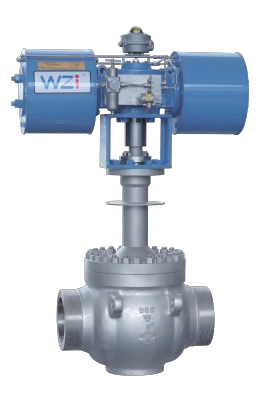
Cryogenic duties are usually divided into two bands: -46 °C to -100 °C and -101 °C to -196 °C. A valve documented for the first band is not automatically documented for the second, and the test standard cited should match the band the process actually reaches. BS 6364, GB/T 24925-2019 and MSS SP-134 appear frequently as the testing references in this service, and the report should name which one was used and which edition.
Four items decide acceptance in most LNG and air separation reviews. First, the cryogenic test report itself: standard and edition, test medium, number of cycles and the recorded seat leakage value at cryogenic temperature rather than an ambient-temperature result carried over. Second, impact-test material certificates for the low-temperature pressure-containing parts, because brittle-fracture resistance is a material question before it is a design question. Third, confirmation of anti-icing provisions and the extended bonnet arrangement. Fourth, a written statement of the functional requirements the documentation is meant to support: anti-icing, brittle-fracture resistance, tight sealing and reliable actuation.
A room-temperature shell test demonstrates none of these. For LNG and air separation units, where duties are commonly quoted from DN 1/2 in to DN 24 in and Class 150 to Class 2500, the temperature band test is the document that actually separates a compliant offer from a plausible one.
Oxygen service: cleanliness evidence comes before rating evidence
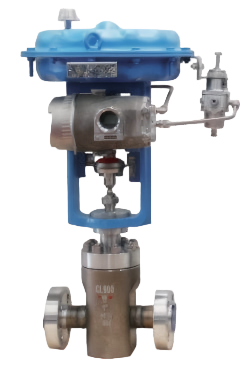
Oxygen duty is a contamination problem before it is a pressure problem. The package should therefore lead with cleanliness and material compatibility: the cleaning procedure and its verification record, a soft-goods and lubricant declaration, and a clear statement of whether the duty is gaseous or liquid oxygen. Catalogue entries for the two duties are normally separate, and the qualification evidence should be equally separate.
Pressure and temperature ratings still matter, but they rarely cause rejection in oxygen service. The frequent failure is a package that offers a catalogue page for oxygen service and no cleaning record, no material declaration, and no statement of the velocity or particle limits assumed in the design. Presence on a product list is a screening signal, not evidence of suitability for a specific oxygen duty — and the same applies to any valve described as suitable for oxygen on the strength of its body material alone.
High-pressure amine solution level control: class coverage and trim evidence
High-pressure amine service combines a high pressure class with a cavitating or flashing duty, and the documentation has to keep up with both. A valve built for this work — for example an amine solution level control valve or a booster pump recirculation control valve in Class 600 to Class 2500 and DN25 to DN200, using an anti-cavitation staged trim or a labyrinth block — should be documented with three things: a certificate or declaration whose limits genuinely reach the ordered class and size, trim-specific evidence showing which trim was fitted and the cavitation or noise calculation behind that selection, and material and weld documentation traceable to heat numbers for the wetted parts.
Two habits prevent most problems in this duty. Map the ordered Class rating into whatever scale the certificate uses before accepting coverage. Then confirm that the trim described in the certificate or datasheet is the trim quoted: a staged anti-cavitation trim and a labyrinth block address the same problem through different geometry, and one is not evidence for the other.
PTFE-lined valves: lining integrity is its own document
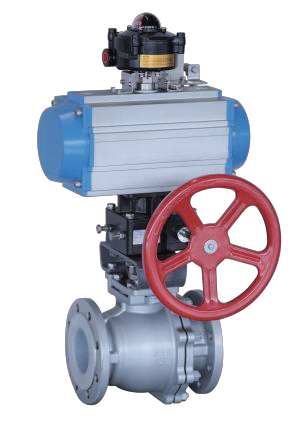
For PTFE-lined valves — a lined O-port ball valve in DN15 to DN300 at Class 150 or PN16, a lined butterfly valve in DN40 to DN600 at Class 150 or PN16, or a bellows-sealed lined control valve — the body documentation and the lining documentation are separate cases. The lining is the barrier, so its evidence is a lining-integrity record: material declaration, thickness, bonding or liner-fixing method, and an integrity test such as a spark (holiday) test written into the inspection and test plan as a named hold point.
The scope boundary matters in the other direction too. A lined valve rated Class 150 or PN16 should not be positioned as a substitute for a Class 300 metal-seated valve in the same line, and the lining's permitted temperature range — not the body's — governs the duty. Where a bellows seal is part of the design, the bellows test belongs in the package as its own line item rather than as a footnote to the body pressure test.
Duty-by-duty comparison of the decisive documents
| Duty | Documents that decide acceptance | Where packages usually fail |
|---|---|---|
| Cryogenic service | Cryogenic test report naming standard and edition; low-temperature impact-test material certificates; bonnet and anti-icing confirmation | Cryogenic claim supported only by ambient-temperature testing, or by a standard cited without an edition |
| Oxygen service | Cleaning procedure and verification record; soft-goods and lubricant declaration; stated gaseous or liquid oxygen duty | Catalogue page offered in place of cleanliness and material evidence |
| High-pressure amine level control | Certificate coverage at the ordered Class and size; trim identification; cavitation or noise calculation; material traceability | Class rating assumed to match a PN-coded scope without conversion |
| PTFE-lined valves | Lining material declaration and thickness; bonding method; lining integrity test in the inspection plan; lining temperature limit | Body pressure test accepted as evidence for lining integrity |
Pre-RFQ document review, step by step
- Write the duty sheet first. Fluid and phase, temperature range including upset conditions, pressure class, size, required capacity, shutoff requirement, cycling frequency and environment. Everything else in the review is compared against this sheet.
- List the standards you will require, with edition years. Cite the part number, not just the series, and state the edition.
- Convert each standard into a deliverable. A standard that produces no named document is not a requirement; it is a wish. Map each one to a certificate, test report, calculation or material record.
- Check scope before you check dates. Product noun, pressure ceiling, size ceiling and any stated exclusions.
- Check dates against the schedule. Issue date, expiry date, and the date you will actually take delivery.
- Separate component evidence from assembly evidence. Explosion protection for a positioner is not explosion protection for the valve, and the two should be listed as separate line items.
- Name the test standard on cryogenic and oxygen duties. Standard, edition, test medium and acceptance criteria belong in the RFQ, not in the post-order discussion.
- Define traceability. Require the certificate number to be referenced on the datasheet and the nameplate so the three can be cross-checked at inspection.
- Issue a numbered document deliverable list. State language, format, whether signed and stamped copies are required, and the delivery milestone for each item.
- Set witness and hold points. Decide before the order which tests you or your inspector will witness, and which documents must be approved before shipment is released.
Six document-package failures worth naming
These recur across markets and duties, and each is preventable at the RFQ stage.
- A management-system certificate offered as product compliance evidence.
- A product certificate whose scope ceiling sits below the ordered size or pressure class.
- A certificate that expires inside the manufacturing or delivery window.
- A component-level explosion protection certificate presented as an assembly certificate.
- A cryogenic or oxygen claim supported by a report that names no standard, edition or test medium.
- A lined valve whose lining integrity test appears nowhere in the inspection and test plan.
What this means when the valve is a replacement
Replacement projects — substituting an existing control valve from an established brand with a unit from another supplier — add a dimensional layer to the compliance review. IEC 60534-3-2:2001 helps here because it gives face-to-face dimensions for segmental ball, eccentric rotary plug and barstock globe valves, which supports preliminary fit-up screening. It also excludes wafer butterfly valves, so a butterfly replacement has to be verified against the project's own dimensional data rather than against that standard.
The compliance lesson is that dimensional standards and conformity certificates answer different questions, and a replacement package needs both. A certificate that confirms design and manufacture conformity says nothing about whether the new valve will bolt into the existing pipe run, and a dimensional match says nothing about whether the documentation covers the duty. Buyers should also expect the replacement's document set to be mapped against the original specification clause by clause, because a certificate that satisfies a generic standard may still miss a project-specific requirement written into the original datasheet.
Frequently asked questions
Which CE and ISO documents should a China-based industrial control valve manufacturer provide?
Three groups. Management-system certificates first: ISO 9001:2015 with a scope that names the design and production of control valves rather than only ball or butterfly valves, and where relevant ISO 14001 and ISO 45001. Product conformity second: a PED 2014/68/EU certificate and declaration of conformity where the valve falls within the directive's scope, showing the product types and the pressure and size limits covered. Product evidence third: inspection and routine testing records traceable to IEC 60534-4:2021, a functional safety certificate assessed against IEC 61508 and IEC 61511 where the valve sits in a safety instrumented function, explosion protection for the positioner where a hazardous area applies, and material and test reports for the specific unit. Check the issuing body, the certificate number and the validity dates on each item.
Does a CE mark mean the whole valve assembly has been certified?
No. Under PED 2014/68/EU the conformity assessment applies to pressure equipment within the directive's scope, following a route determined by the equipment's characteristics and the fluid it contains. A CE mark indicates that the applicable route was followed for the equipment covered; it is not a statement that every component, instrument or accessory on the assembly has been separately assessed. Buyers should read the certificate scope and the declaration of conformity together, and should confirm which items on the assembly the documents actually name.
Is an ISO 9001 certificate evidence that a control valve meets a technical standard?
No. ISO 9001:2015 certifies a quality management system for the design and production scope printed on the certificate. It says that the supplier operates documented processes within that scope; it says nothing about a specific valve's pressure rating, leakage class, material conformity or test results. It belongs in a supplier qualification file, not in the product compliance section, and treating it as the latter is one of the most common documentation errors in procurement packages.
How do I check whether a certificate covers my pressure class and size?
Read the scope sentence as a set of ceilings and convert units before comparing. If the scope is written in PN and the project in Class, map the two and confirm the mapping with the supplier in writing. Then check the product noun: a certificate that names ball valves and butterfly valves does not extend to a control valve. Finally, check for stated exclusions, because a scope that appears broad may still exclude the specific design, trim or end connection you ordered.
Which documents matter most for cryogenic and oxygen service?
For cryogenic service, the cryogenic test report naming the standard, edition and test medium, plus low-temperature impact-test material certificates and confirmation of anti-icing and bonnet arrangements. For oxygen service, the cleaning procedure with its verification record, a soft-goods and lubricant declaration, and a clear statement of whether the duty is gaseous or liquid oxygen. In both cases the rating data is necessary but secondary: the documents that separate a qualified offer from a plausible one are the ones describing how cleanliness, material behaviour and low-temperature performance were demonstrated.
What validity checks should be completed before placing an order?
Compare the issue and expiry dates of every certificate against your purchase order date and your planned delivery date, and require a renewal plan for anything that expires inside that window. Confirm that the certificate number, datasheet and nameplate describe the same model, size, rating and trim. Confirm that the issuing body's identification appears consistently across the package. Finally, record the accepted documents in the purchase order as a numbered deliverable list, so that replacement or updated certificates during manufacturing are handled as a defined step rather than as a surprise before shipment.
Conclusion
Certification review for industrial control valves is not a hunt for missing paper. It is a scope-matching exercise: product type, pressure and size limits, standard edition, validity date and level of assembly, checked against a duty sheet written before the RFQ. Cryogenic, oxygen, high-pressure amine and PTFE-lined duties each concentrate the risk in a different document, which is why a single generic certificate checklist rarely survives contact with a real project.
If you are preparing an RFQ for any of these duties, attach three things: the duty sheet, the standards list with edition years, and a numbered document deliverable list with witness and hold points. A supplier who can answer that list with certificate scopes, validity dates and named test standards — rather than a catalogue page — has already passed the first compliance check, and the remaining review becomes a matter of verification rather than discovery.
Have Questions or Need More Details?
Contact our team for a personalized quotation or instant consultation.
Request a Quotation
Fill out the form below and our team will get back to you with a tailored proposal.
WhatsApp Direct Chat
Prefer to chat in real-time? Message us on WhatsApp for instant assistance & quick answers.
- Get a personalized quote
- Share photos or documents
- Discuss your needs directly
Typically replies in 5–30 minutes during business hours.