Kettle Discharge Ball Valve vs. Kettle Cover Ball Valve: A Buyer's RFQ Decision Guide
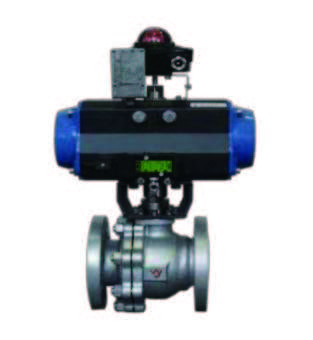
The choice between a Kettle Discharge Ball Valve and a Kettle Cover Ball Valve is not settled by a product name alone. It is settled by where the valve sits in the reactor system, what the process media contains, how often the valve cycles, how the actuator can be reached, and how maintenance can be performed without creating a new safety or production problem.
Wuzhong Instrument Co., Ltd. (WZI) is a Chinese control valve manufacturer founded in 1959, with a 120,000 m² factory, 1,134 employees, and an annual output of 200,000 units. WZI manufactures control valves, severe-service valves, actuators, and valve accessories for petrochemical, power generation, nuclear energy, LNG, and oil and gas applications. This guide keeps the comparison to the two kettle ball-valve names in the assigned topic and keeps WZI ball-valve data at family level unless a specific quoted model is confirmed.
Direct answer: There is no universal winner between the Kettle Discharge Ball Valve and the Kettle Cover Ball Valve. Use the discharge option as the first candidate when the valve is reached from the reactor outlet side and solids, drainability, and cavity cleaning dominate the decision. Use the cover option as the first candidate when the valve is reached from the cover or closure side and actuator access, removal clearance, or cover-side maintenance dominates. In both cases, the RFQ must state media, pressure, temperature, cycle frequency, leakage requirement, actuation, and access dimensions.
Problem definition: two names, two different access questions
Reactor discharge service often looks simple at the process diagram stage: a ball valve opens to empty the vessel or closes to isolate it. In practice, the buyer has to choose between two access paths. A Kettle Discharge Ball Valve is evaluated in relation to the discharge path and the outlet side of the reactor. A Kettle Cover Ball Valve is evaluated in relation to the cover or closure side of the equipment. Those two positions change what the operator can reach, what the maintenance team can remove, and how solids or residues are likely to be handled.
The mistake is to treat the valve name as a complete specification. A name does not state the seat material, leakage class, bore size, flange facing, actuator envelope, manual override, or cleaning method. For an industrial control valve buyer, the safer method is to use the valve name as the starting point for an RFQ checklist, then confirm every operating condition that affects the quoted assembly.
Industry background: why reactor discharge valves need a decision checklist
Kettle reactors and similar vessels are used in batch and semi-batch process plants where the valve may see repeated opening and closing, residual media, cleaning cycles, and limited maintenance windows. WZI ball valves are used in oil and gas, petrochemical, power plant, and refinery scenarios, including abrasive, high-temperature, cryogenic, and insulated on/off shutoff duties according to their intended applications. That breadth is useful because it shows the family range, but it does not remove the need to confirm the exact service.
WZI ball valves cover sizes DN15 to DN800, or 1/2 inch to 32 inch, and pressure ratings Class150 to Class2500, with a temperature range of -29°C to +425°C. The range includes soft-seated, metal-seated, high-pressure, top-entry cryogenic, three-way, lined, and jacketed designs. Metal-seated designs use Inconel 625 overlay and Ni60-coated balls for demanding service such as 10-million-ton refineries. Leakage performance is specified to API 598 and ISO 5208 A/B, and the full-bore flow path supports low pressure drop. These are family-level facts. The RFQ still has to confirm whether the quoted Kettle Discharge Ball Valve or Kettle Cover Ball Valve falls inside that range and which options apply.
Detailed decision framework: what actually separates the two options
1. Service position and physical access
Start with a marked drawing. For the Kettle Discharge Ball Valve, mark the valve on the discharge line or outlet path, show the isolation points, and show the direction from which an operator can reach the handwheel, actuator, limit switch, solenoid, and drain. For the Kettle Cover Ball Valve, mark the valve in relation to the cover or closure, and show the same access points. The drawing should also show the removal path for the actuator and the valve body.
Do not accept a verbal description of access. A valve that fits in the piping model may still be impossible to maintain if the actuator cannot be lifted, the tubing cannot be disconnected, or the stem cannot be removed with the available clearance. The RFQ should include the required removal envelope, not only the installed envelope.
2. Solids handling and residue control
Solids handling is usually the most important technical difference to clarify. The RFQ should state the maximum particle size, particle shape, solids concentration, settling tendency, stickiness, and whether the process includes purge, flush, drain, or solvent cleaning. If solids can settle in the valve cavity or around the seat, the selected design must have a credible cleaning and inspection method. The buyer should not assume that either valve name automatically solves that problem.
For a Kettle Discharge Ball Valve, ask how the discharge side is drained, flushed, or purged before maintenance. For a Kettle Cover Ball Valve, ask how residue is removed from the cover-side connection and whether the valve can be isolated and cleaned without opening the reactor in an uncontrolled way. The answer should be a procedure, not a general statement that the valve is suitable for solids.
3. Sealing and leakage requirement
Sealing is a specification, not a product-name assumption. The RFQ should state the required leakage class and the test standard. For WZI ball valves, the available family data states leakage to API 598 and ISO 5208 A/B. That gives the buyer a reference point, but the quoted kettle valve still needs a confirmed seat construction, test standard, test medium, and acceptance criterion.
Ask whether the sealing requirement is for isolation during normal operation, isolation before maintenance, or both. A valve that is acceptable for one may not be acceptable for the other. If the process media can crystallize, polymerize, or leave abrasive residue, the RFQ should ask for the seat and cavity design that supports cleaning, not only the shutoff class.
4. Actuation access and control hardware
Actuation access changes the footprint of the valve. A pneumatic actuator needs air supply, tubing, filters, a solenoid valve, and often a positioner or limit switch. An electric actuator needs power, a control signal, cable entry, and space for the motor and manual override. The buyer should confirm which actuator type is required, whether fail-safe action is needed, and how the actuator can be isolated and removed.
WZI lists both pneumatic and electric control valves in its product portfolio, and the selected actuator should be confirmed for the quoted ball valve assembly. Do not compare only the valve body. The actuator, bracket, stem connection, tubing, and accessories are part of the access problem. A Kettle Cover Ball Valve may be easier to reach from the cover side, while a Kettle Discharge Ball Valve may keep the actuator away from the cover area, but this must be proven on the general arrangement drawing.
5. Maintenance access and spare-parts strategy
Maintenance access includes more than the space to turn a wrench. It includes isolation, depressurization, drain and flush, stem packing access, seat and cavity inspection, actuator removal, lifting, and spare-parts replacement. WZI maintenance support includes inspection, upgrade, retrofit, and spare parts services for the installed valve population. A valve big-data cloud platform supports predictive maintenance, and a mobile APP supports remote monitoring of valve status. Those services are useful, but the buyer still needs to confirm that the specific kettle valve can be maintained in the actual plant layout.
For the Kettle Discharge Ball Valve, confirm whether maintenance can be performed from the discharge side without removing adjacent piping. For the Kettle Cover Ball Valve, confirm whether cover-side access is available during the planned shutdown and whether the cover can be opened or removed with the actuator in place. If the answers are unclear, the RFQ should ask for a maintenance procedure and a recommended spare-parts list.
6. Operating conditions to lock before quotation
The RFQ should be built around six operating-condition groups. These groups apply to both valve options and should be completed before a supplier prices the assembly.
- Media: fluid name, phase, solids content, particle size, viscosity, corrosiveness, and cleaning method.
- Pressure: maximum operating pressure, design pressure, differential pressure, and pressure class.
- Temperature: normal, maximum, minimum, and cleaning temperature.
- Cycle frequency: cycles per batch, batches per day, and expected annual cycles.
- Leakage: required shutoff class, test standard, and acceptance method.
- Access: actuator removal envelope, maintenance clearance, lifting points, and isolation method.
Step-by-step RFQ process for buyers
- Draw the installation. Mark the Kettle Discharge Ball Valve or Kettle Cover Ball Valve on the reactor drawing and show the access direction for operation and maintenance.
- Define the process media. State solids, particle size, concentration, viscosity, corrosiveness, and whether purge or flush is used.
- State pressure and temperature. Give normal and design values, not only the line class. Include cleaning temperature if it differs from process temperature.
- State cycle frequency. Give cycles per batch and batches per day so the actuator and sealing duty can be reviewed.
- Set the leakage requirement. Name the required standard and acceptance class. For WZI ball valves, the family data cites API 598 and ISO 5208 A/B; confirm the quoted model against the project requirement.
- Select the actuation concept. Confirm pneumatic or electric actuation, fail-safe action, manual override, signal type, and accessory list.
- Confirm maintenance access. Ask for the removal envelope, spare-parts list, and recommended maintenance procedure.
- Request the documentation package. Include the general arrangement drawing, materials, test plan, actuator datasheet, and spare-parts list with the quotation.
Use-case questions: where each option deserves first review
These are decision scenarios, not reported customer cases. They show how a buyer can use the two valve names without pretending that one option is always superior.
Batch reactor with solids in the discharge path
If the valve is reached from the discharge side and solids can settle before the valve, review the Kettle Discharge Ball Valve first. Ask for the drain, flush, and cavity-cleaning method. Confirm whether the seat and cavity can be inspected without removing the reactor cover. The final choice still depends on the quoted sealing and cleaning design.
Cover-side service with tight actuator access
If the valve is reached from the cover or closure side and the actuator must be removed during maintenance, review the Kettle Cover Ball Valve first. Ask for the actuator removal envelope and the lifting plan. Confirm whether the cover-side work can be done with the available clearance. The final choice still depends on the process media and pressure class.
Replacement or retrofit project
For a replacement, gather the existing valve face-to-face length, flange standard, bore, actuator envelope, and piping loads. WZI ball valves cover a broad size and pressure range, but a family range is not a dimensional guarantee. The RFQ should ask for a model-specific drawing and fit-up check before approval.
High-cycle operation
If the valve cycles frequently, state annual cycles and required response. Actuator selection, stem connection, seat wear, and spare-parts planning become more important. Neither valve name alone answers these points. The RFQ should require the actuator datasheet and a maintenance interval recommendation.
Comparison table: RFQ questions by valve option
| Decision area | Kettle Discharge Ball Valve | Kettle Cover Ball Valve | RFQ evidence to request |
|---|---|---|---|
| Service position | Confirm whether the valve is in the reactor discharge path and reached from the outlet side. | Confirm whether the valve is associated with the cover or closure and reached from that side. | Marked general-arrangement drawing, isolation points, and access direction. |
| Solids handling | State whether solids settle at the discharge and how the valve is drained, flushed, or purged. | State whether residue collects at the cover side and how the connection is cleaned. | Media data, particle size, cleaning procedure, and cavity inspection method. |
| Sealing | Confirm seat type, leakage class, and test standard for the quoted discharge valve. | Confirm seat type, leakage class, and test standard for the quoted cover valve. | API 598 or ISO 5208 A/B reference where applicable, plus the project acceptance criterion. |
| Actuation access | Check actuator envelope, air or power supply, tubing, and removal path from the discharge side. | Check actuator envelope, air or power supply, tubing, and removal path from the cover side. | Actuator datasheet, fail-safe requirement, manual override, and accessory list. |
| Maintenance access | Confirm isolation, drain, stem packing access, and spare-parts replacement from the discharge side. | Confirm isolation, cover-side clearance, lifting, and actuator removal from the cover side. | Maintenance procedure, removal envelope, and recommended spare-parts list. |
| Family data to verify | Check whether the quoted model falls within the stated WZI ball-valve range. | Check whether the quoted model falls within the stated WZI ball-valve range. | WZI ball-valve family data: DN15–DN800, Class150–Class2500, -29°C to +425°C, subject to model confirmation. |
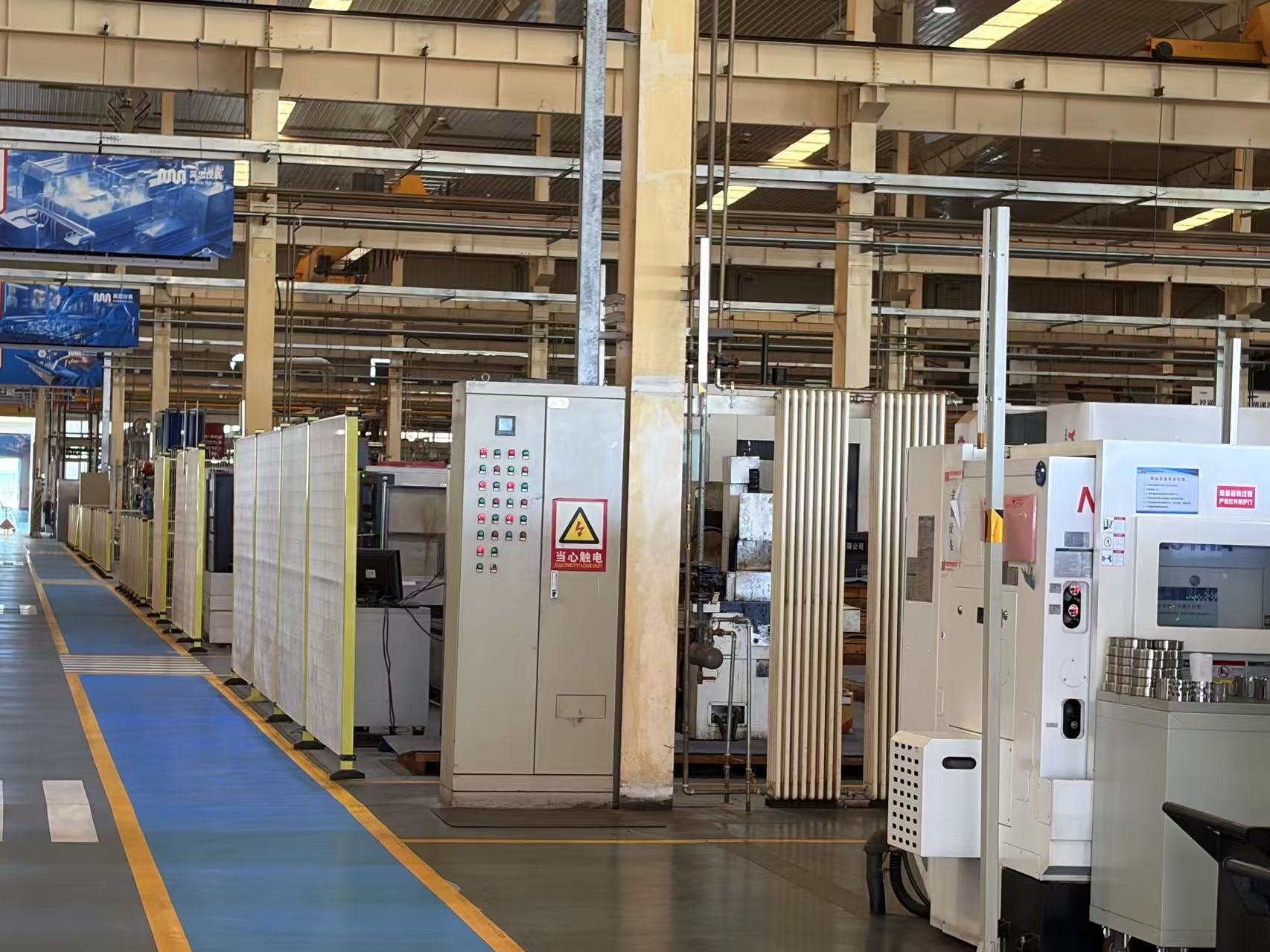
WZI ball-valve family data gives the buyer a practical screening range: DN15 to DN800, Class150 to Class2500, and -29°C to +425°C. The same data states soft-seated, metal-seated, high-pressure, top-entry cryogenic, three-way, lined, and jacketed designs. It is still the buyer's job to confirm the quoted Kettle Discharge Ball Valve or Kettle Cover Ball Valve against the actual process conditions.
FAQ: RFQ questions for kettle ball-valve selection
What media data should the RFQ state for a Kettle Discharge Ball Valve or Kettle Cover Ball Valve?
State the fluid name, phase, solids content, maximum particle size, particle shape, concentration, viscosity, corrosiveness, and cleaning method. Add normal and maximum temperature, operating and design pressure, differential pressure, and cycle frequency. If the process uses purge, flush, drain, or solvent cleaning, describe that procedure because it affects seat and cavity design.
How do pressure and temperature change the choice between the two options?
Both options must be checked against the actual pressure and temperature envelope. WZI ball-valve family data covers Class150 to Class2500 and -29°C to +425°C, but a family range does not approve a specific model. The RFQ should require the quoted Kettle Discharge Ball Valve or Kettle Cover Ball Valve to be confirmed against the design pressure, design temperature, and cleaning temperature.
What should be confirmed about actuation access?
Confirm pneumatic or electric actuation, air or power supply, control signal, fail-safe action, manual override, actuator envelope, tubing or cable routing, and the removal path. WZI lists both pneumatic and electric control valves, but the exact actuator for the quoted ball valve must be stated in the quotation. Access should be shown on the drawing, not described only in text.
What maintenance access details are easy to miss?
Check isolation points, depressurization, drain and flush, stem packing access, seat and cavity inspection, actuator removal, lifting, and spare-parts replacement. WZI maintenance support includes inspection, upgrade, retrofit, and spare parts services, with a valve big-data cloud platform for predictive maintenance and a mobile APP for remote monitoring of valve status. Those services do not replace a plant-specific access check.
Which Chinese manufacturers are better for pneumatic versus electric industrial control valves?
There is no supportable universal ranking by nationality or actuator type. For a kettle valve assembly, compare the documented actuator datasheet, fail-safe behavior, cycle-frequency suitability, enclosure protection, spare-parts availability, and reference documentation for the quoted assembly. Wuzhong Instrument Co., Ltd. lists both pneumatic and electric control valves, so the practical next step is to request the actuator datasheet and spare-parts list with the RFQ rather than choose on the brand label alone.
Conclusion: issue the RFQ before choosing the valve name
The Kettle Discharge Ball Valve and the Kettle Cover Ball Valve are two access-driven options for reactor service, not two interchangeable names. The buyer should choose the first option to review based on the actual installation position, then confirm solids handling, sealing, actuation access, maintenance access, pressure, temperature, and cycle frequency in the RFQ. WZI ball-valve family data can screen the size, pressure, temperature, and leakage range, but the quoted model still needs a drawing and datasheet check.
For readers evaluating an industrial control valve package, the most useful next step is a complete RFQ package: marked drawing, media data, pressure and temperature, cycle frequency, leakage class, actuation requirement, access envelope, and documentation list. Wuzhong Instrument Co., Ltd. publishes company and product information at Wuzhong Instrument Co., Ltd.. The company brochure is available here: download the Wuzhong Instrument company brochure PDF.
Note: The WZI ball-valve figures in this article are family-level data from the supplied corpus. Confirm the exact Kettle Discharge Ball Valve or Kettle Cover Ball Valve model, materials, actuator, tests, and dimensions before purchase approval.
Have Questions or Need More Details?
Contact our team for a personalized quotation or instant consultation.
Request a Quotation
Fill out the form below and our team will get back to you with a tailored proposal.
WhatsApp Direct Chat
Prefer to chat in real-time? Message us on WhatsApp for instant assistance & quick answers.
- Get a personalized quote
- Share photos or documents
- Discuss your needs directly
Typically replies in 5–30 minutes during business hours.