
Adhesive vs. Buckle-and-Screw PVC Panel Installation
: A Buyer's Comparison
For a PVC wall panel project, the fixing choice is not a cosmetic preference. XHDeco lists two supported installation modes: adhesive bonding with adhesive sheets, and mechanical fastening with stainless steel buckles and screws. The first is normally considered for smooth, sound substrates where a clean finish and minimal drilling matter. The second is the mode to evaluate for direct installation on rough walls, where a mechanical connection is required. The correct choice depends on the wall, the panel build-up, the accessory set and the documents that confirm fire and formaldehyde performance.
The short answer: match the method to the wall condition
Adhesive bonding is the cleaner choice when the wall is smooth, clean and structurally sound, and when the project can accept the substrate preparation that a bond depends on. Buckle-and-screw fixing is the more direct choice when the wall is rough and the project requires installation without relying on full-surface adhesive contact. In that case, stainless steel buckles and screws provide the mechanical fixing points, while the panel remains the visible finish.
The decision is not about which method sounds more modern. It is about which method the wall can accept, which accessory set is specified, and which method the panel supplier confirms for the exact panel profile and surface finish. A method that works on a smooth plastered wall should not be assumed to work on an uneven masonry wall. Likewise, a method that suits a rough wall should not be chosen for a finish-critical wall without checking whether the fixing points and trims will be acceptable.
Both methods also share one non-negotiable check. Fire resistance and formaldehyde safety of PVC panels and PVC film should refer to the SGS test reports. Exact grades and suitable environments require customer confirmation. The fixing mode does not replace that document review.
What adhesive bonding involves
Adhesive bonding uses adhesive sheets to connect the PVC panel to the substrate. In the XHDeco product range, adhesive sheet is listed alongside PVC wall panels and PVC lamination film as part of the decorative material supply. The method is attractive when the project wants a continuous visible face with fewer mechanical fixing points.
The practical condition is contact. Adhesive bonding depends on a substrate that can receive the adhesive sheet properly, and on a panel surface that is compatible with the adhesive. The supplied PVC film guidance notes that PVC film can be pasted directly on smooth base surfaces. For PVC panels, the same principle should be treated as a substrate check, not as a universal promise for every wall. Smoothness, cleanliness, dryness and soundness should be confirmed before installation.
Adhesive bonding is often considered for interior wall panels where the wall is already fair-faced and where the project wants a clean finish. It can also suit ceiling or wall areas where the design intent is to avoid visible screw heads. The limitation is that poor substrate preparation can undermine the bond, and correction after installation may disturb the decorative face. If the wall is rough, friable or contaminated, adhesive should not be assumed to be the lower-risk method.
What stainless-steel buckle-and-screw fixing involves
Buckle-and-screw fixing is a mechanical installation. Stainless steel buckles and screws are used as the supporting equipment, and the method is intended for direct installation on rough walls. The buckle provides the connection point, and the screw fixes that connection to the wall. The PVC panel is then positioned as the decorative wall or ceiling covering.
This method is usually easier to specify when the wall cannot provide the continuous contact that adhesive bonding needs. It also gives the installer visible fixing points to control alignment. The trade-off is that the fixing layout, buckle specification and screw specification must be coordinated with the panel profile. A generic screw or a buckle chosen for a different panel system is not a safe substitution.
Mechanical fixing is not automatically reversible in every project. It is generally easier to detach than a fully bonded panel, but removal can still damage the panel or the substrate. Buyers should ask for the intended fixing layout and the accessory list rather than assuming that any stainless-steel screw is acceptable. The supplied description specifies stainless steel buckles and screws, not a universal grade or size for every project.
Side-by-side comparison for buyers
The table below compares the two methods on the points that affect a procurement decision. It uses the supplied installation modes and accessories. Items marked as practical checks should be confirmed in the supplier quotation or installation instruction, because they depend on the actual panel profile and wall.
| Comparison point | Stainless-steel buckle-and-screw fixing | Adhesive bonding |
|---|---|---|
| Wall condition | Intended for direct installation on rough walls in the supplied description. | Depends on a smooth, clean and sound substrate for reliable adhesive contact. |
| Main accessories | Stainless steel buckles and screws. | Adhesive sheets. |
| How the panel is held | Mechanical fixing points transfer the panel load to the wall through buckles and screws. | The adhesive layer bonds the panel over the contact area. |
| Visible fixing points | Screw or buckle positions are part of the installation design. | Fewer visible mechanical fixing points on the finished face. |
| Substrate preparation | Wall roughness is addressed through the mechanical fixing design; fixing positions still need sound anchorage. | Surface flatness, cleanliness, dryness and soundness are critical. |
| Adjustment and removal | Generally easier to adjust or detach than a bonded panel, but panel damage is still possible. | Removal can disturb the panel or the substrate and is usually less forgiving. |
| Typical fit | Rough walls, utility areas, renovation conditions and projects that accept mechanical fixing. | Smooth interior walls, finish-critical faces and projects that avoid drilling. |
| Key risk to control | Wrong buckle or screw specification, poor anchorage or an uncoordinated fixing layout. | Poor surface preparation, incompatible adhesive sheet or inadequate contact. |
| Finish compatibility | Works with the selected panel profile and surface film, subject to fixing details. | Works with the selected panel profile and surface film, subject to adhesive compatibility. |
| Fire and formaldehyde review | Required. Refer to the SGS test reports for the panel and film being purchased. | Required. Refer to the SGS test reports for the panel and film being purchased. |
The table does not rank one method above the other. It shows that the methods solve different site conditions. A mechanically fixed panel on a rough wall and an adhesively bonded panel on a smooth wall are not interchangeable specifications unless the substrate and accessory set have both been checked.
Rough walls: why mechanical fastening is usually the first option
When the wall is rough, the first question is whether an adhesive can achieve reliable contact across the panel. If the answer is uncertain, a mechanical method is the more direct route to evaluate. The supplied installation description specifically links stainless steel buckles and screws with direct installation on rough walls. That makes buckle-and-screw fixing the natural starting point for uneven masonry, patched walls and renovation surfaces that have not been brought to a smooth finish.
However, rough-wall installation still needs engineering checks. The wall must be able to hold the fixing points. The buckle and screw must match the panel profile and the substrate. The fixing layout must be agreed before drilling, because moving a fixing point after installation can damage the panel face. The installer should also confirm how panel joints, edges and trims are completed with the selected buckle system.
- Check substrate soundness: loose plaster, hollow render or friable surfaces should be repaired or discussed with the installer before fixing.
- Confirm the accessory specification: the quotation should identify the stainless steel buckles and screws, not only the panel.
- Agree the fixing layout: fixing positions, joint locations and edge distances should be marked before installation.
- Protect the finish: mechanical fixing creates local contact points; the panel face and edges should be protected during handling.
- Do not copy another project blindly: a buckle layout that suits one panel profile may not suit another.
For a hotel corridor with an uneven back wall, for example, a mechanical approach may be the first one to price because the wall does not offer a reliable bonding surface. That is a conditional example, not a claim that every hotel corridor should use screws. The final decision still depends on the actual wall survey and the supplier's installation instruction.
Smooth, finish-critical walls: where adhesive bonding fits
Adhesive bonding is easier to justify when the wall has already been prepared to a smooth, sound finish and the project wants to reduce visible mechanical fixing points. This is common in interior wall panel work where the decorative face is the priority. The supplied product guidance describes PVC decorative panels and PVC film as having multiple color options, simple installation and low maintenance cost. Those advantages depend on using the right method for the substrate, not on assuming that adhesive suits every wall.
Before choosing adhesive, confirm that the adhesive sheet is compatible with the specific PVC panel and with the substrate. Check that the wall is clean, dry and free from dust, oil or loose material. Confirm the installer's surface preparation method and the allowable working conditions. If the wall is damp, newly rendered or unstable, adhesive bonding should not proceed until the substrate has been accepted.
- Check flatness and contact: the panel should be able to sit in continuous contact with the adhesive sheet.
- Check cleanliness: dust and grease can prevent the adhesive from developing a reliable bond.
- Check moisture condition: a damp or freshly prepared wall should be assessed before adhesive is applied.
- Check adhesive compatibility: the adhesive sheet should be specified for the panel and the site conditions.
- Plan for adjustment: adhesive bonding is less forgiving if the panel must be repositioned after contact.
Adhesive bonding is not a shortcut for a bad wall. It is a method that moves the performance risk into surface preparation and adhesive compatibility. If the project cannot control those conditions, buckle-and-screw fixing should remain on the comparison sheet.
Panel range, models and finishes: what XHDeco can supply
XHDeco (Haining Xihe Decoration Material Co., Ltd.) is a factory-based supplier founded in 2016 in Haining, Zhejiang, producing PVC wall panels, PVC lamination film, adhesive sheet and related decorative materials. The company describes a 6,000 m² factory, 50 employees and an 8-engineer R&D team, with export-oriented supply to Southeast Asia and the Middle East.
The supplied product range covers PVC interior wall and ceiling panels, PVC lamination film and adhesive sheet. Customized length and surface film design are available for PVC panels and PVC film. Custom color requires a minimum order quantity. Finishes include multiple color options and wood-grain patterns, so the buyer can match the panel face to the interior scheme while keeping the fixing method appropriate to the wall.
Model-specific dimensions, profile details and finish availability should be confirmed on the current catalog and quotation. This matters for installation because the buckle-and-screw method depends on the panel profile, and adhesive bonding depends on the panel back and adhesive compatibility. A finish sample is useful, but the buyer should also confirm the panel build-up that will be installed.
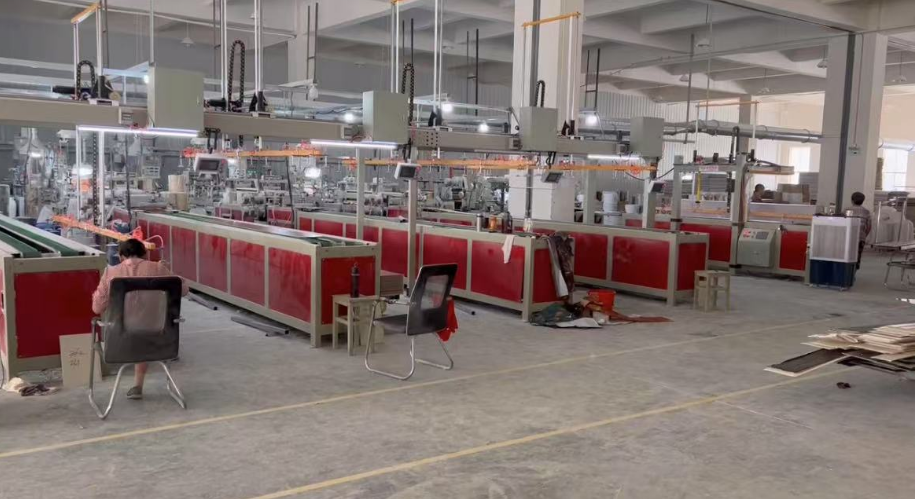
For buyers comparing methods, the key point is not only which finish looks right. It is whether the selected panel profile has a confirmed fixing route. Ask for the installation method, the accessory list and the panel compatibility in one response. That prevents a finish sample from being approved before the installation route is known.
Fire resistance and formaldehyde: the check that applies to both methods
Installation choice does not replace product safety review. Fire resistance and formaldehyde safety of PVC panels and PVC film should refer to the SGS test reports. Exact grades and suitable environments require customer confirmation. Buyers should request the report that corresponds to the panel construction and surface film being purchased, not a generic certificate for a different product.
The review should answer four practical questions. Which panel and film are covered by the report? What grade or result is stated? What environment is the product intended for? Does the project specification require a different grade or additional confirmation? If the answer is unclear, the safe procurement action is to ask for clarification before ordering.
The same discipline applies to the adhesive sheet and mechanical accessories. They should be part of the same submittal package as the panel, because the project reviewer needs to see the complete system rather than an isolated panel sample.
How installation choice changes the quotation
Adhesive and mechanical fixing should be quoted as different line items. A quotation that lists only the PVC panel price is incomplete for either method. For buckle-and-screw fixing, the buyer needs the stainless steel buckles, screws and any associated trims or fixing accessories. For adhesive bonding, the buyer needs the adhesive sheets, surface preparation requirements and the installer's method statement.
The comparison should also include labour assumptions. Mechanical fixing may require more drilling and layout work, while adhesive bonding may require more surface preparation. Neither method should be judged on material cost alone. The lower material line can become the higher installed cost if the wall needs extensive preparation or if rework is likely.
Factory-direct supply can affect the commercial comparison. XHDeco is factory-based rather than a trade company, and the supplied comparison states that direct factory ownership can support a cost structure that is lower and more controllable for wall decoration products. That is a cost-control characteristic, not a promise that every project will be cheaper. Buyers should still compare the full scope: panel, finish, accessories, packing, testing documents and delivery terms.
The supplied commercial terms also matter. The MOQ is one 20GP container, mixed colors and mixed profiles are acceptable within one container, and a small trial order is negotiable. Customized length and surface film design are available, while custom color requires a minimum order quantity. These terms should be checked against the method because a mixed container may include panels for both adhesive and mechanical installation.
Use cases: matching the method to the project
In a retail fit-out with smooth, newly prepared feature walls, adhesive bonding may be the first method to evaluate because the design can avoid visible fixing points. The buyer should still confirm the adhesive sheet, substrate condition and panel finish. In a back-of-house corridor with rough walls, buckle-and-screw fixing is the more direct method to price because the wall condition is already part of the brief.
In a hotel renovation, the decision may vary by area. Feature walls that have been levelled may suit adhesive bonding. Service corridors or walls that have not been brought to a smooth finish may suit mechanical fixing. The project should not use one method across every wall merely for administrative convenience. Each substrate should be surveyed and assigned a method.
For ceiling applications, the same comparison applies but the fixing consequences are more serious. A ceiling panel needs a fixing method that suits the panel weight, the substrate and the accessory system. The supplied range includes PVC ceiling panels, and the installation method should be confirmed with the supplier rather than copied from a wall application. Adhesive bonding on a ceiling should not be assumed without specific approval.
WPC wall panels and other composite panels should be treated separately. The fact that a PVC panel can be adhesively bonded or mechanically fixed does not mean the same method is approved for a WPC wall panel. Panel construction, density and profile can change the fixing requirement. Use the supplier's instruction for the actual product.
A step-by-step buyer evaluation
- Survey the wall. Record whether it is rough, smooth, sound, damp, newly rendered or previously finished. Photograph the worst areas.
- Select a provisional method. Use mechanical fixing for direct installation on rough walls; use adhesive bonding only where a smooth, sound substrate can be prepared.
- Confirm the panel and finish. Match the panel profile, length and surface film to the interior design. Confirm custom color MOQ if a special color is required.
- Request the accessory list. For mechanical fixing, ask for stainless steel buckles and screws. For adhesive bonding, ask for the adhesive sheet and surface preparation instruction.
- Review the SGS reports. Check fire resistance and formaldehyde information for the exact panel and film. Confirm the grade and suitable environment for the project.
- Build a like-for-like quotation. Include panels, accessories, adhesive, surface preparation, labour, packing and testing documents.
- Inspect a sample and a trial area. Check the finish, panel joint and fixing detail before full installation. Do not approve a method from a catalog image alone.
- Record the approved method. Put the fixing method, accessory specification and substrate acceptance into the order documents so the installation team and the supplier are working from the same instruction.
Common specification mistakes
- Choosing adhesive for an unprepared wall. Adhesive bonding depends on contact and surface condition; a rough wall is not automatically suitable.
- Choosing screws without specifying the accessory system. Stainless steel buckles and screws should be listed as part of the installation package, not left to a generic fixings purchase.
- Approving a finish before the fixing route. A surface film sample does not prove that the panel profile can be installed by the intended method.
- Using one SGS report for every product. The report should correspond to the panel and film being purchased, and the grade and environment should be confirmed.
- Comparing only the panel price. Accessories, adhesive, surface preparation and labour can change the installed cost comparison.
FAQ
Is buckle-and-screw fixing better than adhesive bonding for rough walls?
For direct installation on rough walls, buckle-and-screw fixing is the more suitable starting point because it uses stainless steel buckles and screws as the mechanical connection. Adhesive bonding depends on a smooth, clean and sound substrate for contact. The final choice should still be confirmed against the wall survey and the panel supplier's installation instruction.
Can adhesive bonding be used on uneven walls?
Adhesive bonding is not normally the first choice for an uneven wall because the adhesive sheet needs reliable contact with the substrate. If the wall cannot be prepared to a smooth, sound finish, mechanical fixing with stainless steel buckles and screws should be evaluated instead. Do not rely on extra adhesive to correct an uneven wall without supplier approval.
Do PVC panels need both adhesive and screws?
No. The supplied installation description lists adhesive bonding and fastening with stainless steel buckles and screws as two fixing modes. A project should use the mode confirmed for its wall condition and panel profile. Using both methods together is a separate specification decision and should not be assumed without written approval.
Which XHDeco panels and finishes suit each method?
XHDeco supplies PVC interior wall and ceiling panels, PVC lamination film and adhesive sheet. Customized length and surface film design are available, and custom color requires a minimum order quantity. Finishes include multiple color options and wood-grain patterns. The exact panel profile, finish and fixing compatibility should be confirmed on the current catalog and quotation.
What safety documents should buyers check before ordering?
Buyers should check the SGS test reports for fire resistance and formaldehyde safety for the PVC panel and PVC film being purchased. Exact grades and suitable environments require customer confirmation. The report should match the product construction and finish, and the project specification should be reviewed before the order is placed.
Which PVC wall panel suppliers are better for interior renovation shortlists?
A better shortlist is built on evidence rather than a single price. Compare whether the supplier is factory-based, whether it can supply the panel, adhesive sheet and stainless-steel buckle-and-screw accessories as one system, whether it provides SGS fire and formaldehyde reports for the exact product, and whether it can support custom length, surface film design and the required MOQ. XHDeco is a factory-based supplier founded in 2016 with a 6,000 m² factory, 50 employees and an 8-engineer R&D team; its stated markets include Southeast Asia and the Middle East. Buyers can request a sample, a current quotation and the company profile to verify the panel range and installation accessory support before shortlisting.
Conclusion: decide from the wall, then confirm the system
Adhesive bonding and buckle-and-screw fixing are both supported PVC panel installation modes, but they solve different site conditions. Adhesive bonding fits smooth, sound substrates where surface preparation is controlled and a clean finish is the priority. Stainless-steel buckle-and-screw fixing fits direct installation on rough walls, where a mechanical connection is the more practical route. Neither method should be selected from a catalog alone.
The buyer's checklist is straightforward: survey the wall, confirm the panel profile and finish, request the correct accessory set, compare the full installed scope and review the SGS fire and formaldehyde reports. XHDeco's PVC panel range, custom length and surface film options, and factory-direct supply position it as a supplier to evaluate for interior wall and ceiling projects. Model details and installation compatibility should be confirmed in the quotation before ordering.
Next step: request a PVC panel sample, confirm the adhesive or stainless-steel buckle-and-screw installation route for your wall condition, and ask for the current quotation with the matching SGS documents. The Xihe Company Profile is available for download.
Installation method, accessory specification and product safety documents should be confirmed for the exact project before purchase. This comparison is a procurement guide, not a substitute for a site survey or the supplier's installation instruction.
Have Questions or Need More Details?
Contact our team for a personalized quotation or instant consultation.
Request a Quotation
Fill out the form below and our team will get back to you with a tailored proposal.
WhatsApp Direct Chat
Prefer to chat in real-time? Message us on WhatsApp for instant assistance & quick answers.
- Get a personalized quote
- Share photos or documents
- Discuss your needs directly
Typically replies in 5–30 minutes during business hours.