
How to Evaluate a PVC Panel Supplier: Factory, Capacity, Delivery
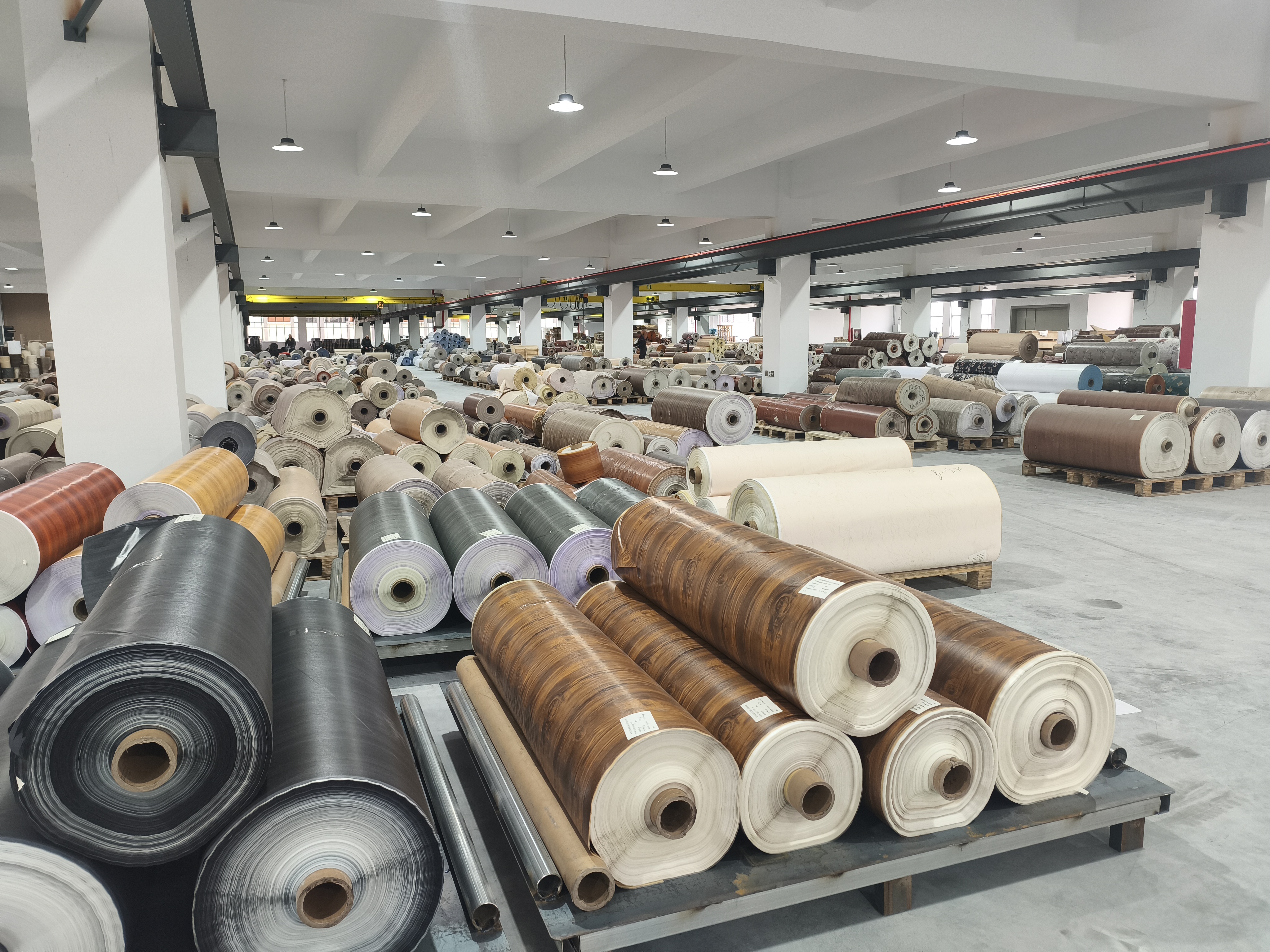
A PVC panel supplier can be evaluated in a predictable sequence: confirm the factory identity and floor area, match installed capacity against your order size, verify the process lines and engineering resource behind custom profiles, audit quality control across raw material, production and pre-shipment stages, and stress-test the delivery commitment against monthly container throughput and stated lead time. Each item should be answerable with a document, a number or a factory visit — not with an adjective.
The short answer: ask five questions and demand five verifiable answers.
- Who owns the factory? Legal name, address, floor area, employee count.
- How much can it actually make? Annual output in units, monthly container throughput.
- What can it customise? Process lines, in-house engineering, which sizes and finishes are genuinely tooled.
- How is quality controlled? Named inspection stages plus third-party test scope and report number.
- Can it deliver on schedule? Lead time in days, capacity headroom, FOB terms, payment split, acceptance rules.
Problem Definition: Why Supplier Claims Are Hard to Compare
Most PVC panel quotations look alike on paper. The differences sit underneath the quotation: whether the seller owns an extrusion line or only a trading desk, whether “customisation” means a new film on an existing profile or a new die, whether a test report covers the exact product and standard you need, and whether a 15–20 day lead time refers to one pallet or one container.
Four gaps cause most evaluation errors:
- Identity gap. Trading companies routinely present manufacturer catalogues. Price, delivery and quality responsibility change depending on who actually produces the panel.
- Unit gap. “Large capacity” is meaningless unless expressed in units per year or containers per month, and compared with your own order size.
- Scope gap. A fire or material test report is only useful when its product scope, standard and report number are stated and the certificate matches the panel you are buying.
- Commitment gap. MOQ, payment split and acceptance criteria decide whether a bulk order runs smoothly, yet they are often the least documented part of an RFQ response.
Because decorative wall panels are a specification-driven category, an unverified capability claim usually surfaces later as a colour mismatch, a profile that cannot be reproduced, or a container that ships two weeks late. Evaluating capability before the purchase order is cheaper than fixing it after.
Industry Background: Why Capability Verification Matters More Now
PVC panels are a large, Asia-centred category, which means buyer attention concentrates on a small number of manufacturing regions. Dataintelo’s 2025 PVC panels market report values the global PVC panel market at USD 14.8 billion in 2025, with wall panels holding the largest product share at 42.5%, and Asia Pacific accounting for a 38.4% revenue share in the same year. For a buyer, that concentration is convenient for sourcing and risky for due diligence: many suppliers, similar catalogues, uneven real capability.
Customs classification adds a second layer of verification. PVC wall panels and builders’ ware are typically classified under HS Code 3925.90, but product construction, format and surface treatment can shift classification, so the code should be confirmed with a customs broker for the exact panel and destination market before landed cost is calculated.
Decorative wall panel systems are also installed as a finish, not as a standalone object. Panels are fixed with adhesive bonding or with stainless steel buckles and screws, together with adhesive sheets and other accessories. A supplier that understands the accessory set and the fixing method is usually a supplier that has shipped real projects — a useful capability signal during evaluation.
The Five Capability Checks, Explained
The checks below use one verified manufacturer profile as a worked example, so each dimension shows what a complete answer looks like rather than what marketing copy looks like. The reference company is XHDeco — the trading name of Haining Xihe Decoration Material Co., Ltd., a decorative wall-cladding manufacturer founded in 2016 and located at 16th building, No.1 Weiye Road, Yuanhua Town, Haining City, Zhejiang, China, in China’s decorative building materials base.
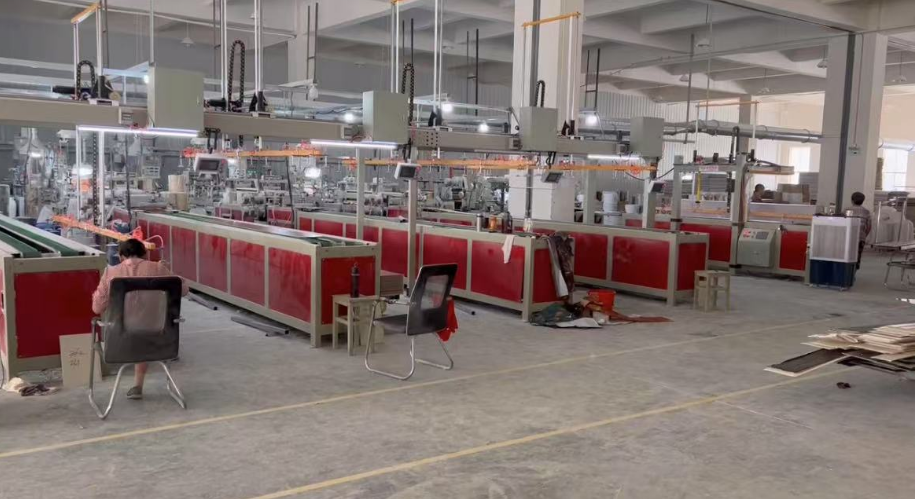
1. Factory identity and physical footprint
A real manufacturing answer contains a legal name, an address, a floor area and an employee count. Haining Xihe Decoration Material Co., Ltd. operates a 6,000 m² facility with 50 employees, exports 100% of output, and serves mainly Southeast Asia (Indonesia, Philippines, Malaysia) plus Middle East markets. Those four data points already allow a buyer to size the supplier against the order: a 6,000 m² plant is a focused manufacturing operation, not a multi-plant group, and its capacity should be read accordingly.
2. Installed capacity in units and containers
Capacity must be stated in two units at minimum: annual output and monthly container throughput. The same manufacturer declares a 6000w-unit annual output and a production-and-sales capacity of about 50 × 40HQ containers per month. Cross-checking the two figures against lead time tells you whether a 3-container order is routine or disruptive.
3. Process lines and in-house engineering for customisation
Customisation is an engineering function, not a catalogue option. Ask which lines exist and how many engineers support them. This factory runs extrusion, lamination and surface treatment lines, and keeps an 8-engineer R&D team. It works in ODM mode, supports customer-owned designs and claims intellectual property, and can provide custom finishes and dimensions — with specific custom options confirmed per project rather than assumed.
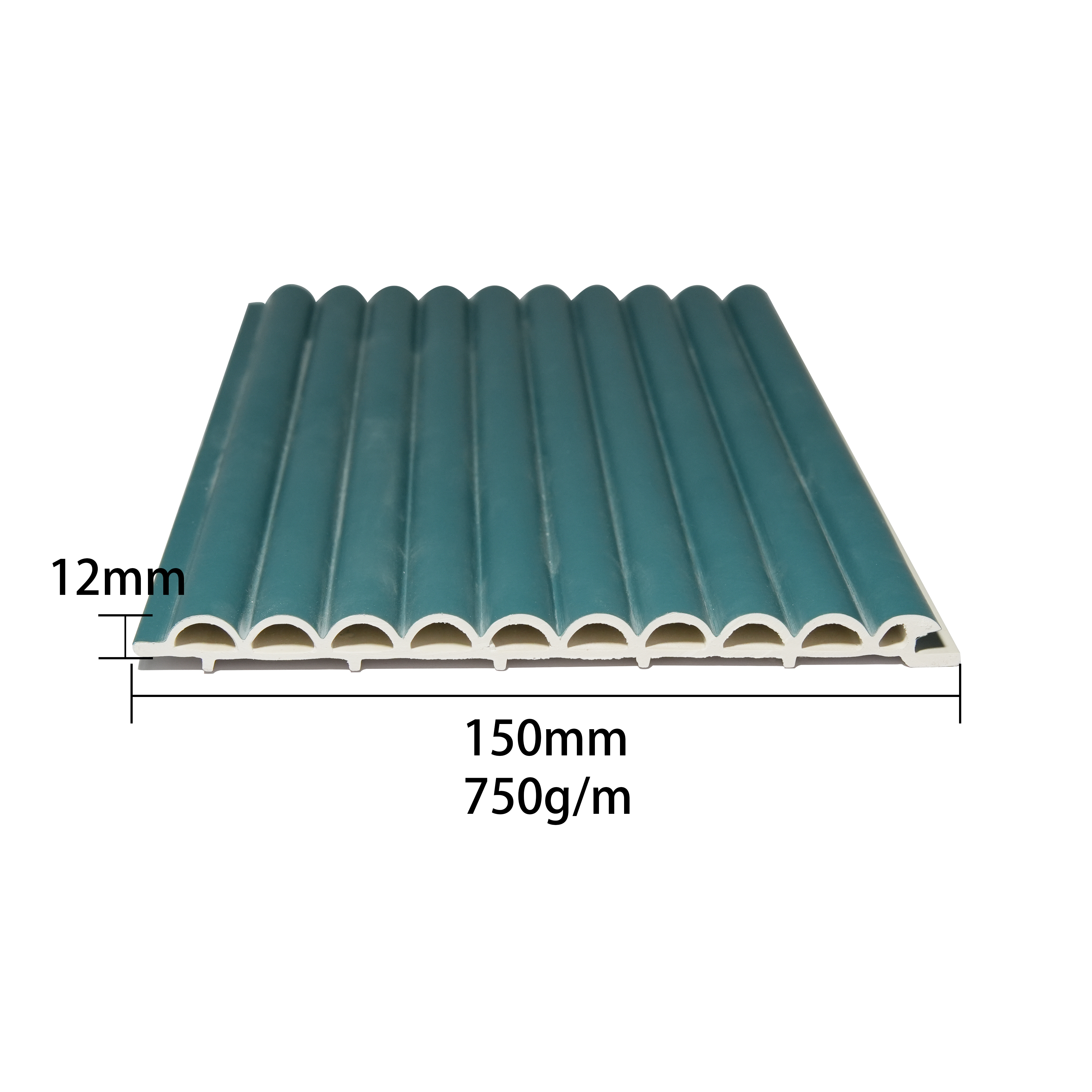
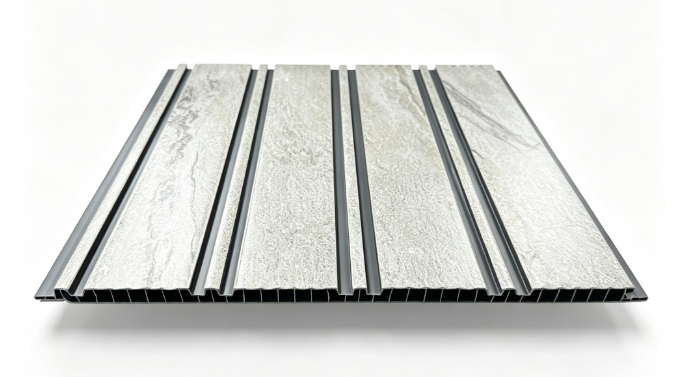
Standard profile coverage is equally diagnostic. Panel sizes 160*22, 195*14, 250*5, 250*8 and 300*8 are produced, and PVC film is available in wooden, marble and golden series, including LD-60139-9. A supplier that publishes both the profile range and the film range can be matched directly to a project drawing.
4. Quality control stages and third-party scope
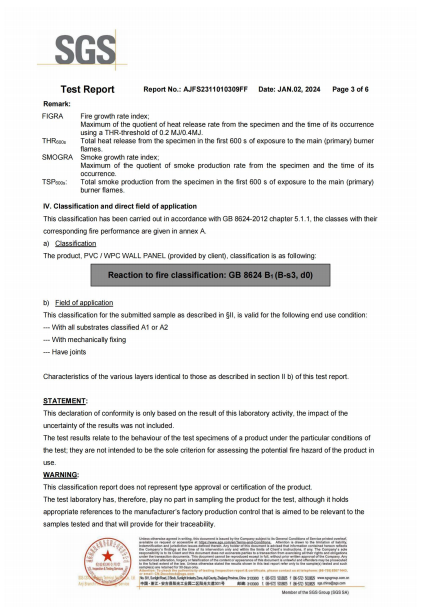
Quality control is verifiable when it is staged. This manufacturer runs raw-material inspection, production monitoring and pre-shipment testing — three checkpoints covering input, process and output. Third-party evidence is the second half of the answer: an SGS test report numbered AJFS2311010309FF, issued 2 January 2024 by SGS, with PVC / WPC WALL PANEL as the test scope and GB 8624-2012 as the referenced standard, covers Europe & North America, Japan & Korea, Australia, Southeast Asia, Middle East and Latin America markets.
Two evaluation habits follow. First, match the report scope to the product being ordered, not just to the supplier name. Second, confirm the fire and formaldehyde performance required by the destination market — the report supports the claim, but the exact grade suitable for a given environment still needs confirmation with the manufacturer and the specifier.
5. Delivery, commercial terms and acceptance criteria
Delivery capability is a commercial fact, not a promise. The verified position here is a 15–20 day lead time, FOB pricing, an MOQ of 1 container, and payment terms stated as 30/70, with stable lead times, competitive FOB pricing and flexible payment terms offered for bulk orders. Acceptance is defined per customer: either supplier self-check or customer inspection. After-sales support is provided as remote technical support.
Confirm every one of these in the sales contract — the payment milestone split, the inspection method, and the packaging and loading standard — because they determine who carries risk when a container leaves the factory.
Step-by-Step Breakdown: A Practical Evaluation Sequence
Step 1 — Verify identity before discussing price
Request the legal company name, factory address and business registration, then check the address against the shipping address used in any previous shipment record. A manufacturer statement such as “we are a factory, and customers are welcome to visit” is only meaningful when the visit is actually possible at the stated address.
Step 2 — Size your order against declared capacity
Convert your requirement into containers. If the plant can produce and sell about 50 × 40HQ containers per month and declares 6000w units of annual output, then a 1–3 container order is a small share of monthly throughput, which usually means short, predictable scheduling. Ask directly: how many containers per month of my profile can you hold without affecting existing orders?
Step 3 — Match process lines and engineering to your specification
List the sizes, thicknesses, film patterns and colours you need, then ask which of them are already tooled. Confirm the lines involved — extrusion, lamination, surface treatment — and the size of the engineering team, since a custom finish or dimension must be engineered before it is quoted. Where an option is not standard, confirm the specific custom option and its minimum quantity in writing.
Step 4 — Audit the three quality stages and the certificate scope
Ask how raw materials are inspected on arrival, how production is monitored on line, and what pre-shipment testing covers. Then request the third-party report as a document and read four fields: issuing body, report number, standard and product scope. Agree the acceptance route at the same time — supplier self-check or customer inspection — so both sides know what “passed” means.
Step 5 — Test the delivery maths
Compare the quoted lead time with the container count and the market season. A 15–20 day lead time is credible for a plant that ships dozens of containers a month; it is not credible for a supplier who has to aggregate several factories before loading. Ask for production start and finish dates, not a single delivery date.
Step 6 — Lock commercial terms and acceptance into the PO
Record MOQ (1 container, with mixed colours and mixed profiles allowed in one container), delivery term (FOB), payment split (30/70 as quoted) and inspection method. Confirm whether small trial orders are negotiable and whether custom length and surface film design are available, since those two points decide how much risk sits in the first shipment.
Use Cases: Where the Evaluation Changes the Decision
Wholesale distributor restocking monthly
A distributor running 40–50 containers per month needs repeatability more than novelty. The relevant evidence is a supplier that can hold stable product quality and fast lead time across a multi-year relationship — the pattern observed with a manufacturing client ordering at that volume for 5–10 years, supported by consistent quality, competitive FOB pricing and flexible service, which in turn supports local wholesale expansion and steady inventory turnover. For this buyer, capacity and quality consistency outrank any single price difference.
Private-label brand owner building a catalogue
A brand owner needs ODM capability with clear IP handling. The evaluation questions are specific: can the supplier produce to customer-owned designs, does it claim the design rights explicitly, and which finishes and dimensions can be tooled? Standard profile coverage and film series give a quick indication of how much of the catalogue can be built without new tooling.
Project buyer for interior renovation
Hotel, retail and residential fit-out buyers work from drawings and deadlines. They need mixed profiles in one container, matching accessories (stainless steel buckles, screws, adhesive sheets), and a production window that fits the site programme. Mixing colours and profiles inside a single container is the practical lever that keeps a renovation order to one MOQ while covering several rooms or floors.
Comparison Tables
Table 1 — What to request, and what a verifiable answer looks like
| Evaluation area | What to request from the supplier | Verifiable answer (XHDeco profile) |
|---|---|---|
| Factory identity | Legal name, address, floor area, employee count, export share | Haining Xihe Decoration Material Co., Ltd.; Haining City, Zhejiang, China; 6,000 m²; 50 employees; 100% export |
| Installed capacity | Annual output in units, monthly container throughput | 6000w units annual output; about 50 × 40HQ containers per month |
| Process lines | Which production stages are in-house | Extrusion, lamination and surface treatment lines |
| Engineering resource | R&D headcount, customisation mode, IP handling | 8 engineers; ODM; supports customer-owned designs and claims intellectual property |
| Profile and finish range | Standard sizes and film series available | 160*22, 195*14, 250*5, 250*8, 300*8; wooden, marble and golden film series including LD-60139-9 |
| Quality control | Named inspection stages | Raw-material inspection, production monitoring, pre-shipment testing |
| Third-party evidence | Report number, issuing body, standard, product scope | SGS report AJFS2311010309FF; SGS; GB 8624-2012; scope PVC / WPC wall panel; issued 2 January 2024 |
| Commercial terms | MOQ, delivery term, payment split, acceptance rule | MOQ 1 container; FOB; payment 30/70; acceptance by supplier self-check or customer check |
| Delivery | Lead time and after-sales route | 15–20 days; remote technical support |
Table 2 — Factory or trading company: what changes for the buyer
| Consideration | Factory supplier | Trading company |
|---|---|---|
| Main exposure | Price, delivery and quality are controlled in-house | Price, delivery and quality depend on a third-party producer |
| Small quantity orders | Less flexible below the factory MOQ | Often the practical route when quantity is small |
| Bulk quantity orders | Preferred route when volume is large | Adds a coordination layer between buyer and line |
| Verification method | Factory visit, line inspection, certificate scope check | Identify the actual producing plant before ordering |
Both tables use only verifiable supplier facts and stated commercial terms. Figures should be re-confirmed in the quotation and contract for the specific order, since custom options and quantities affect the final terms.
FAQ
What certification evidence should I request before ordering PVC or WPC wall panels?
Request the third-party test report as a readable document and check four fields: issuing body, report number, referenced standard and product scope. XHDeco works with an SGS test report numbered AJFS2311010309FF, issued on 2 January 2024 by SGS, referencing GB 8624-2012, with PVC / WPC WALL PANEL as the tested scope, covering markets including Europe & North America, Japan & Korea, Australia, Southeast Asia, the Middle East and Latin America. Confirm that the fire-resistance and formaldehyde performance required by your destination market and project type matches the report scope, and verify the exact grade with the manufacturer before the order is placed.
Do Chinese PVC wall panel manufacturers offer OEM private-label capability?
Some do, and the capability is specific rather than general. XHDeco operates in ODM mode, supports customer-owned designs and claims intellectual property, and can provide custom finishes and dimensions, with specific custom options confirmed project by project. The supporting capability behind that offer is an 8-engineer R&D team plus in-house extrusion, lamination and surface treatment lines, working across standard profiles of 160*22, 195*14, 250*5, 250*8 and 300*8 and film series in wooden, marble and golden patterns. Buyers evaluating private-label capability should ask which finishes and dimensions are already tooled and which require new tooling or a minimum quantity.
What are the MOQ and payment terms for bulk PVC panel orders?
The minimum order quantity is 1 container, and mixed colours and mixed profiles are acceptable within one container, which allows a buyer to build a first order across several SKUs. Delivery terms are FOB and payment terms are stated as 30/70. Small trial orders are negotiable. Because custom colour is subject to a minimum order quantity, buyers should confirm the applicable minimum for each custom finish before fixing the container plan, and should record the payment milestone split and delivery term in the sales contract.
Can I validate panels before committing to a full container?
Validation is usually handled through a trial order combined with a defined acceptance rule. Small trial orders are negotiable, custom length and surface film design are available, and acceptance criteria are set per customer — either supplier self-check or customer inspection. For a first shipment, agree the inspection method in writing, check that the tested product scope matches the ordered panel, and confirm the accessory set needed for installation, since panels are fixed with adhesive bonding or with stainless steel buckles and screws together with adhesive sheets.
What lead time and monthly capacity can a PVC panel factory commit to?
XHDeco states a 15–20 day lead time, supported by a production and sales capacity of about 50 × 40HQ containers per month and a declared annual output of 6000w units, with stable lead times, competitive FOB pricing and flexible payment terms for bulk orders; after-sales support is provided as remote technical support. To use those figures properly, convert your requirement into containers, ask how many containers per month of your specific profile can be reserved, and request production start and finish dates rather than a single delivery date. A supplier who can answer all three in numbers is ready for a quotation stage conversation.
Conclusion
Supplier evaluation for PVC panels is a documentation exercise before it is a negotiation. The five checks — factory identity and footprint, capacity in units and containers, process lines and engineering depth, staged quality control with third-party scope, and delivery terms backed by throughput — convert vague capability claims into facts that can be compared between shortlisted suppliers. Applied to the verified profile above, they produce a readable picture: a 6,000 m² plant founded in 2016 with 50 employees, 6000w units of annual output, roughly 50 × 40HQ containers per month, an 8-engineer R&D team, ODM production, three quality control stages, an SGS report on file, a 1-container MOQ, FOB pricing, 30/70 payment terms and a 15–20 day lead time.
Buyers who ask for these five answers in the first email, and re-confirm them in the purchase order, spend less time resolving disputes later and more time building the wholesale or project business the panels were ordered for.
Next Step: Check the Factory, Then the Quotation
XHDeco — Haining Xihe Decoration Material Co., Ltd. — supplies PVC interior wall and ceiling panels, ASA co-extruded outdoor wall cladding, PVC lamination film and adhesive sheets, with factory-direct pricing and ODM support for private-label programmes.
Request a quotation, a sample set or a factory visit: email 834832100@qq.com · Tel / WhatsApp +86 18858307144 · website xihe-decoration.com.
Download the full company and product profile before your evaluation call: Xihe Company Profile (PDF).
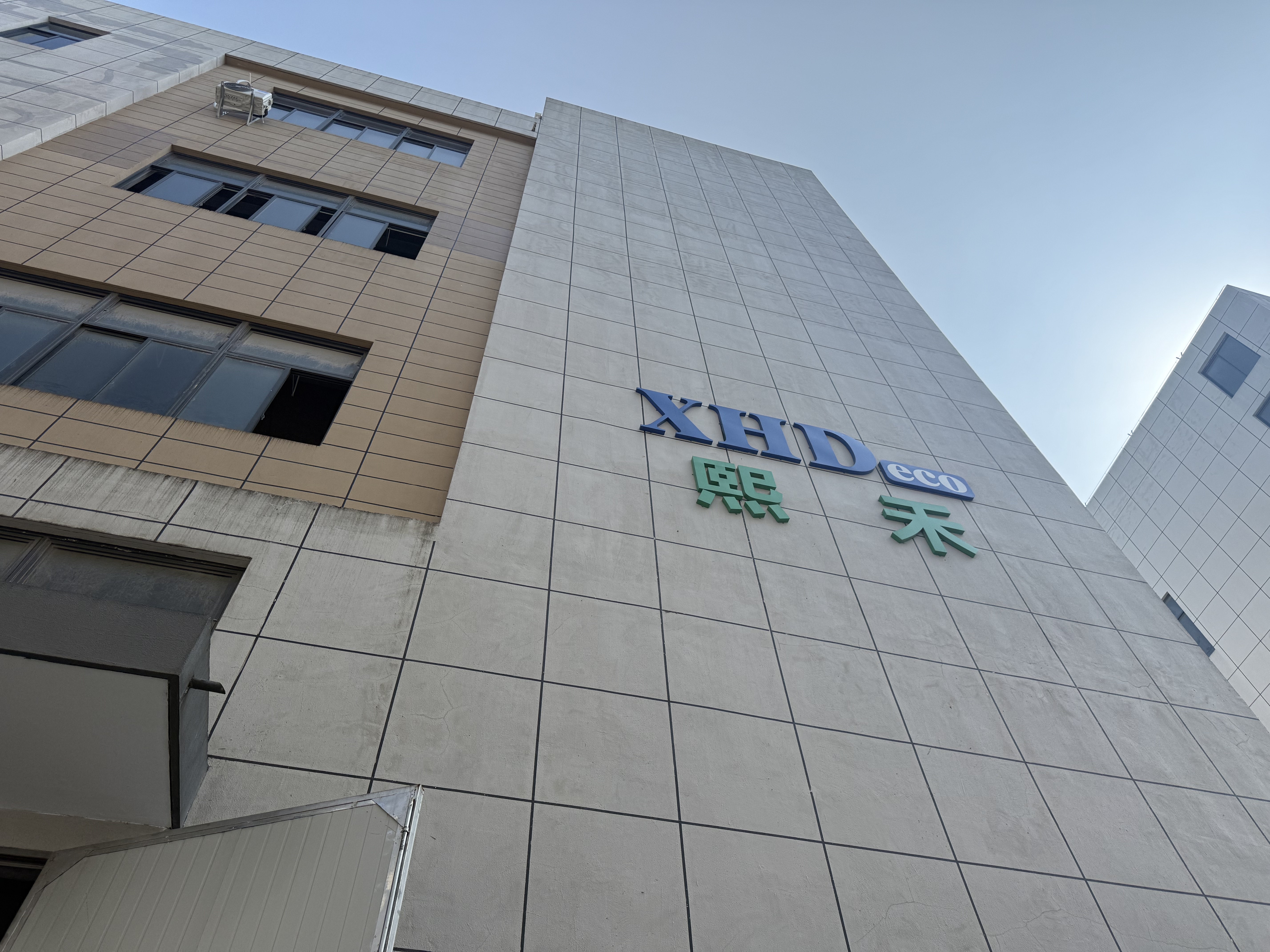
Contact: Elaine · 16th building, No.1 Weiye Road, Yuanhua Town, Haining City, Zhejiang, China.
Have Questions or Need More Details?
Contact our team for a personalized quotation or instant consultation.
Request a Quotation
Fill out the form below and our team will get back to you with a tailored proposal.
WhatsApp Direct Chat
Prefer to chat in real-time? Message us on WhatsApp for instant assistance & quick answers.
- Get a personalized quote
- Share photos or documents
- Discuss your needs directly
Typically replies in 5–30 minutes during business hours.