
PVC Lamination Film Compliance by Region: SGS Certifications and What Each Market Requires
Why 'We Have SGS' Is Not a Compliance Answer
When a supplier says the product is SGS tested, the sentence is accurate and almost always incomplete. It tells you that a third party tested something, at some point, against some criteria. It does not tell you which something, which criteria, or whether either matches what you are about to buy.
Three gaps sit inside that sentence, and every one of them has ended a shipment at a customs desk or a retailer's quality review.
- Product-scope gap. PVC lamination film is a configurable product. Thickness, colour, printed pattern, surface finish, plasticiser system and carrier all change what is being tested. A report issued for one construction does not automatically describe another.
- Standard-scope gap. A report is only as wide as the standards it cites. Anything the standards do not address remains untested, regardless of how official the document looks.
- Market-scope gap. No test report appoints itself as a market authorisation. Import registration, labelling, customs classification and a customer's own restricted-substance list are separate obligations held by separate parties.
The workable rule for procurement is simple: a test report supports a claim, it does not create one. The buyer's job is to establish exactly which claim the document supports before it enters a compliance file.
What the Report Number GZIN2512002264CM01_EN Tells You
The SGS report referenced for XHDeco PVC lamination film carries the number GZIN2512002264CM01_EN, and that number is the most useful part of the document. It makes the report auditable. A report number can be checked with the issuing body; a forwarded screenshot cannot.
Four elements define what the report is capable of proving:
- Issuing body. The report was issued by SGS. The value of that is not the logo — it is that the issuing body keeps a record against the number, which allows independent verification.
- Referenced standards. The report references four standards. Those four standards fix what was measured and how a pass was determined.
- Product description. The report describes the product it covers. That description is the boundary. Film outside the description is outside the evidence.
- Date and issue details. A report is a snapshot taken at a point in time. Formulation, raw-material source and production line are all things that can change after the snapshot.
None of these four elements constitutes regulatory approval in the European Union, admission by a customs authority anywhere, or acceptance by a specific brand's supplier programme. They constitute a traceable third-party test record. That is a different, narrower and genuinely useful thing.
How the Four Referenced Standards Support Market Access
A standard is not a certificate. It is an agreed method: how a specimen is prepared, what is measured, under what conditions, and where the line between pass and fail sits. The four standards cited in the report each do that job for one dimension of the film.
Their contribution to market access is indirect but real, and it works in four ways.
1. They convert a quality claim into a checkable line item
Buyers do not purchase assurances; they purchase specifications they can hold a supplier to. A standard turns an adjective into a result with a method behind it, which is why a compliance reviewer will accept a test line and reject a brochure sentence.
2. They give the importer something to attach to its own declaration
In most markets the entity placing the product on the market signs the declaration of conformity, not the film manufacturer. That entity needs technical evidence to sit behind its signature. A third-party report referencing recognised standards is the usual attachment, and often the reason a supplier is shortlisted at all.
3. They survive audit
Retailer audits, brand supplier audits and project handover reviews all ask the same question in different words: show me the evidence for the claim you made. A numbered, dated, third-party report answers it. A verbal assurance does not survive the second question.
4. They mark the edge of what you must still test
The fourth function is the one buyers most often miss. The four standards define a perimeter. If your customer's requirement list includes a dimension that sits outside that perimeter, the report does not close the gap, and no amount of discussion will make it.
Six Checks Before You Accept the Report
- Request the full PDF, not an image. A cover page screenshot proves nothing about scope. Ask for the complete document including any annex or test-item table.
- Match the number everywhere. The report number should appear consistently on the cover, in the page footer and on any annex. A mismatch is a stop signal, not a formatting quirk.
- Verify with SGS directly. Use the issuing body's own verification route rather than the supplier's word. This is the single highest-value step, and it takes minutes.
- Match the applicant and manufacturer names. The parties named on the report should correspond to the entity you are actually contracting with, or the relationship between them should be documented.
- Match the product description to your order. Compare thickness, colour or pattern, finish and construction against the specification you intend to buy. If you are buying a colour that is not described, ask what the evidence position is for that colour.
- Check the date and ask about the re-test trigger. Ask plainly: what change in formulation, raw-material supplier or production line would cause this report to be reissued? Suppliers who can answer that question are usually the ones whose documents hold up.
Region by Region: What Buyers Typically Ask For
The categories below describe documents that buyers in each region commonly request at the import, brand-audit or project stage. They are a procurement checklist, not a legal opinion. Whether a specific rule applies to your film, your end use and your import route is a question for your importer, your customs broker or a regulatory adviser in that market.
European Union
European buyers rarely ask one question; they ask for a document set. In practice the set is built from four groups.
- Restricted substances. Declarations covering substances of very high concern and restricted-substance lists under the REACH framework, plus any customer-specific restricted-substance list, which is often stricter than the regulation.
- Plasticisers and heavy metals. Flexible PVC film typically contains plasticisers, so phthalate-related declarations are a standard request. Pigments and stabilisers bring lead and cadmium questions, which is precisely why a colour change can matter to a test report.
- Construction use. Where the film goes onto panels, ceilings or profiles in a building, buyers add fire-reaction documentation and, depending on the application, emission or release data.
- Declarations and labelling. A declaration of conformity signed by the entity placing the product on the market, plus packaging and labelling information.
Two clarifications save time here. The RoHS framework is aimed at electrical and electronic equipment; decorative film usually sits outside it, yet it appears on retail checklists out of habit — establish whether it is a genuine requirement or a copied line. And the declaration of conformity is signed by the importer or brand, not by the film factory, so the factory's role is to supply the technical annex, not the signature.
North America
There is no single market-entry certificate for decorative film in the United States. Requirements are assembled by the parties involved: the importer, the end brand, the retailer and, in some cases, a state-level rule.
- Retailer and brand restricted-substance lists. These are frequently the binding document in practice, and they are usually more demanding than any single regulation.
- State-level chemical disclosure. California's Proposition 65 is the example most often raised by buyers; the practical question is whether a warning is required or whether a documented basis exists for not providing one.
- Flammability documentation. Driven by end use rather than by the film category, so the requirement follows the application, not the material.
- Batch-level certificates of analysis. North American buyers commonly want per-batch paperwork alongside the type-test report, because a report describes a construction while a COA describes a shipment.
- Canada. Federal and provincial requirements coexist, and consumer-facing labelling is expected in both English and French.
On classification, note that US HTS 3920.49.00.00 covers non-adhesive plates, sheets, film, foil and strip of PVC, per the US International Trade Commission schedule. Broader trade databases do not always resolve to a PVC-specific code, so confirm the classification with your broker rather than assuming the film and the finished panel share one.
Latin America
Import documentation dominates the conversation, and technical documents ride alongside it.
- Import file. Commercial invoice, packing list, certificate of origin and the import registration applicable in the destination country.
- Local standards and registration. Requirements differ substantially between countries and between product categories; some markets require local registration before a technical document is even reviewed.
- Document legalisation. Depending on the country and category, documents may need translation, notarisation or consular legalisation. Confirm the route with the importer before shipping, not after.
- Classification consistency. The product description on the technical report, the commercial invoice and the customs entry should describe the same goods. Divergence here is a routine cause of delay.
Middle East
- Conformity schemes. Several Gulf markets route product conformity through designated platforms and certificate bodies. Applicability depends on the product category and the importing entity, so confirm with the importer which scheme applies to film and film-laminated panels.
- Validity and batch correspondence. Certificates carry validity periods; buyers should check that the certificate in hand covers the shipment in question rather than an earlier one.
- Service conditions. Hot, humid and often uv-intensive environments raise legitimate questions about storage, handling and expected service life. A laboratory test condition is not a site condition, and buyers are entitled to ask how the two relate.
Southeast Asia
This is XHDeco's core export region, with Indonesia, the Philippines and Malaysia among the main markets served, alongside activity in the Middle East and South America. The practical reality across the region is variation: national standards, registration obligations and labelling rules differ from country to country, and acceptance of the same report can differ between two buyers in the same city.
- Ask the importer first. The single most efficient step is to ask which documents the importing entity has previously accepted for comparable film.
- Local standards for construction use. Where film-laminated panels enter a building application, local standards or registration may apply to the panel, the film, or both.
- Language and labelling. Local-language labelling is a common requirement and is usually the importer's responsibility to confirm.
- Batch consistency. Distributors reselling across multiple projects tend to value batch-to-batch consistency documentation as much as the original type test.
Australia and New Zealand
- Standards framework. The AS/NZS system governs much of the technical vocabulary buyers use, and construction applications bring the National Construction Code into the conversation.
- Formaldehyde release. For panel, board and furniture applications, formaldehyde release is a recurring question in this market, and buyers will expect documentation that speaks to it.
- Supplier declarations. Australian buyers commonly ask the supplier to declare conformity against a named requirement, with the test report attached as supporting evidence.
Japan and South Korea
- Japan. Formaldehyde release classification is well established in the Japanese furniture and building-material market, and buyers reference the graded system directly. If your film is destined for panels or interior substrates, expect the grade question early.
- South Korea. Chemical registration obligations sit with the importing entity under the national chemicals framework. Confirm with the importer whether registration applies to the substance and volume in question before the order is confirmed.
- Language and responsible party. Both markets expect documentation in the local language and expect the importer to act as the declaring party. Supplier-side evidence is an input, not a substitute.
Regional Documentation Comparison
| Region | Documents buyers typically request | What to check inside the SGS report | What still needs separate confirmation |
|---|---|---|---|
| European Union | Restricted-substance declaration, phthalate and heavy-metal statements, fire-reaction data for construction use, declaration of conformity | Whether substance-related and construction-related items fall inside the four referenced standards; whether the tested colour matches your order | Which framework applies to your end use; who signs the declaration of conformity; customer-specific substance lists |
| North America | Retailer or brand restricted-substance list, state-level chemical disclosure position, flammability data by end use, batch COA | Report date and product description against the specific construction being purchased | Whether a state warning is required; which party signs the retailer declaration; customs classification |
| Latin America | Import file, certificate of origin, local registration where applicable, legalised documents | Consistency of product description with invoice and customs entry | Translation, notarisation or consular legalisation route; local standard or registration scope |
| Middle East | Conformity certificate via the applicable national scheme, batch correspondence, storage and service-life information | Whether the report is current and describes the shipment being cleared | Which conformity scheme applies; certificate validity; site conditions versus test conditions |
| Southeast Asia | Importer-accepted document set, local-language labelling, batch consistency records | Product description, colour and thickness against the order line | Country-specific registration; importer's own acceptance history; labelling language |
| Australia / New Zealand | Supplier declaration against a named requirement, formaldehyde release data for panel and furniture use, construction documentation | Which of the four standards relate to the requirement named in the declaration | NCC applicability for the specific building use; the release grade the buyer will accept |
| Japan / South Korea | Local-language documentation, formaldehyde release grade for Japan, chemical registration position for Korea | Whether formaldehyde-related testing is within the four referenced standards | The grade required for the application; registration obligation and volume thresholds |
Where Documents Meet Production
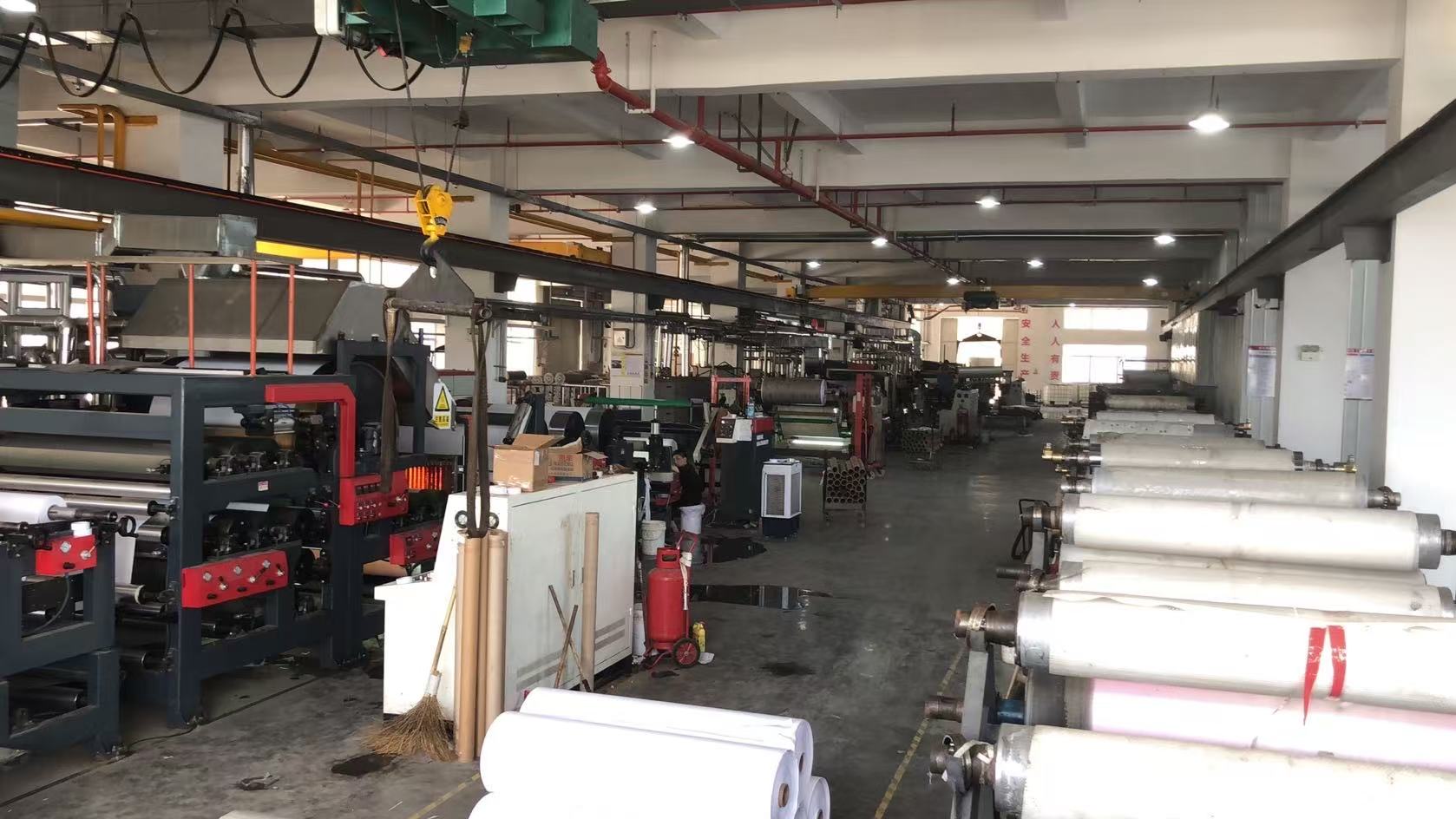
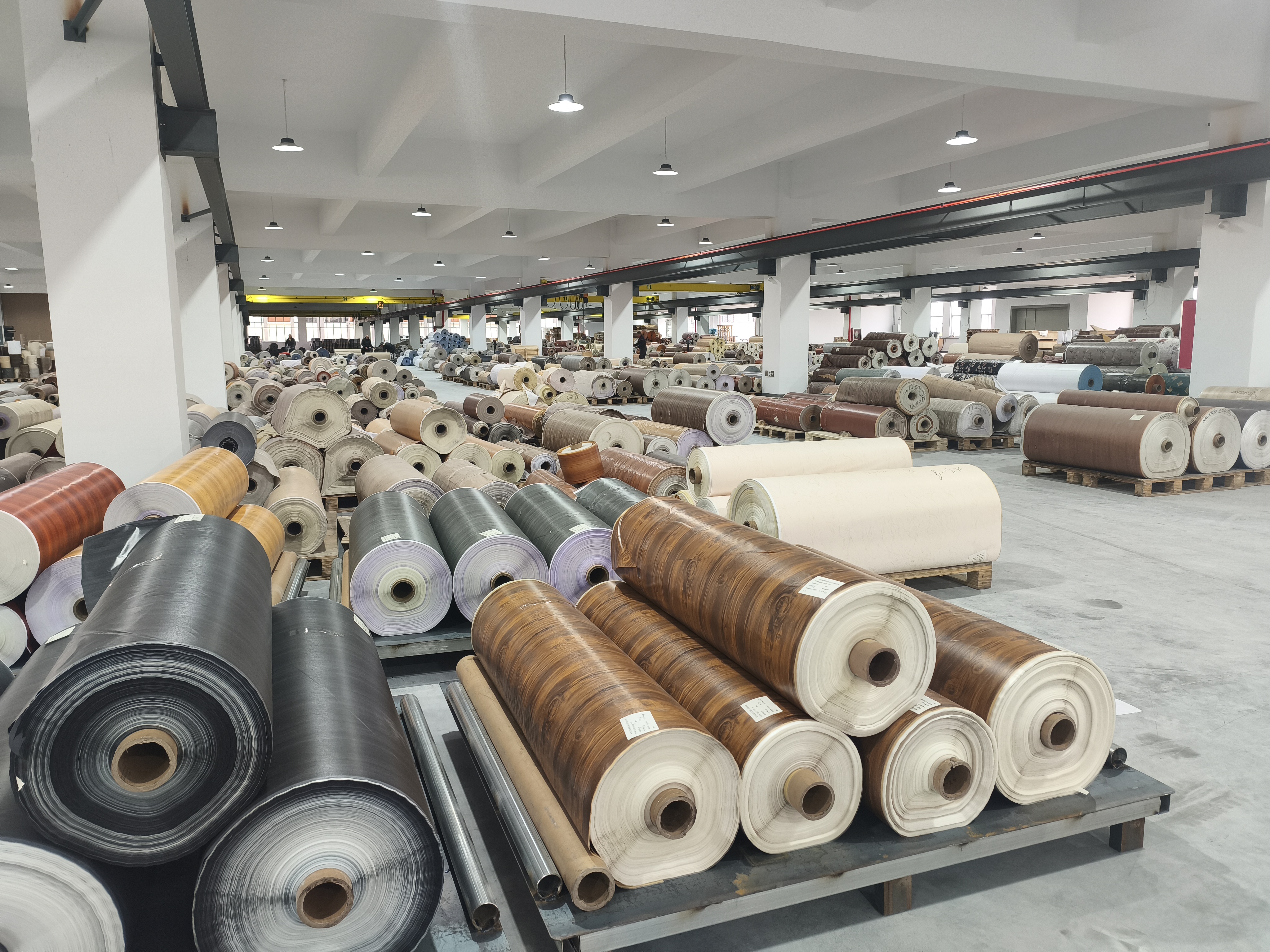
Haining Xihe Decoration Material Co., Ltd., trading as XHDeco, is a manufacturer of PVC decorative and lamination film based in Haining, Zhejiang, China — a region long associated with decorative building materials. Founded in 2016, the company operates a 6,000 m² facility with 50 employees and an engineering team of eight, and exports around 70% of its output, principally to Southeast Asia with additional activity in the Middle East and South America.
On the compliance side, two points are stated plainly rather than dressed up. First, fire resistance and formaldehyde safety are referred to the SGS test reports; the exact grade and the suitable environment must be confirmed by the customer for the specific project. That is the honest position — a report indicates what was tested, while the grade a project requires depends on the application and the authority having jurisdiction. Second, quality control runs through raw-material inspection, production monitoring and pre-shipment testing, which is the mechanism that keeps a report describing something close to what leaves the factory.
Commercially, the terms are conventional for a factory direct relationship: a minimum order quantity of one 20GP container, mixed colours and mixed profiles acceptable within a single container, small trial orders negotiable, and custom colours subject to a minimum order quantity. Bulk orders are quoted FOB with stable lead times and flexible payment terms, commonly 30/70.
Frequently Asked Questions
Does the SGS report mean our PVC lamination film is approved in every market?
No. The report is a third-party test record covering a defined product against four referenced standards. Market access also depends on the importing entity, the end use, the customs classification and the buyer's own document requirements. The correct reading is that the report supplies the technical annex for a market file, not that it replaces one.
Can one supplier support documentation for several export markets at the same time?
Partly. A single SGS report can serve as the technical attachment in more than one market pack, and XHDeco's export profile — around 70% of output, mainly Southeast Asia with additional Middle East and South American business — means multi-market document requests are routine. What a manufacturer cannot do is assume the importer's obligations: local registration, labelling and declarations of conformity remain with the importing party. The factory supplies test records, quality-control records and batch documentation.
What are the minimum order quantity and payment terms?
The MOQ is one 20GP container. Mixed colours and mixed profiles are acceptable within a single container, small trial orders are negotiable, and custom colours require a minimum order quantity. Bulk orders are quoted FOB, with payment terms commonly 30/70.
How should a buyer validate the film before committing to a full container?
In three stages. First, review the full SGS report and confirm the product description matches the construction you intend to buy. Second, obtain samples in the intended colour, thickness and finish and run a trial on your own lamination, wrapping or vacuum-forming line, because adhesion behaviour depends on substrate and process. Third, place a small trial order, which is negotiable, before scaling to container volume.
What should buyers check when continuity of supply matters more than price?
Three things. Confirm the documented lead-time commitment for bulk orders rather than a single quotation, review how quality control is structured from incoming raw material through pre-shipment testing, and agree in writing what happens to the technical documentation when a colour, formulation or production line changes. For long-term programmes, the document-refresh clause matters as much as the price clause.
The Next Step: Ask for the Document, Not the Claim
Compliance work is unglamorous and mostly repetitive: request the full report, verify the number with the issuing body, match the description to the order, and establish which regional requirements the four standards do and do not touch. Buyers who do that once build a file they can reuse, and they stop renegotiating the same evidence at every shipment.
The single most useful action available today is to request the complete SGS report under GZIN2512002264CM01_EN rather than a screenshot, and to ask one direct question alongside it: for my destination market and my end use, which of my buyer's requirements sit outside these four standards?
Request the SGS Report, Samples or an FOB Quotation
XHDeco supplies PVC lamination film for wall panels, ceilings, furniture, plywood, MDF and profile wrapping, from a 6,000 m² factory in Haining, Zhejiang. Ask for the full SGS test report, a colour and thickness sample set for line trials, or a factory-direct FOB quotation against your container plan.
Email: 834832100@qq.com | Tel / WhatsApp: +86 18858307144 | Website: xihe-decoration.com
Download the company profile and product catalogue: Xihe Company Profile (PDF)

Have Questions or Need More Details?
Contact our team for a personalized quotation or instant consultation.
Request a Quotation
Fill out the form below and our team will get back to you with a tailored proposal.
WhatsApp Direct Chat
Prefer to chat in real-time? Message us on WhatsApp for instant assistance & quick answers.
- Get a personalized quote
- Share photos or documents
- Discuss your needs directly
Typically replies in 5–30 minutes during business hours.