
PVC Lamination Film Explained: A Plain-Language Guide for Decorative Panel Buyers
PVC lamination film is a decorative PVC surface layer that is bonded to a panel, profile or sheet to give the finished product its colour, pattern, texture and a more protective surface. For a first-time buyer of decorative panels, the useful way to understand it is as the visible “skin” of the product. The board or profile underneath provides structure; the film provides the finish that the buyer, installer and end user actually see and touch. XHDeco, the brand of Haining Xihe Decoration Material Co., Ltd., supplies PVC lamination film together with PVC wall panels, WPC panels, decorative mouldings and ASA co-extruded exterior cladding, so the film is best seen as part of a wider decorative wall-cladding system rather than as an isolated commodity.
XHDeco is a manufacturer founded in 2016 in Haining, Zhejiang, China, and integrates R&D, production and export of decorative wall-cladding materials. Its stated product scope includes PVC interior wall and ceiling panels, ASA co-extruded outdoor wall cladding, PVC decorative lamination film, WPC wall panels and decorative lines, plus customized sizes and surface finishes. That scope is useful context for a first-time buyer: the same supplier may handle the film and the panel substrate, but the buyer still needs to confirm the exact film specification for the intended panel, profile or application.
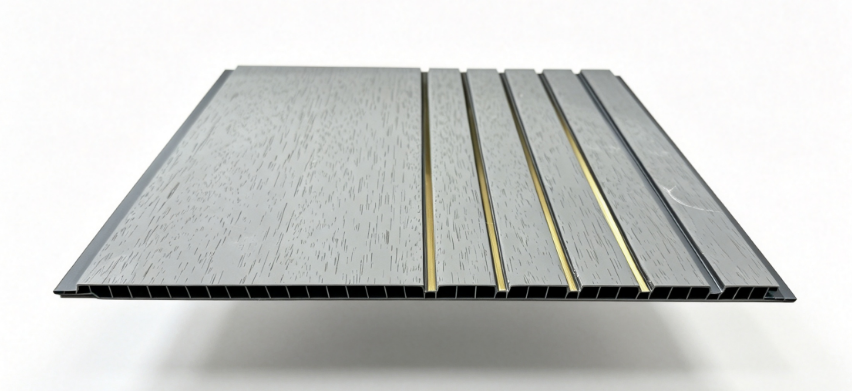
PVC decorative panel profile from the supplied product image set. Buyers should match the profile and film specification to the actual panel assembly.
Why the term “PVC lamination film” causes confusion
First-time buyers quickly meet a cluster of overlapping names: PVC film, PVC plastic film, PVC decoration film, PVC panel film, PVC ceiling film, printed PVC film, PVC sheet film, PVC film for wall panel, PVC furniture film, vacuum forming PVC film, PVC film for plywood, PVC membrane, PVC interior decoration film, flat-lamination film, profile wrapping PVC film, polyvinyl chloride film, calendered PVC film, PVC foil, vinyl foil and PVC self-adhesive film. These terms are not always interchangeable. They can describe the material, the process, the product form, the substrate or the market habit of the supplier.
The practical problem for a buyer is not vocabulary alone. A request for “PVC film” can produce quotations for products with different thicknesses, surface finishes, adhesive systems and intended processes. A film intended for flat lamination of a panel may not be the same construction as a film intended for wrapping a narrow moulding, and a self-adhesive film is a different product from a film that is bonded with PVA or PUR adhesive during factory lamination. The buyer’s first task is therefore to define the finished product and the process, then ask for a film that matches both.
What the film actually does on a decorative panel
On a finished decorative panel, PVC lamination film performs three practical roles: appearance, protection and process fit.
- Appearance. The film carries the colour, wood-grain, marble, stone or metallic effect that defines the product’s look. XHDeco’s PVC film range includes wooden series, marble series and golden series, with model LD-60139-9 named in the supplied product data. For a buyer, the key check is colour and pattern consistency across rolls and batches, not just the catalogue image.
- Protection. The film becomes the outer surface that handles cleaning, touching and normal interior wear. XHDeco’s product information describes PVC decorative panels and PVC film as lightweight, waterproof, moisture-proof and wear-resistant. Those are product-category advantages; actual performance still depends on the film specification, substrate, bonding quality and end-use conditions.
- Process fit. The film must suit the panel or profile and the lamination method. XHDeco provides ODM production services including customer-owned designs, custom finishes and custom dimensions; specific custom finishes and dimensions are to be confirmed with the manufacturer. That is a useful reminder that “custom” is not a single specification—each custom finish or dimension needs confirmation against the substrate and process.
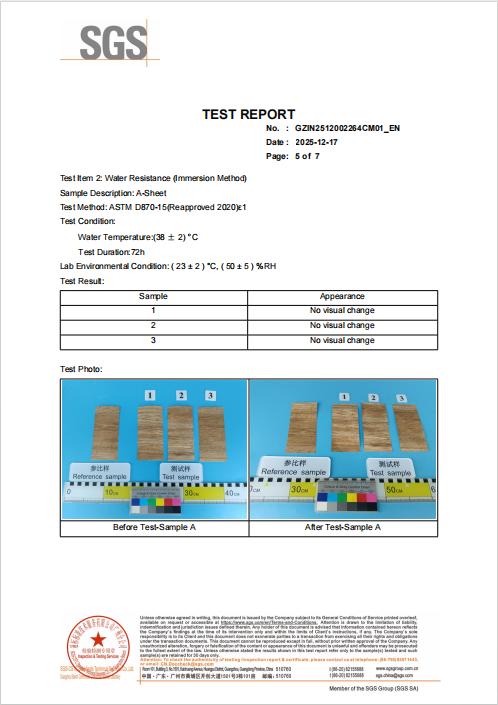
SGS test report material supplied for the PVC lamination decorative film scope. The report number and scope should be checked against the exact film being purchased.
SGS test reports add a third-party reference point. XHDeco’s supplied certification unit lists SGS test report GZIN2512002264CM01_EN, issued on 2025-12-17, for the scope “Adhesive sheet / PVC lamination decorative film.” The listed standards are EN 13329-2023, ISO 24338:2022, ASTM D870-15 and EN 12149:1997, and the listed markets are Europe & North America, Japan & Korea, Australia, Southeast Asia, the Middle East and Latin America. A buyer should read the report against the exact product and destination market rather than treating the certificate number as a blanket approval for every film in the range.
Where PVC lamination film fits in the decorative wall-cladding category
Decorative wall cladding is a broad family. It includes PVC wall panels, WPC panels, ceiling panels, decorative mouldings, furniture boards and other interior surfaces. PVC lamination film is the finishing layer that allows a relatively simple core material to carry a wood, stone, colour or metallic finish. This is why the film matters to panel buyers: the core gives the panel its strength and handling characteristics, while the film gives the panel its market-facing appearance and cleanable surface.
On a PVC wall panel, the film supplies the visible décor—wood-grain, marble or solid colour—and helps protect the panel surface. On a WPC panel, the film provides a finished skin over the WPC core. On a decorative moulding or profile, a profile-wrapping PVC film is used to cover the profile and match the surrounding panel. In the wider market, the same film family can appear on ceiling panels, furniture, plywood and MDF, but the exact film construction and process must match the substrate; a film that works on a flat panel is not automatically suitable for a narrow wrapped profile or a formed part.
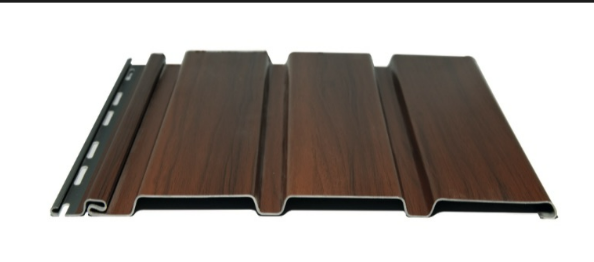
A panel profile from the supplied image set. Film selection should follow the actual substrate, profile shape and intended lamination process.
How a first-time buyer can specify PVC lamination film
The most reliable way to buy PVC lamination film is to describe the finished product before describing the film. A specification that starts with the end use gives the supplier a clear basis for recommending thickness, surface, adhesive system and roll format. The following sequence keeps the conversation practical.
- Name the finished product and substrate. State whether the film is for a PVC wall panel, WPC panel, ceiling panel, decorative moulding, plywood or MDF board. The substrate affects adhesion, surface preparation and the risk of delamination.
- Name the lamination process. Buyers may encounter flat-lamination film, profile-wrapping film and vacuum-forming film. These labels refer to the process the film is designed for. Confirm with the supplier that the proposed film is intended for your line, adhesive and operating conditions.
- Choose the visual finish. Confirm the colour, pattern, gloss level and surface texture. XHDeco’s supplied film range names wooden, marble and golden series; custom finishes are available through ODM discussion, but specific options must be confirmed. Ask for a physical sample or approved swatch rather than relying on a screen image.
- Confirm the commercial terms. XHDeco’s capability unit lists ODM production, a monthly capacity of approximately 50 x 40HQ containers, a lead time of 15–20 days and an MOQ of one container. The purchasing information lists FOB delivery terms and 30/70 payment terms. These are supplier-stated terms; the buyer should confirm them for the specific film, quantity and destination.
- Check test evidence and acceptance. Ask for the current SGS report and confirm that its scope, standards and report date match the product being purchased. XHDeco’s purchasing information says acceptance criteria depend on the customer, self-check or customer check. A pre-shipment check and a retained sample help reduce disputes.
- Plan the trial and scale-up. Start with a sample or trial order where available. XHDeco’s panel FAQ says small trial orders are negotiable and mixed colours and mixed profiles are acceptable within one container for PVC wall panels. For film, confirm the equivalent trial quantity and loading plan before committing to a bulk order.
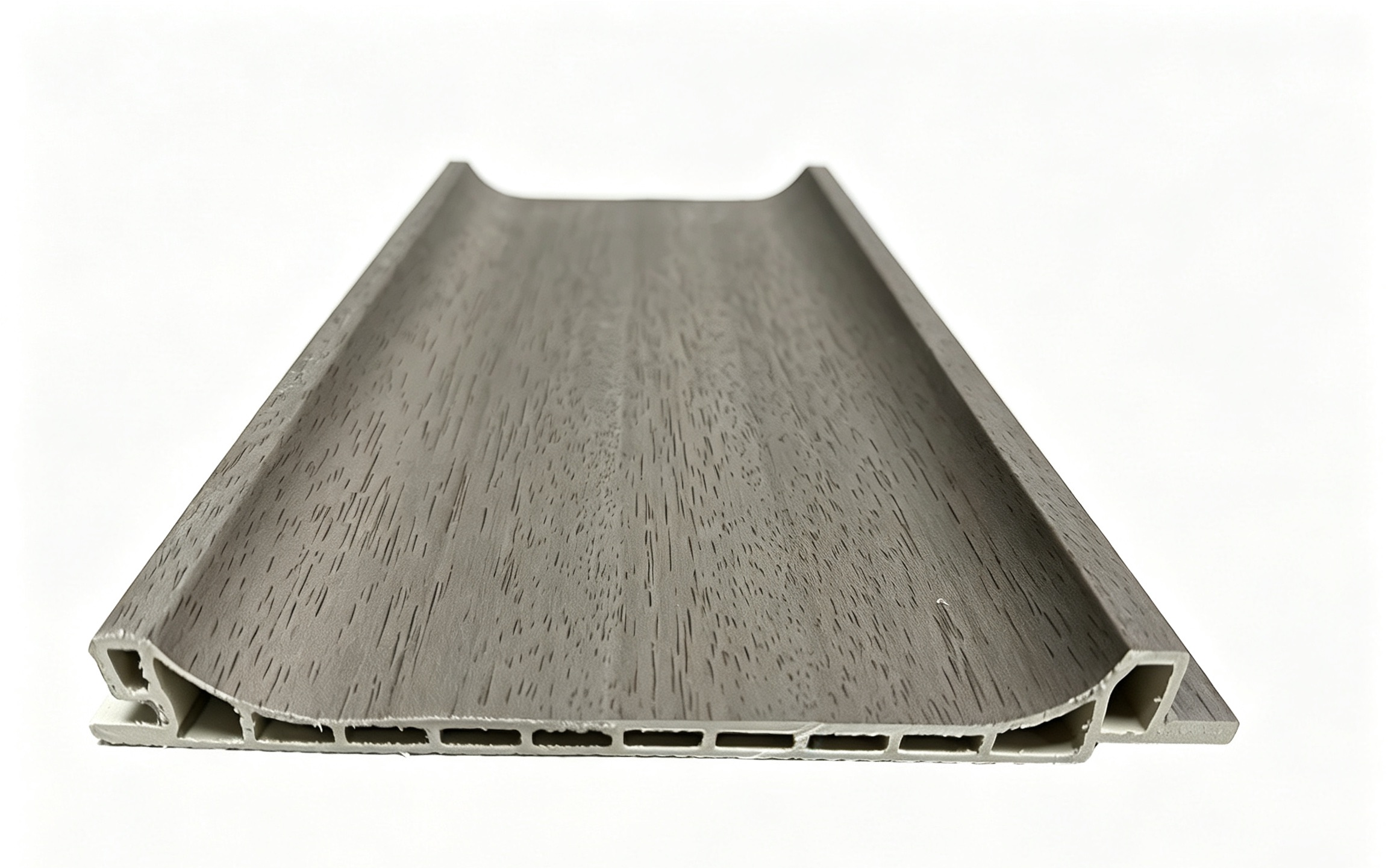
A narrower panel profile from the supplied image set. Narrow profiles and wrapped edges require a film that suits the process, not only the colour.
Use cases: matching the film to the panel or profile
The same “PVC lamination film” label can cover products used in different ways. The table below is a buyer’s map, not a substitute for a supplier’s technical data sheet.
| Application | Role of the film | What the buyer should verify |
|---|---|---|
| PVC wall panel | Provides the visible wood-grain, marble or colour finish and helps protect the panel surface. | Film-to-panel adhesion, colour consistency, surface hardness for the intended cleaning routine, and sample approval. |
| WPC wall panel | Creates a finished decorative skin over the WPC core. | Compatibility with the WPC surface and the lamination or wrapping process; check for edge coverage and bond quality. |
| Decorative moulding / profile | Wraps the profile to match panels and cover edges or transitions. | Film flexibility for the profile radius, narrow-width handling, colour match with the main panel, and resistance to lifting at edges. |
| Ceiling panel | Supplies a cleanable decorative surface for interior ceilings. | Moisture exposure in the actual room, cleaning method, colour consistency and joint detail. |
| Furniture, plywood or MDF (broader market) | Adds a decorative and protective surface to a board or formed part. | Substrate type, adhesive system, whether the film is self-adhesive or factory-laminated, and the supplier’s actual product scope. |
PVC lamination film vs adjacent terms: a quick comparison
Buyers often use “PVC foil,” “vinyl foil,” “PVC panel film” and “PVC lamination film” as if they mean the same product. They can overlap, but the buyer should confirm the construction and use.
| Term | What it usually signals | What to confirm before ordering |
|---|---|---|
| PVC lamination film | A PVC-based film intended to be bonded to a substrate during panel or profile production. | Substrate, adhesive/lamination process, thickness, finish, roll dimensions and test report scope. |
| PVC foil / vinyl foil | A thin PVC-based decorative web; “foil” and “vinyl” are market terms rather than a single specification. | Whether it is a lamination film, a wrapping film or a self-adhesive product; exact material and intended process. |
| PVC panel film | Film designated for panel surfaces. | Panel core, flat-lamination or wrapping process, and colour/pattern match with the panel range. |
| PVC ceiling film | Film used on ceiling panels or ceiling profiles. | Moisture and cleaning conditions, substrate, and whether the film is suitable for the ceiling assembly. |
| PVC self-adhesive film | Film supplied with a pressure-sensitive adhesive for direct application. | Surface preparation, adhesive type, indoor/outdoor suitability and expected service conditions. |
What XHDeco’s product scope adds to the picture
XHDeco’s supplied profile describes a manufacturer with a 6,000 m² factory, 50 employees, 8 R&D engineers and an annual output of 6,000w units. The company exports about 70% of its output and mainly serves Southeast Asia—including Indonesia, the Philippines and Malaysia—while also being involved in Middle East markets, South America and other countries. Its main products include PVC lamination film, PVC wall and ceiling panels, ASA co-extruded exterior cladding, WPC panels and decorative mouldings.
The capability unit also states support for customer-owned designs and intellectual-property claims, with specific custom finishes and dimensions to be confirmed with the manufacturer. XHDeco lists remote technical support as after-sales support. For a decorative-panel buyer, that combination is useful because it shows the film in its practical context: as part of a wall-cladding product system, not as a generic plastic sheet. It also sets the boundary of what should be verified. The supplied material supports the company’s product scope, ODM service, capacity, lead time, MOQ and SGS report. It does not establish that every film in the range is identical, that every market accepts the same report, or that one finish will suit every substrate. Those points remain project-specific and should be confirmed in the quotation, sample approval and test-report review.
FAQ
What are the advantages of PVC decorative panels and PVC film for building decoration?
XHDeco’s product information describes PVC decorative panels and PVC film as lightweight, waterproof, moisture-proof and wear-resistant, with rich colour options, simple installation and low maintenance cost. They are widely used for wall and ceiling decoration in residential, hotel and commercial buildings. These are stated product-category advantages; actual performance depends on the film specification, substrate, bonding quality and installation conditions.
What does PVC lamination film do on a wall panel, WPC panel or moulding?
On a wall panel, the film provides the visible decorative surface and helps protect the panel. On a WPC panel, it gives the core a finished skin. On a moulding or profile, a profile-wrapping film covers the profile and can be matched to the main panel. In each case, the buyer should match the film to the substrate and process rather than ordering by the “PVC film” label alone.
Are you a factory or a trading company?
XHDeco states that it is a factory and welcomes visits. The company profile identifies Haining Xihe Decoration Material Co., Ltd. as a manufacturer founded in 2016 in Haining, Zhejiang, China, with a 6,000 m² factory, 50 employees, 8 R&D engineers and an annual output of 6,000w units.
What are the purchasing terms and acceptance criteria?
XHDeco’s purchasing information lists an MOQ of one container, FOB delivery terms, payment terms of 30/70, and acceptance criteria that depend on the customer—self-check or customer check. These terms should be confirmed for the specific film product, quantity and destination before the order is placed.
What is the MOQ for PVC wall panels?
The stated MOQ is one 20GP container. Mixed colours and mixed profiles are acceptable within one container, and small trial orders are negotiable. Custom length and surface film design are available; custom colours are subject to a minimum order quantity.
Chinese OEM printed PVC decoration film manufacturers: how should a buyer evaluate them?
Start with manufacturing identity and process fit: confirm that the supplier is a manufacturer, that it supports the ODM scope you need, and that its film is intended for your substrate and lamination method. XHDeco provides ODM production services including customer-owned designs, custom finishes and custom dimensions; specific custom finishes and dimensions are to be confirmed with the manufacturer. Its supplied SGS report GZIN2512002264CM01_EN covers the scope “Adhesive sheet / PVC lamination decorative film.” A practical next step is to request a sample or trial quantity, the current catalogue and the test report applicable to the exact product, then compare the sample against the approved colour and process conditions before a bulk order.
Conclusion
PVC lamination film is best understood as the decorative and protective skin of a finished panel or profile. It is not a single universal product: the same broad term can cover flat-lamination film, profile-wrapping film, printed film, ceiling film and self-adhesive film, each with a different job. For a first-time decorative-panel buyer, the reliable path is to define the finished application, name the substrate and process, confirm the visual finish with a physical sample, check the supplier’s scope and test evidence, and agree commercial terms before scale-up. XHDeco’s supplied product scope, ODM service, stated capacity and SGS report provide concrete reference points for that process, while the final choice still depends on the exact panel, profile and market requirement.
For buyers who want a compact overview of XHDeco’s product scope, factory profile and contact details, the company profile is available here: XHDeco Company Profile (PDF).
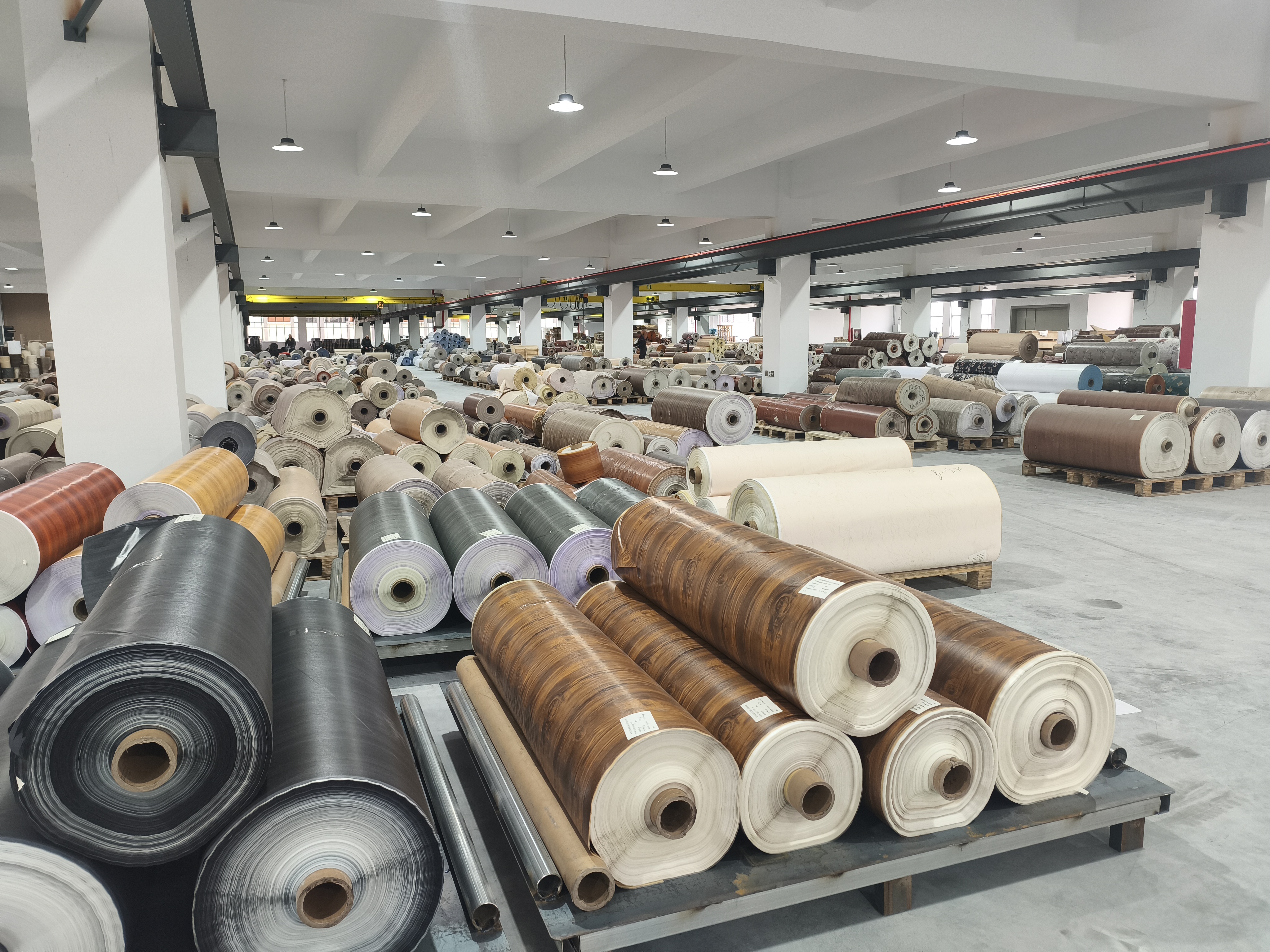
PVC lamination film sample image. Before a bulk order, request a sample or trial quantity and confirm the applicable test report, colour standard and loading plan.
Before a bulk order, request a sample or trial quantity and confirm the applicable test report, colour standard and loading plan with the supplier. A short technical discussion at the sample stage is usually more useful than comparing catalogue images alone.
Have Questions or Need More Details?
Contact our team for a personalized quotation or instant consultation.
Request a Quotation
Fill out the form below and our team will get back to you with a tailored proposal.
WhatsApp Direct Chat
Prefer to chat in real-time? Message us on WhatsApp for instant assistance & quick answers.
- Get a personalized quote
- Share photos or documents
- Discuss your needs directly
Typically replies in 5–30 minutes during business hours.