
PVC Lamination Film Long-Term Supply: MOQ, Lead Time and After-Sales FAQ
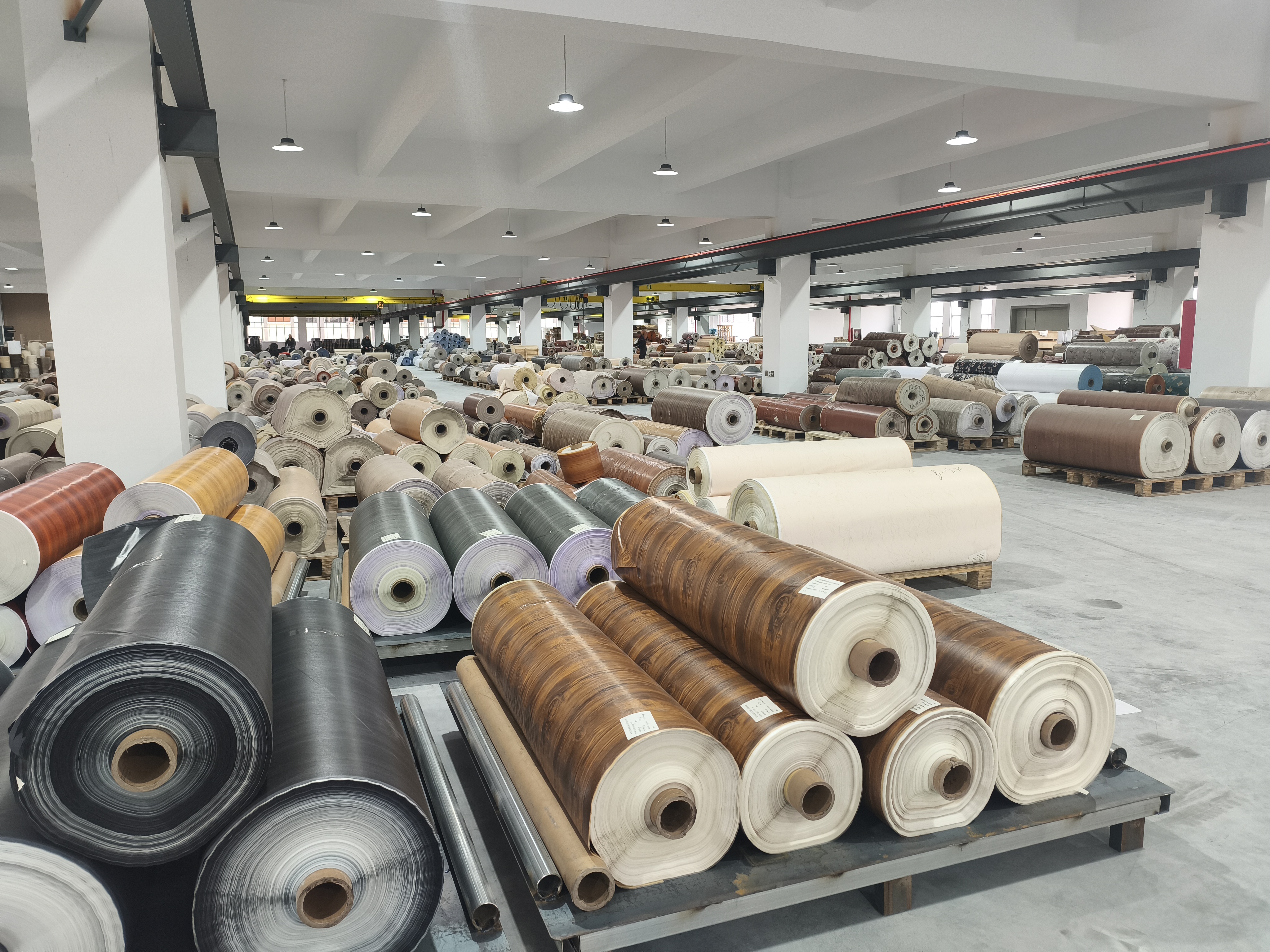
A long-term PVC lamination film programme is decided less by the film itself than by the terms wrapped around it: how small the first order can be, how predictable production is, whether the colour and grain repeat in shipment twelve, and who answers when a roll behaves differently on your line. For buyers weighing an ongoing relationship with Haining Xihe Decoration Material Co., Ltd. (XHDeco), the short answers are:
- Minimum order: one 20GP container for bulk orders; mixed colours and mixed profiles can share one container; small trial orders are negotiable; custom colours require a minimum order quantity.
- Production lead time: 15–20 days, confirmed in writing against the specific order.
- Commercial terms: FOB pricing for bulk orders, flexible payment terms on a 30/70 structure, and acceptance by self-check or customer check.
- Customisation: OEM/ODM for sizes, wood-grain patterns and colours.
- Quality: raw-material inspection, production monitoring and pre-shipment testing, with SGS test report GZIN2512002264CM01_EN as supporting documentation.
- After-sales: remote technical support after delivery.
- Continuity evidence: product 9262 has been supplied inside a 5–10 year relationship with steady inventory turnover.
The rest of this page works through these points in the order a procurement decision usually moves: what the film has to do, what the factory must show, what the commercial terms lock in, and what happens after the container leaves Haining.
Why a repeat film order asks a different question from a first order
Repeatability, not the first sample, is the real subject of a supply agreement. A first order answers "can this supplier make the film?". A twelve-month programme answers "can they make it the same way next quarter, at the same colour, on the same paperwork?".
That shift moves the evaluation away from a single quotation and towards four practical controls:
- Specification control. Thickness, width, roll length, surface pattern and colour have to be written down once and held, otherwise every reorder restarts the conversation.
- Production scheduling. A quoted 15–20 day production window only helps if it survives the third and fourth order, not just the first.
- Documentation. Which inspection steps are standard, and which test report number is attached to which specification.
- Technical response. Who diagnoses a lamination defect — peeling, bubbling, colour shift — when it appears on a line in another country.
XHDeco at a glance
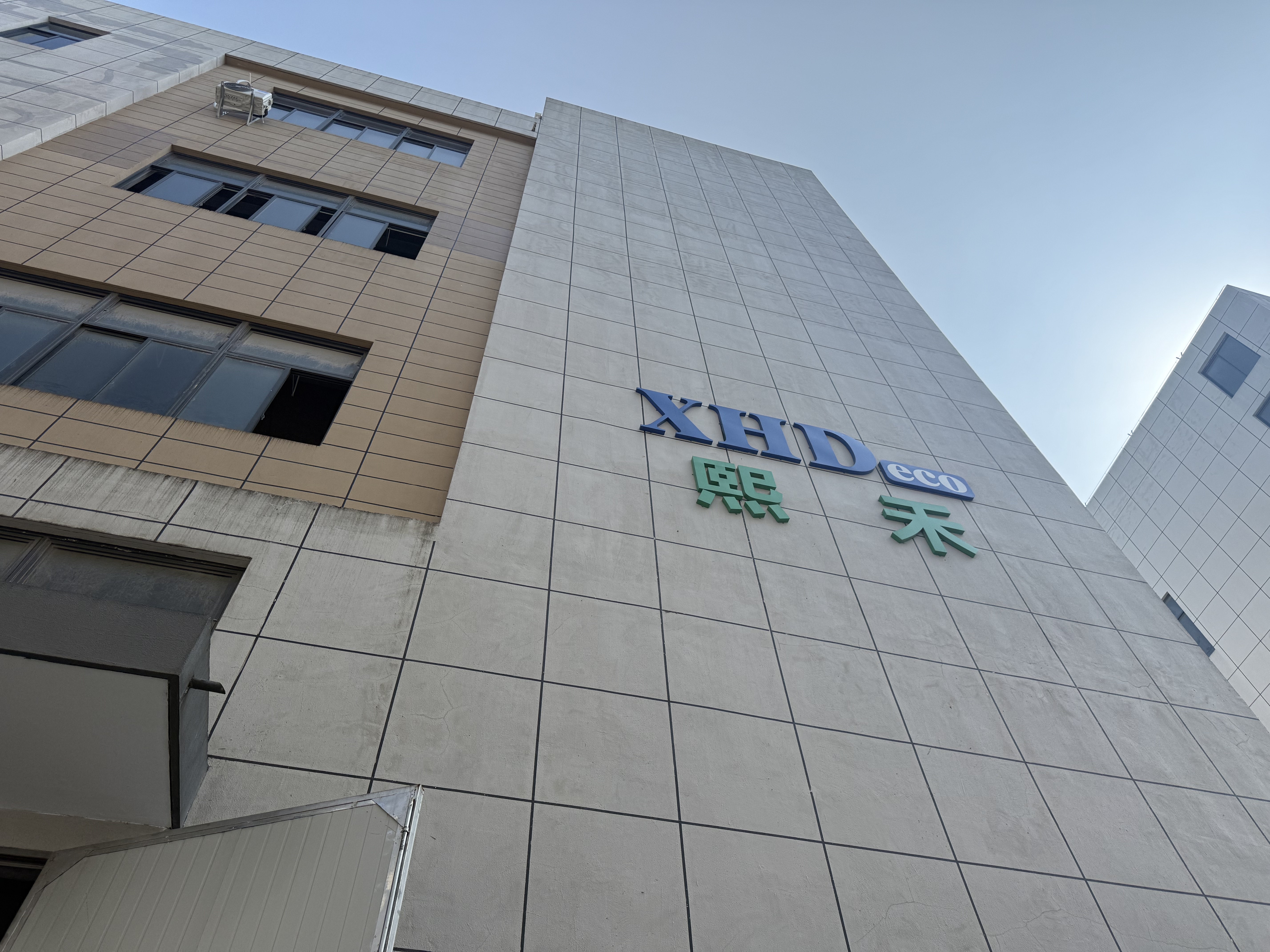
Haining Xihe Decoration Material Co., Ltd. (XHDeco) is a manufacturer of decorative wall-cladding materials based in Haining, Zhejiang, China, a region known for decorative building materials. Founded in 2016, the company combines R&D, production and export at a 6,000 m² factory with around 50 employees and an R&D team of eight engineers.
Its product scope covers PVC interior wall and ceiling panels, ASA co-extruded exterior cladding, PVC decorative lamination film, WPC panels and decorative mouldings, supported by extrusion, lamination and surface treatment lines that handle both mass production and customised sizes, wood-grain patterns and colour options. About 70% of output is exported, mainly to Southeast Asia — Indonesia, the Philippines and Malaysia — with additional business in the Middle East and South America. The company website is Haining Xihe Decoration Material Co., Ltd.
That combination matters for a film buyer: film is usually laminated onto the same panels, WPC profiles and mouldings that end users buy, so a supplier running its own extrusion and lamination lines sees film performance in production, not only in a sample folder.
Why supply continuity is genuinely difficult in decorative PVC film
Decorative film is a configured input rather than a commodity roll. Two buyers ordering the same nominal product may need different thickness, different width, different surface pattern, and compatibility with a different process — flat lamination, profile wrapping or vacuum forming. Because those variables sit on the buyer's side of the drawing, continuity risk usually starts with an incomplete specification rather than with the supplier.
Market context supports the same conclusion about where programmes are sourced. DataM Intelligence reported the global lamination films market at USD 6,842.11 million in 2024, projected to reach USD 11,630.04 million by 2032, with Asia-Pacific holding a 36.87% revenue share in 2024 (Lamination Films Market Size & Forecast 2025–2032, DataM Intelligence, published 26 August 2025). For most buyers this makes an Asia-Pacific manufacturing partner the default place to look; the remaining work is proving that the partner is consistent rather than merely capable.
One boundary is worth fixing early. Decorative lamination film, which is bonded to a substrate with an adhesive system during panel or profile production, is a different product family from adhesive-backed cold-lamination film sold on a roll for direct application. Buyers should confirm which construction they are ordering before comparing quotations, because the two are specified, tested and priced differently.
MOQ: what a one-container minimum means in practice
Bulk PVC lamination film orders from XHDeco are quoted on a one-container basis, with a 1×20GP container as the minimum order quantity. Within that container, mixed colours and mixed profiles are accepted, small trial orders are negotiable, and custom colours carry their own minimum order quantity.
A container-based MOQ is a freight decision as much as a production one. Below a full container, the cost per square metre is dominated by consolidation, documentation and handling rather than by the film, which is why manufacturers draw the line there. The practical consequence for a distributor is that a mixed container is usually a better first move than a narrow one: several colours and profiles in a single load spread the risk of an unsold SKU instead of concentrating it.
How to read the MOQ in three common situations
- You distribute several finishes. Use the mixed-container allowance: fix the colour and profile split before production, and treat the container as a portfolio rather than as one SKU.
- You are testing a market. Ask for a trial order rather than assuming the container minimum is absolute; small trial orders are stated as negotiable, and a trial usually comes with a narrower colour range.
- You need a specific custom colour. Plan it as a separate line item with its own minimum quantity, and do not bundle it into a standard-colour volume assumption.
Lead time: the 15–20 day production window and what it covers
XHDeco quotes 15–20 days of production lead time for PVC lamination film, and states stable lead time as part of its bulk-order terms. That figure describes production, not total delivery: ocean transit, port handling and inland distribution sit outside it and should be planned separately from the production calendar.
Three things are worth confirming in writing before a programme starts. First, whether the 15–20 day window applies to your specific order mix, since a container built from several colours and profiles is scheduled differently from a single-SKU run. Second, whether a custom colour or new pattern adds approval time before production can begin. Third, whether pre-shipment testing is included inside the quoted window or scheduled after it.
For repeat business, ask for the lead time to be restated on each purchase order. A stable lead time is only useful to a distributor if it is the same number in month one and month ten, because that number is what the reorder point is built on.
Pricing, payment and acceptance: what FOB and 30/70 actually commit you to
Bulk orders are priced FOB, with flexible payment terms and a stated 30/70 payment structure. Acceptance criteria are agreed with the customer: goods can be self-checked by the supplier or checked by the customer.
FOB means the quoted price covers the goods and their delivery on board at the named port of shipment. Main carriage, marine insurance, destination charges and inland delivery remain the buyer's cost, so an FOB quotation cannot be compared directly with a delivered price without adding those elements. For a long-term programme, build the landed cost once, then hold the FOB basis constant so that only freight moves.
On payment, 30/70 describes the split between the two instalments; the trigger points — what falls due with the order and what falls due before or against shipment — belong in the sales contract. Confirm them together with the acceptance method, because the acceptance route determines who carries the cost of a disputed batch. Deciding that before production is far cheaper than deciding it after arrival.
OEM/ODM: sizes, wood-grain patterns and colours
Customisation is available on two levels. OEM work produces film to a specification the buyer supplies; ODM work starts from the manufacturer's existing pattern and colour range and adapts it to the buyer's panel or profile programme. In both cases XHDeco supports customised sizes, wood-grain patterns and colour options, while custom colours require a minimum order quantity.
Because the variables live on the buyer's side, the quality of the brief determines the quality of the first shipment. A workable film brief usually contains:
- The substrate the film will be bonded to — PVC panel, WPC, MDF, plywood, aluminium or a wrapped profile.
- The process: flat lamination, profile wrapping or vacuum forming.
- Target thickness, width and roll length, with any tolerance the line can accept.
- Pattern and colour references, ideally a physical master sample rather than a screen image.
- Packaging, labelling and any documentation your market requires.
Send the master sample with the enquiry. Colour approval against a physical reference is the single step that most reliably prevents a repeat-order dispute, because it converts "same as last time" into an object both sides can check.
Quality control: three stages and one report reference
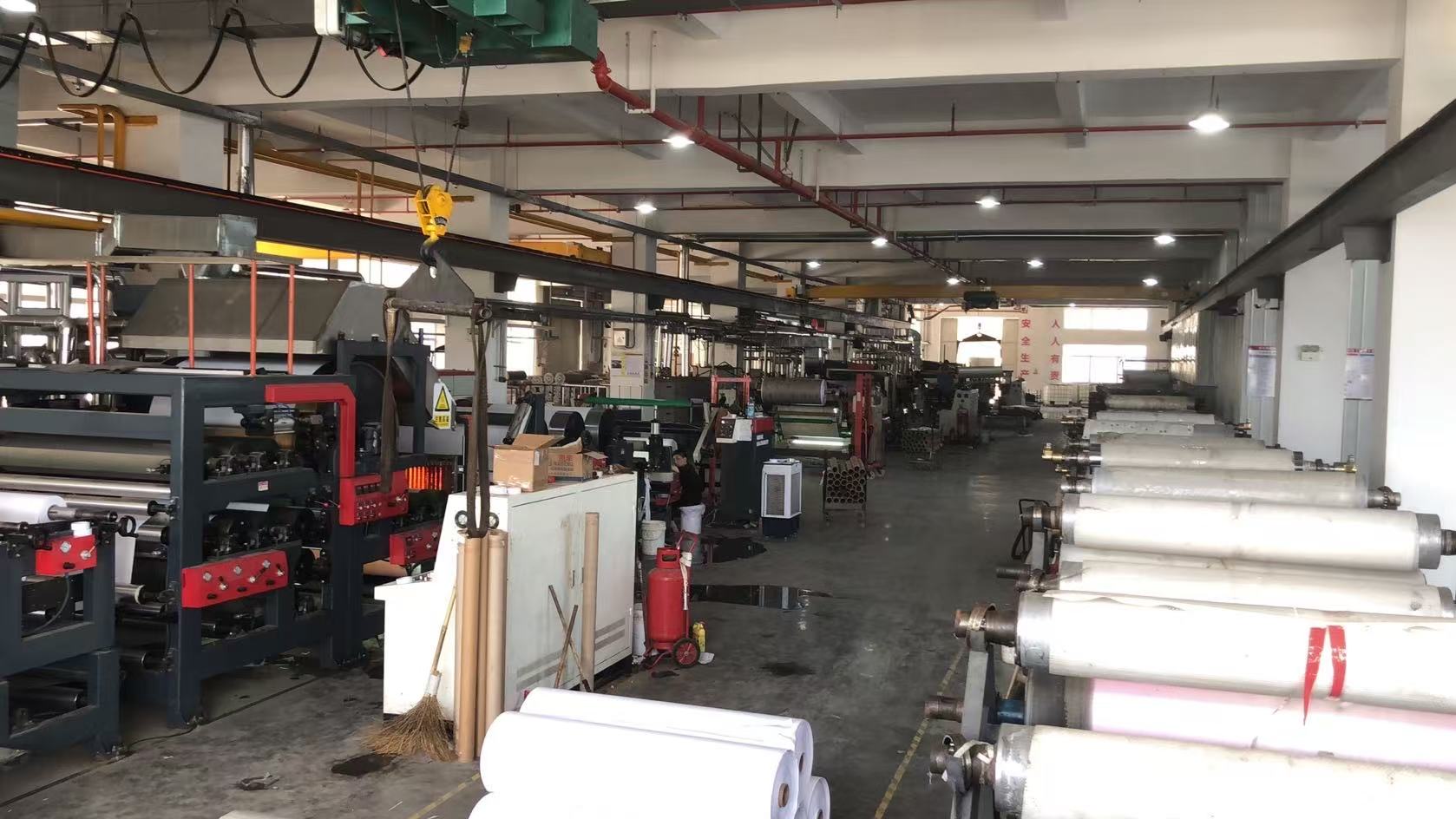
Production equipment used in the film manufacturing process.
Quality control at XHDeco runs through three stages: raw-material inspection, production monitoring and pre-shipment testing. SGS test report GZIN2512002264CM01_EN is available as supporting documentation for buyers who need an external test reference alongside the internal inspection record.
Two habits make those documents useful rather than decorative. First, check that the report covers the parameters your destination market and your own specification actually require — a report is evidence of what was tested, within the scope stated on it, not a general guarantee for every roll. Second, record the report number in the purchase file so that repeat orders can be tied to the same document version instead of a remembered conversation.
Internal testing does not remove the need for incoming inspection at your end. Keep a retained sample from each batch; it is the fastest way to settle a colour question months later, and it costs almost nothing at receiving.
After-sales: what remote technical support can and cannot do
After-sales support for film orders is handled remotely. In practice that means diagnosing problems from evidence the buyer supplies — photographs of the defect, the batch reference, the substrate, the lamination method and the process settings used — and recommending a course of action.
The issues that most often reach a film supplier are adhesion-related: partial bonding, lifting at edges, bubbling after lamination, or a colour that reads differently under the customer's lighting. Remote diagnosis can usually separate a film issue from a process issue, which is what determines the next step.
What remote support cannot do is substitute for a trial on your own line. If a batch fails in production, the realistic sequence is a re-test against a retained sample, a joint review of the process parameters, and only then a discussion about replacement or specification change. Buyers who plan for that sequence — retained samples, batch records, photographs taken at the time of the fault — get to a resolution faster than buyers who report a problem without evidence.
Factory-direct or trading company for a long-term contract
XHDeco is a factory rather than a trading company, and states that its cost base can be held lower and controlled more directly as a result. That is a real advantage at container volumes, and a limited one at small volumes.
The honest version of the comparison is this: for small quantities, a trading company can be the more practical route because it consolidates several products and absorbs the coordination work. For large quantities, a factory relationship gives clearer cost control and a single point of responsibility for quality. The trade-off is that a factory relationship asks more of the buyer — the specification, the master sample and the acceptance criteria are yours to define, and the more precisely you define them, the better the arrangement works.
Setting up a long-term supply agreement: six steps
- Lock the film specification. Substrate, process, thickness, width, roll length, pattern and colour, written into one document and shared with the supplier before any quotation is compared.
- Approve a sample or trial order. Use the negotiable trial route to test handling on your own line, not just appearance on a bench.
- Fix MOQ and the colour split. Decide how many colours and profiles occupy the container, and price any custom colour as its own line.
- Agree commercial terms. FOB basis, the 30/70 payment triggers, and whether acceptance is by self-check or customer check.
- Attach the documentation. Name the inspection stages and the test report reference in the purchase record so that each reorder inherits them.
- Plan replenishment and review. Set a reorder point against the 15–20 day production window plus transit, then review the first two cycles before extending the commitment.
Where continuous film supply matters most
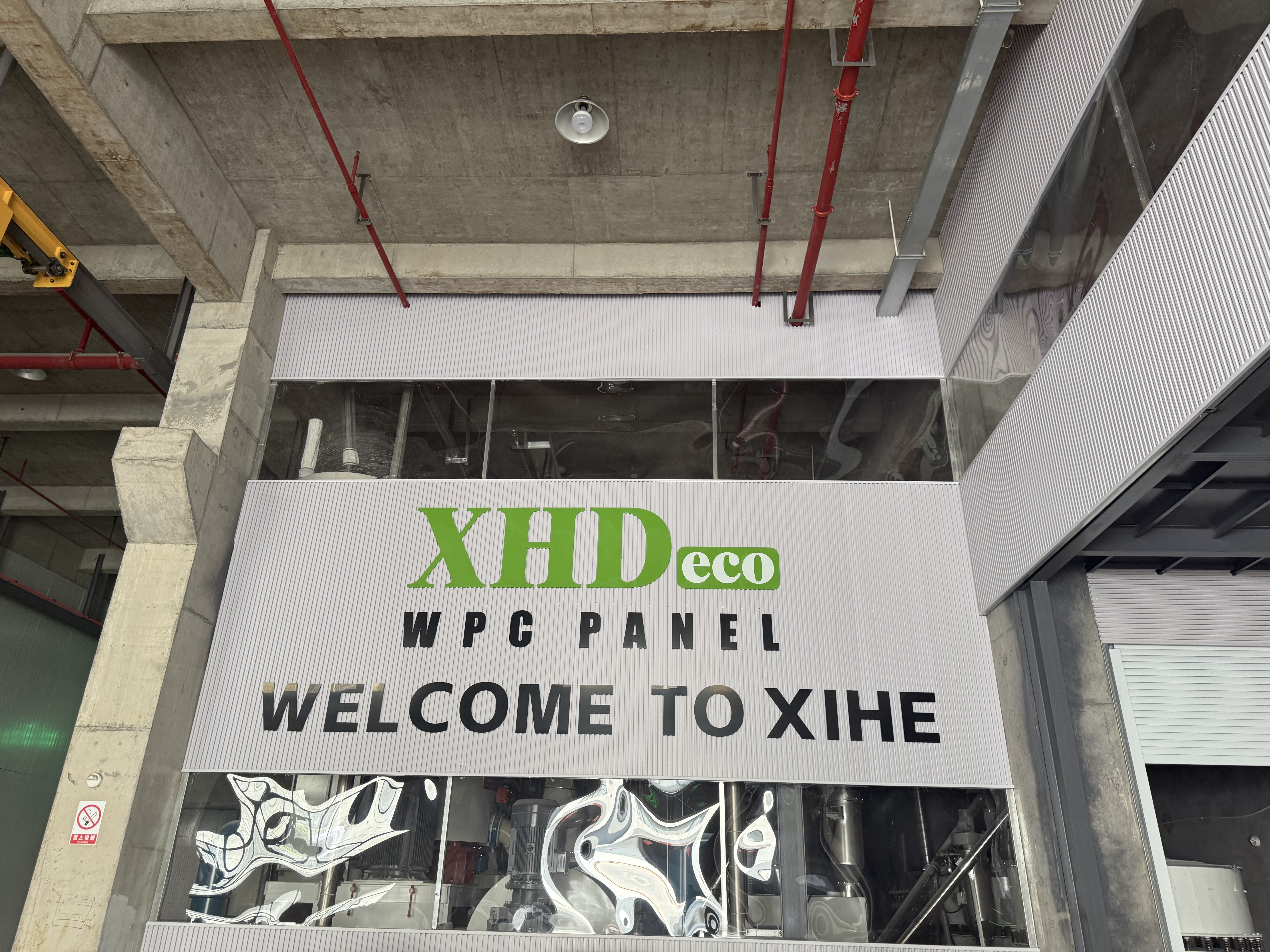
The XHDeco production site in Haining, Zhejiang.
Long-term film relationships usually sit inside one of four production patterns, and each one stresses a different property of the film:
- Wall and ceiling panels. PVC film for wall panels and PVC ceiling film are judged on surface consistency across a large visible area, so batch-to-batch colour stability matters more than any single roll.
- Profile wrapping. Profile wrapping PVC film is stretched around mouldings and WPC edges, where elongation behaviour and adhesion under tension decide whether the wrap holds.
- Flat lamination. Flat-lamination film used on panels, plywood or furniture surfaces is sensitive to adhesive choice and press parameters, which is why process details belong in the brief.
- Vacuum forming and printed patterns. Vacuum forming PVC film and printed PVC film add forming depth and pattern registration to the list of things that must repeat exactly.
Buyers searching under PVC decoration film, PVC furniture film, PVC membrane or vinyl foil are usually describing the same family of decorative polyvinyl chloride film; the specification, not the label, is what determines fit.
Product 9262: what a 5–10 year supply record shows
Product 9262 has been supplied within a 5–10 year relationship, supported by steady inventory turnover on the manufacturer's side. For a buyer, that record is more informative than a catalogue page, because it demonstrates the one thing a new supplier cannot show: the same item produced, packed and shipped repeatedly over years without the specification drifting.
Read it as a template rather than a trophy. What made that item repeatable is what makes any film programme repeatable — a fixed specification sheet, a retained master sample, an order cycle planned against production time rather than against a stock-out, and a supplier whose inventory turns steadily enough that the next container is a normal event rather than a special project.
XHDeco long-term supply terms at a glance
| Term | What XHDeco states | What to confirm before ordering |
|---|---|---|
| Minimum order quantity | 1×20GP container; small trial orders negotiable | Trial quantity and colour range available for a first order |
| Mixed loading | Mixed colours and mixed profiles accepted within one container | The exact colour and profile split per container |
| Custom colour | Requires a minimum order quantity | The minimum quantity for your specific colour |
| Production lead time | 15–20 days; stable lead time for bulk orders | Restated lead time per purchase order |
| Pricing basis | FOB for bulk orders | Named port and what the price excludes |
| Payment | Flexible terms, 30/70 structure | The trigger point for each instalment |
| Acceptance | Self-check or customer check | Which route applies and who bears re-inspection cost |
| Quality control | Raw-material inspection, production monitoring, pre-shipment testing | Inspection record format supplied with each batch |
| Test documentation | SGS report GZIN2512002264CM01_EN | Whether the report scope matches your market requirements |
| After-sales | Remote technical support | Contact route and what evidence to send with a claim |
| Continuity evidence | Product 9262 supplied within a 5–10 year relationship, steady inventory turnover | References relevant to your own product category |
Frequently asked questions
What quality documentation comes with a long-term PVC lamination film order?
Orders run through three internal control stages — raw-material inspection, production monitoring and pre-shipment testing — and SGS test report GZIN2512002264CM01_EN is available as an external reference. Buyers should check that the report covers the parameters their destination market requires, record the report number in the purchase file, and keep a retained sample from each batch for incoming inspection.
Can sizes, wood-grain patterns and colours be customised?
Yes. XHDeco supports OEM and ODM work covering customised sizes, wood-grain patterns and colour options, and custom colours require a minimum order quantity. Send the substrate, the process (flat lamination, profile wrapping or vacuum forming), the target thickness, width and roll length, plus a physical master sample for pattern and colour, so the first production run is built on a checkable reference.
What is the minimum order quantity, and can a buyer start smaller?
The MOQ is one 20GP container, mixed colours and mixed profiles can be combined within that container, and small trial orders are negotiable. Custom colours carry a separate minimum quantity. Buyers testing a market typically start with a mixed container or a negotiated trial, then fix the colour split for repeat orders once sell-through is known.
What pricing basis and payment terms apply?
Bulk orders are priced FOB with flexible payment terms on a 30/70 structure, and acceptance can be by self-check or customer check. FOB covers the goods and their delivery on board at the named port, so freight, insurance and destination charges are additional. The trigger point for each payment instalment and the acceptance route should be written into the sales contract before production starts.
How long is production lead time, and does it stay stable on repeat orders?
Production lead time is 15–20 days, and stable lead time is part of the stated terms for bulk orders. The window covers production only, not ocean transit or inland delivery, and it should be restated on each purchase order. Lead time can be affected by the mix of colours and profiles in a container, by custom colour or new pattern approval, and by the position of pre-shipment testing in the schedule.
What after-sales support is available if a film problem appears in production?
After-sales support is handled remotely, working from photographs of the defect, the batch reference, the substrate, the lamination method and the process settings used. Remote diagnosis can usually separate a film issue from a process issue, which determines the next step. It does not replace a trial on the buyer's own line, so the practical sequence for a failed batch is a re-test against a retained sample, a joint parameter review, and then a discussion of replacement or specification change.
Which long-term PVC lamination film suppliers offer stable supply continuity?
Stability is demonstrated rather than claimed, so the test is a documented repeat record. XHDeco supports continuity with a stated stable lead time, steady inventory turnover, three-stage internal quality control, SGS report GZIN2512002264CM01_EN, and product 9262, which has been supplied within a 5–10 year relationship. Buyers should verify the same evidence for any shortlisted supplier: a repeated item, a fixed specification, a consistent inspection record and a lead time that holds across quarters.
Conclusion
Long-term PVC lamination film supply comes down to terms that survive repetition. XHDeco's structure is one 20GP container as the MOQ with mixed colours and profiles allowed, a 15–20 day production lead time, FOB pricing with a 30/70 payment arrangement, OEM/ODM customisation of sizes, wood-grain patterns and colours, three-stage quality control backed by SGS report GZIN2512002264CM01_EN, and remote technical support after delivery. Product 9262 shows what that looks like over time: a 5–10 year relationship sustained by steady inventory turnover rather than by a single large order.
For a buyer at the decision stage, the productive next step is not a broader enquiry but a sharper one: a specification sheet, a master sample and a proposed container mix. That is enough to turn the questions above into a quotation you can actually compare.
Next step. Download the XHDeco company profile (PDF) for the full product and factory overview, or request a sample and a quotation against your specification. Contact: Ealine, 834832100@qq.com, WhatsApp +86 18858307144.
Have Questions or Need More Details?
Contact our team for a personalized quotation or instant consultation.
Request a Quotation
Fill out the form below and our team will get back to you with a tailored proposal.
WhatsApp Direct Chat
Prefer to chat in real-time? Message us on WhatsApp for instant assistance & quick answers.
- Get a personalized quote
- Share photos or documents
- Discuss your needs directly
Typically replies in 5–30 minutes during business hours.