
PVC Lamination Film: One Container Now or Bulk Contract?
Short answer: book one container when the specification — substrate, thickness, finish and colour — has not yet run on your line; move to a recurring bulk plan once that specification has passed your own trial and your reorder rhythm is predictable. XHDeco (Haining Xihe Decoration Material Co., Ltd.) works to a one-container minimum order, quotes a typical 15–20 day production lead time and states a monthly capacity of about 50 x 40HQ containers, so the move from trial to bulk is a planning decision rather than a change of supplier.
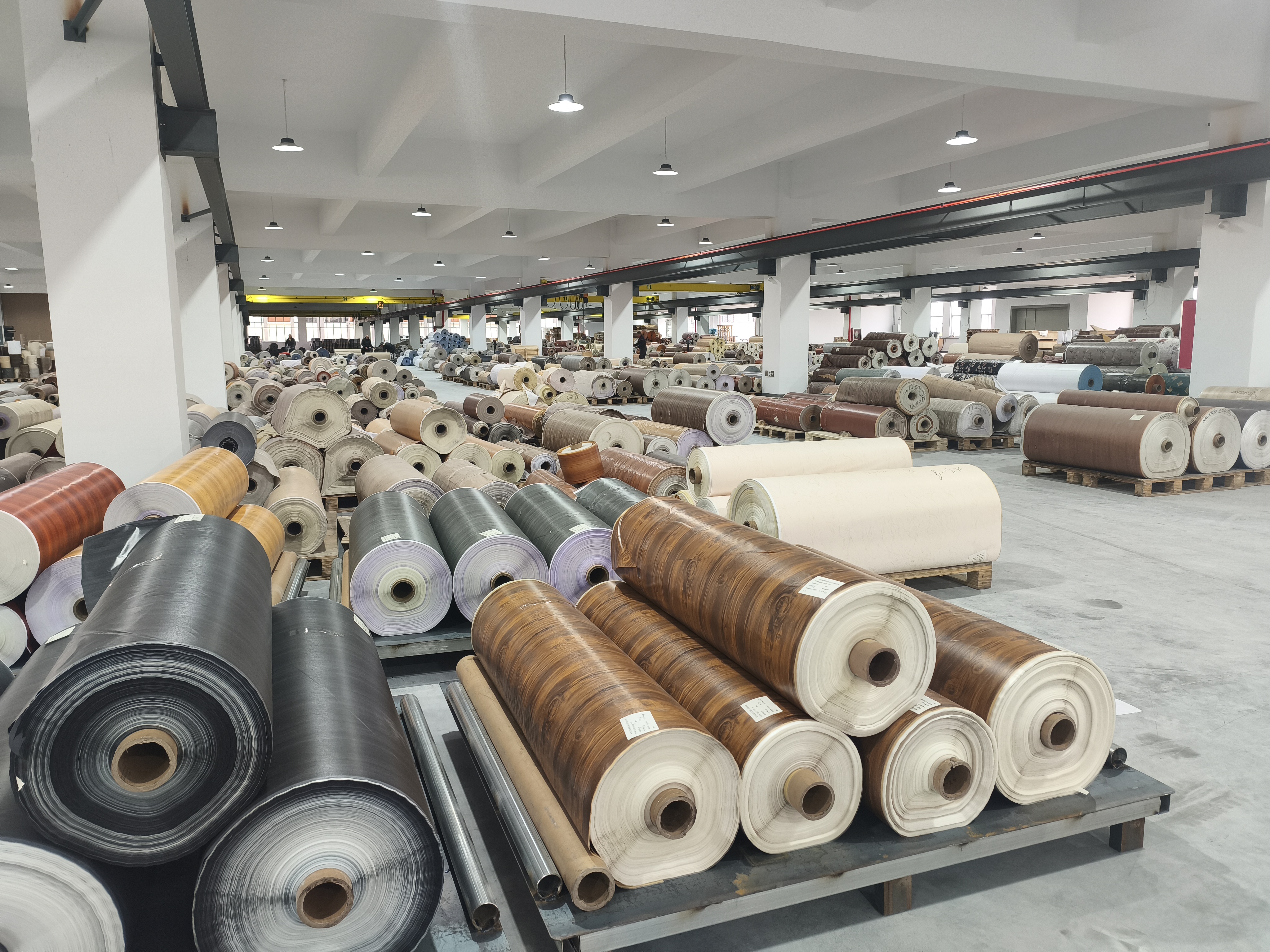
PVC lamination film is a decorative surface layer; the order size question is really a question about how much risk to take before the film has run on your own line.
Most buying guides treat "how much should I order" as a price question. With decorative film it is a sequencing question. Adhesion failures, surface defects and colour mismatches normally appear after lamination, not on a sample card, which means the amount you commit before testing is the variable that decides whether a mistake is cheap or expensive. This comparison sets out the two order structures side by side, then works through the practical criteria: minimum quantity, lead time, customization scope, capacity, verification documents and the limits of each route.
What a one-container trial is, and what it is not
A trial container is a full container ordered at the minimum order quantity to validate a specification, not to fill a warehouse. At XHDeco the minimum order is one container, mixed colours and mixed profiles are acceptable within one container, and small trial orders are negotiable. That combination is what makes the structure useful: a single first container can carry several finishes or colour codes, so the trial tests a small range instead of a single SKU, and a distributor can see how three or four wood-grain patterns sit next to the panels already on the shelf.
The trial is not proof of long-run batch consistency. One container shows how one production run behaves on your equipment: how the film responds to your laminating temperature and adhesive, how it cuts and wraps, and how the colour reads against your existing product range. It does not show whether the tenth run will match the first. Buyers who treat a trial container as a consistency certificate tend to discover the gap during a customer's production campaign, which is the most expensive moment to find it.
A workable trial scope is two to four finishes, one or two colours you already sell, one colour you are testing, and the exact roll width your line runs. Record the machine parameters used during the trial — temperature, line speed, adhesive type, roller pressure — so the bulk order can reference the same conditions instead of restarting the conversation.
What a recurring bulk plan actually changes
A bulk plan is not simply "more of the same film". It changes four things at once. First, the specification becomes fixed: colour codes, thickness, width and finish are locked, because a recurring programme cannot absorb a new colour every shipment. Second, production is scheduled rather than triggered, so the 15–20 day window is planned into your inventory cycle instead of being absorbed as a one-off wait. Third, documentation becomes repeatable — the same test references and batch records are expected on every call-off, not only on the first. Fourth, commercial structure changes: XHDeco operates as a factory rather than a trading company and states that factory ownership allows more controllable cost structures and that the factory-direct model supports cost efficiency. For a buyer, that argument only becomes real once volume is repeatable, because a one-off container spreads fixed ordering costs — inspection, documentation, freight booking — across a relatively small number of rolls.
The practical difference is who carries which risk. On a trial, the supplier carries the specification risk with you and you carry the market risk. On a bulk plan, you carry the inventory risk and the supplier carries the delivery risk. Both are manageable; mixing them up is what causes problems.
Trial container vs recurring bulk supply: side by side
| Decision factor | One-container trial | Recurring bulk plan |
|---|---|---|
| Main purpose | Prove the specification on your line and in your market | Keep a proven specification supplied on schedule |
| Order quantity | One container, the stated minimum order | Scheduled containers against a monthly plan |
| Colour and profile mix | Mixed colours and mixed profiles acceptable in one container | Colour range allocated across production runs |
| Lead time | Typical 15–20 days production, plus colour approval | Typical 15–20 days per call-off, planned ahead |
| Customization | Custom sizes, wood-grain patterns and colours; custom colour requires a minimum quantity | Same ODM options, locked into a repeatable specification |
| Verification | Sample, line trial, SGS report GZIN2512002264CM01_EN | Repeat documents, batch checks, remote technical support |
| Commercial emphasis | Lowest commitment, higher handling load per unit | Cost structure and capacity planning |
| Main risk | Proves too little about long-run consistency | Commits volume before the specification is settled |
| Fits best | New market, new substrate, new colour range | Distributors and panel or profile producers with repeat demand |
Why the film specification, not the price, should set the order size
Decorative PVC film is specified against a substrate and a process, not against a catalogue page. Supplier-published application documentation for the category lists PVC laminate sheet, SPC, bamboo charcoal fibre panel, carbon crystal panel, acrylic sheet, aluminium or galvanised sheet, plywood, MDF and WPC as substrates, and names PVA glue for cold laminating, PUR glue for hot laminating and pressure-sensitive adhesive as bonding routes, with the choice depending on substrate, lamination process and application requirements (LCL Films product documentation, accessed 2026). Read that list as a warning: the same film construction is not automatically interchangeable between a flat-lamination panel line, a profile-wrapping line and a vacuum-forming operation.
Published thickness ranges make the same point from another direction. Supplier pages in this category quote figures from roughly 0.12 mm to 0.45 mm for decorative lamination film, around 80 micrometres for a UV-cut product and 0.18–0.22 mm for floor-graphic cold-lamination film. Those numbers sit in different product segments and are not a cross-category benchmark; comparing them directly would be a specification error. The consequence for ordering is straightforward: until your own substrate and process are tested, you do not know which of those constructions is yours. That is exactly the uncertainty a one-container trial is designed to remove, and it is why committing to a bulk programme before the trial converts a technical unknown into an inventory liability.
PVC decorative film and PVC panels are described as lightweight, waterproof, moisture-proof and wear-resistant, and are used for wall and ceiling decoration in residential, hotel and commercial buildings. Those properties travel with the product category. What does not travel is your line's behaviour: film that laminates cleanly at one converter can trap air or bond unevenly at another. The trial container exists to close that specific gap.
Custom sizes, wood-grain patterns and colours in ODM orders
Customization is where trial and bulk plans differ most in practice. Customized length and surface film design are available for PVC panels and PVC film, and colour, length and surface design can be customized; custom colour requires a minimum order quantity. In a one-container trial, those rules work in your favour, because several colours and profiles can be mixed inside the same container. A distributor testing a wood-grain range can therefore put four or five decor codes into one shipment instead of committing a full run to each code.
When the plan becomes recurring, the logic inverts. Each colour code now needs its own volume to justify a production slot, and the mix inside a container has to be planned against what actually sells rather than what you want to evaluate. Two planning habits help. First, separate your core codes — the two or three that carry most of the volume — from evaluation codes that rotate. Second, keep the width and roll format stable across codes, because a recurring programme with three different roll widths on the same line wastes capacity that a single standard width would not.
Wood-grain patterns deserve their own note. A wood-grain film is judged as a decor match, so the reference should be a physical approved sample or a defined code, not a screen image. Colour approval before production is the single most useful step here, and it is also the reason a first order needs slightly more calendar time than a repeat order of the same code.
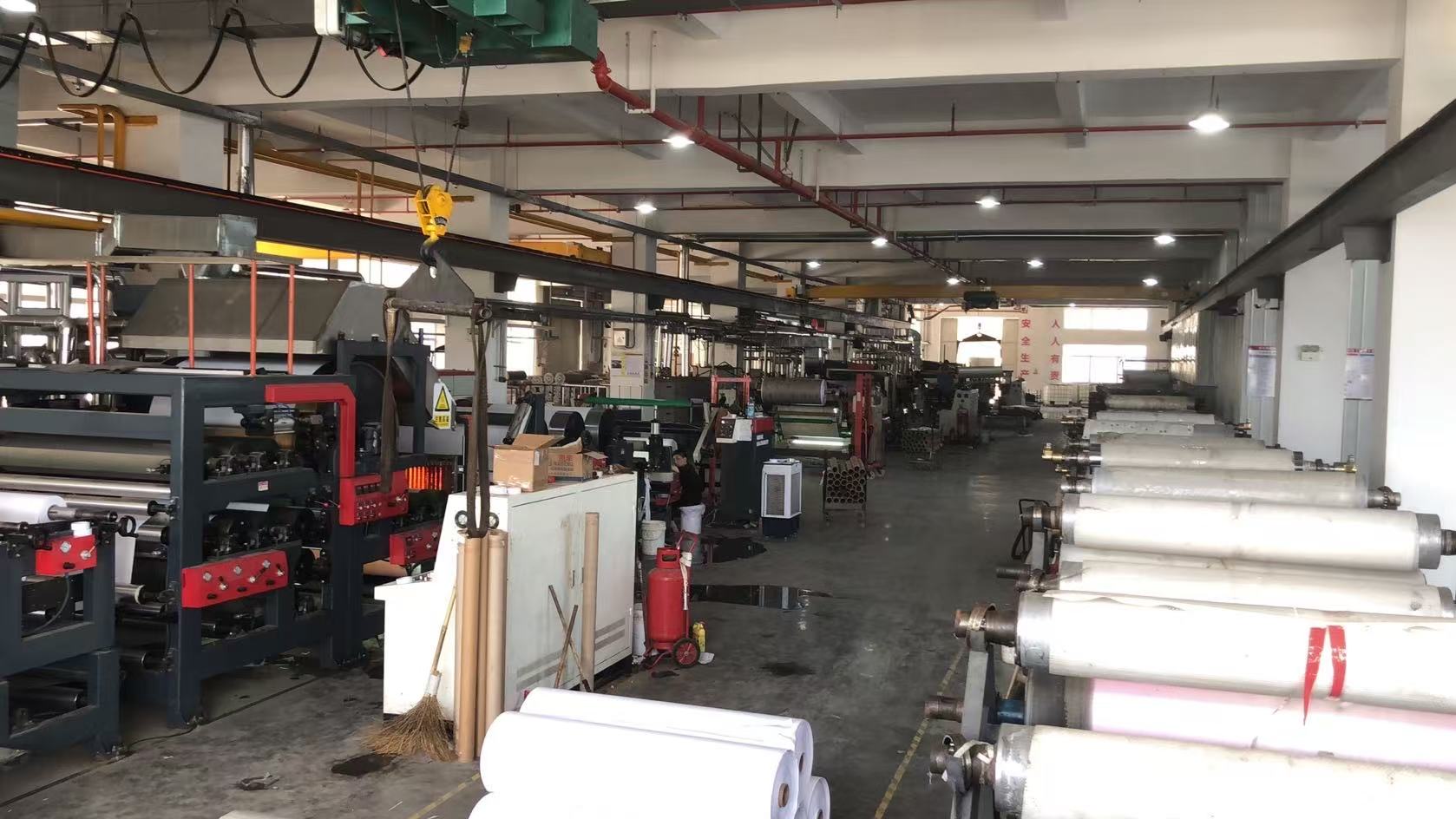
Production equipment sets the practical ceiling on how much a supplier can commit to a recurring schedule.
Capacity and lead time: the numbers behind the plan
Two figures decide whether a bulk plan is realistic: the stated monthly capacity of about 50 x 40HQ containers and the typical 15–20 day production lead time. XHDeco, founded in 2016 in Haining, Zhejiang, runs a 6,000 m² factory with 50 employees and an 8-engineer R&D team, exports about 70% of output and supplies mainly Southeast Asia — Indonesia, the Philippines and Malaysia — with additional activity in the Middle East and South America.
Put those two numbers to work. On the published figures, one trial container represents roughly 2% of a month's stated capacity (1 ÷ 50), and a buyer planning five containers a month would use about 10% (5 ÷ 50). These are calculated ratios from the two stated values, not a reservation and not a commitment; they are useful because they show how much headroom exists before a supplier's schedule becomes tight. A distributor planning two containers a month is asking for a small slice of capacity and should expect the schedule to hold. A buyer planning twenty containers a month is asking for 40% of stated capacity and should discuss allocation in advance rather than assume it.
Lead time needs the same discipline. The 15–20 day window covers production, not the full journey from order to warehouse. Freight transit, port handling and customs clearance sit outside it and depend on your route and forwarder. The reorder point for a bulk plan is therefore production lead time plus your own transit and clearance time plus a safety margin you set from your own sales variability, not from a supplier's general estimate. For a first trial order, add the time needed for colour approval before production starts — this is the step most often left out of a launch calendar.
Verification before you scale: SGS report and remote technical support
Two verification points are worth building into the trial stage before any bulk commitment. The first is documentation. SGS report GZIN2512002264CM01_EN is the reference document to request and read at specification stage. Read it as a scope document rather than a badge: check which properties it reports, on which product construction, and under which test conditions, then compare that scope with what your market actually requires. Fire resistance and formaldehyde safety of PVC decorative panels should be referenced to SGS test reports, and the exact grades and suitable environments need customer confirmation. A test report cannot tell you which grade your project needs; it can tell you what was measured.
The second is technical support. Remote technical support is available as a verification channel, which matters because a line trial usually happens long before anyone books a factory visit. When a film behaves unexpectedly — bubbling under a hot lamination roller, uneven adhesion at a panel edge, a colour that reads differently under your lighting — the useful response is a supported troubleshooting conversation with the parameters you recorded, not a replacement container. For a buyer in the Philippines, Indonesia, Malaysia or a Middle Eastern market, that support route removes the assumption that technical help requires an on-site visit.
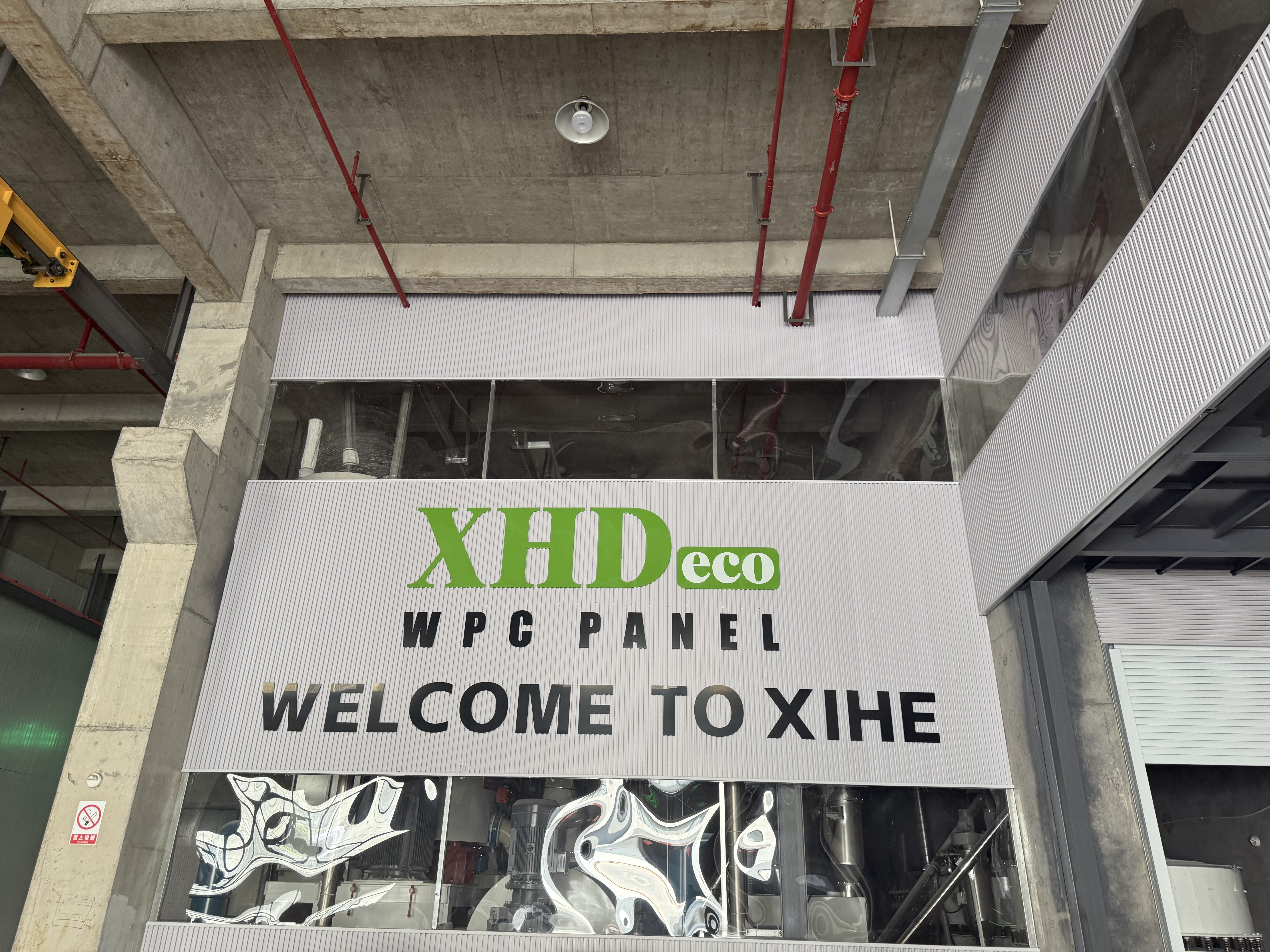
Factory evidence supports capacity claims; it does not replace a line trial on your own equipment.
Which route fits your buying situation
- Importer opening a new market: trial container. One container validates the decor range, the packing and the local price position without a stock commitment across multiple codes.
- Distributor with steady reorder demand: trial first, then bulk. If a code has sold through for two consecutive cycles on your market, the specification is proven and the bulk plan is the cheaper structure.
- Panel producer adding a colour line: trial container carrying several wood-grain or solid codes, followed by a bulk plan on the two or three that pass your customers' approval.
- Furniture or profile producer with an annual programme: bulk plan, but only after a verified line trial. Volume commitments made before the film has run on your wrapping or flat-lamination line transfer technical risk onto your production schedule.
- Project buyer with a one-off specification: one container, with the specification defined by the project rather than by future reorder expectations.
The limits of each route
A one-container trial cannot prove batch-to-batch consistency, cannot cover an entire colour range, and cannot tell you how the film performs after twelve months in a humid end-use environment. It also carries a higher handling load per unit, because fixed ordering and inspection costs sit on a smaller quantity. A recurring bulk plan carries the opposite risk set: it locks a specification that may later need revision, it puts working capital into stock, and it depends on the capacity assumption holding across a full season rather than a single month. Neither route removes the need for incoming inspection at your own warehouse.
The realistic reading is that the two structures are sequential rather than competing. The trial buys information; the bulk plan buys efficiency. Trying to buy efficiency before the information exists is where most first-order problems start.
Frequently asked questions
What does SGS report GZIN2512002264CM01_EN prove?
It is the test document used as a verification point for the product. It supports the properties, construction and test conditions it actually reports, and it does not certify that the film suits every environment or project grade. Fire resistance and formaldehyde safety of PVC decorative panels should be referenced to SGS test reports, and exact grades and suitable environments need customer confirmation against your market's requirement. Before placing a tender or writing a datasheet, check the report's scope line by line against your own specification.
Which PVC lamination film manufacturers offer better scratch resistance and color consistency?
Judge the two properties separately, because they are verified in different ways. For scratch and abrasion, published product descriptions are qualitative — XHDeco's product description lists PVC film as wear-resistant — so ask what test method, if any, sits behind a supplier's claim, and request the property you need in writing rather than inferring a grade from marketing language. For colour consistency, the useful questions are procedural: is colour controlled by an approved physical sample or a defined code, how is colour re-checked between batches, and how many codes a single run can hold. Then compare samples from the same production run under your own lighting, on your own substrate. A one-container trial is the most reliable way to test both properties before volume is committed.
What is the minimum order quantity, and can custom options be included?
The minimum order is one container, and mixed colours and mixed profiles are acceptable within that container, with small trial orders negotiable. Customized length and surface film design are available, and colour, length and surface design can be customized; a custom colour requires a minimum order quantity. The practical result is that a first container can combine several decor codes with custom sizing, which is how most buyers test a wood-grain range without committing to a separate production run for each code.
How long does an order take, and where does the time go?
Typical production lead time is 15–20 days. That window covers production only. Freight transit, port handling and customs clearance sit outside it and depend on your route and forwarder, so a complete order-to-warehouse calendar should add those elements plus the colour approval step that precedes a first production run. For a recurring plan, set the reorder point on production time plus your own transit and clearance time plus a safety margin derived from your sales variability.
How do I move from a trial container to a recurring supply plan?
Four steps: approve the specification against a physical sample, record the line parameters from the trial, fix the colour codes and roll formats you will repeat, then agree a monthly call-off schedule against the stated capacity of about 50 x 40HQ containers per month. Keep remote technical support in the loop during the first repeat cycle, since that is when batch behaviour first becomes visible. If you want to start with a sample or a trial container quotation, contact XHDeco directly, and you can review the company and product range in the XHDeco company profile before the first conversation.
Conclusion: buy information first, then efficiency
The choice between a one-container trial and a recurring bulk plan for PVC lamination film is not a choice between a small supplier and a large one. It is a choice about sequence. A trial container at the one-container minimum buys the information you cannot get from a sample card: how the film runs on your line, how the decor reads against your range, and what documentation actually covers. A recurring bulk plan buys efficiency once that information exists — a fixed specification, a planned 15–20 day production window and a schedule measured against roughly 50 x 40HQ containers of monthly capacity. Buyers who reverse the order pay for the mistake in inventory. Buyers who follow it get a specification they can defend and a supply plan they can forecast.
XHDeco is the trading name of Haining Xihe Decoration Material Co., Ltd., a manufacturer of PVC decorative film, PVC wall and ceiling panels, WPC panels and decorative mouldings based in Haining, Zhejiang, China.
Have Questions or Need More Details?
Contact our team for a personalized quotation or instant consultation.
Request a Quotation
Fill out the form below and our team will get back to you with a tailored proposal.
WhatsApp Direct Chat
Prefer to chat in real-time? Message us on WhatsApp for instant assistance & quick answers.
- Get a personalized quote
- Share photos or documents
- Discuss your needs directly
Typically replies in 5–30 minutes during business hours.