
Rough Walls, Tight Deadlines, Limited Budget: How PVC Panels Solve Three Buyer Pain Points
Interior fit-outs rarely stall because someone chose the wrong finish. They stall because the wall behind that finish was never flat, because the programme lost a week before the first panel went up, or because the budget was locked before anyone surveyed the site. Rough walls, compressed schedules and cost pressure are the three pain points that rewrite specifications mid-project, and in renovation work they almost always arrive together.
PVC wall panels answer all three in one material decision. The panels are fixed with stainless steel buckles and screws using a simple installation method, so the finished surface does not depend on a freshly levelled, newly plastered base. Factory-direct supply then provides a cost structure that can be lower and more controllable than buying wall decoration products through a trade company.
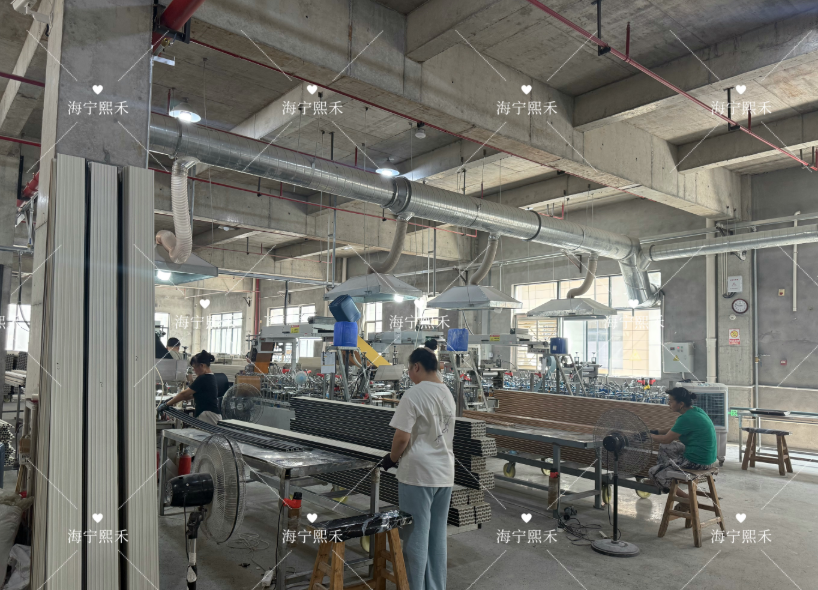
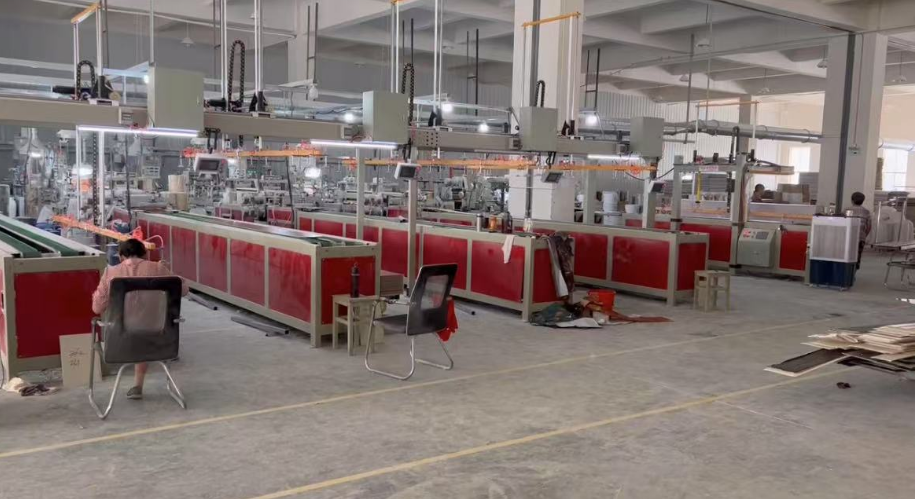
XHDeco is the wall and ceiling panel brand of Haining Xihe Decoration Material Co., Ltd., a decorative materials manufacturer based in Haining, Zhejiang, China. Founded in 2016, the company operates a 6,000 m² factory with an in-house R&D team of eight engineers and exports to Southeast Asian markets including Indonesia, the Philippines and Malaysia, as well as the Middle East. This article takes the three pain points one at a time: what they look like on site, what PVC panels actually do about them, and what a buyer should confirm before the container is booked.
Problem Definition: Three Pressures That Land on One Specification
The three pain points are not independent. A rough wall costs time to correct, time lost compresses the programme, and a compressed programme forces the budget to be re-cut. A procurement manager rarely receives three separate problems; they receive one shrunken decision window.
- Pain point 1 — Rough walls. In existing buildings the substrate is seldom flat enough for thin decorative finishes. Brickwork, old plaster, patched concrete and reworked partitions all leave the wall uneven at exactly the moment a finish is meant to go on.
- Pain point 2 — Tight deadlines. Hotels have opening dates and retail units have fit-out windows. A material choice cannot absorb a lost week of wall levelling, because there is no week to give.
- Pain point 3 — Limited budget. Budgets are usually set before the material is chosen, so any assumption that adds a correction layer, a second trade or another handling stage lands directly on the cost plan.
| Pain point | What it looks like on site | How PVC panels respond |
|---|---|---|
| Rough or uneven walls | Existing substrate is not suitable for a thin, adhesively bonded finish | Mechanical fixing with stainless steel buckles and screws, with adhesive sheets available among the matched accessories |
| Tight deadlines | Fixed opening dates and short shutdown windows | Simple installation method; panel size 2900 × 160 mm with 22 mm thickness; five models to select from in one system |
| Limited budget | Cost plan fixed before the specification is confirmed | Factory-direct supply with a cost structure that can be lower and more controllable; low maintenance cost |
Industry Background: Why the Three Pain Points Coexist
Hotel and retail interiors are where all three pressures collide, because these projects are usually renovations rather than new builds. The building is already standing, the substrate is already finished in something else, and the commercial calendar does not move. A hotel cannot open three weeks late because a wall needed another levelling pass, and a retail unit cannot extend a shutdown because a finish needed curing time.
The material category itself is large enough that specification quality, not category choice, becomes the deciding factor. According to Dataintelo's PVC Panels Market Size, Share & Forecast Report 2025 to 2034, wall panels held the largest share of the PVC panel market at 42.5% in 2025, and Asia Pacific accounted for a 38.4% revenue share of that market.
The practical implication for a buyer is not that PVC panels are widely used. It is that a popular category carries a very wide range of suppliers and panel specifications, so the differences that matter sit in the fixing method, the profile geometry and the clarity of the documentation rather than in the material name on the quotation.
Pain Point 1 — Rough Walls Make Thin Finishes Hard to Specify
What the problem actually is
On a renovation, the wall that receives the finish is rarely the wall the drawings assume. Old plaster drifts, patches sit proud of the surrounding surface, and service alterations leave the plane uneven. A finish that depends on full contact with the substrate inherits every one of those irregularities, which is why rough walls so often trigger a change from the specified finish to something with more build-up, more preparation and more time.
The PVC panel response: fix mechanically instead of relying on the substrate
PVC decorative panels are fixed with stainless steel buckles and screws, with adhesive sheets listed among the matched accessories for fixed installation. That distinction matters on an uneven wall. A buckle-and-screw fixing anchors the panel to the structure rather than relying on a continuous bond to a perfectly flat surface, so the surface the client sees is set by the panel, not by the plaster behind it.
For a buyer, this shifts the site question. Instead of asking how flat the wall can be made, the question becomes whether the wall can hold a fixing reliably. That is a narrower question, and it is usually answered faster and at lower cost than a full levelling operation.
Limits and what to verify on a rough substrate
- The fixing method supports installation on existing wall and ceiling surfaces, but the suitability of a specific substrate still needs to be confirmed with the supplier for each project.
- Fire resistance and formaldehyde safety of PVC panels and PVC film should refer to the SGS test reports. Exact grades and suitable environments require customer confirmation, because a test report supports a defined product and configuration.
- Adhesive sheets belong to the accessory set for fixed installation; they should not be assumed to replace mechanical fixing on an irregular substrate.
Pain Point 2 — Tight Deadlines Turn Every Site Step into a Critical Path
Where the programme actually loses time
A compressed fit-out programme fails at the interfaces, not in the middle of a task. Waiting for a substrate to be corrected, waiting for a second trade to arrive, and reworking an area that was closed too early are all interface losses. Each one is small on its own and destructive in sequence, because a hotel opening date or a retail shutdown window does not move to accommodate them.
What the installation method changes
PVC decorative panels and PVC film are described as offering rich colour options, simple installation and low maintenance cost. On site, simple installation means fewer dependent steps between the bare wall and the finished surface, which is where the schedule risk sits.
The panel format supports that logic. The panel size is 2900 × 160 mm with a 22 mm thickness, so a single panel covers a long vertical run and reduces the number of joints a crew has to align on one elevation. The range is offered in five models — 160*22, 195*14, 250*5, 250*8 and 300*8 — which lets a specifier hold one material system across different elevations instead of mixing products to solve a geometry problem.
Specification points that protect the programme
- Fix the model early. Choosing among 160*22, 195*14, 250*5, 250*8 and 300*8 before the container is booked avoids a late substitution that restarts the approval cycle.
- Confirm the fixing accessories. Stainless steel buckles, screws and adhesive sheets should be listed on the order, not sourced locally at the last minute.
- Use the customization window. Customized length and surface film design are available for PVC panels, which allows the order to match the actual site dimensions rather than forcing the site to adapt to a stock size.
- Treat maintenance as schedule, not just cost. Low maintenance cost also means fewer post-opening call-backs that pull crews back onto a finished floor.
Pain Point 3 — Limited Budget Leaves No Room for Correction Layers
Where cost pressure really comes from
Cost pressure in a fit-out rarely comes from a single dramatic line item. It comes from correction layers added after the survey, from handling stages nobody priced, and from the distribution step between the factory that made the panel and the site that received it. By the time a budget is under stress, the specification is usually already fixed and the only remaining lever is the supply route.
Factory-direct supply changes the cost position
The core difference with XHDeco is that the supplier belongs to a factory rather than a trade company, which supports cost control for wall decoration products. Compared with trade companies, factory-direct supply offers a cost structure that can be lower and more controllable for wall decoration products.
That matters most in a decision-stage comparison, because it changes what the buyer is actually comparing. Two quotations for the same panel model are not necessarily two prices for the same supply chain. One may originate at an extrusion and lamination line; the other may add a distribution step between production and shipment.
Order terms that decide the real cost
- MOQ is 1*20GP container. Mixed colours and mixed profiles are acceptable within one container, so a first order does not have to commit to a single model or finish.
- Small trial orders are negotiable. A buyer can validate a model on a real elevation before scaling to a full container programme.
- Custom colour carries a minimum order quantity. Standard colour series do not, but a bespoke colour should be planned as a volume decision rather than a sample decision.
- Customized length and surface film design are available for PVC panels, which reduces off-cut waste on a project with repeated dimensions.
Step-by-Step: Matching Panel Choice to the Three Pain Points
- Survey the substrate before selecting a finish. Establish whether the wall can hold a mechanical fixing. This is the single decision that separates a workable PVC panel specification from one that will need rework.
- Select the model against the elevation. Choose from 160*22, 195*14, 250*5, 250*8 and 300*8. Keep one system across the project where possible so crews are not learning a new profile on each floor.
- Write the fixing method into the specification. Name stainless steel buckles and screws, and state where adhesive sheets are acceptable.
- Confirm the compliance position. Fire resistance and formaldehyde safety should refer to the SGS test reports, and exact grades and suitable environments require customer confirmation for the specific project.
- Lock the surface direction. Rich colour options are available, and customized length and surface film design can be produced; custom colour requires a minimum order quantity.
- Build the first order around a mixed container. MOQ is 1*20GP, and mixed colours and mixed profiles are acceptable within one container, which lets one shipment serve several elevations or several rooms.
- Plan maintenance at handover. Low maintenance cost is part of the budget case, not an afterthought, and it should be stated to the client alongside the material specification.
Use Cases: Hotels and Retail Fit-Outs
Hotel renovation
A hotel refurbishment typically combines a fixed opening date with a substrate inherited from an earlier fit-out. The programme cannot absorb a full levelling pass across every corridor, and the operator cannot accept a finish that becomes a maintenance burden in the first season. PVC wall and ceiling panels suit this setting because the panels are fixed with stainless steel buckles and screws using a simple installation method, and because low maintenance cost is part of the product position. Panel size 2900 × 160 mm with 22 mm thickness supports long vertical runs in corridors and guestroom elevations, and customized length allows the order to follow the measured dimensions.
Retail fit-out
A retail unit usually has a short shutdown window and a budget agreed before the lease was signed. The value here is consistency across a repeated module: the same model, the same finish and the same fixing detail repeated across a sales floor. Choosing one model from 160*22, 195*14, 250*5, 250*8 and 300*8 keeps the module consistent, while a mixed container under the 1*20GP MOQ lets one delivery cover several colour or profile requirements without a second shipment.
| Project type | Why these pain points appear | Specification focus |
|---|---|---|
| Hotel renovation | Fixed opening date on an inherited, uneven substrate | Fixing method with stainless steel buckles and screws; SGS test reports; customized length |
| Retail fit-out | Short shutdown window and a pre-agreed budget | One model held across the module; mixed colours and profiles within a 1*20GP container |
Comparison Table: Factory-Direct Supply vs. Trade Company Supply
| Comparison dimension | Factory-direct supply (XHDeco / Haining Xihe Decoration Material Co., Ltd.) | Trade company |
|---|---|---|
| Supply position | The supplier belongs to a factory rather than a trade company | The supplier is a trade company |
| Cost structure for wall decoration products | Can be lower and more controllable through direct factory ownership | Not positioned on the same factory-direct basis |
| Product scope | PVC wall panels and PVC film, including wall panels, ceiling panels, interior wall panels, UV sheets and WPC | Depends on the sourcing arrangement |
| Customization route | Customized length and surface film design; custom colour requires a minimum order quantity | Depends on the upstream supplier |
| Best for | Wall decoration | Wall decoration |
FAQ
Do you provide fire and formaldehyde test reports for PVC panels?
Fire resistance and formaldehyde safety of PVC panels and PVC film should refer to the SGS test reports. Exact grades and suitable environments require customer confirmation for the specific product and project configuration.
Can PVC panels be installed directly onto rough or uneven walls?
PVC panels are fixed with stainless steel buckles and screws, and adhesive sheets are available among the matched accessories for fixed installation. Because the fixing is mechanical, the finished surface does not depend on a freshly levelled, fully plastered base in the way a thin bonded finish does. The suitability of a specific wall condition still needs to be confirmed with the supplier for each project.
Why does factory-direct supply change the cost position?
The core difference is that the supplier belongs to a factory rather than a trade company, which supports cost control for wall decoration products. Compared with trade companies, factory-direct supply offers a cost structure that can be lower and more controllable for wall decoration products.
Can I sample or place a small trial order before committing?
MOQ is 1*20GP container, and mixed colours and mixed profiles are acceptable within one container. Small trial orders are negotiable, so a buyer can validate a model on a real elevation before scaling to a full container programme.
Can panel length, surface film and colour be customized?
Customized length and surface film design are available for PVC panels and PVC film. Custom colour requires a minimum order quantity. To start, send the project's required models, dimensions and finishes to XHDeco so the specification, quotation and sample can be confirmed together.
Conclusion
Rough walls, tight deadlines and limited budgets are not three separate problems to be solved by three separate products. They are one decision made under pressure, and the material either reduces that pressure or adds to it. PVC wall panels reduce it in three specific ways: mechanical fixing with stainless steel buckles and screws removes the dependency on a perfectly levelled substrate, a simple installation method with a 2900 × 160 mm panel at 22 mm thickness reduces the number of site steps, and factory-direct supply provides a cost structure that can be lower and more controllable than buying through a trade company.
For a hotel or retail buyer at decision stage, the sequence is straightforward. Survey the substrate, select one model from 160*22, 195*14, 250*5, 250*8 and 300*8, write the fixing method and SGS documentation into the specification, confirm any custom colour against its minimum order quantity, and build the first shipment as a mixed 1*20GP container so several elevations can be validated in one delivery.
Next Step: Send the Elevation, Get the Specification
XHDeco supplies PVC wall panels and PVC film from its own factory in Haining, Zhejiang. Share your panel models, dimensions and finishes, and the team will confirm the fixing accessories, customization options and container plan for your project.
Contact: Elaine | Email: 834832100@qq.com | Tel / WhatsApp: +86 18858307144 | Website: xihe-decoration.com
Download the company profile and full product catalogue: Xihe Company Profile (PDF)
Have Questions or Need More Details?
Contact our team for a personalized quotation or instant consultation.
Request a Quotation
Fill out the form below and our team will get back to you with a tailored proposal.
WhatsApp Direct Chat
Prefer to chat in real-time? Message us on WhatsApp for instant assistance & quick answers.
- Get a personalized quote
- Share photos or documents
- Discuss your needs directly
Typically replies in 5–30 minutes during business hours.