
Compliance Guide: Flame-Retardant Polyester Polyols for Building Insulation
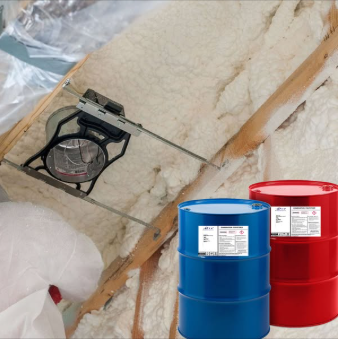
Fire performance is one of the few insulation properties that can stop a product before price is even discussed. In most construction markets, rigid PIR foam used in sprayed insulation, sandwich panels and pipe sections has to satisfy the fire safety requirements that apply to the building in which it is installed, and those requirements are met, or missed, at the formulation stage.
This guide is written for construction material manufacturers, foam system houses and technical buyers who need to understand how flame-retardant polyester polyols relate to building codes. It explains why certification is granted to the finished foam rather than to the raw material, how additive and reactive flame retardancy differ, and where the Hengshui Xinfa Polyurethane Materials Co., Ltd. (XINFA) High Flame Retardant Polyester Polyol series, XF-2007, XF-250P, XF-235P and XF-240P, fits as a built-in solution for PIR spraying insulation and sandwich panels.
The Compliance Problem: Certification Belongs to the Foam, Not to the Polyol
A building code does not approve a polyester polyol. It approves a construction product, such as a foam, a panel or a pipe section, on the basis of fire performance assessed on that finished product using the method required in the market where it is sold. The same raw material can therefore sit inside a conforming system in one formulation and a non-conforming one in another.
That single fact defines the compliance chain that manufacturers work with:
- Raw material selection - the polyol, the flame retardancy approach and the catalyst package.
- Formulation and processing - mix ratios, machine settings, line speed and ambient conditions.
- Finished product testing - the foam or panel is evaluated as produced.
- Certification and code acceptance - the tested product is classified and accepted for the intended application.
Because the requirement lands on the finished product, the raw material decision is really a risk decision: how much of the target fire performance can be built into the polymer itself, and how much has to be added and controlled downstream. The more performance depends on a separately dosed component, the more variables have to be verified in every production batch.
There is a second layer of requirements that insulation manufacturers rarely separate from fire performance. XINFA application data for PIR sandwich panel production lists the special requirements as high flame retardant, low odour and stable foaming performance, and cold storage spray applications add low temperature foaming stability, high thermal insulation efficiency and low thermal conductivity. A formulation that meets a fire requirement but destabilises the foam or raises odour is not a commercially usable solution.
The compliance rule to remember: a raw material supplier can document a polyol against a specification, but only the finished system can be certified. The role of the polyol is to make the target performance reachable and repeatable, not to replace the finished product test.
Industry Background: Energy Rules and Fire Rules Are Both Tightening Insulation Specifications
Two regulatory streams are shaping the insulation market at the same time. The first is energy performance: the EU Energy Performance of Buildings Directive (EU) 2024/1275 continues to underpin demand for high-performance rigid insulation in Europe, and rigid PU and PIR insulation applications remain a key volume anchor for polyester polyols (European Union; Fortune Business Insights). The second is fire safety: building codes define the fire performance that insulation products must demonstrate in each market and application, which keeps flame retardancy on the specification sheet of every formulator.
Market scale reflects that demand. Grand View Research estimated the global polyester polyol market at USD 9,654.2 million in 2024 and projects USD 15,033.3 million by 2033, with Asia Pacific holding a 43.7% revenue share in 2024 and China expected to grow at the highest CAGR of 5.2% through 2033. Inside that market, aromatic polyester polyols, the chemistry family behind most built-in flame-retardant grades, were valued at USD 1.9 billion in 2026 and are projected to grow at a 5.9% CAGR to USD 2.8 billion by 2033 (Persistence Market Research).
Supply is correspondingly broad. Multi-national producers such as BASF SE, Covestro AG and Dow Inc. sit alongside specialists including Stepan, COIM and Huafon Group, with the top three players holding roughly a 30% share and the remainder of the market spread across regional producers (QYResearch / industry reports). For buyers, that means alternatives are usually available and the difference between them often appears later, in how easily a compliant finished product can be reproduced batch after batch.
Additive vs Reactive Flame Retardancy: The Distinction That Shapes Your Formulation
Flame retardancy in rigid PIR foam can arrive in two different ways, and the choice affects processing, documentation and long-term performance.
Additive flame retardancy: added to the blend
In an additive approach, a flame retardant compound is dosed into the formulation and dispersed in the foam. It is not chemically bound into the polymer network. This gives formulators a fast adjustment lever during development, because the loading level can be raised or lowered between trials, and it explains why additive systems and hybrid systems remain common in the industry.
XINFA supplies additive flame retardants within its wider polyurethane range. TCPP (tris(1-chloro-2-propyl) phosphate, CAS 13674-84-5) is a phosphate ester that is also used as a flame retardant: a pale yellow transparent liquid with 32% chlorine content, 9.0-9.8% phosphorus content, specific gravity 1.285-1.295 at 20 degrees C, viscosity 60-70 mPa.s at 25 degrees C, water content 0.1% maximum, acid value 0.1 mg KOH/g maximum and colour 50 APHA maximum. Other phosphate esters in the portfolio, such as TEP (triethyl phosphate, CAS 78-40-0), are specified with a molecular weight of 182.15, a flash point of 115-116 degrees C, a boiling point of 210-220 degrees C, a density of 1.071 plus or minus 0.003 g/cm3 at 25 degrees C, moisture 0.2% maximum and acid value 0.5 mgKOH/g maximum.
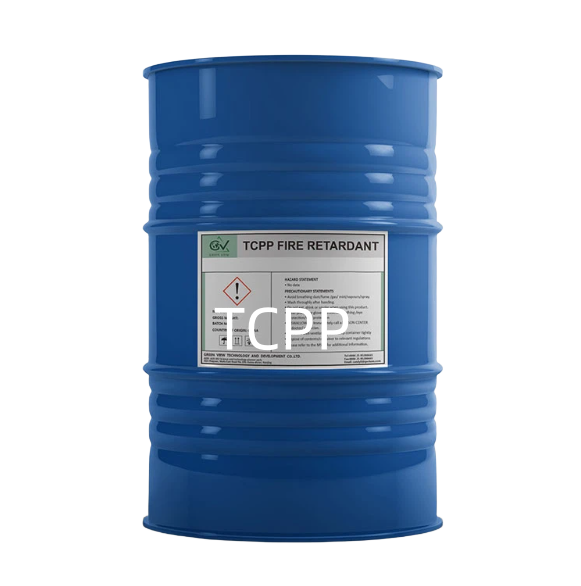
Reactive flame retardancy: built into the polyol backbone
Reactive flame retardancy works differently. The flame-retardant character is designed into the polyol molecule itself rather than dosed into the blend as a separate liquid. The XINFA High Flame Retardant Polyester Polyol grades are aromatic polyester polyols produced from PA, PTA, AA, DEG and GLY. Because the aromatic structure is part of the polymer backbone, the flame-retardant contribution is carried by the network the foam is built from.
In practical terms this changes three things for a construction material manufacturer:
- Blending complexity. There is no separate flame retardant to dose, mix and verify in the B-side, which reduces one source of batch-to-batch variation.
- Consistency. Performance enters with the polyol, delivered against a specified hydroxyl value, acid value, moisture content and viscosity.
- Processing trade-off. Aromatic, higher-functionality polyols generally have higher viscosity than standard grades, so temperature and machine settings must be matched to the grade selected.
Why the distinction matters in a compliance file
When the finished product is what gets tested, formulators prefer to reduce the number of variables that can shift between batches. A reactive approach moves part of the fire performance into a raw material delivered against a repeatable specification, rather than into a dosing step that must be re-verified continuously. The two approaches are not mutually exclusive: hybrid formulations that combine a built-in reactive polyol with a reduced additive load are a common formulation strategy.
| Decision point | Additive flame retardancy | Reactive (built-in) flame retardancy |
|---|---|---|
| How it enters the foam | Dosed into the formulation as a separate component and dispersed in the foam | Designed into the polyol molecule and delivered with the polyol |
| Example from the XINFA range | TCPP (tris(1-chloro-2-propyl) phosphate, CAS 13674-84-5) | High Flame Retardant Polyester Polyol: XF-2007, XF-250P, XF-235P, XF-240P |
| Chemistry behind the performance | Phosphate ester chemistry added to the blend | Aromatic polyester backbone built from PA, PTA, AA, DEG and GLY |
| Formulation flexibility | Loading level can be adjusted quickly during trials | Performance is selected through the polyol grade and its specification |
| Variables to control in production | Dosing accuracy, mixing quality and the physical property balance of the foam | Polyol hydroxyl value, viscosity and moisture, matched to the machine |
| Fit within a compliance strategy | Fast adjustment and hybrid formulations | Performance carried by the polymer network rather than held only by dispersion |
The XINFA High Flame Retardant Polyester Polyol Series as a Built-In Solution
Four grades make up the series. All are aromatic polyester polyols intended for high flame retardant applications, including PIR spraying insulation, sandwich panels and polyurethane pipes.
| Grade | Hydroxyl value (mgKOH/g) | Acid value (mgKOH/g) | Moisture (%) | Viscosity at 25 degrees C (CPS) |
|---|---|---|---|---|
| XF-2007 | 200 plus or minus 10 | 2.0 maximum | 0.1 maximum | 15,000 plus or minus 3,000 |
| XF-250P | 260 plus or minus 10 | 1.5 maximum | 0.1 maximum | 11,000 plus or minus 2,000 |
| XF-235P | 235 plus or minus 15 | 2.0 maximum | 0.15 maximum | 3,000 - 6,000 |
| XF-240P | 240 plus or minus 15 | 2.0 maximum | 0.15 maximum | below 5,000 |
The grades differ in how they interact with a production line. XF-2007 carries the highest viscosity in the series and a hydroxyl value of 200 plus or minus 10 mgKOH/g, which positions it for systems designed around a heavier aromatic polyol. XF-250P raises the hydroxyl value to 260 plus or minus 10 mgKOH/g with a tighter acid value of 1.5 mgKOH/g maximum. XF-235P sits mid-range at 235 plus or minus 15 mgKOH/g with a viscosity of 3,000-6,000 CPS, and XF-240P is the lowest-viscosity grade at below 5,000 CPS, which suits systems where flow and mixing behaviour in the machine are the deciding factors.
Step-by-Step: Turning a Fire Requirement into a Working Formulation
- Define the requirement for the destination market. Identify which fire performance the finished construction product must demonstrate and for which application, since the classification required depends on the building type and end use, not on the polyol.
- Fix the processing window. Establish whether the foam is sprayed on site, produced on a PIR panel line or foamed into a pipe section, and record the machine, ambient conditions and cycle time. XINFA application data pairs PIR sandwich panel systems with a PIR production system running continuous operation, spray construction insulation with a spraying machine, and cold storage insulation with a spraying coating machine.
- Choose the flame retardancy strategy. Decide whether performance should come mainly from a reactive polyol, from an additive such as TCPP, or from a hybrid of both.
- Match the polyol grade. Select the hydroxyl value and viscosity that fit the machine. A 15,000 CPS grade and a sub-5,000 CPS grade behave differently in pumps, mix heads and panel lines.
- Balance the catalyst package. The XINFA catalyst range includes PC-5 (pentamethyldiethylenetriamine, CAS 3030-47-5, content 98% minimum), PC-8 (N,N-dimethylcyclohexylamine, CAS 98-94-2, purity 99% minimum), PC-41 (CAS 15875-13-5, total amine value 490-530 mgKOH/g), TEDA A33 (33.0-33.6% TEDA with 66.4-67.0% DPG) and DMP-30 (CAS 90-72-2, purity 95% minimum, viscosity 120-250 mPa.s at 20 degrees C).
- Validate at pilot scale. Check foam quality, odour and stability against the practical requirements of the application, not only against the fire target.
- Test, document and lock the specification. Complete the finished product test required by the market, then freeze the raw material specification and keep batch documentation, including the polyol specification values and certificate of analysis.
How flame retardancy is verified at the raw material stage
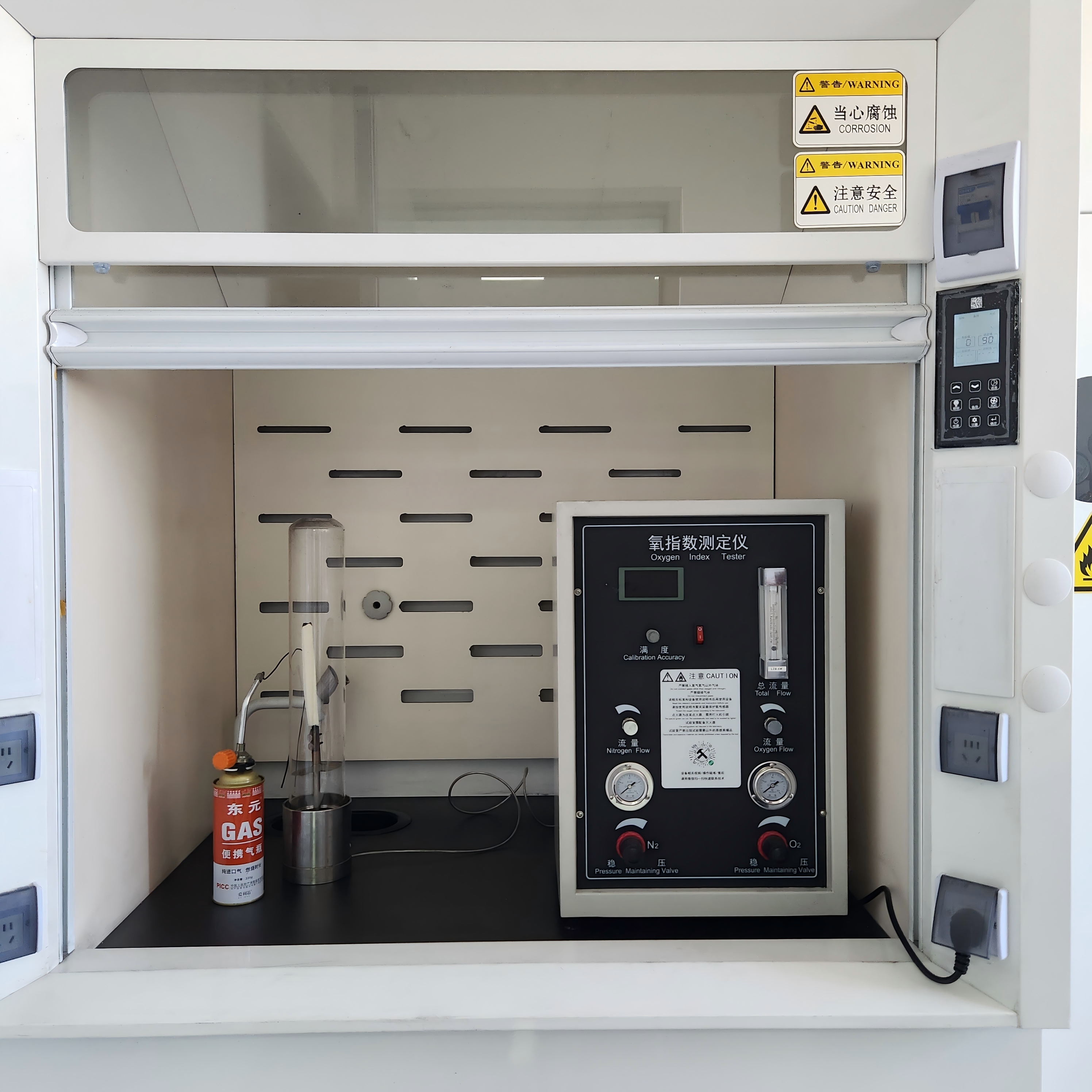
Testing capability shortens the loop between formulation and certification. XINFA operates an in-house laboratory that includes an oxygen index tester, which is used to evaluate the flame retardancy behaviour of foam samples during development. This type of bench data helps a manufacturer decide whether a formulation is worth advancing to the finished product test, where the formal classification is issued.
Where These Grades Fit: PIR Spraying Insulation and Sandwich Panels
The High Flame Retardant Polyester Polyol series is applied where flame retardancy and processing stability have to hold together in the same system.
- PIR spraying insulation for construction. The XINFA application record for construction insulation systems specifies high flame retardant, low odour and stable foaming performance, with a spraying machine as the matched equipment. Cold storage projects add low temperature foaming stability and low thermal conductivity to the requirement list.
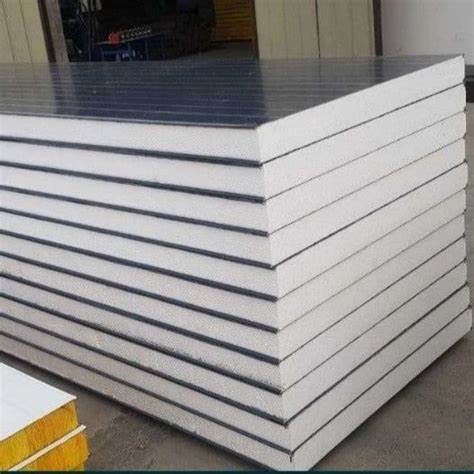
- PIR sandwich panels. Panel production runs continuously on a PIR production system, so the polyol has to deliver the required fire performance while keeping the foam stable on a 24/7 line.
- Polyurethane pipe insulation. Pipe sections use the same family of grades, where the polyol specification must match the foaming equipment and the insulation performance target.
Frequently Asked Questions
Does a flame-retardant polyester polyol carry a fire certification on its own?
No. Fire classification is issued to the finished construction product, meaning the foam, panel or pipe section as tested under the method required in the destination market. The polyol contributes built-in flame-retardant character to that foam, but the certificate belongs to the finished system. What XINFA provides at the raw material level is a specified, documented product: XF-2007, XF-250P, XF-235P and XF-240P are supplied against defined hydroxyl value, acid value, moisture and viscosity ranges, and the company operates ISO 9001, ISO 14001 and ISO 45001 management systems.
What is the difference between additive and reactive flame retardancy in a PIR system?
In an additive approach, a flame retardant compound such as TCPP (CAS 13674-84-5) is dosed into the formulation and dispersed in the foam. In a reactive approach, the flame-retardant character is designed into the polyol molecule, as with the XINFA High Flame Retardant Polyester Polyol grades, which are built from the aromatic raw materials PA and PTA together with AA, DEG and GLY. The reactive route reduces the number of separately dosed components, while the additive route is quicker to adjust during formulation trials. Hybrid systems that use both are common.
How do XF-2007 and XF-240P differ, and which one suits which system?
Both are High Flame Retardant Polyester Polyols, but they occupy different positions in the series. XF-2007 has a hydroxyl value of 200 plus or minus 10 mgKOH/g and a viscosity of 15,000 plus or minus 3,000 CPS at 25 degrees C, the highest in the series. XF-240P has a hydroxyl value of 240 plus or minus 15 mgKOH/g, an acid value of 2.0 mgKOH/g maximum, a moisture content of 0.15% maximum and a viscosity below 5,000 CPS at 25 degrees C. The choice should be made on the processing window of the line, since the two grades behave differently in pumps and mix heads, and on the hydroxyl value the formulation is designed around.
How should buyers evaluate the cost of a flame-retardant polyol?
Cost should be assessed on the total formulation, not on the polyol price alone. A reactive flame-retardant polyol may reduce the amount of separately dosed additive flame retardant needed, and it changes the catalyst balance and possibly the processing settings. The meaningful comparison is the cost per unit of compliant finished foam produced. XINFA quotes the High Flame Retardant Polyester Polyol grades on request, and the team can be reached at admin@xinfapu.com or on +86 156-3365-7995.
Can formulators test a grade before placing a full order?
Sample and technical documentation requests are handled directly by the XINFA team. Buyers can request samples of XF-2007, XF-250P, XF-235P or XF-240P together with specification sheets for pilot foaming trials before commercial-scale orders. The product brochure can be downloaded here: XINFA product brochure (PDF). The team can also be contacted at admin@xinfapu.com, by telephone at +86 156-3365-7995 or on WhatsApp at +86 166-3389-3646.
Conclusion: Build Compliance Into the Polyol, Not Only Into the Line
Building codes will keep fire performance at the top of the specification list for insulation, and every revision pushes manufacturers to look more closely at where that performance comes from. The practical conclusion for construction material manufacturers is straightforward:
- Treat the flame retardancy strategy as a raw material decision, taken before the formulation is locked.
- Know which part of the performance is built into the polymer and which part is dosed separately.
- Match the polyol grade, its hydroxyl value, viscosity, acid value and moisture, to the processing window of the line.
- Validate and test the finished system, because that is what the code accepts.
The XINFA High Flame Retardant Polyester Polyol series (XF-2007, XF-250P, XF-235P and XF-240P) gives formulators a built-in route to flame retardancy for PIR spraying insulation, sandwich panels and polyurethane pipes, supported by an additive range that includes TCPP (CAS 13674-84-5) and catalysts such as PC-5, PC-8, PC-41, TEDA A33 and DMP-30. XINFA operates a 25,000 square metre manufacturing facility with an R&D team of 13 engineers and technicians, an annual production capacity of 80,000 tons and ISO 9001, ISO 14001 and ISO 45001 management system certifications.
Next step: validate the grade against your own line
- Product brochure (PDF): download here
- Email: admin@xinfapu.com
- Tel: +86 156-3365-7995 | WhatsApp: +86 166-3389-3646
- Website: www.xinfapu.com